
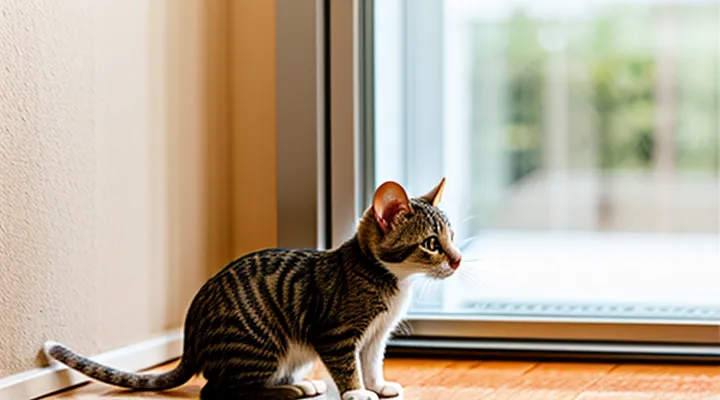
The Feline-Human Bond and Its Evolution
Domestication and Instincts
Predator-Prey Dynamics in the Wild
Domestic cats retain the hunting patterns inherited from their wild ancestors. When a cat captures a mouse, the act reflects a sequence of predator‑prey interactions that have been refined over millennia.
The encounter proceeds through several stages:
- Detection: acute hearing and whisker sensitivity locate the rodent’s movements.
- Stalk: low‑profile movement minimizes the prey’s chance to escape.
- Capture: rapid bite to the neck immobilizes the mouse, exploiting the predator’s muscular strength.
- Presentation: the cat often carries the immobilized prey away from the original site.
In a household setting, the final stage frequently involves delivering the mouse to a human. This behavior can be explained by three ecological mechanisms:
- Resource sharing – In wild colonies, adult felids sometimes provision kittens with captured prey. The domestic cat may extend this instinct to a human caretaker, treating the owner as a surrogate offspring.
- Teaching – Young wild cats learn hunting skills by observing successful captures. By offering a mouse, the cat provides a tangible example that could reinforce the owner’s role as a participant in the cat’s hunting cycle.
- Territorial signaling – Transporting prey away from the hunting ground reduces competition and signals control over a resource patch. Delivering the mouse to a human marks the area as defended and communicates the cat’s dominance.
These dynamics illustrate how innate predatory sequences persist in domesticated felines and manifest as the familiar practice of bringing captured rodents to their owners.
Co-existence with Humans
Cats that deliver captured rodents to people act on instinctive drives that intersect with domestic life. The act reflects a communication pattern rooted in ancestral hunting rituals, where the feline offers its catch to a higher‑ranking member of the group. In a household, the owner assumes the role of that leader, prompting the cat to present its prey as a token of provision.
The behavior supports mutual adaptation in several ways:
- Reinforces the cat’s status as a competent hunter, encouraging continued predatory activity within a safe environment.
- Provides the human with tangible evidence of the animal’s natural abilities, strengthening trust and perceived usefulness.
- Establishes a predictable exchange: the cat supplies food, the owner supplies shelter and supplemental nutrition.
From a co‑existence perspective, the presentation of rodents influences the human‑cat relationship. Owners who recognize the gesture as a form of gifting are more likely to respond with positive reinforcement, such as praise or treats, which in turn consolidates the cat’s willingness to repeat the behavior. Conversely, dismissive or punitive reactions may suppress the instinct, potentially redirecting the cat’s hunting toward less acceptable targets.
Understanding this interaction enables caregivers to manage expectations, design enrichment that satisfies predatory urges, and maintain a balanced dynamic where the feline’s innate drive complements the shared living space.
Instinctual Hunting Behaviors
The Drive to Hunt
Prey Drive in Domesticated Cats
Domestic cats retain a strong predatory instinct regardless of their indoor lifestyle. This instinct, known as prey drive, consists of a sequence of behaviors—stalk, pounce, capture, and kill—that evolved to secure food in the wild. In the domestic environment, the final phase of the sequence often ends with the cat presenting the captured animal to a human companion instead of consuming it.
The presentation behavior serves several functions:
- Resource sharing – the cat offers the catch as a surplus, mirroring the communal feeding observed in feral colonies where adults provide food to kittens and subordinate members.
- Social signaling – the act communicates competence and status to the human, reinforcing the cat’s role as a capable provider within the household hierarchy.
- Learning reinforcement – repeated positive responses from owners (praise, attention) strengthen the tendency to repeat the behavior, embedding it into the cat’s repertoire.
Domestication has altered the nutritional relevance of hunting but not the neural circuitry that triggers prey drive. The brain’s hypothalamic and limbic regions activate during the chase, releasing dopamine and reinforcing the reward loop. When the cat captures a mouse, the dopamine surge persists, and the subsequent delivery to the owner provides an additional social reward, completing the loop.
Factors influencing the intensity of prey drive include:
- Genetic background – breeds with closer ties to wild ancestors (e.g., Egyptian Mau, Bengal) exhibit higher hunting frequencies.
- Environmental enrichment – access to toys that simulate prey movements sustains the drive, reducing spontaneous hunting of live animals.
- Age and experience – younger cats practice hunting more frequently; experienced cats may refine the presentation ritual.
- Owner interaction style – consistent positive reinforcement for “gifts” amplifies the behavior, while negative reactions suppress it.
Understanding prey drive clarifies why many owners receive mice as gifts. The cat’s innate hunting sequence, coupled with social reinforcement from humans, transforms a survival mechanism into a communicative gesture within the domestic partnership.
The "Kill Bite" and Its Absence
Cats often present captured rodents to humans without delivering the final, crushing bite that kills prey in the wild. This omission, known as the “kill bite” absence, reveals several behavioral mechanisms.
The missing kill bite reflects a shift from hunting for sustenance to a social display. Domestic felines retain the chase and capture phases because those actions satisfy predatory instincts. However, the final bite, which severs the spinal cord and ensures rapid death, is suppressed when the animal intends to share the catch. The suppression serves two functions:
- Communication of competence – delivering a dead animal without the kill bite signals that the cat successfully subdued prey, reinforcing its status as a capable hunter.
- Transfer of resources – presenting an intact mouse allows the owner to handle the carcass, reducing the risk of injury to the cat and preserving the prey for potential feeding or study.
Neurobiological data support this pattern. Studies of feline brain activity show reduced activation in the brainstem regions responsible for the powerful jaw closure associated with the kill bite when the cat is observed by a human. Elevated oxytocin levels during close human interaction further dampen aggressive motor output, encouraging a gentler handling of the catch.
Evolutionary models suggest that early domestication favored individuals who could present prey without harming co‑habiting humans. Over generations, selection amplified the tendency to omit the kill bite, transforming a lethal hunting sequence into a gifting ritual.
In summary, the absence of the kill bite in domestic cats that bring mice to their owners indicates a behavioral adaptation where predatory skill is demonstrated without lethal execution, reinforcing social bonds and ensuring safety for both parties.
Explaining the "Gift" Phenomenon
Sharing the Bounty: A Protective Instinct
Teaching Kittens to Hunt
Kittens inherit a strong predatory drive that manifests as stalking, pouncing, and killing small animals. When a cat captures a mouse and presents it to a human, the act reflects an instinct to share resources with the social group, a behavior observed in wild felids that care for offspring. Teaching this drive in a controlled environment reduces the likelihood of unsanctioned hunting and channels the instinct into appropriate play.
Effective training follows a gradual exposure model:
- Begin with interactive toys that mimic prey movement (feather wands, motorized mice).
- Introduce live, non‑lethal prey under supervision once the kitten reliably attacks toys.
- Reward successful captures with food or praise to reinforce the behavior.
- Gradually increase the difficulty of the prey’s escape patterns to develop precision.
- Phase out live prey by substituting high‑quality artificial targets once the kitten demonstrates consistent skill.
Key considerations ensure safety and ethical standards:
- Use prey that cannot transmit parasites or cause injury.
- Limit sessions to 10‑15 minutes to prevent fatigue.
- Monitor the kitten’s health; any signs of stress or injury require immediate cessation.
- Provide alternative outlets (puzzle feeders, scent trails) to satisfy the hunting urge without actual killing.
When kittens learn to hunt under guidance, they acquire the technique needed to capture prey but retain the ability to control when and how they present it. This controlled competence often translates into fewer unsolicited mouse deliveries to owners, as the cat’s predatory satisfaction is met through structured play rather than opportunistic hunting.
Providing for the "Colony"
Cats that capture prey often deposit it near humans as a form of resource distribution for their social group. The behavior stems from ancestral hunting patterns in which individuals share food with kittens, mates, and other colony members to ensure collective survival. When a domestic cat presents a mouse to its owner, it interprets the human as an integral participant in the same network, extending the sharing instinct beyond the immediate feline family.
Key motivations behind this provisioning include:
- Nutritional support – the cat supplies a protein source that can supplement the diet of less skilled hunters within the group.
- Skill reinforcement – delivering captured prey reinforces the cat’s role as an effective provider, strengthening its status and encouraging continued hunting activity.
- Social bonding – the act creates a reciprocal relationship; the human responds with attention or food, reinforcing the cat’s expectation of mutual exchange.
The underlying mechanism relies on instinctual cues rather than conscious calculation. Neural pathways associated with reward processing activate when the cat successfully catches and offers prey, prompting repetition of the behavior. Over time, domestic cats adapt this pattern to the human environment, using the owner as a surrogate caretaker for the broader feline community they perceive.
Understanding this dynamic clarifies why many owners receive unsolicited mice. Recognizing the gesture as an expression of ancestral caregiving can inform appropriate responses, such as providing safe alternatives for prey disposal or reinforcing the cat’s hunting instincts with play objects that satisfy the same biological drive.
Seeking Approval and Attention
Positive Reinforcement from Owners
Cats often present captured rodents to humans because owners unintentionally reinforce the behavior. When a cat brings a mouse and the owner reacts with praise, treats, or attention, the cat interprets the response as a reward. This reward strengthens the likelihood of future deliveries.
Research on feline predatory instincts confirms that positive reinforcement modifies hunting-related actions. Key mechanisms include:
- Verbal approval (“Good job”) paired with petting or treats.
- Immediate food rewards following the presentation.
- Consistent attention, such as playful interaction, after the cat drops the prey.
These responses activate the cat’s reward circuitry, releasing dopamine and reinforcing the association between hunting and human approval. Consequently, the cat learns that delivering prey yields tangible benefits, not merely satisfying an instinct.
Owners who wish to discourage the practice can alter their reactions. Ignoring the mouse, removing it without praise, or providing a separate hunting outlet—such as interactive toys—prevents the reinforcement loop. Conversely, deliberately rewarding the act will increase its frequency, as documented in behavioral studies of domestic felines.
The Human-Cat Communication Loop
Cats deliver captured prey to humans as a deliberate signal within a two‑way communication system. The act conveys information about the cat’s hunting success, resource availability, and perceived social status, while prompting the owner to respond with reward, care, or reinforcement. This exchange creates a feedback loop that shapes future hunting behavior and strengthens the bond between animal and caretaker.
The loop consists of several observable stages:
- Detection: the cat locates and subdues a mouse, activating innate predatory circuitry.
- Presentation: the cat transports the prey to the human’s vicinity, often pausing to expose the capture.
- Owner reaction: the human provides food, affection, or verbal acknowledgment, interpreting the gesture as a gift.
- Reinforcement: the cat registers the response, adjusting motivation to repeat the behavior under similar circumstances.
Neurochemical data indicate that both parties experience dopamine release during the exchange, reinforcing the pattern. Repeated cycles lead to increased frequency of prey delivery, especially in households where owners consistently reward the behavior.
Understanding this communication loop clarifies why felines choose to share their kills. The process is not random; it reflects an evolved strategy for mutual benefit, aligning the cat’s predatory instincts with the human’s capacity for positive reinforcement.
Displaying Hunting Prowess
A Showcase of Skills
Cats that present captured rodents to people demonstrate a set of innate abilities that can be observed in a single interaction. The act combines predatory competence, spatial awareness, and social signaling, allowing owners to witness several competencies simultaneously.
The displayed skills include:
- Hunting precision – swift detection of movement, calculation of trajectory, and execution of a lethal bite.
- Motor coordination – seamless transition from chase to capture, followed by controlled transport of the prey.
- Territorial mapping – navigation of familiar routes to return to the owner’s location while avoiding obstacles.
- Communication – use of body language and vocalizations to convey ownership of the catch and to solicit attention.
These capabilities reflect evolutionary adaptations refined for solitary hunting, now repurposed as a form of interaction with humans. Observing a cat’s delivery of a mouse provides concrete evidence of the animal’s problem‑solving capacity and its ability to integrate instinctual behavior with domestic social structures.
Establishing Dominance
Cats deliver captured rodents to their human companions as a strategic act of dominance. By presenting prey, the animal asserts control over resources, signaling that it can acquire food and choose the recipient. This behavior mirrors wild hunting hierarchies, where dominant individuals dictate the distribution of kills within a group.
The act fulfills several functional objectives:
- Demonstrates the cat’s competence in hunting, reinforcing its superior status.
- Establishes a power dynamic, positioning the owner as a subordinate recipient of the cat’s bounty.
- Reinforces the cat’s role as the primary provider, even when the owner supplies the bulk of the diet.
From an ethological perspective, dominance displays reduce uncertainty in the human‑cat relationship. The cat’s predictable offering of prey creates a clear hierarchy, minimizing conflict over food access and reinforcing the animal’s authority.
Overall, the presentation of mice serves as a concrete expression of the feline’s desire to dominate, translating instinctual hunting success into a social signal directed at the household.
Alternatives to Live Prey
Addressing Unwanted Hunting
Enrichment Activities and Toys
Cats that present captured rodents to their human companions often do so because their natural hunting instincts lack appropriate outlets. When a cat’s environment fails to satisfy predatory drives, the animal redirects the behavior toward the nearest available target—typically a household pet or a passing mouse. Providing structured enrichment reduces the likelihood of such presentations by channeling energy into controlled activities.
Enrichment activities that mimic hunting sequences include:
- Interactive wand toys that simulate prey movement, encouraging stalking, pouncing, and capture.
- Puzzle feeders that require manipulation to release food, replicating the effort of subduing live prey.
- Automated ball or mouse toys that move unpredictably, sustaining attention and prompting chase reflexes.
- Rotating toy sets that introduce novel textures and sounds, preventing habituation.
Toys designed for solitary play, such as crinkled tunnels or feathered sticks, allow cats to practice predatory sequences without external stimuli. Regular rotation of these items maintains novelty, which is essential for sustained engagement.
Incorporating short, frequent play sessions—five to ten minutes, three to four times daily—aligns with a cat’s natural burst hunting pattern. Consistent timing establishes a routine that satisfies instinctual needs and diminishes the impulse to capture uncontrolled prey.
Overall, a deliberately varied enrichment program supplies the sensory and motor challenges cats require, decreasing the probability that they will bring unsolicited catches to their owners.
Scheduled Playtime
Scheduled playtime provides cats with predictable opportunities to practice hunting sequences, reducing the impulse to present captured prey to humans. By allocating specific intervals for interactive exercise, owners channel the cat’s predatory drive into controlled environments, allowing the animal to satisfy its chase‑and‑capture instinct without resorting to unsolicited deliveries.
Regular sessions reinforce the association between play and reward. When a cat successfully stalks a toy mouse during a designated period, the positive reinforcement—typically a treat or verbal praise—strengthens the behavior pattern. Consequently, the cat learns that simulated prey satisfies its needs, diminishing the likelihood of bringing actual rodents to the household.
Implementing a consistent schedule yields measurable outcomes:
- Decreased frequency of unsolicited mouse deliveries.
- Enhanced focus during play, reflected in longer chase durations.
- Improved physical condition, evidenced by stable body weight and muscle tone.
- Strengthened human‑cat bond, observable through increased eye contact and relaxed posture after sessions.
Owners should maintain a routine of at least two 15‑minute play intervals per day, alternating between high‑intensity pursuits (e.g., feather wands) and slower, tactile activities (e.g., puzzle feeders). This structure aligns the cat’s natural hunting rhythm with the household’s expectations, fostering a balanced coexistence.
Veterinary Perspectives
Nutritional Needs and Hunting
Cats are obligate carnivores; their diet must contain high‑quality animal protein, essential amino acids such as taurine, and adequate fat for energy. They lack the enzymatic pathways to synthesize many nutrients from plant sources, so they rely on prey to meet these requirements. Typical nutritional components provided by a mouse include:
- Protein rich in essential amino acids
- Taurine and arginine for cardiac and retinal health
- Vitamin A precursors and B‑complex vitamins
- Saturated and unsaturated fatty acids for skin and coat condition
Hunting satisfies both physiological and behavioral drives. The act of stalking, pouncing, and killing activates predatory circuits in the brain, reinforcing motor skills and sensory acuity. Captured rodents deliver a concentrated source of the nutrients listed above, aligning the cat’s immediate energy needs with its long‑term health. The prey’s size and composition match the cat’s bite force and digestive capacity, allowing efficient ingestion of muscle, organ, and bone tissue.
When a cat presents a mouse to its owner, the behavior reflects an instinctual response to a surplus of food. The animal may be sharing excess prey, reinforcing the human‑cat bond, or signaling competence as a provider. The gesture also serves as a practical method of transferring valuable nutrients to the household, especially when the cat’s own intake is limited by feeding schedules or diet composition. By delivering the mouse, the cat ensures that the high‑quality protein and essential micronutrients are accessible to both itself and its human companion.
Behavioral Counseling
Cats often present captured rodents to their owners as an instinctual behavior rooted in hunting and sharing. This action reflects a cat’s perception of the household as a social group in which the feline assumes a provider role. Understanding this drive allows counselors to frame interventions that respect the animal’s natural impulses while addressing owner concerns.
Behavioral counseling for owners should focus on three objectives: interpreting the cat’s motive, modifying the environment to reduce unwanted deliveries, and reinforcing alternative communication methods. Practitioners can implement the following steps:
- Observe the cat’s routine to identify triggers such as outdoor access or prey‑rich areas.
- Limit unsupervised outdoor hunting by providing indoor enrichment (interactive toys, puzzle feeders) that satisfy predatory instincts.
- Offer positive reinforcement when the cat engages in acceptable behaviors (e.g., using a scratching post, playing with toys) instead of bringing live prey.
- Educate owners on safe handling of captured rodents to prevent injury and disease transmission.
- Establish a consistent response protocol: calmly remove the mouse, clean the area, and redirect the cat’s attention to a designated play session.
Counselors must convey that the delivery of prey is not a sign of aggression but a communication of competence and affiliation. By aligning owner expectations with feline biology, the relationship remains harmonious, and the frequency of unwanted gifts diminishes.