
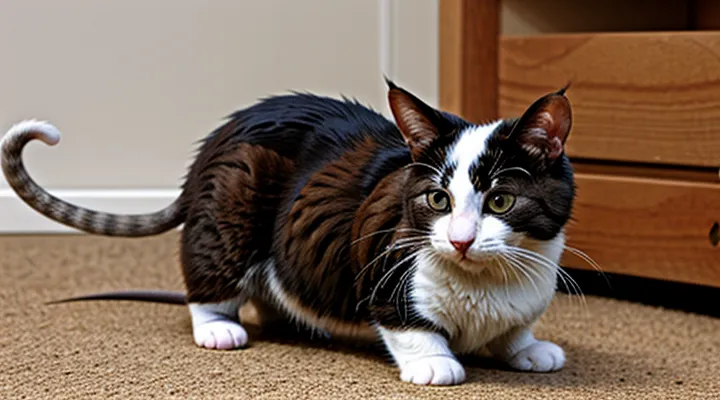
The Feline Hunter's Instinct
Predatory Behavior Rooted in Evolution
Genetic Predisposition
Cats retain a hunting instinct encoded in their DNA. Gene clusters associated with predatory behavior, such as AVPR1A and MAOA, influence dopamine and serotonin pathways that trigger pursuit, capture, and transport of prey. Comparative studies of domestic cats and wild felids reveal conserved alleles that activate neural circuits for stalking and pouncing, indicating an inherited drive rather than learned habit.
Selective pressure during domestication favored individuals that could secure food for offspring, reinforcing the genetic template. Mutations that enhance visual acuity, auditory sensitivity, and motor coordination are linked to the same genetic framework, enabling precise detection and rapid capture of small mammals. Consequently, the propensity to bring captured rodents to humans reflects a hard‑wired reproductive advantage encoded across felid genomes.
- Genetic markers: Variants in DRD4 and SLC6A4 correlate with heightened prey‑seeking activity.
- Neural circuitry: Inherited pathways in the basal ganglia and amygdala mediate instinctual chase responses.
- Evolutionary retention: Domestic cats share >99 % of these genes with their wild ancestors, preserving the predatory template.
Learning Through Observation
Cats capture rodents as part of instinctual predatory behavior, yet the act of presenting prey to humans often reflects learned patterns acquired through observation. When kittens watch mothers or other adults retrieve and deposit captured mice, they internalize the sequence of actions—stalk, pounce, kill, transport, and present. This observational process reinforces neural pathways associated with hunting efficiency and social signaling.
Key aspects of observational learning in felines include:
- Replication of handling techniques observed in experienced hunters, such as precise bite placement and safe transport of prey.
- Adoption of the “gift‑giving” routine, where the cat deposits the mouse in a location frequented by humans, signaling competence and reinforcing owner interaction.
- Modification of prey‑handling based on outcomes witnessed; successful deliveries encourage repeat behavior, while negative responses (e.g., lack of attention) diminish the tendency.
Neurobiological studies show that mirror‑neuron systems in felids activate during both execution and observation of predatory actions, facilitating rapid acquisition of complex hunting sequences without trial‑and‑error learning. Consequently, the prevalence of mice‑bringing behavior among domestic cats can be traced to a combination of innate predatory drives and socially acquired strategies observed from conspecifics.
The Drive to Hunt
Instinctual Response to Prey
Cats retrieve captured rodents because the act satisfies an innate predatory sequence. The sequence begins with detection of movement, followed by stalking, pouncing, and a final bite that immobilizes the prey. After the kill, the cat often carries the mouse away from the hunting site. This transport reflects a hard‑wired behavior that evolved to secure food for later consumption and to teach offspring hunting skills.
The transport phase activates neural circuits linked to the reward system. Dopamine release reinforces the successful capture, while motor pathways coordinate the mouth‑grip and gait needed to move the prey. The behavior persists even when the cat is not hungry, indicating that the reward is tied to the act of capture rather than immediate caloric need.
When kittens observe adults moving prey, they learn the sequence through observational learning. The adult’s behavior provides a template that the young replicate, ensuring the species retains efficient hunting techniques. This learning process is reinforced by the release of oxytocin during social interaction, strengthening the bond between mother and offspring while embedding the predatory routine.
Key elements of the instinctual response:
- Visual trigger: rapid motion of small animals.
- Motor pattern: precise bite, neck‑hold, and carry.
- Neurochemical feedback: dopamine surge after capture.
- Social transmission: kittens mimic adult transport behavior.
Sensory Cues in Hunting
Cats capture mice by exploiting a tightly integrated set of sensory mechanisms that detect prey movement, shape, and scent. Visual acuity enables detection of rapid, erratic motion against low‑light backgrounds; the feline retina contains a high density of rod cells, granting sensitivity to subtle shifts in illumination. Auditory perception isolates ultrasonic frequencies produced by rodent respiration and footfalls; the cat’s pinna can rotate to pinpoint direction within a few degrees. Whisker (vibrissal) input registers air currents and surface contours as a mouse navigates tight spaces, allowing the predator to anticipate escape routes. Olfactory receptors identify mouse pheromones and metabolic odors, complementing other modalities when visual cues are obscured.
Key sensory cues in feline hunting:
- Motion detection: retinal ganglion cells respond to sudden, high‑contrast trajectories; this triggers the predatory chase sequence.
- Acoustic localization: cochlear hair cells tuned to 20–45 kHz capture rodent vocalizations and footstep sounds, guiding head orientation.
- Vibrissal feedback: mechanoreceptors in whisker follicles measure shear forces, delivering real‑time shape information.
- Chemical signatures: vomeronasal and main olfactory epithelium detect mouse-specific volatile compounds, reinforcing target identification.
The convergence of these cues initiates the stereotyped attack pattern: freeze, stalk, pounce, and secure the prey. Successful capture reinforces neural pathways linked to reward circuitry, which in turn motivates the cat to transport the mouse to a safe location. This behavior supports offspring training and preserves food for later consumption, reflecting the underlying biological drivers of the cat’s prey‑bringing habit.
Maternal Instincts and Training
Teaching Offspring to Hunt
Simulated Hunting Scenarios
Researchers employ controlled hunting simulations to isolate the instinctive components of feline predation that lead to the delivery of captured rodents. In these experiments, cats encounter moving objects that mimic the size, scent, and erratic motion of live prey. The artificial setup eliminates external variables such as competition, hunger level, and environmental hazards, allowing precise measurement of the cat’s response hierarchy.
Key elements of simulated scenarios include:
- Mechanical prey models equipped with programmable escape patterns that replicate typical mouse behavior.
- Olfactory cues delivered through scent dispensers to trigger the cat’s hunting drive.
- Variable distances and elevations to assess the influence of spatial factors on capture technique.
- Video tracking systems that record latency to pounce, bite force, and handling duration.
Data from such studies reveal a consistent sequence: detection, stalk, rapid bite, immobilization, and transport to a designated safe zone within the enclosure. The transport phase mirrors the natural tendency to bring prey to a secure location, supporting the hypothesis that the behavior serves both practice of maternal provisioning and reinforcement of hunting proficiency.
Comparative analysis of simulated versus natural hunts shows that cats maintain the same handling pattern regardless of prey authenticity. This consistency underscores the innate nature of the behavior and suggests that the act of presenting captured rodents is rooted in evolutionary mechanisms designed to sharpen predatory skills and ensure offspring nourishment.
Presenting "Kills" to Kittens
Cats often deliver captured rodents to their offspring as a form of instructional feeding. The act serves to demonstrate hunting techniques, prey handling, and consumption sequences essential for the kittens’ survival in environments where self‑sufficient hunting will become necessary.
Key biological functions of this behavior include:
- Skill transmission – kittens observe the adult’s grip, bite pattern, and method of immobilizing the mouse, then replicate these actions during practice hunts.
- Digestive preparation – exposure to fresh prey stimulates the development of the kittens’ gastrointestinal enzymes and microbiota, accelerating adaptation to a carnivorous diet.
- Social bonding – the shared feeding event reinforces maternal‑offspring attachment, reducing stress and promoting cooperative behavior within the litter.
From an evolutionary perspective, mothers that provide live prey early increase the likelihood that their young will acquire competent hunting abilities before independence. Consequently, the frequency of prey presentation correlates with the survival rate of the litter in natural settings.
Provisioning Behavior
Providing Food for Dependents
Cats deliver captured rodents to their young or other members of the group as a direct method of provisioning. This behavior originates from evolutionary pressures that favored individuals capable of supplying nourishment to dependents when external food sources were unpredictable. By presenting prey, a mother cat reduces the time kittens spend learning to hunt, thereby increasing their survival probability.
Key biological mechanisms underlying this provisioning include:
- Instinctual predation drive – neural circuits that trigger hunting persist even when the cat has been fed, ensuring a steady supply of protein for offspring.
- Maternal teaching – exposure to dead or immobilized prey allows kittens to observe handling techniques, accelerating skill acquisition.
- Resource allocation – delivering prey eliminates competition for food within the litter, as the mother controls distribution.
- Social reinforcement – the act reinforces the bond between caregiver and dependent, stabilizing group cohesion.
The net effect of these mechanisms is a measurable increase in offspring growth rates and reduced mortality, confirming that prey delivery serves a functional role in feline reproductive success.
Reinforcing Hunting Skills
Cats often transport captured rodents to secure locations within the home. This behavior serves as a practical rehearsal of predatory sequences, allowing the animal to refine motor patterns such as stalking, pouncing, and handling. Repeated execution of these actions strengthens neural pathways linked to precise timing and force modulation, resulting in increased efficiency during future hunts.
The act of bringing prey also provides sensory feedback that calibrates the cat’s bite pressure and grip. By manipulating a live or dead mouse, the cat assesses muscle tension, jaw alignment, and claw placement. This self‑monitoring loop adjusts future attempts, minimizing energy expenditure while maximizing success rates.
- Repetition of capture and transport reinforces the sequence of movements required for hunting.
- Physical manipulation of the mouse offers real‑time data on grip strength and bite force.
- Exposure to prey odors and sounds maintains sensory acuity essential for detection.
- Presence of captured rodents near kittens creates observational learning opportunities, accelerating skill acquisition in the next generation.
Social Dynamics and Communication
Sharing Prey as a Social Act
Establishing Hierarchy
Cats that capture and present mice often do so as a signal of dominance within a social group. By delivering prey, an individual demonstrates hunting competence, which other cats interpret as an indicator of superior physical condition and resource‑holding potential. This behavior reinforces the predator’s position in the hierarchy, discouraging challenges from lower‑ranking members.
Key effects of prey presentation on hierarchy:
- Establishes the hunter as a reliable food source, increasing deference from subordinates.
- Triggers submissive responses, such as reduced aggression and increased grooming toward the dominant cat.
- Consolidates access to shared resources, because dominant individuals are more likely to retain control over feeding sites and resting areas.
In multi‑cat environments, repeated mouse deliveries amplify the dominant cat’s reputation, stabilizing the social order and reducing conflict. The practice aligns with evolutionary pressures that favor clear rank structures, ensuring efficient allocation of limited resources and minimizing the energy costs of constant fighting.
Demonstrating Hunting Prowess
Cats often present captured mice to their owners as a clear signal of hunting competence. This behavior serves several biological functions:
- Skill verification: By delivering prey, a cat confirms its ability to locate, stalk, and subdue moving targets, reinforcing its status as an effective predator.
- Territory marking: The act of bringing a mouse back into the home environment deposits scent markers, delineating the cat’s domain and communicating dominance to conspecifics.
- Maternal instinct expression: Even in neutered or indoor cats, the instinct to teach offspring persists; presenting prey mimics the tutoring behavior observed in wild mothers.
- Resource sharing: Offering a catch may strengthen the human‑cat bond, ensuring continued access to food resources and protective care.
These mechanisms collectively explain why felines transport rodents to their households, highlighting the innate drive to demonstrate and maintain hunting proficiency.
Communication Through Gifts
Expressing Affection
Cats often present captured mice to humans as a form of social communication rooted in instinctual behavior. In wild settings, adult felines bring prey to kittens to teach hunting skills and to strengthen the bond between mother and offspring. Domestic cats transfer this pattern to their human companions, interpreting the owner as a surrogate member of the family group. The act signals that the cat perceives the owner as safe and worthy of sharing resources, which functions as an expression of affection.
Key biological mechanisms underlying this behavior include:
- Maternal instinct activation – hormonal pathways that trigger nurturing responses also prompt the cat to offer food to a perceived dependent.
- Oxytocin release – interaction with the owner during prey presentation stimulates oxytocin, reinforcing social attachment.
- Territorial reinforcement – presenting prey marks the owner’s space as part of the cat’s domain, thereby affirming the relationship.
Consequently, when a cat delivers a mouse, the gesture conveys more than a mere hunting trophy; it reflects an innate drive to care for and acknowledge a valued partner in the cat’s social hierarchy.
Seeking Approval
Cats that deliver captured rodents to humans demonstrate an instinctive behavior rooted in social signaling. The act functions as a demonstration of hunting competence, which elicits positive feedback from caretakers and reinforces the cat’s status within the household hierarchy.
- Successful capture signals the cat’s ability to provide resources, prompting owners to reward the behavior with food, attention, or affection.
- The reward loop strengthens the cat’s association between hunting and social approval, encouraging repeated presentations of prey.
- By presenting prey, the cat communicates competence to both conspecifics and humans, which can enhance its standing and reduce aggression from dominant individuals.
The biological drive to secure approval aligns with feline territorial and parental instincts. In wild environments, sharing prey with offspring or allies consolidates group cohesion; domestic cats transpose this mechanism toward human companions, treating them as surrogate group members. Consequently, the behavior persists because it satisfies an innate need for validation while simultaneously supporting the cat’s survival strategy.
Misinterpretation of Human Behavior
The Cat's Perspective on Food
Associating Humans with Sustenance
Cats transport captured rodents to human dwellings primarily because the act satisfies innate predatory instincts while simultaneously reinforcing the animal‑human bond that historically enhanced feline survival. The behavior reflects a biological strategy in which the cat’s hunting success is communicated to potential allies, thereby increasing the likelihood of food sharing or protection.
- The cat’s drive to present prey stems from a neuro‑chemical reward system triggered by successful capture, prompting the animal to seek a safe repository for the kill.
- Human presence offers a predictable environment; by delivering prey, the cat signals competence, encouraging caretakers to provide supplemental nourishment.
- Reciprocal exchange develops: humans receive protein sources, while cats gain reliable feeding stations and reduced risk of scavenger competition.
This reciprocal dynamic illustrates how feline predation patterns have been co‑opted into a mutualistic relationship, wherein the cat’s instinctual need to secure resources aligns with human expectations of provision. The result is a sustained interaction that reinforces both species’ access to sustenance.
Offering Food in Return
Cats often present captured rodents to owners as a form of reciprocal provisioning. This behavior originates from ancestral hunting patterns in which adults shared prey with offspring to ensure group survival. By delivering a mouse, a domestic cat signals competence as a hunter and reinforces the bond with the human caretaker, who supplies supplemental nutrition.
Key biological drivers of this offering include:
- Instinctive drive to teach hunting skills to kittens, extended to humans as surrogate caregivers.
- Reinforcement of social hierarchy; delivering prey affirms the cat’s status as provider.
- Activation of reward pathways; the act of giving triggers dopamine release, encouraging repetition.
The exchange mirrors a mutualistic relationship: the cat secures a reliable source of food and protection, while the human receives evidence of the cat’s usefulness and a tangible contribution to the household’s pest control. This dynamic sustains the cat’s hunting instinct within a domestic environment.
The "Gift" to the Human
Sharing the Bounty
Cats often transport live or dead rodents to locations where humans or other cats can access them. This behavior aligns with evolutionary strategies that maximize survival and reproductive success.
- Resource distribution: By delivering prey, a cat secures food for offspring or mates, ensuring the group’s nutritional needs are met without expending additional hunting effort.
- Teaching mechanism: Juvenile cats observe and practice hunting techniques through the presentation of captured prey, accelerating skill acquisition.
- Social signaling: Offering a catch signals competence and status within a feline hierarchy, reinforcing bonding and cooperative interactions.
- Territorial reinforcement: Placing prey at the periphery of a home range advertises the cat’s control over resources, deterring rivals.
These biological drivers explain why felines habitually share their bounty with humans and conspecifics, reinforcing both individual fitness and group cohesion.
Seeking Praise or Attention
Cats often present captured rodents to humans as a form of social signaling. The act triggers a response from the owner, reinforcing the cat’s status as a competent hunter. This reinforcement operates through the reward circuitry in the cat’s brain, linking the presentation of prey with positive feedback from the caretaker.
The behavior serves several specific functions related to attention‑seeking:
- Demonstrates hunting competence, confirming the cat’s role within the household hierarchy.
- Elicits verbal or physical praise, which activates dopamine pathways associated with reward.
- Encourages the owner to provide food or treats, reinforcing the cat’s effort to acquire resources.
When owners respond positively, the cat learns that delivering prey reliably generates attention. This learned association strengthens the likelihood of repeated presentations, even when the mouse provides no nutritional benefit. The pattern reflects a biologically rooted strategy: using a valuable skill to obtain social reinforcement from a trusted companion.