
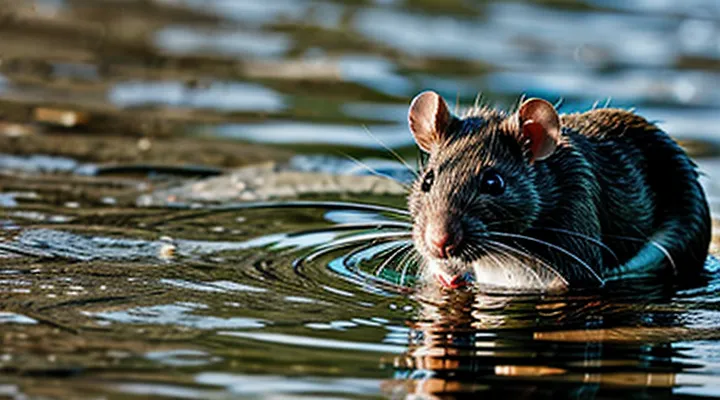
Understanding Rat Behavior and Water
The General Perception of Rats and Water
Rats are widely regarded as animals that avoid immersion, a belief reinforced by folklore, pest‑control literature, and popular media. Stories of rats fleeing floodwaters or refusing to cross puddles appear in urban legends and cartoons, creating a public image of innate aversion to liquid environments.
Observations that support this perception include:
- Laboratory studies showing reduced willingness of Rattus species to enter water‑filled arenas compared with dry alternatives.
- Field reports of rat populations retreating to higher ground during heavy rain, leading to temporary displacement from sewers and basements.
- Anecdotal accounts from exterminators describing rats slipping away when confronted with wet surfaces, reinforcing the stereotype among professionals.
Cultural references amplify the notion. In literature, rats are often depicted as desert‑dwelling scavengers, while visual media frequently animate them scrambling away from dripping pipes. These portrayals shape public expectations, influencing attitudes toward rodent control strategies that exploit water as a deterrent.
Scientific explanations clarify the origin of the myth. Rats possess dense fur that becomes water‑logged, impairing thermoregulation and increasing the risk of hypothermia. Their locomotor system favors firm, dry substrates; wet surfaces reduce traction and elevate predation risk. Consequently, evolutionary pressures have selected for cautious behavior around liquids, which the general public interprets as outright fear.
Natural Habitats and Water Proximity
Rats inhabit environments that provide shelter, food, and limited exposure to open water. Typical natural habitats include dense vegetation, underground burrows, and abandoned structures where moisture is present but not in the form of standing pools. These settings allow rats to access humidity for thermoregulation while avoiding direct contact with large water bodies.
- Forest floor litter and leaf debris retain dampness without forming surface water.
- Rocky crevices and cliff faces collect runoff, offering moisture pockets shielded from predators.
- Subterranean tunnels maintain stable humidity levels, reducing the need for surface water.
Proximity to water influences rat behavior. Moist microhabitats support pheromone signaling and scent marking, essential for social communication. However, exposure to open water triggers an innate aversion rooted in the risk of drowning and limited swimming ability. Consequently, rat populations concentrate near water sources that remain concealed or shallow, such as mossy banks, damp soil, or low‑lying vegetation, rather than lakes, streams, or ponds. This pattern explains the observed reluctance of rats to enter larger water bodies despite their dependence on moisture for survival.
Factors Contributing to Rat's Apparent Aversion
Physiological Vulnerabilities
Respiratory Risks
Rats display a pronounced aversion to water because immersion threatens their respiratory system. Water can enter the nasal passages and airway, compromising the delicate alveolar structures that support gas exchange. When a rat’s nostrils become saturated, the mucous membranes swell, reducing airflow and increasing the risk of hypoxia.
Key respiratory hazards associated with water exposure include:
- Aspiration of liquid into the lungs, leading to pulmonary edema and impaired oxygen diffusion.
- Disruption of the ciliary clearance mechanism, allowing pathogens to colonize the lower respiratory tract.
- Rapid loss of body heat due to evaporative cooling, which can depress respiratory rate and exacerbate hypoxic stress.
- Increased susceptibility to bacterial and fungal infections, as moist environments favor microbial growth on the respiratory epithelium.
Experimental observations show that even brief submersion raises blood carbon dioxide levels, indicating insufficient ventilation. The physiological stress of attempting to escape water further elevates heart rate, placing additional demand on the respiratory muscles.
Overall, water contact presents a direct threat to rat respiration by obstructing airflow, promoting infection, and destabilizing temperature regulation, thereby explaining their instinctive avoidance of aquatic environments.
Hypothermia Concerns
Rats possess a high surface‑area‑to‑mass ratio, which accelerates heat loss when their bodies contact water. Even mildly cool liquid can drop core temperature below the threshold for normal metabolic function. Prolonged exposure forces the animal to divert energy from foraging and reproduction to maintain warmth, increasing mortality risk.
Key physiological factors that heighten hypothermia danger include:
- Limited insulating fur: Wet fur loses its insulating air layer, exposing skin directly to the surrounding temperature.
- Elevated respiratory rate: Immersion stimulates faster breathing, expelling heat more rapidly.
- Reduced shivering capacity: Small mammals generate heat primarily through shivering; water immersion dampens muscular activity, limiting heat production.
- High metabolic demand: Maintaining body temperature in a cool environment requires a surge in metabolic rate, quickly depleting glycogen reserves.
Consequently, rats instinctively avoid aqueous habitats. The behavior minimizes the probability of core temperature collapse, preserves energy stores, and supports survival in environments where water temperature frequently falls below the species’ thermal comfort zone.
Behavioral Responses to Water
Predation Risk in Aquatic Environments
Rats exhibit strong avoidance of water because entering aquatic habitats markedly increases exposure to predators that are either specialized for, or more efficient in, such environments. Terrestrial mammals lack the morphological adaptations required for sustained swimming, rendering them vulnerable once submerged.
Primary predators in water include:
- Raptors such as hawks and owls that hunt from above and can seize rats struggling at the surface.
- Semi‑aquatic mammals like otters that pursue prey underwater with rapid, agile movements.
- Large fish (e.g., carp, catfish) that capture small mammals that fall into shallow water.
- Reptiles such as water snakes that ambush prey along banks and within shallow pools.
- Amphibians (e.g., large bullfrogs) capable of lunging at struggling rodents.
Sensory cues amplify risk. Vibrations, ripples, and chemical signals generated by predators travel efficiently through water, alerting rats to danger before visual detection is possible. Limited buoyancy and poor thermoregulation further compromise their ability to escape once immersed.
Evolutionary pressure favored individuals that instinctively avoided water, resulting in a behavioral pattern passed through generations. Rats that remained on dry ground experienced lower mortality from aquatic predators, reinforcing the avoidance response observed today.
Disruption of Olfactory Senses
Rats depend on a highly developed olfactory system to locate food, recognize conspecifics, and detect predators. When a rat contacts water, the liquid coats the nasal epithelium and dilutes airborne odorants, reducing the intensity of chemical signals that guide behavior.
Water creates a physical barrier that impedes the entry of volatile compounds into the olfactory recesses. The moisture also dissolves odor molecules, lowering their concentration in the air surrounding the animal. As a result, the rat’s ability to discriminate between scents diminishes rapidly.
Experimental observations support this mechanism:
- Rats exposed to humid chambers show a 40‑60 % decline in odor discrimination accuracy compared with dry conditions.
- Electro‑olfactogram recordings reveal reduced receptor activation when the nasal cavity is wetted.
- Behavioral trials demonstrate increased latency to locate food sources after brief immersion in water.
The disruption of scent perception generates uncertainty about the environment. Lacking reliable olfactory cues, rats adopt avoidance strategies, preferring dry surfaces where chemical information remains accessible. This sensory impairment contributes directly to the observed aversion of rats to aquatic settings.
Learned Behaviors and Experience
Negative Encounters with Water
Rats experience distress when submerged or forced onto wet surfaces. Their fur loses insulating properties, leading to rapid heat loss and hypothermia. The resulting temperature drop impairs muscle function and can cause shock.
Exposure to water also interferes with scent communication. Moisture washes away urine and glandular secretions that convey territorial and reproductive information, leaving rats vulnerable to predators and social displacement.
Laboratory observations document several adverse reactions:
- Immediate attempts to flee the water’s edge, even when escape routes are limited.
- Erratic swimming patterns, characterized by short, shallow strokes and frequent resurfacing.
- Increased cortisol levels measured after brief immersion, indicating acute stress.
- Prolonged grooming after exposure, aimed at restoring fur condition and scent markers.
Field reports note that accidental flooding of burrows leads to colony collapse. Mortality rates rise sharply when nests become saturated, as rats cannot maintain body temperature or protect their young. The combination of physiological strain, impaired communication, and heightened predation risk defines the negative impact of water on these rodents.
Avoidance of Unknown Dangers
Rats exhibit a marked aversion to water, a behavior that reflects a broader strategy of avoiding unknown hazards. When confronted with a liquid environment, rodents encounter sensory information that differs sharply from the terrestrial context in which they evolved. The lack of reliable tactile feedback, the potential for sudden submersion, and the difficulty of detecting predators beneath the surface create a risk profile that exceeds familiar threats.
Evolutionary pressure favors individuals that retreat from conditions with ambiguous outcomes. Water presents an unpredictable medium: currents can shift without warning, depth perception is limited, and acoustic cues are altered. These factors increase the probability of drowning or exposure to unseen predators, prompting an instinctive withdrawal.
Physiological constraints reinforce the avoidance response. Rat fur loses insulating properties when wet, accelerating heat loss and impairing thermoregulation. Moisture also disrupts scent trails, reducing the animal’s ability to navigate and detect conspecifics or predators.
Key unknown dangers that trigger the avoidance response include:
- Unstable flow patterns that can trap or drag the animal.
- Diminished auditory and olfactory cues underwater.
- Presence of aquatic predators that lack terrestrial analogues.
The avoidance of water therefore exemplifies a general adaptive principle: when environmental variables are uncertain, rodents prioritize escape over exploration. This principle underlies many risk‑avoidance behaviors observed across rodent species.
Nuances of Rat-Water Interaction
Instances of Rats in Water
Swimming Abilities
Rats possess limited aquatic competence despite occasional anecdotal reports of brief submersion. Their body composition, fur characteristics, and musculoskeletal design constrain sustained swimming.
- High body density reduces natural buoyancy.
- Water‑saturated fur adds weight and impairs insulation.
- Short, clawed limbs generate insufficient thrust for prolonged propulsion.
- Long, muscular tail provides balance but lacks a paddle‑like surface.
- Respiratory control allows brief underwater periods, yet oxygen reserves deplete quickly.
Laboratory tests demonstrate that rats can remain afloat for a few seconds when placed in shallow water, but they quickly surface to avoid drowning. When forced to cross water, individuals exhibit frantic paddling, erratic movements, and rapid exhaustion. The observed behavior aligns with an evolutionary preference for terrestrial habitats and a physiological predisposition against extended immersion.
Consequently, the limited swimming capacity reinforces the species’ general avoidance of wet environments, shaping both natural foraging patterns and laboratory handling protocols.
Seeking Water for Survival
Rats must locate liquid to maintain blood volume, regulate temperature, and enable metabolic processes. Their survival depends on drinking, yet they typically avoid immersion because wet fur reduces insulation, increases heat loss, and hampers locomotion. Consequently, rats develop strategies that allow them to obtain water while minimizing exposure.
- Small, shallow containers provide a surface that supports the animal’s weight without submerging the body.
- Elevated sources, such as dripping pipes or condensation on walls, enable drinking without contact with standing water.
- Nighttime activity reduces predation risk, allowing rats to approach water sources when visibility is low.
Physiological mechanisms support limited water intake. The kidneys concentrate urine, reducing the amount needed for hydration. Nasal passages reclaim moisture from exhaled air, and the tongue’s papillae create a capillary action that draws fluid with minimal swallowing effort. These adaptations permit rats to survive in arid environments while still satisfying the essential requirement for liquid.
When water is scarce, rats expand their foraging radius, increase nocturnal movements, and exploit human‑generated sources such as leaky faucets or pet dishes. Their reluctance to become fully wet does not prevent them from accessing the fluid necessary for cellular function, reproduction, and long‑term health.
Distinguishing «Fear» from «Avoidance»
Rats often refuse to enter water, prompting researchers to determine whether this reaction stems from genuine fear or from a learned avoidance strategy.
Fear manifests as an acute emotional state accompanied by physiological activation. Typical indicators include heightened heart rate, increased corticosterone levels, amygdala firing, and vocalizations. The animal may freeze or exhibit startle responses before attempting escape.
Avoidance represents a behavioral pattern that minimizes exposure to an undesirable stimulus without necessarily triggering the same internal arousal. Signs consist of swift retreat, lack of freezing, and unchanged stress hormone concentrations. The response can develop through repeated negative experiences and persist even when the original threat diminishes.
Key criteria for discrimination:
- Cardiovascular response (elevated vs. baseline)
- Corticosterone concentration (spike vs. steady)
- Amygdala activity (present vs. absent)
- Motor pattern (freezing vs. rapid withdrawal)
- Vocalization frequency (high vs. low)
Experimental protocols separate the two phenomena by comparing naïve rats with individuals trained to associate water with a mild aversive stimulus. Naïve subjects display the physiological profile of fear when first exposed, whereas trained rats exhibit rapid escape without measurable stress markers, reflecting avoidance.
Accurate classification influences pest‑management tactics, welfare assessments, and the interpretation of rodent neurobiology. Recognizing fear as a distinct, stress‑inducing condition directs interventions toward mitigation, while identifying avoidance guides strategies that exploit learned escape routes.
Implications for Pest Control
Water-Based Deterrents
Rats exhibit a natural aversion to moisture because their fur loses insulation when wet, increasing heat loss and making them vulnerable to hypothermia. This instinctive avoidance can be exploited with water‑based deterrents that create an environment rats find uncomfortable or unsafe.
- Sprinkler systems activated by motion sensors deliver short bursts of water when rodents cross designated zones, interrupting feeding or nesting activities.
- Moisture‑saturated mats placed beneath cabinets or along walls release a continuous damp surface, discouraging travel and forcing rats to seek drier routes.
- Ultrasonic devices combined with low‑frequency vibration emit a pulsing sound through a water medium, amplifying the perceived threat without harming non‑target species.
- Chemical repellents dissolved in water, such as ammonia or citrus extracts, can be sprayed around entry points; the volatile compounds evaporate quickly, leaving a lingering scent rats avoid.
Effectiveness depends on consistent coverage, proper calibration of sensors, and regular maintenance to prevent mineral buildup that reduces water pressure. In settings where structural sealing is impractical, integrating water‑based deterrents with physical barriers maximizes control by exploiting the rodents’ innate dislike of wet conditions.
Understanding Rat Movement Patterns
Rats navigate environments by relying on tactile whiskers, keen olfactory cues, and rapid foot placement. Their locomotion favors solid, dry substrates because moisture reduces traction and interferes with whisker feedback. When presented with a wet surface, rats typically pause, probe the area with their forepaws, and then redirect to a drier route.
Observations of movement in laboratory mazes reveal consistent patterns:
- Preference for elevated pathways that keep the body above potential water sources.
- Rapid, low‑amplitude steps when traversing dry corridors, minimizing exposure time.
- Frequent re‑orientation toward the nearest dry wall or platform when water is introduced.
- Increased use of lateral walls for balance, reducing the likelihood of slipping into liquid.
Experimental data show that rats will detour up to 150 % longer routes to avoid crossing a shallow water tray. The detour distance correlates with the depth of water; deeper pools trigger more pronounced circuitous paths. Video tracking confirms that rats maintain a higher body posture and reduced stride length when approaching wet zones, indicating anticipatory adjustments.
These movement characteristics explain the species’ reluctance to enter water. The combination of reduced grip, altered sensory input, and the energetic cost of swimming drives a behavioral strategy that emphasizes dry, stable routes. Understanding these patterns clarifies why water represents a significant obstacle in rat navigation and informs pest‑control designs that exploit this aversion.