
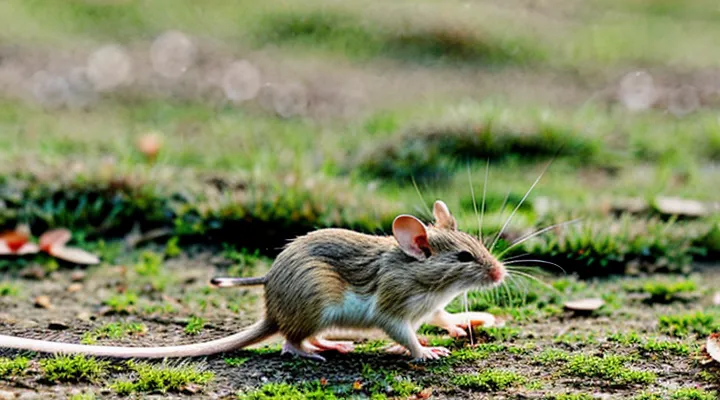
Physical Characteristics
Size and Weight
The white field mouse (Apodemus sylvaticus) exhibits a compact body structure. Adult individuals typically measure 70–95 mm from the tip of the snout to the base of the tail, with the tail adding an additional 45–70 mm. The species’ weight ranges from 15 g to 30 g, with most specimens clustering around 20 g. Seasonal and geographic variations influence these dimensions; northern populations tend toward the larger end of the spectrum, while southern groups are generally lighter.
- Head‑body length: 70–95 mm
- Tail length: 45–70 mm
- Body mass: 15–30 g (average ≈20 g)
These metrics provide a reliable basis for field identification and for comparing ecological adaptations across the mouse’s range.
Fur Coloration
The white‑field mouse exhibits a distinctive pelage that combines functional camouflage with intraspecific signaling. Dorsally, the coat is uniformly pale‑gray to soft brown, each hair bearing a darkened tip that creates a subtle speckled appearance. This pattern breaks up the animal’s outline against the mixed vegetation and leaf litter of its habitat, reducing predator detection. Ventral fur is markedly lighter, ranging from creamy white to almost pure white, a contrast that aids thermoregulation by reflecting heat from the ground.
Seasonal variation influences coloration. In winter, the dorsal coat becomes paler, with reduced pigmentation at the hair tips, enhancing concealment in snow‑covered environments. Summer coats display richer brown tones, aligning with the darker understory. Occasionally, melanistic individuals occur, displaying a markedly darker dorsal surface while retaining a light ventral area; such forms are rare and typically confined to isolated populations.
Genetic factors underpin the observed color spectrum. The expression of the melanocortin‑1 receptor (MC1R) gene governs melanin production, while the agouti signaling protein (ASIP) modulates the distribution of pigment along individual hairs. Mutations in these loci can produce albinism, characterized by a complete lack of melanin, resulting in a uniformly white coat and pinkish eyes, a phenotype that reduces survival odds due to increased visibility.
Geographically, the species inhabits a broad range across temperate regions, from lowland grasslands to forest edges. Within this distribution, fur coloration adapts to local environmental conditions, reflecting the selective pressures of each microhabitat. The interplay of genetic regulation and ecological demand maintains the characteristic pelage pattern observed throughout the species’ range.
Unique Features
The white field mouse exhibits several anatomical and behavioral characteristics that distinguish it from related rodent species.
- A dorsal coat of pure white fur, lacking the darker pigmentation typical of many field mice, provides camouflage in open grasslands and snow‑covered habitats.
- Large, rounded ears with a high density of mechanoreceptors enhance detection of low‑frequency sounds, facilitating early predator awareness.
- An elongated snout houses an expanded olfactory epithelium, allowing precise identification of seed and insect cues essential for foraging.
- Hind limbs are proportionally longer than forelimbs, generating a powerful leap that aids in rapid escape across sparse vegetation.
- A reduced number of mammary glands (four total) reflects adaptation to smaller litter sizes and higher parental investment per offspring.
These traits collectively support the species’ success across temperate zones, from lowland meadows to sub‑arctic tundra, where it exploits open habitats and seasonal food resources.
Habitat and Range
Geographic Distribution
The white field mouse (Apodemus sylvaticus) occupies a extensive Palearctic range, extending from the Atlantic coast of western Europe to the far east of the Asian continent. In Europe, the species is present throughout the United Kingdom, Ireland, France, the Benelux states, Germany, the Scandinavian Peninsula, the Baltic states, Poland, the Czech Republic, Slovakia, Hungary, the Balkans, and the Iberian Peninsula. Its eastern limits include the Ural Mountains, western Siberia, Kazakhstan, and northern Mongolia, with isolated populations reported in northern China and the Korean Peninsula.
Habitat preference centers on open and semi‑open environments such as agricultural fields, meadowlands, hedgerows, and riverine floodplains. The mouse frequently inhabits cultivated lands where grain and seed availability support high population densities. In mountainous regions, it is found at elevations up to 2,000 m, provided suitable vegetation cover exists.
Key aspects of the distribution pattern include:
- Continuous presence across temperate zones with moderate precipitation.
- Concentrated populations in regions with mixed farmland and natural grassland mosaics.
- Reduced occurrence in arid steppes and heavily forested interiors, where other Apodemus species dominate.
- Seasonal expansion into peripheral habitats during breeding periods, driven by food resource fluctuations.
Overall, the species’ broad geographic footprint reflects adaptability to diverse agricultural landscapes and temperate climates throughout its Eurasian range.
Preferred Habitats
The white field mouse (Apodemus sylvaticus) favors environments that provide cover, abundant seed sources, and moderate moisture. Its habitat selection reflects the species’ need for protection from predators and access to food throughout the breeding season.
Typical locations include:
- Open grasslands interspersed with low shrubs, where dense ground cover shields individuals from aerial threats.
- Hedgerows and field margins that connect larger vegetation patches, offering corridors for movement and foraging.
- Lightly cultivated arable fields, especially those with fallow periods, which supply a steady supply of grains and insects.
- Woodland edges and clearings, where sunlight penetrates the canopy, promoting seed production and supporting a diverse invertebrate community.
- Damp meadows and riverine floodplains, provided the soil remains well‑drained; these areas maintain higher humidity levels favorable for nesting material and prey availability.
The mouse’s presence correlates strongly with habitats that combine structural complexity, seasonal food abundance, and relative stability of microclimatic conditions. Consequently, alterations that reduce ground vegetation, increase pesticide use, or fragment connectivity can diminish suitable sites for the species.
Adaptations to Environment
The white field mouse exhibits a suite of adaptations that enable survival across diverse temperate habitats, from open grasslands to cultivated fields. These traits reflect evolutionary responses to fluctuating temperature, predation pressure, and resource availability.
Morphologically, the species possesses a compact body and dense fur that provide insulation against cold nights while allowing heat dissipation during warm days. The dorsal coloration, a pale gray‑white hue, offers camouflage against the light soil and vegetation typical of its range. Large, sensitive whiskers detect airflow and obstacles in low‑visibility environments, facilitating nocturnal foraging. Strong, clawed forelimbs support efficient digging for burrow construction and seed extraction.
Physiologically, the mouse maintains a high basal metabolic rate, supporting rapid energy turnover required for constant activity. Seasonal adjustments in kidney function reduce water loss during drought periods, while the ability to store fat in the abdomen supplies reserves during lean winters. Thermoregulatory mechanisms include vasodilation of peripheral vessels to release excess heat and shivering thermogenesis for cold stress.
Behaviorally, the animal demonstrates several strategies that enhance fitness:
- Burrow architecture: Complex tunnel systems provide shelter, temperature buffering, and escape routes from predators.
- Social flexibility: Groups form during breeding seasons to improve pup survival; solitary foraging reduces competition when resources are scarce.
- Dietary opportunism: Consumption of seeds, insects, and plant material allows exploitation of fluctuating food sources.
- Reproductive timing: Breeding peaks align with periods of abundant food, maximizing offspring growth potential.
Collectively, these adaptations confer resilience to environmental variability, underpinning the species’ extensive distribution across Eurasian lowland ecosystems.
Behavior and Diet
Nocturnal Habits
The white field mouse (Apodemus sylvaticus) is primarily active after sunset, conducting most foraging, social interaction, and movement during the night. This temporal niche reduces competition with diurnal rodents and limits exposure to visual predators.
Nighttime activity follows a crepuscular peak at dusk, a sustained phase throughout darkness, and a brief reduction before sunrise. During these periods the mouse:
- Explores for seeds, insects, and plant material using acute whisker and olfactory cues.
- Communicates with conspecifics through ultrasonic vocalizations that travel efficiently in low‑light conditions.
- Constructs and repairs nests in concealed locations, often relocating to avoid detection.
Thermoregulation and energy conservation shape nocturnal behavior. Ambient temperatures drop after dark, prompting the mouse to increase metabolic heat production while remaining insulated within dense ground cover. Seasonal shifts affect activity length; longer nights in winter extend foraging windows, whereas shorter summer nights concentrate activity into brief, high‑intensity bouts.
Predator avoidance relies on heightened auditory and tactile senses. The mouse pauses frequently to assess sounds, employs rapid, erratic sprinting when threatened, and utilizes moonless periods to minimize visibility. These adaptations collectively define the species’ nocturnal lifestyle, influencing its distribution across temperate grasslands, woodlands, and agricultural margins.
Dietary Preferences
The white field mouse consumes a range of plant and animal matter, reflecting its opportunistic foraging behavior.
Key components of the diet include:
- Seeds of grasses and cereals
- Fresh and dried grains
- Fruit and berry flesh
- Invertebrates such as beetles, larvae, and earthworms
- Fungal spores when available
During spring, the mouse favors emerging seeds and tender shoots, while summer diets shift toward abundant insects and ripening fruits. Autumn introduces a higher intake of stored seeds and fallen nuts, and winter reliance increases on cached grains and occasional arthropods.
Geographic variation influences food selection. Populations in agricultural landscapes exploit cultivated crops, whereas individuals in natural meadows rely more on wild grasses and native insects. Coastal groups incorporate higher proportions of marine-derived detritus when present.
Social Structure
The white field mouse (Apodemus leucopus) exhibits a flexible social organization that varies with seasonal resource availability and population density. During the breeding season, males establish overlapping home ranges that intersect the territories of several females, facilitating multiple mating opportunities. Females maintain exclusive core areas within their ranges, defending nesting sites and immediate foraging zones from conspecific intruders.
Reproductive groups typically consist of one dominant male, several breeding females, and their offspring. Juveniles remain within the natal area for several weeks, receiving limited parental care before dispersing to locate independent territories. Hierarchical interactions are mediated by scent marking, vocalizations, and brief aggressive encounters, which serve to reinforce spatial boundaries and mating rights.
Key aspects of the species’ social structure include:
- Territoriality: Males patrol perimeter routes, depositing urine and glandular secretions to signal occupancy.
- Communication: High‑frequency chirps and ultrasonic calls convey alarm, courtship, and individual identification.
- Dispersal: Young males disperse farther than females, reducing inbreeding risk and promoting gene flow across fragmented habitats.
- Group size fluctuation: Population peaks lead to temporary aggregation in resource‑rich microhabitats, while scarcity prompts solitary foraging.
These patterns enable the white field mouse to adapt to diverse environments across its geographic range, balancing reproductive success with survival pressures.
Reproduction and Life Cycle
Breeding Season
The white field mouse initiates reproduction during the spring months, typically from March to May, when daylight lengthens and ambient temperatures rise. Hormonal cycles synchronize with these environmental cues, prompting females to enter estrus after their first winter molt. Males increase territorial marking and vocalizations to attract receptive females, establishing short‑term pair bonds that dissolve after mating.
Gestation lasts approximately 21 days, after which females produce litters of three to six offspring. Litter size correlates with maternal condition and resource availability; abundant seed and insect populations in early summer support higher pup survival. Litters are reared in concealed nests constructed from shredded vegetation and shredded paper, providing insulation and protection from predators.
Key reproductive parameters:
- Estrus onset: early spring, linked to photoperiod increase
- Gestation period: ~21 days
- Litter size: 3–6 young, variable with nutrition
- Nesting material: dry grasses, leaves, soft debris
- Post‑weaning dispersal: juveniles leave the natal area by late summer, facilitating gene flow across the species’ range
Breeding peaks align with the species’ broader distribution, which spans temperate grasslands and agricultural fields across Europe and western Asia. Seasonal rains and crop cycles create optimal foraging conditions, reinforcing the timing of reproductive activity throughout the range.
Gestation and Litter Size
The white field mouse reproduces rapidly, with a gestation period that typically lasts 19–23 days. Pregnancy begins soon after mating, and females can become receptive again within a few days after giving birth, enabling multiple breeding cycles within a single season.
Key reproductive parameters include:
- Gestation length: 19–23 days, varying slightly with ambient temperature and food availability.
- Breeding season: Early spring to late autumn in temperate zones; some populations produce litters year‑round in milder climates.
- Post‑natal interval: Females may conceive again as early as 4–6 days after parturition.
Litter size averages 4–6 pups, but the range extends from 2 up to 10 individuals under optimal conditions. Factors influencing litter size are:
- Maternal condition: Well‑nourished females tend to produce larger litters.
- Habitat quality: Areas with abundant cover and food resources support higher offspring numbers.
- Geographic variation: Populations at higher latitudes often have smaller litters but may compensate with additional breeding attempts.
Overall, the species’ reproductive strategy—short gestation, frequent breeding, and flexible litter size—facilitates swift population growth when environmental conditions are favorable.
Lifespan
The white field mouse typically lives 12–24 months in natural habitats. Survival beyond two years is uncommon due to predation, disease, and seasonal food scarcity.
In controlled environments the species can reach 3–4 years, with occasional individuals recorded at 5 years. Captivity eliminates many external mortality factors, allowing longer physiological longevity.
Key lifespan parameters:
- Wild average: 1–2 years
- Maximum observed in the wild: ≈3 years
- Captive average: 3–4 years
- Recorded longevity record: 5 years
Factors influencing longevity include:
- Predation pressure: high mortality rates reduce average lifespan.
- Seasonal temperature fluctuations: extreme cold or heat increase stress.
- Nutritional availability: consistent access to protein‑rich food extends survival.
- Disease prevalence: outbreaks of hantavirus or ectoparasite infestations shorten life expectancy.
Understanding these parameters aids in population modeling and conservation planning for the species.
Ecological Role and Conservation
Role in Ecosystem
The white‑field mouse (Apodemus sylvaticus) occupies a central position in temperate and Mediterranean ecosystems. As a prolific consumer of seeds, nuts, and insects, it influences plant regeneration by reducing seed banks and facilitating dispersal through caching behavior. Its foraging activity modifies vegetation structure, promoting heterogeneity in understory composition.
Predation pressure on the species is substantial. It constitutes a primary food source for a range of carnivores, including barn owls (Tyto alba), red foxes (Vulpes vulpes), and weasels (Mustela spp.). Fluctuations in mouse populations directly affect predator reproductive success and survival rates, thereby regulating higher trophic levels.
Burrowing and nest construction generate soil turnover, enhancing aeration and nutrient mixing. This bioturbation supports microbial activity and improves seed germination conditions. Additionally, the species serves as a reservoir for several zoonotic pathogens, such as hantaviruses, influencing disease dynamics within wildlife communities and occasionally affecting human health.
Key ecological functions:
- Seed predation and dispersal, shaping plant community succession.
- Provision of biomass for raptors, mesocarnivores, and snakes.
- Soil disturbance through excavation, promoting nutrient cycling.
- Maintenance of pathogen reservoirs, impacting host‑parasite interactions.
Threats and Challenges
The white field mouse faces a range of pressures that limit its population stability and habitat integrity. Habitat loss, driven by agricultural expansion and urban development, reduces the availability of native grasslands and marginal fields. Fragmentation isolates populations, impeding gene flow and increasing vulnerability to local extinction. Pesticide application in cultivated areas introduces toxic exposure, directly affecting survival rates and reproductive success. Climate variability, particularly prolonged droughts and extreme temperature shifts, alters food resources and nesting conditions, further stressing the species. Predation pressure intensifies where human‑altered landscapes favor opportunistic predators such as feral cats and raptors.
- Conversion of natural meadows to intensive crops
- Urban sprawl encroaching on peripheral habitats
- Broad‑spectrum insecticide and rodenticide use
- Drought and heatwave frequency linked to climate change
- Increased presence of invasive predators
Mitigation efforts encounter logistical and regulatory obstacles. Land‑use planning often prioritizes economic output over biodiversity, limiting the implementation of conservation set‑aside zones. Monitoring programs are constrained by limited funding and the species’ cryptic behavior, which hampers accurate population assessments. Coordination among agricultural stakeholders, wildlife agencies, and climate adaptation initiatives remains fragmented, reducing the effectiveness of integrated management strategies.
Conservation Status
The white field mouse (Apodemus leucopus) is classified by the International Union for Conservation of Nature as “Least Concern.” This assessment reflects a broad geographic range across temperate grasslands and agricultural landscapes, coupled with an estimated large total population.
Population surveys indicate stable or slightly increasing numbers in most parts of its distribution. Local declines have been documented where intensive farming practices reduce ground cover, but such reductions are offset by the species’ adaptability to cultivated fields and edge habitats.
Key factors influencing the species’ status include:
- Habitat modification: conversion of meadows to monoculture crops reduces shelter availability.
- Pesticide exposure: insecticide use can affect food resources and cause direct toxicity.
- Predation pressure: increased numbers of domestic cats and raptors in peri‑urban zones raise mortality rates.
Conservation actions focus on maintaining heterogeneous landscapes, promoting low‑intensity agriculture, and preserving field margins. Legal protection is minimal because the species does not meet criteria for threatened categories, yet monitoring programs continue to track population trends and emerging threats.