
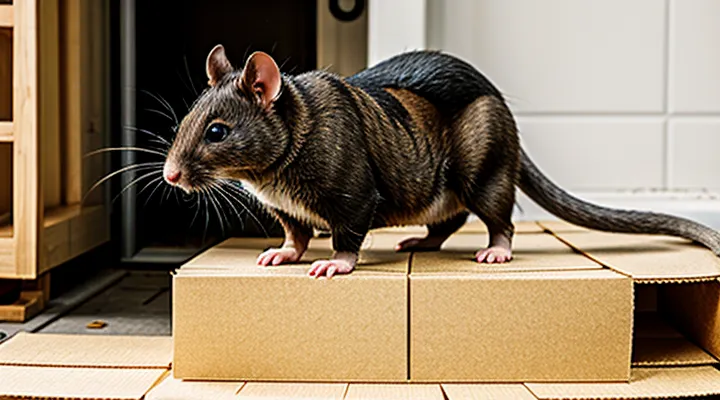
Understanding Rat Behavior and Insulation
Why Rats Infest Insulation
«Chewing Habits of Rodents»
Rodents chew continuously to keep incisors worn and to explore their environment. The behavior targets materials that are soft, readily shaped, or emit scents that attract gnawing.
Materials that discourage gnawing share properties such as high tensile strength, abrasive surface, low palatability, or chemical additives that are toxic or unappealing to rodents.
- Rigid fiberglass insulation – abrasive fibers damage teeth, causing avoidance.
- Mineral wool (rock or slag) – dense composition resists bite pressure, lacks edible texture.
- Polyisocyanurate boards with foil facing – hard core and metallic surface deter gnawing.
- Ceramic fiber insulation – high melting point and brittle structure break teeth on contact.
- Closed‑cell spray foam with added rodent‑repellent additives – chemical deterrents and firm matrix reduce chewing.
Selecting these options for walls, attics, or crawl spaces reduces the likelihood of rodent damage. Incorporating deterrent‑rated insulation alongside sealing entry points creates a comprehensive barrier against gnawing activity.
«Nesting Instincts»
Rats possess a strong drive to build concealed, warm nests, typically using soft, fibrous, or readily available debris. Their instinct pushes them toward materials that provide insulation, moisture retention, and structural support for offspring.
Materials that interfere with these preferences tend to be unappealing or harmful. Substances that emit strong odors, possess abrasive textures, or contain toxic compounds discourage nest construction. Metallic surfaces and dense, non‑porous foams impede the ability to shape a stable cavity, further reducing attractiveness.
- Steel‑wool pads infused with peppermint oil
- Copper mesh sheeting coated with rodent‑repellent chemicals
- High‑density closed‑cell polyurethane sheets laced with capsaicin
- Fiberglass batts treated with citrus‑based deterrents
- Mineral wool impregnated with ammonia‑derived scents
Applying such deterrent‑oriented insulation in walls, attics, and crawl spaces creates environments where rats cannot establish comfortable nests. The result is a measurable decline in rodent activity without reliance on traps or poisons.
Insulation Materials Rats Dislike
«Natural Deterrents»
«Steel Wool»
Steel wool is a metal‑based insulation that rats tend to avoid. Its abrasive texture damages the pads of a rodent’s paws, creating discomfort that discourages gnawing. The sharp, interwoven fibers also produce a metallic scent that rodents find unappealing, reducing the likelihood of nesting in areas where steel wool is present.
Key deterrent characteristics:
- Physical irritation – coarse strands abrade foot pads and whiskers, causing immediate aversion.
- Sensory repulsion – metallic odor interferes with rats’ olfactory cues used for habitat selection.
- Structural incompatibility – the rigid, non‑flexible mesh prevents the formation of snug burrows or tunnels.
When installed in wall cavities, attic spaces, or around pipe penetrations, steel wool creates a barrier that rats cannot easily bypass. Its durability ensures long‑term effectiveness without the need for frequent replacement.
«Copper Mesh»
Copper mesh serves as an effective deterrent against rodent intrusion. The metal’s conductive properties create an environment that rats find uncomfortable, discouraging them from nesting or gnawing.
Key characteristics that make copper mesh unattractive to rats:
- Sharp edges: The fine, rigid strands can cause minor injuries to a rat’s paws, prompting avoidance.
- Metallic taste: Rats detect the metallic flavor, which is unpleasant compared to natural food sources.
- Electrical conductivity: When incorporated with a low‑voltage current, the mesh delivers a mild shock that rats quickly learn to evade.
- Durability: Copper resists chewing, remaining intact where softer insulation fails.
Implementation guidelines:
- Install the mesh in gaps around entry points, vents, and crawl spaces.
- Overlap sections by at least two inches to eliminate gaps.
- Secure edges with stainless‑steel staples to prevent displacement.
- Combine with a low‑voltage power source if additional deterrence is required.
The result is a long‑lasting barrier that reduces rat activity without relying on chemicals or traps.
«Fiberglass - The Irritant Factor»
Fiberglass creates an immediate aversive response in rats. The material’s fine glass fibers irritate the nasal passages and skin, causing sneezing, itching, and discomfort that rats quickly learn to avoid. When a nest or tunnel contacts fiberglass, the animals exhibit heightened grooming and retreat behavior, often abandoning the area altogether.
Key irritant properties include:
- Sharp, microscopic fibers that lodge in mucous membranes.
- Rough texture that hampers comfortable movement.
- Lack of odor or chemical attractants, eliminating sensory cues that draw rodents.
Experimental observations confirm that rats placed in environments with exposed fiberglass insulation spend significantly less time exploring compared with untreated wood or foam. The discomfort triggers stress responses, reducing feeding and nesting activity near the material.
Consequently, fiberglass functions as an effective non‑chemical deterrent. Its physical irritation, combined with the absence of appealing scents, makes it one of the most reliable insulation choices for preventing rat colonization.
«Chemical and Scent-Based Deterrents»
«Boric Acid Treated Insulation»
Boric‑acid‑treated insulation combines standard fibrous or foam substrates with a coating of boric acid, a compound known for its toxicity to rodents. When rats encounter the treated material, the acid irritates their mucous membranes and disrupts metabolic processes, prompting immediate avoidance.
Key characteristics that make this insulation effective against rats:
- Chemical deterrent – Boric acid acts as a stomach irritant and neurotoxin at low concentrations, reducing the likelihood of ingestion.
- Low palatability – The bitter taste and abrasive texture discourage gnawing.
- Durability – The coating adheres to cellulose, fiberglass, or foam, maintaining efficacy over time despite environmental exposure.
- Safety for humans – When applied within recommended limits, the material poses minimal risk to occupants while remaining lethal to rodents.
Application methods typically involve spraying or dipping the insulation material in a boric‑acid solution, followed by curing to secure the coating. Proper ventilation during installation mitigates inhalation hazards for workers.
Maintenance requires periodic inspection for surface wear. Re‑application restores the protective layer if contact with moisture or mechanical abrasion diminishes the coating’s integrity.
«Capsaicin-Infused Materials»
Capsaicin‑infused insulation leverages the pungent compound found in hot peppers to deter rodent activity. When incorporated into fibers, foams, or coatings, capsaicin triggers sensory receptors in rats, producing an uncomfortable burning sensation that discourages gnawing and nesting.
The deterrent effect stems from activation of TRPV1 receptors in the nasal and oral mucosa of rats. Repeated exposure leads to avoidance behavior, reducing the likelihood of damage to structural components. The compound remains effective as long as it is retained within the material matrix, which can be achieved through microencapsulation or binding to polymer backbones.
Key characteristics of capsaicin‑based insulation:
- Chemical stability: Encapsulated capsaicin resists volatilization and degradation under typical indoor temperature ranges (15‑30 °C).
- Thermal performance: Integration does not compromise the material’s R‑value; foam or fibrous structures retain standard insulating properties.
- Safety profile: Capsaicin concentrations are calibrated to be non‑toxic for humans and pets, while still eliciting a strong aversive response in rodents.
- Durability: Resistance to moisture and UV exposure ensures long‑term efficacy in both residential and commercial settings.
- Installation flexibility: Available as pre‑formed panels, spray‑on coatings, or additive blends for existing insulation systems.
Limitations include potential desensitization in populations repeatedly exposed to low levels of capsaicin, and regulatory constraints on the allowable concentration in building materials. Proper formulation and periodic replacement of high‑traffic sections mitigate these concerns.
Overall, capsaicin‑infused insulation offers a biologically active alternative to conventional rodent‑resistant barriers, combining thermal efficiency with a proven sensory deterrent.
«Peppermint Oil and Other Strong Scents»
Rats react strongly to volatile aromatic compounds; peppermint oil is among the most effective deterrents. The oil’s high concentration of menthol and menthone overstimulates the rodent’s olfactory receptors, producing an unpleasant sensation that prompts avoidance of treated surfaces.
When applied to structural cavities, wall cavities, or insulation layers, peppermint oil creates a barrier that rats are unlikely to cross. A thin, even coating on the exterior of insulation panels or a saturated cotton pad placed within gaps sustains the scent for several days, reducing the need for frequent reapplication.
Other potent odors that produce similar repellent effects include:
- Eucalyptus oil – rich in eucalyptol, irritates nasal passages.
- Clove oil – contains eugenol, triggers strong sensory aversion.
- Citronella oil – high in citronellal, disrupts scent tracking.
- Ammonia solution – volatile ammonia vapor creates an inhospitable environment.
- Vinegar – acetic acid vapors cause discomfort in rodent nasal mucosa.
Safety considerations require that oils be used in concentrations that avoid damage to building materials and limit exposure for humans and pets. Dilution to a 5‑10 % solution in water or a carrier oil prevents corrosion while maintaining efficacy. Reapplication should follow observed loss of scent intensity, typically after 5‑7 days in well‑ventilated spaces.
In practice, integrating peppermint oil or the listed strong scents into insulation installations provides a non‑toxic, low‑cost method for deterring rats without compromising thermal performance. Regular monitoring ensures the barrier remains effective and that any signs of rodent activity prompt immediate reinforcement.
«Less Appealing Conventional Options»
«Mineral Wool»
Mineral wool consists of spun or blown fibers made from rock or slag, bound with resin or cementitious agents. The material is widely used for thermal and acoustic insulation because of its high temperature resistance and low thermal conductivity.
The fibrous structure creates a rough, abrasive surface that interferes with a rat’s ability to gnaw and build nests. Sharp fibers can cause discomfort or minor injuries to the animal’s incisors and paws, reducing the likelihood of prolonged contact.
Alkaline pH levels, typically ranging from 8 to 10, create an environment that is unfriendly to rodent skin and respiratory tissues. Some formulations include formaldehyde‑based binders or other chemical additives that further discourage gnawing behavior.
Field reports indicate that rats seldom select mineral wool for burrowing or nesting. When presented with alternative insulation types, rodents preferentially avoid mineral wool in favor of softer, more pliable materials.
Key deterrent properties of mineral wool:
- Abrasive fiber texture
- Sharp, irritating particles
- High alkalinity
- Presence of chemical binders
- Poor suitability for nest construction
These characteristics collectively make mineral wool an effective choice when the goal is to limit rat activity within insulated spaces.
«Cellulose with Borate Treatment»
Cellulose insulation treated with borate compounds presents a chemical deterrent that discourages rodent activity. Borate ions disrupt the sensory receptors rats rely on to assess nesting material, creating an unpleasant taste and odor that the animals instinctively avoid.
The treatment process involves mixing sodium borate or boric acid into the cellulose fibers before installation. This integration yields a homogeneous product that retains the thermal and acoustic benefits of standard cellulose while adding a persistent, low‑toxicity insecticidal effect. The borate remains active for several years, even after exposure to moisture, because it bonds chemically with the cellulose matrix.
Key advantages for rodent control include:
- Immediate aversion: rats encounter the treated fibers during gnawing attempts and withdraw quickly.
- Non‑contact action: deterrence occurs without requiring physical barriers or traps.
- Compatibility with building codes: the material meets fire‑resistance standards and does not release hazardous fumes.
Limitations to consider:
- Effectiveness declines if the insulation is removed or heavily contaminated with oil or grease, which can mask the borate odor.
- High humidity environments may reduce the concentration of free borate ions, slightly weakening the deterrent effect.
- Application requires professional mixing equipment to ensure uniform distribution of the treatment.
When selecting insulation to reduce rat intrusion, cellulose with borate treatment ranks among the most reliable options because it combines structural performance with a chemically based repellent that rodents consistently reject.
«Rigid Foam Boards - A Tougher Barrier»
Rigid foam boards provide a physical barrier that rats find difficult to penetrate. The material’s high density resists gnawing, while the smooth, non‑porous surface offers no grip for claws. Closed‑cell structures prevent rats from burrowing through gaps, and the boards maintain structural integrity under pressure.
Key characteristics that deter rodents:
- Density: Core mass exceeds typical wood or fiberglass, reducing bite efficiency.
- Surface texture: Uniform, slick exterior eliminates footholds.
- Moisture resistance: Eliminates damp environments that attract nesting.
- Thermal stability: Remains rigid across temperature fluctuations, preventing deformation that could create entry points.
- Sealability: Edges can be sealed with compatible adhesives, creating continuous insulation without seams.
Installation guidelines enhance effectiveness. Align boards tightly, seal joints with foam‑compatible tape, and secure edges to framing with corrosion‑resistant fasteners. Avoid exposing raw foam edges; cover them with trim or protective sheathing to eliminate potential chewing sites.
When compared with alternative insulation, rigid foam boards combine structural strength with chemical inertness, making them one of the most reliable options for deterring rat intrusion while delivering energy‑efficiency benefits.
Comprehensive Rodent Control Strategies
«Exclusion and Sealing Entry Points»
Effective rodent control begins with eliminating the pathways that allow rats to enter a building. Identifying gaps around pipes, vents, foundation cracks, and utility penetrations is essential. Once located, each opening should be sealed with materials that rats find unappealing and that also provide thermal insulation.
- Steel wool packed tightly into small holes, then covered with caulking, creates a barrier that rats cannot chew through.
- Rigid foam board, especially closed‑cell varieties, resists gnawing and adds a layer of insulation.
- Metal flashing or steel mesh applied over larger gaps prevents entry while maintaining structural integrity.
- Silicone sealant reinforced with fiberglass tape fills irregular seams and deters chewing.
- Expanding polyurethane foam, when applied in thin layers, fills voids and hardens into a rat‑resistant surface.
In addition to sealing, consider insulation products that rats naturally avoid. Materials such as mineral wool, fiberglass batts, and certain spray foams contain fibers or chemical additives that discourage gnawing. Combining these with a thorough exclusion strategy reduces the likelihood of infestation and improves energy efficiency. Regular inspection of sealed points ensures long‑term effectiveness; any signs of wear or new openings must be addressed immediately.
«Sanitation and Food Storage»
Effective insulation for areas where food is stored and sanitation is critical must deter rodent intrusion. Materials that rats cannot gnaw or that cause discomfort reduce contamination risk and protect stored provisions.
- Steel wool or copper mesh: metallic fibers resist chewing, create a barrier that rats cannot penetrate.
- Concrete or cement board: hard, non‑edible surface offers no grip for gnawing.
- Closed‑cell polyurethane foam infused with bitterant: dense structure prevents bite penetration; bitterant discourages chewing.
- Glass fiber board: abrasive texture damages rodent incisors, deterring repeated contact.
- Ceramic tiles with sealed joints: smooth, hard surface eliminates gaps and provides no foothold for climbing.
Selecting these substances for walls, ceilings, and storage compartments limits rat access, maintains hygiene, and preserves food quality. Regular inspection ensures integrity; any damage to the barrier must be repaired promptly to sustain protection.
«Professional Pest Control Integration»
Professional pest‑control services increasingly incorporate rat‑averse insulation choices into building projects. By selecting materials that rodents naturally avoid, technicians reduce infestation risk while improving energy efficiency.
Rats show strong aversion to the following insulation types:
- Rigid foam infused with copper or aluminum particles
- Fiberglass batts treated with bitter‑tasting deterrents
- Mineral wool containing high‑density silica fibers
- Expanded polystyrene coated with a thin layer of stainless‑steel mesh
- Aerogel panels wrapped in a reflective foil barrier
Integration steps used by pest‑control specialists include:
- Conducting a site survey to identify vulnerable entry points and existing insulation gaps.
- Recommending replacement or augmentation of current insulation with the listed rat‑repellent options.
- Installing physical barriers such as steel wool or copper mesh within wall cavities before insulation placement.
- Applying rodent‑deterrent sealants around penetrations to complement the chosen insulation.
- Providing maintenance guidelines that emphasize regular inspection of insulation integrity and barrier continuity.
The combined approach leverages material selection, structural sealing, and ongoing monitoring to create environments where rats are less likely to establish nests or travel. This methodology aligns pest‑control expertise with construction practices, delivering long‑term protection without reliance on chemical baits.