
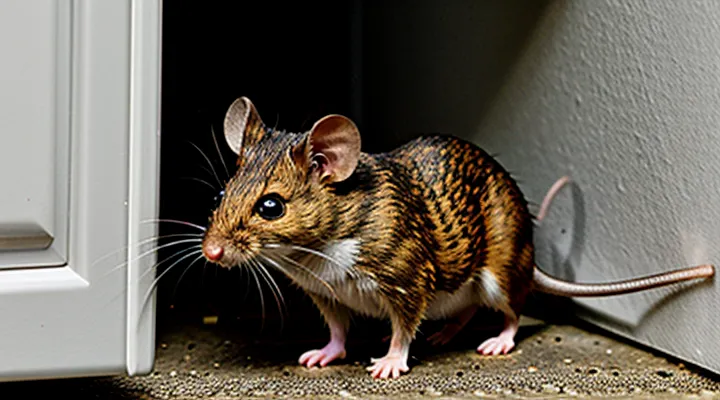
«Understanding Field Mice Entry Points»
«Why Field Mice Enter Homes»
«Search for Food and Water»
Field mice infiltrate homes primarily when seeking sustenance and hydration. Small openings that connect exterior environments with interior spaces provide the necessary pathways.
Typical entry points include:
- Cracks around foundation walls, often less than a centimeter wide.
- Gaps beneath doors, especially where weatherstripping is worn or absent.
- Unsealed openings around utility penetrations such as pipes, cables, and vent stacks.
- Openings in siding or brickwork where mortar has deteriorated.
- Unscreened vents and exhaust fans that lack tight mesh.
- Gaps around window frames, particularly where caulking has failed.
These apertures permit mice to locate kitchen stores, pantry items, pet food, and water sources such as leaky pipes or condensation. Sealing each gap with appropriate materials—steel wool, caulk, foam sealant, or metal flashing—reduces the likelihood of intrusion while denying the rodents access to essential resources.
«Shelter from Predators»
Field mice constantly seek refuge from predators, and any opening that provides concealment becomes a target for entry. Small cracks around foundation walls, gaps beneath sliding doors, and unscreened vents allow a mouse to disappear from sight while moving indoors. These passages are often less than a centimeter wide, yet they create a protected route that shields the rodent from birds, snakes, and larger mammals.
Typical entry points include:
- Cracks where brick or siding meets the foundation.
- Gaps around utility penetrations such as pipes and cables.
- Unsealed spaces beneath exterior staircases or decks.
- Damaged or missing weather stripping on doors and windows.
- Openings in attic or crawl‑space ventilation that lack proper mesh.
By eliminating these concealed pathways, homeowners remove the shelters that mice rely on to evade predators, thereby reducing the likelihood of indoor infestations.
«Escape Harsh Weather Conditions»
Field mice move indoors primarily to avoid rain, snow, wind, and extreme temperatures. When outdoor conditions become hostile, the animals search for any opening that offers protection from moisture and cold.
Structural openings that serve as entryways for rodents also function as escape routes from adverse weather. These passages typically result from construction tolerances, wear, or inadequate maintenance. Their size and location allow mice to slip inside while shielding themselves from precipitation and drafts.
Common openings include:
- Cracks in foundation walls and basement floors
- Gaps around utility pipes and cables passing through walls
- Unsealed spaces beneath roof eaves and soffits
- Openings around vent pipes, chimney flues, and exhaust fans
- Loose or damaged weather‑stripping on doors and windows
- Gaps around garage doors and loading bays
Mitigation measures focus on eliminating the pathways that provide both shelter and ingress. Effective actions are:
- Apply durable sealant or cement to foundation cracks and floor seams
- Install metal or mesh collars around pipes and cables before sealing
- Fit properly sized vent covers and chimney caps
- Replace worn weather‑stripping and install door sweeps
- Ensure roof eaves, soffits, and attic vents are tightly fitted
- Conduct regular inspections to identify new gaps caused by settling or pest activity
By closing these apertures, homeowners reduce the likelihood that field mice will exploit the same routes used to escape harsh weather conditions.
«Breeding Opportunities»
Small openings around foundations, vent pipes, and utility penetrations serve as primary entry routes for field mice. Gaps less than 2 cm in width, especially those near ground level, provide unobstructed access to interior spaces.
Once inside, these rodents exploit the same openings to establish nesting zones. Warm, sheltered areas adjacent to the entry points allow quick colonization, reducing the distance between food sources and breeding sites.
Factors that increase reproductive success in such environments include:
- Availability of dry, insulated corners for nest construction
- Proximity to stored grains, pet food, or pantry items
- Presence of concealed pathways (e.g., behind appliances, under cabinets) that protect offspring from disturbance
- Stable temperature gradients that support year‑round breeding cycles
Eliminating or sealing the identified gaps removes both the access route and the conditions that facilitate rapid population growth.
«Common Entry Gaps and Locations»
«Foundation and Ground Level»
«Cracks in the Foundation»
Cracks in a building’s foundation create direct pathways for field mice to infiltrate living spaces. Even hairline fissures can be large enough for a mouse’s slender body to pass through, especially when the surrounding soil is soft and moisture‑rich.
Typical locations where foundation cracks become problematic include:
- Basement walls near floor joists, where settlement shifts generate gaps.
- Exterior corners where concrete meets footings, often exposed to freeze‑thaw cycles.
- Drainage joints adjacent to gutters, which collect water and erode mortar.
- Areas around utility penetrations, such as pipe sleeves, that may shift over time.
Key characteristics that determine a crack’s suitability as a mouse entry point are:
- Width of ¼ inch (6 mm) or greater, allowing easy passage.
- Length extending from the exterior soil to interior finished walls, providing an uninterrupted tunnel.
- Presence of moisture, which attracts mice and softens surrounding material, enlarging the opening.
Detection methods focus on visual inspection and tactile assessment. Look for:
- Visible fissures with jagged edges.
- Small piles of mouse droppings or gnaw marks near the base of walls.
- Signs of burrowing activity in adjacent landscaping.
Effective remediation involves sealing the openings with materials that resist rodent chewing, such as steel‑reinforced mesh combined with hydraulic cement. Apply a waterproof sealant over the repaired area to prevent future moisture intrusion, which can cause new cracks.
Regular maintenance—monitoring foundation integrity, controlling humidity, and keeping vegetation away from the house perimeter—reduces the likelihood that mice will exploit these structural weaknesses.
«Gaps Around Utility Lines and Pipes»
Utility lines and pipes often create openings that field mice exploit to gain access to a residence. Gaps may appear where conduits penetrate exterior walls, where service entries are sealed, or where fittings are installed without proper weather‑proofing. Inadequate clearance around these elements provides a direct route for rodents to move from the outdoors to indoor spaces.
Typical openings include:
- Unfilled sleeves around electrical, telephone, or cable lines that pass through foundation or siding.
- Undersized or damaged pipe collars surrounding water, gas, or sewage pipes at the foundation.
- Loose or cracked sealant around vent stacks, chimney flues, and dryer exhaust ducts.
- Gaps left by removed or relocated service lines where the surrounding material is not re‑sealed.
Remedying these vulnerabilities requires inspecting each penetration, applying appropriate caulking, expanding collars, or installing metal flashing to eliminate the void. Regular maintenance of the exterior envelope ensures that utility installations do not become permanent entry points for field mice.
«Unsealed Vents and Drains»
Unsealed vents and drains provide direct routes for field mice to infiltrate a dwelling. Gaps around ventilation shafts, roof vents, and floor drains often lack proper screening, allowing rodents to slip through openings as small as a quarter of an inch. Once inside, mice can travel along ductwork, crawl spaces, and utility chases to reach living spaces.
Key characteristics of these entry points include:
- Absence of metal or mesh covers that meet building‑code specifications.
- Deteriorated sealants or weather‑stripping that create gaps around the perimeter of vent housings.
- Open or poorly fitted drain traps that do not retain water, eliminating a barrier to rodent movement.
- Misaligned or cracked vent louvers that expose interior cavities.
Remedial measures focus on installing reinforced screens, applying durable caulking, and ensuring all drainage components are fitted with tight‑closing covers. Regular inspection of vent and drain assemblies helps identify wear and prevent future infiltration.
«Loose or Damaged Siding»
Loose or damaged siding creates openings that field mice can exploit to reach interior spaces. Cracks, gaps between panels, and missing sections expose the building envelope, allowing rodents to squeeze through openings as small as a quarter‑inch. When siding is not securely fastened, vibration from wind or traffic can gradually separate boards, forming entry points that are difficult to see without close inspection.
Typical failure modes include:
- Cracked or warped panels that no longer seal against the sheathing.
- Gaps around windows, doors, or vent covers where siding has pulled away.
- Loose trim or flashing that has detached from the underlying structure.
- Missing nails or screws that permit panels to shift under load.
Signs of siding‑related intrusion are visible gnaw marks around seams, droppings near exterior walls, and fresh pathways where mice have burrowed behind loosened boards. Addressing the issue requires:
- Inspecting the entire exterior for compromised panels, paying special attention to corners and areas near roof eaves.
- Re‑securing loose boards with appropriate fasteners and applying sealant to fill cracks.
- Replacing damaged siding sections to restore a continuous barrier.
- Installing metal flashing or mesh around vulnerable joints to deter future entry.
By eliminating these structural weaknesses, homeowners reduce the likelihood that field mice will find a route into the residence.
«Doors and Windows»
«Gaps Under Doors»
Field mice exploit openings beneath exterior doors because these gaps provide direct access to interior shelter and food sources. The size of the opening determines whether a mouse can pass; an aperture as small as ¼ inch (6 mm) is sufficient for most adult field mice.
-
Typical gap dimensions:
• 0–¼ inch (0–6 mm) – often unnoticed, still passable.
• ¼–½ inch (6–12 mm) – common in older homes with worn thresholds.
• Over ½ inch (12 mm) – easily traversed, usually indicates larger structural issues. -
Common locations of under‑door openings:
• Between the door sweep and floor covering.
• Around the door frame where the threshold does not sit flush.
• At the junction of the door jamb and foundation wall. -
Detection methods:
• Visual inspection for visible gaps or misaligned sweeps.
• Use of a thin credit‑card or ruler to measure clearance.
• Observation of mouse activity such as droppings or gnaw marks near the threshold. -
Effective sealing solutions:
• Install a tightly fitting door sweep with a flexible rubber seal.
• Apply expanding polyurethane foam to fill irregular voids.
• Attach a metal or vinyl threshold that overlaps the door bottom.
• Use weather‑stripping tape to close residual spaces after the sweep is fitted.
Regular maintenance of these under‑door passages reduces the probability of rodent intrusion and protects the interior environment from contamination and damage.
«Damaged Weather Stripping»
Damaged weather stripping compromises the seal around doors and windows, leaving openings that are large enough for field mice to slip through. Even a split or compressed strip can create a gap of a few millimeters, matching the size of a mouse’s head and allowing it to enter the interior.
Field mice routinely probe any breach in the building envelope. Cracks, tears, or missing sections of weather stripping provide a direct pathway from the exterior to interior spaces, especially near entry doors, sliding windows, and garage doors. The soft, flexible material that should conform to the frame loses its shape over time, creating a persistent entry point.
- Cracked or split strip segments
- Compressed or flattened sections that no longer contact the frame
- Gaps visible when the door or window is closed
- Drafts or audible whistling during wind conditions
- Signs of gnaw marks or nesting material near the seal
Regular inspection of the seal’s condition is essential. Remove the old strip, clean the mounting surface, and install a new, weather‑resistant material that matches the original dimensions. Verify that the replacement makes continuous contact around the entire perimeter when the door or window is closed. Replacing damaged weather stripping eliminates a common entry route and reduces the likelihood of field mice gaining access to the home.
«Unscreened or Damaged Screens»
Unscreened windows, doors, and vents, as well as screens that are torn, warped, or missing mesh, create openings large enough for field mice to slip through. Even a gap as small as ½ inch allows an adult mouse to enter, and damaged screens often leave multiple such gaps along the perimeter of a frame.
Key indicators of vulnerable screens:
- Holes or tears larger than a quarter inch
- Loose or detached screen material from the frame
- Gaps where the screen overlaps the sash or door jamb
- Rotted or corroded frame sections that no longer hold the screen securely
Remedial steps:
- Inspect every screened opening after storms or heavy wind.
- Replace torn mesh with fine‑woven screen material rated for rodent exclusion.
- Secure frames with rust‑resistant fasteners and seal any gaps with silicone caulk.
- Install additional barrier such as a metal mesh or hardware cloth in high‑risk areas.
By eliminating unscreened openings and repairing damaged screens, the primary pathways that field mice exploit are removed, reducing the likelihood of indoor infestations.
«Cracks in Window Frames»
Cracks in window frames constitute a direct conduit for field mice to infiltrate residential spaces. Even hair‑thin fissures compromise the barrier between exterior and interior, allowing rodents to squeeze through gaps as small as ¼ inch.
Typical origins of frame cracks include seasonal wood contraction, poor installation tolerances, and degradation of sealant. These openings often appear at:
- junctions between sash and frame
- corners where glazing stops meet the frame
- areas around hardware such as hinges and locks
Detection relies on visual inspection and tactile probing. Light‑colored caulk or a thin wire can reveal hidden fissures when pressed into suspected seams.
Effective remediation follows a three‑step protocol:
- Clean the gap of debris, dust, and old sealant.
- Apply a flexible, rodent‑resistant filler—silicone‑based caulk or polyurethane foam—ensuring full penetration into the crack.
- Reinforce the repair with a metal or PVC strip, secured by corrosion‑resistant screws, to prevent future re‑opening.
Regular maintenance—re‑checking seals after extreme temperature shifts and replacing worn weatherstripping—maintains the integrity of the frame and eliminates a common entry point for field mice.
«Roof and Upper Levels»
«Gaps Around Eaves and Soffits»
Field mice commonly infiltrate homes through openings located where the roof meets the exterior walls. The eaves form the overhanging edge of the roof, while the soffits cover the underside of that overhang. When these components are not sealed, they create continuous pathways from the attic to the outside environment.
Typical gaps include:
- Cracks between the soffit material and the fascia board.
- Unfilled spaces where vent pipes, cables, or ducts penetrate the soffit.
- Gaps left by deteriorated or missing soffit panels.
- Openings at the junction of the eave trim and the roof sheathing.
These openings provide a protected corridor that shields mice from predators and weather, allowing them to travel from the roofline to the attic and eventually into interior rooms.
Effective inspection requires:
- Visual examination of the soffit underside for torn screens, loose panels, or visible holes.
- Use of a flashlight to trace the continuity of gaps from the eave edge to the attic space.
- Testing for movement by gently tapping the soffit and listening for squeaks or scurrying sounds.
Remediation measures consist of:
- Installing metal or heavy‑duty mesh over all vent openings.
- Sealing cracks with caulk or expanding foam rated for exterior use.
- Replacing damaged soffit panels with solid, tightly fitted sections.
- Applying a continuous strip of steel flashing at the eave‑wall junction.
Addressing these specific vulnerabilities eliminates the most direct route field mice use to gain entry, reducing the likelihood of infestation throughout the dwelling.
«Damaged Roof Shingles»
Damaged roof shingles create openings that field mice can exploit to access a building’s interior. Cracks, missing pieces, and loosened edges break the continuous barrier that protects the attic and roof cavity from small mammals.
Common forms of shingle damage that generate entry points include:
- Cracked or split shingles caused by hail, falling branches, or age‑related brittleness.
- Detached or lifted shingles that no longer sit flush against the underlayment.
- Missing shingles leaving exposed sections of roof deck.
- Split seams along ridge or hip lines where water runoff has weakened the material.
Each defect produces a gap ranging from a few millimeters to several centimeters, sufficient for field mice to squeeze through. Gaps often align with roof vents, chimneys, or eaves, providing a direct route to nesting sites.
Effective control begins with a thorough roof inspection. Identify compromised shingles, replace or reseal them, and reinforce surrounding flashings. Seal all visible gaps with appropriate roofing sealant or metal flashing. Regular maintenance—clearing debris, trimming overhanging branches, and addressing water damage promptly—prevents new openings from forming and reduces the likelihood of rodent intrusion.
«Unsealed Chimney Openings»
Unsealed chimney openings provide a direct vertical passage from the roof to interior rooms, creating a conduit that field mice can exploit. The gap between the chimney flue and the surrounding masonry often remains open when the fireplace is not in use, allowing small rodents to climb the exterior chimney shaft and slip through the opening into the house.
Typical characteristics of an unsealed chimney include:
- Absence of a chimney cap or a damaged cap that fails to block entry.
- Cracks or gaps around the flue liner where insulation or mortar has deteriorated.
- Open hearths or fireboxes without a closing screen, exposing the interior to the chimney throat.
- Loose or missing firebrick that creates additional apertures.
Sealing measures must address each point of ingress:
- Install a properly fitted chimney cap with mesh screen to prevent rodent entry while allowing ventilation.
- Apply fire-resistant sealant to cracks around the flue and mortar joints.
- Fit a snugly closing fireplace screen or door when the hearth is not in use.
- Replace or secure loose firebrick, ensuring a continuous barrier along the chimney interior.
These actions eliminate the vertical route that field mice use, reducing the likelihood of intrusion through the chimney system.
«Attic Vents and Openings»
Attic ventilation shafts often present the most accessible entry points for field mice because they connect the exterior directly to the interior roof space. The metal or plastic louvers that cover these openings are usually sized to allow airflow but leave gaps large enough for a rodent’s body and head to pass through. When the louvers are damaged, improperly installed, or lack a protective mesh, mice can slip into the attic with minimal resistance.
Common vent configurations include ridge vents, gable vents, soffit vents, and turbine vents. Ridge vents consist of a continuous slot along the roof peak; the slot width typically ranges from ½ inch to 1 inch, sufficient for a mouse to squeeze through. Gable vents feature rectangular openings that may be fitted with screens; missing or torn screens create openings of the same dimensions. Soffit vents are perforated panels under the eaves; if the perforations are larger than ¼ inch or the vent covers are cracked, mice can exploit the space. Turbine vents rotate to draw air; the central shaft often has a circular aperture of 2–3 inches, which, without a fine mesh, becomes a direct tunnel.
Mitigation measures:
- Install stainless‑steel mesh (¼‑inch or smaller) over all vent openings.
- Seal gaps around vent frames with silicone caulk or expanding foam.
- Replace broken louvers and damaged screens promptly.
- Ensure vent covers are securely fastened to prevent displacement by wind or animal pressure.
- Perform regular inspections of attic ventilation during seasonal changes to detect new damage.
«Interior Pathways and Concealed Openings»
«Access from Garages and Sheds»
Field mice frequently use the connection between outbuildings and the main residence as a shortcut into living spaces. The proximity of garages and sheds to the house creates multiple potential entry points that require attention.
Common gaps in garages and sheds that allow rodents to move indoors include:
- Door thresholds left several centimeters clear of the floor.
- Unscreened vents and louvers in walls or roofs.
- Openings around utility pipes, electrical conduits, and HVAC ducts.
- Cracks in foundation walls or slab joints.
- Gaps around window frames, especially where screens are missing or damaged.
- Open eaves and soffits that expose the interior to the exterior.
Sealing these openings eliminates the primary routes used by field mice. Effective measures consist of:
- Installing metal or heavy‑duty rubber sweeps on all exterior doors.
- Fitting mesh screens with a ¼‑inch opening or smaller over vents and louvers.
- Using steel wool or copper mesh to pack around pipes before applying expanding foam or cement.
- Applying epoxy or concrete filler to foundation cracks and joint seams.
- Replacing broken window screens and ensuring a tight fit around frames.
- Closing eaves and soffits with solid sheathing or metal flashing.
Regular inspection of garage and shed perimeters, combined with prompt repair of any newly formed gaps, maintains a continuous barrier that prevents field mice from accessing the house.
«Unsealed Interior Wall Voids»
Unsealed interior wall voids create continuous channels between the exterior and living spaces. Gaps around electrical boxes, plumbing penetrations, and HVAC ducts often remain open, linking the building envelope to the cavity behind drywall. Field mice exploit these passages because they provide shelter, stable temperature, and direct routes to food sources.
Typical characteristics of these voids include:
- Rough-cut openings left after framing or renovation, without firestop or caulking.
- Spaces behind baseboards where wall studs meet the foundation slab, often overlooked during sealing.
- Unfilled gaps around conduit sleeves that extend from the outside wall to interior fixtures.
Mice locate the voids by following scent trails or detecting vibrations. Once inside, they can travel horizontally through the cavity, emerging through any additional breach such as a cracked vent cover or an improperly fitted window frame.
Effective mitigation requires:
- Inspecting each wall cavity for exposed joist or stud ends and applying expanding foam or low‑expansion spray sealant.
- Installing metal mesh or steel wool around penetrations before sealing to prevent re‑infestation.
- Verifying that all utility openings are capped with appropriate gaskets or sealing compounds.
Regular visual checks of interior walls, especially in basements and crawl spaces, help identify newly formed voids before mice establish a presence.
«Gaps Around Fireplaces»
Field mice frequently exploit openings that surround fireplaces, using them as direct routes into residential interiors.
Typical gaps that provide access include:
- Cracks in mortar joints between bricks or stones surrounding the chimney stack.
- Spaces around the firebox where the metal frame meets the surrounding masonry.
- Unsealed edges of the damper or flue liner, especially when the damper is open or poorly fitted.
- Openings around the chimney cap, particularly when the cap is missing, damaged, or lacks a protective screen.
- Gaps behind the fireplace surround, where wood trim or tiles meet the wall.
- Holes in vent covers or exhaust ducts that connect to the fireplace system.
These apertures often measure less than one inch in width, a dimension easily traversed by small rodents. Sealing each opening with appropriate materials—such as high‑temperature caulk, steel mesh, or chimney repair cement—eliminates the primary pathways and prevents further intrusion.
«Identifying Potential Entry Points»
«Inspection Techniques»
«Visual Assessment»
Visual assessment involves a systematic walk‑through of a dwelling to locate openings that permit field mice access. Inspectors observe structural features, material conditions, and surrounding vegetation without relying on traps or monitoring devices.
The method reveals entry routes that are otherwise hidden from casual observation. By focusing on visual cues such as wear patterns, gnaw marks, and material gaps, the evaluator can prioritize remediation efforts efficiently.
Typical openings identified during a visual survey include:
- Gaps around door and window frames exceeding 6 mm
- Unsealed cracks in foundation walls and basement floors
- Openings at pipe, cable, and vent penetrations
- Damaged or missing siding, soffits, and eaves
- Gaps beneath utility lines where they cross the exterior wall
- Uncovered attic access points and roof vent louvers
- Openings around chimney flashing and chimney base
- Gaps beneath garage doors and sliding door tracks
To conduct an effective visual assessment, follow these steps:
- Examine the building envelope from the exterior, noting any discontinuities in weather‑stripping, flashing, or sealant.
- Inspect interior walls, floors, and ceilings for signs of gnawing, droppings, or nesting material adjacent to potential openings.
- Use a flashlight to reveal small cracks in low‑light areas such as under cabinets, behind appliances, and within crawl spaces.
- Measure each identified gap; record dimensions and material type to guide appropriate sealing techniques.
- Prioritize gaps based on size, proximity to food sources, and ease of access for rodents.
A thorough visual assessment provides a clear inventory of vulnerabilities, enabling targeted repairs that reduce the likelihood of field mice entering the residence.
«Light Test Method»
Identifying the openings that permit field mice to access a dwelling is essential for effective pest control. The Light Test Method provides a quick, non‑invasive way to locate such passages by revealing light leakage through gaps.
The method relies on a portable, high‑intensity flashlight or work lamp. When the light source is positioned inside the building and directed toward suspected wall, roof, or foundation areas, any external illumination that penetrates the interior indicates a breach. The contrast between illuminated and dark zones makes even narrow cracks visible to the naked eye.
Procedure
- Dim interior lighting to a low level.
- Place the light source at ground level near the exterior wall, roof edge, or foundation.
- Aim the beam parallel to the building surface, scanning horizontally and vertically.
- Observe interior surfaces for bright spots or shafts of light.
- Mark each illuminated point with a temporary marker.
Interpretation and remediation
- Bright spots on walls or ceilings correspond to gaps larger than 2 mm; seal with steel wool, caulk, or expanding foam.
- Narrow light lines suggest cracks or seams; fill with appropriate sealant and reinforce with mesh if needed.
- Persistent illumination after initial sealing indicates secondary openings; repeat the test until no light penetrates.
Applying the Light Test Method systematically uncovers all structural weaknesses that field mice exploit, allowing targeted repairs and reducing the likelihood of future infestations.
«Smoke Test Method»
The Smoke Test Method provides a practical means of locating the openings through which field mice gain access to a residence. By releasing a visible, non‑toxic smoke plume inside the building, the tester can observe the direction and speed of airflow, which highlights gaps that draw air from the exterior.
The principle relies on pressure differentials created by heating, ventilation, and air‑conditioning systems. Smoke that escapes through a crack or opening follows the same path that a mouse would use, making the defect immediately apparent.
Procedure
- Seal all interior doors and windows to isolate the test area.
- Generate a steady stream of smoke using a handheld smoke emitter or smoke pencil.
- Position the smoke source near suspected entry zones (e.g., baseboards, utility penetrations).
- Observe the smoke’s movement; any outward drift indicates an exterior breach.
- Mark the identified openings for subsequent sealing.
Typical defects revealed by this technique include:
- Narrow cracks in foundation walls or slab edges.
- Gaps around service pipes, cables, and conduit sleeves.
- Unsealed openings around vents, exhaust fans, and chimney flues.
- Spaces beneath doors and around window frames.
Employing the Smoke Test Method yields rapid, low‑cost identification of rodent pathways, allowing targeted remediation and reducing the likelihood of future infestations.
«Signs of Field Mouse Activity»
«Droppings»
Droppings serve as a reliable indicator of how field mice infiltrate residential structures. Fresh specimens are dark, cylindrical, and approximately 5‑8 mm long; older deposits become lighter and may crumble. Concentrations near walls, ceilings, or behind appliances pinpoint the routes rodents use to move inside. By tracing the direction of droppings from a central nest toward the exterior, inspectors can locate the precise openings that permit ingress.
Typical access points include:
- Cracks in foundation or brickwork larger than 6 mm
- Unsealed gaps around pipe penetrations and utility lines
- Openings behind vent covers, especially in attics and crawl spaces
- Damaged or missing weather‑stripping on doors and windows
- Gaps around electrical conduit and cable entry points
- Holes in insulation or siding where rodents can wedge through
When droppings are found in these areas, they confirm active use of the corresponding gap. The presence of fecal streaks along baseboards, in insulation, or on top of stored items indicates frequent traffic, suggesting that sealing the identified opening will directly reduce mouse activity. Regular monitoring of droppings, combined with prompt repair of identified gaps, provides an effective strategy for preventing field mice from entering the home.
«Gnaw Marks»
Gnaw marks serve as reliable indicators of the openings through which field mice infiltrate residential structures. The teeth of these rodents leave V‑shaped incisions on soft materials such as wood, insulation, and plastic, revealing the precise location of compromised barriers. Identifying these signs enables targeted sealing of entry routes.
Typical locations where gnaw marks appear include:
- Baseboards and skirting boards where rodents test the gap between floor and wall.
- Utility openings around pipes, cables, and vents that provide direct access to interior cavities.
- Door and window frames, especially where weatherstripping is degraded or missing.
- Exterior cladding joints and soffit vents that lack protective metal mesh.
Once gnaw marks are documented, the corresponding gaps should be measured, cleared of debris, and sealed with appropriate materials—steel wool, copper mesh, or expanding polyurethane—followed by a durable outer layer such as cement or metal flashing. Regular inspection of previously marked sites prevents re‑infestation and confirms the integrity of the barrier system.
«Nests»
Field mice exploit structural openings to establish nests inside residential buildings. Small apertures—often unnoticed—provide direct routes from the exterior to interior spaces where rodents can construct their colonies.
Typical entry points include:
- Cracks along foundation walls and sill plates, wider than ¼ inch.
- Gaps around utility penetrations such as pipes, cables, and vents.
- Unsealed openings around doors, windows, and garage doors.
- Damaged or missing screens on vents, chimneys, and crawl‑space entries.
- Holes left by insects or previous rodent activity, especially in insulation or wall cavities.
When a gap leads to a concealed area (e.g., attic, wall void, basement), mice are more likely to build nests there. They favor locations that offer warmth, protection from predators, and proximity to food sources. Nest materials—dry grasses, shredded paper, insulation fibers—accumulate in these hidden spaces, reinforcing the rodents’ presence and increasing the likelihood of further infiltration.
Sealing identified openings eliminates the primary pathway for nest establishment. Use steel wool, caulk, or hardware cloth to close gaps larger than a few millimeters. Regular inspection of the building envelope, especially after seasonal changes, prevents new entry points from forming and reduces the risk of indoor nesting.
«Unusual Sounds»
Unusual sounds often signal the presence of small rodent intruders and reveal the specific openings they exploit. A faint scratching in walls, intermittent squeaking behind baseboards, or soft scurrying in ceiling voids typically originates from mice navigating narrow passages.
The most common entry points that generate audible clues include:
- Gaps around utility pipes (diameter as small as ¼ inch) where mice squeeze and create metallic clatter.
- Cracks in foundation or sill joints that produce hollow thuds when rodents dash through.
- Unsealed vent openings that amplify high‑pitched squeals as mice climb and descend.
- Damaged or missing weatherstripping on doors, resulting in intermittent rubbing noises during nocturnal activity.
Detecting these sounds requires systematic listening: start at ground level, move upward along walls, and pause at each potential breach. Record the timing and location of each noise; repeated occurrences near a specific gap confirm the route.
Once identified, seal the openings with steel wool, caulking, or hardware cloth to eliminate both the auditory evidence and the physical pathway, thereby preventing further incursions.
«Preventative Measures and Sealing Strategies»
«Material Selection for Sealing»
«Steel Wool and Caulk»
Steel wool and caulk are effective materials for sealing the openings through which field mice gain access to a residence. Steel wool, when densely packed into narrow cracks, creates a barrier that rodents cannot chew through because the metal fibers shred their incisors. Caulk, applied over the steel wool and into larger gaps, adheres to surrounding surfaces, preventing the fibers from shifting and eliminating residual voids.
- Identify entry points such as gaps around utility pipes, foundation cracks, and vent openings.
- Insert steel wool into each narrow opening until it fits tightly.
- Apply a bead of silicone‑based caulk over the steel wool, smoothing it to form a continuous seal.
- Allow the caulk to cure according to the manufacturer’s instructions before exposing the area to moisture or temperature changes.
Regular inspection of sealed areas ensures that the barrier remains intact, especially after seasonal temperature fluctuations that may cause material contraction or expansion. Maintaining this combination of steel wool and caulk reduces the likelihood of rodent intrusion without the need for additional mechanical traps.
«Hardware Cloth»
Field mice exploit openings as small as ¼ inch. Common entry points include:
- Gaps around utility pipes and cables
- Unsealed cracks in foundation walls
- Openings beneath doors and windows
- Holes in siding, soffits, and eaves
- Gaps around vent pipes, chimneys, and dryer exhausts
- Uncovered openings in crawl‑space or basement floors
Hardware cloth provides a durable, mesh barrier that blocks these passages. The material consists of galvanized steel woven into a grid, typically available in ½‑inch, ¼‑inch, and 1‑inch openings. For rodent exclusion, the ¼‑inch mesh is essential because it is smaller than the animal’s head width, preventing passage while allowing airflow.
Installation guidelines:
- Measure each opening accurately; cut the cloth with tin snips to a slight overlap.
- Secure the mesh with stainless‑steel screws or heavy‑duty staples, ensuring no gaps remain at the edges.
- Seal joints with a rodent‑resistant caulk to eliminate micro‑cracks.
- For vent pipes, wrap the mesh around the pipe and fasten it with metal wire, then cover the exterior with a protective collar.
- In crawl‑space walls, attach the cloth to the interior surface, overlapping seams by at least 2 inches and sealing with mesh tape.
Hardware cloth’s corrosion‑resistant coating endures outdoor conditions, maintaining structural integrity for years. When applied to all identified openings, it creates a continuous physical barrier that eliminates the pathways field mice use to infiltrate a residence.
«Mortar and Cement»
Mortar and cement joints often develop fissures that become pathways for field mice to infiltrate residential structures. Cracks appear where mortar has dried unevenly, where cement has been subjected to repeated thermal expansion, or where settlement has shifted foundation walls. These openings, even when only a few millimeters wide, provide sufficient clearance for small rodents to squeeze through.
Typical locations include:
- Exterior brick veneer where mortar joints have eroded.
- Concrete foundation walls adjacent to soil, especially where water infiltration has caused shrinkage cracks.
- Interior plaster or cement floors where joint lines have separated due to moisture cycling.
- Chimney crowns and firebrick where cement mortar has crumbled.
Effective remediation requires:
- Inspection of all mortar and cement surfaces for visible cracks, gaps, or detached joint material.
- Cleaning of the defect with a wire brush and vacuum to remove dust and loose particles.
- Application of a suitable mortar mix or cement patch, pressed firmly into the void to restore a continuous seal.
- Smoothing the repaired area and allowing adequate curing time before exposing it to moisture.
- Installation of metal or plastic mesh reinforcement in larger gaps to prevent recurrence.
Regular maintenance—repointing deteriorated mortar, sealing new cracks promptly, and ensuring proper drainage around the foundation—eliminates the access points that field mice exploit, thereby reducing the risk of infestation.
«Foam Sealant»
Foam sealant provides a reliable barrier against small rodents that exploit structural openings to gain indoor access.
Typical entry points include:
- Gaps around utility pipes and cables
- Cracks in foundation walls or slab edges
- Openings beneath doors and windows
- Unsealed holes in vent ducts or chimney flues
- Spaces around HVAC equipment and exhaust fans
The sealant’s expanding polyurethane formula fills irregular shapes, adheres to wood, metal, and concrete, and hardens into a durable, moisture‑resistant membrane. Its rapid cure time creates a tight seal before rodents can re‑enter.
Effective application requires cleaning debris from the gap, inserting the nozzle into the opening, and dispensing a controlled amount of sealant. Allow the material to expand fully, then trim excess once hardened.
Regular inspection of sealed areas ensures integrity; resealing may be necessary after structural shifts or after severe weather. Foam sealant, when applied correctly, eliminates most pathways that field mice use to infiltrate residential interiors.
«Professional Pest Control Assistance»
«When to Call an Expert»
Field mice exploit cracks, gaps around foundations, vent pipes, utility conduits, and poorly sealed doors. When these openings become evident, the risk of infestation rises sharply.
Call a pest‑control specialist if you notice any of the following:
- Active gnaw marks on wood, plastic, or insulation near suspected entry points.
- Fresh droppings in kitchens, pantries, or attic spaces.
- Chewed wiring, insulation, or stored food containers.
- Persistent scratching noises after dark, especially near walls or ceilings.
- Repeated sightings of mice despite basic sealing attempts.
Professional intervention is also warranted when structural repairs are required to close large openings, when chemical treatments must be applied safely, or when the infestation spreads to multiple rooms. Prompt expert assistance prevents damage to wiring, insulation, and stored goods, and reduces health hazards associated with rodent saliva and urine.
«Long-Term Prevention Plans»
Field mice exploit structural openings; a durable strategy focuses on eliminating those pathways and maintaining the barrier over time.
Begin with a comprehensive inspection of the building envelope. Identify cracks in foundations, gaps around utility penetrations, deteriorated weatherstripping, and openings in roof eaves or soffits. Record each defect with location and size to prioritize remediation.
- Seal foundation cracks using hydraulic cement or epoxy filler.
- Install metal flashing or steel mesh around vents, ducts, and pipe entries; close gaps with stainless‑steel wool and sealant.
- Replace worn weatherstripping on doors and windows; fit tight-fitting door sweeps.
- Repair damaged soffits and eaves; fit solid screens of ¼‑inch mesh.
- Trim vegetation within two meters of the structure; remove debris that shelters rodents.
- Establish a perimeter barrier of concrete or stone to discourage burrowing.
Implement a maintenance schedule that includes quarterly visual checks, annual resealing of high‑traffic joints, and prompt repair of any new damage. Document actions in a log, noting dates, materials used, and observed rodent activity. Review the log biannually to adjust the plan based on trends.
Long‑term success depends on consistent application of these measures and systematic monitoring, ensuring that entry points remain closed and the property stays resistant to field mouse intrusion.