
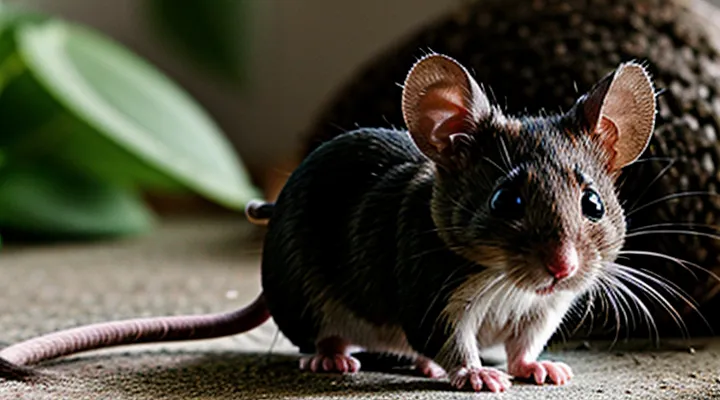
Introduction to Mouse-Like Mammals
What Makes an Animal «Mouse-Like»?
Physical Characteristics
Mouse‑like mammals share a compact body plan, soft fur, elongated whiskers, and a long, hair‑covered tail. Their skulls are narrow, with prominent incisor teeth that grow continuously. Hind limbs are short relative to the torso, providing agility in confined spaces. Vision is typically poor, compensated by heightened tactile sensing through vibrissae.
- Voles – body length 10‑15 cm, dense brown fur, short tail, robust hind feet, rounded ears.
- Shrews – length 5‑10 cm, velvety fur, tail often hairless, pointed snout, reduced visual capacity.
- Gerbils – length 10‑20 cm, sandy‑colored fur, relatively longer tail with a tuft, large cheek pouches.
- Hamsters – length 8‑15 cm, thick fur, stubby tail, cheek pouches, stocky build.
- Dormice – length 7‑14 cm, silky fur, bushy tail, large eyes for nocturnal activity.
All listed species exhibit the defining mouse‑type morphology: small stature, furred tails, prominent whiskers, and continuously growing incisors, distinguishing them from larger rodents and non‑rodent mammals.
Behavioral Similarities
Mice exhibit distinct behavioral patterns that recur in several other species. These patterns include nocturnal foraging, high reproductive rates, extensive grooming, burrowing, and strong social cohesion within small colonies.
- Norway rats (Rattus norvegicus) – share nocturnal activity cycles, opportunistic feeding, and complex tunnel networks comparable to mouse burrows.
- House shrews (Sorex spp.) – display rapid foraging bursts, territorial marking, and frequent grooming, mirroring mouse vigilance and hygiene routines.
- Prairie voles (Microtus ochrogaster) – form monogamous pair bonds, maintain communal nests, and engage in extensive scent‑marking similar to mouse social structures.
- African pygmy mice (Mus minutoides) – reproduce continuously, occupy dense ground cover, and exhibit aggressive nest defense akin to larger murine species.
- Eastern chipmunks (Tamias striatus) – hoard food, operate primarily at night, and use extensive burrow systems that parallel mouse nesting behavior.
These species demonstrate convergent behavioral traits that align closely with those observed in typical laboratory and wild mice, providing useful comparative models for ecological and physiological studies.
Animals Commonly Mistaken for Mice
Shrews
Distinguishing Features of Shrews
Shrews are diminutive mammals frequently mistaken for mice because of comparable size and brownish fur. Unlike rodents, shrews belong to the order Eulipotyphla, which separates them taxonomically from mouse-like rodents.
Key characteristics that set shrews apart:
- Dentition: Sharp, pointed teeth form a continuous series without the prominent incisors typical of rodents.
- Snout: Elongated, tapering snout houses a high concentration of sensory receptors.
- Tail: Often hair‑covered, short, and lacks the scaly texture seen in many mice.
- Fur: Dense, velvety pelage with a uniform coloration; mouse fur tends to be coarser and may display distinct dorsal‑ventral contrast.
- Metabolism: Extremely high basal metabolic rate demands constant feeding; mice exhibit a more moderate metabolic profile.
- Sensory reliance: Primary reliance on touch and smell; vision is limited. Mice possess comparatively better visual acuity.
- Behavior: Solitary, predominantly nocturnal foragers; many mouse species display social structures and diurnal activity periods.
These traits provide reliable criteria for distinguishing shrews from mouse-like mammals in field observations and taxonomic assessments.
Habitats and Diets of Shrews
Shrews are diminutive insectivorous mammals frequently confused with mice due to their comparable size, elongated bodies, and pointed snouts. Their external similarity does not imply taxonomic closeness; shrews belong to the order Eulipotyphla, whereas mice are rodents.
Shrews occupy a wide range of environments, each supporting their high metabolic demands:
- Deciduous and coniferous forests, where leaf litter and fallen logs provide cover and humidity.
- Moist grasslands and meadows, especially near streams or marshes that maintain soil moisture.
- Alpine tundra and sub‑arctic heath, where dense vegetation offers shelter from temperature extremes.
- Subterranean burrows and crevices in rocky outcrops, used for daytime refuge and nesting.
The diet of shrews reflects their voracious energy requirements. They consume:
- Invertebrates such as earthworms, beetles, spiders, and larvae.
- Small arthropods, including springtails and mites.
- Occasionally, amphibian eggs, tiny fish, or carrion when prey is scarce.
- Some species supplement with plant material, primarily seeds or fungi, but animal matter remains dominant.
Shrews’ habitat flexibility and carnivorous feeding strategy distinguish them from true mice, despite superficial resemblances.
Voles
Key Differences Between Voles and Mice
Voles and mice are frequently confused because both belong to the order Rodentia and share a small, agile appearance. Accurate identification relies on several anatomical and ecological characteristics that distinguish the two groups.
- Taxonomy: Voles are members of the family Cricetidae, subfamily Arvicolinae; mice belong to the family Muridae, subfamily Murinae.
- Body shape: Voles have a stockier build with a broader head; mice exhibit a slender, elongated form.
- Tail length: Vole tails are short, often less than half the body length and covered with sparse hair; mouse tails are long, typically equal to or longer than the body, and densely furred.
- Fur texture: Vole fur is soft and dense, giving a plush feel; mouse fur is finer and smoother.
- Cheek pouches: Voles possess external cheek pouches used for transporting food; mice lack visible pouches.
- Habitat preference: Voles favor moist grasslands, meadows, and dense ground cover; mice occupy a broader range of environments, including human structures, forests, and fields.
- Diet: Voles primarily consume grasses, roots, and tubers; mice are omnivorous, eating seeds, insects, and occasional plant material.
- Reproductive cycle: Voles produce multiple litters of 4–7 young with a gestation of about three weeks; mice generate larger litters (5–12) with a similar gestation but may breed year‑round.
- Activity pattern: Voles are mainly crepuscular to nocturnal and remain close to ground level; mice display more flexible activity, often active throughout the night and capable of climbing.
These distinctions enable reliable separation of voles from mice, preventing misidentification when evaluating small rodents that resemble each other.
Voles in Ecosystems
Voles are small, stout rodents that often resemble mice in size and appearance, yet they occupy distinct ecological niches. Their burrowing activity modifies the upper soil layers, creating channels that improve water infiltration and oxygen exchange. By moving organic material into the ground, voles accelerate the decomposition process and enhance nutrient cycling.
- Disperse seeds through caching and accidental transport, influencing plant community composition.
- Serve as a primary food source for a range of predators, including raptors, snakes, and mammalian carnivores, thereby supporting higher trophic levels.
- Generate surface litter and fecal deposits that enrich the microhabitat for invertebrates and microorganisms.
Population fluctuations of voles can trigger measurable changes in vegetation density and predator abundance. High vole densities often correspond with increased seed predation and altered plant competitive dynamics, while low densities may reduce prey availability for specialist hunters. Understanding vole ecology is essential for managing grassland health, forest regeneration, and agricultural pest control.
Hamsters
Hamsters vs. Mice: A Closer Look
Hamsters and mice share several morphological traits that often cause confusion, yet distinct anatomical and behavioral characteristics separate them. Both belong to the order Rodentia, but hamsters are classified in the family Cricetidae while mice belong to Muridae. Size ranges overlap: adult dwarf hamsters measure 5–10 cm, comparable to common house mice at 6–9 cm, whereas Syrian hamsters can reach 15–18 cm, exceeding most mouse species.
Key differences appear in facial structure and tail development. Mice possess elongated muzzles and a hair‑covered tail that may be as long as the body. Hamsters display a blunt snout and a short, often hair‑sparse tail. Dental patterns also diverge; mouse incisors grow continuously with a pronounced curvature, whereas hamster incisors are slightly less curved and paired with robust cheek teeth for grinding seeds.
Behavioral contrasts influence suitability as pets and laboratory subjects. Mice are highly social, forming complex hierarchies and exhibiting rapid breeding cycles. Hamsters are solitary, defending territories aggressively when housed together. Activity cycles differ: mice are primarily nocturnal, while many hamster species show crepuscular tendencies, becoming most active at dawn and dusk.
Dietary requirements reflect ecological niches. Mice consume a broad spectrum of grains, insects, and refuse, adapting readily to human environments. Hamsters specialize in seeds, nuts, and occasional insects, requiring higher fiber content to support cheek pouch storage. Nutrient formulations for captive care must account for these preferences.
A concise comparison:
- Taxonomy: Cricetidae (hamsters) vs. Muridae (mice)
- Tail: Short, sparse (hamsters) vs. long, furred (mice)
- Sociality: Solitary (hamsters) vs. highly social (mice)
- Activity: Crepuscular (hamsters) vs. nocturnal (mice)
- Diet: Seed‑heavy (hamsters) vs. omnivorous (mice)
Understanding these distinctions clarifies why hamsters resemble mice superficially yet diverge markedly in physiology, behavior, and ecological role.
Domesticated Hamsters
Domesticated hamsters are small, burrowing rodents frequently kept as companion animals. Their size, fur texture, and overall body plan closely parallel those of common laboratory mice.
Taxonomically, hamsters belong to the family Cricetidae, whereas mice are members of Muridae. Both families fall under the order Rodentia, which explains many shared anatomical features.
Key physical resemblances include:
- Compact body length of 5–15 cm, comparable to mouse dimensions.
- Short, hair‑covered tail that is often concealed beneath the fur.
- Rounded ears positioned laterally on the head.
- Prominent incisors adapted for gnawing.
Behavioral parallels are evident in nocturnal activity patterns, a preference for concealed nesting sites, and a diet consisting primarily of seeds, grains, and occasional insects. Both species exhibit rapid reproductive cycles and a high degree of adaptability to captive environments.
Distinguishing characteristics involve tail length—hamsters possess a vestigial tail, while mice have a longer, visible one—and social tendencies; hamsters are generally solitary, whereas many mouse strains display communal nesting. Reproductive output also varies, with hamsters producing fewer, larger litters compared to the prolific breeding of mice.
In research settings, hamsters serve as alternative models for studies of metabolism, immunology, and infectious diseases, offering a rodent counterpart that mirrors many mouse phenotypes while presenting unique physiological traits. Their popularity as pets stems from manageable size, low maintenance, and the visual similarity that makes them readily recognizable to those familiar with mice.
Young Rats
Identifying Juvenile Rats
Juvenile rats are frequent sources of confusion when differentiating mouse‑like rodents. Their small size, soft fur, and proportionally long tails overlap with the appearance of many small murids, making accurate identification essential for pest control, research, and wildlife monitoring.
Physical traits that separate juvenile rats from true mice include:
- Body length: juveniles measure 8–12 cm without the tail, whereas adult mice rarely exceed 10 cm total length.
- Tail proportion: rat pups have tails that are 70–85 % of body length; mouse tails are typically equal to or longer than the body.
- Ear size: ears are relatively smaller in rat juveniles, covering about one‑third of the head width, while mouse ears are larger relative to head size.
- Fur coloration: young rats often display a gray‑brown dorsal coat with a paler ventral side; many mouse species show a more uniform coloration or distinct dorsal stripes.
- Whisker length: rat whiskers are shorter and thicker compared to the long, delicate whiskers of mice.
Behavioral cues further aid identification. Juvenile rats tend to be more solitary, occupying burrows or concealed nests, whereas mouse juveniles frequently remain in groups near food sources. Activity patterns also differ; rat pups emerge later in the evening, while mouse juveniles are active at first light.
Anatomical examination provides definitive evidence. Key diagnostic features are:
- Incisor orientation: rat incisors emerge at a slight forward angle, whereas mouse incisors are vertical.
- Skull shape: rat juveniles have a broader, more robust skull with a pronounced sagittal ridge; mouse skulls remain narrow and delicate.
- Foot pads: the plantar surface of rat paws displays larger, more rounded pads with distinct pads on the heel; mouse pads are smaller and more numerous.
- Growth plates: X‑ray imaging reveals slower closure of growth plates in rat juveniles, reflecting a longer developmental period.
By assessing these measurable characteristics, professionals can reliably distinguish juvenile rats from other small rodents that share a mouse‑like silhouette.
Growth and Development of Rats
Rats share many morphological traits with small rodent species, making them a primary reference when comparing mouse‑like mammals. Their growth follows a predictable pattern that researchers use to assess developmental timelines across related taxa.
From birth, neonate rats weigh approximately 5–7 g and are hairless, with eyes closed. Within 10 days, sensory organs open, and fur appears. By the third week, pups attain 30–40 g, begin solid food consumption, and exhibit increased locomotor activity. At 4–5 weeks, the average weight reaches 100–150 g; sexual maturity emerges, marked by the onset of estrous cycles in females and sperm production in males. Full adult size, 250–350 g for males and slightly less for females, is typically achieved by 10–12 weeks.
Key developmental milestones:
- Pup stage (0–10 days): rapid cell division, organogenesis, thermoregulation development.
- Juvenile stage (10–21 days): dentition eruption, weaning, emergence of social hierarchy behaviors.
- Adolescent stage (21–35 days): reproductive axis activation, increased muscle mass, brain synaptic pruning.
- Adult stage (≥35 days): stable body mass, fully formed olfactory and auditory systems, established territorial range.
Growth rates are temperature‑dependent; ambient temperatures near 28 °C accelerate metabolic processes, shortening the interval between stages. Nutrient density directly influences body composition, with high‑protein diets promoting lean mass accrual while excess calories favor adipose deposition.
Comparative analysis shows that rats reach comparable developmental stages faster than many mouse‑like relatives, providing a benchmark for evaluating growth efficiency and morphological similarity among small rodents.
Less Common Mouse Look-Alikes
Dormice
Unique Traits of Dormice
Dormice belong to the family Gliridae, a distinct lineage of small rodents that share a superficial resemblance to common house mice but differ markedly in anatomy and behavior.
Key characteristics that set dormice apart include:
- Extended hibernation – some species remain dormant for up to six months, relying on stored body fat.
- Arboreal lifestyle – specialized foot pads and flexible claws enable efficient climbing and leaping among branches.
- Large, forward‑facing eyes – provide acute night vision for navigating dense foliage.
- Long, prehensile tail – assists in balance and grasping while moving through trees.
- Dietary flexibility – omnivorous intake of nuts, seeds, fruits, insects, and occasionally fungi.
Compared with typical mice, dormice are larger, possess a softer, silky pelage, and emit a series of high‑pitched vocalizations rather than the squeaks common to murids. Their reproductive cycle is slower, with fewer litters per year, reflecting the energy demands of prolonged hibernation.
These attributes illustrate why dormice represent a noteworthy example among mammals that resemble mice, highlighting both convergent appearance and divergent ecological adaptations.
Dormice Behavior and Lifestyle
Dormice are small, agile rodents that often appear similar to common mice due to comparable body size and fur coloration. Their distinctive behaviors, however, set them apart within the broader group of mouse‑like mammals.
Dormice are strictly nocturnal. They emerge after dusk, rely on keen hearing and whisker sensitivity to navigate dense foliage, and retreat to concealed nests before sunrise. Their arboreal habit forces them to climb, leap, and cling to branches, a capability less developed in most mouse species.
Key aspects of dormouse lifestyle include:
- Diet: omnivorous; preference for nuts, seeds, berries, and occasional insects.
- Hibernation: prolonged torpor lasting up to six months in temperate regions; metabolic rate drops to near‑zero.
- Territoriality: individuals maintain small home ranges; overlaps are minimal except during breeding periods.
- Reproduction: breeding season in spring; litters of 2–7 offspring; young remain in the nest for several weeks before independence.
Social organization is generally solitary, with brief pair bonding during mating. After birth, mother dormice provide intensive care, feeding offspring with milk rich in lipids to support rapid growth.
Comparatively, dormice share mouse‑like size and fur texture, yet their nocturnal arboreal activity, extended hibernation, and specialized diet distinguish them from typical mouse behavior. These traits explain why dormice are often grouped with mouse‑resembling animals while retaining a unique ecological niche.
Small Marsupials
Antechinus
Antechinus are small carnivorous marsupials native to Australia, frequently confused with mice because of their diminutive size and sleek fur.
Members of the order Dasyuromorphia and family Antechinidae, Antechinus species measure 8–12 cm in head‑body length, weigh 15–30 g, and possess a tail nearly equal to body length. Their coat ranges from gray‑brown to reddish, matching the coloration of many rodent species.
These mammals inhabit forest undergrowth, heathland, and coastal scrub, occupying a range that extends from southeastern Queensland to Tasmania. They are nocturnal hunters, feeding on insects, spiders, and small invertebrates.
Reproductive biology distinguishes Antechinus from rodents: males die after a single, intense breeding season, a phenomenon known as semelparity, while females retain a pouch for rearing young.
Mouse‑like appearance derives from a compact body, pointed snout, and proportionally long tail. The resemblance ends with several diagnostic traits: presence of a pouch, a dental formula lacking continuously growing incisors, and a distribution confined to the Australian continent.
Key points of similarity and difference:
- Size and fur – comparable to many mouse species.
- Tail length – proportionally long, similar to mouse tail.
- Taxonomic class – marsupial (Antechinus) vs. placental mammal (mouse).
- Reproductive strategy – semelparous male die‑off vs. multiple breeding cycles in mice.
- Geographic range – endemic to Australia vs. worldwide distribution of mice.
Understanding these characteristics clarifies why Antechinus often appear alongside rodents in discussions of mammalian forms that resemble mice.
Planigales
Planigales are diminutive dasyurid marsupials native to arid and semi‑arid regions of Australia. Adult body length ranges from 45 mm to 80 mm, with a tail roughly equal to or slightly longer than the torso. Their fur is short, fine, and typically gray‑brown to reddish‑brown, providing a visual resemblance to common house mice.
The resemblance extends beyond size and coloration. Planigales possess a flattened head, small rounded ears, and a pointed snout, features that parallel rodent morphology. Their nocturnal foraging habits involve ground‑level activity and the use of whiskers for tactile navigation, mirroring mouse behavior. Although they are carnivorous, feeding on insects and small vertebrates, their overall silhouette often leads to misidentification as rodents.
Key points of similarity:
- Body length under 10 cm, comparable to many mouse species.
- Fur coloration ranging from gray to brown, matching typical mouse pelage.
- Rounded ears and a pointed snout that create a mouse‑like profile.
- Nocturnal, ground‑dwelling lifestyle with reliance on whisker sensation.
Taxonomically, planigales belong to the family Dasyuridae, subfamily Planigalinae, comprising species such as the Southern planigale (Planigale australis) and the Long-tailed planigale (Planigale ingrami). Their ecological role as small predators differentiates them from true rodents, yet their physical traits frequently cause confusion with mouse analogues.
Elephant Shrews (Macroscelididae)
Distinctive Anatomy
Animals that share mouse‑like appearance exhibit a set of anatomical characteristics that distinguish them from larger rodents and non‑rodent mammals. These traits include a compact body, elongated tail, prominent whiskers, and specialized dentition.
The most consistent features are:
- Body size: Length typically ranges from 5 to 12 cm, with a lightweight skeleton adapted for rapid, agile movement.
- Tail: Long, hairless, and prehensile in many species, providing balance during climbing and quick directional changes.
- Ears: Large relative to head size, thinly furred, and highly vascularized for efficient thermoregulation.
- Whiskers (vibrissae): Dense, forward‑projecting tactile hairs that detect subtle air currents and obstacles, essential for nocturnal foraging.
- Dentition: Continuously growing incisors with a sharp, chisel‑shaped edge, paired with a reduced molar row for grinding soft plant material and insects.
- Skeleton: Cervical vertebrae elongated to support a flexible neck; lumbar vertebrae reduced to enhance flexibility; hindlimbs proportionally longer than forelimbs for leaping.
Species that exemplify these anatomical patterns include:
- Deer mouse (Peromyscus maniculatus) – slender skull, long hind limbs, and a tail nearly equal to body length.
- Harvest mouse (Micromys minutus) – exceptionally long tail with a tufted tip, and a narrow rostrum adapted for seed extraction.
- Northern pygmy shrew (Sorex hoyi) – though a shrew, it possesses a mouse‑sized body, elongated snout, and dense vibrissae.
- African pygmy mouse (Mus minutoides) – diminutive size, reduced cranial vault, and a tail with sparse hair for improved grip.
These anatomical markers form a diagnostic framework for identifying mammals that resemble mice despite taxonomic diversity. Recognizing the combination of body proportions, tail structure, auditory and tactile adaptations, and dental specialization enables precise classification without reliance on superficial coloration or habitat description.
Locomotion and Foraging
Several small mammals exhibit a mouse‑like body plan, encompassing members of the Muridae family, certain Cricetidae, shrews (Soricidae), and the marsupial genus Antechinus. Their size, elongated snout, and long tail enable comparable locomotor and foraging behaviors.
Locomotion
- Ground runners: Species such as the deer mouse (Peromyscus maniculatus) and the house mouse (Mus musculus) rely on rapid quadrupedal sprinting, capable of short bursts exceeding 10 m s⁻¹. Their flexible spine and lightweight limbs reduce inertia, allowing swift direction changes.
- Climbers: The forest shrew (Myosorex varius) and the eastern chipmunk (Tamias striatus) possess sharp claws and strong hind limbs, facilitating vertical ascent on bark and tangled vegetation.
- Burrow navigators: Pocket gophers (Geomys spp.) and the water vole (Arvicola amphibius) display reinforced forelimbs and muscular shoulders, optimized for digging and moving through subterranean tunnels.
- Semi‑aquatic swimmers: The water vole and the marsh rice rat (Oryzomys palustris) combine webbed hind feet with dense fur, enabling efficient propulsion in shallow water.
Foraging
- Seed harvesters: The deer mouse and chipmunk gather and cache seeds, using precise forepaw manipulation to extract kernels from husks. Their cheek pouches store food for later consumption.
- Insect predators: Shrews employ rapid tongue extension and high metabolic rates to consume large quantities of arthropods, often hunting on the ground surface or within leaf litter.
- Omnivorous foragers: The house mouse exploits human‑derived waste, crushing grains with its incisors and scavenging crumbs; its tactile whiskers assess food texture.
- Aquatic foragers: The water vole grazes on submerged vegetation, using its whiskers to detect plant material, while the marsh rice rat captures small crustaceans with swift snapping bites.
These locomotor and dietary adaptations allow mouse‑resembling mammals to exploit a range of habitats, from forest floor to wetland, maintaining ecological roles similar to those of true mice.
Ecological Roles of Mouse-Like Creatures
Prey Animals
Small mammals that share the size, body shape, and fur coloration of typical house mice frequently occupy the lower trophic level, serving as prey for a wide range of carnivores, raptors, and reptiles.
- Field voles (Microtus agrestis) – 5–9 cm body length, brown‑gray dorsal pelage, high reproductive rate; hunted by foxes, owls, and snakes.
- Southern red‑backed vole (Myodes gapperi) – compact body, soft brown fur, nocturnal activity; preyed upon by hawks, weasels, and domestic cats.
- Deer mouse (Peromyscus maniculatus) – 7–10 cm body, spotted dorsal coat, agile climber; targeted by owls, snakes, and larger rodents.
- Harvest mouse (Micromys minutus) – 5 cm body, long tail, grass‑dwelling; consumed by kestrels, foxes, and shrews.
- Shrew‑like moles (family Talpidae) – streamlined shape, sparse fur, subterranean lifestyle; fall victim to snakes and predatory birds.
- Young rabbits (Oryctolagus cuniculus) – newborns resemble oversized mouselets, soft fur, vulnerable to foxes, eagles, and feral dogs.
These species exhibit convergent traits—small stature, rapid breeding, and cryptic coloration—that increase detectability and capture efficiency for predators. Their ecological role as primary prey supports the energy flow from primary producers to higher‑order carnivores, sustaining biodiversity across temperate and grassland ecosystems.
Seed Dispersers
Small mammals that share a mouse‑like appearance frequently act as seed dispersers, moving seeds away from parent plants and influencing vegetation patterns.
- Norway rat (Rattus norvegicus) – consumes grains and nuts, stores them in concealed caches; many cached seeds escape predation and germinate.
- House mouse (Mus musculus) – gathers seed fragments, transports them within nests, occasionally releases viable seeds during nest cleaning.
- Deermouse (Peromyscus maniculatus) – hoards seeds in underground burrows; unretrieved caches provide a reliable source of seedlings.
- Wood mouse (Apodemus sylvaticus) – collects acorns and other mast, disperses them across forest floor through scatter‑hoarding.
- Dormouse (Gliridae family) – feeds on fruit and seeds, moves them between tree cavities, contributing to forest regeneration.
These species rely on opportunistic foraging and caching behaviors, creating spatially distributed seed banks that support plant recruitment and diversity.
Insect Control
Insects that are frequently mistaken for small rodents share size, coloration, and nocturnal habits. Species such as the house cricket, dark-winged fungus gnat, and certain beetles possess elongated bodies and muted fur‑like textures that cause confusion with mouse‑like mammals. Their presence often triggers unnecessary rodent control actions, while the actual pest requires targeted insect management.
Effective control of these mouse‑resembling insects relies on precise identification and integrated tactics:
- Environmental sanitation: Remove organic debris, standing water, and food residues that attract breeding populations.
- Physical barriers: Seal cracks, install fine‑mesh screens, and use door sweeps to prevent entry.
- Biological agents: Deploy predatory nematodes, parasitic wasps, or entomopathogenic fungi specific to the target species.
- Chemical interventions: Apply low‑toxicity insect growth regulators or residual sprays in concealed areas, following label instructions.
- Monitoring: Place sticky traps or pheromone lures to assess infestation levels and adjust treatment frequency.
Combining these measures reduces misdirected rodent control efforts and limits damage caused by insects that visually resemble mice.
Differentiating Pests from Harmless Animals
Signs of Infestation
Rodent look‑alikes leave distinct evidence that confirms their presence. Identifying these clues early prevents structural damage and health risks.
Common indicators of an infestation by small, mouse‑like mammals:
- Gnaw marks on wood, plastic, or wiring, typically ¼‑inch wide.
- Accumulated droppings, dark, pellet‑shaped, found along walls, in cabinets, or near food sources.
- Grease or smudge trails along baseboards, caused by oily fur contacting surfaces.
- Nests constructed from shredded paper, fabric, or insulation, often hidden in corners, attics, or under appliances.
- Unusual scratching or scurrying noises, especially at night, heard behind walls or in ceiling voids.
These signs differentiate active infestations from occasional sightings and guide targeted control measures.
Humane Identification Methods
Humane identification of small rodent‑like species requires techniques that minimize stress and avoid invasive procedures. Visual markers such as distinctive coat patterns, ear notches, and tail‑tip tattoos provide reliable recognition when applied with proper anesthesia and sterile equipment. Non‑invasive biometric tools, including high‑resolution photography of facial features and automated pattern‑recognition software, enable individual tracking without physical alteration.
Genetic sampling offers precise identification while remaining ethically acceptable if performed with minimal tissue collection. Buccal swabs and hair follicles supply sufficient DNA for PCR‑based profiling; both methods cause negligible discomfort and can be repeated safely. Environmental tagging, such as RFID microchips implanted subcutaneously, combines durability with low physiological impact, provided implantation follows aseptic technique and post‑procedure monitoring.
Behavioral profiling supplements physical methods. Recording activity patterns, nest‑building preferences, and social interactions creates a behavioral fingerprint that distinguishes individuals within populations of mice‑like mammals. When combined with visual or genetic data, behavioral signatures increase accuracy and reduce reliance on any single method.
Regular validation of identification protocols ensures consistency. Audits should compare recorded identifiers with independent observations, adjust techniques to reduce error rates, and document any adverse effects. Maintaining detailed logs of identification events supports reproducibility and ethical accountability across research and conservation programs.