
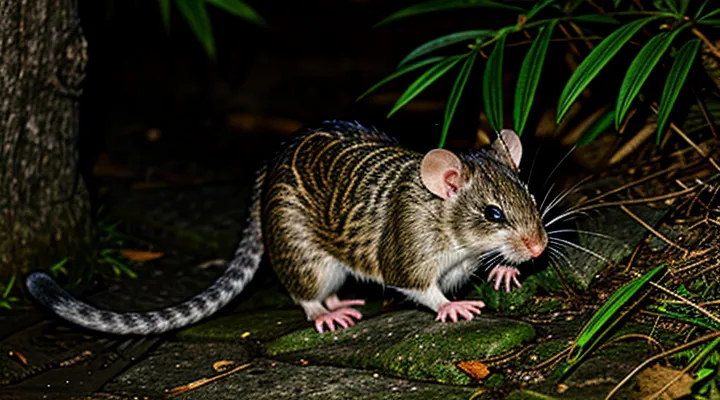
The Circadian Rhythm of Wild Rats
Understanding Nocturnal Habits
Factors Influencing Activity Patterns
Wild rats display flexible activity patterns that shift in response to multiple external and internal cues. Their periods of rest and foraging are not fixed solely by darkness; rather, they emerge from a dynamic balance of ecological pressures.
- Ambient temperature: Cooler nights reduce metabolic demand, encouraging longer bouts of rest; warmer conditions increase activity to exploit heat‑generated food sources.
- Light intensity: Low‑level illumination from moon phases or artificial sources can suppress or extend activity, depending on predator visibility.
- Predator presence: Elevated risk from nocturnal hunters prompts earlier cessation of movement and deeper sleep intervals.
- Food availability: Abundant, easily accessed resources trigger extended foraging periods, while scarcity leads to concentrated activity during brief windows of safety.
- Social hierarchy: Dominant individuals often dictate the timing of communal movement, with subordinates aligning their rest cycles accordingly.
- Seasonal changes: Shifts in day length and climate across seasons recalibrate circadian rhythms, altering the proportion of night spent awake.
These factors interact continuously. For instance, a warm night with high food density may offset increased predator activity, resulting in a net increase in nocturnal foraging despite elevated risk. Conversely, a cold, moonless night with scarce resources typically compresses activity into the early evening hours, followed by prolonged rest.
Understanding the relative weight of each driver enables accurate prediction of when wild rats are most likely to be active or asleep, which is essential for field studies, pest management, and ecological modeling.
Seasonal Variations in Sleep-Wake Cycles
Wild rats adjust their sleep–wake patterns according to seasonal changes in temperature, daylight length, and food availability. During winter, reduced ambient temperatures and shorter nights drive a shift toward longer daytime rest periods, while nocturnal activity contracts to the few hours of darkness that remain. In contrast, spring brings increasing daylight and abundant foraging opportunities, prompting rats to extend their active phase and shorten daytime sleep.
Key seasonal effects include:
- Temperature: Cold stress in colder months suppresses metabolism, leading to prolonged torpor‑like rest during the day; milder temperatures support higher nighttime foraging.
- Photoperiod: Shorter winter days limit exposure to light, decreasing melatonin suppression and encouraging earlier onset of sleep; longer summer days delay sleep onset.
- Food supply: Scarcity in winter forces rats to conserve energy, lengthening sleep bouts; abundance in summer allows frequent, shorter rest intervals.
These adjustments are reflected in measurable changes in circadian hormone levels. Melatonin peaks later in winter, aligning with delayed activity, while cortisol rises in spring, supporting heightened alertness and exploration. Field studies using radio‑telemetry have recorded average nighttime activity windows of 4–6 hours in winter versus 8–10 hours in summer.
Overall, seasonal variation produces a flexible sleep–wake architecture that optimizes energy expenditure and predator avoidance, ensuring survival across fluctuating environmental conditions.
Sleep Patterns and Stages
Characteristics of Rat Sleep
REM Sleep in Rodents
Rodent rapid eye movement (REM) sleep occupies a distinct portion of the daily sleep cycle, typically following non‑REM (NREM) stages in short, recurring episodes. In wild rats, REM periods concentrate during the dark phase, aligning with heightened nocturnal activity. The average REM bout lasts 10–20 seconds in free‑living individuals, extending to 30–40 seconds under laboratory conditions where ambient disturbances are minimized.
Electroencephalographic recordings reveal that REM episodes are preceded by a brief transition marked by theta rhythm emergence and muscle atonia. This pattern recurs every 30–45 minutes throughout the night, resulting in approximately 12–15 REM bouts per 12‑hour dark interval. The cumulative REM duration therefore accounts for 15–20 percent of total sleep time in wild specimens, lower than the 20–25 percent observed in captive rodents.
Environmental factors shape REM expression. Variable light intensity, predator presence, and temperature fluctuations modulate bout length and frequency. For example, increased ambient noise reduces REM episode duration by up to 30 percent, while stable burrow temperatures preserve typical REM architecture.
Key physiological markers associated with rodent REM sleep include:
- Elevated acetylcholine release in the pontine reticular formation
- Suppressed norepinephrine activity in the locus coeruleus
- Rapid eye movements detectable via high‑resolution video tracking
- Muscle tone reduction measurable by electromyography
These markers confirm that REM sleep in wild rats fulfills essential functions related to neural plasticity and memory consolidation, despite the compressed bout structure imposed by nocturnal foraging demands. Understanding this balance between environmental pressures and REM physiology informs broader interpretations of sleep strategies across mammalian species.
Non-REM Sleep Features
Wild rats exhibit a distinct pattern of non‑REM (NREM) sleep that dominates their nocturnal rest. During NREM episodes, cortical electroencephalogram (EEG) recordings show high‑amplitude, low‑frequency (0.5–4 Hz) delta waves, indicating synchronized neuronal activity. Muscle tone remains relatively high compared to REM sleep, allowing the animal to maintain posture and respond quickly to environmental cues. Heart rate and respiration decrease steadily, reflecting reduced autonomic drive.
Key characteristics of rat NREM sleep include:
- Duration: Individual NREM bouts last 5–20 minutes; multiple bouts accumulate to 30–45 minutes of NREM within a typical night.
- Frequency: NREM episodes appear in clusters, interleaved with brief wake periods and occasional REM phases.
- Depth: Delta power intensifies over the course of a bout, marking deepening sleep and heightened restorative processes.
- Sensory gating: Threshold for external stimuli rises, yet the animal retains the ability to awaken rapidly if a threat is detected.
The prevalence of NREM sleep during the dark phase aligns with the species’ crepuscular activity pattern. Rats prioritize NREM before entering REM, suggesting a hierarchical organization where restorative slow‑wave sleep prepares the brain for subsequent dreaming and memory consolidation.
Duration and Frequency of Sleep Bouts
Adaptations for Survival
Wild rats exhibit flexible sleep patterns that align with predator avoidance, foraging efficiency, and environmental pressures. Their survival depends on a suite of physiological and behavioral adaptations that dictate when they rest and when they become active.
- Acute circadian modulation: Light-sensitive retinal cells trigger melatonin release, prompting rest during bright periods while maintaining alertness in low-light conditions. This mechanism enables rapid transition between sleep and activity as ambient illumination changes.
- Enhanced olfactory acuity: Highly developed scent detection allows rats to locate food sources and detect predators without visual cues, supporting nocturnal foraging while minimizing exposure.
- Social vigilance: Group nesting creates overlapping watchfulness; individuals alternate between sleeping and sentinel duties, reducing the risk of nocturnal attacks.
- Thermoregulatory flexibility: Dense fur and peripheral vasoconstriction conserve heat during cool night hours, allowing sustained activity without excessive energy loss.
- Metabolic efficiency: Elevated basal metabolic rate supplies sufficient energy for brief, high-intensity bursts of movement, permitting short sleep bouts interspersed with rapid foraging excursions.
These adaptations collectively shape a pattern of fragmented, opportunistic sleep punctuated by brief periods of heightened activity. The result is a survival strategy that maximizes resource acquisition while mitigating predation risk throughout the night.
Nighttime Activities Beyond Sleep
Foraging and Hunting Behaviors
Predation Avoidance Strategies
Wild rats operate on a primarily nocturnal schedule, alternating between foraging bouts and brief rest periods throughout the night. Exposure to owls, foxes, and other nocturnal predators creates selective pressure for behaviors that minimize detection while the animals sleep.
Predation avoidance in these rodents relies on several coordinated mechanisms:
- Site selection – nests are constructed deep within burrows, under dense vegetation, or in concealed crevices, reducing visual and auditory cues for hunters.
- Temporal fragmentation – sleep is broken into short episodes interspersed with alertness, preventing prolonged vulnerability.
- Group vigilance – individuals within a colony rotate guard duties; one rat remains awake while others rest, ensuring continuous monitoring of predator presence.
- Sensory suppression – whisker and ear movements are dampened during rest, limiting the generation of signals that could attract predators.
- Rapid arousal response – neural pathways trigger immediate awakening and escape when sudden sounds or shadows are detected, shortening reaction time to less than a second.
These strategies collectively enable wild rats to exploit nighttime resources while maintaining a low profile against natural enemies.
Social Interactions During Darkness
Wild rats are highly social during the hours of darkness, forming dynamic networks that facilitate foraging, predator avoidance, and reproduction. Their interactions rely on a combination of vocalizations, scent marking, and tactile signals, each calibrated to the low‑light environment.
Auditory communication dominates nocturnal encounters. High‑frequency chirps and ultrasonic squeaks convey individual identity, territorial boundaries, and alarm cues. These sounds travel efficiently in the dense underbrush where visual cues are limited, allowing rats to coordinate movements without direct line of sight.
Scent marks provide a persistent record of presence and hierarchy. Urine, glandular secretions, and fecal deposits are deposited along established routes, creating chemical trails that inform conspecifics about recent activity, reproductive status, and dominance rank. Rats follow these trails to locate nest sites, food caches, and potential mates.
Tactile exchanges occur primarily during close‑quarter activities such as grooming and mating. Mutual grooming reinforces social bonds, reduces parasite load, and synchronizes stress hormone levels. Mating bouts are brief and often initiated by scent cues, with males detecting estrous females through volatile compounds released in the nest chamber.
Typical nocturnal social pattern:
- Early night: Individuals emerge from burrows, emit contact calls, and establish foraging groups.
- Mid‑night: Territorial patrols intensify; scent marking frequency peaks.
- Late night: Grooming clusters form; mating attempts increase as females become receptive.
- Pre‑dawn: Groups reconvene at nest sites, reduce vocal activity, and prepare for daylight shelter.
These behaviors collectively maintain colony cohesion, optimize resource exploitation, and enhance survival in the dark.
Nesting and Territory Maintenance
Wild rats construct nests that serve as both shelter and central point for defending their home range. Nests are built from shredded vegetation, paper, insulation, and debris collected near food sources. The structures are typically located in burrows, crevices, or underneath debris piles, where they remain concealed from predators.
During the dark hours, rats retreat to these nests for rest. Sleep periods are brief, interspersed with foraging bouts that begin shortly after dusk. The nest’s placement within the territory reduces travel distance to feeding sites, allowing rapid return after each outing.
Territory maintenance relies on scent marking, vocalizations, and aggressive encounters. Rats deposit urine and glandular secretions along the perimeter of their range, establishing a chemical boundary that deters intruders. When an outsider approaches, resident individuals display threat postures and emit high‑frequency calls that signal occupancy.
Key aspects of nesting and territorial behavior include:
- Material selection: preference for dry, insulating substances that retain heat.
- Location choice: proximity to water, food, and escape routes.
- Periodic renovation: removal of waste, addition of fresh lining, and reinforcement of structural integrity.
- Scent marking: regular deposition of odor cues along pathways and entrance points.
- Defensive actions: patrol of boundaries and confrontation of rivals during the night.
These practices ensure that the nest remains a secure, thermally stable environment for rest, while the surrounding territory is actively defended, supporting the species’ nocturnal lifestyle.
Environmental Influences on Nighttime Behavior
Impact of Light and Darkness
Artificial Light Pollution Effects
Artificial illumination in urban and suburban environments extends daylight hours, compelling wild rats to adjust their nocturnal schedule. The presence of continuous or intermittent light sources delays the onset of active periods and shortens the total duration of rest.
Exposure to light at night suppresses melatonin secretion, elevates cortisol levels, and disrupts circadian gene expression. These physiological changes reduce sleep depth, increase fragmented rest, and accelerate metabolic turnover.
Altered sleep patterns modify foraging behavior. Rats become more active during illuminated intervals, exploiting human-generated food sources while avoiding darkness that previously provided predator cover. Consequently, individuals experience higher energy intake but also heightened exposure to vehicular traffic and predation by visually oriented hunters.
Key ecological outcomes include:
- Shifted predator–prey dynamics due to altered rat activity windows.
- Increased transmission potential for zoonotic pathogens because of denser aggregations in lit areas.
- Accelerated population turnover driven by reduced reproductive cycles linked to hormonal imbalance.
Mitigation strategies such as shielding streetlights, implementing motion-activated lighting, and preserving dark refuges can restore more natural sleep rhythms and stabilize associated ecological processes.
Role of Temperature and Weather
Wild rats adjust their nocturnal rest periods in response to ambient temperature. When temperatures drop below the thermoneutral zone (approximately 20–30 °C for Rattus spp.), rats increase the duration of sleep bouts to conserve heat. Conversely, in warm conditions above 30 °C, they fragment sleep, interspersing short rests with foraging to dissipate excess body heat.
Weather conditions further modulate nighttime behavior. Rainfall reduces visibility and dampens scent trails, prompting rats to seek sheltered microhabitats where they can rest undisturbed. Cloud cover lowers ambient temperature and often leads to extended sleep episodes, while clear skies and low humidity encourage more frequent activity cycles.
Key environmental variables influencing sleep patterns:
-
Temperature:
• < 20 °C – prolonged, uninterrupted sleep.
• 20–30 °C – normal sleep cycle length.
• > 30 °C – fragmented sleep, increased surface activity. -
Precipitation:
• Light rain – modest increase in shelter use, minor sleep extension.
• Heavy rain – significant sheltering, prolonged rest periods. -
Humidity:
• High humidity (≥ 80 %) – elevated body temperature, reduced sleep duration.
• Low humidity – facilitates heat loss, supports longer rest. -
Wind:
• Strong winds – encourage deeper burrow use, lengthening sleep bouts.
• Calm conditions – allow surface foraging, shorter rests.
These factors interact dynamically; a cold, rainy night typically yields the longest uninterrupted sleep, while warm, dry, and windy conditions produce the most fragmented rest schedule. Understanding these patterns assists in predicting rat activity for pest management and ecological research.
Evolutionary Aspects of Nocturnalism
Advantages of Nighttime Activity
Reduced Predation Risk
Wild rats typically enter periods of inactivity during the darkest hours, aligning their sleep with the peak of nocturnal predator activity. By confining rest to the deepest night, they limit exposure to visual hunters that rely on ambient light.
Reduced predation risk drives this timing. When ambient illumination falls, owls, hawks, and feral cats experience diminished hunting efficiency, forcing them to hunt at higher altitudes or earlier twilight periods. Consequently, rats that remain active during these intervals face higher mortality, while those that retreat to concealed burrows experience lower attack rates.
Key adaptations that lower predation risk during sleep include:
- Selecting deep, narrow burrows that restrict predator access.
- Positioning nests near dense vegetation that obscures movement.
- Coordinating communal rest, which creates a “safety in numbers” effect and reduces individual vulnerability.
- Limiting surface activity to brief, pre‑dawn foraging bouts, thereby avoiding peak predator presence.
Empirical observations confirm that rats emerging from sleep later in the night exhibit fewer predator encounters than those that awaken earlier. The correlation between delayed sleep onset and decreased predation underscores the adaptive value of nocturnal rest timing.
Access to Resources
Wild rats adjust their nocturnal activity according to the availability of food, shelter and water. When food sources are abundant near nesting sites, individuals reduce the time spent foraging and increase periods of rest during the night. Conversely, scarce resources force prolonged searching, which shortens sleep bouts and leads to irregular rest cycles.
Access to shelter directly influences sleep architecture. Rats occupying well‑protected burrows or dense vegetation experience fewer interruptions, allowing longer, uninterrupted sleep phases. In habitats where safe cover is limited, rats alternate between brief sleep episodes and heightened vigilance, extending overall active time.
Water availability shapes nightly patterns as well. Proximity to reliable water sources diminishes the need for nocturnal excursions, promoting earlier onset of sleep. In arid environments, rats must travel farther and later, delaying rest and increasing exposure to predators.
Key factors affecting sleep timing:
- Food density near nest sites
- Quality and concealment of shelter
- Distance to permanent water sources
- Competition pressure for limited resources
Each factor modifies the balance between foraging and resting, dictating the precise schedule of night‑time inactivity for wild rats.