
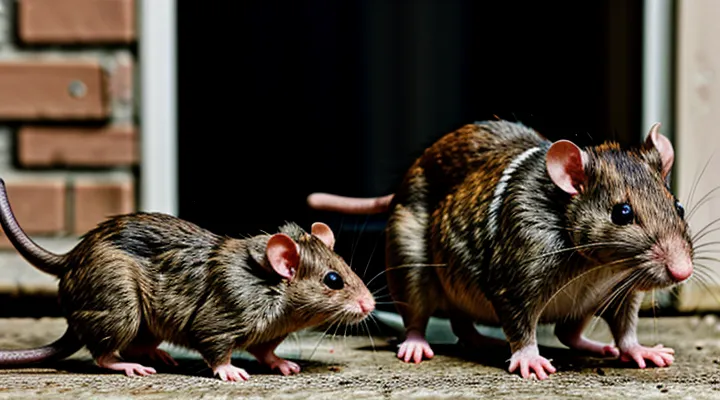
Understanding Rat Reproductive Biology
Basic Reproductive Cycle
Estrous Cycle
The estrous cycle provides the physiological framework that initiates breeding activity in laboratory rats. Hormonal fluctuations during each cycle create a narrow window of sexual receptivity, prompting females to mate and males to display increased courtship behavior.
Key phases of the rat estrous cycle and their reproductive significance:
- Proestrus: Rising estrogen levels trigger ovulation readiness; vaginal epithelium proliferates, preparing the tract for sperm transport.
- Estrus: Peak estrogen coincides with ovulation; females exhibit lordosis, a posture that facilitates copulation.
- Metestrus: Corpus luteum formation begins, secreting progesterone that supports early embryonic development if fertilization occurs.
- Diestrus: Progesterone dominance maintains uterine environment; the cycle pauses until the next proestrus.
These sequential hormonal events synchronize female receptivity with male sexual motivation, thereby governing the timing and success of rat reproduction.
Gestation Period
The gestation period of the common laboratory rat (Rattus norvegicus) averages 21‑23 days, with minor variation among strains and environmental conditions. Litter size, maternal age, and nutrition can shift the duration by up to two days, but the core interval remains tightly regulated by endocrine feedback loops.
A short gestation enables rapid succession of litters, amplifying the impact of external cues that initiate breeding. When photoperiod or temperature signals elevate prolactin and luteinizing hormone levels, ovulation occurs within days of weaning, and the fixed gestation length ensures that newborns become fertile at approximately five weeks. Consequently, any factor that shortens the interval between parturition and the next estrus—such as increased food availability or reduced stress—directly accelerates population growth.
Key implications of the rat gestation timeline:
- Predictable birth dates allow precise scheduling of experimental cohorts.
- Rapid turnover magnifies the effect of seasonal or hormonal triggers on overall reproductive output.
- Management of environmental variables (light, temperature, diet) can modulate the speed at which successive litters appear.
Understanding the fixed gestation span therefore provides a baseline for interpreting how physiological and ecological stimuli translate into heightened breeding activity in rats.
Litter Size and Frequency
Rats typically produce litters ranging from six to twelve pups, with the exact number influenced by genetics, maternal age, and nutritional status. Younger females often have smaller litters, while mature, well‑fed individuals can reach the upper limit of the species’ reproductive capacity.
Reproductive cycles in rats are rapid; a female may become pregnant again within 24 hours after giving birth. This high turnover results in multiple litters per year, commonly three to five, depending on environmental conditions.
Key determinants of litter size and frequency include:
- Genetic background: Strains selected for laboratory use display predictable litter ranges, whereas wild populations show greater variability.
- Body condition: Adequate protein and caloric intake correlate with larger litters and shorter inter‑litter intervals.
- Age of the dam: Peak reproductive output occurs between 3 and 6 months; performance declines thereafter.
- Photoperiod and temperature: Longer daylight exposure and moderate ambient temperatures enhance reproductive efficiency, shortening the interval between litters.
- Social environment: Presence of a male or other females can stimulate hormonal pathways that accelerate ovulation and increase breeding frequency.
Understanding these factors clarifies how physiological and environmental cues shape the reproductive output of rats, providing insight into the mechanisms that drive their prolific breeding patterns.
Environmental Factors Influencing Reproduction
Food Availability and Quality
Impact on Female Fertility
Environmental cues, nutritional status, and social signals dictate the onset of reproductive cycles in female rats, directly influencing ovulatory capacity, litter size, and gestation success.
Photoperiod changes modulate melatonin secretion, which adjusts hypothalamic gonadotropin‑releasing hormone (GnRH) pulses. Shorter daylight reduces GnRH frequency, suppressing estrous cycles and decreasing the proportion of females entering estrus. Conversely, extended illumination enhances GnRH rhythm, raising the likelihood of ovulation.
Dietary composition governs energy balance and leptin levels. High‑fat, calorie‑dense diets elevate leptin, stimulating hypothalamic pathways that advance puberty onset and increase the number of mature follicles. Protein restriction lowers circulating insulin‑like growth factor‑1, delaying follicular development and reducing viable oocytes.
Social environment exerts profound effects. Presence of a dominant male emits pheromonal cues that accelerate estrous synchronization, elevating luteinizing hormone surges and improving fertilization rates. Absence of male scent or overcrowding induces stress‑related corticosterone spikes, which inhibit GnRH release and prolong estrus intervals.
Stressors—temperature extremes, handling, or predator odors—activate the hypothalamic‑pituitary‑adrenal axis. Elevated corticosterone suppresses ovarian steroidogenesis, leading to irregular cycles and diminished embryo implantation.
Key impacts on female fertility:
- Accelerated cycle entry → higher ovulation frequency
- Enhanced luteal phase support → improved embryo survival
- Delayed puberty or anestrus → reduced litter potential
- Hormonal imbalance → lower conception rates
Understanding these triggers enables precise manipulation of breeding programs, ensuring optimal reproductive performance in laboratory and agricultural rat populations.
Impact on Male Fertility
Environmental cues, hormonal fluctuations, and physiological conditions modulate male reproductive capacity in rats. Photoperiod length alters circulating testosterone; longer daylight periods correlate with elevated serum levels, enhancing spermatogenic efficiency. Temperature extremes suppress Leydig cell activity, reducing androgen synthesis and impairing sperm production.
Nutritional status exerts immediate effects. Caloric restriction diminishes gonadotropin-releasing hormone (GnRH) pulsatility, leading to lower luteinizing hormone (LH) and follicle-stimulating hormone (FSH) concentrations, which in turn decrease testicular volume and sperm count. Conversely, diets enriched with polyunsaturated fatty acids support membrane fluidity of spermatozoa, improving motility.
Chemical exposures influence male fertility through endocrine disruption. Phthalates, bisphenol A, and certain pesticides bind androgen receptors, antagonizing testosterone signaling and causing histopathological changes in seminiferous tubules. Chronic exposure results in reduced epididymal sperm density and increased DNA fragmentation.
Social environment shapes reproductive output. Presence of dominant conspecifics elevates stress hormones (cortisol), suppressing hypothalamic-pituitary-gonadal axis activity. Subordinate males exhibit decreased testicular weight and lower ejaculatory frequency.
Key determinants can be summarized:
- Light regimen: extended photoperiod → ↑ testosterone → ↑ sperm output
- Ambient temperature: extreme heat/cold → ↓ Leydig function → ↓ spermatogenesis
- Energy balance: caloric deficit → ↓ GnRH/LH/FSH → ↓ testicular growth
- Dietary composition: omega‑3 enrichment → ↑ sperm motility
- Xenobiotics: endocrine disruptors → receptor antagonism → impaired sperm quality
- Social hierarchy: dominance stress → ↑ cortisol → ↓ reproductive hormone cascade
Understanding these variables clarifies how male fertility contributes to the broader mechanisms that initiate and sustain rat breeding cycles.
Water Access
Water availability directly influences rat breeding activity. Adequate hydration maintains plasma volume and supports the metabolic processes required for gamete production. Dehydration reduces gonadotropin release, suppresses estrus onset, and shortens litter size.
Hydration status modulates endocrine pathways. Increased water intake elevates circulating leptin and insulin‑like growth factor, hormones that stimulate ovarian follicle development and sperm maturation. Conversely, limited water triggers stress‑related corticotropin‑releasing hormone, which delays sexual receptivity and lowers mating frequency.
Experimental studies confirm these patterns. Laboratory colonies given unrestricted water produced 20‑30 % larger litters than groups restricted to 50 % of normal intake. Field surveys in arid regions reported lower capture rates of pregnant females and extended inter‑birth intervals.
Management implications for pest control:
- Provide abundant water sources in containment zones to accelerate population growth for rapid assessment.
- Restrict water access in targeted areas to suppress reproductive output and delay population expansion.
- Monitor humidity and precipitation as indirect indicators of water‑related breeding pressure.
Understanding water access as a reproductive driver enables precise prediction of population surges and informs effective intervention strategies.
Shelter and Nesting Sites
Protection from Predators
Protection from predators directly shapes the reproductive timing and output of rats. When predation risk declines, females allocate more energy to gestation and lactation, resulting in larger litters and shorter inter‑birth intervals. Conversely, heightened threat levels suppress ovulation and increase the proportion of non‑reproductive individuals within a colony.
Rats mitigate danger through several behavioral and physiological adjustments that influence breeding:
- Selection of concealed nest sites near dense cover or underground burrows.
- Synchronization of breeding activities among group members to overwhelm predator attention.
- Elevated stress hormone secretion under acute threat, which delays estrus cycles.
- Increased male territorial marking to deter predators and secure safe breeding territories.
These strategies produce measurable population effects. Colonies experiencing sustained predator suppression exhibit rapid exponential growth, whereas those exposed to persistent predation maintain lower densities and extended generation times. The balance between safety and reproductive investment therefore serves as a primary regulator of rat population dynamics.
Temperature Regulation
Temperature regulation directly influences the onset of estrus and litter size in laboratory and wild rats. Ambient temperatures below the thermoneutral zone (approximately 28 °C for adult rats) elevate metabolic heat production, which suppresses gonadotropin-releasing hormone (GnRH) secretion and delays ovulation. Conversely, temperatures within or slightly above the thermoneutral range maintain optimal hypothalamic activity, promoting regular estrous cycles and increasing the probability of successful mating.
Key physiological pathways linking thermal conditions to reproductive output include:
- Hypothalamic-pituitary axis modulation: Heat stress alters GnRH pulse frequency, affecting luteinizing hormone (LH) and follicle-stimulating hormone (FSH) release.
- Peripheral hormone metabolism: Elevated body temperature accelerates the clearance of estradiol, reducing its circulating concentration and impairing follicular development.
- Behavioral adjustments: Rats exposed to cooler environments increase nest-building and huddling, behaviors that conserve energy for gestation and lactation.
Experimental data show that maintaining cage temperatures at 22–26 °C maximizes breeding efficiency, while temperatures exceeding 30 °C result in prolonged estrous cycles, reduced implantation rates, and higher embryo resorption. Precise thermal control, therefore, constitutes a critical environmental parameter for managing rat reproductive performance.
Social and Behavioral Triggers
Population Density
Stress and Reproductive Suppression
Stressful conditions suppress rat fertility through neuroendocrine pathways. Elevated corticosterone interferes with the hypothalamic‑pituitary‑gonadal axis, reducing gonadotropin‑releasing hormone secretion and downstream luteinizing hormone pulses. The resulting hormonal imbalance diminishes estrous cyclicity in females and sperm production in males.
Key stressors identified in laboratory and field studies include:
- Social instability (crowding, hierarchy disruptions)
- Predator cues (odor, visual exposure)
- Food deprivation or irregular feeding schedules
- Environmental extremes (temperature, noise, lighting fluctuations)
Each factor activates the hypothalamic‑pituitary‑adrenal axis, producing glucocorticoid surges that directly inhibit gonadal function. Chronic exposure prolongs anestrus in females and lowers testicular weight and sperm motility in males.
Mitigation strategies focus on minimizing acute stressors and providing predictable environments. Enrichment devices, stable group compositions, and consistent feeding regimes reduce corticosterone spikes, thereby restoring reproductive competence.
Competition for Resources
Competition for limited food, water, and nesting sites drives the timing and intensity of rat breeding. When resources become scarce, individuals increase reproductive effort to secure offspring before conditions deteriorate further.
Scarcity triggers several physiological responses. Elevated cortisol stimulates the hypothalamic‑pituitary‑gonadal axis, accelerating gonadotropin release. Faster gonadal maturation shortens the interval between estrus cycles, allowing females to produce litters more frequently.
Key mechanisms linking resource competition to reproductive output include:
- Hormonal modulation: Stress hormones amplify luteinizing hormone pulses, advancing ovulation.
- Behavioral shifts: Aggressive encounters over food elevate mating activity among dominant males.
- Energy allocation: Rats redirect metabolic reserves from growth to gamete production under competitive pressure.
The resulting surge in litter size and frequency amplifies population growth, complicating pest‑management strategies. Effective control programs must reduce resource availability in targeted areas to disrupt this feedback loop and curb reproductive acceleration.
Mating Behavior
Pheromones and Chemical Signals
Pheromonal communication governs reproductive cycles in rats by transmitting physiological status between individuals. Male rats emit volatile urinary compounds, principally major urinary proteins (MUPs) bound to volatile ligands such as 2‑heptanone and 4‑ethylphenol. These substances stimulate estrus onset in females, synchronize ovulation, and increase mating readiness. Female rats release estrus‑specific vaginal secretions containing estradiol‑derived metabolites (e.g., estradiol‑3‑sulfate) that attract males and provoke mounting behavior.
Chemical cues also regulate social hierarchy, which indirectly affects breeding. Dominant individuals produce higher concentrations of aggression‑related pheromones, such as alpha‑androstane, suppressing subordinate reproduction through stress‑induced hormonal pathways. Subordinate rats respond to reduced levels of dominant pheromones by delaying estrus and decreasing sperm production.
Key signals involved in rat reproduction include:
- MUP‑bound volatiles: detect male presence, trigger female receptivity.
- Estradiol metabolites: signal female fertile phase, elicit male courtship.
- Stress‑related pheromones: modulate reproductive suppression in lower‑rank individuals.
- Scent‑marking deposits: convey territorial boundaries, influencing mate selection and population density.
Environmental factors alter pheromone efficacy. Temperature affects volatility, while crowding changes scent concentration gradients, leading to either heightened breeding activity or reproductive inhibition. Understanding these chemical pathways enables precise manipulation of breeding programs and pest‑control strategies.
Courtship Rituals
Rats engage in a defined sequence of courtship behaviors that precede copulation. The male initiates contact by approaching the female, sniffing the anogenital region, and emitting ultrasonic vocalizations that signal sexual interest. He may also display whisker twitching and rapid foot stamping, actions that stimulate the female’s receptivity.
- Anogenital investigation by the male
- Ultrasonic vocalizations (≈ 50 kHz) produced during close proximity
- Whisker twitching and foot stamping by the male
- Female lordosis posture in response to male advances
- Mounting attempts followed by intromission when the female is receptive
These interactions trigger neuroendocrine responses in both sexes. In the male, tactile stimulation and vocal feedback elevate testosterone levels, enhancing sperm production. In the female, sensory cues from the male’s scent and vocalizations increase estradiol secretion, advancing the estrous cycle to a fertile phase. The synchronization of hormonal states maximizes the probability of successful fertilization.
External factors such as photoperiod, ambient temperature, and the presence of conspecific pheromones modulate the intensity and timing of these rituals, ensuring that reproductive activity aligns with optimal environmental conditions.
Physiological and Hormonal Mechanisms
Role of Hormones
Estrogen and Progesterone
Estrogen rises sharply in female rats during the proestrus phase, prompting the activation of the hypothalamic-pituitary-gonadal axis. Elevated estrogen levels increase the frequency of luteinizing hormone (LH) pulses, which directly induce ovulation. The hormone also enhances the sensitivity of the ventral medial nucleus of the hypothalamus to gonadal steroids, thereby reinforcing the surge of reproductive activity.
Progesterone appears shortly after the estrogen peak, coinciding with the onset of estrus. Its primary function is to prepare the uterine environment for potential implantation and to modulate the behavioral expression of sexual receptivity. Progesterone suppresses further LH surges, establishing a negative feedback loop that limits the breeding window to a single cycle.
Key actions of these steroids in rat breeding cycles:
- Estrogen → LH pulse amplification → ovulation trigger
- Estrogen → hypothalamic neuron sensitization → increased reproductive drive
- Progesterone → uterine lining preparation → implantation readiness
- Progesterone → LH surge inhibition → cycle termination
The coordinated rise and fall of estrogen and progesterone thus constitute the hormonal cascade that initiates and confines reproductive events in laboratory rats.
Testosterone
Testosterone, the principal androgen in male rats, is synthesized by Leydig cells under the control of luteinizing hormone. Its plasma concentration rises sharply at sexual maturity and fluctuates with seasonal and social cues that affect breeding cycles.
Elevated testosterone levels stimulate:
- Activation of neural circuits governing mounting and intromission.
- Enhancement of sperm production and maturation in the testes.
- Suppression of gonadotropin‑releasing hormone feedback loops that modulate further hormone release.
In female rats, testosterone derived from ovarian stromal cells and peripheral conversion to estradiol influences estrous cyclicity and receptivity to mating. The hormone’s interaction with pheromonal signals from conspecific males can accelerate the onset of estrus, thereby synchronizing reproductive activity within a population.
Experimental studies demonstrate that:
- Castration, which eliminates endogenous testosterone, abolishes typical male sexual behavior and reduces fertility indices.
- Exogenous testosterone replacement restores mounting frequency and sperm counts to levels comparable with intact males.
- Antagonists of androgen receptors block the expression of courtship behaviors even when circulating testosterone remains high.
These findings confirm that testosterone functions as a direct physiological trigger linking internal endocrine status to external reproductive cues in rats.
Nutritional Status and Body Condition
Fat Reserves and Reproductive Success
Fat storage directly influences the onset of breeding cycles in rodents. When energy stores exceed a species‑specific threshold, hormonal pathways that regulate gonadal activity become activated. Leptin, produced by adipose tissue, signals sufficient energy availability to the hypothalamus, which in turn stimulates the release of gonadotropin‑releasing hormone (GnRH). Elevated GnRH drives the secretion of luteinizing hormone (LH) and follicle‑stimulating hormone (FSH), initiating ovulation in females and spermatogenesis in males.
Experimental data show a positive correlation between body condition indices and litter size. Rats with higher pre‑breeding fat percentages produce more offspring, whereas individuals with depleted reserves exhibit delayed estrus or reduced sperm count. This pattern persists across laboratory and wild populations, indicating that adiposity serves as a reliable predictor of reproductive output.
Key physiological links include:
- Leptin‑mediated activation of the hypothalamic‑pituitary‑gonadal axis.
- Insulin‑like growth factor (IGF‑1) amplification of gonadal tissue growth.
- Energy‑dependent modulation of estrous cycle length.
Consequently, fat reserves function as both a trigger and a limiting factor for successful breeding in rats.
Age and Reproductive Lifespan
Rats reach sexual maturity rapidly, typically between 5 and 7 weeks of age. At this stage, the hypothalamic‑pituitary‑gonadal axis becomes fully operational, allowing the onset of estrous cycles in females and spermatogenesis in males. Early maturation maximizes the number of possible breeding cycles within a rat’s lifetime.
The reproductive lifespan of laboratory rats extends from the first estrus to the cessation of cycling, roughly 12 to 15 months for females and up to 18 months for males. Throughout this period, fertility peaks during the initial three to four months and declines gradually as senescence progresses. Age‑related hormonal alterations, such as reduced luteinizing hormone surges and diminished testosterone production, correspond with decreased mating success and litter size.
Key age‑dependent parameters influencing breeding potential include:
- Age at first estrus (5–7 weeks)
- Peak fertility window (1–4 months)
- Onset of reproductive decline (6–9 months)
- End of viable breeding (12–15 months for females, 18 months for males)
Environmental stressors, nutrition, and social hierarchy can modulate the timing of these milestones, but intrinsic age factors remain primary determinants of when rats initiate and sustain reproduction.
Human Impact and Control Strategies
Habitat Modification
Urbanization and Food Scarcity
Urban expansion reshapes habitats, concentrates waste, and creates sheltered structures that facilitate rat breeding. Dense construction limits predator access while providing abundant nesting sites, directly increasing reproductive output. Elevated temperatures within built environments accelerate gestation cycles, shortening intervals between litters.
Food shortage in surrounding areas forces rats to seek alternative resources within cities. Limited natural foraging drives intensified competition, prompting earlier sexual maturity and higher litter sizes as a survival strategy. Scarcity also triggers stress‑induced hormonal changes that elevate breeding frequency.
Key mechanisms linking urbanization and food scarcity to rat population growth include:
- Increased availability of anthropogenic food waste.
- Reduced predation pressure due to human‑dominated landscapes.
- Enhanced shelter density within infrastructure.
- Accelerated physiological development under nutritional stress.
Agricultural Practices
Agricultural environments create conditions that directly stimulate rodent breeding cycles. Abundant food supplies, reduced predation pressure, and favorable microclimates combine to accelerate reproductive output.
Key practices influencing these dynamics include:
- Crop residues left in fields after harvest provide continuous nourishment, shortening the interval between litters.
- Irrigation systems generate moist soil layers that protect nests from desiccation, increasing juvenile survival rates.
- Storage facilities with inadequate sealing allow grain spillage, establishing permanent feeding sites that support high-density colonies.
- Mechanized planting and tillage disturb soil structure, exposing burrowing opportunities and encouraging settlement in previously unsuitable areas.
- Use of monoculture crops reduces plant diversity, limiting natural pest control agents and concentrating rat populations around uniform food sources.
Each of these elements modifies the reproductive physiology of rats by elevating hormone levels linked to gonadal activity, thereby raising litter size and frequency. Managing residue removal, securing storage, regulating water application, and diversifying crop rotations can mitigate the reproductive surge observed in agricultural settings.
Pest Control Methods
Chemical Control and Reproductive Inhibition
Chemical agents that suppress rat fertility operate through endocrine disruption, gonadal toxicity, or behavioral modification. Antigonadotropic compounds, such as synthetic analogs of gonadotropin‑releasing hormone (GnRH) antagonists, reduce luteinizing hormone (LH) and follicle‑stimulating hormone (FSH) release, leading to diminished ovarian and testicular activity. Gonadotoxic pesticides, including organophosphates and certain pyrethroids, cause direct damage to germ cells, resulting in reduced sperm count and impaired oocyte development.
Effective reproductive inhibitors fall into three categories:
- Hormonal modulators – GnRH antagonists, estrogen receptor blockers, and anti‑androgens that alter feedback loops in the hypothalamic‑pituitary‑gonadal axis.
- Gonadotoxic chemicals – Heavy metals (lead, cadmium), organochlorine compounds, and specific insecticides that induce oxidative stress and apoptosis in reproductive tissues.
- Behavioral suppressors – Pheromone‑based formulations and neuroactive agents (e.g., nicotine derivatives) that diminish sexual drive and mating frequency.
Application strategies prioritize dosage precision to achieve sterility without excessive mortality. Continuous exposure at sublethal concentrations maintains population suppression, while intermittent high‑dose treatments risk rapid resistance development. Monitoring hormone levels, sperm parameters, and breeding behavior provides feedback for adjusting chemical regimes.
Trapping and Population Management
Effective control of rat numbers hinges on timely removal of breeding individuals and disruption of conditions that favor rapid population growth. Traps placed near food sources, nesting sites, and travel corridors intercept mature females before they can produce litters. Regular inspection ensures that captured rodents are removed promptly, preventing replacement by new arrivals.
Key elements of a management program include:
- Strategic placement of snap or live‑capture devices according to observed activity patterns.
- Rotation of bait types to avoid habituation and maintain attraction.
- Monitoring of capture rates to gauge population trends and adjust effort.
- Integration of sanitation measures that eliminate excess waste, water, and shelter, thereby reducing reproductive incentives.
When trapping is combined with environmental modifications—such as sealing entry points, reducing clutter, and managing refuse—the overall reproductive pressure on the colony declines, leading to measurable decreases in litter frequency and size. Continuous data collection on capture numbers and habitat conditions supports evidence‑based adjustments, ensuring sustained suppression of rat proliferation.