
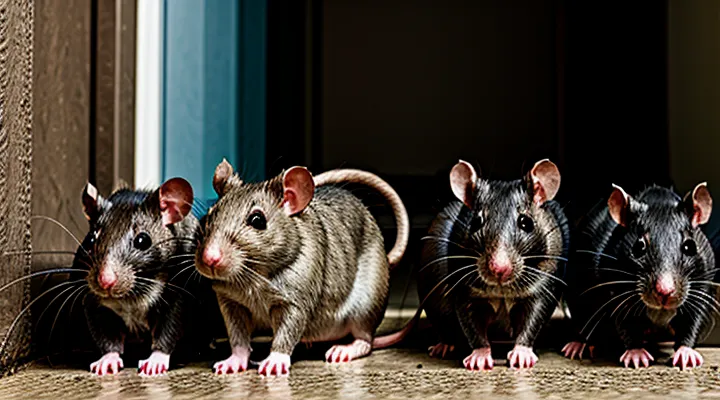
Factors Influencing Rat Size
Genetics and Breed
Adult rat dimensions are largely determined by genetic inheritance and selective breeding. Each strain carries a distinct set of alleles that influence skeletal growth, muscle development, and overall body proportions. When two individuals mate, offspring receive a combination of these alleles, producing predictable size patterns within a breed.
Breed-specific size ranges illustrate the genetic impact:
- Standard (brown) rats: average body length 20–25 cm, weight 250–300 g.
- Fancy (color) rats: length 18–23 cm, weight 200–280 g; coloration does not affect size, but the breeding lines often emphasize compactness.
- Dwarf (e.g., “dwarf” or “miniature”) rats: length 15–20 cm, weight 150–200 g; a recessive dwarfism gene reduces overall growth.
- Giant (e.g., “large” or “jumbo”) rats: length up to 30 cm, weight 350–500 g; selective breeding for larger body mass amplifies growth‑related genes.
Genetic markers such as the Growth Hormone Receptor (GHR) and Insulin‑like Growth Factor 1 (IGF‑1) loci show measurable variation between these lines. Breeders exploit these markers to stabilize desired size traits across generations. In addition, polygenic inheritance ensures that environmental factors—nutrition, housing, health—moderate but do not override the genetic baseline.
Consequently, understanding the hereditary framework and breed classification enables accurate predictions of adult rat dimensions and informs responsible breeding practices.
Diet and Nutrition
Adult rats reach a body length of 20–25 cm (excluding the tail) and a weight of 300–500 g, but these measurements vary with the quality and composition of their diet. Adequate protein supplies the amino acids necessary for muscle development; a diet containing 18–22 % crude protein supports normal growth, while lower levels result in reduced body mass and shorter length. Energy density influences overall size: diets providing 3.5–4.0 kcal g⁻¹ promote optimal weight gain, whereas excessive calories can lead to obesity without increasing skeletal length.
Key nutrients affecting mature rat dimensions include:
- Calcium and phosphorus (1.0–1.5 % and 0.8–1.0 % of the diet, respectively) for bone elongation and density.
- Vitamin D3 (1,000–2,000 IU kg⁻¹) to facilitate calcium absorption and skeletal mineralization.
- Essential fatty acids (omega‑3 and omega‑6) to support cell membrane integrity and overall growth.
- Trace minerals such as zinc and copper (30–50 ppm) which influence enzymatic processes related to tissue development.
Feeding practices also shape adult size. Continuous access to a balanced pelleted diet yields consistent growth rates, while intermittent feeding or reliance on low‑nutrient food sources can produce stunted individuals. Water availability is critical; dehydration reduces feed intake and impairs weight gain.
In summary, the dimensions of mature rats are directly linked to dietary protein level, caloric content, and the presence of specific vitamins and minerals. Proper formulation of these components ensures that adult rats achieve the typical length and weight ranges documented for the species.
Environment and Health
Adult rats typically measure 20–30 cm in total length, including a 10–15 cm tail, and weigh 250–500 g. Size varies among species; the common brown rat (Rattus norvegicus) reaches the upper end of this range, while the black rat (Rattus rattus) remains slightly smaller.
Environmental conditions directly affect these dimensions. Factors that modify growth include:
- Nutrient density of the diet; protein‑rich feed accelerates weight gain.
- Ambient temperature; cooler environments increase body mass as rats store more fat for thermoregulation.
- Cage space and population density; overcrowding limits growth, while spacious enclosures permit full development.
- Light cycles; extended daylight can stimulate hormonal pathways linked to growth.
Health outcomes correlate with adult size. Larger individuals exhibit higher basal metabolic rates, which can influence susceptibility to metabolic disorders such as fatty liver disease. Conversely, under‑sized rats often display weakened immune responses and heightened stress markers, raising the risk of respiratory infections and gastrointestinal problems. Monitoring size alongside environmental variables provides a practical metric for assessing the welfare and disease risk of laboratory or pet rat populations.
Sex Differences
Adult rats exhibit measurable sexual dimorphism in overall dimensions. Males typically attain greater body length, mass, and tail length than females, reflecting hormonal influences on growth patterns.
- Body length (nose‑to‑base of tail): males 20–25 cm; females 18–22 cm.
- Tail length: males 17–22 cm; females 15–20 cm.
- Body mass: males 300–500 g; females 250–400 g.
These ranges represent averages for common laboratory strains such as Sprague‑Dawley and Wistar under standard housing conditions. Variation arises from genetics, diet, and environmental factors, but the male‑biased size advantage remains consistent across studies.
The size disparity influences experimental design. Male rodents require larger cages and higher feed allocations, while female subjects occupy slightly less space and consume fewer calories. When measuring physiological parameters, researchers must adjust for sex‑specific baseline values to avoid confounding results.
Overall, adult rat size differences between sexes are predictable and quantifiable, supporting precise planning in laboratory and veterinary contexts.
Average Size of Adult Rats
Common Pet Rat Breeds and Their Sizes
Adult pet rats vary in size according to breed, genetics, and nutrition. Most domestic rats reach a length of 9–11 cm (head‑body) and weigh between 300 and 500 g when fully mature. Specific breeds display predictable ranges that help owners anticipate space, diet, and handling requirements.
- Standard Fancy Rat – The most widely kept type; adult length 9–11 cm, weight 300–500 g. Coat colors and patterns are numerous, but size remains consistent across varieties.
- Dumbo Rat – Named for large, low‑set ears; body length 9–11 cm, weight 350–550 g. Ear size adds apparent bulk, but overall mass aligns with standard rats.
- Rex Rat – Characterized by a curly, plush coat; adult dimensions match the standard breed, 9–11 cm length, 300–500 g weight. Coat texture does not affect growth.
- Hairless Rat – Lacks fur, exposing skin; size identical to standard rats, 9–11 cm length, 300–500 g weight, though skin may appear larger due to lack of insulation.
- Tailless (Manx) Rat – Shortened tail; body length remains 9–11 cm, weight 300–500 g. Tail reduction does not influence overall mass.
Occasionally, selective breeding produces larger individuals that exceed 12 cm in length and approach 600 g, but these are outliers rather than breed norms. Monitoring growth curves ensures that each rat remains within the expected size parameters for its breed, supporting optimal health and husbandry.
Wild Rat vs. Domestic Rat Size
Adult wild rats typically reach a body length of 7–10 cm (head‑to‑base) with a tail of similar length, and weigh between 200–500 g. Domestic rats, selectively bred for laboratory or pet purposes, commonly attain 9–12 cm body length and a 15–20 cm tail, with adult weights ranging from 250 g to over 600 g for larger strains.
-
Wild species (Rattus norvegicus, Rattus rattus):
• Body length: 7–10 cm
• Tail length: 7–10 cm
• Weight: 200–500 g -
Domestic (laboratory or pet) strains:
• Body length: 9–12 cm
• Tail length: 15–20 cm
• Weight: 250–600 g (some breeds exceed 800 g)
Growth differences stem from genetics, diet, and environmental pressures. Wild rats experience variable nutrition and high predation risk, limiting maximum size. Domestic rats receive consistent, nutrient‑dense feed and live in protected settings, allowing greater mass accumulation and longer tails.
Measuring Rat Dimensions
Weight Considerations
Adult rats reach a mature body mass that varies noticeably among strains, sexes, and environments. Laboratory strains such as Sprague‑Dawley or Wistar commonly weigh 250–350 g (9–12 oz). Pet rats of mixed heritage average 300–500 g (10–18 oz). Wild brown rats (Rattus norvegicus) usually fall between 150 and 300 g (5–11 oz), with males on the higher end of the spectrum.
Weight is determined by several biological and husbandry factors:
- Genetic background – selective breeding can produce larger or smaller individuals.
- Sex – males typically exceed females by 10–20 % in mature weight.
- Nutritional intake – caloric density and protein content directly influence growth rate and final mass.
- Physical activity – higher activity levels promote leaner body composition, reducing fat accumulation.
- Health status – parasites, disease, or chronic stress can cause weight loss or abnormal gain.
Accurate weight monitoring supports effective care. Feeding regimens should be calibrated to the animal’s current mass, with adjustments made for growth phases or health changes. Sudden deviations of more than 10 % from an established baseline warrant veterinary evaluation, as they often signal metabolic disorders, infection, or dietary imbalance. Maintaining weight within the expected range ensures optimal physiological function and longevity for adult rats.
Body Length vs. Tail Length
Adult rats typically measure between 20 and 25 cm (8–10 in) from the tip of the nose to the base of the tail. The tail adds an additional 15 to 20 cm (6–8 in), resulting in a total length of 35–45 cm (14–18 in). These dimensions vary slightly among common laboratory strains and wild populations, but the overall proportion remains consistent.
- Body length (head + torso): 20–25 cm (8–10 in)
- Tail length: 15–20 cm (6–8 in)
- Tail‑to‑body ratio: approximately 0.75 – 0.85
The tail length is not a random extension; it typically represents 75–85 % of the body length. This proportion supports thermoregulation, balance, and communication. Measurements are taken with a flexible ruler or digital calipers, positioning the animal on a flat surface and recording the distance from the nasal tip to the cloacal opening for body length, then from the cloacal opening to the tail tip for tail length. Consistent methodology ensures reliable data across studies.
When Do Rats Stop Growing?
Growth Stages and Milestones
Adult rats progress through distinct developmental phases, each marked by measurable changes in body length and mass. The embryonic period lasts approximately 21–23 days, after which pups are born blind, hairless, and weigh 5–7 g. Within the first week, fur appears and ear pinnae become visible; by day 10, locomotor activity increases and the pups begin to explore the nest.
Weaning occurs around day 21. At this point, body weight typically reaches 30–45 g, and crown‑to‑rump length measures 8–10 cm. The transition to independence is accompanied by the onset of solid‑food consumption and the development of adult dentition.
Juvenile growth continues rapidly until sexual maturity, which is reached between 5 and 8 weeks of age. Males generally attain 150–250 g and a length of 20–25 cm, while females average 120–200 g and 18–22 cm. The emergence of reproductive organs and the first estrus cycle in females signal the completion of this stage.
Adult size stabilizes after the eighth week. Mature individuals maintain the following ranges:
Weight fluctuations beyond these limits often indicate health issues or atypical genetics rather than normal growth.
Reaching Full Maturity
Adult rats attain full physical development between 10 and 12 weeks of age. At this stage growth in length and mass plateaus, and further changes are limited to minor fluctuations in body condition.
Typical dimensions for the most common laboratory and pet species are:
-
Norway (Rattus norvegicus) – wild type:
- Body length (head‑to‑base of tail): 20–25 cm
- Tail length: 18–25 cm
- Weight: 250–500 g, with males averaging 10–15 % heavier than females
-
Fancy (domesticated) rats – mixed strains:
- Body length: 18–22 cm
- Tail length: 16–22 cm
- Weight: 200–350 g, occasional individuals exceeding 400 g under optimal nutrition
Growth phases preceding maturity include:
- Neonatal period (0–3 weeks): rapid weight gain, skeletal elongation.
- Juvenile stage (3–10 weeks): linear growth dominates, whisker length and ear size increase.
- Maturation (10–12 weeks): endocrine changes close epiphyseal plates, stabilizing length; body composition shifts toward higher muscle mass.
Factors that modify adult size:
- Genetics: selective breeding can produce dwarf or giant phenotypes, altering both weight and length.
- Nutrition: protein‑rich diets accelerate early growth but do not significantly exceed genetic size limits.
- Environmental temperature: cooler housing can reduce overall mass due to higher metabolic demand.
Understanding the precise age at which rats cease linear growth enables accurate planning of experimental timelines, husbandry protocols, and health assessments. Once the 10‑ to 12‑week threshold is passed, any further weight variation reflects changes in body condition rather than true growth.
The Range of Rat Sizes
Smallest Adult Rats
The smallest adult rats belong to the dwarf and miniature varieties commonly kept as pets. Adult dwarf rats reach a body length of 6–8 cm (2.4–3.1 in) and a tail length of 5–7 cm (2.0–2.8 in). Their weight ranges from 70 g to 120 g (2.5–4.2 oz), considerably less than the 300–500 g (10.5–17.5 oz) typical of standard laboratory strains.
Key characteristics of the smallest adult rats:
- Dwarf (Rattus norvegicus) strains – selective breeding reduced overall size while maintaining normal physiology.
- Miniature Fancy rats – exhibit similar dimensions, with slight variation in coat color and ear size.
- Laboratory dwarf lines – used in research for metabolic studies; adult body mass averages 80 g (2.8 oz).
Growth patterns show that these rats attain full size by 10–12 weeks of age. Skeletal development follows the same timeline as larger counterparts, but proportional scaling results in reduced organ mass and shorter limbs. Nutrition requirements correspond to body weight; caloric intake is approximately 12–15 kcal per day for a 100 g adult.
In summary, the smallest adult rats measure under 8 cm in body length, weigh less than 120 g, and reach maturity within three months. Their compact size results from targeted breeding programs that emphasize reduced stature without compromising health.
Largest Adult Rats
Adult rats display a broad range of dimensions, with several species attaining sizes far beyond those of common laboratory or pet varieties. The most massive representatives belong to the genus Mallomys and the African giant pouched rat (Cricetomys gambianus).
- Bosavi woolly rat (Mallomys sp.) – head‑body length up to 82 cm, tail length 30–35 cm, weight 1.2–1.5 kg.
- New Guinea giant rat (Mallomys spp.) – head‑body length 70–80 cm, tail 25–30 cm, weight 1.0–1.3 kg.
- African giant pouched rat (Cricetomys gambianus) – head‑body length 30–45 cm, tail 20–30 cm, weight 0.7–1.0 kg.
These specimens surpass the typical 20–30 cm body length and 200–300 g weight of Rattus norvegicus or Rattus rattus. Their dimensions result from evolutionary pressures in forested habitats, where abundant resources and reduced predation allow prolonged growth periods. In captivity, the large body mass demands spacious enclosures, reinforced flooring, and diets providing higher caloric intake to sustain health.
Understanding the upper limits of rat size informs veterinary care, enclosure design, and comparative studies of rodent physiology. The documented measurements establish clear benchmarks for what adult rats can achieve under optimal conditions.
Implications of Rat Size
Housing Requirements
Adult rats typically reach a body length of 9–11 inches (23–28 cm) with a tail extending another 5–7 inches (13–18 cm). Enclosures must provide enough floor space for the animal to stretch fully, turn, and move without restriction.
- Minimum floor area per individual: 10 inches × 10 inches (25 cm × 25 cm) for a single rat; larger groups require proportionally more space.
- Recommended floor area for a pair: 20 inches × 12 inches (50 cm × 30 cm) or greater.
- Height of cage side walls: at least 12 inches (30 cm) to allow climbing and placement of enrichment items.
Adequate height prevents rats from escaping and supports vertical activity. Wire mesh should have openings no larger than ½ inch (12 mm) to avoid entrapment while ensuring airflow.
Bedding should be at least 2 inches (5 cm) deep, using absorbent, dust‑free material such as paper pulp or aspen shavings. Regular replacement maintains hygiene and reduces odor.
When housing multiple rats, maintain a minimum of 10 inches × 12 inches (25 cm × 30 cm) per animal, and provide solid partitions if sub‑groups require separation. Sufficient space, proper height, and appropriate bedding collectively meet the physical needs of adult rats and promote healthful behavior.
Health Considerations and Weight Management
Adult laboratory and pet rats reach a body length of 20–30 cm (head‑to‑base) and a tail length of 15–25 cm. Body mass usually falls between 250 g and 500 g, with males averaging slightly higher values than females. These dimensions define the physiological baseline for healthy growth.
Excessive weight compromises cardiovascular function, reduces mobility, and predisposes rats to metabolic disorders such as fatty liver disease. Under‑weight individuals suffer from impaired immunity, delayed wound healing, and increased susceptibility to infections. Maintaining weight within the established range supports optimal organ performance and longevity.
Effective weight control combines nutrition, environmental enrichment, and regular monitoring.
- Provide a balanced diet containing 18 %–22 % protein, 4 %–6 % fat, and adequate fiber; avoid high‑calorie treats.
- Measure food portions daily; adjust quantities according to observed body condition.
- Offer chewable toys, tunnels, and climbing structures to stimulate physical activity.
- Conduct weekly weight checks; record values and compare with breed‑specific standards.
- Consult a veterinarian if weight deviates more than 10 % from the target range.
Lifespan and Size
Adult rats (Rattus norvegicus) typically live 2 to 3 years under laboratory conditions, with a maximum of 4 years reported in optimal environments. In the wild, average lifespan shortens to 1–2 years due to predation, disease, and variable food supply.
Body length of a mature rat, measured from nose to the base of the tail, ranges from 18 cm to 25 cm. Tail length adds an additional 15 cm to 20 cm, yielding a total length of 33 cm to 45 cm. Weight varies with sex and strain:
- Male: 300 g – 500 g
- Female: 250 g – 350 g
Body mass peaks between 10 and 12 months of age, after which gradual decline accompanies aging.
Size and lifespan are linked through metabolic rate: larger individuals exhibit slightly longer longevity, while rapid growth in early life correlates with earlier onset of age‑related decline. Consequently, the dimensions outlined above represent the typical adult size for rats that have reached full maturity within their expected lifespan.
Dispelling Myths About Rat Size
Common Misconceptions
Many people assume adult rats are uniformly small, yet their size varies with species, genetics, and nutrition. Misunderstandings persist because popular media often portray rodents as miniature pets without acknowledging biological diversity.
- Misconception: All adult rats fit within a 5‑inch body length. Fact: Common laboratory and pet strains typically measure 7–10 inches from nose to base of the tail; some dwarf breeds remain near 5 inches, but larger varieties exceed that range.
- Misconception: Tail length equals body length. Fact: Tail length usually matches or surpasses body length, adding another 6–9 inches, so total length can reach 15 inches or more.
- Misconception: Weight stays below 200 grams regardless of age. Fact: Healthy adult females often weigh 250–300 grams; males can approach 500 grams, especially in well‑fed environments.
- Misconception: Size is fixed after puberty. Fact: Growth continues slowly for several months after sexual maturity, with minor increases in both length and mass.
Accurate measurements depend on proper handling and consistent reference points. Researchers and owners who rely on precise dimensions benefit from using calipers for body length and a flexible tape for tail measurement. Data collected under standardized conditions reveal that adult rat size is broader than commonly portrayed, aligning with species‑specific growth patterns rather than a single universal standard.
Reality vs. Perception
Adult rats typically measure 7–10 cm from nose to the start of the tail, with tails adding another 8–12 cm. Body weight ranges from 250 g to 500 g for common laboratory strains; larger breeds such as the Norwegian rat can exceed 600 g. Male individuals generally outweigh females by 10–20 percent, and genetic lineages influence both length and mass.
Public perception often exaggerates size, portraying rats as either diminutive pets or monstrous pests. Media images frequently depict oversized rodents, reinforcing fear or fascination. Conversely, pet owners sometimes underestimate growth potential, expecting a constant size after a few weeks. These misconceptions arise from selective visual representations and limited exposure to mature specimens.
Empirical measurements clarify the discrepancy. Studies of laboratory colonies report average total length (including tail) of 15–22 cm and weight peaks at 450 g for mature males. Field observations of wild brown rats (Rattus norvegicus) show similar dimensions, with occasional individuals reaching 30 cm total length in resource‑rich environments. Seasonal food abundance can temporarily increase body mass, yet length remains within the established range.
Understanding the factual dimensions helps align expectations with reality. Accurate size data informs cage design, handling protocols, and humane pest‑control strategies, reducing reliance on exaggerated or minimized visual cues.