
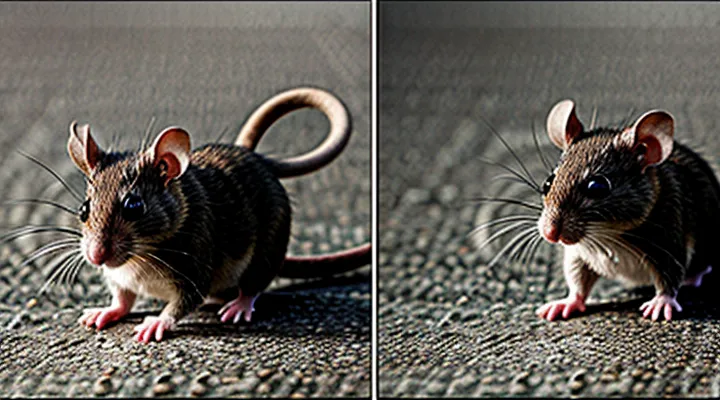
Understanding Mouse Behavior and Fears
The Instinctual Nature of Fear in Mice
Predatory Threats and Their Impact
Predatory presence constitutes the primary source of fear for rodents, triggering instinctive escape responses and heightened vigilance. Natural hunters—birds of prey such as owls and hawks, small carnivorous mammals including foxes, ferrets, and domestic cats—exert pressure through visual, auditory, and olfactory cues that mice readily detect. The impact of these threats manifests in three distinct behavioral adaptations:
- Immediate flight to concealed burrows or crevices upon detection of predator silhouettes or sudden movements.
- Sustained reduction in foraging activity during periods of heightened predator activity, resulting in limited nutrient intake.
- Increased use of scent‑marking and communal alarm signals to warn conspecifics of nearby danger.
Physiological stress responses accompany these behaviors, elevating cortisol levels and accelerating heart rate, which together diminish long‑term reproductive success. Consequently, predatory threats shape population dynamics by imposing selective pressure that favors individuals with heightened sensory acuity and rapid decision‑making capabilities.
Environmental Stressors and Their Influence
Environmental stressors constitute the primary drivers of fear responses in small rodents. Exposure to adverse conditions triggers physiological arousal, heightened vigilance, and escape behavior, which together reduce survival prospects.
Key stressors include:
- Predator‑derived cues such as urine, feces, or fur fragments; olfactory detection elicits rapid freezing and fleeing.
- Sudden acoustic disturbances; high‑frequency sounds beyond normal ambient levels provoke startle reflexes.
- Intense illumination; bright, fluctuating light sources increase perceived exposure to predators.
- Extreme temperatures; both hyperthermia and hypothermia activate thermoregulatory distress pathways.
- Chemical irritants; ammonia, formaldehyde, or strong odors disrupt nasal epithelium and induce avoidance.
- Spatial confinement; limited shelter or overcrowding elevates stress hormones and impairs exploratory behavior.
Physiological measurements consistently reveal elevated corticosterone and heart rate under these conditions, confirming activation of the hypothalamic‑pituitary‑adrenal axis. Behavioral assays demonstrate reduced time spent in open arenas, increased latency to approach food, and preference for dark, enclosed zones when any of the listed stressors are present.
Mitigation strategies focus on minimizing exposure: controlling predator presence, dampening abrupt noises, providing stable low‑light environments, maintaining temperature within thermoneutral range, eliminating harsh chemicals, and ensuring adequate nesting material. Implementation of these measures lowers stress indicators and improves overall welfare.
Key Factors That Instill Fear in Mice
Natural Predators and Their Deterrent Effect
Feline Presence and Scent
Mice react instinctively to the presence of felines, a response rooted in evolutionary survival mechanisms. Visual detection of a cat’s silhouette triggers heightened alertness, while the mere awareness of a predator’s proximity initiates rapid escape behavior.
Key factors of feline influence include:
- Visual silhouette resembling a hunting predator.
- Audible cues such as low‑frequency purrs or footfalls.
- Chemical signatures left by cats, notably secretions of felinine and other pheromones.
- Territorial markings, including scratch marks and urine, which embed scent cues in the environment.
The scent component exerts a profound effect. Chemical analysis identifies felinine, a sulfur‑containing compound, as a primary deterrent. Mice detect concentrations as low as a few parts per billion, prompting avoidance of areas marked by this odor. Additionally, feline urine contains volatile compounds that reinforce the perception of danger, leading mice to alter foraging routes and nesting sites.
Behavioral studies confirm that exposure to feline scent alone, without visual contact, reduces mouse activity levels by up to 60 %. This suppression persists even when the source of the scent is removed, indicating a lasting imprint on the rodent’s risk assessment system.
Overall, the combination of visual, auditory, and especially olfactory cues establishes felines as the dominant threat in the mouse’s environment, shaping movement patterns and habitat selection.
Avian Predators and Overhead Threats
Mice exhibit heightened vigilance toward aerial predators, especially birds that hunt from above. Visual detection of wing silhouettes, rapid flight patterns, and shadow cues trigger immediate escape responses. The threat perception relies on the mouse’s ability to process motion in the upper visual field, where predator activity concentrates.
Key avian threats include:
- Raptors such as hawks, owls, and falcons, whose hunting strategy involves soaring or perching at height before diving.
- Corvids, notably crows and magpies, that exploit opportunistic attacks from trees or structures.
- Gulls and swallows, which may swoop low over open areas, creating sudden disturbances.
Physiological reactions involve increased heart rate, release of stress hormones, and activation of the startle circuitry in the brainstem. Behavioral manifestations consist of rapid retreat to burrows, freezing in concealed positions, and heightened use of cover objects.
Environmental factors amplify risk. Open fields lacking overhead cover provide unobstructed sightlines for birds, while dense vegetation reduces exposure. Artificial lighting at night can attract nocturnal predators, extending the period of vulnerability.
Mitigation strategies focus on reducing aerial visibility. Structural modifications, such as installing overhead barriers or planting dense shrub layers, limit line‑of‑sight exposure. Managing habitat features that attract predatory birds—such as limiting perching sites—further diminishes the perceived threat level for mice.
Reptiles and Their Ground-Level Danger
Reptiles constitute a dominant source of terror for mice that forage close to the ground. Their predatory tactics combine stealth, rapid acceleration, and acute sensory systems, creating an environment in which rodents experience heightened vigilance and avoidance behavior.
Key reptilian threats include:
- Snakes – employ infrared-sensitive pits to locate warm‑blooded prey, strike with velocities exceeding 7 m s⁻¹, and often possess venom that immobilizes small mammals within seconds.
- Monitor lizards – rely on powerful forelimb thrusts and serrated teeth to capture and subdue rodents, especially in arid habitats where shelter is scarce.
- Gila monsters – deliver a potent neurotoxic bite that quickly incapacitates prey, discouraging repeated foraging in their vicinity.
«Snakes rely on heat‑sensing pits to locate rodents», notes a herpetological study, emphasizing the precision of reptile hunting at low elevations. Camouflage further enhances danger; many species blend with leaf litter and soil, reducing detection distance for mice to mere centimeters.
Exposure to reptilian predators triggers immediate physiological responses in mice: elevated cortisol levels, increased heart rate, and a shift toward nocturnal activity. These reactions limit foraging time and alter habitat selection, reinforcing the role of ground‑level reptiles as the principal fear factor for small rodents.
Human Intervention and Related Fears
Traps and Other Control Methods
Mice react strongly to sudden motion, sharp edges, and intense sensory stimuli. Control devices exploit these reactions to achieve rapid deterrence.
- Snap traps deliver a swift, forceful closure that triggers an immediate escape response.
- Electronic traps emit a high‑frequency pulse followed by a lethal shock, creating a sudden, painful stimulus.
- Live‑catch traps confine rodents within a confined space, generating panic through restricted movement.
- Glue boards present a sticky surface that immobilizes, producing an overwhelming sense of entrapment.
Additional methods reinforce the aversion effect. Ultrasonic emitters broadcast frequencies beyond human hearing, causing discomfort without visual cues. Rodent‑repellent granules release strong odors—such as peppermint oil or predator urine—that overwhelm olfactory receptors. Physical barriers, including steel mesh and sealed entry points, eliminate safe passages, forcing mice to confront unfamiliar, hostile environments.
Combining mechanical traps with sensory deterrents maximizes the perceived threat, leading to rapid population decline and reduced damage. Regular monitoring and prompt replacement of ineffective devices maintain consistent pressure on rodent activity.
Repellents and Their Efficacy
Repellents constitute a primary strategy for reducing rodent intrusion in residential and commercial environments. Their purpose is to create an environment perceived as hostile, prompting mice to avoid treated areas.
Common categories include:
- Chemical agents such as ammonia, peppermint oil, and capsaicin formulations.
- Ultrasonic devices emitting frequencies above 20 kHz.
- Predator‑derived scents, for example, fox urine or synthetic ferret pheromones.
- Physical barriers treated with bittering agents or adhesive compounds.
Efficacy varies with formulation, concentration, and application method. Chemical repellents demonstrate measurable success when applied directly to entry points and food storage surfaces; effectiveness diminishes after exposure to moisture or ventilation. Ultrasonic units achieve limited impact, often restricted to small, enclosed spaces and susceptible to interference from ambient noise. Predator scents provoke short‑term avoidance but lose potency as mice habituate to the odor. Physical barriers provide consistent deterrence when maintained without gaps or degradation.
Optimal results arise from integrating multiple approaches. Deploy chemical deterrents at known ingress locations, complement with ultrasonic units in isolated rooms, and reinforce with predator‑derived scents near perimeter zones. Regular monitoring and reapplication of volatile agents ensure sustained potency. Combining repellents with exclusion techniques—such as sealing cracks and eliminating food sources—maximizes overall reduction of mouse activity.
Loud Noises and Vibrations
Loud noises and vibrations trigger immediate defensive reactions in mice. Sudden acoustic peaks above 70 dB and rapid substrate movements activate the auditory and mechanosensory pathways, causing a startle reflex that includes rapid muscle contraction and increased heart rate.
Physiological response includes heightened catecholamine release, elevated respiration, and activation of the hypothalamic‑pituitary‑adrenal axis. These changes prepare the animal for escape but also impair normal foraging and social interaction when the stimulus persists.
Behavioral consequences are observable as:
- Immediate freezing or retreat to the nearest shelter;
- Preference for low‑frequency, low‑amplitude environments;
- Reduced exploration of areas associated with recurrent disturbances;
- Increased use of burrows or hidden crevices as escape routes.
In controlled settings, exposure to repetitive loud sounds or mechanical vibrations leads to habituation only after prolonged, low‑intensity training, whereas intermittent high‑intensity events maintain avoidance behavior. Consequently, effective rodent deterrence strategies rely on unpredictable, high‑amplitude acoustic or vibratory cues rather than constant low‑level background noise.
Olfactory Deterrents
Peppermint Oil and Other Strong Scents
Peppermint oil is widely recognized for its repellent properties against rodents. The volatile compound menthol activates sensory receptors in the nasal epithelium of mice, producing an overwhelming odor that interferes with their ability to locate food and shelter. Laboratory trials have demonstrated a decrease in mouse activity within environments treated with concentrations of 5–10 % peppermint oil, indicating a strong aversive response.
Other aromatic substances exhibit comparable deterrent effects. Commonly employed strong scents include:
- Citronella oil – contains citronellal and geraniol, which trigger olfactory overload.
- Eucalyptus oil – rich in eucalyptol, producing a sharp, penetrating aroma.
- Clove oil – high in eugenol, causing irritation of the respiratory tract.
- Ammonia – releases a pungent vapor that irritates mucous membranes.
Effectiveness depends on concentration, application method, and environmental ventilation. Direct spraying or impregnating cotton balls with the oil provides immediate coverage, while slow‑release diffusers maintain a persistent odor gradient. Reapplication is necessary because volatile compounds dissipate over time, typically within 24–48 hours under normal indoor conditions.
Safety considerations restrict the use of strong scents in areas accessible to humans and pets. Peppermint oil, when diluted to recommended levels, poses minimal risk, but excessive exposure may cause skin irritation or respiratory discomfort. Regulatory guidelines advise labeling treated zones and avoiding direct contact with eyes and mucous membranes.
Integration of aromatic repellents with physical exclusion measures—such as sealing entry points and maintaining cleanliness—enhances overall control. The combination reduces the likelihood of habituation, as mice are less able to adapt to multiple sensory deterrents simultaneously.
Ammonia and Predator Urine
Chemical cues that signal danger provoke immediate avoidance in rodents. Two potent stimuli are ammonia vapor and the urine of predatory species.
Ammonia presents a sharp, irritating odor detectable at low concentrations. Olfactory receptors in the nasal epithelium bind ammonia molecules, triggering neural pathways associated with distress. Laboratory observations record rapid withdrawal from environments where ammonia levels exceed 10 ppm, accompanied by heightened respiration and reduced exploratory activity.
Predator urine contains a complex mixture of kairomones, such as sulfur‑containing compounds and specific pheromonal peptides. These substances are recognized as innate alarm signals, activating the vomeronasal organ and the amygdala. Exposure results in freezing, increased vigilance, and a marked decline in foraging behavior, even when the predator is absent.
Both agents serve as reliable indicators of threat, making them valuable tools in rodent management. Their effectiveness stems from:
- Immediate sensory detection
- Activation of conserved fear circuits
- Consistent behavioral suppression across mouse strains
Utilization of ammonia foggers or predator‑urine‑based repellents can reduce mouse activity in storage facilities, laboratories, and residential settings without reliance on toxic chemicals.
Visual Deterrents
Decoys and Silhouette Devices
Decoys and silhouette devices exploit the innate predator‑avoidance circuitry of rodents. Visual silhouettes resembling birds of prey, snakes, or domestic cats trigger a rapid escape response, even when the threat is non‑functional. The presence of a static silhouette disrupts foraging patterns, forcing mice to relocate to safer zones within a few minutes of exposure.
Effectiveness depends on three factors: contrast against the background, realistic posture, and motion simulation. High‑contrast silhouettes placed near entry points create a visual barrier that mice interpret as a lethal obstacle. Motion‑activated mechanisms that sway or flutter the decoy enhance perceived danger, reducing habituation and prolonging aversion.
Key characteristics of successful devices:
- Silhouette shape calibrated to common predators (e.g., owl outline, cat profile).
- Material with matte finish to avoid reflective glare that could diminish realism.
- Placement at ground level or on walls where mice travel, ensuring line‑of‑sight visibility.
- Optional battery‑powered motion module that initiates a brief oscillation every 30 seconds.
Integration of decoys with other deterrent methods—such as ultrasonic emitters or scent barriers—produces synergistic effects, lowering mouse activity across treated areas.
Bright Lights and Sudden Flashes
Bright lights and sudden flashes constitute a powerful aversive stimulus for rodents. Their visual system, optimized for low‑light conditions, reacts sharply to intense illumination.
Mice possess a retina dominated by rod cells, which amplify weak light but become saturated under bright exposure. Sudden increases in luminance trigger rapid pupil constriction and activation of the suprachiasmatic nucleus, signaling potential danger.
Typical behavioral responses include:
- Immediate cessation of foraging activity
- Rapid retreat to concealed, shadowed areas
- Heightened alertness and increased locomotor speed
Physiological reactions observed under intense flashes are:
- Elevated cortisol levels
- Accelerated heart rate
- Release of adrenaline, preparing the animal for escape
Practical applications exploit these responses. Devices that emit intermittent, high‑intensity LEDs create an environment that mice avoid, reducing infestation in storage facilities, warehouses, and residential spaces. Continuous exposure to moderate illumination also diminishes activity, but abrupt, unpredictable flashes prove most effective in sustaining avoidance.