
Understanding Common Misconceptions
The «Albino Rat» Designation
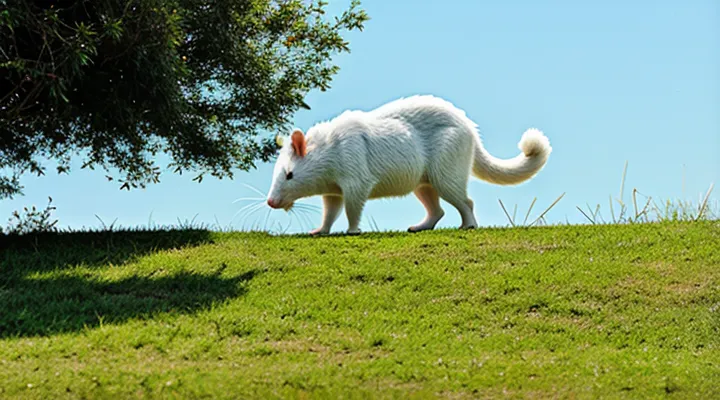
Albino rats are the term applied to large, white-furred rodents that lack pigment in their skin, hair, and eyes. The absence of melanin results in a pinkish nose and red eyes, distinguishing them from other white variants that retain some coloration.
Scientifically, albino rats belong to the species Rattus norvegicus and are often bred from the standard laboratory strain. Their genotype includes the recessive c allele, which suppresses melanin production. This genetic marker is the basis for the designation and is recognized by breeders and researchers worldwide.
Key characteristics of the albino designation:
- Completely white coat with no pigment
- Pink or red ocular tissue due to visible blood vessels
- Pink nose and paw pads
- Uniform appearance across individuals of the same breeding line
- Frequent use in biomedical research because lack of pigmentation simplifies visual assessments
The label “albino rat” is preferred over generic descriptors such as “white rat” because it conveys specific genetic information. In scientific literature, researchers cite the albino status to control for variables related to skin and eye pigmentation, ensuring reproducibility of experimental outcomes.
The «Laboratory Rat» Context
The large white laboratory rat is most commonly identified as a Wistar rat. Researchers select this strain for its calm temperament, rapid growth, and well‑documented genetics. Other white or light‑colored laboratory rats include:
- Sprague‑Dawley: albino, widely used for toxicology and pharmacology studies.
- Long‑Evans: pigmented but often bred to produce a white coat for specific experiments.
- Fischer 344: albino, favored in aging and cancer research.
These strains share several characteristics that make them suitable for controlled experiments: uniform size, predictable reproductive cycles, and extensive background data. The Wistar rat, in particular, originated from a breeding program at the Wistar Institute in the early 20th century and has become the benchmark for behavioral and physiological investigations. Its large, white phenotype simplifies visual assessments and facilitates standardization across laboratories.
Identifying Specific Rat Breeds and Strains
The «Wistar Rat»
Historical Origin and Development
The term applied to a sizable white specimen of the common rat has evolved through scientific taxonomy and laboratory breeding history. Early European naturalists identified the species as Rattus norvegicus, a name derived from its presumed Norwegian origin despite the animal’s broader distribution across Eurasia. The designation “Norwegian rat” persists in zoological literature and distinguishes the species from the smaller black Rattus rattus.
In the late 19th century, domestication for research introduced albino variants that lacked the typical brown coloration. Breeders coined the label “white rat” to describe these laboratory strains, emphasizing coat color rather than species. The most widely recognized names emerged from the institutions that developed the lines:
- Wistar rat – originated at the Wistar Institute, first described in 1906.
- Sprague‑Dawley rat – created by Sprague and Dawley in 1925 through selective breeding.
- Long‑Evans rat – introduced in the 1930s, noted for a white coat with a pigmented head.
These appellations reflect a shift from geographic or morphological descriptors to institutional branding, a practice that standardized nomenclature across scientific publications. The modern usage of “large white rat” typically references any of these albino laboratory strains, each possessing a documented breeding lineage that traces back to the early 20th‑century efforts to produce uniform, genetically tractable models for biomedical research.
Key Characteristics and Usage
The term applied to a sizable white rodent commonly encountered in research facilities and pet stores is the albino Norway rat, often referred to simply as the white laboratory rat.
Key characteristics:
- Coat: pure white fur lacking pigment, with pink or red eyes and nose.
- Size: adult body length 20–25 cm, tail length comparable to the body, weight 300–500 g.
- Skeletal structure: robust skull, pronounced incisors, strong hind limbs suited for burrowing.
- Temperament: docile, adaptable to confinement, high breeding rate, low aggression toward conspecifics.
- Sensory profile: diminished visual acuity compensated by heightened olfactory and auditory senses.
Primary usage:
- Scientific research: genetics, pharmacology, toxicology, neuroscience, and behavioral studies rely on the species for its predictable physiology and ease of manipulation.
- Education: biology and veterinary programs employ the animal for dissection, anatomy instruction, and experimental demonstrations.
- Pet industry: hobbyists keep albino rats for companionship, benefiting from their sociability and manageable size.
The «Sprague-Dawley Rat»
Origin and Distinguishing Features
The large white rat originated from the Norway rat (Rattus norvegicus) after breeders introduced an albino mutation and selected individuals for increased body size and docile temperament. Early 20th‑century laboratory colonies propagated the trait, creating a standardized strain used worldwide for scientific research.
Key distinguishing characteristics:
- Albinism: pink or red eyes, white fur lacking melanin.
- Size: average weight 300–500 g, longer body and limbs than typical brown Norway rats.
- Skull morphology: broader cranial vault, pronounced nasal bones, facilitating neuroanatomical studies.
- Tail: longer, proportionally thicker, with a uniform white coloration.
- Behavior: reduced aggression, heightened adaptability to captive environments, making the strain suitable for handling and experimentation.
Genetically, the strain carries the c (albino) allele in homozygous form and often includes markers for specific research purposes, such as susceptibility to certain pathogens or defined metabolic profiles. These attributes collectively define the large white rat as a distinct laboratory model.
Research Applications
The large white laboratory rat, scientifically known as Rattus norvegicus, serves as a standard model in biomedical investigations. Its size, genetic uniformity, and well‑documented physiology enable reproducible experiments across numerous disciplines.
Research fields that routinely employ this species include:
- Pharmacology: evaluation of drug efficacy, metabolism, and toxicity.
- Neuroscience: study of learning, memory, and neurodegenerative disease mechanisms.
- Immunology: assessment of immune responses, vaccine development, and pathogen‑host interactions.
- Toxicology: determination of environmental contaminant effects and safety thresholds.
- Genetics: manipulation of gene expression through transgenic and CRISPR techniques.
Key attributes that support these applications are a short reproductive cycle, robust breeding capacity, and extensive historical data sets for comparative analysis. The animal’s physiological responses closely mirror human systems in cardiovascular, renal, and endocrine functions, providing translational relevance.
Regulatory frameworks require adherence to humane handling, environmental enrichment, and justification of animal numbers. Compliance with these standards ensures ethical integrity while preserving scientific validity.
The «Long-Evans Rat»
Appearance and Behavioral Traits
The animal commonly referred to as a large white rat is scientifically named Rattus norvegicus and is also known as the Norway rat or brown rat. It is the most widespread rodent species in urban and rural environments.
Physically, the species exhibits the following characteristics:
- Body length of 20–25 cm, tail length of 15–20 cm.
- Weight ranging from 250 g to 500 g, with females typically lighter.
- Dense fur that appears whitish‑gray due to selective breeding; natural coloration is brownish‑gray.
- Robust skull with a blunt muzzle, strong incisors that continuously grow.
- Short, hairless ears and small, beady eyes adapted for low‑light activity.
Behaviorally, the rodent displays:
- Highly social organization; individuals live in colonies with defined hierarchies.
- Omnivorous diet, consuming grains, fruits, insects, and human waste.
- Primarily nocturnal activity, increased foraging during twilight hours.
- Rapid breeding cycle; gestation of 21–23 days, litters of 6–12 pups, multiple litters per year.
- Strong adaptability to varied habitats, including sewers, basements, and agricultural fields.
Role in Research
Large white rats are widely employed as experimental models in biomedical research. Their genetic uniformity, rapid breeding cycle, and physiological similarity to humans make them suitable for controlled studies of disease mechanisms and therapeutic interventions.
Key applications include:
- Pharmacological testing of new drugs and dosage regimens.
- Investigation of metabolic disorders such as diabetes and obesity.
- Examination of neurobehavioral processes and neurodegenerative disease models.
- Evaluation of toxicological effects of chemicals and environmental agents.
- Study of immunological responses and vaccine efficacy.
Data generated from these animals contribute to regulatory submissions, guide clinical trial design, and support the development of medical devices. Their use follows strict ethical guidelines, including institutional review board approval, adherence to the 3Rs principle (replacement, reduction, refinement), and compliance with national animal welfare legislation.
Genetic Factors Influencing Appearance
Albinism in Rodents
Genetic Basis of White Fur and Red Eyes
The standard designation for a sizable white laboratory rat is “albino rat.” In scientific settings the term refers to a rat with a uniformly white coat and pink‑to‑red irises, a phenotype produced by a specific genetic defect.
Albino coloration results from loss‑of‑function mutations in the tyrosinase gene (Tyr). Tyrosinase catalyzes the first step of melanin synthesis; when the enzyme is inactive, melanin production ceases, leaving the fur depigmented and the eyes translucent. Additional genes, such as Oca2 and Slc45a2, can generate comparable hypopigmentation when mutated, but the classic albino rat carries the Tyr mutation.
- Mutation type: typically a point mutation or deletion that abolishes enzymatic activity.
- Inheritance: autosomal recessive; both parents must carry the defective allele for offspring to display the phenotype.
- Phenotypic markers: white fur, red or pink eyes, lack of pigment in the retina and skin.
- Genetic testing: polymerase chain reaction (PCR) assays targeting the Tyr locus confirm albino status.
Common laboratory strains—Wistar, Sprague‑Dawley, and Long‑Evans—include albino variants that are deliberately bred for uniformity in research. These strains provide a consistent genetic background, facilitating reproducibility across biomedical experiments.
Health Implications of Albinism
The term applied to a sizable white rodent in scientific and hobbyist circles is “albino rat,” a designation that directly reflects the lack of pigment in its skin, fur, and eyes. This pigmentation deficiency, known as albinism, carries distinct health implications that affect both laboratory animals and pet populations.
Albinism disrupts normal ocular development, reduces melanin‑mediated protection against ultraviolet radiation, and impairs thermoregulation. These physiological changes create a predictable pattern of medical concerns.
- Reduced visual acuity and photophobia caused by underdeveloped retinal pathways.
- Increased susceptibility to skin lesions, cancers, and sunburn due to absent melanin shielding.
- Heightened risk of temperature‑related stress because the coat provides limited insulation.
- Potential auditory deficits linked to developmental anomalies in the inner ear.
Effective management requires controlled lighting, temperature‑stable housing, and regular veterinary monitoring. Breeding programs prioritize genetic screening to limit the propagation of severe albinism‑related disorders while preserving the research value of the albino rat phenotype.
Other Genetic Mutations Affecting Coat Color
Variations Beyond Pure White
A large albino rat, often referred to as a big white laboratory rat, is characterized by a complete lack of melanin, resulting in a stark white coat and pinkish eyes. Genetic mutations can produce coat patterns that deviate from this uniform coloration, creating distinct phenotypes useful for breeding programs and scientific studies.
- Ivory: faint cream hue, minimal pigment presence.
- Cream: soft yellowish tint, slight melanin reduction.
- Piebald: extensive white areas combined with darker patches.
- Agouti‑white: typical agouti pattern interrupted by large white sections.
- Dilute white: muted grayish‑white coat, reduced pigment intensity.
- Blue‑eyed white: white coat with reduced pigment in the iris, yielding a blue eye color.
These variations arise from alterations in the tyrosinase gene, modifier loci, or selective breeding strategies. Recognizing each phenotype facilitates accurate strain identification, enhances experimental reproducibility, and informs ethical breeding decisions.
The Role of Rats in Research and Pet Ownership
Domestication and Selective Breeding
The large, albino specimen commonly found in research facilities is the product of intentional domestication and selective breeding. Early 20th‑century breeders isolated wild Rattus norvegicus individuals that displayed a mutation for reduced pigmentation. By maintaining these individuals in controlled environments, they established a stable line with uniform white fur, reduced aggression, and heightened adaptability to laboratory conditions.
Selective breeding reinforced traits desirable for scientific work. Breeders repeatedly paired individuals that exhibited:
- Consistent coat coloration without spotting
- Calm temperament under handling
- Reproductive efficiency and short gestation periods
- Genetic uniformity to minimize experimental variability
These criteria produced a strain that is genetically homogeneous, facilitating reproducible results across studies. The process also eliminated alleles linked to disease susceptibility, further enhancing the model’s reliability.
Domestication extended beyond physical attributes. Over multiple generations, the rats adapted to human‑provided diets, lighting cycles, and cage environments. Their physiological responses became predictable, allowing researchers to attribute observed effects to experimental variables rather than environmental noise.
The resulting animal is routinely referred to as the “white laboratory rat” or “albino laboratory rat.” The terminology reflects both its coloration and its role as a standardized research subject, a designation rooted in the deliberate breeding program that shaped its phenotype and behavior.
Ethical Considerations in Animal Naming
The practice of assigning a specific label to a sizable albino laboratory rat influences how researchers, caretakers, and the public relate to the animal. Names convey perceived traits, affect communication, and can shape attitudes toward the creature’s moral status.
Ethical issues arising from this labeling include:
- Anthropomorphic bias – assigning human‑like qualities or affectionate monikers may obscure the rat’s biological reality and lead to inappropriate handling.
- Stigmatization – using derogatory or dismissive terms reinforces negative stereotypes, potentially justifying reduced welfare standards.
- Scientific precision – vague or emotive names hinder reproducibility, as they mask genetic background, strain details, or health status.
- Regulatory compliance – certain jurisdictions require neutral identifiers for animals used in research to avoid bias in reporting and oversight.
Addressing these concerns involves adopting neutral, descriptive terminology, documenting strain and phenotype information alongside any colloquial name, and ensuring that all personnel receive training on the impact of language on animal welfare. Implementing standardized naming protocols reduces bias, supports ethical research practices, and promotes transparent communication across disciplines.
Debunking Popular Naming Conventions
Why Generic Names Can Be Misleading
The term “large white rat” is often used as a catch‑all label, yet it obscures critical distinctions among species, breeds, and purposes. When a generic label replaces a precise scientific or breed name, several problems arise.
- Taxonomic ambiguity: A single common name may refer to multiple species, such as Rattus norvegicus (the Norway rat) and Rattus rattus (the black rat), each with different physiology and behavior.
- Research reproducibility: Studies that cite only a vague descriptor fail to convey the exact strain or lineage, compromising the ability to replicate experiments.
- Veterinary care: Treatment protocols depend on species‑specific disease susceptibility; a generic label can lead to misdiagnosis or inappropriate medication.
- Public perception: Broad names encourage misconceptions about size, coloration, and temperament, influencing pet owners’ expectations and animal welfare decisions.
Accurate identification requires referencing the scientific name, recognized breed, or standardized laboratory strain. This practice eliminates confusion, supports reliable data exchange, and ensures appropriate handling of the animal in both scientific and domestic contexts.
The Importance of Specific Terminology
Precise naming of a sizable albino rodent eliminates ambiguity in scientific records, regulatory documents, and commercial listings. When researchers refer to “large white rat” without a standardized term, data aggregation becomes error‑prone, and comparative studies may misinterpret results.
Unclear terminology can lead to misidentification in pest‑management protocols, breeding programs, and laboratory inventories. Mislabeling a specimen as merely “big white mouse” may cause procurement errors, dosage miscalculations, and compromised reproducibility of experiments.
Adopting exact descriptors, such as “large albino Rattus norvegicus,” provides several advantages:
- Consistent classification across databases
- Accurate communication between veterinarians, researchers, and suppliers
- Streamlined regulatory approval processes
- Reduced risk of cross‑species contamination in experimental settings
Implementing specific terminology therefore enhances data integrity, operational efficiency, and safety in all sectors dealing with this animal.