
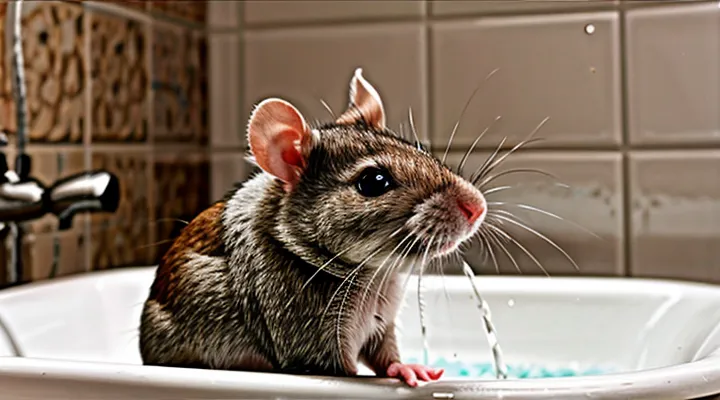
Understanding Rat Grooming
The Importance of Self-Grooming for Rats
Observing a rat deliberately cleaning its fur reveals a complex routine that directly influences health and behavior. The animal employs its forepaws and mouth to remove debris, distribute natural oils, and inspect skin integrity.
Key physiological benefits include:
- «skin protection» through removal of dirt and damaged hair, reducing infection risk.
- «parasite control» by dislodging mites and fleas, lowering disease transmission.
- «temperature regulation» achieved by spreading saliva, which evaporates and cools the body.
Social dynamics are also affected. Grooming signals hierarchy, reinforces bonds, and mitigates stress; individuals that neglect the activity often display heightened aggression and anxiety.
For caretakers, ensuring access to clean nesting material, safe grooming surfaces, and regular health checks supports the rat’s innate cleaning behavior. Providing enrichment that encourages self‑grooming can improve overall welfare and prevent dermatological issues.
Anatomical Adaptations for Washing
Paws and Mouth Usage
The rat demonstrated a systematic cleaning routine that combined tactile and oral actions. Its forelimbs moved in rapid, overlapping strokes, each digit contacting the fur to dislodge debris. The pads pressed against the skin, creating friction that lifted particles without damaging the coat.
Simultaneously, the animal employed its «mouth» to wet the fur, draw out loosened material, and smooth the surface. Licking actions followed each paw swipe, delivering saliva that reduced friction and added a protective layer. The tongue reached into areas inaccessible to the paws, such as the under‑belly and facial whisker bases.
Key elements of the behavior:
- Forelimb strokes: short, repetitive, covering the entire body.
- Pad pressure: moderate, enough to lift debris.
- Tongue contact: continuous after each paw movement, focusing on tight spots.
- Saliva distribution: uniform, providing lubrication and cleaning agent.
The coordination between «paws» and «mouth» produced an efficient self‑maintenance cycle, allowing the rat to maintain a clean coat with minimal effort.
Specialized Hair Structure
The footage of a rat performing a self‑cleaning routine highlights the organism’s highly adapted integumentary system. The animal’s coat consists of distinct hair categories, each contributing to the efficiency of the washing motion.
- «Guard hairs» – thick, coarse fibers covering the dorsal surface; repel water and protect underlying layers.
- «Underfur» – fine, dense pelage situated beneath guard hairs; traps debris and facilitates heat retention.
- «Vibrissae» – stiff, tactile whiskers positioned around the snout and facial region; detect water flow and surface texture during grooming.
The structural arrangement creates a multi‑layered barrier. Guard hairs channel excess moisture away from the skin, while underfur absorbs residual particles, allowing the rat to dislodge contaminants with rapid paw strokes. Vibrissae provide real‑time feedback, guiding precise movements of the forelimbs and mouth to reach concealed areas.
These hair adaptations enable rapid removal of soil and pathogens without external assistance. Understanding the configuration of the rat’s coat informs comparative studies of grooming mechanisms across mammalian species.
The Washing Process Unveiled
Initial Body Cleaning
Head and Face Grooming
The clip demonstrates a rat’s systematic approach to cleaning its head and face. The animal begins by positioning its forepaws on the snout, using the pads to spread saliva across the fur. This creates a lubricated surface that facilitates the removal of debris.
Subsequent actions include:
- Rubbing the whiskers with the forepaws to dislodge particles.
- Scraping the ears with the claws, alternating sides to reach the inner folds.
- Sweeping the muzzle in a circular motion, ensuring coverage of the entire facial area.
Throughout the sequence the rat maintains a steady rhythm, alternating between left and right paws to achieve balanced coverage. The behavior reflects an innate grooming pattern that preserves sensory organ function and fur condition.
Torso and Back Maneuvers
The rat employs coordinated torso rotations and dorsal flexions to dislodge debris from its fur. Each motion integrates muscular contraction with precise limb placement, creating a self‑cleaning cycle that maximizes surface coverage.
Key characteristics of the torso and back maneuvers include:
- Alternating lateral bends that compress the fur against the body, forcing particles outward.
- Rapid dorsal arches that lift the scapular region, exposing the upper back for thorough rinsing.
- Synchronous pelvic twists that generate centrifugal forces, driving water toward the tail and hind limbs.
- Repetitive rolling motions that combine the aforementioned actions, ensuring continuous removal of contaminants.
Observations indicate that the sequence initiates with a shallow side bend, progresses to a full dorsal arch, and concludes with a rolling motion that returns the rat to a neutral posture. The pattern repeats until the fur appears uniformly clean, demonstrating an efficient biomechanical strategy for personal hygiene.
Detailed Limb and Tail Care
Forelimb Washing Techniques
Rats demonstrate a series of coordinated forelimb movements when cleaning themselves, observable in the recorded sequence of the animal’s grooming behavior. The actions can be categorized as follows:
- Surface contact: The animal places the palm of each forelimb against the fur, applying gentle pressure to dislodge debris.
- Oscillatory strokes: Rapid, back‑and‑forth sweeps are performed along the length of the body, targeting areas that are difficult to reach with the mouth.
- Rotational twists: The wrist rotates to expose different angles of the fur, ensuring thorough coverage of the dorsal and ventral surfaces.
- Inter‑limb coordination: While one forelimb cleans a specific region, the opposite limb simultaneously prepares for the next target, maintaining a continuous cleaning rhythm.
These techniques serve to maintain coat integrity, reduce ectoparasite load, and regulate body temperature. The sequence observed in the visual material illustrates a systematic progression: initial forelimb placement, followed by alternating strokes, and concluding with a final inspection phase where the rat uses its whiskers to verify cleanliness. The precision of each movement reflects innate motor patterns refined through evolutionary pressure, enabling efficient self‑maintenance without external assistance.
Hindlimb and Tail Maintenance
The footage illustrating a rat’s cleaning routine provides clear evidence of coordinated hindlimb and tail maintenance. The animal employs its forepaws to direct water toward the posterior limbs, then uses the hindlimbs to scrub fur and skin, removing particulate matter. The tail, extended during the process, receives focused streams that dislodge debris from its surface and ventral groove.
Key aspects of the maintenance sequence include:
- Precise positioning of the hindlimbs to contact the lower body and tail region.
- Repetitive strokes that generate friction sufficient to detach contaminants.
- Continuous water flow that flushes loosened particles away from the skin.
- Final inspection of the tail tip, ensuring no residual buildup remains.
These actions preserve tactile sensitivity, prevent infection, and support overall locomotor efficiency. The observed behavior demonstrates a systematic approach to hygiene, integrating limb coordination and tail exposure without reliance on external grooming agents.
Factors Influencing Rat Washing Behavior
Environmental Cleanliness
The recorded footage of a rat performing a cleaning routine provides a clear illustration of environmental hygiene in action. The animal repeatedly immerses its paws in water, scrubs surfaces, and removes debris, demonstrating a natural instinct to maintain a contaminant‑free surroundings.
Observations reveal several mechanisms that contribute to effective sanitation:
- Repeated immersion of limbs facilitates removal of particulate matter.
- Vigorous rubbing creates friction that dislodges adhered substances.
- Use of flowing water transports waste away from the immediate area.
These behaviors underscore the importance of regular washing cycles in controlling microbial load. By mirroring the rat’s systematic approach, human sanitation protocols can achieve comparable reductions in surface contamination. Implementing scheduled rinsing, thorough mechanical agitation, and continuous water flow aligns with the principles exhibited in the animal’s routine, thereby promoting a cleaner environment.
Social Grooming Dynamics
Mutual Grooming Benefits
The clip shows a rat using its forepaws to clean a cage‑mate, an example of reciprocal grooming observed in rodents.
Mutual grooming delivers several measurable advantages:
- removal of parasites and debris, improving skin integrity;
- stimulation of cutaneous sensory receptors, which triggers parasympathetic activity and lowers cortisol levels;
- reinforcement of social hierarchy, establishing predictable interaction patterns;
- enhancement of immune function through the exchange of beneficial microbiota.
These effects combine to promote individual health and group stability, illustrating how cooperative cleaning behavior contributes to the adaptive success of the species.
Communication Through Grooming
The footage shows a rat engaging in meticulous self‑washing, a behavior that extends beyond hygiene. Observations reveal that the act functions as a conduit for information exchange within rodent groups.
Key functions of grooming‑based communication include:
- Transmission of social status through the frequency and duration of cleaning bouts.
- Reduction of group tension; increased grooming correlates with lowered cortisol levels.
- Reinforcement of pair bonds; reciprocal grooming strengthens affiliative connections.
- Indicator of health; absence of grooming signals potential illness or stress.
Researchers note that specific body regions receive targeted attention, producing distinct tactile signals. These signals convey reassurance, dominance, or submission without vocalization. The pattern of movements, pressure applied, and duration create a multimodal message that other rats interpret rapidly.
Consequently, grooming operates as an efficient, non‑verbal channel that regulates hierarchy, promotes cohesion, and maintains colony health.
Insights from Video Analysis
Capturing Nuances of Rat Hygiene
The footage documents a rodent performing a self‑grooming sequence, highlighting precise movements of forepaws, whisker manipulation, and oral cleaning. Each motion is captured with high‑resolution close‑ups, allowing observation of micro‑adjustments that maintain fur integrity and skin health.
Key behavioral elements include:
- Rapid paw strokes that dislodge debris from the dorsal coat.
- Delicate whisker sweeps that remove particles from sensory organs.
- Repetitive facial licking that moistens fur, facilitating thermoregulation.
Physiological implications emerge from the visual record. The grooming routine promotes removal of ectoparasites, reduces pathogen load, and supports coat insulation. Temporal analysis reveals a structured pattern: initial paw work, followed by whisker clearing, concluding with oral cleaning. This progression mirrors established grooming hierarchies observed in laboratory studies.
The visual evidence underscores the complexity of rodent hygiene, demonstrating that seemingly simple actions involve coordinated motor control, sensory feedback, and adaptive benefits. Accurate representation of these nuances contributes to a deeper understanding of small‑mammal health maintenance.
Scientific Applications of Observation
The recorded demonstration of a rat performing a washing‑like grooming sequence offers a direct observable model for studying complex motor patterns. Precise visual data enable researchers to extract quantitative parameters such as stroke frequency, limb coordination, and temporal sequencing, which serve as objective markers of neural circuit function.
Key scientific applications include:
- Neurophysiological mapping of sensorimotor pathways through correlation of grooming phases with electrophysiological recordings.
- Behavioral phenotyping in genetic models, where deviations from the baseline grooming pattern indicate neurological disorders.
- Development of biomimetic algorithms for autonomous cleaning robots, leveraging the rat’s efficient movement strategies.
- Evaluation of pharmacological agents, with alterations in grooming dynamics providing rapid assessment of drug effects on motor control.
Methodological rigor demands high‑resolution imaging, frame‑by‑frame analysis, and standardized environmental conditions to ensure reproducibility. Comparative studies across species rely on the same observational framework, facilitating cross‑disciplinary insights.
«Rodent grooming provides a window into sensorimotor integration», a principle that underlies the translation of observed behavior into measurable scientific outcomes.