
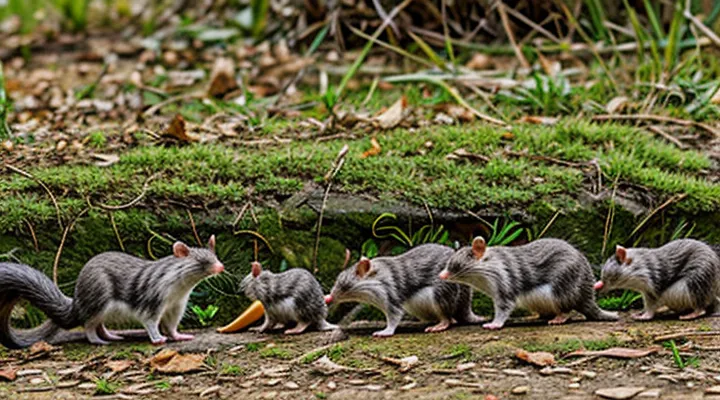
The Reproductive Cycle of Wild Rats
Sexual Maturity and Mating
Sexual maturity in wild rats occurs rapidly; females reach reproductive capability at about 5‑6 weeks of age, while males become fertile slightly later, around 6‑8 weeks. Early maturation enables multiple breeding cycles within a single season, directly influencing the average number of offspring per litter.
Mating behavior follows a defined pattern. Female rats emit estrus signals detectable by males, prompting courtship and copulation. A single female may mate with several partners during one estrus period, increasing genetic diversity of the litter. After successful fertilization, gestation lasts roughly 21‑23 days, after which the female gives birth to a brood typically ranging from 6 to 12 pups. This range reflects the species’ capacity for high reproductive output, driven by the brief interval between sexual maturity and first litter.
Key factors linking maturity and litter size:
- Early onset of fertility allows up to three litters per year in temperate regions.
- Short gestation combined with rapid post‑natal development supports successive breeding cycles.
- Polyandrous mating during estrus can raise pup survival rates, indirectly contributing to larger average litters.
Understanding the timing of sexual development and the mechanics of mating provides essential context for interpreting the typical brood size observed in wild rat populations.
Gestation Period
The gestation period of wild rats averages 21–23 days, a narrow window that directly influences the number of offspring produced per breeding cycle. Female rats reach sexual maturity within two to three months, allowing multiple litters each year when the short gestation aligns with rapid reproductive turnover.
Key characteristics of the gestation phase include:
- Duration: 21 days for the common brown rat (Rattus norvegicus); 22–23 days for other wild species such as the black rat (Rattus rattus).
- Maternal preparation: uterine lining expands, and hormonal changes peak around day 12, supporting fetal development.
- Litter size correlation: shorter gestation limits fetal growth time, resulting in typical litters of 5–12 pups; extended gestation beyond 24 days is rare and often associated with reduced litter numbers.
Environmental factors—temperature, food availability, and population density—modulate gestation length marginally but do not substantially alter the standard 21–23‑day period. Consequently, the predictable gestation timeline underpins the high reproductive output observed in wild rat populations.
Factors Influencing Litter Size
Species and Geographic Location
Wild rats exhibit variation in reproductive output depending on species and region. The most widely studied species are the Norway rat (Rattus norvegicus), the black rat (Rattus rattus), and the Polynesian rat (Rattus exulans). Their habitats span temperate, tropical, and island environments, influencing brood size.
- Rattus norvegicus – native to temperate Eurasia, now global in urban and agricultural settings. Average litters contain 8–12 pups; in colder climates the count tends toward the lower end, while milder regions often reach the upper range.
- Rattus rattus – originates from South Asia, prevalent in tropical and subtropical regions worldwide. Typical litters comprise 6–10 offspring; island populations frequently produce 5–8 due to limited resources.
- Rattus exulans – native to the Pacific islands, inhabits remote archipelagos. Litters usually consist of 4–7 young, reflecting the constrained food supply typical of isolated islands.
Geographic factors such as temperature, food availability, and predator pressure correlate with these differences. In temperate zones, longer breeding seasons allow multiple litters per year, whereas tropical and island populations often experience seasonal peaks aligned with rainfall patterns. Consequently, species‑specific reproductive potential must be assessed in the context of their local ecosystems.
Environmental Conditions
Environmental variables exert measurable influence on the number of offspring produced by free‑living rats. Temperature extremes reduce reproductive output; moderate climates allow females to sustain larger litters. Food abundance directly correlates with brood size: plentiful seeds, insects, and human refuse enable mothers to allocate more resources to gestation and lactation. Habitat type shapes litter size as well—urban environments, with high waste availability, typically support larger litters than arid field sites where nourishment is scarce.
Key factors include:
- Seasonal changes: spring and early summer peaks in daylight and temperature align with maximal litter sizes.
- Population density: high densities trigger stress‑induced hormonal shifts that can lower average offspring numbers.
- Predation pressure: elevated risk of predation shortens breeding cycles, limiting the number of pups per litter.
- Moisture levels: moist soils and vegetation improve foraging efficiency, indirectly boosting reproductive capacity.
Overall, optimal environmental conditions—moderate climate, abundant food, low predation, and suitable habitat—consistently produce the highest average brood sizes observed in wild rat populations.
Food Availability
Food abundance directly modifies reproductive output in free‑living rats. When resources are plentiful, females allocate more energy to gestation and lactation, resulting in larger litters. Conversely, scarcity limits maternal condition, leading to fewer embryos and increased embryonic resorption.
Key mechanisms linking resource levels to litter size include:
- Enhanced body condition raises ovarian follicle development and ovulation rate.
- Sufficient protein and carbohydrate intake supports uterine growth, allowing implantation of additional embryos.
- Adequate nutrition prolongs the breeding season, giving females multiple opportunities to produce sizable litters.
- In low‑food environments, hormonal feedback reduces gonadotropin release, suppressing ovulation and decreasing clutch size.
Empirical surveys of rodent populations show a positive correlation between the density of seeds, insects, and anthropogenic waste and the average number of offspring per birth. Seasonal spikes in food supply, such as post‑harvest grain availability, often coincide with peak litter sizes, while drought periods correspond with a marked decline.
Overall, the quantity and quality of available nourishment serve as the primary environmental driver of reproductive magnitude in wild rats, shaping population dynamics through direct effects on litter size.
Predation Pressure
Predation pressure directly influences the number of offspring produced by free‑living rats. High predator density increases mortality risk for both adults and juveniles, prompting females to allocate resources toward earlier, smaller litters that can be reared more quickly. Conversely, environments with few natural enemies allow females to invest in larger broods, maximizing reproductive output over the breeding season.
Key mechanisms linking predator presence to brood size include:
- Energetic trade‑offs: Energy diverted to anti‑predator behaviors (e.g., heightened vigilance, use of concealed nesting sites) reduces the allocation available for gestation and lactation, resulting in fewer pups per litter.
- Reproductive timing: Elevated risk accelerates the onset of breeding cycles, leading to more frequent but less populous litters.
- Maternal stress hormones: Chronic exposure to predator cues elevates corticosterone levels, which suppresses fetal development and limits litter size.
Empirical surveys of urban and rural rat populations reveal a consistent pattern: sites with intensive predator activity report average litters of 4–6 pups, while predator‑sparse locations document averages of 8–12 pups. This relationship underscores predation as a primary driver of reproductive strategy in wild rat populations.
Female Age and Health
Female age is a primary determinant of brood size in wild rats. Juvenile females (under three months) rarely produce litters, and when they do, the number of offspring seldom exceeds three. Prime‑age females (three to twelve months) achieve the highest reproductive output, averaging six to eight pups per litter. Senescent females (older than twelve months) show a marked decline, with typical litters containing four or fewer young.
Health status directly modifies the potential litter size. Well‑nourished individuals with minimal parasite load consistently reach the upper range of the species’ normal brood size. Conversely, malnutrition, chronic disease, or heavy ectoparasite infestation reduce uterine capacity and embryonic survival, often limiting litters to three or fewer pups. Additional stressors such as high population density or environmental toxins further depress reproductive performance.
Key influences on litter size:
- Age class: juvenile → low; prime → peak; senescent → reduced.
- Nutritional condition: adequate → maximal; deficient → diminished.
- Parasite burden: low → optimal; high → compromised.
- Disease presence: absent → full potential; chronic → limited.
These factors interact; an older female in poor health may produce significantly fewer offspring than a younger, healthy counterpart, thereby shaping the overall reproductive output observed in wild rat populations.
Average Litter Sizes
Common Wild Rat Species
The most widespread rat species in natural environments exhibit distinct reproductive capacities that influence population dynamics. Each species produces a characteristic number of offspring per breeding event, reflecting adaptations to habitat, predation pressure, and resource availability.
- Brown rat (Rattus norvegicus) – average litter size 6–12 young; peaks in temperate regions with abundant food waste.
- Black rat (Rattus rattus) – average litter size 5–8 young; common in tropical and subtropical areas, often associated with arboreal habitats.
- Polynesian rat (Rattus exulans) – average litter size 4–7 young; occupies islands across the Pacific, reproduces rapidly in disturbed ecosystems.
- Roof rat (Rattus rattus, subspecies) – average litter size 5–9 young; thrives in human dwellings, especially in warm climates.
- Bush rat (Rattus fuscipes) – average litter size 5–10 young; found in Australian woodlands, reproduces seasonally with higher output during wet periods.
Reproductive output for these species generally falls within a range of four to twelve juveniles per litter, with the brown rat consistently achieving the upper limit. This pattern underpins the ability of wild rat populations to expand swiftly under favorable conditions.
Variations by Environment
Wild rat populations exhibit noticeable differences in average brood size depending on habitat characteristics. In temperate forests, litters commonly contain six to eight offspring, whereas urban environments often support larger litters of nine to twelve individuals. These discrepancies reflect resource availability, predation pressure, and microclimatic conditions.
Key environmental variables influencing litter size include:
- Food abundance: higher caloric intake correlates with increased pup numbers.
- Seasonal temperature: milder winters reduce maternal stress, allowing larger broods.
- Predator density: lower predation risk permits greater reproductive investment.
- Habitat complexity: dense cover provides shelter, encouraging higher fecundity.
Empirical surveys across North America and Europe confirm that rats inhabiting agricultural fields, which combine abundant grain stores and limited predator presence, regularly produce the largest litters recorded for the species. Conversely, populations in arid scrublands, facing scarce nourishment and heightened exposure, tend toward the lower end of the size spectrum.
Survival Rates of Pups
Parental Care
Wild rats normally produce litters of six to eight pups, although numbers can vary from five to twelve depending on species and environmental conditions. The mother assumes full responsibility for offspring survival, employing a set of behaviors that directly affect the size and health of each brood.
Maternal activities include:
- Construction of a compact nest using shredded material that provides insulation and concealment.
- Continuous grooming of neonates to stimulate circulation and maintain hygiene.
- Regulation of nest temperature through body heat, ensuring optimal development conditions.
- Frequent nursing, with milk composition adjusted to meet the nutritional demands of growing pups.
- Defensive actions such as vocal alarms and aggressive deterrence of predators or conspecific intruders.
When litter size increases, maternal investment per pup typically declines. Larger broods result in shorter individual nursing periods, reduced grooming frequency, and a greater reliance on the nest’s thermal properties rather than direct maternal warmth. Conversely, smaller litters allow the mother to allocate more time and resources to each offspring, often leading to higher survival rates.
Paternal involvement is minimal in wild rat populations. Males may assist indirectly by defending territory, which can lower predation risk for the nesting female, but they do not participate in direct care activities.
Overall, parental care in wild rats is a tightly regulated system that balances the energetic costs of raising multiple young against the reproductive advantage of producing larger litters.
Environmental Challenges
Wild rat populations typically produce 6–12 offspring per breeding event, a figure that reflects the species’ high reproductive capacity. Environmental pressures constrain this potential, shaping the actual brood size observed in natural settings.
Key factors that limit reproductive output include:
- Food scarcity – limited access to protein‑rich resources reduces maternal condition, leading to smaller litters.
- Predation intensity – high predator density increases stress hormones, which suppress ovulation and embryo viability.
- Temperature extremes – prolonged heat or cold periods disrupt estrous cycles and impair fetal development.
- Habitat disturbance – urban development or agricultural tillage destroys nesting sites, forcing females to allocate energy to shelter construction rather than reproduction.
- Pathogen load – prevalence of leptospirosis, hantavirus, or parasitic infections compromises immune function, decreasing litter size.
- Chemical contaminants – exposure to rodenticides, heavy metals, or endocrine‑disrupting compounds interferes with hormonal regulation of reproduction.
These challenges interact, producing spatial and temporal variation in offspring numbers across different ecosystems. Understanding how each pressure modifies reproductive output informs population management and disease risk assessment.