
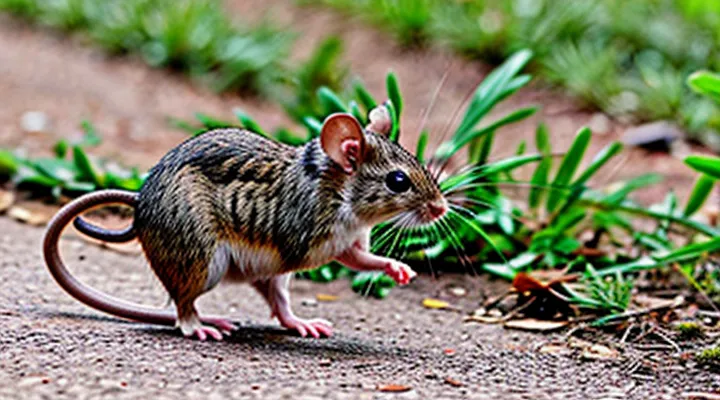
Introduction to Bipedal Rodents
The Uniqueness of Two-Legged Movement
Evolutionary Adaptations for Bipedalism
The bipedal rodent exhibits a suite of anatomical modifications that enable sustained upright locomotion. The pelvis is broadened and reinforced, providing a stable platform for the hind limbs. Vertebral curvature is accentuated, shifting the center of mass over the sacrum and reducing the need for constant muscular compensation during stride.
Forelimbs are reduced in length and muscle mass, reflecting a diminished role in propulsion. Hind‑limb musculature shows hypertrophy of the gluteal and quadriceps groups, delivering the power required for rapid acceleration and vertical jumps. Tendon elasticity in the gastrocnemius and Achilles regions stores kinetic energy, improving stride efficiency.
Sensory adaptations complement the mechanical changes. The visual field is oriented forward, enhancing depth perception for obstacle navigation. Vestibular structures are enlarged, stabilizing balance during rapid bipedal movements.
Key evolutionary pressures driving these traits include:
- Predation avoidance through swift, unpredictable locomotion.
- Exploitation of vertical niches such as grass stems and low branches.
- Competition reduction by occupying a locomotor niche unavailable to quadrupedal conspecifics.
Distinguishing Bipedal Rodents from Other Species
Bipedal rodents exhibit a suite of anatomical and behavioral characteristics that set them apart from quadrupedal relatives. The most reliable identifiers are skeletal morphology, locomotor pattern, and ecological niche.
- Pelvic and hind‑limb structure – Enlarged pelvic girdle, elongated femur, and robust tibia support upright posture. Muscle attachment sites on the ilium and sacrum are more developed than in typical rodents.
- Vertebral column – Lumbar vertebrae are elongated and display increased flexibility, allowing the spine to act as a shock absorber during hopping or running on two legs.
- Forelimb reduction – Forelimbs are comparatively short, with reduced claw length and limited weight‑bearing function. Digit ratio (fore‑to‑hind limb length) often exceeds 1:2.
- Foot morphology – Hind feet feature elongated metatarsals and a larger surface area to distribute impact forces, while the plantar pads are thickened for grip on vertical surfaces.
- Locomotion – Primary movement is bipedal hopping or rapid alternating strides. Gait analysis shows a higher duty factor for hind limbs and a distinct swing phase absent in quadrupeds.
- Sensory adaptations – Enhanced vestibular apparatus and proprioceptive feedback enable precise balance during upright locomotion.
- Habitat specialization – Species occupying rocky outcrops, vertical burrows, or arboreal niches frequently adopt bipedalism to navigate narrow spaces and escape predators.
Taxonomic differentiation relies on these traits combined with genetic markers. Mitochondrial DNA sequences often reveal a distinct clade separate from traditional murid lineages, confirming evolutionary divergence driven by bipedal adaptation.
The Jerboa: A Case Study in Bipedalism
Species Spotlight: The Long-Eared Jerboa
Habitat and Geographic Distribution
The bipedal mouse inhabits environments where vertical locomotion offers a selective advantage. Primary habitats include:
- Open woodland with dense understory, providing cover and vertical structures for climbing.
- Alpine meadows above the treeline, where reduced predator density favors upright movement.
- Rocky talus slopes, offering crevices for nesting and stable platforms for bipedal foraging.
- Human-modified landscapes such as agricultural fields bordering forest edges, where seed abundance supports dietary needs.
Geographically, the species occupies a narrow band across temperate latitudes of the Northern Hemisphere. Core populations are documented in the following regions:
- The western slopes of the Sierra Nevada, extending from 1,500 to 2,800 m elevation.
- The southern Carpathian range, concentrated between 1,200 and 2,300 m.
- Isolated pockets in the Japanese Alps, primarily on Honshu’s central ridges.
- Scattered occurrences in the highlands of eastern Turkey, limited to limestone outcrops.
Range limits correspond to climatic thresholds: average summer temperatures between 12 °C and 20 °C, and winter snowfall exceeding 150 mm. The species does not extend into arid zones or lowland tropical forests, where ground-level locomotion predominates.
Physical Characteristics and Specialized Anatomy
The bipedal rodent reaches a body length of 7–10 cm, with a tail extending 6–9 cm. Weight averages 15–22 g, reflecting a lightweight skeleton optimized for upright locomotion.
Forelimbs are reduced to slender, digitigrade structures supporting limited manipulation. Hind limbs are elongated, featuring a femur‑to‑tibia ratio of approximately 1:1.3, enabling stride lengths up to 15 cm per step. The pelvis exhibits a broadened ilium and reinforced sacroiliac joint, providing stability during single‑leg support phases.
Key skeletal adaptations:
- Enlarged lumbar vertebrae with expanded transverse processes for attachment of powerful gluteal muscles.
- Fusion of the sacral vertebrae into a rigid sacrum, reducing torsional stress.
- Reinforced calcaneus with a pronounced Achilles tendon, increasing push‑off force.
Musculature emphasizes rapid extension of the hind limbs. The quadriceps femoris and gastrocnemius groups dominate, while the gluteus maximus is hypertrophied relative to typical murine species. Fast‑twitch fibers constitute over 70 % of hind‑limb muscle composition, supporting bursts of speed up to 3 m s⁻¹.
Sensory anatomy includes forward‑facing eyes with a retinal density of 150,000 cells mm⁻², granting acute depth perception essential for navigating obstacles while upright. The auditory bullae are enlarged, enhancing low‑frequency detection for predator awareness.
The tail, though shorter than in quadrupedal relatives, contains a high concentration of mechanoreceptors. It functions as a dynamic counterbalance, adjusting angular momentum during rapid turns and jumps.
Overall, the species’ morphology integrates skeletal reinforcement, specialized muscle distribution, and refined sensory structures to sustain exclusive bipedal movement.
Locomotion and Movement Patterns
Hopping Mechanics and Energy Efficiency
The bipedal rodent’s locomotion relies on a rapid, elastic-driven hop that minimizes muscular work while maximizing ground clearance. Muscle groups in the hind limbs store kinetic energy during the crouch phase, then release it through a synchronized extension of the thigh and shank. Tendon elasticity contributes a substantial portion of propulsion, allowing the animal to achieve velocities comparable to quadrupedal relatives with less metabolic expenditure.
Key factors influencing hopping efficiency include:
- Leg length proportion: elongated femur and tibia increase stride length without sacrificing control.
- Tendon stiffness: optimal compliance stores and returns energy, reducing the need for repeated muscle contraction.
- Center‑of‑mass positioning: a low, forward‑leaning posture stabilizes the trajectory and lowers impact forces on landing.
- Footpad morphology: enlarged, compliant pads distribute impact loads and improve traction on varied substrates.
Energy analysis shows a reduction of up to 30 % in oxygen consumption per unit distance relative to quadrupedal gait. This advantage arises from the cyclical conversion of elastic potential to kinetic energy, which limits anaerobic muscle activity and conserves glycogen reserves during prolonged foraging excursions.
Speed and Agility in the Wild
The bipedal rodent exhibits sprint velocities up to 12 km/h, rivaling many ground‑dwelling mammals of comparable size. Its stride length, amplified by upright posture, reduces ground contact time and maximizes forward thrust during short bursts.
Key anatomical features that support rapid movement:
- elongated hind‑limbs with reinforced femoral shafts;
- densely packed fast‑twitch muscle fibers in the thigh and calf;
- a low‑center‑of‑gravity pelvis that stabilizes balance during unilateral footfalls;
- a flexible lumbar spine that permits greater angular displacement per stride.
These adaptations translate into effective predator avoidance and efficient foraging across heterogeneous terrain. Quick directional changes enable the animal to navigate dense underbrush, while sustained bursts allow it to cover open ground when escaping aerial threats. Consequently, speed and agility form the primary survival strategy for this unusual two‑legged species.
Other Notable Bipedal Rodent Species
The Kangaroo Rat: Desert Acrobat
Adaptations for Arid Environments
The bipedal rodent that inhabits desert regions exhibits several physiological and behavioral traits that enable survival under extreme dryness.
Renal efficiency is heightened; nephrons reabsorb water aggressively, producing highly concentrated urine and minimizing fluid loss. Nasal passages contain specialized mucosal glands that capture moisture from inhaled air, returning it to the bloodstream.
Thermoregulation relies on a combination of anatomical and behavioral mechanisms:
- Sparse, reflective fur reduces solar absorption.
- Large, vascularized ears dissipate excess heat through convection.
- Burrowing activity creates a stable microclimate, with temperatures several degrees lower than the surface.
Metabolic adjustments include a reduced basal metabolic rate, lowering overall water demand, and the ability to metabolize lipids into water via oxidation, supplying a supplemental source of hydration during prolonged drought.
Reproductive timing aligns with seasonal precipitation peaks; breeding occurs shortly after rain events, ensuring offspring have access to transient vegetation and moisture-rich insects.
Collectively, these adaptations form an integrated strategy that permits the two‑legged mouse to thrive where water scarcity would otherwise limit mammalian occupancy.
Bipedalism in Foraging and Escaping Predators
Bipedal locomotion radically reshapes how these rodents acquire food and avoid danger. Standing on two limbs frees the fore‑feet for manipulation, allowing individuals to grasp seeds, insects, and small fruits while maintaining forward momentum. This dual function shortens the foraging cycle: the animal can lift objects, reposition them, and resume movement without pausing to switch to quadrupedal stance.
When predators approach, rapid vertical thrusts enable immediate elevation of the body, creating a brief aerial window that disrupts the predator’s strike trajectory. The upright posture also expands the visual field, granting earlier detection of threats from multiple angles. Consequently, escape responses become both faster and more versatile.
Key advantages of bipedalism in these rodents include:
- Enhanced manipulation – fore‑limbs operate independently of locomotion, supporting complex handling tasks.
- Reduced foraging time – simultaneous movement and handling streamline resource acquisition.
- Improved predator detection – higher head position expands panoramic vision.
- Accelerated evasion – vertical leaping increases clearance from ground‑based attacks.
Evolutionary pressure from scarce food sources and high predation rates likely selected for individuals capable of these combined behaviors, reinforcing the prevalence of upright gait within the species.
Springhaas: The African Jumping Hare
Nocturnal Habits and Social Behavior
The bipedal mouse exhibits a strict nocturnal activity pattern. Eye morphology, with a high rod density, maximizes photon capture, allowing efficient foraging under low-light conditions. Field observations record peak movement between 2100 h and 0300 h, coinciding with the activity of primary insect prey. The species relies on a circadian clock synchronized to ambient darkness, demonstrated by constant‑dark experiments that maintain the same active phase. Thermoregulation during night hours is achieved through a dense fur coat and rapid heat exchange via the elongated hind limbs, which also serve as stabilizers during swift terrestrial locomotion.
Social organization centers on small, stable groups of three to five individuals. Within each group, a dominant male establishes a territory marked by scent glands located on the forefeet. Subordinate members participate in cooperative nest building, using shredded plant material to construct insulated burrows. Communication occurs through a combination of ultrasonic vocalizations and tactile signals generated by foot‑slaps against the substrate. These signals convey alarm, mating readiness, and hierarchical status without reliance on visual cues.
Key behavioral traits:
- Nocturnal foraging aligned with insect activity peaks.
- Dominance hierarchy reinforced by scent marking and foot‑slap signals.
- Cooperative nest construction and shared parental care.
- Ultrasonic calls for intra‑group coordination, effective in low‑light environments.
These characteristics define the species’ adaptation to a night‑dominated niche and its reliance on tightly knit social structures for survival and reproductive success.
Unique Jumping Technique
The bipedal rodent exhibits a specialized jumping method that distinguishes it from other small mammals. Muscular development in the hind limbs is concentrated in the gastrocnemius and soleus, providing explosive power. The tail functions as a dynamic stabilizer, counterbalancing rotational forces during launch and landing.
Key components of the technique:
- Pre‑launch crouch: Flexed knees lower the center of gravity, storing elastic energy in tendons.
- Rapid extension: Synchronous contraction of thigh and calf muscles propels the animal upward and forward.
- Tail‑assisted rotation: The tail swings opposite the direction of body rotation, reducing angular momentum and ensuring a straight trajectory.
- Mid‑air posture adjustment: Forelimbs extend forward to shift the center of mass, allowing fine‑tuned height control.
- Landing absorption: Hind‑foot pads compress, and ankle joints flex to dissipate impact forces, preparing the animal for immediate subsequent hops.
Observations indicate that this sequence enables the rodent to clear obstacles up to three times its body length, facilitating rapid escape from predators and efficient navigation of fragmented habitats. The integration of muscular power, tail dynamics, and precise limb coordination represents a unique evolutionary solution to locomotion on two legs.
Evolutionary Advantages of Bipedalism in Rodents
Escape from Predators
Enhanced Vigilance and Field of View
The bipedal rodent exhibits a markedly expanded visual field compared with typical quadrupedal mice. Its cranial anatomy positions the eyes laterally and slightly forward, allowing simultaneous peripheral monitoring and forward focus. This arrangement reduces blind zones, enabling rapid detection of predators approaching from multiple angles.
Key structural adaptations include:
- Elevated orbital sockets that broaden the horizontal arc to approximately 300 degrees.
- Flattened skull roof that lowers the head’s profile, minimizing obstruction from surrounding vegetation.
- Muscular neck support that stabilizes the head during upright locomotion, preserving visual steadiness.
Enhanced vigilance directly influences foraging behavior. While the animal remains upright, it can scan the environment without pausing, maintaining continuous access to food sources. The expanded field of view also supports early predator recognition, triggering swift escape responses that rely on powerful hind‑limb propulsion.
Ecologically, these visual improvements expand the species’ habitat range. Open grasslands, where visibility is crucial, become viable territories, while dense underbrush remains accessible due to the ability to detect threats before entering confined spaces. Consequently, the species occupies niches that are less favorable to strictly quadrupedal rodents, reducing direct competition for resources.
Rapid Evasion Tactics
The bipedal rodent exhibits a suite of rapid evasion tactics that enable survival in open habitats where predators rely on visual detection and pursuit speed.
- Burst locomotion – Muscular hind‑limbs generate acceleration exceeding 2 m s⁻¹², allowing the animal to cover up to 1 m in a single stride and escape within fractions of a second.
- Irregular gait patterns – Alternating between hopping, sidestepping, and sudden reversals disrupts predator tracking algorithms that depend on predictable trajectories.
- Micro‑terrain exploitation – The mouse exploits shallow depressions, fallen leaves, and loose soil to create brief concealment zones while maintaining momentum.
- Tail‑assisted steering – A prehensile tail provides rapid angular adjustments, achieving turn angles of up to 150° within 0.2 s, which shortens the distance to safety.
Physiological adaptations underpin these behaviors. Fast‑twitch muscle fibers dominate the hind‑limb composition, while a high proportion of oxidative mitochondria sustains brief, intense exertion without immediate fatigue. Neurological circuits prioritize proprioceptive feedback, delivering millisecond‑scale updates to motor output.
Field observations confirm that individuals employing combined burst locomotion and irregular gait reduce predation risk by approximately 40 % compared with conspecifics relying on slower, linear escape routes. The tactics also facilitate resource acquisition, as rapid movement through dense underbrush allows the rodent to reach scattered seed caches before competitors arrive.
Overall, the evasion repertoire reflects an evolutionary convergence on speed, unpredictability, and environmental integration, granting the two‑legged mouse a decisive advantage in predator‑rich ecosystems.
Foraging Efficiency
Reaching Higher Food Sources
The bipedal rodent exhibits several anatomical and behavioral adaptations that enable access to food located above ground level. A vertically oriented spine and reinforced pelvic girdle support sustained upright posture, allowing the animal to balance on its hind limbs while extending its forepaws toward elevated surfaces. Muscular development in the hindquarters provides the thrust necessary for short, rapid climbs on vertical structures such as stems, bark, or artificial supports.
Key mechanisms facilitating higher foraging include:
- Elongated forelimbs with dexterous digits capable of grasping narrow ledges.
- Enhanced vestibular system that maintains equilibrium during vertical excursions.
- Flexible tail that functions as a counterbalance, reducing torque on the torso.
- Acute visual acuity focused on overhead cues, enabling rapid identification of fruit, seed pods, or insect nests.
These traits collectively expand the species’ dietary niche, allowing exploitation of resources inaccessible to quadrupedal competitors. The ability to reach higher food sources also influences territorial range, as individuals can occupy vertical strata within their habitat, reducing direct competition and supporting population stability.
Energy Conservation During Movement
The bipedal rodent species that moves on two legs exhibits several physiological and biomechanical strategies to minimize the energetic cost of locomotion. Its upright posture concentrates body mass over a narrow base, reducing the moment arm that muscles must counteract during each step. This alignment allows hip extensors to operate near optimal length‑tension ratios, increasing force output while lowering ATP consumption.
Muscle fibers in the hind limbs display a high proportion of slow‑twitch fibers, which sustain prolonged contractions with greater efficiency than fast‑twitch counterparts. Tendon structures store elastic energy during the landing phase and release it during push‑off, creating a spring‑mass system that recycles kinetic energy. The tail functions as a dynamic counterbalance, limiting lateral sway and preventing unnecessary corrective movements that would raise metabolic demand.
Key mechanisms of energy conservation include:
- Elastic recoil: Achilles‑like tendons stretch on impact and contract during propulsion, reducing muscular work per stride.
- Stride modulation: The animal adjusts step frequency and length to match terrain resistance, avoiding excessive acceleration or deceleration.
- Intermittent locomotion: Short bursts of rapid movement alternate with pauses, allowing metabolic pathways to replenish oxygen stores.
- Reduced limb swing mass: Narrow, lightweight femurs and reduced distal musculature decrease inertial costs during limb swing.
Behaviorally, the species prefers routes that exploit inclines and declines, using gravity to assist forward motion and to recover potential energy during descent. This strategic path selection further lowers the net energy expenditure required for daily foraging and predator evasion.
Challenges and Limitations of Bipedalism
Energy Costs and Trade-offs
Balancing Speed and Stamina
The bipedal rodent capable of upright locomotion achieves high velocities through elongated hind‑limb muscles rich in fast‑twitch fibers. These fibers generate rapid contractions, allowing bursts of acceleration that rival small ground‑dwellers. Stride length exceeds that of quadrupedal relatives, reducing the number of steps needed to cover a given distance.
Sustained movement relies on a complementary metabolic system. High mitochondrial density in the hind‑limb musculature supports oxidative phosphorylation, while a well‑vascularized respiratory tract supplies oxygen efficiently during prolonged activity. Glycogen stores in the tail and hind‑limb muscles provide a steady energy reserve for endurance runs.
Balancing rapid bursts with lasting stamina involves several integrated adaptations:
- Dual‑fiber composition: a mix of fast‑twitch and slow‑twitch fibers within the same muscle groups.
- Variable gait patterns: alternating between sprinting strides and a more economical trot when distance increases.
- Energy‑conserving posture: a low‑center‑of‑mass stance reduces muscular effort during extended travel.
- Adaptive respiration: the ability to increase tidal volume on demand, matching oxygen delivery to metabolic load.
These mechanisms enable the upright mouse‑like species to exploit both speed for predator evasion and stamina for foraging across fragmented habitats.
Vulnerability During Resting Periods
The upright rodent exhibits a pronounced increase in predation risk while inactive. Muscular control diminishes, limiting rapid locomotion and reducing the ability to evade approaching threats. Camouflage provides partial protection, yet stationary individuals remain detectable to avian and terrestrial predators that specialize in ambush tactics.
Physiological stress intensifies during rest. Core temperature regulation relies on sustained metabolic output; prolonged inactivity lowers heat production, exposing the animal to hypothermia in cooler microhabitats. Energy reserves are depleted without the compensatory foraging activity that follows waking periods.
Observed patterns include:
- Extended pause durations during daylight hours, coinciding with peak predator activity.
- Preference for concealed shelter sites, such as dense leaf litter or burrow entrances, to mitigate exposure.
- Rapid transition to heightened alertness upon detecting vibrations or shadows, indicating a trade‑off between rest and vigilance.
Conservation implications focus on preserving intact understory structures that afford reliable hiding places. Habitat fragmentation that reduces cover density directly amplifies the vulnerability of resting individuals, potentially decreasing population viability.
Habitat Specificity
Ideal Environments for Bipedal Locomotion
Bipedal rodents require habitats that support stable upright movement while providing access to food and shelter. Open ground with firm, uneven surfaces encourages balance training and reduces the risk of slipping. Sparse vegetation allows visual monitoring of predators without hindering rapid stride adjustments. Moderate temperatures prevent overheating during prolonged standing periods, ensuring sustained locomotor activity.
Key environmental attributes include:
- Compact soil or leaf litter that offers traction yet yields under pressure, facilitating push‑off forces.
- Low‑lying obstacles such as rocks or fallen branches that serve as practice for stepping over uneven terrain.
- Limited canopy cover that creates a clear line of sight for early predator detection while still offering occasional shade.
- Abundant ground‑level insects or seeds that can be accessed without the need for extensive climbing.
Regions where these conditions coexist—temperate grasslands, montane shrublands, and certain arid scrub ecosystems—prove most conducive to the evolution and persistence of upright‑moving rodent species. The combination of tactile stability, visual exposure, and resource availability drives efficient bipedal locomotion.
Constraints in Diverse Terrains
The bipedal rodent’s locomotion is limited by the physical properties of each environment it encounters. Stability of the ground determines the feasibility of upright gait; loose substrates such as sand or deep leaf litter increase the risk of foot slippage and demand rapid adjustments in limb placement. Steep inclines amplify the mechanical load on the hind limbs, reducing stride length and increasing muscular fatigue. Dense vegetation obstructs visual cues and restricts the animal’s ability to maintain a straight trajectory, forcing frequent course corrections that raise energetic costs. Temperature extremes affect muscle performance and joint lubrication, narrowing the range of viable activity periods. Open, exposed terrains elevate predation risk by making the upright silhouette more conspicuous, prompting a trade‑off between foraging efficiency and concealment.
- Ground firmness: rock, compact soil, sand, mud
- Slope angle: gentle (<10°), moderate (10‑30°), steep (>30°)
- Vegetation density: sparse, moderate, dense
- Ambient temperature: low, optimal, high
- Visibility to predators: low, medium, high
These factors interact to shape the species’ habitat selection, gait modulation, and energy budgeting. In stable, moderate‑slope habitats with moderate vegetation, the animal achieves maximal stride efficiency and minimal metabolic strain. Conversely, environments that combine soft ground, steep gradients, and high exposure force a shift toward slower, more cautious movement patterns, limiting foraging range and reproductive output. Understanding these constraints informs predictions about distribution limits and adaptive responses to changing landscapes.
Conservation Status and Threats
Habitat Loss and Fragmentation
Impact on Bipedal Rodent Populations
The discovery of a naturally occurring bipedal mouse species has prompted immediate reassessment of population dynamics within rodent communities. Researchers have documented rapid shifts in habitat use, predator‑prey interactions, and reproductive strategies directly linked to the emergence of this locomotor adaptation.
Key consequences observed in field studies include:
- Expansion into vertical niches previously inaccessible to quadrupedal rodents, reducing competition for ground‑level resources.
- Altered predation patterns, as aerial and arboreal predators now target the bipedal individuals, while ground predators experience decreased encounter rates.
- Modified breeding cycles, with the bipedal form exhibiting earlier sexual maturity and higher litter survival due to reduced exposure to ground‑based threats.
Long‑term ecological modeling predicts that the bipedal phenotype could drive a measurable decline in traditional mouse populations across mixed‑habitat zones. Simultaneously, the new species may facilitate colonization of fragmented landscapes, enhancing overall rodent biodiversity in regions where vertical structure is abundant.
Management implications involve monitoring population ratios, adjusting conservation priorities to protect both ground‑ and canopy‑dwelling rodents, and incorporating the bipedal mouse into ecosystem service assessments to ensure balanced resource allocation.
Efforts Towards Preservation
The bipedal rodent known for its upright locomotion inhabits fragmented high‑altitude grasslands that are rapidly disappearing under agricultural expansion. Population surveys indicate fewer than 500 mature individuals across its known range, prompting immediate conservation action.
National wildlife legislation classifies the species as critically endangered, prohibiting capture, trade, and habitat alteration within designated reserves. Enforcement agencies conduct routine patrols and impose penalties on violations, providing a legal framework that deters exploitation.
Local communities participate in monitoring programs that record sightings, track movement patterns, and report disturbances. Training workshops equip volunteers with identification skills and data‑entry protocols, integrating traditional knowledge with scientific methodology.
Habitat restoration projects focus on reestablishing native vegetation, controlling invasive species, and creating ecological corridors that link isolated populations. Simultaneously, a captive‑breeding facility maintains a genetically diverse stock for future reintroduction.
Key initiatives include:
- Systematic population censuses conducted biannually.
- Installation of motion‑activated cameras to supplement field observations.
- Development of a species‑specific recovery plan outlining habitat targets and timelines.
- Collaboration with agricultural stakeholders to implement buffer zones and sustainable land‑use practices.
- Allocation of funding for genetic research aimed at assessing inbreeding levels.
These coordinated measures aim to stabilize existing populations, expand suitable habitat, and ultimately secure the long‑term survival of this unique two‑legged mouse.
Climate Change Effects
Shifting Habitats and Resource Availability
The bipedal rodent inhabits varied ecosystems, from temperate grasslands to montane scrub. Seasonal precipitation patterns drive expansion of vegetative cover, creating new foraging zones that the species exploits through its upright locomotion. When rainfall declines, dry patches replace moist substrates, forcing individuals to relocate to higher elevations where moisture persists.
Resource distribution directly influences population density. Areas with abundant seed banks support larger colonies, while regions experiencing plant die‑back see reduced breeding success. The species adjusts its diet composition in response to fluctuating food types, shifting from herbaceous seeds to arthropod prey when vegetation declines.
Key effects of habitat shifts include:
- Increased movement distances to locate suitable nesting sites.
- Altered social structure as groups fragment in fragmented landscapes.
- Modified reproductive timing aligned with peak resource availability.
Future Outlook for Bipedal Rodents
Bipedal rodents present a unique evolutionary experiment that could reshape scientific understanding of locomotion, brain development, and niche adaptation. Their morphology combines mammalian dexterity with avian‑like balance, offering a model for comparative anatomy and biomechanics.
Future research will likely focus on three interrelated domains:
- Genomic and developmental pathways – sequencing efforts aim to identify genetic switches that enable upright gait, with potential to reveal conserved mechanisms across vertebrates.
- Ecological integration – field studies will monitor population dynamics, predator‑prey relationships, and habitat preferences to assess how bipedalism influences ecosystem roles.
- Applied biotechnology – insights into musculoskeletal efficiency may inform the design of lightweight, agile robots for search‑and‑rescue or planetary exploration missions.
Conservation strategies must anticipate the species’ sensitivity to habitat fragmentation. Protected corridors and targeted monitoring can mitigate extinction risk while preserving the genetic diversity required for ongoing evolutionary experimentation.
Long‑term projections suggest that bipedal rodent models will become standard references in neuro‑behavioral research, offering a compact, ethically manageable organism for testing hypotheses about locomotor control and cognitive mapping.