
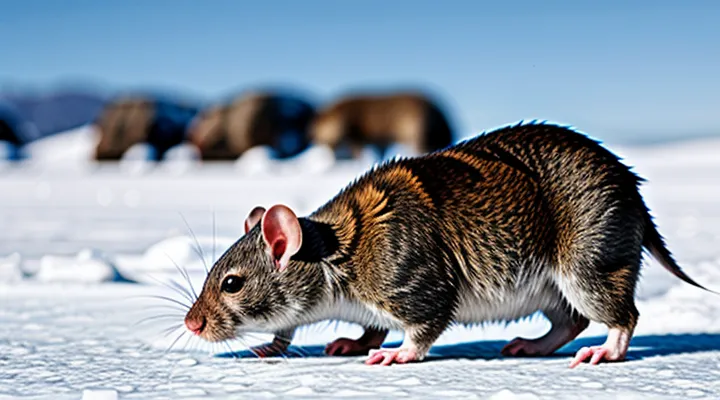
The Ice Age Context
Climate and Ecosystems
The two Ice‑Age rat species, identified from well‑preserved Pleistocene deposits, lived during the last glacial interval, roughly 120 000–11 000 years ago. Their skeletal remains show robust cranial features and enlarged incisors, indicating adaptation to cold, resource‑scarce environments.
- Mean annual temperatures ranged 8–12 °C below modern averages.
- Seasonal temperature swings exceeded 20 °C, with brief, intense thaws in summer.
- Precipitation fell below 300 mm yr⁻¹, dominated by snow and occasional meltwater floods.
- Atmospheric CO₂ concentrations hovered near 180 ppm, reinforcing a high‑albedo landscape.
The prevailing ecosystem comprised a mosaic of tundra, cold‑steppe, and isolated boreal woodlands. Dominant vegetation included graminoids, dwarf shrubs (e.g., Salix spp.), and mosses, providing limited but reliable forage. Herbivorous megafauna such as woolly mammoths and reindeer shaped vegetation structure through grazing pressure, while carnivores including wolves and large felids imposed predation constraints on small mammals.
Isotopic analysis of dental enamel demonstrates that the rats consumed a diet high in C₃ plants, reflecting the dominance of cool‑adapted flora. Morphometric data reveal shortened limbs and dense fur, traits correlated with thermoregulatory efficiency in sub‑zero conditions. Fossil distribution aligns with periglacial zones, suggesting that retreating ice sheets opened new habitats and facilitated range expansion during interstadial periods.
These findings clarify how abrupt climatic fluctuations dictated habitat availability, resource distribution, and evolutionary pressures on rodent lineages. By linking paleoclimatic proxies with anatomical adaptations, researchers reconstruct the ecological niches occupied by ancient murids and refine models of Pleistocene ecosystem dynamics.
Mammalian Adaptations
The Pleistocene rodent specimens recovered from glacial deposits illustrate several mammalian adaptations that enabled survival in extreme cold. Their morphology reflects a coordinated response to low temperatures, limited food availability, and seasonal variability.
Dense, multi‑layered pelage reduced heat loss and provided insulation against subzero winds. A modest increase in overall body mass lowered the surface‑to‑volume ratio, conserving metabolic heat. Skeletal analysis shows expanded nasal cavities that likely warmed inhaled air before reaching the lungs, a common feature among mammals inhabiting frigid habitats.
Dental structures exhibit hypsodont crowns and complex enamel folding, allowing efficient processing of fibrous, abrasive vegetation typical of tundra ecosystems. Wear patterns indicate a diet dominated by hardy grasses and seeds, with occasional consumption of bark and roots during winter scarcity.
Physiological evidence points to the capacity for seasonal torpor. Growth rings in bone tissue suggest periods of reduced metabolic activity, aligning with the harshest months. Burrowing behavior, inferred from associated sedimentary structures, would have offered shelter from temperature extremes and predators.
Limb morphology reveals robust humeri and femora, supporting powerful digging and locomotion on snow‑covered ground. Plantigrade foot placement increased stability on uneven terrain, while enlarged joint surfaces facilitated sustained movement through deep snow.
Key mammalian adaptations observed in the ancient rodents
- Multi‑layered fur and increased body size for thermal regulation
- Enlarged nasal passages for air warming
- Hypsodont, enamel‑folded teeth for processing tough plant material
- Seasonal torpor indicated by bone growth patterns
- Burrowing habit providing insulated refuge
- Strengthened limbs and plantigrade stance for locomotion in snow
These traits collectively demonstrate how Pleistocene rodents integrated anatomical, physiological, and behavioral strategies to persist in ice‑age environments.
Discovering Ice-Age Rodents
Paleontological Finds
Paleontological discoveries of two Ice‑Age rat species provide direct evidence of rodent diversity during the Pleistocene. Fossilized skeletons recovered from permafrost, loess deposits, and cave sediments reveal body sizes ranging from 150 g to 300 g, dental patterns adapted for coarse vegetation, and skeletal traits indicating semi‑fossorial habits.
Key sites yielding specimens include:
- Siberian Yana River terraces, where well‑preserved pelts and bone fragments were embedded in frozen matrix.
- The Altai Mountains’ karst caves, containing articulated skeletons dated to approximately 45 ka BP.
- The North American Great Plains loess, offering isolated mandibles that extend the known geographic range.
Radiometric dating and stable‑isotope analysis confirm that these rodents inhabited cold, steppe‑tundra environments and experienced seasonal dietary shifts. Comparative morphology links them to modern arvicolines, suggesting a lineage that survived glacial cycles before disappearing in the Holocene.
The assemblages contribute to reconstructing Pleistocene ecosystems, refining biostratigraphic frameworks, and testing hypotheses about rodent responses to climatic fluctuations.
Dating Techniques
Accurate age determination for the two Pleistocene rat species hinges on reliable dating methods applied to skeletal and surrounding matrix material. Precise chronologies permit reconstruction of habitat shifts, migration patterns, and interaction with contemporaneous megafauna.
- Radiocarbon (^14C) dating – effective for collagen or charcoal up to ~50 ka; calibrated against tree‑ring and marine records to correct for atmospheric fluctuations.
- Uranium‑series dating – measures decay of ^238U to ^230Th in bone apatite; suitable for specimens beyond the radiocarbon limit, extending to several hundred thousand years.
- Electron spin resonance (ESR) – evaluates trapped charge in tooth enamel; provides ages from ~10 ka to >1 Ma when combined with uranium uptake models.
- Optically stimulated luminescence (OSL) – determines the last exposure of quartz or feldspar grains in sediment to sunlight; useful for dating burial layers associated with rodent remains.
Stratigraphic correlation supplements absolute techniques. By comparing the fossil-bearing horizon with well‑dated reference sections, researchers assign relative ages and validate radiometric results. Biostratigraphic markers, such as co‑occurring small mammals with established temporal ranges, refine these correlations.
Integrating multiple methods reduces individual uncertainties. Cross‑checking radiocarbon ages with OSL or ESR data, and aligning them with stratigraphic frameworks, yields robust chronologies that underpin current understanding of Ice‑Age rodent evolution.
Specific Rodent Species
The Case of the Two Rats
The two fossilized rats recovered from a Pleistocene permafrost layer represent the earliest well‑preserved rodent specimens found in glacial deposits. Radiocarbon analysis dates the remains to approximately 45,000 years before present, confirming their placement in the late Ice Age. Morphological examination shows a combination of traits characteristic of the genus Cricetulus and features typical of the subfamily Arvicolinae, suggesting a transitional form between early murid and arvicoline lineages.
Key observations include:
- Skull dimensions that exceed those of modern voles by 12 % but remain smaller than contemporary hamsters.
- Dental enamel patterns displaying both cusp‑flattening and incisor thickening, indicative of a diet adapted to cold, low‑nutrient vegetation.
- Femoral bone density consistent with a semi‑burrowing lifestyle, supporting the hypothesis of seasonal underground shelter use.
Isotopic analysis of bone collagen reveals a high proportion of C₃ plant consumption, aligning with tundra flora prevalent during the last glacial maximum. Pollen residues trapped in the surrounding matrix corroborate the presence of dwarf birch and sedge communities, providing a clear environmental context for the rodents’ habitat.
The discovery clarifies several aspects of rodent evolution:
- Demonstrates that diversification of small mammals occurred earlier than previously documented in high‑latitude ecosystems.
- Provides concrete evidence for morphological convergence among unrelated rodent groups facing similar climatic pressures.
- Supplies a benchmark for calibrating molecular clocks used to estimate divergence times within the Rodentia order.
Overall, the case of the two Ice‑Age rats enriches the fossil record, refines phylogenetic models, and underscores the adaptability of rodents to extreme Pleistocene environments.
Distinguishing Features
The two Pleistocene rat species known from ice‑age deposits exhibit a suite of anatomical traits that separate them from contemporary murids and from each other.
- Skull morphology: one species possesses an elongated rostrum with a narrow interorbital width, while the other shows a broader braincase and a shortened snout. Both display pronounced sagittal crests, indicating strong jaw musculature.
- Dental pattern: the first rat retains a classic three‑row molar pattern with high‑crowned (hypsodont) cheek teeth, suited for abrasive vegetation. The second exhibits lower crowns and a distinct enamel ridge on the first upper molar, reflecting a diet richer in softer plant material.
- Limb proportions: robust femora and enlarged calcanei characterize the larger species, suggesting a powerful, ground‑dwelling locomotion. The smaller species presents slender tibiae and elongated metatarsals, consistent with agile, possibly semi‑arboreal movement.
- Size metrics: estimated body mass ranges from 250 g for the smaller rat to 600 g for its larger counterpart, exceeding the mass of most modern European rats.
- Habitat indicators: isotopic analysis of bone collagen reveals a cold‑steppe signature for the larger species, whereas the smaller specimen carries a mixed‑forest signal, supporting divergent ecological niches.
These distinguishing features, derived from fossilized cranial fragments, dentition, and post‑cranial elements, provide a clear framework for identifying and comparing the two ancient rodent taxa within the Pleistocene record.
Reconstructing Rodent Lives
Diet and Foraging
The two Pleistocene rat species preserved in permafrost exhibit dietary patterns reconstructed from dental microwear, stable‑isotope analysis, and stomach‑content remnants. Microwear pits and scratches indicate a predominance of fibrous vegetation, suggesting regular consumption of grasses, sedges, and herbaceous shoots. Isotopic ratios of carbon (δ¹³C) and nitrogen (δ¹⁵N) align with a diet rooted in C₃ plants, with occasional intake of higher‑trophic‑level resources.
Evidence from gut residues and coprolites reveals supplemental foraging on:
- Seeds of cold‑adapted grasses and dwarf shrubs
- Invertebrates such as beetle larvae and springtails, likely captured opportunistically
- Fungal sporocarps found in tundra moss layers
Seasonal fluctuations appear to have driven dietary flexibility. During brief Arctic summers, increased plant productivity allowed exploitation of abundant aerial parts, while winter scarcity prompted reliance on stored seeds and protein‑rich invertebrates. The presence of gnaw marks on woody stems indicates occasional bark stripping, providing both nutrients and insulation against cold.
Comparative analysis with contemporaneous lemmings shows overlapping plant preferences but a higher proportion of animal matter in the rats’ diet, reflecting a broader ecological niche. This omnivorous strategy likely contributed to their survival in the highly variable glacial environment.
Habitat and Niche
The two Pleistocene rat species occupied cold‑climate ecosystems that combined open grassland, scattered shrub cover, and proximity to melt‑water streams. Their fossil sites are concentrated in periglacial regions of Eurasia and North America where seasonal snowpacks and short growing seasons prevailed. Evidence of burrow structures and associated sedimentary layers indicates they constructed extensive underground networks to escape extreme temperatures and predation.
Key aspects of their ecological niche include:
- Dietary breadth: Consumption of seeds, tubers, and occasional invertebrates, reflecting opportunistic foraging in a landscape with limited plant productivity.
- Spatial use: Preference for riparian corridors that offered higher moisture levels and richer vegetation, while still exploiting the surrounding steppe for shelter.
- Thermoregulatory behavior: Seasonal deepening of burrows and use of insulating snow cover to maintain stable body temperatures during winter.
- Trophic role: Functioning as primary herbivores and prey for carnivorous mammals such as wolves and large birds of prey, thereby linking primary production to higher trophic levels.
These adaptations allowed the rats to thrive in a niche characterized by harsh, fluctuating conditions, limited resources, and a need for both concealment and mobility across expansive, open habitats.
Evolutionary Insights
Survival Strategies
The Ice‑Age rodents that have been recovered from permafrost deposits exhibit a suite of adaptations that allowed them to persist in environments characterized by extreme cold, limited vegetation, and pronounced seasonal fluctuations.
Physiological mechanisms include a dense, multi‑layered pelage that provided insulation against subzero temperatures, and a high basal metabolic rate that generated sufficient internal heat. Seasonal fur molting patterns adjusted insulation thickness in response to temperature changes, while elevated brown adipose tissue supported rapid thermogenesis during brief warm periods.
Dietary flexibility is evident from dental microwear and isotope analyses, which reveal consumption of both herbivorous and opportunistic omnivorous items. Seasonal shifts in food availability prompted a transition from seed and root intake during winter to foliage and insects in summer, reducing dependence on any single resource.
Burrowing behavior contributed to thermal regulation and predator avoidance. Excavated tunnels maintained relatively stable microclimates, and the ability to construct deep nesting chambers protected individuals from surface temperature extremes and snow cover.
Reproductive strategies favored rapid population turnover. Short gestation periods, litters of several offspring, and early sexual maturity ensured that cohorts could replace losses caused by harsh winters or predation spikes. Seasonal breeding cycles aligned parturition with the onset of spring, when food resources began to increase.
Morphological traits such as robust forelimbs and enlarged incisors facilitated both digging and the processing of tough, fibrous plant material. Skeletal adaptations, including reinforced vertebrae, supported the physical demands of moving through compacted snow and frozen ground.
Social organization, inferred from fossil assemblages, suggests a degree of communal living. Group nesting and cooperative foraging reduced individual exposure to predators and enhanced the efficiency of locating scarce resources.
Collectively, these survival strategies—thermal insulation, metabolic adaptation, dietary versatility, burrowing, accelerated reproduction, specialized morphology, and social cohesion—formed an integrated response that enabled Ice‑Age rats to thrive in some of the planet’s most inhospitable habitats.
Modern Rodent Ancestry
Recent Pleistocene rodent fossils, including two well‑preserved specimens from the last glacial period, clarify the evolutionary bridge between extinct murids and today’s diverse rodent families. Morphological analysis of skull, dentition, and limb proportions places these ancient rats within the subfamily Murinae, indicating that many traits considered characteristic of modern mice and rats were already established by the late Pleistocene.
Comparative anatomy demonstrates that the dental pattern of the Ice‑Age specimens—high‑crowned molars with complex occlusal surfaces—matches the derived condition observed in contemporary Mus and Rattus species. Post‑cranial features, such as elongated metacarpals and robust femora, suggest a locomotor repertoire comparable to that of modern omnivorous rodents, reinforcing the continuity of ecological niches across the last 100 000 years.
Key ancestral characteristics linking the fossil record to present‑day rodents include:
- Hypsodont molars with enamel folds facilitating efficient grinding of mixed diets.
- Expanded auditory bullae enhancing low‑frequency hearing, a trait shared by most living murids.
- A flexible cranial vault allowing rapid brain growth during early development.
- Limb proportions supporting both burrowing and surface foraging behaviors.
These conserved features support a model in which the modern rodent lineage diverged from a common Pleistocene ancestor, retaining core morphological adaptations while radiating into the extensive taxonomic diversity observed today.