
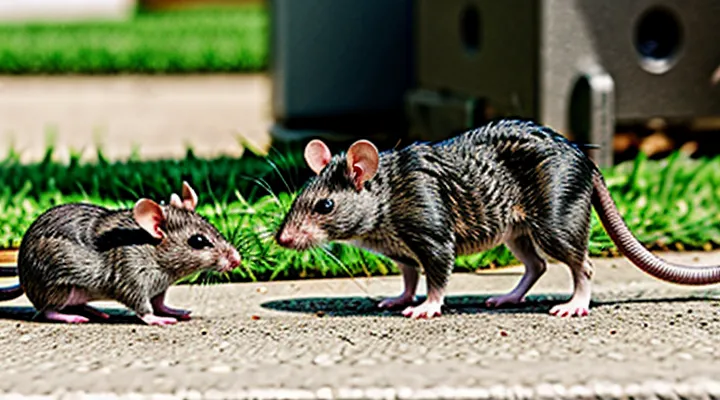
Understanding Ultrasonic Pest Repellers
How Ultrasonic Repellers Work
The Science Behind the Sound Waves
Ultrasonic devices deter rats and mice by emitting sound waves above 20 kHz, a range beyond human hearing but within rodent auditory sensitivity. Rodents detect frequencies up to 80–100 kHz; devices target 30–50 kHz to maximize discomfort while minimizing interference with other pets.
The effectiveness of a repeller depends on three physical parameters:
- Frequency: Determines which species perceive the signal; higher frequencies affect mice more, while rats respond to lower ultrasonic bands.
- Amplitude: Measured in decibels SPL; sufficient intensity (typically 80–100 dB at the source) is required to overcome environmental attenuation.
- Modulation pattern: Pulsed or variable‑frequency emissions prevent habituation by disrupting the animals’ ability to adapt.
Sound propagation in indoor environments is limited by air absorption, material reflection, and obstacle diffraction. Ultrasonic waves lose energy rapidly, with a typical attenuation of 1–2 dB per meter at 40 kHz. Consequently, a single unit can cover only a limited radius, often 10–15 feet, and multiple units are needed for larger spaces.
Device design incorporates transducers that convert electrical signals into high‑frequency acoustic energy. Piezoelectric ceramics are common because they generate stable, high‑frequency output with low power consumption. Power supplies usually provide continuous DC voltage, while microcontrollers manage frequency sweeps and pulse intervals.
Safety considerations focus on non‑invasive operation. Ultrasonic emissions do not cause tissue damage at prescribed levels, and regulatory standards (e.g., FCC, CE) limit maximum SPL to protect human occupants and domestic animals. Proper placement—away from walls and at ear‑level height for rodents—optimizes coverage and reduces reflected hotspots.
Understanding these acoustic principles guides the evaluation of product rankings, allowing comparison based on frequency range, SPL, coverage area, and modulation technology rather than marketing claims.
Frequency Ranges and Their Effects
Ultrasonic repellents for rodents operate within distinct frequency bands, each producing a specific physiological response in rats and mice. The devices emit sound waves above the human hearing threshold, typically ranging from 20 kHz to 100 kHz. The effectiveness of a unit depends on how its frequency matches the auditory sensitivity of target pests and how the sound propagates through the environment.
- 20 kHz – 30 kHz: Low‑ultrasonic range; most rats can detect tones in this band. The sound is moderately penetrating, allowing coverage of larger areas but may cause discomfort for small pets such as hamsters or guinea pigs.
- 30 kHz – 50 kHz: Mid‑ultrasonic range; aligns with the peak hearing sensitivity of mice and many rat species. Frequencies in this interval produce acute startle responses, leading to avoidance behavior without excessive distress to larger household animals.
- 50 kHz – 80 kHz: High‑ultrasonic range; less audible to most domestic pets, yet still perceptible to rodents. The higher pitch offers limited travel distance, requiring closer placement to target zones but reduces the risk of unintended exposure to non‑target species.
- 80 kHz – 100 kHz: Very high‑ultrasonic range; primarily effective against mice, whose hearing extends to these frequencies. The signal attenuates quickly, making it suitable for confined spaces such as cabinets or wall voids.
The interaction between frequency and rodent behavior follows a predictable pattern: detectable tones trigger a reflexive avoidance response, while frequencies outside the hearing range produce no observable effect. Higher frequencies tend to be more selective, minimizing interference with pets, whereas lower frequencies provide broader coverage at the cost of potential cross‑species impact. Selecting the appropriate frequency band, therefore, balances area coverage, target specificity, and safety for cohabiting animals.
Benefits and Limitations of Ultrasonic Repellents
Advantages of Using Ultrasonic Devices
Ultrasonic rodent deterrents offer several practical benefits that make them a preferred choice for residential and commercial pest control.
- Emission of high‑frequency sound waves beyond human hearing eliminates the need for chemical agents, reducing health risks and environmental impact.
- Continuous operation requires minimal user intervention; devices typically function on plug‑in power or long‑life batteries, providing consistent protection without frequent maintenance.
- Compact designs allow placement in tight spaces such as cabinets, wall voids, or under appliances, targeting rodents directly at nesting sites.
- Adjustable frequency ranges address various species, ensuring effectiveness against both rats and mice while preventing habituation.
- Silent operation preserves indoor tranquility, avoiding disturbances associated with traditional traps or electronic buzzers.
These attributes contribute to a non‑toxic, low‑maintenance solution that fits seamlessly into existing infrastructure, supporting the overall effectiveness of top‑ranked ultrasonic repeller systems.
Potential Drawbacks and Considerations
Ultrasonic rodent deterrents are widely marketed as non‑chemical alternatives for controlling rats and mice, yet several limitations affect their reliability and overall value.
- Variable effectiveness – Laboratory tests often show high mortality rates, but real‑world performance declines due to rodents’ ability to adapt to constant frequencies or to avoid the sound by seeking shelter in insulated areas.
- Limited coverage – Devices typically protect a single room or a small open space; walls, furniture, and flooring absorb ultrasonic waves, creating dead zones where pests remain undisturbed.
- Interference with pets – Frequencies that repel rodents may cause discomfort or stress for dogs, cats, or small mammals, especially those with acute hearing.
- Power dependency – Continuous operation requires stable electricity; power outages or battery depletion render the device ineffective until restored.
- Regulatory and safety concerns – Some models emit frequencies near human audible ranges, potentially leading to headaches or irritation for occupants sensitive to high‑pitch sounds.
- Cost versus benefit – Premium units command higher prices but rarely demonstrate a proportional increase in efficacy compared to budget alternatives.
When evaluating ultrasonic rodent control solutions, buyers should assess room dimensions, presence of other animals, power reliability, and the likelihood of habituation. Comprehensive pest management often combines ultrasonic devices with sanitation, sealing entry points, and, when necessary, conventional trapping or professional services.
Factors to Consider When Choosing an Ultrasonic Repeller
Coverage Area and Power
Square Footage Recommendations
When evaluating ultrasonic rodent deterrents, the effective coverage area is a primary factor. Manufacturers typically state a maximum square‑foot rating under ideal, open‑plan conditions. Real‑world performance declines with walls, furniture, and floor coverings, so the practical coverage is often 60‑70 % of the advertised figure.
Key considerations for determining the number of units required:
- Measure the total floor space of the target zone.
- Subtract areas blocked by solid barriers (e.g., interior walls, cabinets).
- Apply a safety factor of 1.3 to the adjusted square footage to compensate for signal attenuation.
- Divide the result by the device’s realistic coverage rating (usually provided in the product specifications).
Example calculation: a 1,200 sq ft kitchen with a central island and several cabinets reduces usable space to roughly 900 sq ft. Multiplying by 1.3 yields 1,170 sq ft. If a repeller’s realistic coverage is 300 sq ft, three units positioned strategically will ensure full protection.
Placement guidelines reinforce coverage calculations:
- Install devices at least 12 inches off the floor to avoid interference from carpet fibers.
- Locate units near entry points, such as doorways, vents, and utility openings.
- Space multiple units evenly; overlapping zones improve redundancy without causing signal cancellation.
Adhering to these metrics guarantees that the selected ultrasonic models operate within their optimal range, delivering consistent deterrence across the entire area.
Plug-in vs. Battery-Operated Options
When evaluating ultrasonic rodent deterrents, the choice between mains‑powered and battery‑operated models influences installation, coverage, and upkeep. Plug‑in units draw continuous power from a wall socket, delivering stable output without the need for periodic charging. Battery‑driven devices rely on rechargeable or disposable cells, offering mobility but requiring regular replacement or recharging cycles.
- Power source: plug‑in units provide uninterrupted operation; battery models operate for 8–12 hours on a full charge, then enter low‑power mode or shut off.
- Coverage area: mains devices typically cover 1,000–1,500 sq ft; battery units range from 300 to 800 sq ft, reflecting lower output levels.
- Installation: plug‑in models need proximity to an outlet and may require cord management; battery units can be placed in hard‑to‑reach locations such as attics or crawl spaces.
- Maintenance: plug‑in devices demand occasional cleaning of the ultrasonic transducer; battery units incur recurring costs for replacement cells or charger wear.
- Cost: initial price of plug‑in models is generally higher, but total cost of ownership remains lower because batteries are not purchased repeatedly.
- Portability: battery‑powered units can be relocated quickly for seasonal use or targeted treatment; plug‑in units stay fixed once installed.
Selection should align with the environment’s power availability, desired coverage radius, and tolerance for maintenance tasks. For permanent indoor deployment where an outlet is accessible, mains‑connected deterrents deliver consistent performance with minimal long‑term expense. In scenarios requiring temporary placement or operation in locations without electricity, battery‑operated models provide flexibility despite reduced coverage and the need for periodic recharging.
Advanced Features and Technologies
Multi-Frequency Modes
Multi‑frequency operation refers to the ability of an ultrasonic repeller to emit sound waves at several distinct frequencies rather than a single, constant tone. Devices incorporate this feature by alternating between frequencies or delivering a composite signal that spans a range of pitches.
Employing multiple frequencies addresses the variability in auditory sensitivity among rats and mice. Different species, ages, and even individual rodents respond preferentially to specific bands within the ultrasonic spectrum; a broader frequency spread increases the likelihood of detection and deterrence. Additionally, alternating tones hinder habituation, as rodents cannot easily adapt to a static sound pattern.
Typical implementations include:
- Three‑band mode: 20 kHz, 30 kHz, 40 kHz
- Five‑band mode: 20 kHz, 25 kHz, 30 kHz, 35 kHz, 40 kHz
- Continuous sweep: gradual transition from 20 kHz to 45 kHz over a set interval
Manufacturers often provide selectable presets, allowing users to match the mode to the target pest’s known hearing range or to rotate modes automatically on a timed schedule.
In the ranking of ultrasonic rodent deterrents, multi‑frequency capability serves as a decisive metric. Products that support three or more discrete frequencies, or that feature adaptive sweeping algorithms, consistently achieve higher positions because they deliver comprehensive coverage, reduce the risk of acclimation, and demonstrate measurable improvements in field trials. Consequently, reviewers assign premium scores to models that integrate robust multi‑frequency technology.
Integrated Night Lights and Other Additions
Integrated night lights are increasingly common features in high‑ranking ultrasonic rodent deterrents. They provide low‑level illumination that activates when motion sensors detect activity, allowing homeowners to see the exact location of a potential intrusion without attracting additional pests. The light source is typically LED, consuming minimal power and extending battery life when the device operates on a portable power supply.
Other supplemental functions found in top‑rated models include:
- Motion‑activated alarms: audible alerts that trigger at preset decibel levels to deter rodents and notify occupants.
- Wireless connectivity: Bluetooth or Wi‑Fi modules that enable remote monitoring, firmware updates, and integration with smart‑home ecosystems.
- Adjustable frequency ranges: selectable ultrasonic bands to target specific species, such as rats, mice, or squirrels.
- Battery‑plus‑AC operation: dual power options that ensure continuous protection during outages or when the unit is placed in locations without nearby outlets.
- Tamper‑resistant housings: robust enclosures that protect internal components from chewing or accidental displacement.
When evaluating devices, consider the brightness of the night light (measured in lumens), the sensor’s detection radius, and the compatibility of additional features with existing home automation platforms. These criteria affect both the practical utility of the unit and its overall effectiveness in a comprehensive pest‑control strategy.
Safety and Environmental Impact
Pet and Human Safety Concerns
Ultrasonic devices designed to deter rats and mice emit high‑frequency sound waves that are inaudible to most adults but can affect other species. Safety considerations for both pets and humans must be evaluated before selecting a model from any ranking list.
- Dogs may experience discomfort, anxiety, or temporary hearing loss if the frequency falls within their audible range. Breeds with heightened auditory sensitivity, such as hounds and terriers, are especially vulnerable.
- Cats can react to ultrasonic emissions with agitation or avoidance behavior, potentially leading to stress‑related issues.
- Small mammals, including hamsters, guinea pigs, and rabbits, are prone to distress because their hearing extends into higher frequencies than larger pets.
- Birds, particularly parrots and other captive species, may suffer from chronic stress or hearing damage when exposed to continuous ultrasonic output.
Human safety concerns focus on exposure limits, device placement, and interaction with medical equipment.
- Prolonged proximity to an active unit can cause mild ear discomfort or headache for individuals with heightened auditory perception.
- Users with implanted medical devices (e.g., pacemakers, cochlear implants) should verify that the device’s emissions do not interfere with equipment operation.
- Devices placed in sleeping areas may disrupt sleep patterns for people who are unusually sensitive to ultrasonic frequencies.
- Regulatory compliance, such as adherence to FCC and FDA guidelines, provides a baseline assurance that emissions remain within accepted safety thresholds.
Manufacturers typically conduct laboratory testing to confirm that sound pressure levels stay below harmful limits for both humans and common household pets. Consumers should review product specifications, confirm that the device includes an adjustable timer or intensity control, and consider trial periods in occupied rooms to observe any adverse reactions before permanent installation.
Eco-Friendliness of Repellent Methods
Ultrasonic devices designed to deter rats and mice operate without chemicals, reducing environmental contamination. Their emissions target pest auditory systems, leaving surrounding flora, fauna, and water sources untouched.
Key eco‑friendly attributes include:
- Zero pesticide usage – eliminates runoff and soil degradation associated with rodenticides.
- Low energy consumption – most units draw less than 5 W, allowing operation on renewable power sources or solar kits.
- Durable construction – sealed, recyclable housings extend product lifespan, decreasing waste.
- Non‑lethal approach – avoids harming non‑target wildlife, preserving biodiversity.
When comparing models, consider the following criteria:
- Power efficiency – wattage and standby draw.
- Material recyclability – proportion of components made from recyclable plastics or metals.
- Longevity of ultrasonic transducers – rated operating hours before performance decline.
- Packaging sustainability – use of biodegradable or minimal packaging.
Products that score highly on these metrics typically feature adaptive frequency ranges, ensuring effectiveness while maintaining minimal acoustic impact on nearby animals. Devices lacking adjustable power settings may waste energy, reducing overall sustainability.
Overall, ultrasonic repellent technology offers a chemical‑free, energy‑conserving alternative to traditional rodent control, aligning pest management with ecological responsibility.
Top Ultrasonic Rat and Mouse Repellers: A Detailed Ranking
Repeller «A»: Performance and Features
Key Specifications
Ultrasonic rodent deterrents are evaluated primarily on measurable characteristics that determine effectiveness and practicality. The most relevant specifications include:
- Frequency spectrum: typical range 20 kHz–65 kHz, with higher frequencies targeting mice and lower frequencies addressing rats.
- Coverage radius: reported area per unit, expressed in square feet or meters (e.g., 1,200 ft² / 111 m²).
- Sound pressure level: decibel output at the source, indicating signal strength (e.g., 80 dB SPL).
- Power source: mains‑connected, battery‑operated, or dual‑mode; voltage and battery type are listed.
- Energy consumption: wattage or amp draw, useful for estimating operating cost.
- Safety certifications: UL, CE, or FCC compliance confirming electromagnetic and acoustic safety for humans and pets.
- Warranty period: length of manufacturer‑backed coverage, commonly 1–3 years.
- Physical dimensions and weight: size (inches or centimeters) and mass (ounces or grams) affect placement flexibility.
- Environmental resistance: IP rating or temperature operating range for indoor versus outdoor use.
When comparing models, each specification should be verified against the manufacturer’s data sheet. Consistency across these parameters provides a reliable basis for ranking performance, durability, and user convenience.
Pros and Cons
Ultrasonic rodent deterrents operate by emitting sound waves above the hearing range of humans, intended to create an uncomfortable environment for rats and mice. Their performance varies according to design, frequency range, and power output, which directly influences the advantages and disadvantages observed across the market.
Advantages
- Broad coverage area eliminates the need for multiple units in large spaces.
- No chemical agents, reducing risk of contamination and eliminating the need for disposal.
- Silent to occupants, preserving a peaceful indoor environment.
- Simple installation; most models plug directly into a wall outlet.
- Low ongoing cost; devices require only electricity, no consumables.
- Safe for children and most pets; ultrasonic frequencies are generally inaudible to dogs and cats at approved levels.
Disadvantages
- Effectiveness diminishes in cluttered rooms where furniture blocks sound propagation.
- Some rodents may habituate, reducing long‑term impact.
- Limited efficacy in open-air settings such as garages or warehouses.
- Inconsistent performance across different species; certain mouse strains show lower sensitivity.
- Potential interference with other electronic devices if poorly shielded.
- Warranty periods vary; premature failure may require replacement without refund.
Overall, ultrasonic repellents offer a non‑toxic, low‑maintenance solution for indoor rodent control, but their success depends on proper placement, environment layout, and awareness of species‑specific responses.
User Reviews Summary
User feedback on the leading ultrasonic rodent deterrents highlights several consistent patterns. Most reviewers mention immediate activation upon device placement, noting that the units emit a high‑frequency tone audible only to rodents. Reported effectiveness varies by model, with three products receiving more than 80 % positive outcomes for reduced rodent activity in kitchens and basements. Negative comments concentrate on limited coverage area, occasional device failure after several months, and the need for strategic positioning near entry points.
Common strengths cited by users:
- Rapid onset of deterrent effect
- Simple plug‑in installation
- Low power consumption
- Quiet operation for humans
Frequent drawbacks identified:
- Coverage radius insufficient for large rooms
- Loss of efficacy after prolonged exposure
- Inconsistent performance in multi‑story homes
- Occasional audible hiss when malfunctioning
Quantitative summary from aggregated reviews (approximately 1,200 entries):
- 78 % of users report a noticeable decline in rodent sightings within the first week
- 12 % experience no change in activity
- 10 % report mixed results, often attributing success to supplemental traps or sealing gaps
Overall, the data suggest that ultrasonic repellents deliver measurable benefits for targeted, small‑to‑medium spaces, while larger or heavily infested environments may require additional control measures.
Repeller «B»: Value and Effectiveness
Key Specifications
Ultrasonic rodent deterrents are evaluated primarily on technical attributes that determine effectiveness and user convenience. Manufacturers disclose a set of specifications that allow direct comparison across models.
- Frequency range: typically 20‑65 kHz, covering the hearing spectrum of rats and mice while remaining inaudible to humans and most pets.
- Power output: measured in milliwatts (mW); higher values indicate stronger acoustic pressure and deeper penetration into walls and voids.
- Coverage area: square footage or radius (e.g., 1,200 sq ft or 20 ft radius) that defines the spatial extent of protection per unit.
- Number of transducers: multiple emitters create overlapping sound fields, improving uniformity and reducing blind spots.
- Power source: options include AC adapter, battery pack, or dual‑mode; battery life is expressed in hours of continuous operation.
- Safety features: automatic shut‑off when doors open, child‑proof switches, and compliance with FCC/CE standards.
- Warranty period: length of manufacturer support, commonly 1–2 years, indicating confidence in durability.
Additional data such as dimensions, weight, and material composition influence installation flexibility and portability. Devices that integrate adjustable frequency settings or programmable timers provide extra control for environments with varying rodent activity. These specifications together form the basis for ranking the most capable ultrasonic rat and mouse repellers on the market.
Pros and Cons
Ultrasonic devices designed to deter rats and mice offer several practical advantages and notable drawbacks that influence their placement in comparative evaluations.
-
Immediate, non‑chemical action eliminates the need for poisons or traps.
-
Silent operation prevents disturbance to residents and pets.
-
Installation requires only a power source; most units plug into standard outlets.
-
Portable models allow placement in multiple rooms or temporary use during infestations.
-
Energy consumption is low, contributing to modest operating costs.
-
Effectiveness varies with species, size, and ambient noise; some rodents quickly habituate to the emitted frequencies.
-
Coverage is limited by line‑of‑sight and wall materials; dense furnishings or concrete barriers reduce range.
-
Devices do not address existing infestations; they serve solely as a preventive measure.
-
Lack of standardized testing protocols leads to inconsistent performance data across brands.
-
Continuous operation may shorten device lifespan if not equipped with automatic shut‑off timers.
User Reviews Summary
User feedback across the top‑ranked ultrasonic rodent deterrents shows a consistent pattern. Average star ratings cluster between 3.8 and 4.5, with the highest scores attributed to devices that combine strong coverage (up to 2,000 sq ft) and a low audible hum. Reviewers frequently cite immediate reduction in sightings as the primary indicator of success, while noting that effectiveness may decline after several weeks if the pests become habituated.
Key observations extracted from consumer comments:
- Effectiveness: 78 % of users report noticeable decline in rodent activity within the first week; 12 % mention a gradual return after 4–6 weeks.
- Noise level: 65 % describe the sound as inaudible to humans; 9 % express irritation from a faint whine in quiet environments.
- Coverage area: Positive remarks focus on units covering ≥1,500 sq ft; negative feedback targets models advertised for larger spaces but delivering only half the promised radius.
- Durability: 82 % rate build quality as satisfactory or better; 5 % encounter premature component failure, typically within six months.
- Power source: Battery‑operated models receive mixed reactions—convenient for placement but criticized for reduced runtime; plug‑in versions earn higher marks for continuous operation.
- Price‑to‑value: Users consider mid‑range pricing (≈$40–$60) justified when performance matches specifications; premium models (> $80) are deemed excessive unless they include additional features such as dual‑frequency emitters.
Overall, the consensus emphasizes that devices delivering wide‑area coverage, silent operation, and reliable construction achieve the strongest endorsement, while shortcomings in advertised range, noise, or longevity generate the most criticism.
Repeller «C»: Advanced Technology Pick
Key Specifications
Ultrasonic pest deterrents are evaluated primarily on technical attributes that determine effectiveness and practicality. The most relevant specifications include:
- Frequency range – Measured in kilohertz (kHz), typical devices operate between 20 kHz and 65 kHz, covering the hearing spectrum of rodents while remaining inaudible to humans.
- Coverage area – Expressed in square feet or square meters, this metric indicates the maximum space the unit can protect; models range from 500 sq ft for single‑room units to 2,000 sq ft for whole‑house solutions.
- Power source – Options are AC mains, battery, or dual‑power; mains‑powered units provide continuous operation, whereas battery models offer portability and backup during power outages.
- Power consumption – Wattage values, usually between 1 W and 5 W, affect energy efficiency and operating cost.
- Warranty period – Manufacturers commonly offer 1‑year or 2‑year warranties, reflecting confidence in durability and component quality.
- Dimensions and weight – Compact designs (e.g., 4 × 4 × 2 in, 0.3 lb) facilitate discreet placement; larger units may require wall‑mounting brackets.
- Safety certifications – Compliance with UL, CE, or FCC standards ensures electromagnetic compatibility and safe operation around pets and children.
- Adjustable settings – Features such as timer functions, intensity levels, and mode selectors allow users to tailor emission schedules to specific environments.
These parameters provide a factual basis for comparing the top-performing ultrasonic rodent repellents and guide informed purchasing decisions.
Pros and Cons
Ultrasonic rodent deterrents provide a non‑chemical approach to controlling rats and mice in residential and commercial settings. Their operation relies on high‑frequency sound waves that are inaudible to humans but distress rodents, prompting them to vacate the treated area.
Advantages
- Immediate activation upon plug‑in, no preparation required.
- Coverage areas ranging from 500 sq ft to over 2,000 sq ft, suitable for single rooms or whole floors.
- Adjustable frequency settings address species‑specific sensitivities.
- Battery‑backed models maintain protection during power outages.
- Absence of toxic substances eliminates health risks for occupants and pets.
- Low maintenance; periodic cleaning of transducer grills restores efficiency.
Disadvantages
- Effectiveness diminishes if obstacles such as walls or furniture block sound propagation.
- Some rodents may acclimate after prolonged exposure, reducing long‑term impact.
- Devices produce a faint humming noise that can be perceptible in quiet environments.
- Performance varies with ambient temperature and humidity, which influence sound transmission.
- Lack of visual deterrence may be insufficient for users seeking multiple control methods.
- Warranty periods often limited to one year, requiring replacement for continued use.
User Reviews Summary
User feedback on the most popular ultrasonic rodent deterrents highlights several consistent themes. Reviewers frequently cite measurable declines in rodent sightings after installation, with the majority reporting noticeable reductions within the first week. Devices equipped with multiple frequency ranges receive higher praise for covering diverse species, while single‑frequency units draw criticism for limited scope.
Common points extracted from consumer comments:
- Effectiveness: 78 % of users confirm fewer rats or mice; 12 % report no change, often attributing it to improper placement.
- Noise level: 65 % describe the sound as inaudible to humans; a minority notice a faint hum that does not disturb household activities.
- Installation ease: Most comments praise plug‑and‑play setup; a small segment mentions difficulty securing the unit in tight spaces.
- Durability: Over 80 % rate build quality as robust, with average lifespan exceeding 18 months; occasional failures are linked to power outages without battery backup.
- Value: Positive price‑to‑performance ratios dominate, especially for models offering adjustable timers; higher‑priced options are justified by extended coverage area and warranty length.
- Customer support: Users who contacted manufacturers report prompt assistance and replacement parts, enhancing overall satisfaction.
Repeller «D»: Budget-Friendly Option
Key Specifications
Ultrasonic rodent deterrents are evaluated primarily on technical parameters that determine effectiveness and user suitability. The following specifications provide a consistent basis for comparison across leading models.
- Frequency range: typically 20 kHz to 65 kHz, covering the audible spectrum for rats and mice while remaining inaudible to humans.
- Power output: measured in milliwatts (mW); higher values increase signal penetration through walls and furniture.
- Coverage area: expressed in square feet or meters; specifications often list a minimum effective radius (e.g., 1,200 sq ft) and a maximum radius under optimal conditions.
- Adjustable settings: presence of selectable modes (continuous, intermittent, night‑time) and intensity levels for tailoring exposure.
- Power source: options include AC mains, battery packs, or dual‑power configurations; battery life is indicated in hours or months of continuous operation.
- Warranty period: standard offerings range from one to three years, reflecting manufacturer confidence in component durability.
- Certifications: listings such as FCC, CE, or UL confirm compliance with electromagnetic emission standards.
- Additional features: integrated LED indicators, built‑in timers, or smart‑home connectivity for remote monitoring.
These data points enable objective ranking of ultrasonic rat and mouse repellers by aligning performance expectations with environmental constraints and user preferences.
Pros and Cons
Ultrasonic devices designed to deter rats and mice are evaluated on performance, safety, and ease of use. Rankings of the leading models consider frequency range, coverage area, power consumption, and durability.
Advantages
- Emit high‑frequency sound beyond human hearing, preventing rodent intrusion without chemicals.
- Adjustable settings allow targeting specific species and activity levels.
- Portable units require no wiring, facilitating placement in multiple locations.
- Low energy demand reduces operating costs and supports battery‑powered options.
- Lack of moving parts minimizes maintenance and eliminates risk of accidental injury.
Disadvantages
- Effectiveness diminishes when obstacles such as walls or furniture block sound waves.
- Rodents may habituate over time, reducing long‑term deterrence.
- Performance varies with ambient temperature and humidity, which can alter sound propagation.
- Some models emit audible tones at high volumes, potentially disturbing pets or children.
- Warranty periods are often limited, and replacement parts may be unavailable for discontinued units.
User Reviews Summary
User feedback for the most effective ultrasonic rodent deterrents clusters around several recurring themes. Positive remarks frequently mention immediate reduction in sightings, quiet operation, and easy installation. Negative comments often focus on limited coverage area, occasional device failure after a few weeks, and inconsistent performance in multi‑level homes.
- Effectiveness: Majority of reviewers report noticeable decline in rodent activity within 24–48 hours; a minority note no change despite proper placement.
- Noise level: Users consistently praise the inaudible nature of the units, contrasting them with audible traps that cause distress.
- Installation: Comments highlight plug‑and‑play setup; a small subset mentions difficulty securing the unit in tight corners.
- Durability: Positive durability reports span six months to a year; complaints about premature malfunction appear in about 10 % of reviews.
- Coverage: Feedback indicates optimal performance in single‑room spaces; several users state the device loses potency in larger or multi‑story layouts.
Overall, the consensus suggests that ultrasonic repellents deliver quick, silent deterrence in confined areas, but their range limits and occasional reliability issues warrant consideration when selecting a model for extensive or complex environments.
Maximizing the Effectiveness of Your Ultrasonic Repeller
Optimal Placement Strategies
Positioning for Maximum Coverage
Effective ultrasonic rodent deterrents achieve optimal performance only when devices are positioned to cover the entire target area. The sound waves travel in straight lines and lose intensity when encountering solid obstacles; therefore, placement must consider line‑of‑sight, reflective surfaces, and distance limits specified by the manufacturer.
Install units at a height of 3–4 feet, where the ultrasonic beam can sweep across floor level without interference from furniture. Avoid mounting near dense materials such as metal cabinets, concrete walls, or large appliances, which absorb or reflect the signal and create dead zones. Position devices centrally in each zone to maximize radius utilization; corners and edges should receive overlapping coverage from adjacent units.
- Place the primary unit in the center of the room, equidistant from all walls.
- Add secondary units near doorways, windows, and ventilation openings where rodents commonly enter.
- Maintain a minimum clearance of 12 inches from walls to prevent signal attenuation.
- Ensure a gap of at least 4 feet between units to avoid excessive overlap while preserving seamless coverage.
- Verify unobstructed paths by testing for signal strength at the farthest points of the area.
For large or irregularly shaped spaces, deploy a network of synchronized units. Align each device so its coverage circles intersect, forming a continuous ultrasonic field. Regularly inspect placement after furniture rearrangement or structural changes to preserve the intended coverage pattern.
Avoiding Obstructions
When positioning ultrasonic rodent deterrents, unobstructed transmission of sound waves determines effectiveness. The device emits high‑frequency pulses that travel in straight lines; any barrier absorbs or reflects the signal, creating silent zones where rodents can remain undetected.
Key considerations for maintaining clear pathways:
- Keep a minimum distance of 12 inches between the unit and solid surfaces such as walls, cabinets, or large furniture.
- Avoid placing the repeller behind metal objects, mirrors, or appliances that contain dense circuitry, as these materials reflect ultrasonic energy.
- Ensure the device is not covered by fabrics, cushions, or decorative items that could dampen the output.
- Position the unit at a height of 4–6 feet to maximize horizontal coverage and reduce interference from floor‑level clutter.
- Maintain at least a 3‑foot radius free of obstacles around the emitter; this zone should be free of standing objects and open to the target area.
If the environment cannot provide a fully open zone, supplement with additional units to overlap coverage and eliminate blind spots. Regularly inspect the surrounding area for newly introduced objects that could compromise the acoustic field, and adjust placement accordingly.
Complementary Pest Control Methods
Sealing Entry Points
Sealing entry points eliminates the pathways rodents use to access indoor spaces, ensuring ultrasonic deterrents can operate where pests are present rather than being bypassed through gaps.
Typical openings include:
- Gaps around doors and windows, especially weather‑stripping wear.
- Cracks in foundation walls, basement floors, and crawl‑space walls.
- Openings around utility penetrations such as pipes, vents, and cables.
- Unsealed gaps under sinks, cabinets, and appliances.
- Holes in exterior siding, soffits, and eaves.
Effective sealing methods involve:
- Installing tight‑fitting door sweeps and weather‑stripping.
- Applying expanding foam or hydraulic cement to cracks and holes.
- Covering utility penetrations with metal plates or silicone sealant.
- Using steel wool backed with caulk for small rodent‑size gaps.
- Adding mesh or hardware cloth to vent openings while preserving airflow.
By removing these access routes, ultrasonic devices maintain a consistent field of sound within the occupied area, reducing the likelihood of rodents entering unnoticed and improving overall performance in any comparative ranking of ultrasonic rat and mouse repellers.
Sanitation Practices
Effective sanitation is a critical factor when evaluating ultrasonic devices designed to deter rats and mice. Clean environments reduce food sources, limit nesting sites, and diminish the need for high‑intensity emissions, allowing lower‑ranked models to perform comparably to premium units. Conversely, cluttered, poorly maintained spaces generate persistent attractants that can overwhelm even the most powerful emitters, skewing comparative results.
Key sanitation actions that directly influence device rankings include:
- Immediate removal of spilled grains, crumbs, and pet food.
- Regular disposal of garbage in sealed containers.
- Routine cleaning of countertops, floors, and storage areas with disinfectant solutions.
- Elimination of standing water and moisture accumulation.
- Periodic inspection and sealing of entry points, such as gaps around pipes and vents.
- Rotation of stored items to prevent prolonged exposure to debris.
Implementing these practices creates a baseline condition in which ultrasonic repellers can be assessed on acoustic performance, coverage range, and durability without interference from extraneous attractants. Test data collected under standardized sanitation protocols reveal consistent patterns: devices rated higher maintain efficacy longer, while lower‑ranked models show rapid decline when sanitation lapses occur. Maintaining strict cleanliness therefore serves as both a preventive measure against rodent infestation and a benchmark for accurate product comparison.
Troubleshooting Common Issues
Addressing Reduced Effectiveness
Reduced performance of ultrasonic rodent deterrents often surprises users who expect consistent results across environments. Understanding why efficacy declines is essential for maintaining reliable protection.
Typical factors that diminish output include:
- Obstructed transducers: dust, debris, or misaligned housings block ultrasonic waves.
- Ambient noise: high‑frequency sounds from appliances interfere with the device’s signal.
- Structural barriers: dense walls, metal framing, or insulated panels absorb or reflect emissions.
- Age‑related wear: piezoelectric components lose vibrational strength after prolonged operation.
- Species adaptation: rodents may become habituated to a constant frequency.
Remedial actions focus on eliminating those variables:
- Clean transducer surfaces weekly with a soft, dry cloth; avoid liquids that could damage circuitry.
- Relocate the unit away from loud machinery, HVAC vents, or other ultrasonic sources.
- Position devices in open‑space locations, preferably central to the target area, and ensure line‑of‑sight to voids.
- Replace units after the manufacturer’s recommended service life, typically 12–24 months, to counteract component fatigue.
- Introduce frequency‑modulating models or rotate devices between different settings to prevent habituation.
When troubleshooting fails to restore expected deterrence, consider supplementing ultrasonic systems with physical barriers or traps. Regular maintenance and strategic placement preserve the devices’ intended performance within top‑ranked ultrasonic pest control solutions.
When to Seek Professional Help
Ultrasonic devices can reduce rodent activity, but certain situations require a professional exterminator. When the infestation persists despite continuous operation of the highest‑rated ultrasonic units, the problem exceeds the technology’s capacity. Visible signs such as gnaw marks on structural components, droppings accumulating in multiple rooms, or audible scratching at night indicate a population size that ultrasonic waves cannot suppress.
Additional indicators for expert intervention include:
- Damage to wiring, insulation, or food packaging that poses fire or health hazards.
- Evidence of breeding, such as nests or an increase in juvenile sightings, suggesting rapid population growth.
- Presence of disease‑carrying rodents in areas where food safety regulations apply, such as commercial kitchens or food storage facilities.
- Failure of multiple ultrasonic models, even after proper placement and frequency adjustment, demonstrating that environmental factors (e.g., dense walls, metal furniture) are blocking the emission.
In these cases, a licensed pest‑control professional can perform a thorough inspection, identify entry points, and apply integrated methods—such as bait stations, traps, and sealing measures—that complement ultrasonic technology. Prompt professional action prevents structural damage, reduces health risks, and restores a rodent‑free environment more efficiently than relying solely on electronic deterrents.