
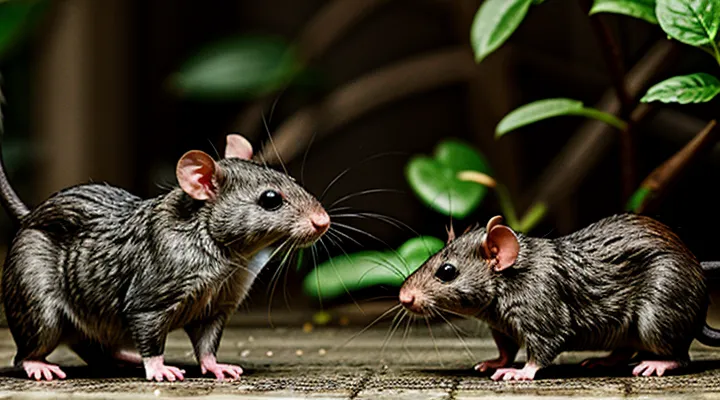
Kingdom: «Animalia» - The Animal Kingdom
Phylum: «Chordata» - Animals with a Notochord
Rats are classified within the class Mammalia, order Rodentia, family Muridae, and belong to the phylum «Chordata». This phylum encompasses all animals that possess, at some stage of development, a notochord—a flexible, rod‑like structure that provides skeletal support.
Key characteristics of the phylum «Chordata» include:
- Presence of a notochord, either persistent or transient.
- Dorsal hollow nerve cord situated above the notochord.
- Paired pharyngeal slits or clefts.
- Post‑anal tail extending beyond the anus.
These traits distinguish chordates from other animal groups and confirm the inclusion of rats among them.
Class: «Mammalia» - Warm-Blooded, Hair-Covered Vertebrates
Rats are classified within the class «Mammalia», a taxonomic group of vertebrates distinguished by endothermy and a covering of hair. Members of this class maintain a constant internal temperature through metabolic heat production and possess specialized integumentary structures that protect the skin and aid in thermoregulation.
Key characteristics of the class «Mammalia» include:
- Endothermy (warm‑blooded physiology)
- Presence of hair or fur on the body surface
- Mammary glands that produce milk for offspring nourishment
- Three middle ear bones facilitating acute hearing
- Differentiated teeth adapted for various dietary functions
These traits collectively define the biological framework that places rats among warm‑blooded, hair‑covered vertebrates of the mammalian lineage.
Order: «Rodentia» - The Gnawing Mammals
Key Characteristics of Rodents
Rats are members of the order Rodentia, a group distinguished by several morphological and physiological traits that are shared across its diverse species.
• Incisor morphology: a single pair of continuously growing upper and lower incisors equipped with enamel on the labial surface and dentine on the lingual side, creating a self‑sharpening chisel edge.
• Dental formula: typically 1.0.0.3 / 1.0.0.3, indicating the presence of incisors and molars while lacking canines and premolars.
• Diastema: a pronounced gap between the incisors and molars, allowing manipulation of food items without interference from the grinding teeth.
• Skull structure: enlarged infraorbital foramen facilitating the passage of the masseter muscle, enhancing bite force necessary for gnawing.
• Gnawing adaptation: robust mandibular musculature and reinforced jaw joints enable sustained biting on hard materials.
• Reproductive capacity: high fecundity and short gestation periods, contributing to rapid population growth under favorable conditions.
• Sensory systems: well‑developed vibrissae and acute olfactory capabilities support environmental exploration and foraging.
• Tail morphology: typically hairless, elongated, and prehensile, serving balance and thermoregulation functions.
These characteristics collectively define the rodent clade, providing the functional basis for the ecological success of rats and their close relatives within the same taxonomic order.
Diversity within «Rodentia»
Rats belong to the mammalian order «Rodentia», family Muridae, subfamily Murinae, genus Rattus. This placement follows the hierarchical system of classification used for all vertebrates, positioning rats alongside other rodents that share characteristic dental and skeletal features.
The order «Rodentia» exhibits extensive diversity. More than 2,300 recognized species populate the group, distributed across 29 families. Major families include:
- Muridae – the largest family, containing rats, mice, and related genera.
- Sciuridae – squirrels, marmots, and chipmunks.
- Cricetidae – hamsters, voles, lemmings, and New World rats and mice.
- Caviidae – guinea pigs and capybaras.
- Dipodidae – jerboas and jumping mice.
These families occupy a wide range of habitats, from arid deserts to tropical rainforests, and display significant variation in body size, ranging from the tiny African pygmy mouse (≈ 5 g) to the capybara (≈ 65 kg). Morphological adaptations such as elongated incisors, specialized cheek pouches, and diverse tail structures reflect ecological specializations, including seed dispersal, burrowing, arboreal locomotion, and semi-aquatic foraging.
Dietary breadth further illustrates the group's heterogeneity. While many members are granivorous or herbivorous, others are omnivorous, insectivorous, or carnivorous, demonstrating flexible feeding strategies that support survival in fluctuating environments.
Overall, the taxonomic placement of rats within «Rodentia» situates them among a highly speciose order characterized by adaptive radiation, ecological versatility, and morphological innovation.
Family: «Muridae» - The Old World Mice and Rats
Defining Features of «Muridae»
The family «Muridae» represents the largest group within the order Rodentia. It comprises the true mice, rats, gerbils and their close relatives, occupying a broad range of habitats on every continent except Antarctica.
Defining characteristics of «Muridae» include:
- Continuously growing incisors with a single enamel ridge on the outer surface and dentine on the inner side.
- Molars with three longitudinal rows of cusps (tri‑tridentate pattern) adapted for grinding.
- Robust, elongated skulls featuring a well‑developed zygomatic arch and enlarged auditory bullae.
- Tail length generally equal to or longer than the head‑body length, often hairless and covered with scales.
- Presence of a well‑defined sternal gland in many species, associated with scent marking.
- High reproductive rate, characterized by short gestation periods and large litter sizes.
Taxonomically, «Muridae» falls under the suborder Myomorpha, family authority established by Bowdich in 1821. The family encompasses over 600 species distributed across more than 150 genera, reflecting extensive diversification. Morphological uniformity, particularly the dental and cranial traits listed above, distinguishes the group from other rodent families and underpins its classification.
Notable Genera within «Muridae»
The family «Muridae» represents the largest rodent family, encompassing over 700 species distributed worldwide. Members share dental formula I 1/1, C 0/0, P 0/0, M 3/3 and exhibit a high degree of ecological adaptability. The group includes both highly studied laboratory models and numerous wild species that influence agricultural and disease dynamics.
Notable genera within «Muridae»:
- Mus – contains the common house mouse, a primary model organism in genetics and biomedical research.
- Rattus – comprises species such as the brown rat and black rat, recognized for their commensal relationship with human habitats.
- Apodemus – includes field mice prevalent in Eurasian forests, serving as indicators of environmental change.
- Mastomys – hosts multimammate rats native to sub‑Saharan Africa, important reservoirs for viral pathogens.
- Praomys – consists of African forest mice, characterized by arboreal habits and diverse dietary preferences.
- Gerbilliscus – groups gerbil‑like mice adapted to arid regions of Africa and the Middle East.
These genera illustrate the taxonomic breadth and ecological significance of «Muridae», providing essential models for scientific investigation and influencing ecosystems across continents.
Genus: «Rattus» - True Rats
Species within the Genus «Rattus»
Rats belong to the order Rodentia, family Muridae, subfamily Murinae, and are classified within the genus «Rattus». The genus comprises a diverse assemblage of species that occupy a wide range of habitats across Asia, Africa, Oceania, and introduced populations worldwide.
Approximately 60–70 species are recognized in «Rattus». Prominent members include:
- Rattus norvegicus – the brown rat, common in urban environments and laboratory research.
- Rattus rattus – the black rat, historically linked to human settlements and disease transmission.
- Rattus exulans – the Pacific rat, native to many islands in the Pacific region.
- Rattus argentiventer – the ricefield rat, found in Southeast Asian agricultural areas.
- Rattus tanezumi – the Asian house rat, distributed throughout tropical and subtropical Asia.
- Rattus fuscipes – the dusky field rat, inhabiting forested regions of New Guinea.
Species differentiation relies on morphological traits such as skull shape, pelage coloration, and tail length, complemented by molecular analyses that refine phylogenetic relationships within the genus. Conservation status varies; while some species thrive as commensals, others face habitat loss and are listed as vulnerable or endangered.
Common Examples: «Rattus norvegicus» and «Rattus rattus»
Rats are mammals belonging to the order Rodentia, family Muridae, and genus Rattus. This taxonomic placement groups them with other murid rodents and distinguishes them from other rodent families.
Common representatives of the genus include «Rattus norvegicus» and «Rattus rattus». These species illustrate the typical characteristics of the group, such as omnivorous diet, high reproductive capacity, and adaptability to urban environments.
Taxonomic hierarchy for rats:
- Kingdom: Animalia
- Phylum: Chordata
- Class: Mammalia
- Order: Rodentia
- Family: Muridae
- Genus: Rattus
- Species: «Rattus norvegicus», «Rattus rattus»
The classification reflects evolutionary relationships derived from morphological and genetic analyses, confirming rats’ position within the murid rodent lineage.
The Significance of Taxonomic Classification
Understanding Evolutionary Relationships
Rats belong to the order Rodentia, which is the most diverse mammalian order. Within this order they are placed in the family Muridae, subfamily Murinae, and the genus Rattus. The full taxonomic hierarchy is:
- Kingdom Animalia
- Phylum Chordata
- Class Mammalia
- Order Rodentia
- Family Muridae
- Subfamily Murinae
- Genus Rattus
- Species (e.g., Rattus norvegicus, Rattus rattus)
Understanding evolutionary relationships relies on phylogenetic analysis. Molecular sequences—mitochondrial DNA, nuclear genes, and whole‑genome data—provide high‑resolution markers for reconstructing lineage splits. Morphological characters, such as dentition patterns and skull architecture, complement molecular evidence, especially for fossil taxa lacking genetic material.
Phylogenetic trees consistently show that rats form a monophyletic group within Murinae. Their closest extant relatives include other murine rodents such as mice (genus Mus) and various Asian field rats (genus Bandicota). Divergence estimates place the split between Rattus and Mus at approximately 12–15 million years ago, coinciding with the Miocene radiation of murine rodents.
The placement of rats in the murine clade reflects shared derived traits: continuously growing incisors, a specific pattern of molar cusps, and genomic signatures of adaptive evolution. These traits distinguish the murine lineage from other rodent families, such as Sciuridae (squirrels) and Caviidae (guinea pigs), which occupy separate branches of the rodent phylogeny.
Implications for Biology and Research
Rats belong to the order Rodentia, family Muridae, and genus Rattus, a placement that aligns them with other gnawing mammals sharing characteristic dentition and skull morphology. This classification establishes a clear phylogenetic framework for comparative studies across mammals.
The taxonomic context informs biological research by defining evolutionary distances, enabling accurate extrapolation of physiological data from rats to related species. Morphological and genetic traits conserved within Rodentia provide benchmarks for investigating developmental pathways and adaptive mechanisms.
Research applications derive directly from this classification:
- Genetic manipulation exploits the well‑characterized murine genome to explore gene function and regulation.
- Disease modeling leverages physiological similarities between rats and humans for cardiovascular, neurological, and metabolic disorders.
- Pharmacological testing benefits from comparable drug metabolism pathways, supporting translational drug development.
- Behavioral experiments utilize the species‑specific social and exploratory patterns documented within Muridae.
Recognizing rats as members of Rodentia ensures that experimental designs account for phylogenetic relevance, enhancing the validity of conclusions drawn across biomedical disciplines.