
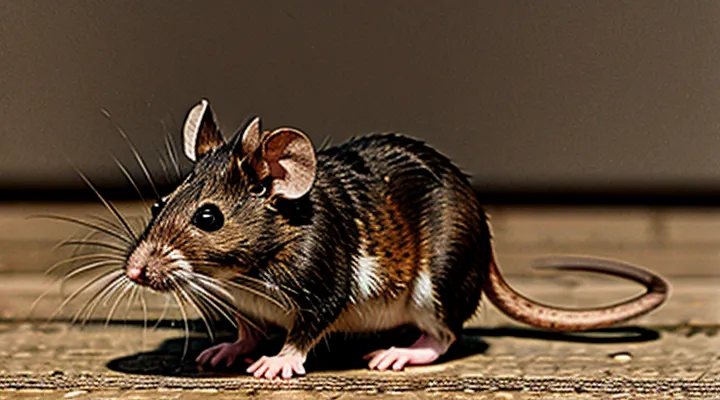
The Etymology of «Mus»
Indo-European Roots
Proto-Indo-European Origins
The classical Latin word for a mouse is mus, a term that appears in scientific nomenclature (e.g., Mus musculus) and in ancient literature.
The form mus descends from the Proto‑Indo‑European root *mūs or *meʔs‑, which denoted a small rodent. This root generated a family of cognates across the Indo‑European spectrum, reflecting a common lexical heritage.
- Sanskrit: mūṣiká “mouse”
- Ancient Greek: μῦς (mūs) “mouse”
- Old English: mus → Modern English “mouse”
- Old Church Slavonic: мѫшъ (muš) “mouse”
- Lithuanian: mus “mouse”
The continuity of the root demonstrates how a single lexical element survived phonological changes in diverse branches, preserving the reference to the same animal. The Latin designation thus serves as a direct descendant of the earliest Indo‑European term for this ubiquitous mammal.
Linguistic Cognates
The Latin word for mouse is mus. Its phonetic structure and semantic field link it to a family of Indo‑European cognates that share both meaning and a common ancestral root *mūs.
- Greek μῦς (mûs) – identical meaning, reflects early sound shift from ū to û.
- Sanskrit mush (मुष) – denotes a small rodent, preserves the original vowel quality.
- Old English mus – precursor of Modern English “mouse,” shows Grimm’s law consonant changes.
- German Maus – retains the vowel length and demonstrates the High German consonant shift.
- Slavic муха (mukha) – meaning “fly,” derived from the same root but diverged semantically.
- Celtic mus (reconstructed) – appears in early Irish glosses for “mouse,” confirming the root’s spread.
These cognates illustrate regular phonological developments: the Proto‑Indo‑European mūs yielded a long ū in Greek and Sanskrit, a short u in Germanic, and a diphthong‑like au in German. Semantic stability is notable; most languages preserve the reference to a small rodent, confirming the root’s resilience across millennia.
Evolution in Latin
Old Latin Forms
The mouse’s Latin designation originated in the earliest stages of the language, where the root appears in several phonetic and morphological variants. Old Latin inscriptions and glosses preserve forms that differ from the later Classical standard.
- mys – early spelling reflecting the Greek loan, found in archaic epigraphic records.
- mu – a reduced form used in some pre‑classical tablets, likely a phonetic contraction.
- mus – the nominative singular that later became the Classical norm; early examples show occasional vowel lengthening (mūs).
- muris – genitive singular, displaying the Proto‑Italic ‑is ending before the shift to ‑is in Classical Latin.
- mu‑ (stem) – the base used for forming other cases, evident in compounds such as mu‑tus (mouse‑related).
These forms illustrate the transition from a more variable orthography to the stabilized mus of Classical Latin. The shift involved regularization of vowel length, loss of the Greek‑derived mys, and adoption of the standard ‑us noun pattern across the declension.
Classical Latin Usage
In Classical Latin the common word for a mouse is mus, a masculine noun of the second declension. Its nominative singular is mus, genitive mūs, dative mū (or mūi in later usage), accusative mūnem, ablative mū (or mūe). The plural forms follow the regular pattern: nominative mūs, genitive mūrōrum, dative mūrīs, accusative mūrēs, ablative mūrīs.
Classical authors employ mus in a range of contexts, from everyday description to metaphorical illustration. The poet Virgil uses the term in the Georgics (1. 260) to depict a field plagued by rodents, while Ovid references the creature in the Metamorphoses (5. 539) as a transformation target. Legal texts such as the Digest (23.2.6) adopt mus when discussing property damage caused by vermin.
Key morphological points:
- Second‑declension masculine; stem mūr‑ for plural forms.
- Irregular genitive singular mūs (short vowel) distinguishes it from regular mus‑stem nouns.
- Dative singular historically appears as mū; later literature records mūi.
- The adjective musculus (“little mouse”) derives from mus and yields the modern term “muscle”.
Zoological Classification
Linnaean Taxonomy
Genus «Mus»
The genus Mus occupies a distinct position within the family Muridae, order Rodentia. It comprises small, omnivorous mammals commonly identified as the true mice.
The name derives directly from the classical Latin word mus, which translates to “mouse”. Linnaean taxonomy formalized the genus in the 18th century, assigning it the binomial format used for all species in the group.
Representative species include:
- Mus musculus – the house mouse, the most widely distributed member.
- Mus spicilegus – the steppe mouse, native to Eastern European grasslands.
- Mus caroli – the Ryukyu mouse, found in the Ryukyu Islands.
- Mus pahari – the Gairdner’s mouse, inhabiting South‑East Asian forests.
- Mus minutoides – the African pygmy mouse, noted for its diminutive size.
Geographic range spans continents: M. musculus thrives in urban and rural environments worldwide; other species occupy temperate grasslands, forest understories, and island ecosystems across Europe, Asia, and Africa. Habitat preference generally includes low vegetation, seed stores, and human‑associated structures.
In biomedical research, Mus musculus serves as the principal model organism. Its genome has been fully sequenced, and standardized laboratory strains enable reproducible experiments in genetics, immunology, and pharmacology. The genus’s reproductive rapidity and genetic tractability underpin its extensive use in controlled studies.
Species «Mus musculus»
Mus musculus, the house mouse, carries the binomial designation assigned by Carl Linnaeus in 1758. It belongs to the order Rodentia, family Muridae, and subfamily Murinae.
- Kingdom: Animalia
- Phylum: Chordata
- Class: Mammalia
- Order: Rodentia
- Family: Muridae
- Genus: Mus
- Species: musculus
The species exhibits a compact body length of 6–10 cm, a tail of comparable length, and a weight ranging from 12 to 30 g. Fur coloration varies from light gray to brown, with a lighter ventral side. Dental formula is 1/1, 0/0, 0/0, 3/3, reflecting the characteristic incisor growth pattern of rodents.
Geographically, Mus musculus occupies a cosmopolitan range, thriving in human‑associated environments across continents. Populations establish in urban, suburban, and agricultural settings, exploiting stored grains and refuse. The species tolerates a broad temperature spectrum, from temperate to tropical climates.
In biomedical research, Mus musculus serves as the primary model for genetic, physiological, and pharmacological studies. Its genome, fully sequenced and annotated, enables precise manipulation through techniques such as CRISPR-Cas9. The organism’s short reproductive cycle and high fecundity accelerate experimental timelines, supporting investigations into disease mechanisms, drug efficacy, and developmental biology.
Modern Nomenclature
Scientific Naming Conventions
The common house mouse is classified under the binomial name Mus musculus. This designation follows the International Code of Zoological Nomenclature, which requires a genus name capitalized and a species epithet in lowercase, both italicized. The genus Mus groups together small rodents sharing specific morphological traits, while the species epithet musculus distinguishes the house mouse from other members of the genus.
Key principles governing such Latinized scientific names include:
- Uniqueness: Each species receives a single, globally recognized binomial.
- Latin or latinized form: Names are derived from Latin or rendered into a Latin grammatical structure.
- Gender agreement: The species epithet must agree in gender with the genus name.
- Authorship citation: The original describer’s name and year of publication may follow the binomial (e.g., Mus musculus Linnaeus, 1758).
- Stability: Names are retained unless a formal revision demonstrates synonymy or misidentification.
These conventions ensure precise communication across languages and disciplines, allowing researchers to reference the house mouse unambiguously in scientific literature.
Common Misconceptions
Mus musculus is the binomial used by taxonomists for the common house mouse. Many readers assume the name is a literal translation of “mouse” from Latin, that it conveys a specific characteristic, or that it applies universally to all mouse species.
- The epithet “mus” does not mean “small rodent” in a generic sense; it is a direct borrowing of the classical Latin word for mouse.
- “musculus” is not a descriptive term for size or behavior; it is a diminutive form, indicating a smaller or younger individual, not a separate species.
- The designation applies only to the species Mus musculus, not to other members of the genus Mus or to unrelated rodents such as field mice or deer mice.
- The name does not imply any evolutionary relationship to the Latin word for “muscle,” despite its visual similarity.
Correct interpretation: Mus musculus denotes a single species within the Muridae family, identified by morphological and genetic criteria. The Latin components reflect historical naming conventions rather than biological attributes beyond species identification.
Cultural and Historical Context
«Mus» in Roman Literature
Mythological References
The classical Latin term “mus” (species designation Mus musculus) surfaces repeatedly in mythic literature, where the animal functions as a symbol, a transformed figure, or a divine associate.
- Ovid’s Metamorphoses records the conversion of a mortal woman into a mouse to escape the wrath of a jealous god, illustrating the creature’s role in narratives of metamorphosis.
- Roman tradition links mice to Diana, the huntress, whose nocturnal rites occasionally featured mouse sacrifices as omens of fertility and protection for grain stores.
- Greek myth attributes a companion status to the mouse in the cult of Hecate, where the rodent appears as a familiar spirit guiding the goddess through liminal spaces.
- Augustus employed mouse imagery on coinage to convey humility and the modest origins of the empire, echoing a broader Roman motif that equated the mouse with modesty and vigilance.
- Medieval bestiaries, drawing on Latin sources, describe the mouse as a modest creature whose silence conceals hidden knowledge, a theme echoed in alchemical texts that reference “mus” as a symbol of concealed potential.
Literary Depictions
The Latin designation for the mouse, mus, appears repeatedly across literary traditions, serving both as a precise identifier and as a symbolic element. Classical authors such as Virgil employ mus in the Georgics to illustrate agricultural pestilence, while Ovid references the creature in the Metamorphoses to explore themes of transformation. Medieval bestiaries retain the term, integrating it into moral allegories that contrast the diminutive animal with larger virtues.
Key literary instances include:
- Virgil, Georgics (1.345‑352) – mus introduced as a natural threat to crops, emphasizing the creature’s impact on cultivation.
- Ovid, Metamorphoses (5.453‑456) – mus used in the narrative of the mythic mouse that evades capture, highlighting ingenuity.
- Geoffrey Chaucer, The Canterbury Tales (The Miller’s Tale) – Latin term appears in a scholarly marginal note, reinforcing the tale’s academic framing.
- John Milton, Paradise Lost (Book IX, line 1035) – mus cited in a catalog of earthly creatures, underscoring the poem’s exhaustive taxonomy.
- J.R.R. Tolkien, The Hobbit (Chapter 2) – Latin name employed in a descriptive passage about the wood mouse, reflecting Tolkien’s philological precision.
The continued use of mus in literature demonstrates authors’ preference for a universally recognized term that conveys biological exactness while allowing metaphorical flexibility. By invoking the Latin name, writers align their narratives with scientific nomenclature, thereby enhancing credibility and facilitating cross‑cultural interpretation.
Symbolic Meanings
Pestilence and Destruction
The rodent known in scientific Latin as Mus has long been linked to outbreaks of disease and material loss. Historical records identify Mus as a vector for pathogens that caused widespread mortality among humans and livestock. Its capacity to thrive in human settlements amplifies exposure to infectious agents and accelerates the spread of contamination.
Key aspects of the association between Mus and health crises include:
- Transmission of plague bacteria (Yersinia pestis) through flea carriers that infest the rodent.
- Spread of hantavirus pulmonary syndrome via inhalation of aerosolized rodent excreta.
- Contamination of grain stores, leading to spoilage and economic damage.
Ecological adaptability allows Mus to infiltrate agricultural and urban environments, creating conditions for rapid pathogen dissemination and resource depletion. Control measures that target the species’ habitats and reproductive cycles reduce the likelihood of pestilential events and mitigate destructive outcomes.
Fertility and Abundance
The scientific designation Mus musculus originates from classical taxonomy, where Latin terms often encode symbolic meaning. In ancient agrarian societies, the mouse symbolized prolific reproduction; its rapid breeding cycles served as a natural metaphor for fertility. The species name therefore carries an implicit reference to abundance, echoing the expectation of plentiful harvests and thriving livestock.
Key associations linking the Latin label to fertility and abundance include:
- Reproductive speed – Mus musculus can produce several litters per year, illustrating high fecundity.
- Population resilience – The species thrives in diverse environments, demonstrating ecological robustness.
- Cultural metaphor – Historical literature employed the mouse as an emblem of plentifulness, reinforcing the linguistic connection.
By embedding these attributes within its Latin nomenclature, the term conveys more than a taxonomic identifier; it encapsulates a broader concept of generative vigor and material surplus.
Related Terms and Derivatives
Latin Diminutives
«Murinus»
Murinus is the Latin adjective meaning “pertaining to a mouse.” In biological nomenclature it appears as the specific epithet in numerous species names, indicating a mouse‑like characteristic or direct association with mice. The term derives from the Latin noun mus, genitive muris, combined with the suffix ‑inus, which forms adjectives denoting relationship or resemblance.
Typical applications include:
- Mus murinus – the scientific name historically assigned to the common house mouse.
- Rattus murinus – a designation for certain rat species displaying mouse‑like traits.
- Aedes murinus – a mosquito species whose larvae are frequently found in mouse burrows.
In taxonomic literature murinus signals a morphological or ecological link to mice, often guiding researchers toward relevant comparative studies. The adjective follows the gender of the genus name, adapting to masculine, feminine, or neuter forms (e.g., murinus, murina, murinum). Its consistent use across taxa provides a concise linguistic marker for mouse‑related attributes.
«Musculus»
The term Musculus serves as the classical Latin designation for the small rodent commonly known in English as a mouse. It appears in scientific nomenclature, notably within the binomial name Mus musculus, which identifies the common house mouse. The word derives from the diminutive form of mus, meaning “mouse,” and functions as a morphological indicator of size.
In taxonomic literature, Musculus is employed in several contexts:
- As the specific epithet in Mus musculus and related subspecies.
- In anatomical terminology, where “musculus” denotes a muscle, reflecting the original Latin meaning “little mouse” due to the perceived movement of muscles.
- In historical texts, where the term describes various small mammals of the Muridae family.
The Latin label persists in modern biological classification, providing a standardized reference that transcends linguistic boundaries and facilitates precise communication among researchers.
English Loanwords
«Mouse» and Its History
The species commonly known as the mouse is identified in scientific nomenclature as Mus musculus. This binomial, established by Carl Linnaeus in the 10th edition of Systema Naturae (1758), follows the Linnaean system that pairs a generic name with a specific epithet. The genus name Mus derives directly from the Latin word for “mouse,” while the species epithet musculus means “little mouse” or “little organ,” reflecting a diminutive form.
The English term “mouse” traces its origins to Old English mus, a cognate of the Proto‑Germanic musaz and ultimately the Proto‑Indo‑European root mʰūs. Throughout the medieval period the word remained stable, appearing in texts such as the Anglo‑Saxon Chronicle (c. 900) and later in Chaucer’s works. By the early modern era, the term acquired additional metaphorical uses (e.g., “computer mouse”) without altering its zoological meaning.
Key milestones in the naming history:
- 1758 – Linnaean classification introduces Mus musculus.
- 1798 – Johann Friedrich Blumenbach expands the genus to include several related species.
- 1850s – Genetic studies begin distinguishing laboratory mouse strains from wild populations.
- 1902 – The International Code of Zoological Nomenclature formalizes rules governing the usage of Mus and related taxa.
- 1970s – Molecular phylogenetics confirms the placement of Mus musculus within the Muridae family.
The continuity of the Latin designation underscores the stability of taxonomic practice, while the English word’s etymology illustrates a parallel, unbroken linguistic lineage spanning more than a millennium.
Related Scientific Terms
Mus musculus, the scientific designation for the common mouse, belongs to a well‑defined taxonomic hierarchy. The genus Mus groups small rodents with similar cranial and dental structures; the species epithet musculus distinguishes the house mouse from other Mus members. This species resides within the family Muridae, order Rodentia, class Mammalia, phylum Chordata, and kingdom Animalia.
Relevant scientific terminology includes:
- Model organism – a species extensively used in biomedical research for its genetic tractability.
- Inbred strain – a genetically uniform line derived from successive brother‑sister matings.
- Knockout mouse – an individual in which a specific gene has been deactivated.
- Genome – the complete DNA sequence of Mus musculus, sequenced and annotated.
- Allele – a variant form of a gene present within mouse populations.
- Phenotype – observable traits resulting from genotype and environment.
- Transgenic – a mouse carrying foreign DNA integrated into its genome.
- Embryonic stem cell – pluripotent cells derived from early mouse embryos, used for gene targeting.
These terms collectively describe the biological classification and experimental contexts that define the mouse as a cornerstone of modern genetics and physiology.