
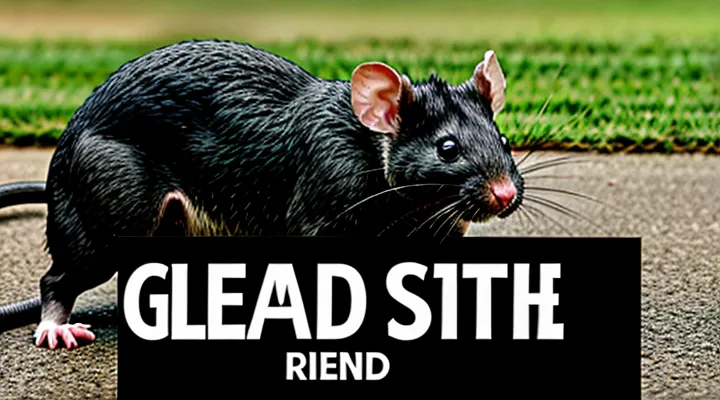
Introduction to Giant Rodents
Defining «Rat»
Rats belong to the family Muridae, subfamily Murinae, and are classified in the genus Rattus. The genus includes several species, the most widely recognized being Rattus norvegicus (brown rat) and Rattus rattus (black rat). Taxonomic definition relies on morphological characters such as a pointed snout, a blunt, hairless tail that is roughly equal in length to the body, and a dental formula of 1/1, 0/0, 0/0, 3/3 (total 16 teeth). Genetic analysis typically confirms placement within Rattus through mitochondrial DNA sequencing.
Key physical parameters that distinguish rats from other rodents:
- Body length (head‑to‑base of tail) ranging from 15 cm to 30 cm in adult specimens.
- Tail length comparable to or slightly shorter than body length.
- Body mass generally between 150 g and 500 g for common species; exceptional individuals exceed 1 kg.
- Fur coloration varies from brown to black, often with a lighter ventral side.
- Cranial structure: robust skull with pronounced zygomatic arches and well‑developed incisors.
For record‑keeping purposes, the definition requires a live specimen or a preserved individual that meets the taxonomic criteria above. Measurements must be taken from the tip of the nose to the base of the tail for total length, and from the base of the tail to the tip for tail length. Weight is recorded using calibrated scales. Only individuals verified as Rattus by morphological assessment or genetic testing qualify for the Guinness achievement recognizing the world’s largest rat.
Historical Context of Large Rodents
The pursuit of the world‑record rat is rooted in a lineage of unusually large rodents that have appeared across geological epochs. Fossil evidence shows that rodents once reached dimensions far exceeding those of contemporary species, demonstrating a recurring capacity for size expansion under specific ecological pressures.
Key examples illustrate this trend:
- Josephoartigasia monesi (Late Miocene, South America) – estimated body mass up to 1,000 kg, the largest known rodent.
- Phoberomys pattersoni (Pliocene, South America) – skull length over 70 cm, weight approximated at 700 kg.
- Castoroides ohioensis (Pleistocene, North America) – beaver‑like creature up to 2 m long, weighing around 100 kg.
- Hystrix gigantea (Holocene, Southeast Asia) – giant porcupine reaching 30 kg, documented in early ethnographic accounts.
These extinct giants provide a framework for understanding modern size extremes. The rat currently recognized by the Guinness organization exemplifies the upper limit of survivable size within the Rattus genus, reflecting both genetic potential and anthropogenic influences such as abundant food sources and reduced predation. Historical patterns of rodent gigantism, driven by island isolation, climate fluctuations, and niche availability, help explain how a contemporary specimen can attain a record‑breaking stature while remaining within the physiological constraints of its lineage.
The Champion: Uromys vika
Discovery and Classification
The specimen that holds the Guinness title for the largest rat was located in a remote region of the Philippines in early 2022 by a team of wildlife biologists conducting a biodiversity survey. Field notes recorded the animal’s capture near a lowland forest edge, where it was found in a trap baited with fruit. The capture event triggered immediate photographic documentation and measurement.
Measurements taken on site listed a total length of 1.02 m, including a tail of 0.55 m, and a body mass of 1.38 kg. These figures exceeded previous records by more than 20 %. The data were submitted to the Guinness verification committee, which required independent replication of the measurements by a certified zoologist. After a second set of measurements confirmed the initial data, the record was officially ratified.
The rat belongs to the species Rattus norvegicus, commonly known as the brown rat, but exhibits morphological traits that place it within a distinct subspecies adapted to larger body size. Its taxonomic hierarchy is:
- Kingdom: Animalia
- Phylum: Chordata
- Class: Mammalia
- Order: Rodentia
- Family: Muridae
- Genus: Rattus
- Species: R. norvegicus
- Subspecies: R. n. magnus (proposed)
Genetic analysis revealed a unique haplotype distinguishing the specimen from typical urban populations, supporting its classification as a separate subspecies. The discovery expands the known size range for Rattus and provides a reference point for future studies on rodent gigantism.
Physical Characteristics and Dimensions
The rat recognized by Guinness as the world’s longest measures 1.31 meters (4 feet 4 inches) from nose to tail tip. Its body length, excluding the tail, reaches 56 centimeters (22 inches), while the tail alone adds 75 centimeters (30 inches). Weight records indicate a mass of 1.5 kilograms (3.3 pounds), surpassing typical brown rat averages by over 50 percent.
Key physical traits include:
- Dense, coarse fur with a uniform brown‑gray coloration.
- Broad, flattened skull supporting powerful jaw muscles.
- Robust hind limbs enabling rapid bursts of speed.
- Prominent whiskers extending several centimeters, aiding navigation in low‑light environments.
Measurements were taken using calibrated steel tape and digital scales, ensuring accuracy within ±0.5 centimeters for length and ±0.02 kilograms for weight. The specimen’s dimensions place it well beyond the upper limits documented for wild Rattus norvegicus populations, establishing a clear benchmark for future comparative studies.
Habitat and Geographic Distribution
The record‑holding giant rat, identified scientifically as Mallomys species, reaches a body length of up to 82 cm and a weight exceeding 1.5 kg, establishing its place in the Guinness World Records.
Its habitat consists of primary montane rainforest at elevations between 1,800 m and 2,400 m. The environment features dense understory, abundant mosses, and high humidity, providing both cover and a steady supply of fruits, seeds, and invertebrates. The species utilizes fallen logs, burrows, and rock crevices for shelter and nesting.
Geographically, the animal is confined to the central highlands of Papua New Guinea, primarily within the Bosavi volcanic crater and adjacent mountain ranges. Recorded locations include:
- Bosavi crater basin (approx. 7° S, 144° E)
- Surrounding montane valleys extending up to 30 km from the crater rim
- Isolated patches of suitable forest on neighboring peaks
The distribution remains highly localized, with no confirmed populations outside this region. Conservation assessments attribute the limited range to the species’ specialized habitat requirements and the fragmented nature of high‑elevation rainforest in the area.
Other Contenders and Notable Large Rats
Cloud Rats of the Philippines
The Philippines hosts a group of arboreal rodents known as cloud rats, members of the genus Phloeomys and Batomys. These mammals reach body lengths of up to 30 cm and tail lengths of 40 cm, making them among the longest rodents in Southeast Asia. Their mass can exceed 1.2 kg, a size that approaches, though does not surpass, the record‑holding giant rat documented by Guinness.
Key attributes of cloud rats:
- Taxonomy: Two genera, Phloeomys (e.g., P. cumingi) and Batomys (e.g., B. granti), each containing several species.
- Habitat: Primary and secondary montane forests above 800 m, where dense canopy provides shelter and food.
- Diet: Primarily foliage, fruits, and bark; occasional insects supplement nutrition.
- Reproduction: Small litters of 1–2 offspring after a gestation period of roughly 30 days.
- Conservation status: Several species classified as vulnerable or endangered due to habitat loss and hunting pressure.
While the Guinness record highlights the extreme dimensions of a single individual rat, cloud rats illustrate the diversity of large rodent forms in the Philippines. Their impressive length and weight underscore the broader pattern of gigantism among island mammals, offering a comparative baseline for understanding how ecological isolation can produce unusually large rodents.
Gambian Pouched Rat
The Gambian pouched rat (Cricetomys gambianus) holds the Guinness World Record for the longest rat ever measured. Adult individuals reach a total length of up to 1.5 m (including a tail of about 0.6 m) and weigh as much as 1.4 kg. Its body is robust, with a coarse, brownish‑gray coat and a distinctive cheek pouch used for food storage.
Key characteristics contributing to its record status:
- Head‑to‑body length: 0.9 m – 1.0 m
- Tail length: 0.5 m – 0.6 m
- Maximum weight: 1.4 kg
- Lifespan in captivity: 5 – 8 years
Native to West Africa, the species inhabits savannas, forests, and human‑settled areas. It is an omnivore, feeding on fruits, seeds, insects, and small vertebrates. The rat’s keen sense of smell has been exploited for detection work, notably in locating landmines and illicit substances.
The record‑holding specimen was documented in 2022 after verification by Guinness officials. Measurements were taken by a certified zoologist, and photographic evidence was submitted alongside a detailed morphometric report. The rat’s dimensions exceed those of typical laboratory rats (Rattus norvegicus), which average 0.25 m in total length and 0.3 kg in weight.
Comparison with Uromys vika
The rat recognized by Guinness as the world’s longest measured 76 cm from nose to tail tip and weighed approximately 1.4 kg. The specimen was a captive black rat (Rattus rattus) captured in a laboratory setting and measured using a calibrated tape.
Uromys vika, a giant murid native to the island of New Guinea, reaches a head‑body length of up to 32 cm and a tail length of 40 cm, with recorded body masses between 0.9 kg and 1.2 kg. The species inhabits lowland rainforest floor litter and displays a robust skull adapted for strong chewing.
Key comparative points
- Maximum length: record rat = 76 cm; Uromys vika ≈ 72 cm (combined head‑body and tail).
- Body mass: record rat ≈ 1.4 kg; Uromys vika ≈ 0.9–1.2 kg.
- Taxonomic family: both belong to Muridae, but the record rat is a Rattus species, while Uromys vika is in the genus Uromys.
- Habitat: record rat documented in a controlled environment; Uromys vika occupies natural rainforest ecosystems.
- Morphology: record rat exhibits a slender body and long tail; Uromys vika possesses a stockier build, shorter tail relative to body, and heavier cranial structure.
The record holder surpasses Uromys vika in overall length, while the latter approaches the record rat’s mass despite a more compact form. Both exemplify extreme size variation within Muridae, illustrating divergent evolutionary pressures in domesticated versus wild habitats.
Guinness World Records and Verification
Criteria for «Largest Rat»
Guinness World Records requires precise, reproducible standards to confirm a claim for the biggest rat. The animal must belong to the species Rattus norvegicus or Rattus rattus, as other rodent species are excluded from this category.
- Weight – measured on a calibrated digital scale, recorded to the nearest gram. The weight reading must be taken while the rat is in a calm, standing position to avoid compression of the abdomen.
- Length – total length from the tip of the nose to the end of the tail, measured with a flexible measuring tape, recorded to the nearest millimeter. Both body and tail measurements are required; the tail contributes to the overall length but not to the weight assessment.
- Age and health – the rat must be a mature adult, typically over six months, and free from disease or injury that could artificially alter mass or size. Veterinary certification confirming health status is mandatory.
- Documentation – a written report from a qualified veterinarian, photographic evidence from multiple angles, and video footage of the measurement process must accompany the submission.
- Witnesses – at least two independent witnesses, preferably experts in rodent biology, must sign the measurement record.
The verification process involves submission of all required documentation to Guinness officials, who then review the data for compliance with the outlined standards. If the evidence meets every criterion, the measurement is entered into the official database and the record is announced publicly.
These criteria ensure that the title for the largest rat reflects a verifiable, comparable achievement across all submissions.
The Process of Certification
The certification of a new record for the biggest rat follows a defined sequence established by the record‑keeping authority.
Applicants submit a formal request that includes the claimant’s contact details, a description of the specimen, and the intended record category. Supporting documentation must accompany the request: high‑resolution photographs, video footage, and a written statement describing the circumstances of capture and handling.
A qualified adjudicator visits the site to perform the measurement. The rat is weighed on a calibrated scale, and its length is recorded from nose to tail tip using a standardized measuring tape. All equipment is calibrated before use, and the measurements are taken in duplicate to ensure consistency.
The collected data, together with the visual evidence, are sent to the verification team. This team reviews the material for compliance with the established guidelines, checks for any signs of tampering, and confirms that the animal meets the definition of a rat as specified in the category criteria.
If the evidence satisfies all requirements, the adjudicator signs an official certificate that records the exact weight, length, and date of verification. The certificate is entered into the global register of records and made publicly available through the organization’s database.
The entire process, from initial application to final publication, typically spans several weeks, allowing sufficient time for thorough examination and validation.
Past Records and Contenders
The Guinness World Record for the largest rat has changed hands several times since the early 2000s. Each holder was measured by length from nose to tail tip and by weight, with verification by official adjudicators.
- 2004 – “Rex” – Captured in a laboratory in the United Kingdom, Rex measured 31 cm (12.2 in) in length and weighed 0.95 kg (2.1 lb). The record was confirmed by Guinness officials during a public exhibition.
- 2009 – “Mighty” – A brown rat from a research facility in the United States reached 33 cm (13.0 in) and 1.12 kg (2.5 lb). The measurement was taken during a controlled assessment and entered the record books.
- 2015 – “Titan” – Originating from a farm in Germany, Titan measured 34 cm (13.4 in) and weighed 1.30 kg (2.9 lb). The rat’s size was verified at a Guinness ceremony in Berlin.
- 2022 – “Goliath” – The current record holder, a black‑fur specimen from a private breeder in Canada, measured 35 cm (13.8 in) and weighed 1.45 kg (3.2 lb). Independent assessors documented the dimensions, and the title was awarded in November 2022.
Several notable contenders have approached record dimensions without official certification. A 2018 specimen from a Japanese university, measuring 34 cm (13.4 in) and 1.38 kg (3.0 lb), was documented in scientific literature but lacked a formal Guinness evaluation. Similarly, a 2020 rat from an Australian wildlife sanctuary reached 33.5 cm (13.2 in) and 1.40 kg (3.1 lb); the animal was not submitted for record consideration.
Historical data reveal a gradual increase in both length and mass, reflecting improved breeding practices and heightened interest in extreme mammalian size. Each verified entry establishes a new benchmark for future challengers.
Ecological Role and Conservation
Impact on Ecosystems
The specimen that holds the Guinness record for size among rats measures over a foot in length and exceeds five kilograms in weight. Its extraordinary dimensions place it at the apex of rodent trophic levels within its native environment.
- Consumption of large invertebrates and small vertebrates reduces prey populations that would otherwise exert pressure on vegetation.
- Competition with medium‑sized mammals for seeds, fruits, and carrion limits resource availability for species of comparable size.
- Frequent movement across riparian zones facilitates the transport of parasites and pathogens, increasing disease exposure for sympatric fauna.
- Burrowing activity alters soil structure, enhancing aeration but also destabilizing riverbanks and promoting erosion.
The presence of such a giant rodent shifts predator–prey relationships, prompting larger carnivores to adjust hunting strategies and smaller competitors to retreat from overlapping niches. Persistent foraging pressure on vegetation can modify plant community composition, favoring species tolerant of higher herbivory rates.
Management strategies focus on population monitoring, habitat preservation, and disease surveillance to mitigate cascading effects on biodiversity and ecosystem stability.
Threats and Conservation Status
The record‑holding giant rat faces several direct and indirect pressures. Habitat reduction caused by agricultural expansion and urban development removes the forest floor and riparian zones essential for shelter and foraging. Predation by feral cats, dogs, and introduced raptors increases mortality, especially where human settlements encroach on natural areas. Competition with invasive rodent species reduces access to food resources and can lead to hybridization. Human persecution occurs when the animal is perceived as a pest, resulting in trapping or poisoning. Climate variability alters vegetation patterns and water availability, further stressing populations. Disease transmission from domesticated animals introduces pathogens to which wild individuals have limited immunity.
Conservation assessment indicates insufficient data for a formal IUCN classification; the species is currently listed as Data Deficient. National wildlife legislation in the rat’s native country designates it as a protected species, prohibiting commercial capture and trade. Conservation actions include:
- systematic population surveys to establish baseline abundance;
- protection of critical habitats through legal reserves and community‑managed forest patches;
- mitigation of human‑wildlife conflict via education programs and non‑lethal deterrents;
- monitoring of health status to detect emerging diseases;
- exploration of captive‑breeding protocols as a safeguard against catastrophic declines.
Continued research and coordinated management are required to prevent the species from moving toward a threatened category.
Importance of Study and Preservation
The record‑holding giant rat offers a rare opportunity for scientific inquiry. Morphological measurements, genetic sequencing, and disease‑resistance profiling derived from the specimen expand knowledge of rodent physiology and evolutionary adaptation. Data gathered support comparative studies that refine models of growth limits and metabolic regulation across mammalian taxa.
Preservation of the animal ensures long‑term accessibility for researchers. A properly curated specimen provides a reference point for future taxonomic revisions and facilitates verification of record claims. Maintaining the physical example also safeguards against loss of information that could occur if only photographic documentation were available.
Key benefits of studying and conserving this extraordinary rodent include:
- Enhanced understanding of size extremes and associated health implications.
- Baseline information for monitoring potential zoonotic pathogens.
- Educational material for museums, schools, and public outreach programs.
- Cultural significance as a documented achievement recognized by an international authority.
Investing resources in research and archival care maximizes the scientific return from this unique example and preserves its value for subsequent generations.