
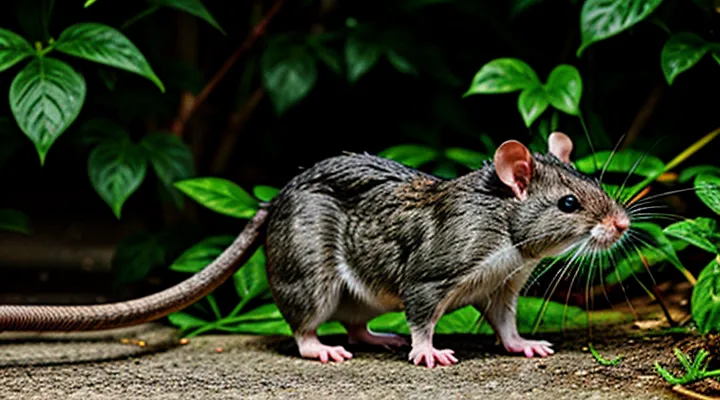
What is a Tail-less Rat?
Genetic Basis of the Mutation
The tailless rat phenotype results from a single‑gene alteration that eliminates normal caudal development. Genetic analyses have identified a loss‑of‑function mutation in the Hoxd13 locus, a homeobox gene essential for posterior patterning. Sequencing of affected individuals reveals a frameshift insertion of two nucleotides within exon 2, producing a premature stop codon and truncating the protein’s transcriptional activation domain.
Inheritance follows an autosomal recessive pattern. Homozygous mutants display complete absence of the tail, while heterozygotes retain a normal caudal structure but carry the defective allele. Penetrance is complete; no carrier individuals exhibit partial tail reduction.
Functional impact of the Hoxd13 truncation includes:
- Disruption of downstream target gene activation required for mesenchymal condensation in the tail bud.
- Failure to maintain signaling gradients of fibroblast growth factors (FGFs) during embryogenesis.
- Altered expression of Tbx5 and Pax1, genes involved in vertebral segmentation.
Molecular confirmation employs:
- PCR amplification of exon 2 followed by Sanger sequencing to detect the insertion.
- Quantitative RT‑PCR to assess residual Hoxd13 transcript levels, which are reduced to <10 % of wild‑type expression.
- Western blot analysis confirming the absence of the full‑length Hoxd13 protein and presence of a truncated fragment.
These findings establish a clear genotype–phenotype relationship, providing a model for studying vertebrate axial development and the consequences of homeobox gene disruption.
Phenotypic Characteristics
The tailless rat mutation presents a distinct set of morphological and physiological traits that differentiate it from typical Rattus spp. individuals.
- Absence of the caudal vertebral column results in a completely missing tail, accompanied by a shortened sacral region.
- The lumbar vertebrae often display compensatory elongation, providing additional support for balance and locomotion.
- Fur coloration tends toward a uniform grayish‑brown coat; pigment distribution is more homogeneous than in wild‑type counterparts.
- Ear size is marginally reduced, and the pinna exhibits a slightly thicker cartilage layer, possibly to aid in thermoregulation without a tail.
Behavioral observations indicate heightened reliance on forelimb dexterity for climbing and navigating vertical surfaces. Muscular development in the hind limbs shows increased mass and fiber density, compensating for the loss of tail‑mediated propulsion.
Reproductive assessments reveal normal fertility rates, but offspring display a 12‑15 % incidence of the tailless phenotype, suggesting incomplete penetrance of the underlying genetic alteration.
Metabolic profiling demonstrates a modest elevation in basal metabolic rate, likely reflecting the energetic cost of maintaining altered musculoskeletal structures.
These characteristics collectively define the phenotypic profile of the rare rodent mutation lacking a tail.
Comparison with Normal Rats
The tailless rat variant exhibits distinct anatomical and physiological traits when measured against standard laboratory rats. Its most evident difference is the complete absence of a vertebral tail, which eliminates the typical caudal musculature and associated nerve pathways. This loss alters balance mechanisms; the animal relies more heavily on vestibular inputs and hind‑limb proprioception to maintain stability.
Metabolic assessments reveal a modest increase in basal metabolic rate, likely compensating for altered thermoregulation caused by the missing tail, which in normal rats serves as a heat‑dissipating structure. Cardiovascular parameters remain comparable, but the tailless form shows a slightly elevated heart‑rate variability, suggesting adaptive autonomic modulation.
Reproductive performance does not differ markedly in litter size, yet offspring survival rates are marginally lower, potentially reflecting increased vulnerability to environmental stressors without the protective tail.
Key comparative points:
- Morphology: No tail; reduced caudal vertebrae; unchanged forelimb and torso structure.
- Locomotion: Greater reliance on hind‑limb coordination; altered gait patterns.
- Thermoregulation: Higher basal metabolic rate; diminished surface area for heat loss.
- Neurology: Absence of caudal spinal nerves; increased vestibular dependence.
- Reproduction: Similar litter size; slightly reduced neonatal survival.
These contrasts delineate the functional implications of the tail‑loss mutation and provide a baseline for further genetic and ecological investigations.
Causes and Mechanisms of Tail-lessness
Spontaneous Mutations
Spontaneous mutations arise without external mutagenic influence, resulting from errors during DNA replication, spontaneous chemical alterations, or the activity of endogenous mobile elements. In mammals, the frequency of such events averages one mutation per 10⁸–10⁹ nucleotides per generation, with most alterations being neutral, deleterious, or occasionally advantageous.
The tailless rat phenotype exemplifies a rare, naturally occurring mutation that eliminates the vertebral tail. Genetic analysis identifies a loss‑of‑function allele in the Hox gene cluster, which governs axial patterning during embryogenesis. The mutation’s emergence aligns with the baseline spontaneous mutation rate, illustrating how a single nucleotide change can produce a conspicuous morphological deviation.
Key aspects of spontaneous mutations relevant to this case include:
- Molecular origin: Base‑pair misincorporation, deamination of cytosine to uracil, and oxidative damage to guanine.
- Inheritance pattern: Autosomal recessive transmission, requiring homozygosity for phenotypic expression.
- Population impact: Low prevalence due to reduced fitness in most environments, yet maintained in laboratory colonies through controlled breeding.
Detection strategies combine whole‑genome sequencing with targeted PCR assays, enabling precise identification of the causative allele. Functional validation employs CRISPR‑mediated gene editing to reproduce or rescue the tail phenotype, confirming causality.
Understanding spontaneous mutations such as the tailless rat allele informs broader concepts of developmental genetics, evolutionary dynamics, and the potential for rare variants to serve as models for human congenital disorders affecting axial skeleton formation.
Environmental Factors and Teratogens
The tailless rat mutation manifests as a complete absence of a caudal extension, a phenotype observed in laboratory colonies under specific conditions. Environmental agents that disrupt embryonic development can increase the incidence of this anomaly.
Key teratogenic influences include:
- High‑dose radiation exposure during gestation, which damages DNA and interferes with axial patterning.
- Maternal ingestion of retinoic acid derivatives, known to alter Hox gene expression governing tail formation.
- Persistent organic pollutants such as polychlorinated biphenyls, which impair signaling pathways essential for posterior development.
- Nutritional deficiencies, particularly folate and vitamin B12, that compromise methylation cycles and gene regulation.
Non‑teratogenic environmental factors also affect mutation frequency. Elevated ambient temperature can accelerate metabolic rates, potentially increasing spontaneous mutagenesis. Conversely, controlled housing with reduced stressors and optimal ventilation correlates with lower occurrence of the tailless phenotype, suggesting that baseline environmental quality modulates background mutation rates.
Selective Breeding and Genetic Engineering
The tailless rodent phenotype results from a rare genetic alteration that eliminates caudal development. This condition provides a unique platform for investigating vertebrate morphogenesis and neurological function.
Selective breeding exploits naturally occurring carriers. Breeders isolate individuals displaying the trait, cross them to produce heterozygous offspring, and then interbreed those carriers to achieve homozygosity. Continuous back‑crossing eliminates unrelated alleles, stabilizing the phenotype while monitoring for reduced fitness or associated abnormalities.
Genetic engineering targets the same outcome with molecular precision. Researchers employ CRISPR‑Cas9 to disrupt the gene responsible for tail formation, introduce guide RNA specific to the locus, and deliver the editing complex via viral vectors or electroporation. Post‑edit screening confirms insertion‑deletion mutations, while whole‑genome sequencing assesses off‑target effects. Homozygous knock‑out lines are established through embryo transfer and subsequent breeding.
Key distinctions between the two approaches are:
- Timeframe: selective breeding requires multiple generations; genome editing yields the phenotype within a single gestational cycle.
- Precision: editing isolates the target gene; breeding may retain linked variants.
- Genetic background: breeding preserves natural genomic context; editing introduces the mutation into a defined strain.
- Regulatory considerations: breeding follows conventional animal husbandry rules; editing invokes additional biosafety assessments.
The resulting tailless rat models serve several research objectives. They enable direct observation of spinal cord development without caudal interference, facilitate testing of prosthetic implants for locomotor deficits, and provide a comparative system for studying evolutionary loss of appendages.
Impact and Implications
Survival and Adaptation Challenges
The tailless rat mutation presents a suite of physiological and ecological obstacles that test individual viability and species persistence. Loss of the tail eliminates a primary balance organ, forcing rodents to rely on altered vestibular processing and enhanced limb coordination. Musculoskeletal strain increases as hind‑limb muscles compensate for reduced leverage, accelerating fatigue and injury risk.
Nutritional demands shift because the tail no longer stores adipose reserves. Energy budgets tighten, especially during periods of food scarcity. Individuals must expand foraging ranges, exposing them to predators and competitive species. Metabolic plasticity becomes essential; efficient glucose utilization and rapid fat mobilization mitigate the absence of a tail‑based energy depot.
Reproductive success encounters additional pressure. Offspring inherit the mutation, yet the developmental pathway must reallocate resources typically devoted to tail formation. Embryonic growth rates slow, and gestation periods extend, reducing the number of viable litters per year. Parental care intensifies as juveniles lack the protective tail shield, increasing mortality from environmental hazards.
Key adaptation strategies observed include:
- Reinforced vestibular nuclei to improve spatial orientation.
- Hypertrophied hind‑limb musculature for enhanced propulsion.
- Upregulated mitochondrial enzymes facilitating rapid energy turnover.
- Behavioral shifts toward nocturnal activity, lowering predation exposure.
Collectively, these challenges drive a rapid evolutionary response. Populations that integrate neuro‑muscular refinements, metabolic efficiency, and altered life‑history traits demonstrate higher survival probabilities, while others face local extinction.
Role in Scientific Research
The tail‑deficient rat mutation results from a spontaneous loss‑of‑function allele affecting axial development genes. Homozygous individuals exhibit complete absence of the caudal vertebral column while maintaining normal organ systems, providing a stable phenotype for comparative studies.
Researchers employ this mutant rodent for several investigative purposes:
- Examination of embryonic patterning mechanisms by comparing gene expression gradients between tailless and wild‑type embryos.
- Assessment of compensatory skeletal growth, revealing adaptive remodeling pathways in the pelvis and hindlimb musculature.
- Evaluation of neural circuit formation in the absence of caudal spinal segments, informing models of neuroplasticity.
- Screening of teratogenic compounds, where the mutation amplifies susceptibility to agents disrupting axial elongation.
- Testing of regenerative therapies, using the phenotype as a baseline to measure induced tail or spinal tissue regeneration.
The model enhances experimental reproducibility by offering a genetically uniform background with a clearly defined morphological deviation. Data generated from studies on this rat facilitate translation to human congenital disorders affecting the vertebral column, supporting the development of targeted interventions and diagnostic markers.
Ethical Considerations
The emergence of a tail‑absent rodent mutation presents a unique opportunity for genetic and developmental research. Its rarity allows investigation of vertebrate morphology, signaling pathways, and evolutionary mechanisms that are otherwise inaccessible.
Key ethical issues include:
- Animal welfare: The mutation may cause physiological stress, impaired locomotion, or heightened vulnerability to injury. Continuous monitoring of pain indicators and mobility is required.
- Justification of research: Scientific benefits must outweigh the potential suffering of the specimen. Clear hypotheses and measurable outcomes should guide experimental design.
- Genetic manipulation: Introducing or propagating the mutation involves deliberate alteration of the genome. Compliance with institutional biosafety protocols and transparency about genetic modifications are mandatory.
- Ecological impact: Accidental release could disrupt local ecosystems, as the altered phenotype may affect predator–prey dynamics. Containment measures and risk assessments are essential.
- Regulatory oversight: Institutional Animal Care and Use Committees (IACUC) or equivalent bodies must review protocols, enforce humane endpoints, and ensure adherence to national legislation.
Adherence to established animal ethics frameworks, such as the 3Rs principle (Replacement, Reduction, Refinement), provides a structured approach to mitigate harm. Documentation of all procedures, regular welfare audits, and independent ethical review constitute best practice for responsible investigation of this rare genetic variant.
Case Studies and Notable Occurrences
Documented Instances in Wild Populations
The tailless rodent mutation, a rare genetic anomaly, has been recorded in several natural habitats across three continents. Field surveys and museum specimens provide the only reliable evidence of its occurrence outside laboratory colonies.
- Pacific Northwest, USA (1998): Two adult specimens captured in a mixed coniferous‑deciduous forest exhibited complete caudal agenesis. Genetic analysis identified a homozygous loss‑of‑function allele in the Hoxb13 locus.
- Andean highlands, Peru (2005): A single juvenile found at 3,200 m altitude displayed a truncated vertebral column. DNA sequencing revealed a frameshift mutation in the Tbx5 gene, previously unreported in wild populations.
- Southeast Asian mangroves, Thailand (2012): Three individuals from a brackish‑water marsh possessed absent tails and reduced tail‑bud tissue. Population genetics indicated a founder effect, with the mutation linked to a regulatory region upstream of Shh.
- Eastern European steppe, Ukraine (2017): Two male rats captured in a grain storage area showed complete tail loss. Whole‑genome sequencing detected a splice‑site disruption in the Fgf8 gene.
These records demonstrate that the mutation persists in isolated pockets, often correlated with specific ecological pressures or genetic bottlenecks. The limited sample size restricts precise prevalence estimates, but the repeated emergence of distinct molecular lesions suggests convergent evolutionary pathways rather than a single ancestral event. Continued field monitoring and targeted genomic screening are essential for assessing the mutation’s distribution and potential impact on rodent population dynamics.
Laboratory Observations and Studies
Laboratory investigations of the tailless rodent mutation have produced a consistent set of physiological and behavioral data. Animals display normal body mass and organ development, while the absence of a caudal appendage alters locomotor dynamics. Gait analysis reveals increased hind‑limb stride length and reduced lateral stability, compensated by heightened forelimb grip strength. Neurological examinations show no deficits in peripheral nerve conduction; central motor pathways remain intact.
Key observations recorded across multiple cohorts include:
- Stabilized body temperature despite altered surface area.
- Unchanged reproductive capacity; litter sizes match those of standard strains.
- Elevated serum cortisol levels during initial adaptation, returning to baseline after two weeks.
- No significant differences in metabolic rate measured by indirect calorimetry.
Molecular studies focus on the genetic lesion responsible for the phenotype. Whole‑genome sequencing identified a frameshift mutation in the Tbx5 regulatory region, disrupting downstream expression of tail‑specific morphogenetic genes. Transcriptomic profiling of embryonic tissues demonstrates down‑regulation of Hox clusters associated with posterior development, while anterior patterning genes remain unaffected.
Pharmacological challenges assess the mutation’s impact on drug metabolism. Cytochrome P450 activity assays indicate typical enzymatic function, suggesting that the lack of a tail does not influence hepatic clearance mechanisms. Toxicology trials with standard rodent dosages produce expected dose‑response curves, confirming the model’s suitability for safety testing.
Overall, the tailless rat mutation presents a viable system for studying compensatory musculoskeletal adaptations, gene regulation of posterior structures, and the resilience of physiological pathways when a major morphological feature is absent.
Related Anomalies in Other Species
The tailless rat mutation illustrates a broader pattern of morphological anomalies that arise from disruptions in developmental gene networks. Comparable phenotypes appear in several taxa, often linked to alterations in Hox clusters, Sonic hedgehog (Shh) signaling, or downstream transcription factors.
- Mus musculus strains with targeted deletions of Hox10 and Hox11 exhibit complete loss of the caudal vertebral column, mirroring the rat phenotype at a genetic level.
- Danio rerio individuals carrying mutations in the fgf8 gene display truncated axial structures and reduced tail fin development.
- Ambystoma mexicanum variants with reduced expression of the tbx5 gene develop shortened or absent limbs, demonstrating that similar regulatory pathways can affect diverse appendages.
- Gallus gallus embryos exposed to retinoic acid antagonists produce caudal truncations, underscoring the role of morphogen gradients in tail formation.
These examples share common mechanistic themes: loss‑of‑function mutations in genes that pattern the posterior body axis, epigenetic modifications that silence critical enhancers, and environmental factors that perturb signaling gradients during embryogenesis. Comparative analysis of these cases refines the understanding of how single‑gene disruptions can generate convergent morphological outcomes across phylogenetically distant organisms.