
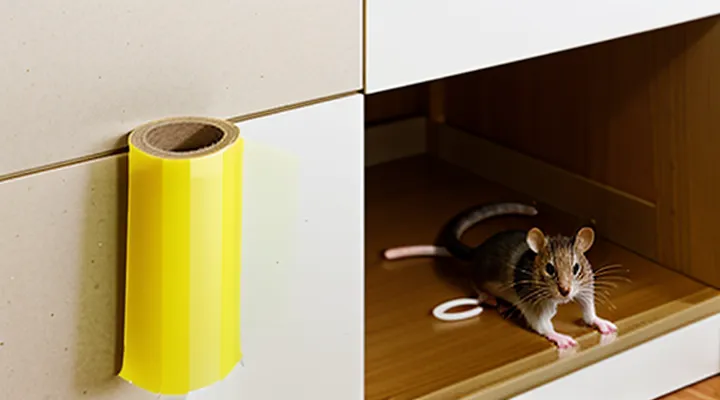
«What is Sticky Tape?»
«Composition and Materials»
The product is a specialized mouse‑catching adhesive tape designed for placement in rodent pathways. Its effectiveness depends on a precise formulation of adhesive and backing materials that together provide strong, rapid bonding while maintaining safety for non‑target species.
The tape consists of four primary components:
- Adhesive polymer – a pressure‑sensitive acrylic or rubber‑based formulation that remains tacky over a wide temperature range and releases minimal residue.
- Backing substrate – a thin, flexible polyester or polyethylene film that supplies structural integrity and resists tearing under tension.
- Release coating – a silicone‑based layer applied to the non‑sticky side to facilitate easy handling and prevent premature adhesion during installation.
- Additives – UV stabilizers, antioxidants, and anti‑microbial agents that extend shelf life and inhibit fungal growth.
Material properties are calibrated for rodent capture:
- Tensile strength of the backing exceeds 30 MPa, preventing breakage during placement.
- Shear adhesion maintains a minimum pull‑off force of 150 N per centimeter, sufficient to immobilize a mouse instantly.
- Operational temperature limits span from –20 °C to 50 °C, ensuring consistent performance in indoor and outdoor environments.
- Chemical resistance to common cleaning agents allows safe removal of trapped specimens without degrading the tape.
Safety specifications require that all constituents comply with ISO 10993‑5 for cytotoxicity and are free of hazardous solvents. The adhesive is formulated to avoid skin irritation and to limit secondary poisoning, aligning with pest‑control regulations in residential and commercial settings.
«How it Works»
Adhesive mouse‑capture tape consists of a flexible backing coated with a pressure‑sensitive polymer that remains tacky at room temperature. The adhesive is formulated to retain strength after repeated contact with fur, saliva, and moisture, ensuring consistent grip on small rodents.
Effective placement follows a three‑step protocol:
- Identify high‑traffic zones by observing droppings, gnaw marks, or gnawing sounds.
- Apply a strip of tape to a flat surface, pressing firmly to eliminate air bubbles and guarantee uniform adhesion.
- Position a small food lure (e.g., grain, peanut butter) at the center of the tape to attract the mouse toward the sticky zone.
When a mouse steps onto the tape, its paws and whiskers become embedded in the adhesive matrix. The polymer’s viscoelastic properties allow the animal to move briefly before the bond exceeds the force generated by its muscles, resulting in rapid immobilization. The tape’s surface area is calibrated to cover the animal’s body, preventing escape without causing excessive trauma.
After capture, the tape can be removed in one piece, sealing the mouse inside a protective envelope for humane euthanasia or relocation, depending on local regulations. The adhesive retains its tack for multiple uses if stored in a cool, dry environment; however, contamination with debris reduces effectiveness and warrants replacement.
Safety considerations include keeping the product away from children and pets, wearing gloves during handling to avoid skin irritation, and disposing of used strips in sealed containers to prevent accidental release.
«Effectiveness of Sticky Tape»
«Pros»
Adhesive mouse traps provide a rapid, non‑lethal solution for rodent control. The design relies on a high‑tack surface that immobilizes rodents upon contact, eliminating the need for poisons or mechanical mechanisms.
- Immediate capture eliminates escape risk after contact.
- No chemical exposure protects humans, pets, and non‑target wildlife.
- Low cost per unit facilitates widespread deployment in residential and commercial settings.
- Simple installation requires only placement on a flat surface; no tools or wiring are necessary.
- Quiet operation prevents disturbance; the trap functions silently once set.
- Minimal maintenance involves periodic inspection and replacement of used strips.
The combination of speed, safety, affordability, and ease of use makes adhesive mouse traps a practical choice for effective rodent management.
«Cons»
Adhesive traps present several disadvantages when employed for rodent control.
- Non‑selective capture results in unintended mortality of non‑target species, including insects and small vertebrates.
- Trapped mice experience prolonged suffering due to immobilization and inability to escape, raising ethical concerns.
- Glue surfaces lose effectiveness after exposure to dust, debris, or moisture, requiring frequent replacement and increasing operational costs.
- Placement of sticky boards in high‑traffic areas can create hazardous surfaces for humans and pets, leading to accidental adhesion injuries.
- Disposal of contaminated traps demands careful handling to prevent secondary contamination and complies with waste‑management regulations.
- The visual presence of adhesive devices may deter occupants, limiting their suitability for residential or commercial environments where aesthetics matter.
Overall, the drawbacks encompass animal welfare issues, reduced efficacy under adverse conditions, safety hazards, higher maintenance expenses, and limited applicability in certain settings.
«Ethical Concerns and Alternatives»
«Animal Welfare Considerations»
Adhesive mouse traps raise several animal welfare issues that must be addressed before deployment. The traps cause prolonged suffering because captured rodents remain immobilized while experiencing stress, pain, and dehydration. Non‑target species, such as insects, reptiles, or small birds, may also become victims, adding ecological concerns.
Key considerations include:
- Pain and distress – Glue immobilizes the animal, preventing escape and leading to a gradual decline in health.
- Time to death – Mortality may take hours or days, contrasting with rapid‑kill methods that reduce suffering.
- Non‑target capture – Lack of selectivity increases the risk of harming protected wildlife.
- Regulatory compliance – Many jurisdictions classify glue traps as inhumane, requiring permits or prohibiting their use.
- Disposal procedures – Humane euthanasia of trapped animals and safe removal of glue residues are essential to prevent secondary injuries.
Mitigation strategies involve selecting alternative devices that deliver swift, lethal outcomes, such as snap traps or electronic deterrents, and implementing monitoring protocols to limit trap exposure time. Documentation of trap placement, regular inspection, and prompt removal of captured animals further reduce welfare impacts.
«Humane Trapping Methods»
Adhesive devices designed to capture rodents can cause severe injury, prompting demand for humane alternatives that immobilize without harming the animal. Effective humane trapping relies on rapid capture, easy release, and minimal stress, allowing owners to relocate mice safely.
Common humane approaches include:
- Live‑catch cages with spring‑loaded doors that close instantly when the mouse enters.
- Multi‑compartment traps that guide the rodent into a sealed chamber using a one‑way funnel.
- Glue‑free snap traps equipped with a cushioned trigger that immobilizes briefly before release.
- Magnetic or ultrasonic deterrents that encourage avoidance rather than capture, used in conjunction with monitoring devices.
Selection criteria focus on capture speed, ease of cleaning, and compatibility with relocation protocols. Live‑catch cages provide the quickest release; multi‑compartment designs reduce escape risk; snap‑type humane traps limit injury through padded mechanisms. Proper placement—along walls, near food sources, and in low‑traffic areas—optimizes success rates while preserving animal welfare.
«Prevention Strategies»
Effective mouse control with adhesive traps begins with measures that reduce the likelihood of infestation. Seal cracks, gaps, and openings in walls, floors, and foundations using steel wool, caulk, or expanding foam. Install door sweeps and repair damaged screens to block entry points. Keep storage areas organized; store food in airtight containers and clean spills promptly to eliminate attractants.
Place sticky traps along established rodent pathways, such as behind appliances, beneath cabinets, and near baseboards. Position traps perpendicular to walls, with the adhesive side facing the expected direction of travel. Use multiple traps to cover a broader area and increase capture probability. Replace traps regularly; inspect them at least once daily and discard captured rodents in sealed bags before disposal.
Maintain a clean environment to discourage rodent activity. Remove clutter that offers shelter, vacuum crumbs, and manage waste by using tightly sealed bins. Reduce outdoor attractions by trimming vegetation away from building exteriors and storing firewood off the ground.
Integrate monitoring tools, such as motion-activated cameras or tracking powders, to verify trap effectiveness and adjust placement as needed. Combine adhesive traps with complementary methods—like snap traps or electronic devices—when high infestation levels persist.
Document findings systematically. Record trap locations, dates of placement, and capture counts. Analyze trends to identify hotspots and refine preventive actions over time. This data-driven approach supports sustained rodent management while minimizing reliance on chemical controls.
«Proper Placement and Usage»
«Identifying Mouse Activity»
Identifying mouse activity is a prerequisite for the effective deployment of adhesive traps. Accurate detection allows precise placement, minimizes waste, and increases capture rates.
- Fresh droppings, typically 3–5 mm long, darkened with age.
- Gnaw marks on wires, wood, or plastic, often at 45‑degree angles.
- Grease trails along walls or baseboards, visible as faint smears.
- Discarded nesting material such as shredded paper, cotton, or insulation.
Additional indicators include audible scratching or squeaking during nighttime hours, and damage to food containers or packaging. These signs confirm active foraging routes and shelter locations.
Infrared motion‑activated cameras capture nocturnal movement without disturbing the rodents. Passive infrared sensors mounted near suspected pathways trigger alerts when temperature changes exceed ambient levels. Tracking powders, applied to suspected runways, reveal footprints that persist for several days, facilitating route mapping.
Combine observational data with technological inputs to determine high‑traffic zones. Position adhesive strips perpendicular to identified runways, secure them at a height of 2–3 inches above the floor, and replace them at regular intervals based on capture results. Continuous monitoring of trap performance informs adjustments to placement density and orientation, ensuring sustained efficacy.
«Optimal Locations for Tape Traps»
When deploying adhesive tape traps, placement determines capture efficiency. Identify areas where rodents travel routinely, then position strips to intersect those paths.
- Along baseboard seams where walls meet flooring.
- Inside cabinets, directly behind stored items on shelves.
- Near entry points such as gaps beneath doors, utility openings, and vent grilles.
- Along the interior side of walls adjacent to known gnaw marks or droppings.
- Beneath appliances that generate heat, including refrigerators and ovens, where mice seek warmth.
Each location should feature a smooth, clean surface; remove dust, grease, or debris before applying tape. Secure the strip firmly to prevent displacement by vibrations or cleaning activities. Replace compromised sections promptly to maintain adhesion.
Monitoring frequency influences success. Inspect traps daily, record captures, and adjust placement based on observed activity patterns. Concentrate additional strips in zones with repeated evidence, while removing traps from areas showing no sign of rodent movement.
Optimizing trap distribution minimizes waste of material and reduces the time required to achieve population control. By targeting high‑traffic corridors and concealment sites, adhesive tape traps become a reliable component of an integrated rodent‑management strategy.
«Safety Precautions»
When using adhesive tape designed to trap rodents, protect yourself and others by following strict safety measures.
Wear disposable gloves to prevent skin contact with the adhesive. If the tape contains chemicals, use a mask that filters organic vapors. Keep the product away from food preparation areas and store it in a sealed container out of reach of children and pets.
- Apply tape only on flat, stable surfaces to avoid accidental detachment.
- Do not place traps near electrical outlets or wiring; the adhesive can damage insulation.
- After a capture, dispose of the tape in a sealed bag before discarding it in accordance with local hazardous‑waste regulations.
- Wash hands thoroughly with soap and water after handling the tape, even when gloves are used.
- Inspect the tape before each use for tears or degradation; replace any compromised material immediately.