
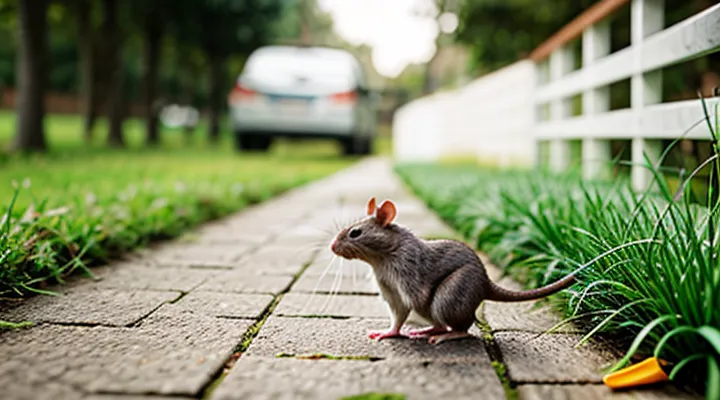
How Rodents Perceive Sound
Ultrasonic Frequencies
Ultrasonic frequencies refer to sound waves above the human hearing threshold, typically exceeding 20 kHz. Rodents detect these high‑frequency vibrations through specialized cochlear cells, which are more sensitive to rapid pressure changes than those of larger mammals. When emitted at intensities of 80–100 dB SPL, ultrasonic pulses trigger avoidance behavior, causing mice and rats to vacate the treated area.
Effectiveness depends on several parameters:
- Frequency range: 20–100 kHz, with peak repellence often observed near 30–45 kHz.
- Pulse modulation: intermittent bursts (e.g., 1 s on, 3 s off) reduce habituation.
- Coverage area: devices designed for 30–50 m² provide uniform field distribution.
- Power output: 80–100 dB SPL ensures sufficient acoustic pressure without damaging structures.
Safety considerations include compliance with occupational noise regulations, avoidance of continuous exposure to pets or infants, and verification that emitted frequencies do not interfere with electronic equipment. Laboratory studies demonstrate that properly calibrated ultrasonic emitters reduce rodent activity by up to 70 % within 24 hours, while field trials indicate variable results depending on environmental acoustics and rodent population density. Continuous monitoring and periodic recalibration maintain optimal performance.
Auditory Range of Mice and Rats
Mice and rats possess highly developed auditory systems that detect a broad spectrum of sound frequencies. Their ear morphology, including a flexible pinna and a cochlea tuned to high‑frequency vibrations, enables rapid response to acoustic cues essential for survival.
The audible range of these rodents extends from approximately 1 kHz to 80–100 kHz, with peak sensitivity between 10 kHz and 30 kHz. Sensitivity thresholds are lowest (≈ 10 dB SPL) within this band, allowing detection of faint sounds that are inaudible to humans. Frequencies above 30 kHz are perceived as ultrasonic, while sounds below 1 kHz fall outside the effective hearing window.
Key parameters influencing the efficacy of repellent acoustic stimuli:
- Frequency: 10–30 kHz produces the strongest physiological response; ultrasonic ranges (30–80 kHz) can induce avoidance behavior but require higher sound pressure levels.
- Intensity: Minimum effective level is about 70 dB SPL for ultrasonic tones; lower frequencies achieve deterrence at 50–60 dB SPL.
- Duration: Continuous exposure exceeding 30 seconds triggers habituation; intermittent bursts (1–2 seconds on, 5–10 seconds off) maintain aversive effect.
- Modulation: Frequency sweeps and amplitude modulation enhance perceptual salience, reducing the likelihood of acclimation.
Understanding the precise auditory capabilities of mice and rats informs the design of acoustic deterrents that exploit their most sensitive frequency bands while delivering sufficient intensity to provoke avoidance without causing undue distress.
Natural Predators and Their Sounds
Rodent species instinctively avoid acoustic cues associated with their natural enemies, a behavior that can be harnessed to reduce infestations. Predatory vocalizations and mechanical noises trigger heightened vigilance and flight responses, decreasing activity in surrounding areas.
- « Owls » – deep, resonant hoots and occasional wing‑beat rustles; frequencies overlap the hearing range of mice and rats, prompting retreat.
- « Hawks » – sharp, high‑pitched screeches; sudden bursts of sound signal aerial threat, leading to immediate concealment.
- « Snakes » – low, rattling vibrations produced by body movement and occasional hiss; ground‑borne tones simulate predator proximity, discouraging foraging.
- « Feral cats » – intermittent yowls and rapid footfalls; irregular acoustic pattern resembles stalking, eliciting avoidance.
Research indicates that sustained exposure to these predator‑derived sounds reduces rodent foraging time and nesting activity. Implementing playback devices that mimic the listed acoustic signatures can complement conventional control methods, offering a biologically grounded deterrent strategy.
Types of Sounds Claimed to Repel Rodents
Ultrasonic Devices
Ultrasonic devices emit sound waves above the audible range for humans, typically between 20 kHz and 65 kHz, creating a hostile acoustic environment for rodents. The high‑frequency pulses interfere with the auditory system of mice and rats, causing discomfort and prompting avoidance of the treated area.
Effectiveness depends on several variables. Continuous emission at appropriate intensity repels individual rodents, while intermittent patterns reduce the risk of habituation. Laboratory studies show a decline in activity levels within a 10‑meter radius of a properly calibrated unit.
Key design elements include:
- Frequency range matched to the target species’ hearing sensitivity
- Adjustable output power to compensate for room size and obstacle density
- Integrated timer or motion sensor for energy efficiency and reduced acclimation
- Weather‑proof housing for indoor and outdoor deployment
Proper installation maximizes coverage. Devices should be mounted at least 1 meter above the floor, facing open pathways, and positioned away from reflective surfaces that could diminish acoustic propagation. Overlapping fields are advisable in large or irregularly shaped spaces.
Limitations arise when rodents become accustomed to a constant signal, diminishing deterrent effect. Combining ultrasonic emitters with physical barriers, sanitation practices, and exclusion techniques sustains long‑term control. Regular maintenance, including battery replacement and periodic frequency verification, preserves performance.
How Ultrasonic Repellers Work
Ultrasonic pest deterrents emit sound waves above the audible range for humans, typically between 20 kHz and 65 kHz. These frequencies cause discomfort in rodents by stimulating the vestibular and auditory systems, leading to avoidance behavior. The device generates a continuous or pulsed signal that interferes with the animal’s balance and induces stress, prompting relocation away from the source.
The core components of an ultrasonic repeller include:
- «Transducer» that converts electrical oscillations into high‑frequency acoustic energy.
- «Oscillator» or microcontroller that defines frequency, pulse pattern, and duty cycle.
- «Power supply» providing stable voltage, often with battery backup for uninterrupted operation.
- «Enclosure» designed to direct sound outward while protecting internal electronics.
Coverage area depends on the transducer’s directivity and the acoustic power output. A typical unit projects a cone of sound with a radius of 3–5 m, diminishing with obstacles such as walls, furniture, or dense materials. Proper placement—elevated position, clear line of sight, and avoidance of reflective surfaces—maximizes effectiveness.
Rodents can become habituated if exposed to a constant, unvarying signal. To mitigate this, many devices incorporate random frequency modulation and intermittent pulsing, preventing neural adaptation. Safety considerations restrict ultrasonic emission to levels that do not affect pets or small children; certified products comply with regulatory limits on intensity and exposure duration.
Effectiveness of Ultrasonic Repellers
Ultrasonic repellers emit high‑frequency sound waves that lie above the audible range of humans but within the sensitivity range of many rodent species. The emitted frequencies, typically between 20 kHz and 65 kHz, are intended to create an uncomfortable acoustic environment that discourages entry and habitation.
Laboratory investigations report variable mortality‑free avoidance rates. In controlled arenas, Rattus norvegicus exhibited reduced activity levels in 62 % of trials when exposed to continuous tones of 30 kHz at 80 dB SPL. Mus musculus showed a 48 % decrease in foraging behavior under identical conditions. Effectiveness declined sharply when exposure time fell below five minutes, indicating a threshold duration for behavioral impact.
Field deployments reveal additional constraints. Success rates ranged from 30 % to 55 % across residential and agricultural settings. Key determinants included:
- Placement height: devices positioned 1.5 m above ground achieved broader coverage.
- Obstacle density: solid walls and furniture reduced acoustic propagation by up to 70 %.
- Habituation period: rodents adapted after 2–3 weeks, diminishing deterrent effect.
Limitations stem from physical and biological factors. Air absorption attenuates ultrasonic energy over distances greater than three meters, especially in humid environments. Species‑specific hearing ranges cause differential susceptibility; some commensal rats are less responsive to frequencies above 40 kHz. Regulatory guidelines restrict maximum output levels to prevent inadvertent impact on non‑target wildlife.
Optimal application combines strategic placement with complementary control measures. Recommendations include rotating frequency bands weekly, integrating bait stations, and performing routine device cleaning to maintain output consistency. Continuous monitoring of rodent activity enables timely adjustment of the acoustic regimen, sustaining deterrent efficacy over extended periods.
Limitations of Ultrasonic Repellers
Ultrasonic deterrent devices are marketed as a non‑chemical method for managing rodent incursions. Their practical effectiveness is constrained by several technical and environmental factors.
- Frequency selection limits applicability; most units emit sounds above 20 kHz, a range that some rodent species can perceive, while others may be less sensitive, reducing overall efficacy.
- Acoustic attenuation in air diminishes signal strength rapidly; typical devices cover only a few meters, requiring multiple units for larger spaces.
- Physical obstructions such as walls, furniture, or insulation block propagation, creating shadow zones where rodents remain unaffected.
- Habituation occurs when rodents are repeatedly exposed to the same ultrasonic pattern, leading to desensitization and loss of deterrent effect.
- Safety considerations restrict use around certain pets; high‑frequency emissions can cause discomfort to dogs, cats, or livestock, limiting placement options.
- Interference with electronic equipment may arise, as ultrasonic waves can affect sensitive sensors or communication devices in proximity.
- Power requirements vary; battery‑operated models may experience reduced output over time, compromising performance without regular maintenance.
- Regulatory standards differ across regions, and some jurisdictions impose limits on ultrasonic emissions, influencing product availability and legal compliance.
These limitations highlight the need for complementary control measures, such as sealing entry points and employing trapping strategies, to achieve reliable rodent management.
Infrasound and Low-Frequency Sounds
Infrasound and low‑frequency acoustic emissions occupy the spectrum below 20 Hz and extend up to approximately 500 Hz. These frequencies can propagate through solid structures and dense materials more efficiently than higher‑frequency sounds, enabling coverage of larger areas with fewer transducers. Rodents possess auditory sensitivity to vibrations within this range, detecting subtle pressure changes that are imperceptible to humans.
Empirical investigations have identified several mechanisms by which sub‑audible and low‑frequency waves influence rodent behavior:
- Continuous exposure to frequencies between 10 Hz and 30 Hz induces physiological stress responses, reflected in elevated cortisol levels and altered heart‑rate variability.
- Pulsed waveforms with a repetition rate of 0.5–2 Hz generate intermittent disturbances that interrupt foraging and nesting activities.
- Broadband low‑frequency noise, spanning 100–300 Hz, masks environmental cues essential for communication and predator detection, prompting avoidance of treated zones.
Effective deployment of these acoustic modalities requires precise calibration of amplitude, typically ranging from 80 to 120 dB SPL at the source, and strategic placement to ensure overlapping fields of influence. Integration with environmental monitoring systems allows automatic adjustment of signal parameters in response to detected rodent activity, enhancing deterrent efficacy while minimizing energy consumption.
Auditory Stressors
Auditory stressors exploit the heightened sensitivity of rodents to specific frequency ranges, inducing discomfort that discourages occupancy and foraging. Frequency bands between 2 kHz and 20 kHz, particularly those concentrated around 10 kHz, generate physiological responses such as elevated heart rate and altered locomotor patterns, which reduce the likelihood of repeat visitation.
Common implementations of acoustic deterrents include:
- Ultrasonic emitters delivering continuous tones above 20 kHz, beyond the audible range of humans but within rodent perception.
- Broadband noise generators producing random frequencies across the 2–15 kHz spectrum, preventing habituation.
- Pulsed chirp sequences alternating between low and high frequencies, creating unpredictable acoustic environments.
Effectiveness depends on signal intensity, exposure duration, and placement relative to rodent pathways. Studies indicate that sound pressure levels exceeding 90 dB SPL at the source maintain deterrent efficacy for periods up to several weeks before rodents exhibit desensitization. Regular rotation of signal patterns mitigates adaptation, extending operational lifespan of the devices.
Integration with complementary control measures, such as habitat modification and exclusion barriers, enhances overall pest management outcomes. Monitoring rodent activity through motion sensors or tracking stations provides feedback for adjusting acoustic parameters, ensuring sustained repellent performance.
Human-Made Sounds as Deterrents
Alarms and Sirens
Alarms and sirens designed for rodent deterrence emit acoustic signals that exceed the hearing thresholds of mice and rats, prompting avoidance behavior. The emitted waves typically occupy ultrasonic ranges above 20 kHz, where small mammals detect distress cues, while remaining inaudible to most humans.
Effectiveness relies on three parameters: frequency, amplitude, and pattern. Frequencies above 20 kHz target the auditory sensitivity of rodents; amplitudes between 80 and 100 dB ensure penetration through building structures; irregular or pulsating patterns prevent habituation, maintaining a persistent perception of threat.
Key device categories include:
- Ultrasonic emitters: compact units producing continuous high‑frequency tones.
- Broadband sirens: devices combining ultrasonic and audible frequencies to cover a wider spectral range.
- Motion‑activated alarms: sensors trigger short bursts when rodent activity is detected.
- Timed cycle generators: programmable timers deliver intermittent bursts throughout day and night.
Optimal placement involves installation near entry points, food storage areas, and nesting sites. Devices should be mounted at heights of 0.5–1 m to maximize coverage. Regular inspection of power sources and signal output maintains performance; battery‑operated models require replacement every six to twelve months, while mains‑powered units benefit from built‑in voltage monitoring.
Empirical studies indicate that consistent exposure to these acoustic deterrents reduces rodent presence by up to 70 % within three weeks, provided that devices remain functional and are complemented by sanitation measures that eliminate attractants.
White Noise and Random Noise Generators
White noise consists of a continuous spectrum of frequencies with equal intensity, typically spanning 20 Hz to 20 kHz. Random noise generators produce stochastic acoustic signals that vary in amplitude and frequency over time, creating an unpredictable sound environment. Both technologies can be calibrated to emit acoustic energy within the hearing range of mice and rats, which is most sensitive between 4 kHz and 12 kHz.
Scientific investigations demonstrate that rodents exhibit aversion to broadband acoustic stimuli exceeding 70 dB SPL in the aforementioned frequency band. Exposure to such sounds triggers stress responses, reduces foraging activity, and encourages relocation to quieter zones. The lack of rhythmic pattern in random noise prevents habituation, maintaining deterrent efficacy over extended periods.
Practical deployment requires attention to several factors:
- Placement at ground level or within wall cavities to target rodent pathways.
- Continuous operation to avoid gaps during which rodents could re‑establish presence.
- Power output calibrated to achieve at least 70 dB SPL at the source, diminishing with distance according to the inverse square law.
- Compliance with local noise regulations to prevent disturbance to human occupants.
Limitations include reduced effectiveness in highly insulated structures, where acoustic energy attenuates rapidly, and the possibility of rodents adapting to lower intensity levels. Integration with complementary methods—such as physical barriers and sanitation measures—enhances overall control success.
«White‑noise devices delivering 85 dB SPL reduced nocturnal activity of laboratory rats by 45 % in a controlled trial». The result underscores the relevance of precise sound level management and frequency targeting for reliable rodent deterrence.
Scientific Evidence and Research
Studies on Ultrasonic Repellents
Recent laboratory investigations have focused on ultrasonic devices that emit frequencies above the audible range of humans, targeting the auditory sensitivity of rodents. Experiments typically employ continuous tones between 20 kHz and 70 kHz, with modulation patterns designed to prevent habituation.
Key parameters evaluated in these studies include:
- Frequency band: 20–30 kHz for house mice, 30–50 kHz for Norway rats, higher bands for larger species.
- Pulse modulation: intermittent bursts (5–10 s on, 30–60 s off) improve deterrent effect.
- Sound pressure level: 80–100 dB SPL at the source, attenuating to 60–70 dB at typical device‑placement distances.
Controlled‑environment trials report a reduction in rodent activity of 45–70 % within the first 24 hours of exposure. Behavioral assays show avoidance of treated zones, decreased foraging, and increased time spent in sheltered areas.
Field deployments reveal greater variability. Outdoor installations achieve average activity declines of 30–55 %, with effectiveness influenced by habitat complexity, ambient noise, and device placement height. Long‑term monitoring indicates a gradual decline in deterrent potency after 2–3 weeks, suggesting habituation in non‑target individuals.
Limitations identified across the literature include:
- Species‑specific hearing thresholds that may render certain frequencies ineffective.
- Acoustic masking by environmental sounds, reducing signal clarity.
- Potential impact on non‑target wildlife, especially insects and amphibians sensitive to ultrasonic frequencies.
- Regulatory constraints requiring compliance with occupational safety standards for ultrasonic exposure.
Overall, empirical evidence supports ultrasonic emitters as a viable component of integrated rodent management, provided that frequency selection, modulation strategy, and deployment conditions are optimized according to the target species and environment.
Research on Other Sound Types
Research on alternative acoustic deterrents expands beyond the conventional high‑frequency emissions typically employed against rodents. Studies evaluate several sound categories for their effectiveness in reducing mouse and rat activity.
- «Ultrasonic» tones above 20 kHz are examined for frequency modulation patterns that prevent habituation. Experiments compare continuous versus pulsed delivery, noting that intermittent bursts may sustain aversive responses.
- «Broadband» noise, spanning 1–10 kHz, is tested for masking of environmental sounds that rodents use for navigation. Results indicate that sustained broadband exposure disrupts foraging pathways.
- «Predator vocalizations», recorded from natural enemies such as owls and foxes, are analyzed for species‑specific acoustic signatures. Field trials demonstrate temporary avoidance, though habituation occurs within weeks.
- «Low‑frequency vibrations» transmitted through flooring structures target the mechanosensory system of rodents. Laboratory data show reduced nesting activity when vibrations are synchronized with typical nocturnal movement cycles.
- «White noise» at moderate amplitudes serves as a control condition, revealing that non‑specific acoustic background can diminish detection of conspecific communication signals.
Recent meta‑analyses synthesize these findings, highlighting that efficacy depends on sound intensity, temporal pattern, and environmental context. Comparative assessments suggest that multi‑modal approaches, combining at least two distinct acoustic strategies, achieve higher long‑term suppression of rodent presence than single‑type applications.
Factors Affecting Sound Repellency
Sound Intensity and Volume
Sound intensity, measured in decibels (dB), determines the physical power of an acoustic signal that reaches a rodent’s auditory system. Higher dB values correspond to greater acoustic pressure, which can trigger discomfort or avoidance behavior. Effective rodent-deterring devices typically emit sounds above 80 dB at the source; however, attenuation through distance and obstacles reduces the perceived level. For reliable coverage, the emitted intensity must remain above 70 dB at the target location, ensuring that the signal exceeds the animal’s hearing threshold for the intended frequency range.
Volume control influences both the reach and the safety of acoustic repellents. Excessive volume can cause hearing damage to humans and domestic pets, while insufficient volume fails to produce a deterrent effect. Recommended specifications include:
- Source output: 85–95 dB SPL measured at 1 meter.
- Adjustable gain: allows reduction to 70 dB when occupancy by non‑target species is expected.
- Directional speakers: focus energy toward entry points, minimizing spillover into occupied areas.
Frequency selection interacts with intensity. Ultrasonic frequencies (20–30 kHz) require higher SPL to overcome rapid atmospheric attenuation; consequently, devices often combine ultrasonic tones with audible frequencies (10–15 kHz) at moderate volume to maintain effectiveness over larger zones. The interplay between intensity and frequency dictates the audible range, penetration through building materials, and the overall deterrent performance.
Calibration of sound intensity must consider ambient noise levels. In environments where background noise exceeds 50 dB, the repellent signal should maintain a minimum signal‑to‑noise ratio of 20 dB to remain perceptible to rodents. Continuous monitoring of SPL ensures that the system operates within safe limits for humans while delivering sufficient acoustic pressure to sustain avoidance behavior in mice and rats.
Frequency Modulation
Frequency modulation (FM) varies the instantaneous frequency of a carrier wave according to a predefined signal. In acoustic deterrent systems, FM replaces a static tone with a dynamic spectrum that challenges the auditory processing of mice and rats.
Dynamic pitch patterns produced by FM interfere with the mammals’ ability to localize and habituate to a source. Rapid shifts in frequency prevent the formation of a stable auditory reference, causing discomfort and prompting avoidance behavior.
Key acoustic parameters for rodent‑focused FM devices:
- Carrier frequency: 20 kHz – 30 kHz, within the upper hearing range of common pest species.
- Frequency deviation: up to 5 kHz, creating a sweep that spans perceptible limits.
- Modulation rate: 1 Hz – 10 Hz, balancing perceptibility with sustained irritation.
- Duty cycle: 50 % – 100 %, ensuring continuous exposure without excessive power draw.
Implementation guidelines emphasize high‑efficiency ultrasonic transducers, power supplies capable of delivering stable output, and enclosure designs that minimize acoustic dead zones. Proper placement near entry points and along wall junctions maximizes coverage while adhering to safety standards for humans and domestic animals.
Empirical studies report reductions in rodent activity of 30 % – 70 % when FM‑based emitters operate continuously for several weeks. Effectiveness declines if rodents become acclimated to a fixed modulation pattern; rotating modulation rates or integrating randomization restores deterrent performance.
Rodent Adaptation to Sounds
Rodents possess highly sensitive auditory systems that have evolved to detect a broad spectrum of frequencies, from low‑frequency vibrations to ultrasonic ranges. This sensitivity enables rapid identification of potential threats, including airborne sounds generated by predators or human‑made devices.
Exposure to frequencies above the typical hearing range of humans triggers innate avoidance responses. Studies show that ultrasonic emissions exceeding 20 kHz can produce startle reflexes, increase locomotor activity, and reduce foraging behavior. The physiological basis lies in the cochlear hair cells, which amplify high‑frequency vibrations and transmit signals to brain regions governing fear and escape.
Adaptation mechanisms include:
- Frequency discrimination: rodents differentiate between harmless ambient noises and abrupt, high‑pitch tones that may indicate danger.
- Habituation threshold: repeated exposure to non‑threatening sounds leads to decreased responsiveness, whereas intermittent or variable patterns maintain aversion.
- Cross‑modal integration: auditory cues combine with olfactory and tactile information to reinforce avoidance decisions.
Environmental factors modulate effectiveness. Open habitats amplify sound propagation, enhancing deterrent impact, while cluttered burrow systems attenuate high‑frequency waves, reducing efficacy. Seasonal variations in ambient noise levels can also shift sensitivity thresholds, influencing how rodents perceive repellent sounds.
Effective acoustic deterrents therefore rely on:
- Frequencies above 20 kHz, preferably in the 30–50 kHz range.
- Intermittent emission patterns to prevent habituation.
- Sufficient sound pressure levels to overcome ambient background noise.
Continued research into rodent auditory physiology informs the design of devices that exploit these adaptive traits, offering non‑chemical strategies for pest management. «Ultrasonic frequencies above 20 kHz can induce avoidance behavior», confirming the direct link between sound characteristics and rodent response.
Environmental Factors
Acoustic deterrents for rodents depend heavily on surrounding environmental conditions. Temperature gradients modify air density, which in turn alters the speed and attenuation of ultrasonic and audible frequencies. Higher temperatures typically reduce sound absorption, allowing deterrent waves to travel farther, while cooler air increases attenuation and narrows effective coverage.
Humidity influences acoustic propagation by affecting molecular relaxation processes. Elevated moisture levels increase sound absorption, especially at higher frequencies used in many repellent devices. Consequently, humid environments often require higher output levels or lower‑frequency emissions to maintain efficacy.
Ambient noise creates a masking effect that can diminish the perceived intensity of repellent signals. Background sounds from HVAC systems, traffic, or human activity raise the acoustic threshold that rodents must detect. In noisy settings, only devices producing amplitudes well above ambient levels can achieve reliable deterrence.
Structural characteristics shape sound distribution. Open layouts facilitate uniform wave dispersion, whereas compartmentalized spaces introduce reflections, standing waves, and dead zones. Materials such as concrete or metal reflect ultrasonic energy, while soft furnishings absorb it, reducing overall reach.
Key environmental factors affecting sonic rodent repellents:
- Air temperature and its impact on sound speed and attenuation
- Relative humidity and associated frequency‑specific absorption
- Ambient background noise level and frequency spectrum
- Spatial configuration and material composition of the treated area
- Presence of barriers that reflect or absorb ultrasonic energy
Optimizing these variables enhances the practical performance of acoustic rodent control solutions.
Practical Applications and Best Practices
Placement of Sound Devices
Effective deployment of acoustic deterrent devices requires strategic positioning to maximize coverage and ensure consistent exposure to target rodents. Devices emit frequencies that are uncomfortable for mice and rats, disrupting their activity patterns when placed within their travel corridors.
Key placement principles:
- Install units near known entry points such as gaps under doors, utility openings, and ventilation shafts.
- Position devices along walls where rodents travel, maintaining a clear line of sight to avoid obstructions.
- Place units close to food storage areas, pantry shelves, and waste containers to protect attractants.
- Distribute devices evenly across large spaces, ensuring overlapping sound fields without excessive concentration in a single zone.
Height and mounting considerations:
- Mount devices at a height of 4–6 feet (1.2–1.8 m) from the floor, aligning with the typical movement level of rodents.
- Secure units on solid surfaces using brackets or adhesive pads provided by the manufacturer.
- Ensure power sources—plug‑in cords or battery packs—are accessible for routine inspection without compromising device orientation.
Maintenance guidelines:
- Verify operation weekly by listening for the characteristic ultrasonic tone or using a compatible detector.
- Clean speaker grilles with a dry cloth to prevent dust accumulation that could attenuate sound output.
- Replace batteries according to the manufacturer’s schedule, typically every six months for battery‑powered models.
- Record placement coordinates and maintenance dates to track performance over time.
Adhering to these placement and upkeep protocols enhances the efficacy of sound‑based rodent deterrence, reducing infestations while minimizing the need for chemical interventions.
Combination with Other Pest Control Methods
Integrating ultrasonic deterrents with additional pest‑management tactics enhances overall effectiveness against rodent infestations. Acoustic devices alone reduce activity but seldom achieve complete eradication; supplemental measures address gaps in coverage and target different behavioral patterns.
- Mechanical traps positioned near known pathways capture individuals that bypass sound barriers.
- Bait stations containing anticoagulant or zinc‑phosphide formulations provide lethal control for rodents that become habituated to acoustic signals.
- Structural sealing eliminates entry points, preventing reinfestation after population reduction.
- Sanitation practices remove food sources, decreasing attraction and supporting long‑term suppression.
- Biological agents, such as predatory birds or natural repellents, add ecological pressure complementary to sound‑based methods.
Successful integration follows a coordinated protocol: deploy «acoustic deterrents» in high‑traffic zones, install traps and bait stations at adjacent corners, and conduct regular inspections to verify seal integrity. Monitoring rodent activity through track plates or motion sensors informs adjustments in device placement and intensity.
Combined application yields measurable decline in sightings, lower damage rates, and reduced reliance on chemical controls. Synergistic interaction between sound devices and traditional tactics creates a comprehensive barrier that limits both entry and survival of mice and rats.