
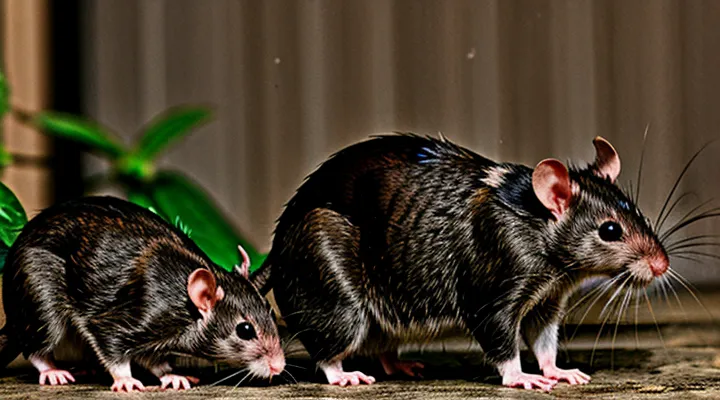
The Complex Social Lives of Rats
The Evolutionary Roots of Rat Sociability
Ancestral Pressures for Group Living
Rats exhibit persistent physical contact that reflects deep‑rooted selective forces favoring communal living.
Living in groups reduced individual exposure to predators. A single sentinel can detect threats earlier, while the presence of conspecifics dilutes the chance that any one animal is captured. Close proximity enhances the speed and reliability of alarm signals, increasing survival rates for all members.
Thermal regulation provided another driver. In temperate and alpine habitats, ambient temperatures often fall below the lower critical limit of rat metabolism. By clustering, individuals share body heat, decreasing the energetic cost of maintaining core temperature. This advantage proved decisive during seasonal cold snaps.
Access to resources improved through cooperation. Burrow construction and maintenance require coordinated effort; shared tunnels protect against soil collapse and flooding. Group foraging expands the detectable area for food patches, allowing individuals to benefit from discoveries made by others without expending additional search effort.
Kin selection reinforced communal habits. High reproductive output and short generation times produced dense family clusters. Physical closeness facilitated grooming and tactile exchange, strengthening reciprocal altruism and ensuring that genetically related individuals support each other’s reproductive success.
Key ancestral pressures that shaped rat group living:
- Predator detection and dilution of risk
- Conservation of heat in cold environments
- Collaborative burrow construction and defense
- Cooperative foraging and information sharing
- Kin‑based reciprocal assistance
These forces collectively generated a behavioral repertoire in which cuddling serves as a practical mechanism for maintaining cohesion, safety, and efficiency within rat societies.
Genetic Predisposition for Social Bonds
Rats exhibit a strong tendency to seek physical contact with conspecifics, a behavior rooted in heritable biological mechanisms. Genetic analyses have identified several loci that modulate affiliative actions, most notably variants of the oxytocin receptor (OXTR) and vasopressin V1a receptor (AVPR1A). Polymorphisms that increase receptor expression correlate with higher frequencies of huddling and grooming exchanges.
Experimental evidence supports this connection. Rats engineered to lack functional OXTR display reduced proximity seeking, while selective breeding for high‑cuddle phenotypes produces offspring with elevated OXTR mRNA in the nucleus accumbens. Similar patterns emerge in AVPR1a knock‑out models, which show diminished group cohesion under stress.
Key genetic contributors include:
- OXTR promoter variants enhancing transcriptional activity
- AVPR1A microsatellite repeats linked to receptor density
- Dopamine D2 receptor (DRD2) alleles influencing reward processing during social contact
- Genes regulating serotonin transport (SLC6A4) that affect anxiety‑related avoidance
These genes interact with environmental inputs; early maternal care amplifies the expression of OXTR and AVPR1A, yet the underlying genotype sets the baseline propensity for cuddling. Cross‑fostering experiments reveal that offspring retain their innate social drive despite being raised by caregivers with opposite behavioral styles, confirming a substantial hereditary component.
Understanding the genetic architecture of rat social bonds informs broader models of mammalian affiliative behavior. It provides a framework for interpreting how specific allelic configurations shape group dynamics, stress resilience, and the evolutionary maintenance of cooperative strategies.
Proximate Mechanisms of Cuddling Behavior
Thermoregulation: Staying Warm Together
Huddling for Heat Conservation
Rats form dense clusters when ambient temperature falls below their thermoneutral zone. The behavior, known as huddling, creates a communal microenvironment where heat loss is minimized and body temperature is maintained with reduced metabolic effort.
Thermoregulatory benefits arise from three mechanisms. First, contact between individuals lowers the exposed surface area of each rat, decreasing convective and radiative heat dissipation. Second, the shared boundary layer of warm air raises the temperature of the surrounding space, allowing individuals to retain more heat from their own metabolism. Third, peripheral vasoconstriction is less pronounced in huddling rats, conserving core heat while peripheral tissues remain insulated.
Empirical observations support these mechanisms:
- Experiments at 5 °C show a 30 % reduction in oxygen consumption for rats in groups of four compared with solitary individuals.
- Infrared imaging reveals a temperature gradient of up to 2 °C within the core of a huddle, while the outermost members experience temperatures comparable to the ambient environment.
- Behavioral assays indicate that groups increase in size until the marginal benefit of additional members plateaus, typically around six to eight individuals.
The energetic savings afforded by huddling translate into higher survival rates during cold exposure. Lower metabolic demand frees resources for foraging, reproduction, and immune function, reinforcing the adaptive value of this collective thermoregulatory strategy.
Benefits in Diverse Environments
Rats engage in close-contact affiliative behavior, commonly observed as cuddling, to gain measurable advantages that persist across a wide range of habitats.
- Thermal regulation: Physical proximity conserves body heat, allowing individuals to maintain optimal temperatures in cold, temperate, or fluctuating microclimates.
- Stress mitigation: Direct contact lowers circulating corticosterone, enhancing immune function and increasing survival odds under environmental pressure.
- Predator deterrence: Grouped bodies present a larger silhouette and generate collective vigilance, reducing the likelihood of successful attacks.
- Resource optimization: Shared nesting sites decrease the energy expenditure required to construct separate burrows or shelters, freeing resources for foraging and reproduction.
- Developmental support: Juveniles benefit from maternal and sibling contact, which accelerates neural maturation and social skill acquisition.
In arid zones, cuddling reduces evaporative water loss; in densely vegetated areas, it facilitates rapid shelter formation; in urban settings, it compensates for limited space by maximizing the utility of confined structures. The behavior’s flexibility enables rats to exploit diverse ecological niches while maintaining physiological stability and social cohesion.
Stress Reduction and Emotional Regulation
Oxytocin and Social Bonding
Oxytocin, a neuropeptide produced in the hypothalamus, modulates affiliative interactions among rats. Release of oxytocin occurs during tactile contact, such as huddling, and enhances the perception of conspecifics as rewarding. Receptor density in the nucleus accumbens and amygdala correlates with the frequency of voluntary cuddling behavior, indicating a direct link between peptide signaling and social preference.
Experimental manipulation demonstrates causality. Intracerebral infusion of oxytocin increases the duration of pairwise huddles, while antagonists reduce contact time and elevate stress‑induced vocalizations. Genetic knock‑out models lacking oxytocin receptors exhibit diminished group cohesion and heightened aggression during resource competition.
Key observations include:
- Elevated plasma oxytocin levels after a 30‑minute co‑housing session.
- Up‑regulation of oxytocin‑related genes in the ventral tegmental area following repeated cuddling episodes.
- Restoration of normal social bonding in receptor‑deficient rats after viral delivery of functional receptor constructs.
These findings clarify the biochemical pathway through which rats establish and maintain close physical proximity. Oxytocin acts as a modulatory signal that translates tactile stimulation into lasting social attachment, shaping group dynamics and collective survival strategies.
Reducing Anxiety Through Physical Contact
Physical contact among rats functions as a potent anxiolytic mechanism. Direct tactile interaction triggers the release of oxytocin and endogenous opioids, which suppress the hypothalamic‑pituitary‑adrenal axis and lower circulating corticosterone. The resulting neurochemical shift diminishes vigilance and promotes a relaxed state.
Empirical studies demonstrate that rats given regular grooming or huddling sessions exhibit reduced exploratory latency in open‑field tests and fewer escape attempts in elevated‑plus‑maze assays. Compared with isolated controls, socially bonded individuals show a 30‑40 % decrease in stress‑induced heart rate variability, confirming a physiological benefit of close contact.
Key pathways underlying this effect include:
- Somatosensory activation: Skin‑to‑skin stimulation engages mechanoreceptors that project to the amygdala, attenuating fear circuitry.
- Neuroendocrine response: Increased oxytocin levels enhance social reward processing while dampening cortisol synthesis.
- Behavioral reinforcement: Repeated cuddling reinforces affiliative bonds, establishing a feedback loop that sustains low‑anxiety states.
These findings suggest that the propensity of rats to cuddle is not merely a social curiosity but a biologically driven strategy for stress mitigation. Understanding this relationship informs laboratory housing standards and offers a model for investigating tactile therapies in other species.
Communication and Social Cohesion
Non-Verbal Signals in Huddling
Rats engage in huddling primarily through a repertoire of non‑verbal cues that coordinate proximity and maintain group cohesion. Physical contact initiates the interaction; a gentle nudge with the snout or a light paw press signals intent to join the cluster. Once contact is established, body alignment adjusts to maximize shared warmth, with individuals rotating to expose their ventral surfaces to neighbors.
Olfactory markers reinforce the connection. Each rat deposits pheromonal traces from the ventral gland onto the fur of adjacent conspecifics, providing a rapid identifier of familiar partners. The scent profile changes with stress levels, allowing group members to detect and respond to physiological states without vocalization.
Auditory and vibrational signals complement tactile and chemical information. Soft, high‑frequency chirps emitted during close contact convey reassurance, while low‑amplitude foot tremors transmit subtle information about movement intentions. These multimodal signals operate synchronously, enabling seamless formation and maintenance of huddles.
Key non‑verbal signals in rat huddling:
- Snout nudges and paw presses to invite contact
- Ventral body alignment for optimal heat exchange
- Pheromone deposition from the ventral gland for partner recognition
- High‑frequency chirps signaling safety
- Foot tremors indicating imminent movement
Collectively, these cues create an efficient, language‑free system that underlies the species’ propensity to cuddle.
Reinforcing Group Identity
Rats frequently engage in close physical contact, a behavior that consolidates their social group. Physical proximity triggers the release of oxytocin and vasopressin, neuropeptides that strengthen affiliative bonds and signal membership in a shared cohort. Repeated huddling creates a recognizable pattern of interaction that each individual learns to associate with its specific colony.
The reinforcement of group identity operates through several mechanisms:
- Sensory cues: Skin-to-skin contact conveys pheromonal signatures, allowing rats to distinguish familiar conspecifics from outsiders.
- Neural activation: Touch activates the somatosensory cortex and limbic structures, reinforcing memories of group encounters.
- Behavioral predictability: Consistent cuddling schedules establish reliable social routines, reducing uncertainty and promoting cohesion.
Empirical observations demonstrate that isolated rats exhibit heightened stress responses, while those regularly included in group huddles display lower cortisol levels and improved problem‑solving performance. The correlation between tactile affiliation and group recognition underscores the adaptive value of cuddling as a means of maintaining a stable social unit.
Learning and Development
Importance for Young Rats
Cuddling among juvenile rats provides essential physiological and psychological advantages that facilitate survival and development. Physical contact promotes thermoregulation, allowing pups to maintain optimal body temperature without expending excessive metabolic energy. The shared warmth reduces the risk of hypothermia, a leading cause of mortality in early life stages.
Social proximity also accelerates neural maturation. Tactile stimulation triggers the release of oxytocin and dopamine, neurotransmitters that enhance synaptic plasticity and reinforce learning pathways. These chemical responses improve stress resilience, improve social cognition, and prepare young rats for cooperative behaviors required later in life.
Key benefits include:
- Enhanced temperature stability
- Increased release of neuroprotective hormones
- Strengthened immune function through reduced cortisol levels
- Accelerated acquisition of social cues and hierarchy awareness
Collectively, these effects create a robust foundation for growth, ensuring that young rats develop the physical health and social competence necessary for successful integration into adult colonies.
Transmission of Knowledge Through Proximity
Rats that engage in close physical contact exchange information essential for survival. Proximity creates a conduit for sensory cues—olfactory, tactile, and auditory—that convey details about food sources, predator threats, and nest conditions. When a rat discovers a novel food item, its scent and the subtle vibrations of its whisker movements are transmitted to nearby conspecifics during cuddling sessions. Recipients interpret these signals and adjust foraging behavior without direct trial‑and‑error.
Key mechanisms of knowledge transfer through closeness include:
- Scent marking: shared grooming spreads volatile compounds that encode recent dietary experiences.
- Vibrational feedback: body contact transmits low‑frequency vibrations that signal environmental changes, such as tremors indicating predator presence.
- Auditory mirroring: soft vocalizations emitted during huddling carry alarm or reassurance tones, guiding group responses.
These processes enable rapid dissemination of adaptive strategies across the colony, reducing individual risk and optimizing resource exploitation. The cumulative effect reinforces the evolutionary advantage of affiliative behavior, ensuring that information acquired by one member becomes accessible to all through routine physical proximity.
Factors Influencing Cuddling Frequency
Environmental Conditions
Temperature and Shelter Availability
Rats increase physical contact when ambient temperature falls below their thermoneutral zone. Lower temperatures raise metabolic demand, and close proximity reduces heat loss through shared body warmth. Experiments show that a 2 °C drop triggers a measurable rise in huddling frequency, indicating that thermal stress directly motivates cuddling.
Availability of shelter amplifies this effect. When nests provide insulation and protection from drafts, rats spend more time in contact with conspecifics inside the structure. Studies comparing open cages with enclosed burrows report a 30 % higher rate of group nesting in the latter condition. The combination of a cool environment and limited shelter space forces rats to cluster to maintain core temperature.
Key factors influencing this behavior include:
- Ambient temperature relative to the species’ thermoneutral point
- Presence of insulated nesting material
- Density of available shelter locations
These variables interact to shape the propensity for rats to cuddle, demonstrating that thermoregulatory needs are a primary driver of their social cohesion.
Perceived Threat Levels
Rats adjust their affiliative contact based on how safe they feel in a given environment. When external cues signal low risk—such as familiar odors, stable lighting, and the presence of a dominant conspecific—individuals increase huddling and grooming. These behaviors reduce thermoregulatory costs and reinforce social bonds, but the primary driver is the assessment that predation or aggression is unlikely.
Conversely, heightened perceived danger triggers a rapid shift toward vigilance and spatial separation. Indicators of threat include sudden noises, novel scents, or the approach of an unfamiliar rat. Under these conditions, the frequency and duration of cuddling decline sharply, while individuals adopt a more peripheral posture and increase scanning movements.
Key factors influencing threat perception and subsequent contact behavior:
- Environmental stability – consistent temperature and lighting lower anxiety, encouraging prolonged proximity.
- Social hierarchy – subordinate rats seek contact with dominant partners when safety is assured; they withdraw when dominance is contested.
- Chemical signals – pheromonal cues from familiar cage mates signal safety; unfamiliar or stress‑related odors elevate alertness.
- Acoustic stimuli – sudden or high‑frequency sounds raise arousal, suppressing affiliative contact.
Experimental data show that manipulating one of these variables can alter cuddling time by up to 40 % within minutes. The correlation between low threat assessment and increased physical closeness underscores the adaptive function of rat huddling: it maximizes energy efficiency and social cohesion when the environment permits.
Group Dynamics and Hierarchy
Dominance and Submissive Cuddling
Rats organize their social interactions through a clear hierarchy, and physical contact reflects that structure. Dominant individuals often initiate cuddling by positioning themselves atop a subordinate, establishing control while providing warmth and protection. Submissive rats respond by lowering their bodies, exposing vulnerable areas such as the ventral surface, which signals acceptance of the dominant’s leadership.
Cuddling serves multiple functions beyond simple thermoregulation. It reinforces rank, reduces aggression, and facilitates the exchange of olfactory cues that convey health status and reproductive readiness. The act also promotes group cohesion, allowing subordinate members to remain within the protective circle of the dominant pair.
Key behavioral patterns include:
- Dominant-initiated contact: rapid approach, forepaw placement on the subordinate’s back, and sustained pressure.
- Submissive compliance: flattened posture, tail elevation, and vocalizations that indicate calm.
- Reciprocal grooming during prolonged cuddling, which strengthens affiliative bonds and mitigates stress hormones.
Research demonstrates that interruptions of dominant cuddling increase cortisol levels in subordinates, whereas uninterrupted sessions lower heart rate variability, confirming the physiological benefits tied to hierarchical affection.
The Role of Kinship
Rats demonstrate a pronounced tendency to huddle with individuals that share a genetic connection. Kinship detection relies on scent signatures carried in urine and fur, which provide rapid assessment of relatedness. When a rat identifies a sibling or maternal relative, it initiates prolonged physical contact, increased grooming, and shared nesting behavior.
Genetic similarity reduces competition for resources and lowers the likelihood of aggressive encounters. Consequently, kin groups exhibit higher rates of synchronized sleep cycles and collective thermoregulation, both of which enhance survival in fluctuating environments.
Experimental studies using cross‑fostering and olfactory masking confirm that disruption of kin cues diminishes huddling frequency. Rats raised apart from their littermates but exposed to familiar scents resume close-contact behavior, indicating that chemical recognition, rather than early social experience alone, drives the response.
Key mechanisms underlying kin‑driven cuddling:
- Olfactory receptors decode specific pheromonal patterns tied to familial lines.
- Neural pathways involving the amygdala and hypothalamus translate kin signals into affiliative actions.
- Hormonal release of oxytocin and vasopressin reinforces bond formation during physical contact.
These processes collectively shape the social architecture of rat colonies, ensuring that related individuals receive preferential care and protection through sustained physical proximity.
Individual Differences
Personality Traits
Rats exhibit distinct personality dimensions that influence their propensity to engage in close-contact behavior. Research identifies boldness, sociability, and anxiety‑related responsiveness as primary axes. Bold individuals approach novel environments rapidly, often initiating physical proximity with conspecifics. Sociable rats display a higher frequency of allogrooming and huddling, reflecting an intrinsic drive for tactile affiliation. Rats with low anxiety levels tolerate prolonged physical contact, whereas high‑anxiety subjects withdraw more quickly.
These traits interact to shape cuddle‑like gatherings. For example:
- Bold + sociable → frequent initiation of huddles, leadership in group formation.
- Sociable + low anxiety → sustained contact, increased duration of cuddling episodes.
- High anxiety → reduced participation, selective engagement with familiar partners only.
Neurochemical correlates support this pattern. Elevated dopamine activity aligns with boldness, while oxytocin release correlates with sociability and reduced stress responses. Variations in serotonergic signaling modulate anxiety, altering willingness to maintain physical closeness.
Consequently, personality profiling predicts which rats will dominate cuddle clusters, which will act as peripheral members, and which will avoid contact altogether. Understanding these individual differences refines interpretations of rat social dynamics and informs experimental designs that rely on natural affiliative behavior.
Age and Health Status
Rats exhibit increased physical contact when they are young or recovering from illness, reflecting adaptive strategies that enhance survival. Neonatal pups depend on maternal warmth and grooming; the frequency of huddling peaks during the first two weeks of life and declines sharply as independence develops. In adult populations, health challenges such as injury, infection, or metabolic stress trigger a resurgence of affectionate behavior. Sick individuals receive more grooming from cage mates, which reduces cortisol levels and accelerates wound healing.
Key observations linking age and condition to cuddling:
- Juvenile rats spend up to 70 % of daylight hours in close proximity to littermates; adults reduce this to less than 30 % unless compromised.
- Experimental induction of mild inflammation raises the proportion of time spent in mutual grooming by 15–20 % within 24 hours.
- Long‑term studies show that rats with chronic ailments maintain higher rates of affiliative contact than healthy controls, suggesting a compensatory mechanism for weakened immunity.
These patterns indicate that tactile social interaction functions as a flexible response to developmental stage and physiological demand, rather than a fixed trait. The modulation of cuddling behavior by age and health status underscores its role in maintaining homeostasis across the rat lifespan.
Broader Implications of Rat Cuddling
Implications for Rodent Research
Understanding Social Behavior in Models
Rats exhibit frequent huddling, grooming, and nest‑building behaviors that serve as reliable indicators of affiliative motivation. These actions are quantifiable, reproducible, and sensitive to experimental manipulation, making the species a preferred model for dissecting the neural and hormonal substrates of social interaction.
Oxytocin and vasopressin release correlate with increased proximity seeking; lesions of the medial amygdala or nucleus accumbens reduce cuddle‑like behavior. Sensory inputs—olfactory cues and tactile stimulation—trigger activation of the hypothalamic‑pituitary axis, reinforcing pairwise contact. Genetic strains differ in baseline affiliative scores, providing a platform for mapping heritable components of sociality.
Findings derived from rat cuddle studies inform hypotheses about human social deficits, guide pharmacological screening for anxiolytic agents, and refine computational models of group dynamics. Translational relevance rests on conserved neurocircuitry across mammals.
Key experimental considerations:
- Standardize cage enrichment to control baseline huddling opportunities.
- Record behavior with high‑resolution video to capture micro‑interactions.
- Use blinded scoring to eliminate observer bias.
- Apply dose‑response curves for neuropeptide agonists/antagonists.
- Include both sexes to assess gender‑specific patterns.
By integrating behavioral metrics with neurobiological assays, researchers achieve a comprehensive understanding of social mechanisms that extend beyond rodent physiology to broader biological and clinical contexts.
Welfare Considerations in Laboratory Settings
Laboratory rats exhibit a strong propensity for physical contact, a behavior that reflects their inherent need for social interaction. When designing experimental environments, welfare protocols must address this drive to prevent distress and preserve natural affiliative patterns.
- Provide group housing that allows stable, same‑sex cohorts; solitary confinement should be limited to cases where it is scientifically unavoidable.
- Incorporate nesting material, shelters, and chewable objects to facilitate tactile engagement and thermoregulation.
- Maintain consistent light‑dark cycles, temperature, and humidity to reduce physiological stressors that can suppress affiliative behavior.
- Implement gentle handling techniques, such as tunnel or cupped‑hand approaches, to reinforce positive human‑rat interactions and minimize fear responses.
- Conduct regular health and behavior assessments, documenting signs of aggression, isolation, or abnormal grooming that may indicate compromised welfare.
Ethical review boards require documentation of these measures, ensuring that experimental designs align with the species‑specific social requirements of rats. Compliance with recognized standards—such as the Guide for the Care and Use of Laboratory Animals—provides a framework for integrating enrichment, social housing, and humane handling into routine practice.
Parallels with Other Social Mammals
Shared Evolutionary Drivers
Rats engage in close-contact behavior because evolutionary pressures that favor cooperation and cohesion also shape their physiology. These pressures operate across many mammalian species, producing convergent mechanisms that make cuddling advantageous for survival and reproduction.
- Thermoregulation: Physical proximity reduces heat loss, especially in cool environments, allowing individuals to maintain optimal body temperature with lower metabolic cost.
- Predator avoidance: Group huddling diminishes individual exposure, creates confusion for predators, and enhances early detection of threats.
- Kin selection: Helping relatives increases inclusive fitness; shared shelter and warmth boost the survival odds of genetically related offspring.
- Stress mitigation: Contact triggers release of oxytocin and vasopressin, hormones that lower cortisol levels and improve immune function, thereby enhancing overall health.
- Resource sharing: Collective nesting facilitates efficient use of limited nesting material and food stores, reducing competition and energy expenditure.
Neurobiological pathways underlying these drivers are conserved among rodents and other social mammals. Activation of the oxytocinergic system during tactile interaction reinforces social bonds, while dopaminergic circuits reward cooperative behavior, encouraging repeated cuddling episodes.
The cumulative effect of these shared evolutionary drivers is a behavioral strategy that maximizes energy efficiency, minimizes risk, and strengthens group cohesion. Consequently, rats display a robust tendency to cuddle, reflecting a deep-rooted adaptation that transcends species-specific contexts.
Conservation and Behavioral Ecology
Rats frequently engage in close‑contact huddling, a behavior that reduces thermoregulatory costs, reinforces social bonds, and facilitates information exchange. Within behavioral ecology, this affiliative activity is interpreted as a strategy that enhances individual fitness and group cohesion, thereby influencing population structure.
Cuddling directly affects survival rates by:
- Lowering energy expenditure during cold periods.
- Accelerating recovery from injury through communal grooming.
- Modulating stress hormone levels, which improves immune function.
These effects cascade into demographic outcomes. Higher survival translates into increased reproductive output, while reduced disease susceptibility alters pathogen prevalence within colonies. Consequently, the pattern of intimate contact shapes both local abundance and the spatial distribution of rat populations.
From a conservation perspective, understanding huddling informs habitat management. Preserving structural complexity—such as burrow networks, vegetation cover, and nesting substrates—supports natural affiliative sites, thereby maintaining stable wild populations. Conversely, urban pest‑control programs that disrupt these microhabitats may unintentionally increase aggression, dispersal, and human‑rat conflict.
Research protocols emphasize:
- Continuous video monitoring to quantify contact frequency and duration.
- Thermal imaging to assess heat‑exchange benefits.
- Hormonal assays for cortisol and oxytocin as physiological markers of social affiliation.
Data generated through these methods guide evidence‑based interventions, balancing population control with ecological integrity.