
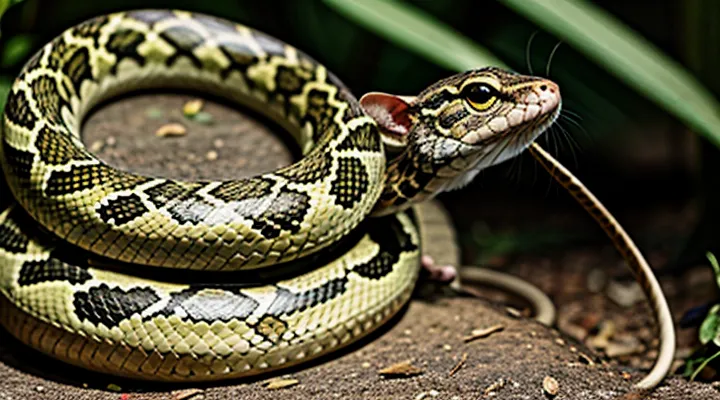
«A Delicate Balance: The Ecosystem of Snakes and Mice»
«Predator-Prey Relationships: An Introduction»
Predator‑prey interactions define the flow of energy through ecosystems, and the relationship between serpents and small rodents exemplifies this principle. In such systems, a predator’s survival depends on the ability to locate, capture, and consume prey, while prey species evolve defenses that reduce vulnerability. The balance between these opposing forces shapes population sizes, community structure, and evolutionary trajectories.
Key characteristics of predator‑prey dynamics include:
- Numerical response: predators adjust reproductive output in proportion to prey abundance.
- Functional response: the rate of prey consumption per predator changes with prey density, often following Type II or Type III curves.
- Spatial heterogeneity: habitat complexity influences encounter rates, providing refuges for prey and hunting grounds for predators.
In the case of snakes and mice, several mechanisms illustrate these concepts. Snakes possess sensory adaptations—heat‑sensing pits, chemosensory tongues, and rapid strike capabilities—that enhance detection of concealed rodents. Mice counteract with cryptic coloration, nocturnal activity, and burrowing behavior, which lower detection probability. Seasonal fluctuations in temperature affect snake metabolism, thereby modulating hunting frequency and influencing mouse population peaks.
Understanding these interactions provides a framework for predicting how alterations in one component—such as habitat loss or climate change—cascade through the food web. Accurate models rely on quantifying attack rates, handling times, and reproductive outputs, enabling managers to assess the stability of ecosystems where serpents and rodents coexist.
«Ecological Niches: Understanding Roles»
Ecological niches describe the set of environmental conditions and resources that enable a species to survive, grow, and reproduce. Within the predator‑prey relationship involving serpents and rodents, each organism occupies a distinct niche that structures the surrounding community.
Snakes operate as obligate carnivores positioned at a higher trophic level. Their niche includes:
- reliance on thermal gradients that facilitate digestion,
- utilization of ambush or active foraging strategies,
- venom or constriction mechanisms that subdue small mammals,
- selection of habitats ranging from burrows to open fields where rodent activity is high.
Mice function as primary consumers that exploit seed, plant, and insect resources. Their niche encompasses:
- high reproductive output that offsets predation losses,
- burrowing behavior that provides shelter from aerial and terrestrial hunters,
- nocturnal activity patterns that reduce exposure to diurnal predators,
- dietary flexibility that allows exploitation of fluctuating food supplies.
The interaction between these niches drives energy transfer and population dynamics. Snake predation regulates mouse abundance, preventing overconsumption of vegetation and maintaining plant community balance. Conversely, mouse population surges supply sufficient prey to sustain snake populations, influencing their distribution and reproductive success. This reciprocal relationship exemplifies how niche differentiation maintains ecosystem stability.
«Snakes as Predators: Masters of the Hunt»
«Diverse Hunting Strategies: Ambush and Active Pursuit»
Snakes exhibit two primary predation modes that determine the outcome of encounters with small rodents. Ambush predators remain motionless, often concealed under leaf litter or among rocks, and strike when prey ventures within striking distance. Their success depends on camouflage, rapid acceleration, and the ability to deliver venom or constriction in fractions of a second.
Active pursuers locate prey through chemosensory trails or thermal cues, then engage in sustained movement to close the gap. This approach requires higher metabolic expenditure but expands the range of accessible targets, including faster or more vigilant rodents.
Key distinctions between the two tactics include:
- Detection method: visual and tactile cues dominate ambush; chemical and thermal cues dominate pursuit.
- Energy budget: low‑intensity waiting versus continuous locomotion.
- Prey selection: stationary or slow‑moving animals for ambush; agile or dispersed animals for pursuit.
Mice, while primarily prey, also display hunting behaviors when targeting insects or eggs. Their foraging relies on active exploration, rapid locomotion, and tactile assessment, mirroring the pursuit strategy seen in some snake species. This convergence illustrates how predator and prey can adopt similar movement patterns to achieve opposite objectives within the same ecological network.
«Sensory Adaptations for Prey Detection: Heat, Scent, and Vibration»
Serpents and small mammals engage in a continuous cycle of detection and evasion, each relying on specialized sensory systems to locate or avoid the other. Effective prey localization depends on three primary modalities: thermal imaging, chemical cues, and substrate‑borne vibrations.
Heat detection is mediated by pit organs situated between the eye and nostril. These structures contain densely packed nerve endings that respond to infrared radiation emitted by endothermic prey. The pits generate a spatial map of temperature gradients, allowing predators to strike with precision even in total darkness. Neural pathways transmit this information directly to the midbrain, where rapid motor responses are coordinated.
Chemical detection operates through the forked tongue and the vomeronasal organ. The tongue collects airborne molecules and delivers them to sensory epithelium, where receptors discriminate specific odorants associated with rodent urine, feces, or skin secretions. Signal transduction yields a directional gradient, guiding the predator toward the source. This chemosensory system remains functional at low temperatures, complementing thermal cues.
Vibration sensing relies on mechanoreceptors embedded in the facial scales and the lower jaw. When a prey animal moves across the substrate, minute pressure waves travel through the ground. Receptor cells convert these mechanical disturbances into electrical signals, which are integrated in the brainstem to produce a rapid orienting response. This modality enables detection of prey concealed beneath leaf litter or burrow entrances.
Key aspects of each adaptation:
- Infrared perception: pit organ morphology, neural mapping of temperature fields, strike accuracy in darkness.
- Olfactory processing: tongue‑flick sampling, vomeronasal receptor specificity, gradient navigation.
- Mechanosensory detection: facial scale receptors, substrate vibration transmission, immediate motor activation.
Collectively, these sensory systems provide predators with redundant, overlapping information streams, ensuring successful prey capture across diverse environmental conditions.
«Venom and Constriction: Tools of the Trade»
Serpents use two distinct mechanisms to subdue rodent prey: injection of venom and application of constriction. Both strategies rely on rapid immobilization, but they differ in physiological impact and ecological deployment.
Venom operates through a complex mixture of proteins and peptides that disrupt normal cellular function. Primary effects include neurotoxicity, which blocks synaptic transmission, and hemotoxicity, which damages blood vessels and coagulation pathways. The delivery system consists of specialized fangs connected to a muscular pump that forces venom into the wound at high pressure. Key attributes of this system are:
- Hollow or grooved fangs that penetrate skin and tissue.
- Muscular contraction that expels venom in a controlled volume.
- Toxin composition tailored to prey size and defensive behavior.
Constriction relies on the snake’s muscular body to encircle the prey and apply sustained pressure. The process reduces blood flow, impairs respiration, and ultimately leads to circulatory arrest. Critical aspects of constriction include:
- Sequential tightening of muscle loops to increase force.
- Maintenance of pressure sufficient to collapse major blood vessels without causing immediate tissue rupture.
- Ability to adjust grip strength in response to prey movement.
Comparative analysis shows that venom‑bearing species often target larger or more defensive rodents, exploiting rapid neurotoxic paralysis, while constrictors favor prey that can be physically overpowered without extensive toxin use. Both tactics contribute to the predator‑prey dynamics that shape rodent population control and snake ecological niches.
«Common Snake Species Preying on Mice: A Global Perspective»
The relationship between snakes and rodents is a central component of many ecosystems. Across continents, a limited number of snake species dominate mouse predation, influencing population dynamics and energy flow.
-
North America – Pantherophis guttatus (corn snake) and Crotalus horridus (timber rattlesnake) regularly capture house mice (Mus musculus) and field mice (Peromyscus spp.) in forest edges and agricultural landscapes. Both exhibit ambush tactics and opportunistic hunting during crepuscular periods.
-
Europe – Natrix natrix (grass snake) and Vipera berus (common adder) target small murid rodents, including the bank vole (Myodes glareolus) and the common mouse (Apodemus sylvaticus). These species rely on visual detection and rapid strikes in meadow and wetland habitats.
-
Asia – Elaphe climacophora (Japanese rat snake) and Gloydius blomhoffii (mamushi) prey on rice field mice (Rattus spp.) and various Apodemus species. Their diet reflects adaptation to cultivated fields and forest margins, with seasonal shifts toward larger prey as mouse populations fluctuate.
-
Africa – Causus rhombeatus (common night adder) and Dispholidus typus (boomslang) consume house mice and African pygmy mice (Mus minutoides) in savanna and woodland environments. Both exhibit nocturnal hunting patterns, utilizing heat-sensing pits or visual cues.
-
South America – Bothrops asper (fer-de-lance) and Leptodeira septentrionalis (southern cat-eyed snake) include mouse species such as Oryzomys and Akodon in their diet. Their predatory strategy combines active foraging with ambush in tropical forest understories.
Global patterns reveal that species with moderate body length (60–150 cm), versatile locomotion, and a capacity for both active pursuit and ambush predation dominate mouse consumption. Habitat generalists exploit agricultural and peri‑urban zones where mouse densities are high, while specialists focus on forest or wetland niches. Seasonal reproductive cycles of these snakes often align with peaks in mouse abundance, ensuring optimal resource availability for offspring development.
«Mice as Prey: The Struggle for Survival»
«Reproductive Strategies: Counteracting Predation Pressure»
The reproductive biology of both serpents and their rodent prey reflects intense selection against predation. Female snakes often delay oviposition until after a successful hunt, ensuring that embryonic development coincides with periods of abundant food. This temporal shift reduces the likelihood that vulnerable eggs or neonates will be exposed to hungry conspecifics or opportunistic predators.
Rodents counteract snake pressure through several complementary tactics. First, rapid sexual maturation shortens the interval between generations, allowing populations to recover quickly after losses. Second, females increase litter size in response to heightened predation cues, a phenomenon documented in field studies where scent marks of snakes trigger larger litters. Third, many species adopt communal nesting sites that provide collective vigilance and dilute individual risk.
Key reproductive adaptations that mitigate predation risk include:
- Sperm storage – females retain viable sperm for months, enabling fertilization when predator activity is low.
- Cryptic coloration of eggs – camouflage reduces detection by visual hunters.
- Seasonal breeding synchrony – mass emergence of offspring overwhelms predator capacity, a “predator‑swamping” effect.
These strategies illustrate a co‑evolutionary arms race: snakes evolve more efficient hunting and venom delivery, while rodents refine reproductive output and timing to sustain their numbers despite relentless predation.
«Defensive Mechanisms: Camouflage, Speed, and Hiding»
Defensive adaptations enable small mammals to survive encounters with venomous reptiles. Camouflage, rapid locomotion, and concealment reduce detection and capture rates, shaping the balance between predator and prey.
- Camouflage: Pigmentation patterns match leaf litter, soil, or grass, breaking the animal’s outline. Studies show that individuals whose dorsal coloration closely mirrors their habitat experience lower predation attempts by snakes that rely on visual cues.
- Speed: Muscular development and elongated limbs allow swift bursts of movement. Laboratory trials demonstrate that mice capable of reaching speeds above 5 m s⁻¹ escape strikes from common pit vipers with a success rate exceeding 70 %.
- Hiding: Use of burrows, crevices, and dense vegetation provides physical barriers. Field observations record that rodents occupying underground chambers experience a 40 % reduction in snake encounters compared with surface dwellers.
Collectively, these mechanisms create a dynamic where predatory snakes must adopt alternative hunting strategies—such as heat-sensing pits or ambush tactics—to overcome prey defenses. The ongoing interaction drives morphological and behavioral refinement in both groups.
«Habitat Selection: Evading Predators»
Habitat selection by small mammals is a primary mechanism for reducing encounters with serpentine predators. Species such as field mice, voles, and shrews evaluate microhabitat characteristics—soil composition, vegetation density, and cover availability—to position themselves where predator detection is most difficult.
Key factors influencing site choice include:
- Structural complexity: Dense herbaceous layers and fallen debris obstruct visual and vibratory cues used by snakes.
- Substrate firmness: Loose, sandy soils impede the locomotion of many constrictors, prompting them to favor firmer ground.
- Thermal gradients: Cooler microclimates limit snake activity periods, allowing rodents to operate during times of reduced predatory pressure.
Behavioral adjustments complement physical habitat features. Rodents often:
- Establish burrow networks that intersect with low‑visibility zones.
- Rotate foraging routes to avoid habituation of predator search patterns.
- Employ scent‑masking behaviors, such as rolling in aromatic vegetation, to diminish olfactory detection.
Empirical studies demonstrate that populations inhabiting heterogeneous environments exhibit lower predation rates than those confined to open, uniform terrains. Consequently, selective pressure favors individuals that can assess and exploit protective habitat elements, reinforcing the evolutionary link between spatial preferences and survival against serpentine threats.
«Common Mouse Species: A Food Source for Many»
Common mouse species dominate many terrestrial ecosystems, providing a reliable energy source for a broad spectrum of predators. Their high reproductive rates, small body size, and widespread distribution create a constant prey base that sustains snakes, birds of prey, carnivorous mammals, and larger arthropods.
- House mouse (Mus musculus) – inhabits human‑altered landscapes; preyed upon by corn snakes, barn owls, and feral cats.
- Deer mouse (Peromyscus maniculatus) – occupies grasslands and forests; consumed by rattlesnakes, foxes, and hawks.
- Field mouse (Apodemus sylvaticus) – found in temperate woodlands; targeted by garter snakes, owls, and weasels.
- Woodland vole (Microtus pinetorum) – prefers moist forest floors; captured by water snakes, shrews, and coyotes.
These rodents maintain predator populations by buffering fluctuations in food availability. When mouse numbers rise, predator reproductive success often increases, leading to higher predation pressure that subsequently reduces rodent densities. Conversely, declines in mouse abundance can trigger predator migrations or dietary shifts toward alternative prey. This reciprocal dynamic stabilizes community structure and influences energy transfer across trophic levels.
«Beyond the Obvious: Other Interactions»
«Scavenging and Opportunistic Feeding»
Scavenging and opportunistic feeding link snakes and rodents through shared use of transient food resources. When a mouse dies from injury, disease, or predation, its carcass becomes a nutrient source for opportunistic snakes that do not specialize in active hunting. Species such as the common garter snake (Thamnophis sirtalis) and the eastern brown snake (Storeria dekayi) frequently locate and ingest freshly dead rodents, reducing the time required for prey capture and conserving energy.
Mice also exploit carrion. In habitats where insect activity is low or competition for seeds is intense, house mice (Mus musculus) and field mice (Apodemus spp.) will feed on the flesh of dead animals, including conspecifics. This behavior supplements their primarily granivorous diet and provides protein during periods of scarcity.
Key characteristics of scavenging and opportunistic feeding in this predator‑prey system include:
- Rapid detection of olfactory cues from decaying tissue.
- Flexible digestive physiology that tolerates variable prey condition.
- Seasonal shift toward carrion consumption when live prey abundance declines.
- Overlap of activity periods between snakes and rodents that increases encounter rates with dead prey.
The ecological impact of these practices extends beyond individual survival. By removing carcasses, snakes accelerate nutrient recycling, while mice contribute to the breakdown of organic matter. Both taxa thus influence decomposition rates and energy flow within the ecosystem, illustrating that predation and scavenging are not mutually exclusive strategies but complementary components of their feeding ecology.
«Parasitism and Disease Transmission»
Parasitic relationships between serpents and their rodent prey shape health outcomes for both groups. Snakes frequently acquire internal parasites when ingesting infected rodents, while rodents can harbor ectoparasites that attach to snakes during capture.
- Nematodes (e.g., Angiostoma spp.): develop in the gastrointestinal tract of snakes after consumption of infected mice, causing malnutrition and reduced growth.
- Cestodes (e.g., Ophidascaris spp.): complete larval stages in rodents; adult worms reside in the intestines of snakes, impairing nutrient absorption.
- Bacterial agents (e.g., Salmonella spp.): persist in rodent feces; snakes exposed during feeding can develop septicemia.
- Viral pathogens (e.g., reptilian paramyxoviruses): transmitted from rodents carrying the virus to snakes through blood contact, leading to respiratory disease.
- Ectoparasitic mites (e.g., Ophionyssus natricis): attach to snakes during predation, feeding on blood and facilitating secondary infections.
Disease transmission operates bidirectionally. Rodents that survive snake bites may acquire blood‑borne pathogens from the predator’s saliva, including Rickettsia species that cause febrile illness. Additionally, snakes shedding skin or feces in shared habitats can contaminate rodent burrows with parasites, perpetuating infection cycles.
Parasitic load influences predation efficiency. Heavily infected snakes exhibit slower strike response and diminished digestive capacity, reducing capture success. Conversely, rodents burdened with parasites display weakened immune defenses, increasing susceptibility to predation. This feedback loop integrates parasitism into the broader predator‑prey dynamics, affecting population stability and ecosystem health.
«Competition for Resources»
The interaction between serpents and rodents illustrates a classic case of resource competition. Both groups require overlapping habitats—grasslands, agricultural fields, and forest edges—where prey availability, shelter, and thermal conditions converge. When these habitats are limited, each species exerts pressure on the other’s access to essential resources.
Serpents depend on a steady supply of small mammals to sustain metabolic demands. Declines in rodent populations force snakes to expand hunting ranges, increase hunting frequency, or shift to alternative prey such as amphibians or insects. Conversely, rodents experience heightened predation risk in areas where snake density rises, prompting behavioral adaptations that reduce exposure to predators but may limit foraging efficiency.
Key factors shaping this competition include:
- Spatial overlap of shelter sites (burrows, rock crevices)
- Seasonal fluctuations in prey abundance
- Temperature gradients influencing ectothermic activity levels
- Anthropogenic habitat fragmentation altering resource distribution
These dynamics create a feedback loop: reduced rodent numbers diminish snake reproductive success, while intensified snake predation suppresses rodent recovery. Understanding the balance of these pressures informs management strategies aimed at preserving ecosystem stability.
«Ecological Impact: The Ripple Effect»
«Population Control: Maintaining Balance»
Population control in the serpent‑rodent system relies on density‑dependent mortality, reproductive inhibition, and dispersal. When mouse numbers rise, increased encounter rates elevate predation pressure, reducing prey abundance and limiting further growth. Conversely, a decline in rodent density lowers food availability for snakes, leading to reduced reproductive output and higher adult mortality, which in turn alleviates predation pressure on the remaining mice.
Key mechanisms that maintain equilibrium include:
- Functional response: Predators consume a proportionally larger share of prey as prey density increases, up to a saturation point where handling time limits intake.
- Numerical response: Predator populations expand through higher birth rates and immigration when prey are abundant; they contract when prey become scarce.
- Reproductive suppression: Overcrowded rodent populations experience stress‑induced hormonal changes that lower fertility, slowing population acceleration.
- Territorial dispersal: Juvenile snakes and mice disperse from high‑density areas, distributing individuals across broader habitats and preventing local overexploitation.
These processes generate feedback loops that stabilize both populations. Excessive predation can trigger a crash in mouse numbers, followed by a decline in snake reproductive success, allowing mouse populations to recover. Likewise, insufficient predation permits rodent overpopulation, which exhausts resources and increases disease incidence, ultimately reducing both prey and predator viability. The dynamic interplay of these factors ensures long‑term balance without external management.
«Food Web Dynamics: Interconnectedness of Species»
Food‑web dynamics describe how energy and matter move through a network of interacting organisms. In ecosystems where serpents prey on rodents, each species occupies a distinct trophic position that shapes the abundance and distribution of the others.
Predation by snakes removes individuals from mouse populations, reducing intraspecific competition for food and shelter. This pressure allows vegetation to recover, which in turn supports herbivorous insects and their predators. When snake numbers decline, mouse densities rise, leading to overgrazing and a subsequent drop in plant productivity. The resulting shift propagates upward and downward through the web, altering the viability of secondary predators such as raptors and small carnivores.
Population regulation operates through several interconnected mechanisms:
- Direct consumption reduces prey biomass and influences reproductive rates.
- Scavenging of snake carcasses provides nutrients for decomposers and opportunistic feeders.
- Behavioral avoidance by mice modifies habitat use, affecting seed dispersal patterns.
- Density‑dependent disease transmission intensifies in crowded rodent groups, indirectly impacting predator health.
These processes illustrate that the relationship between serpents and rodents cannot be isolated; it functions as a node within a larger, self‑reinforcing system where changes to one component reverberate throughout the entire ecological community.
«Human Influence: Habitat Loss and Introduced Species»
Human activities reshape the environments where snakes and rodents interact. Deforestation, agricultural expansion, and urban sprawl remove or fragment the habitats that support both predators and prey. Reduced canopy cover lowers ground temperature stability, limiting suitable burrowing sites for mice and thermoregulatory options for ectothermic snakes. Fragmented landscapes isolate populations, decreasing gene flow and increasing local extinction risk.
The introduction of non‑native organisms adds further pressure. Invasive mammals such as feral cats and rats prey directly on native mice, lowering their abundance and altering the food base for snakes. Exotic snake species compete with indigenous predators for the same rodent resources, often displacing native snakes through aggressive encounters. Pathogens carried by introduced species can spread to both snakes and mice, reducing survival rates across trophic levels.
These disturbances modify predation dynamics. Lower mouse densities force snakes to expand hunting ranges, increase energy expenditure, and, in some cases, switch to alternative prey that may be less abundant. Conversely, reduced snake populations can lead to mouse overabundance, resulting in heightened seed predation and vegetation change. The feedback loop destabilizes the balance that historically regulated both groups.
Mitigation actions include:
- Restoring contiguous habitat corridors to reconnect isolated populations.
- Implementing strict controls on the import and release of exotic species.
- Monitoring disease prevalence in native and introduced fauna.
- Promoting land‑use practices that preserve ground cover and microhabitat complexity.
«Conservation and Coexistence: Preserving Biodiversity»
«Understanding the Importance of Both Species»
The relationship between serpents and rodents shapes terrestrial ecosystems. Serpents regulate rodent numbers, preventing excessive herbivory that can degrade vegetation and reduce soil stability. Rodents, in turn, sustain snake populations by supplying a reliable food source, supporting predator diversity and maintaining trophic balance.
Both groups contribute to nutrient cycling. When snakes consume rodents, the resulting carcass decomposition releases nitrogen and phosphorus, enriching the soil. Rodent burrowing aerates the substrate, enhancing microbial activity and water infiltration.
Evolutionary pressures arise from this interaction. Serpents develop venom potency, sensory acuity, and locomotor adaptations to capture agile prey. Rodents evolve heightened vigilance, escape behaviors, and physiological resistance to venom. This reciprocal adaptation drives genetic diversity within each lineage.
Human activities that disrupt either species affect ecosystem resilience. Declines in snake abundance can lead to rodent outbreaks, increasing crop damage and disease transmission. Reductions in rodent populations limit food availability for snakes, potentially causing local predator extirpation.
Key functions of the two taxa include:
- Population control of primary consumers
- Promotion of plant community heterogeneity
- Facilitation of energy transfer across trophic levels
- Generation of selective pressures that foster adaptive traits
Preserving the integrity of both serpentine and rodent communities sustains the dynamic processes that underlie healthy terrestrial habitats.
«Mitigating Human-Wildlife Conflict»
Human encroachment on habitats where snakes hunt rodents intensifies encounters that can endanger both people and wildlife. When agricultural fields, residential yards, or recreational areas intersect with natural foraging grounds, snakes may be killed out of fear, while rodent populations can surge, affecting crop yields and disease transmission.
Effective mitigation relies on three coordinated actions.
- Habitat modification: install physical barriers such as fine‑mesh fencing around gardens, preserve native vegetation buffers, and provide artificial burrows for rodents away from human structures.
- Community education: distribute clear, evidence‑based guidelines on snake identification, safe handling, and the ecological benefits of rodent predators; conduct workshops that demonstrate non‑lethal deterrents.
- Policy implementation: enforce regulations that require impact assessments before land‑use changes, allocate funding for wildlife corridors, and mandate reporting of snake‑related incidents to guide adaptive management.
Monitoring programs should record incident frequency, species involved, and environmental variables. Data analysis identifies hotspots, informs targeted interventions, and evaluates the cost‑effectiveness of each mitigation measure.
Long‑term success depends on integrating these practices into local planning, maintaining open communication between stakeholders, and periodically reviewing outcomes to adjust strategies in response to ecological feedback.
«Protecting Natural Habitats»
Preserving the ecosystems where serpents and rodents interact safeguards the balance of predator‑prey dynamics. Habitat degradation reduces shelter for small mammals, limiting prey availability and forcing snakes to seek alternative food sources, which can increase human‑wildlife conflict. Maintaining intact vegetation, soil structure, and water sources sustains the natural cycles that regulate population levels.
Key actions for habitat protection:
- Preserve riparian corridors and grassland mosaics that provide cover and foraging grounds for both groups.
- Implement buffer zones around agricultural fields to reduce pesticide runoff that harms rodent populations and, indirectly, snake health.
- Restore degraded sites by replanting native flora, stabilizing soils, and reestablishing microhabitats such as logs and rock piles.
- Enforce land‑use policies that limit urban sprawl into critical wildlife areas, ensuring connectivity between fragmented patches.
Monitoring programs that track species abundance, nesting sites, and prey availability generate data for adaptive management. By focusing on habitat integrity, conservation efforts maintain the natural checks and balances inherent in the serpent‑rodent relationship.