
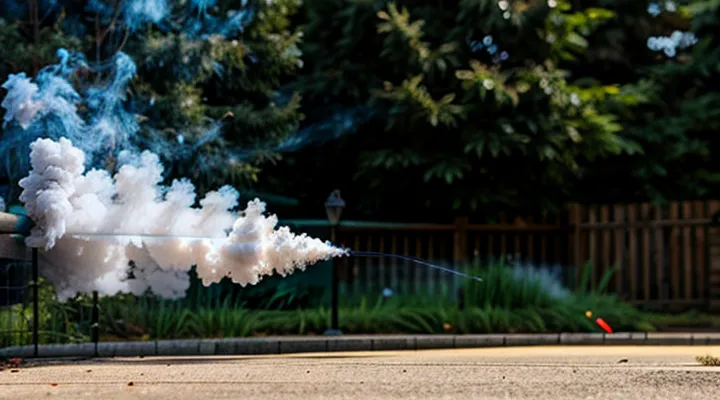
What is a Smoke Bomb?
Composition of Rodent Smoke Bombs
Rodent smoke devices rely on a precisely formulated mixture that creates a dense, irritating aerosol when ignited. The core of the formulation consists of a volatile organic solvent that dissolves the active toxicant and facilitates rapid vaporization. Nicotine salts, pyrethroid derivatives, or organophosphate compounds serve as the primary toxic agents, chosen for their potency against small mammals and rapid onset of respiratory distress.
A solid propellant, typically a blend of potassium nitrate and a carbonaceous fuel, provides the necessary heat and pressure to disperse the aerosol throughout confined spaces. The propellant composition is calibrated to achieve an ignition temperature that maximizes solvent vaporization while preventing combustion of the toxicant itself.
Stabilizing additives, such as antioxidants and moisture absorbers, extend shelf life and maintain consistent performance under varying humidity conditions. Binding agents, often low‑melting waxes or polymeric resins, ensure uniform distribution of the active ingredients within the propellant matrix.
Typical component list:
- Volatile solvent (e.g., acetone, ethanol) – 30 %–45 % of total mass
- Toxicant (nicotine salt, pyrethroid, organophosphate) – 10 %–20 %
- Solid propellant (potassium nitrate, carbon fuel) – 30 %–40 %
- Stabilizers and antioxidants – 2 %–5 %
- Binders or waxes – 3 %–8 %
Precise ratios are adjusted to balance aerosol density, toxicity, and burn rate, ensuring effective control of rats and mice while minimizing risk to non‑target species. The resulting composition produces a quick‑acting, inhalable cloud that incapacitates rodents within seconds of exposure.
How Smoke Bombs Differ from Other Pest Control Methods
Smoke bombs designed for rodent control release a dense aerosol that suffocates or disorients rats and mice within a confined space. The aerosol consists of inert gases and irritant particles that penetrate burrows and hiding places, causing rapid incapacitation without leaving toxic residues.
Key distinctions from alternative methods:
- Chemical baits rely on ingestion; effectiveness depends on the pest’s willingness to consume the poison, and non‑target species may be exposed.
- Mechanical traps demand physical contact; success rates vary with pest behavior and trap placement.
- Ultrasonic emitters emit high‑frequency sound waves; efficacy diminishes in cluttered environments and does not eliminate the pest.
- Biological agents introduce pathogens; deployment requires careful monitoring to avoid ecological disruption.
Advantages of smoke‑based solutions include immediate action, minimal chemical contamination, and reduced risk to humans and pets when used according to instructions. The aerosol can infiltrate narrow tunnels, reaching pests that evade traps or avoid bait stations.
Limitations involve the necessity of sealing the treatment area to contain the smoke, potential respiratory irritation for occupants, and incompatibility with open‑air settings. Proper ventilation after application is essential to restore safe breathing conditions.
The Mechanism of Action
Chemical Reactions and Gas Generation
The device employed to repel rodents relies on a rapid exothermic reaction that converts solid compounds into a dense cloud of particulate matter and gases. A typical formulation contains an oxidizer such as potassium nitrate, a combustible fuel like sugar or charcoal, and a binding agent that holds the mixture together. When ignited, the oxidizer supplies oxygen to the fuel, producing heat that vaporizes the binding matrix and releases smoke‑laden gases.
The primary chemical transformation can be expressed by the simplified equation:
KNO₃ + C → K₂CO₃ + N₂ + CO₂ + heat
Simultaneous combustion of carbonaceous material generates carbon monoxide and carbon dioxide, while the heat causes the formation of fine aerosol particles composed of condensed organic compounds. These particles scatter visible light, creating a thick, opaque plume that limits visual cues for rats and mice.
Gas generation proceeds at temperatures between 300 °C and 500 °C, creating a pressure rise that forces the smoke out of the container through a vent. The resulting plume expands rapidly, filling confined spaces and displacing ambient air. Elevated concentrations of carbon dioxide and carbon monoxide induce respiratory irritation, while the visual obstruction disrupts the rodents’ navigation.
Key considerations for safe operation include:
- Use of non‑flammable, corrosion‑resistant containers to prevent accidental ignition.
- Storage in a cool, dry environment to avoid premature degradation of the oxidizer.
- Ventilation of the treated area after deployment to disperse residual gases and reduce toxicity risk for humans and pets.
The combined effect of chemical heat release, gas expansion, and particulate suspension produces an effective, short‑term deterrent that exploits both sensory overload and physiological stress in target rodents.
Impact on Rodent Respiratory Systems
The device releases a dense cloud of irritant aerosols designed to affect the upper and lower airways of rats and mice. Rapid diffusion ensures exposure of the entire respiratory tract within seconds of activation.
Composition includes finely pulverised aluminum particles, sulfur‑based smoke, and volatile organic compounds. Upon inhalation, these agents trigger:
- Immediate irritation of nasal mucosa and tracheal epithelium
- Reflex bronchoconstriction mediated by sensory nerve activation
- Accumulation of particulate matter in alveolar sacs, impairing gas exchange
- Elevated respiratory rate followed by acute respiratory distress
Physiological response progresses from transient coughing to severe hypoxia if exposure persists. Histological examinations reveal edema of the bronchial walls and infiltration of inflammatory cells. Blood gas analysis shows reduced oxygen saturation and increased carbon dioxide levels, confirming compromised pulmonary function.
Effective deployment requires placement in confined spaces where airflow is limited, maximizing concentration and contact time. Protective equipment for personnel must address inhalation hazards, as the same irritants pose risks to non‑target organisms. Proper ventilation after activation reduces residual smoke, preventing unintended environmental contamination.
Effects on Rodent Burrows and Nests
Smoke‑generating devices designed for rodent control introduce dense, irritant aerosols into underground chambers. When deployed near active burrows, the smoke penetrates tunnel networks through ventilation shafts and entry holes, reaching nesting chambers that are otherwise sealed from surface disturbances.
The primary outcomes for burrow systems include:
- Immediate respiratory irritation causing rapid evacuation of occupants.
- Disruption of scent trails, which impairs communication and territorial marking.
- Structural weakening of tunnel walls due to moisture condensation from smoke particles.
- Deposition of residual chemicals that persist in bedding material, reducing habitability.
- Increased exposure to predators as rodents emerge in search of fresh air.
Long‑term effects often involve abandonment of the original burrow complex and relocation to less suitable sites, leading to reduced reproductive success and heightened mortality. Persistent residues may also contaminate adjacent soil, limiting future colonization by other small mammals.
Types of Rodent Smoke Bombs
Pyrotechnic Smoke Bombs
Pyrotechnic smoke bombs designed for rodent control generate a dense aerosol that interferes with the sensory perception of rats and mice. The device consists of a combustible matrix, an oxidizer, a fuel, and a coloring agent. Upon ignition, the oxidizer releases oxygen, allowing the fuel to combust rapidly. The heat produced vaporizes the coloring agent, which condenses into fine particles suspended in the air. These particles form a visual barrier that masks escape routes and disorients the animals, prompting them to remain within the treated area.
The activation mechanism typically involves a friction‑sensitive primer or an electric igniter. The primer ignites the main charge with a delay of a few seconds, ensuring safe deployment distance for the operator. The burn time ranges from 30 to 90 seconds, providing sufficient coverage for small to medium‑sized infested zones.
Key considerations for effective use include:
- Selection of a color that contrasts with the surrounding environment, enhancing visual obstruction.
- Placement of the device at entry points, burrow exits, or along established foraging paths.
- Observation of wind direction to avoid dispersion beyond the target zone.
- Compliance with local regulations regarding the storage and disposal of pyrotechnic materials.
Safety protocols mandate the use of protective eyewear, gloves, and a clear evacuation perimeter during ignition. After the smoke dissipates, residual particles settle on surfaces and should be cleaned to prevent secondary contamination. Proper ventilation accelerates clearance of airborne particles, reducing the risk of inhalation exposure for humans and non‑target animals.
Fumigation Canisters
Fumigation canisters are sealed containers that hold a measured quantity of pyrotechnic compound designed to release a dense aerosol when ignited. The aerosol consists of fine particles and volatile gases that disperse rapidly, creating an environment hostile to rodents. Activation typically occurs through a mechanical striker or an electric igniter; the resulting combustion generates heat and pressure, forcing the contents through a vented nozzle.
The composition of the compound balances rapid vaporization with low toxicity to non‑target species. Common ingredients include potassium chlorate, sugar, and a carrier oil, which together produce a thick white smoke rich in carbon monoxide and irritant vapors. The smoke’s visibility aids in confirming coverage, while the chemical properties interfere with the respiratory systems of rats and mice, leading to rapid incapacitation.
Deployment methods vary:
- Hand‑held release: operator pulls a trigger, exposing the canister to open air for immediate dispersal.
- Remote activation: battery‑powered unit triggers the canister from a safe distance, reducing operator exposure.
- Integrated trap systems: canisters are placed inside bait stations, activating upon animal entry.
Safety considerations demand sealed storage, clear labeling, and adherence to ventilation guidelines. Protective equipment, such as respirators and gloves, protects personnel during handling and activation. After discharge, residual smoke dissipates within minutes; however, thorough ventilation is recommended before re‑entry.
Effectiveness depends on proper placement, sufficient concentration of aerosol, and target species’ susceptibility. Field tests indicate that well‑positioned canisters achieve mortality rates exceeding 80 % within a controlled area, confirming their utility as a rapid response tool in rodent management programs.
Considerations for Selection
Selecting an appropriate rodent‑control smoke device requires evaluation of several critical parameters.
Key factors include:
- Active compound: choose a formulation that delivers rapid incapacitation without excessive toxicity to non‑target species.
- Particle size distribution: ensure aerosol particles remain suspended long enough to reach concealed habitats while avoiding rapid deposition that reduces coverage.
- Release mechanism: prefer devices with reliable ignition systems that function under varied environmental conditions (temperature, humidity).
- Safety certifications: verify compliance with local pest‑control regulations and occupational‑health standards.
- Environmental impact: opt for biodegradable carriers and low‑residue chemicals to minimize soil and water contamination.
- Efficacy against target species: consider behavioral traits of rats and mice, such as nesting depth and ventilation patterns, to match smoke penetration capabilities.
- Dosage control: select products that allow precise dosing per square meter, reducing waste and exposure risk.
- Storage stability: ensure the device maintains potency over its shelf life under recommended storage conditions.
A systematic comparison of these criteria enables informed procurement decisions, aligning operational goals with regulatory and ecological responsibilities.
Advantages of Using Smoke Bombs
Effectiveness in Hard-to-Reach Areas
Smoke generators for rodent control create a dense aerosol that can travel through narrow gaps, pipework, and ventilation ducts. The aerosol consists of fine particles that remain suspended long enough to reach concealed nesting sites, where it irritates the respiratory system of rats and mice and forces them to vacate the area.
The device operates under pressure, forcing smoke through a calibrated nozzle that produces a high‑velocity stream. This stream follows the path of least resistance, allowing the plume to infiltrate cavities that are inaccessible to traps or bait stations. The smoke’s chemical composition is formulated to be non‑lethal yet sufficiently repellent to induce rapid evacuation.
Key factors that enhance performance in confined spaces:
- nozzle diameter optimized for laminar flow, reducing turbulence that could block passage
- pressure level calibrated to overcome static resistance in ducts and wall voids
- particle size distribution engineered to remain airborne for extended periods, ensuring deep penetration
- odor profile selected for high detectability by rodent olfactory receptors, increasing aversion
Effective deployment requires positioning the generator near the entrance of the target zone, sealing secondary openings to direct flow, and allowing a dwell time of several minutes for complete diffusion. Safety measures include ventilation after activation and use of protective equipment for operators. Properly applied, smoke devices provide a rapid, non‑invasive method to reach hidden infestations where conventional methods fail.
Speed of Action
The device designed to disperse a dense aerosol of irritant particles targets rodents by delivering a rapid physiological shock. The formulation vaporizes within seconds of activation, creating a cloud that fills the intended area almost instantly.
Rapid action derives from three factors. First, the propellant generates high‑pressure discharge, expelling the mixture at velocities exceeding several meters per second. Second, particle size is calibrated between 5 µm and 20 µm, allowing deep penetration into the respiratory tract of rats and mice. Third, the active irritant—commonly a synthetic capsaicinoid analogue—binds to nociceptor receptors, triggering immediate coughing, bronchoconstriction, and loss of coordination.
Typical timeline:
- 0–2 seconds: ignition of propellant and formation of aerosol cloud.
- 2–5 seconds: cloud reaches full concentration, enveloping the target zone.
- 5–10 seconds: rodents begin exhibiting respiratory distress and immobilization.
- 10–30 seconds: majority of affected individuals lose mobility, facilitating capture or extermination.
The swift onset minimizes the opportunity for rodents to escape, enhancing the efficiency of control operations while reducing exposure time for non‑target species.
Broad Area Coverage
The device designed to emit irritant smoke for rodent control disperses particulate matter across an extensive zone, ensuring that target species encounter the agent throughout the treated space.
Effective «Broad Area Coverage» relies on rapid aerosolization of fine particles that remain suspended long enough to travel beyond the immediate release point. Particle diameters calibrated between 10 µm and 30 µm achieve optimal balance between drift distance and settling rate, allowing the cloud to infiltrate crevices, burrows, and ventilation pathways.
Key parameters influencing the reach of the smoke cloud include:
- Charge volume: larger propellant loads generate higher initial velocity, extending the cloud radius.
- Nozzle geometry: conical or multi‑orifice designs produce a wider spread pattern compared to single‑point emitters.
- Ambient airflow: gentle drafts (0.1–0.3 m s⁻¹) assist horizontal transport without causing premature dilution.
- Temperature and humidity: lower humidity reduces particle agglomeration, preserving cloud integrity over greater distances.
Operational guidelines for maximizing area impact:
- Position devices at central locations within the target environment to exploit radial dispersion.
- Deploy multiple units with overlapping zones to eliminate blind spots, maintaining a minimum separation of 2–3 m.
- Activate devices during periods of minimal human activity to reduce exposure risk.
- Verify environmental conditions meet the recommended airflow and humidity thresholds before activation.
Adherence to these principles ensures that the irritant smoke permeates the entire infestation zone, delivering consistent exposure to rats and mice across the intended treatment area.
Disadvantages and Risks
Safety Concerns for Humans and Pets
Rodent‑control smoke devices release a fine aerosol that irritates the respiratory system of rats and mice, causing temporary incapacitation. The formulation typically contains powdered capsicum, pyrethroids, or other irritants combined with a propellant that generates dense smoke.
Human safety considerations focus on inhalation and dermal exposure. Inhaled particles can provoke coughing, throat irritation, and bronchospasm, especially in individuals with asthma or chronic respiratory conditions. Direct contact with the irritant may cause skin redness or eye burning. Adequate ventilation, use of protective masks, gloves, and eye protection are essential during deployment. Exposure limits indicated on product labels must not be exceeded, and any accidental spill requires immediate decontamination with water and mild soap.
Pet safety concerns extend to cats, dogs, birds, and small mammals that may inhabit the same environment. Secondary inhalation can produce similar respiratory distress as in humans. Pets may also ingest residual powder from fur or paws, leading to gastrointestinal irritation or systemic toxicity. To prevent accidental exposure, ensure that the area is cleared of all animals before activation, and keep the device out of reach of unattended pets after use.
Key safety measures:
- Deploy only in sealed rooms; close doors and windows to contain smoke.
- Verify that no humans or pets occupy the space for the duration specified on the label.
- Wear certified respirators, chemical‑resistant gloves, and goggles.
- Allow sufficient aeration time before re‑entering the area; use fans or open windows when safe.
- Store the device in a locked cabinet, away from children and animals, and keep the original safety data sheet accessible.
Environmental Impact
The device designed to disperse irritant smoke for controlling rats and mice consists of a combustible matrix containing a volatile oil, a particulate carrier, and a propellant. Ignition generates a dense cloud of aerosol particles that irritate the respiratory system of rodents, causing rapid avoidance behavior.
During deployment, the aerosol introduces fine particulate matter and volatile organic compounds into the surrounding air. Non‑target organisms, especially insects and small mammals, may inhale the smoke, leading to acute respiratory distress. Soil that contacts the residue can retain oil fragments, potentially affecting microbial activity and plant root health.
The aerosol particles remain suspended for several minutes before settling. Persistent hydrocarbons may adhere to dust, prolonging exposure through resuspension. Water runoff can transport soluble components into aquatic ecosystems, where they may exert toxic effects on fish and invertebrates. Overall air‑quality degradation is limited in duration but can contribute to localized pollution peaks.
Mitigation strategies focus on reducing environmental load:
- Formulate the carrier with biodegradable polymers that break down within days.
- Replace volatile oils with low‑toxicity, plant‑derived irritants.
- Limit charge size to the minimum effective quantity.
- Implement containment measures, such as sealed deployment chambers, to direct smoke toward target burrows.
- Conduct post‑application monitoring of soil and water samples to verify residue levels.
Potential for Incomplete Eradication
The aerosol device designed for rodent control often fails to achieve total elimination. Residual individuals may survive due to physiological resistance, sheltering behavior, or incomplete exposure within the treated area.
Key factors contributing to incomplete eradication include:
- Variable penetration of smoke through dense bedding or concealed nests;
- Species‑specific tolerance to the active compounds, allowing some rodents to recover after exposure;
- Inconsistent distribution of the aerosol cloud caused by ventilation patterns or obstacles;
- Timing of deployment relative to rodent activity cycles, which can leave nocturnal individuals unaffected.
Mitigation measures focus on optimizing delivery and complementing the aerosol approach. Recommendations comprise:
- Conducting pre‑treatment surveys to identify hidden refuge zones;
- Adjusting release intervals to align with peak activity periods;
- Integrating physical barriers or traps to capture survivors;
- Monitoring post‑treatment populations with systematic counts to verify efficacy.
Proper Application Techniques
Preparation of the Treatment Area
Preparation of the treatment area is critical for the effective deployment of a rodent smoke device. All non‑target items must be removed from the space to prevent contamination. Surfaces should be covered with disposable sheeting to protect furnishings and facilitate cleanup.
Ventilation control is essential. Windows and doors are sealed with tape or weather‑stripping to contain the smoke within the target zone. An exhaust fan positioned outside the sealed area creates a negative pressure environment, directing airflow through a filtered outlet.
Safety measures include:
- Placement of fire‑resistant barriers around the device.
- Installation of carbon‑monoxide detectors calibrated for low‑level exposure.
- Availability of personal protective equipment (respirators, gloves, eye protection) for personnel entering the zone.
Prior to activation, the area is inspected for leaks. Any gaps in sealing are patched with silicone caulk. Electrical circuits in the vicinity are switched off to eliminate ignition sources. The floor is cleared of debris that could obstruct the dispersion of the aerosol.
Final verification involves confirming that all entry points are secured, monitoring equipment is operational, and evacuation routes are established. Only after these conditions are met should the smoke bomb be ignited, ensuring that the aerosol remains confined to the prepared treatment zone.
Placement and Activation
Effective deployment of a rodent smoke deterrent requires precise positioning and reliable triggering. The device must be situated where rodents travel, yet remain inaccessible to non‑target species and humans. Ideal locations include concealed gaps along walls, under floorboards, or within burrow entrances. Placement should allow smoke to fill the passage without obstruction, ensuring rapid exposure throughout the tunnel network.
Activation methods fall into three categories:
- Timed ignition – a built‑in clock releases the charge after a predetermined interval, suitable for unattended installations.
- Remote release – a wireless transmitter triggers the device from a safe distance, providing immediate control during pest‑activity peaks.
- Motion‑sensor activation – a passive infrared detector senses movement of the target and initiates discharge, minimizing unnecessary smoke release.
Each method demands verification of power source integrity, proper sealing of the charge chamber, and compliance with local safety regulations. After installation, conduct a test activation in a controlled environment to confirm that smoke disperses evenly and that the trigger responds within the expected timeframe. Regular inspection of placement points and activation mechanisms maintains efficacy over prolonged use.
Post-Treatment Ventilation
Following the discharge of a rodent‑targeted smoke device, immediate removal of residual aerosol is essential for safety and effectiveness. Airborne particles settle quickly, but incomplete clearance can expose humans and non‑target animals to irritants and toxic compounds.
Critical parameters for effective ventilation include:
- Minimum air‑exchange rate of 12 volumes per hour in confined spaces.
- Continuous monitoring of smoke density with optical particle counters until levels fall below occupational‑exposure limits.
- Verification of uniform airflow to prevent stagnant zones where smoke may accumulate.
Recommended actions:
- Open all exterior openings—windows, doors, vents—to create cross‑draft.
- Deploy high‑capacity exhaust fans at the highest point of the room, directing contaminated air outward.
- Activate the building’s HVAC system on fresh‑air mode; disable recirculation filters that could retain particles.
- Position portable air‑cleaning units equipped with HEPA filters near the source to capture fine particulates.
- Maintain ventilation for at least 30 minutes after visual clearance, extending duration if sensor readings remain elevated.
Documentation of ventilation duration, airflow measurements, and sensor data should be retained for regulatory compliance and future risk assessments.
Legal and Regulatory Aspects
Local Regulations and Restrictions
Local regulations governing the use of rodent‑targeted smoke generators vary widely across jurisdictions. In many regions, the devices are classified as pest‑control chemicals and therefore fall under the same licensing requirements as conventional rodenticides. Authorities typically demand registration of the product, safety data sheets, and proof of training for anyone applying the method in residential or commercial settings.
Restrictions often focus on the environment in which the smoke may be released. Common prohibitions include:
- Application inside occupied dwellings without prior ventilation and occupant evacuation.
- Use in proximity to food preparation areas, schools, hospitals, and other sensitive facilities.
- Deployment in outdoor public spaces where smoke could affect non‑target wildlife or the general public.
- Distribution to minors or untrained individuals without documented supervision.
Compliance enforcement is carried out by environmental protection agencies, health departments, and local pest‑control boards. Penalties for violations range from fines to revocation of pest‑control licenses. Operators must retain records of each application, including date, location, product batch, and safety measures taken, to satisfy audit requirements.
Licensing Requirements
Licensing for devices that emit smoke to control rodent populations is governed by federal, state, and local regulations. Agencies responsible for oversight include the Environmental Protection Agency (EPA), the Occupational Safety and Health Administration (OSHA), and state departments of agriculture or wildlife management. Compliance requirements encompass product classification, hazardous material registration, and usage authorization.
Product classification determines whether the smoke bomb is considered a pesticide, a fumigant, or a non‑chemical device. If classified as a pesticide, registration with the EPA’s Pesticide Registration Division is mandatory, accompanied by a detailed dossier on active ingredients, toxicology, and environmental impact. Non‑chemical devices may still require registration as a pest‑control apparatus under state statutes, particularly when they incorporate compressed gases or pyrotechnic components.
Key licensing elements include:
- Submission of a safety data sheet (SDS) documenting composition, handling procedures, and emergency measures.
- Acquisition of a federal pesticide registration number (if applicable) before commercial distribution.
- Obtaining a state‑issued pest‑control operator license for individuals or businesses that deploy the devices in the field.
- Securing a hazardous materials transport permit when shipping products containing pressurized gases.
- Adherence to labeling standards that specify dosage, target species, application methods, and personal protective equipment (PPE) requirements.
Failure to secure the appropriate licenses can result in enforcement actions, including fines, product seizure, and revocation of operating privileges. Continuous compliance monitoring involves periodic reporting of usage statistics, adverse event logs, and renewal of permits according to agency timelines.
Safe Disposal Guidelines
Rodent smoke devices release a dense aerosol that remains hazardous until fully dissipated. After application, disposal procedures must prevent accidental exposure, environmental contamination, and fire risk.
The disposal process begins with complete deactivation of the device. Remove the ignition source, isolate the unit in a fire‑resistant container, and allow the aerosol to settle in a well‑ventilated area. Do not attempt to open the chamber while smoke persists.
- Place the inactive device in a sealed, non‑combustible bag.
- Transfer the bag to a rigid, puncture‑resistant container.
- Label the container with «hazardous aerosol waste» and the date of deactivation.
- Store the container in a temperature‑controlled, ventilated space away from ignition sources.
- Arrange collection by an authorized hazardous‑waste service within 48 hours.
During transport, secure the container to prevent tipping or impact. Verify that the carrier complies with local regulations for hazardous material handling. Documentation must accompany the shipment, specifying the product type, quantity, and disposal authorization number.
Final disposal must occur at a licensed facility equipped to treat aerosol‑containing waste. The facility should employ filtration or incineration methods that neutralize residual chemicals. Verify that the disposal record reflects complete destruction or safe recycling of all components.
Adherence to these guidelines eliminates residual risk, protects personnel, and ensures compliance with environmental protection statutes.