
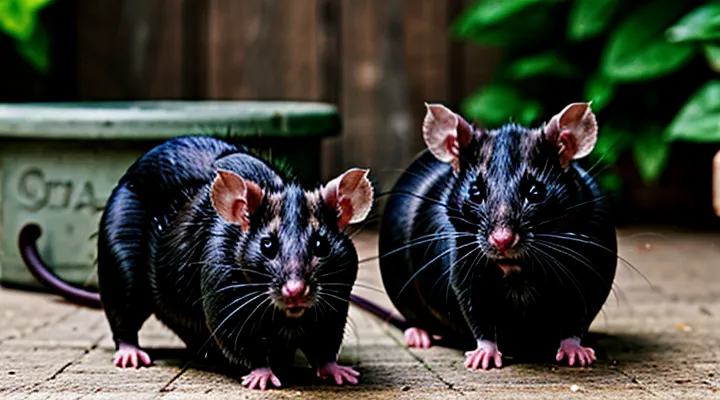
«History and Origin»
«Development of the Siamese Rat»
The Siamese rat originated in the early 20th century through selective breeding of laboratory strains that displayed a distinctive coat coloration pattern. Breeders focused on the albino gene combined with a recessive pigment modifier, producing the characteristic white body with dark points on the ears, face, and tail. This phenotype proved stable after several generations, establishing a reproducible line for research purposes.
Genetic analysis shows that the point coloration derives from a mutation in the tyrosinase gene, which reduces melanin synthesis at body temperature but allows pigment production in cooler extremities. Cross‑breeding experiments with standard albino rats confirmed the autosomal recessive inheritance of the trait, enabling predictable propagation of the Siamese pattern.
Selective pressure emphasized not only coat appearance but also behavioral uniformity. Over successive generations, the breed exhibited reduced aggression and heightened docility, traits favored for laboratory handling. Standardized breeding protocols—controlled mating pairs, consistent environmental conditions, and routine health screening—contributed to the rapid fixation of these characteristics.
Key milestones in the breed’s development include:
- 1912: Initial identification of the point coloration in a colony of albino rats.
- 1924: Formal establishment of a breeding program dedicated to the phenotype.
- 1936: Publication of the genetic inheritance pattern, confirming recessive transmission.
- 1950s: Integration of the line into major biomedical research facilities, solidifying its status as a model organism.
Current populations maintain genetic integrity through periodic outcrosses with verified carriers, preventing inbreeding depression while preserving the distinctive coloration and temperament that define the Siamese rat breed.
«Distinction from Wild Rats»
The Siamese rat exhibits a suite of traits that separate it clearly from any wild‑type Rattus species. Domesticated lineage, selective breeding, and controlled environments produce a consistent phenotype, whereas wild populations display extensive genetic variability driven by natural selection.
Key distinctions include:
- Coat coloration – the breed displays a uniform, pale‑cream or ivory coat with characteristic dark facial markings; wild rats possess mottled fur patterns that blend with their habitats.
- Temperament – Siamese individuals are docile, accustomed to handling, and display reduced aggression; wild counterparts maintain heightened wariness and defensive behaviors.
- Morphology – the breed shows a compact body, shortened tail, and a rounded skull; wild rats have longer tails, leaner builds, and more pronounced cranial features suited for foraging and escape.
- Health profile – selective breeding has minimized susceptibility to parasites and zoonotic diseases common in wild colonies; wild rats frequently harbor ectoparasites, internal parasites, and pathogens.
- Reproductive cycle – captive breeding schedules result in predictable estrus periods and litter sizes; wild rats experience irregular cycles dictated by seasonal food availability and predator pressure.
These attributes arise from controlled genetics, environmental stability, and human‑directed selection, establishing the Siamese rat as a distinct domestic variant rather than a feral offshoot.
«Physical Characteristics»
«Coloration and Markings»
«Seal Point»
The seal point variety of the Siamese rat displays a distinct color pattern in which the body remains a light, creamy shade while the ears, mask, tail, and paws exhibit a deep, almost black pigmentation. This contrast results from a temperature‑sensitive albinism gene that restricts melanin production to cooler body regions. The phenotype is stable across generations when both parents carry the seal point allele, ensuring predictable offspring coloration.
Key attributes of the seal point type include:
- Dark facial mask extending from the eyes to the nose, providing a sharp facial outline.
- Blackened ears and tail that retain coloration even in warmer environments.
- Light undercoat that may appear off‑white to pale tan, depending on lighting.
- Uniform coat texture identical to other Siamese rat color forms, with no impact on fur quality or shedding rate.
Breeders rely on the seal point pattern to maintain breed standards, as the contrast enhances visual identification and aligns with exhibition criteria. The genetic mechanism behind the seal point is recessive; two carriers are required for the trait to manifest, making selective pairing essential for consistent results.
«Blue Point»
The Blue Point is a distinct color morph within the Siamese rat breed, recognized for its cool‑toned pigmentation and striking contrast between body and extremities.
Genetically, the Blue Point phenotype results from a dilution of the classic seal point allele; the responsible mutation is recessive, requiring both parents to carry the gene for expression in offspring.
Physical traits include a medium‑sized body with a dense, short coat that appears slate‑gray on the torso and lighter bluish‑gray on the ears, mask, tail, and feet. Eyes are typically deep blue, matching the muted coloration of the points. Skeletal structure mirrors that of standard Siamese rats, with a slender frame and proportionate limbs.
Behavioral observations show a calm demeanor, moderate activity levels, and a tendency toward social interaction with conspecifics and handlers. The color does not influence temperament; however, breeders note a slight preference for quieter environments.
Care requirements emphasize standard rat husbandry: a spacious cage, regular enrichment, and a balanced diet of commercial pellets supplemented with fresh vegetables. The short coat demands minimal grooming, though occasional brushing reduces shedding.
Health considerations focus on the typical ailments of the Siamese line—respiratory infections, dental overgrowth, and skin sensitivities—without additional risks linked to the Blue Point coloration. Routine veterinary checks and proper environmental hygiene mitigate these concerns.
Breeding recommendations include pairing carriers of the dilution allele with confirmed Blue Point individuals to increase the probability of producing true‑blue offspring. Litters should be monitored for coat expression, as incomplete dilution can result in mixed‑point phenotypes.
- Recessive dilution allele required
- Slate‑gray body, bluish points, blue eyes
- Standard Siamese rat health profile
- No extra grooming beyond typical care
- Carrier × carrier or carrier × Blue Point matings optimize results
«Himalayan Variation»
The Himalayan variation of the Siamese rat displays a distinctive color pattern in which the body remains a light shade while the extremities—ears, nose, paws, and tail—exhibit a deep, almost black pigmentation. This contrast results from a temperature‑sensitive gene that suppresses melanin production in warmer areas of the body, a trait shared with other Himalayan‑type animals.
Key characteristics of the Himalayan type include:
- Coat coloration: Cream‑to‑white torso, black points; the intensity of the points may vary with ambient temperature during development.
- Genetic inheritance: Recessive Himalayan allele; breeding two carriers produces a 25 % chance of Himalayan offspring per litter.
- Temperament: Calm and inquisitive; comparable to the standard Siamese rat but often shows a slightly higher tolerance for handling.
- Health considerations: No specific ailments linked to the coloration gene; standard preventive care for the breed applies.
- Care requirements: Regular grooming to prevent matting of the longer point fur; stable temperature environment to maintain consistent coloration.
Overall, the Himalayan variant retains the structural and behavioral traits of the Siamese rat breed while adding a striking visual element that appeals to enthusiasts seeking both aesthetic appeal and the breed’s known intelligence.
«Body Type and Size»
«Head and Ears»
The Siamese rat displays a distinct cranial profile. The skull is narrow and elongated, with a slightly domed forehead that tapers toward the muzzle. This shape contributes to the breed’s characteristic sleek silhouette.
Ears are proportionally large relative to head size. They attach at the midpoint of the skull, set slightly forward, and project outward at a gentle angle. The pinna is thin, semi‑transparent, and covered in fine hair that matches the coat’s hue. Auditory canals open wide, providing acute sound detection.
Key head and ear traits include:
- Narrow, tapered skull with a smooth dorsal curve.
- Prominent, forward‑placed ears with a slight outward tilt.
- Thin, hair‑covered pinna matching overall coloration.
- Wide ear canals enhancing auditory acuity.
These anatomical features support the breed’s agility and responsiveness in a laboratory or pet setting.
«Tail and Paws»
The Siamese rat’s tail is relatively short, typically measuring 2–3 cm in adults. Its surface is sparsely furred, exposing a thin layer of skin that aids in thermoregulation. The tail lacks a prehensile function; instead, it serves primarily for balance during rapid movements. Muscular control is limited to subtle adjustments rather than strong gripping.
Paw structure reflects the breed’s agility and sensory acuity. Key characteristics include:
- Four toes on each forelimb, five on each hind limb, all ending in sharp, slightly curved claws.
- Dense, fine hair covering the pads, providing insulation while preserving tactile sensitivity.
- Well‑developed digital pads with a high concentration of mechanoreceptors, enhancing grip on varied substrates.
- Flexible metacarpal and metatarsal joints that permit precise manipulation of objects and efficient navigation through narrow passages.
«Coat Type»
The Siamese rat displays a distinctive coat that differentiates it from other laboratory and pet strains. The hair is short, fine, and lies close to the skin, giving the animal a sleek appearance. Coat coloration follows a pointed pattern: a light, creamy base on the torso transitions to darker pigmentation on the ears, mask, tail tip, and extremities. This contrast is consistent across individuals, with the dark areas ranging from deep brown to black, depending on genetic variation.
Key attributes of the coat include:
- Texture: Soft, dense, and uniform; minimal wiriness reduces the risk of matting.
- Shedding: Low to moderate; the fine hair sheds in small amounts, simplifying cage cleaning.
- Grooming needs: Routine spot cleaning suffices; no specialized brushing required.
- Health considerations: The thin, smooth coat offers limited protection against ectoparasites, making regular health inspections essential.
- Temperature regulation: The coat’s thinness facilitates rapid heat loss, necessitating ambient temperatures within the standard laboratory range (20‑26 °C) to prevent hypothermia.
Understanding these coat characteristics informs husbandry protocols, environmental control, and health monitoring for this specific rat breed.
«Temperament and Behavior»
«Social Nature»
The Siamese rat exhibits a strong propensity for group living. Individuals form stable colonies that persist across multiple generations, maintaining consistent membership unless disrupted by disease or relocation.
Within a colony, a clear hierarchy emerges. Dominant rats occupy central nesting sites and receive priority access to food resources. Subordinate members display deference through reduced vocalizations and avoidance of direct contact with the dominant individual. This structure minimizes conflict and promotes efficient resource distribution.
Interaction with humans reflects the breed’s sociability. Rats readily accept handling, display rapid habituation to routine contact, and often seek proximity to caregivers. Positive reinforcement accelerates trust, resulting in frequent grooming and exploratory behavior directed toward human handlers.
Compatibility with other small mammals varies. Siamese rats coexist peacefully with fellow rodents when introduced at a young age, but aggressive encounters increase when older individuals are added to an established group. Caution is advised when pairing with species that differ significantly in size or temperament.
Key aspects of the social nature include:
- Persistent colony formation
- Defined dominance hierarchy
- High tolerance for human interaction
- Conditional compatibility with other small mammals
- Cooperative grooming and nesting behaviors
These characteristics shape the breed’s suitability for research environments, educational programs, and companion animal settings, where predictable social dynamics are essential.
«Intelligence and Trainability»
The Siamese rat demonstrates notable cognitive abilities that translate into practical trainability. Observations confirm rapid acquisition of new tasks, strong memory retention, and adaptability to varied environments.
Key aspects of intelligence include:
- Quick problem‑solving when presented with puzzles or obstacles.
- Ability to recognize and respond to complex cues from handlers.
- Consistent performance in maze navigation, indicating spatial awareness.
Trainability characteristics are evident in:
- High motivation for positive reinforcement, allowing efficient shaping of desired behaviors.
- Capacity to learn multiple commands or tricks within a short training cycle.
- Responsiveness to clicker or sound cues, facilitating precise control during handling.
Practical implications for caretakers:
- Implement regular mental enrichment sessions to sustain engagement and prevent boredom.
- Use short, frequent training periods to capitalize on the breed’s short attention span.
- Apply consistent, reward‑based methods to reinforce reliability and reduce stress.
Overall, the breed’s combination of sharp intellect and eagerness to cooperate makes it well suited for both novice and experienced rat owners seeking an interactive companion.
«Activity Level»
The Siamese rat exhibits a consistently high degree of activity throughout the day. Individuals are prone to frequent locomotion, rapid exploration of their environment, and sustained engagement with enrichment items. This vigor distinguishes the breed from more sedentary rodent varieties and influences housing, handling, and care requirements.
Key aspects of their activity profile include:
- Continuous movement: Rats often run, climb, and tunnel for several hours daily, requiring ample space and vertical structures.
- Responsive play behavior: They readily interact with toys, puzzles, and social companions, displaying quick reflexes and curiosity.
- Adaptable energy expenditure: Activity levels can increase during daylight hours, yet the rats also demonstrate bursts of intense movement during nighttime periods.
- Impact on health: Regular exercise supports cardiovascular health, muscular tone, and mental stimulation, reducing the likelihood of stress‑related disorders.
Owners should provide a cage layout that encourages safe, vigorous activity, such as multiple levels, chewable branches, and rotating enrichment devices. Monitoring the rats’ movement patterns helps identify deviations that may signal health concerns, ensuring timely veterinary intervention.
«Health and Care Considerations»
«Common Health Issues»
The Siamese rat is prone to several recurring health problems that require vigilant monitoring. Respiratory disease, especially bacterial pneumonia and Mycoplasma infection, manifests as nasal discharge, labored breathing, and reduced activity. Prompt veterinary assessment and appropriate antibiotics are essential to prevent rapid deterioration.
Dermatological conditions frequently affect this breed. Alopecia, fungal dermatitis, and mite infestations appear as patchy hair loss, scaling, and itching. Regular grooming, clean bedding, and routine ectoparasite control reduce incidence. When lesions develop, culture‑guided treatment and topical antiseptics improve recovery.
Dental malocclusion, gastrointestinal stasis, and neoplastic growth are additional concerns. Overgrown incisors cause difficulty eating; regular inspection and trimming prevent injury. Stomach blockage presents with anorexia and abdominal distension; immediate intervention with fluid therapy and supportive care is critical. Tumors, particularly mammary adenomas, may arise in older individuals; surgical excision offers the best prognosis.
Effective management combines routine health checks, a balanced diet low in sugary treats, and an environment free of drafts and excessive humidity. Early detection and targeted treatment extend longevity and maintain the breed’s well‑being.
«Dietary Needs»
The Siamese rat requires a diet that mirrors the nutritional profile of its wild ancestors while accommodating the increased metabolic demands of a domesticated environment. Protein should constitute 18‑20 % of total caloric intake, supplied through high‑quality rodent pellets, cooked lean meats, or boiled eggs. Fiber, essential for gastrointestinal motility, must represent 4‑6 % of the diet; appropriate sources include shredded wheat, oat bran, and fresh leafy greens such as kale or romaine lettuce. Fat levels should remain modest, at 4‑6 % of calories, with occasional inclusion of omega‑3‑rich oils (e.g., flaxseed or fish oil) to support coat health.
Key micronutrients include calcium and phosphorus in a 1.2:1 ratio, attainable through fortified pellets or a calibrated supplement of powdered calcium carbonate. Vitamin D3, vitamin E, and B‑complex vitamins are critical for bone development and metabolic efficiency; balanced commercial formulations typically meet these requirements. Fresh water must be available at all times, with daily replacement to prevent bacterial growth.
Feeding schedule:
- Morning: measured portion of high‑protein pellets (≈ 15 g) plus a small amount of fresh vegetable mix.
- Evening: repeat pellet portion, supplement with a protein source (≈ 5 g cooked lean meat or boiled egg) and a teaspoon of omega‑3 oil.
- Throughout the day: unlimited access to clean water; occasional fresh fruit (e.g., apple slices) as a treat, limited to 5 % of total caloric intake.
Foods to exclude: citrus fruits, raw onions, garlic, chocolate, and high‑fat processed snacks. These items pose toxicity risks or predispose the animal to obesity and hepatic strain. Regular monitoring of body condition score and weight ensures dietary adjustments remain aligned with health objectives.
«Housing Requirements»
The Siamese rat requires a spacious enclosure that prevents overcrowding and allows for natural movement. A minimum floor area of 1 sq ft per adult is recommended; larger spaces reduce stress and support healthy activity levels. The cage should have solid walls or a secure mesh with openings no larger than ½ inch to prevent escape.
Key elements of an appropriate habitat include:
- Bedding: Absorbent, dust‑free material such as paper pulp or aspen shavings; replace weekly to maintain hygiene.
- Temperature: Stable ambient range of 68–75 °F (20–24 °C); avoid drafts and direct sunlight.
- Humidity: Maintain 40–60 % relative humidity to prevent respiratory irritation.
- Ventilation: Continuous airflow without causing strong currents; mesh panels on upper sides are effective.
- Enrichment: Multiple levels, tunnels, chewable items, and hiding spots; rotate items regularly to stimulate curiosity.
- Cleaning: Full cage clean once per month; spot clean soiled areas daily to control odor and pathogens.
- Location: Quiet area away from loud appliances and predators; ensure easy access for routine health checks.