
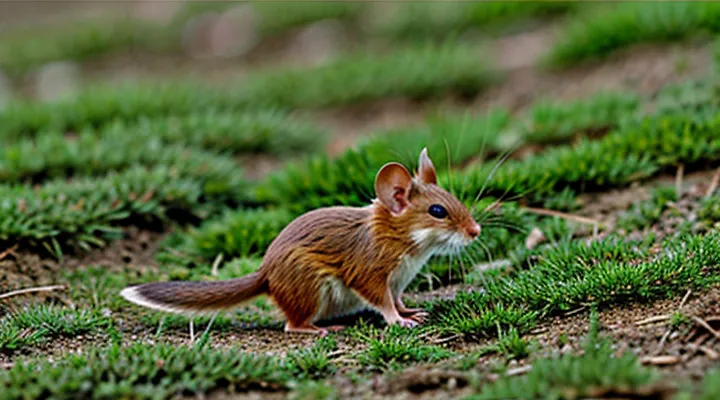
Description of the Red Field Mouse
Physical Characteristics
Size and Weight
The red field mouse exhibits a compact build suited to its grassland environment. Adult individuals display a body length ranging from 70 mm to 95 mm, with tail length typically extending 55 mm to 80 mm, resulting in a total length of approximately 125 mm to 175 mm. Weight measurements fall between 15 g and 25 g, reflecting slight variations linked to seasonal food availability.
Key dimensions:
- Body length: 70–95 mm
- Tail length: 55–80 mm
- Total length: 125–175 mm
- Weight: 15–25 g
These metrics provide a baseline for field identification and ecological research concerning the species’ habitat preferences and population dynamics.
Fur Color and Texture
The red field mouse exhibits a distinctive fur palette that ranges from deep reddish‑brown on the dorsal surface to a lighter, gray‑ish tone on the ventral side. The dorsal hairs contain a high concentration of pheomelanin, producing the characteristic reddish hue, while the ventral fur lacks this pigment, resulting in a paler appearance. Seasonal molting may introduce a subtle shift toward a more muted brown during winter months, enhancing camouflage in leaf litter and low vegetation.
Fur texture combines several functional attributes. The outer guard hairs are coarse, relatively long, and water‑repellent, forming a protective barrier against moisture and debris. Beneath this layer, a dense undercoat of fine, soft fibers provides insulation, maintaining body temperature across temperature fluctuations typical of temperate habitats. The overall hair length averages 7–10 mm on the back and 4–6 mm on the belly, with the undercoat comprising up to 70 % of the total fur mass.
Key characteristics of the species’ pelage:
- Dorsal coloration: reddish‑brown, pigmented by pheomelanin.
- Ventral coloration: pale gray, low pigment concentration.
- Guard hairs: coarse, water‑repellent, 7–10 mm length.
- Undercoat: fine, insulating, 4–6 mm length, high density.
- Seasonal variation: winter molt yields darker, denser fur.
These attributes contribute to the mouse’s ability to blend into grassy fields and to regulate thermal balance in its native environments.
Distinctive Features
The red field mouse displays a suite of morphological traits that separate it from other rodent species inhabiting temperate grasslands.
- Small body length, typically 70–95 mm, with a proportionally long tail exceeding body length by 10–20 mm.
- Dorsal pelage rich in reddish‑brown tones, contrasting sharply with a pale, almost white ventral surface.
- Large, rounded ears covered in sparse fur, enhancing auditory detection of predators.
- Prominent, whiskered muzzle; vibrissae extend laterally to aid navigation through dense vegetation.
- Hind feet equipped with elongated digits and well‑developed pads, providing agility for rapid, erratic leaps.
Physiological and behavioral characteristics further reinforce its distinctiveness. The species possesses a high metabolic rate, reflected in frequent foraging bouts during crepuscular periods. Reproductive cycles peak in late spring, with litters averaging five to eight offspring, each born altricial and rapidly attaining independence. Burrow architecture consists of shallow, branching tunnels lined with shredded grasses, offering protection against temperature fluctuations and aerial threats. These combined features establish the red field mouse as a uniquely adapted occupant of open field ecosystems.
Behavioral Traits
Diet and Foraging
The red field mouse consumes a varied diet that combines plant material and animal prey. Primary components include seeds, grains, and grasses, while insects, spiders, and small arthropods supplement protein intake.
Foraging occurs chiefly during twilight and nighttime hours. Individuals move close to the ground, exploiting cover of vegetation and leaf litter. Search patterns are systematic, involving short, rapid scurries followed by pauses to assess food patches. Burrow entrances serve as staging points for outward excursions.
Seasonal shifts influence dietary composition. In spring and summer, seed abundance and herbaceous growth provide ample carbohydrate sources. Autumn sees increased reliance on stored seeds and fallen nuts. Winter prompts greater intake of invertebrates uncovered beneath snow or within insulating debris.
Typical food items:
- Wild grasses and herbaceous shoots
- Wheat, barley, and other cereal seeds
- Sunflower and thistle seeds
- Beetles, moth larvae, and springtails
- Earthworms and small arachnids
Energy demands for reproduction and thermoregulation drive the mouse to cache surplus seeds in underground chambers, ensuring access during periods of scarcity.
Social Structure
The red field mouse exhibits a predominantly solitary organization, with individuals occupying distinct home ranges that overlap minimally. Males defend territories that encompass the nesting sites of several females, establishing a hierarchical structure based on aggressive encounters. Breeding season intensifies territorial behavior, prompting males to patrol perimeter boundaries and emit ultrasonic vocalizations to deter rivals.
Key aspects of the social system include:
- Home‑range fidelity: individuals maintain consistent spatial use throughout the year.
- Male dominance: larger, more aggressive males secure superior territories and gain greater access to receptive females.
- Female nesting clusters: females construct nests within protected microhabitats, often near dense vegetation that offers concealment.
- Seasonal variation: social interactions intensify during the reproductive period and diminish when resources are scarce.
Juvenile dispersal occurs shortly after weaning, with young mice leaving natal areas to establish independent ranges, thereby reducing inbreeding risk and promoting gene flow across populations.
Activity Patterns
The red field mouse exhibits a predominantly nocturnal activity cycle, with peak foraging occurring during the first three hours after sunset. Light avoidance reduces predation risk, while the cooler night temperatures favor metabolic efficiency. Seasonal shifts modulate this pattern: in summer, activity peaks extend into twilight hours, whereas in winter the mouse shortens its active period to conserve energy. Home‑range excursions are confined to a radius of 30–50 m, and individuals maintain a strict territorial boundary marked by scent glands.
Key aspects of the species’ daily routine include:
- Night‑time foraging on seeds, insects and green material.
- Crepuscular scouting for nesting sites during dawn and dusk.
- Mid‑day rest within burrows, characterized by reduced locomotion and lowered body temperature.
- Seasonal torpor in colder months, limiting activity to brief intervals for food acquisition.
Habitat of the Red Field Mouse
Geographical Distribution
Native Range
The red field mouse inhabits a broad swath of temperate Eurasia, extending from central and eastern Europe to western Siberia. Its distribution includes:
- Poland, Czech Republic, Slovakia, and Hungary
- The Baltic states (Estonia, Latvia, Lithuania)
- Northern and central Russia, reaching the Ural Mountains
- Parts of the Balkans, notably Serbia and Bosnia‑Herzegovina
Populations are concentrated in open grasslands, agricultural fields, and steppe habitats where soil conditions remain moist. The species avoids dense forest interiors and high‑altitude zones, favoring low‑lying terrains that provide ample cover and foraging opportunities. «The native range of the red field mouse reflects adaptation to continental climates with cold winters and warm summers, supporting its widespread presence across the described regions.»
Current Distribution
The red field mouse occupies a broad swath of temperate Eurasia, extending from western Europe through the Caucasus to central Asia. Populations are concentrated in agricultural landscapes, grasslands, and open forest edges where suitable cover and food resources exist.
- Western Europe: United Kingdom, France, Belgium, the Netherlands, and Germany.
- Central Europe: Poland, Czech Republic, Slovakia, Austria, and Hungary.
- Eastern Europe: Belarus, Ukraine, and western Russia.
- Caucasus region: Georgia, Armenia, and parts of southern Russia.
- Central Asia: Kazakhstan, Uzbekistan, and northern Turkmenistan.
Recent surveys indicate a gradual northward shift in the species’ range, likely linked to climate warming and land‑use changes. Data compiled by the European Mammal Monitoring Programme and national biodiversity inventories confirm stable or expanding populations in most of the listed areas, while isolated declines appear in highly urbanized zones lacking adequate habitat.
Preferred Environments
Forested Areas
The red field mouse inhabits a variety of environments, yet forested areas provide essential resources for its survival. Dense canopy cover moderates temperature fluctuations, creating a stable microclimate that supports the species’ activity patterns. Understory vegetation supplies both shelter and foraging opportunities, while fallen leaf litter offers protection from predators and a substrate for nesting.
Key characteristics of forested habitats relevant to the red field mouse include:
- Mixed deciduous and coniferous stands that generate diverse seed and insect populations.
- Moist, well‑drained soils rich in organic matter, facilitating burrow construction.
- Presence of coarse woody debris, which creates additional refuges and foraging niches.
- Seasonal variation in understory density, influencing movement corridors and territorial boundaries.
Geographically, the mouse occupies temperate woodlands across Europe and western Asia, favoring regions where open glades intersect with denser thickets. Population density tends to increase in mosaic landscapes that combine clearings with dense cover, allowing efficient exploitation of both ground‑level food sources and protective cover.
Reproductive success correlates with the availability of suitable nesting sites within leaf litter and low vegetation. High-quality forested habitats support multiple breeding cycles per year, contributing to stable local populations. Conservation of these woodlands, therefore, directly influences the long‑term viability of the species.
Grasslands and Fields
The red field mouse (Apodemus agrarius) is a small, reddish‑brown rodent with a head‑body length of 7–10 cm and a tail of comparable length. Its dorsal pelage provides camouflage among herbaceous stems, while the ventral side is paler. Distribution spans temperate regions of Europe and Asia, where the species occupies open terrestrial environments.
Grasslands and cultivated fields constitute the principal landscape for this rodent. These habitats share several defining features:
- Dense herbaceous cover that offers concealment from aerial predators.
- Soil composition ranging from loamy to sandy textures, facilitating burrow excavation.
- Seasonal fluctuations in plant height and density, influencing foraging opportunities.
- Presence of seed‑bearing grasses and annual herbs that constitute the bulk of the mouse’s diet.
Adaptations to these environments include a flexible diet of seeds, insects, and green vegetation, and the construction of shallow burrows beneath surface litter. Reproductive cycles align with peak resource availability in late spring and early summer, resulting in multiple litters per year. Seasonal dispersal occurs when field conditions become unsuitable, prompting temporary migration to adjacent hedgerows or woodland edges.
Within the ecosystem, the red field mouse contributes to seed predation and dispersal, affecting plant community composition. It also serves as prey for a range of predators, including raptors, foxes, and mustelids, thereby supporting trophic dynamics in open habitats.
Agricultural Lands
The red field mouse frequently occupies cultivated areas, where open fields and crop residues provide shelter and foraging opportunities. Its distribution aligns with regions where cereals, legumes, and root vegetables dominate the landscape, offering abundant seed and insect prey.
Fields with well‑drained soils and moderate vegetation cover support higher densities of the species. Seasonal tillage creates temporary burrow sites, while hedgerows and field margins supply additional protection from predators. The mouse’s nocturnal activity reduces exposure to human disturbance and aligns with the timing of seed dispersal.
Feeding habits adapt to the agricultural environment: grains and stored seeds constitute the primary diet, supplemented by arthropods found among crop residues. Nest construction utilizes available plant material, often incorporating shredded stalks and husks to reinforce underground chambers.
Impact on cultivated land includes:
- Consumption of seeds and seedlings, which can lower crop yields during peak reproductive periods.
- Provision of prey for raptors, owls, and barn owls, contributing to the biological control of insect pests.
- Influence on soil aeration through burrowing activity, enhancing water infiltration and nutrient cycling.
Management practices such as crop rotation, controlled mowing, and maintenance of field margins can mitigate negative effects while preserving the ecological functions associated with the species.
Nesting and Burrows
Burrow Construction
The red field mouse constructs underground chambers that serve as shelters, nesting sites, and food storage areas. Burrow entrances are typically located at the base of grasses or beneath low vegetation, providing immediate concealment from predators.
Burrow architecture consists of a primary tunnel leading to a central nesting chamber, often accompanied by subsidiary tunnels that connect to secondary chambers. The main tunnel measures 5–10 cm in diameter and extends 30–80 cm in length, while nesting chambers are enlarged to accommodate a small family group.
Construction techniques include:
- Excavation of loose soil using forelimb claws and incisors; displaced material is pushed outward to form a modest mound.
- Compaction of tunnel walls by rhythmic back‑foot pressure, which stabilizes the passage and reduces collapse risk.
- Lining of nesting chambers with shredded plant stems, dried grasses, and collected fur, creating an insulated environment.
Seasonal variation influences burrow depth; during winter, tunnels are extended deeper, reaching up to 50 cm below the surface to maintain stable temperatures. The network of tunnels also facilitates efficient foraging, allowing rapid access to surrounding fields without exposing the animal to open ground.
Nesting Materials
The red field mouse constructs nests primarily for thermoregulation, protection from predators, and rearing offspring. Nests are assembled from locally available resources, reflecting the species’ adaptability to diverse environments.
Typical components include:
- Dry grasses harvested from meadow margins;
- Fine plant fibers such as wheat straw or barley husks;
- Soft bark fragments from low‑lying shrubs;
- Moss and lichens collected in damp microhabitats;
- Small amounts of animal-derived material, for example, feathers or fur, incorporated when accessible.
Material selection prioritizes insulation properties, structural stability, and ease of manipulation. Dry grasses and plant fibers provide a lightweight yet cohesive matrix, while moss contributes moisture regulation. Occasional inclusion of animal matter enhances nest warmth and may deter ectoparasites. The resulting structure is compact, often situated under dense vegetation, within burrow entrances, or concealed in ground litter.