
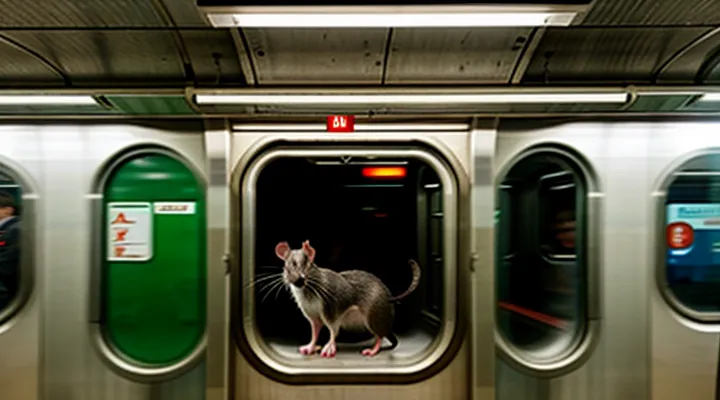
The Allure of the Underground: Why Rats Choose Subways
Food Sources and Waste Management
The Role of Human Activity
Human waste disposal practices create abundant food sources for subway rodents. Unsealed trash containers, overflowing litter bins, and irregular collection schedules leave organic material accessible in stations and tunnels, encouraging rats to establish foraging routes.
Maintenance activities shape the physical environment. Routine repairs often involve opening access points such as ventilation shafts, cable trays, and maintenance hatches. When these openings are not promptly resealed, they become permanent ingress routes that rats exploit to move between surface and underground levels.
Construction and renovation work disturb existing habitats. Excavation generates debris and displaces established colonies, forcing rats to seek new nesting sites within the transit infrastructure. Temporary barriers erected during projects may be inadequate, allowing rodents to bypass them.
Human movement patterns contribute to passive transport. Commuters inadvertently carry rats or their droppings on shoes, bags, and clothing when stepping onto platforms that are not regularly cleaned. This mechanical transfer introduces rodents to previously uninfested stations.
Key human‑driven factors include:
- Improper waste management
- Incomplete sealing of service openings
- Construction‑induced habitat displacement
- Inadequate cleaning of passenger footwear and belongings
Mitigating these influences requires systematic waste containment, rigorous inspection and sealing of all access points, coordinated construction protocols that include rodent‑proof barriers, and regular decontamination of high‑traffic surfaces. By addressing each element, transit authorities can reduce the prevalence of rats within underground transport networks.
Underground Waste Disposal Practices
Underground waste disposal practices determine the availability of food and shelter for rodents that infiltrate subway systems. Improper handling creates pockets of organic matter that attract rats, while efficient removal reduces the incentive for colonization.
Typical procedures include:
- Closed, metal refuse containers placed at platform edges.
- Daily collection by dedicated service crews, often during off‑peak hours.
- Separate bins for recyclables, hazardous waste, and organic debris to prevent cross‑contamination.
- Limited on‑site compactors that compress waste before transport to surface facilities.
Weak points in current operations:
- Overflow of bins during peak periods, exposing garbage to the environment.
- Manual transfer of bags near platform edges, increasing spillage risk.
- Inconsistent sealing of containers, allowing rodents to gnaw openings.
- Absence of real‑time monitoring systems to detect bin fill levels.
Effective measures to mitigate rodent access:
- Install pneumatic tube networks that convey waste directly to surface collection points, eliminating on‑site storage.
- Use tamper‑proof lids with rat‑resistant hinges on all containers.
- Implement sensor‑driven alerts that trigger additional collection when bins reach 80 % capacity.
- Conduct quarterly inspections of waste routes, focusing on potential gaps where rodents could establish nests.
By enforcing stringent disposal protocols, subway authorities can limit food sources, thereby reducing the frequency of rat incursions into underground transport networks.
Entry Points and Infiltration Strategies
Cracks, Crevices, and Structural Weaknesses
Rats infiltrate underground rail systems primarily through gaps in the built environment. Structural imperfections such as fissures in concrete walls, loose joint sealants, and deteriorated brickwork create continuous pathways from street level to tunnels. These openings often result from aging infrastructure, water infiltration, and vibration‑induced stress.
Key entry mechanisms include:
- Cracks in tunnel lining – micro‑fractures expand under pressure, allowing rodents to wedge through.
- Crevices around utility penetrations – gaps surrounding pipes, cables, and ventilation ducts serve as direct conduits.
- Weaknesses at station interfaces – poorly sealed platform edges, stairwell landings, and elevator shafts provide easy access points.
Once inside, rats exploit the same defects to move laterally, reach service rooms, and access food sources. Accumulated debris in these voids offers shelter and nesting material, reinforcing the infestation cycle.
Mitigation requires systematic identification and sealing of all openings. Techniques involve:
- Conducting laser‑scanning surveys to map fissure networks.
- Applying high‑strength epoxy or cementitious grout to fill gaps.
- Installing stainless‑steel mesh or metal flashing at utility junctions.
- Implementing regular inspection cycles to detect emerging cracks before they enlarge.
By addressing structural vulnerabilities, transit authorities can significantly reduce rodent ingress without reliance on chemical controls.
Ventilation Systems and Utility Tunnels
Ventilation shafts connect the surface environment to the underground network, providing a direct conduit for rodents. Open grates, insufficiently sealed dampers, and gaps around maintenance hatches allow rats to travel from street level into air ducts. Once inside, the ducts intersect with station corridors and platform tunnels, creating unobstructed pathways to passenger areas.
Utility tunnels, which house electrical, water, and communication lines, also serve as hidden corridors. Access points such as manholes, service doors, and pipe junctions often lack robust barriers. Rats exploit these openings, moving laterally between service shafts and emerging in station backrooms, stairwells, or directly onto platforms.
Common vulnerabilities include:
- Unscreened ventilation grilles
- Damaged or misaligned duct seals
- Unlocked utility access doors
- Poorly maintained manhole covers
- Gaps around conduit penetrations
Mitigation requires sealing entry points, installing rodent‑proof screens, and conducting regular inspections of all service openings. Continuous monitoring of airflow and utility tunnel integrity reduces the likelihood of rodent intrusion throughout the underground transport system.
Subway Car Access and Human Commuters
Rats reach subway cars primarily through the interface between the train and the platform. When doors open, a narrow clearance remains between the car body and the platform edge; rodents exploit this gap to slip inside. The pressure differential created by the train’s movement also draws air—and small animals—into the carriage.
Human commuters contribute unintentionally. Passengers often hold doors open longer than necessary, allowing rats to follow the flow of people onto the train. Luggage and bags placed near doorways provide additional cover for rodents, masking their presence from quick visual detection. Crowded conditions reduce the likelihood that a commuter will notice a small animal entering the vehicle.
Key mechanisms facilitating rat access:
- Door clearance: gaps of 1–2 cm are sufficient for a rat to pass.
- Airflow dynamics: pressure changes draw rodents toward the interior.
- Extended door dwell time: longer openings increase opportunity for entry.
- Obstructive items: bags, strollers, and personal belongings create concealment zones.
- Crowd density: high passenger volume limits visual monitoring of each doorway.
Mitigation requires precise control of door operation, regular inspection of clearance tolerances, and passenger awareness campaigns that discourage propping doors open and encourage clear pathways around entry points.
Life Below: Rat Behavior and Adaptation in the Subway Environment
Shelter and Nesting Locations
Abandoned Tunnels and Maintenance Areas
Abandoned tunnels and maintenance zones form a continuous network that links surface sewers, utility corridors, and operational tracks. Their infrequent inspection and limited lighting create an environment where rodents can move undetected between distant sections of the system.
Structural characteristics that facilitate rodent movement include:
- Open grates and unfinished shaft covers that lack secure seals.
- Damp, unswept surfaces providing shelter and water sources.
- Direct connections between utility tunnels and passenger platforms through service doors left ajar for staff access.
Rats exploit these features by:
- Entering through unsecured maintenance doors during low‑traffic periods.
- Traveling along drainage pipes that intersect with abandoned passages.
- Nesting in isolated chambers where cleaning crews seldom reach.
Mitigation efforts focus on sealing access points, installing rodent‑proof barriers on maintenance hatches, and scheduling regular inspections of dormant tunnels. Consistent application of these measures reduces the likelihood that neglected infrastructure serves as a conduit for rodent infiltration into the underground transport network.
Station Infrastructure as Habitat
Station infrastructure offers rats a range of micro‑habitats that support survival and reproduction. Structural cavities, such as gaps between platform tiles, service ducts, and expansion joints, protect rodents from predators and harsh weather. The constant temperature, typically between 15 °C and 20 °C, reduces metabolic stress and extends breeding cycles.
Materials used in construction contribute to habitat suitability. Corrugated metal, concrete rubble, and insulation foam provide nesting substrates that retain warmth and moisture. Drainage systems accumulate organic debris, creating food caches that sustain colonies during low‑traffic periods.
Maintenance practices unintentionally create access points. Infrequent cleaning of trash receptacles leaves residual waste that attracts foraging rats. Faulty door seals on service elevators and ventilation shafts permit movement between stations, linking isolated populations into larger networks.
Key infrastructure elements that function as rat habitats include:
- Platform edge gaps: shelter and escape routes.
- Electrical conduit bays: nesting sites insulated from vibration.
- Storm‑water pits: water source and food accumulation zone.
- Maintenance tunnels: corridors for inter‑station travel.
Understanding these physical features enables targeted interventions, such as sealing openings, reinforcing vulnerable structures, and redesigning waste collection to limit resource availability.
Reproductive Cycles and Population Dynamics
Rats thrive in underground rail networks because the environment supplies shelter, food residues, and limited predation. Their ability to maintain sizable colonies depends largely on reproductive timing and the factors that influence population change.
The species’ reproductive cycle is rapid. Females can conceive after a 30‑day interval following birth, gestation lasts approximately 21 days, and litters average six to twelve pups. This schedule permits multiple generations within a single year, especially when ambient temperature remains stable in tunnel sections. Seasonal variations have limited impact; the constant climate of subway tunnels eliminates the winter slowdown observed in surface populations.
Population dynamics are governed by birth rates, mortality, immigration, and emigration. Key drivers include:
- Resource availability – food waste and water seepage raise survivorship of juveniles.
- Space constraints – tunnel geometry limits colony expansion, prompting dispersal to adjacent stations.
- Control interventions – baiting, trapping, and structural repairs increase mortality and reduce recruitment.
- Human traffic – high passenger flow introduces additional food sources, indirectly boosting reproductive output.
When birth rates exceed losses, colony size follows an exponential curve until density‑dependent factors, such as competition for nesting sites, curb growth. Effective management requires monitoring reproductive indicators (e.g., proportion of pregnant females) and adjusting control measures before populations reach infestation thresholds.
Coexistence and Conflict: Rats and Humans in the Subway
Impact on Infrastructure
Rats inhabiting subway tunnels create direct threats to the physical components of the system. Their gnawing activity damages insulated wiring, causing short circuits and forcing premature replacement of cables. Burrowing undermines concrete slabs and track ballast, leading to misalignment of rails and increased risk of derailments. Accumulated droppings corrode metal surfaces, accelerate rust on structural beams, and contaminate ventilation ducts, reducing airflow efficiency.
The resulting operational consequences are measurable:
- Service interruptions lasting from minutes to several hours due to equipment failure.
- Escalated maintenance budgets, with repair costs often exceeding initial construction expenses.
- Diminished lifespan of critical assets such as signaling equipment, power conduits, and track infrastructure.
- Heightened health and safety concerns for staff and passengers, prompting additional cleaning protocols and pest‑control expenditures.
Mitigation requires systematic inspection, reinforced material selection, and integrated rodent‑management programs to preserve infrastructure integrity and maintain reliable transit service.
Health Concerns and Disease Transmission
Rats inhabiting underground rail networks pose significant public‑health risks. Their presence increases exposure to pathogens that can be transferred directly through bites or indirectly via contaminated surfaces, food sources, and air currents.
Key disease agents associated with subway rodents include:
- Leptospira spp. – bacteria causing leptospirosis, transmitted through urine that contaminates water or surfaces.
- Salmonella enterica – bacteria responsible for salmonellosis, spread when rats contaminate food handling areas.
- Hantavirus – virus linked to hemorrhagic fever with renal syndrome, released in aerosolized rodent excreta.
- Yersinia pestis – bacterium causing plague, historically associated with rodent fleas; occasional urban cases still documented.
- Streptobacillus moniliformis – agent of rat‑bite fever, introduced through puncture wounds.
Transmission pathways extend beyond direct contact. Rat droppings, urine, and fur shed microbial particles that settle on platform tiles, train interiors, and ventilation ducts. Mechanical cleaning that fails to eliminate residues may redistribute contaminants, raising infection probability for commuters and staff.
Mitigation measures must address both population control and environmental sanitation. Integrated pest‑management programs combine baiting, trapping, and habitat modification with routine disinfection of high‑traffic zones. Monitoring rodent activity through trap counts and pathogen testing provides data for targeted interventions, reducing the likelihood of outbreak clusters linked to underground transit systems.