
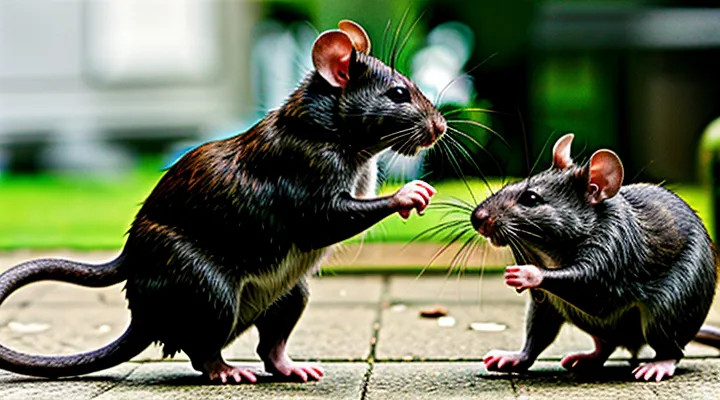
«Why Distinguish Between Fighting and Playing?»
«Impact on Rat Welfare»
Distinguishing aggressive encounters from playful interactions directly influences the health and psychological state of laboratory and pet rats. Accurate identification prevents unnecessary interventions that could exacerbate stress, while enabling appropriate enrichment that supports natural behavior.
Physical injury is the most immediate welfare concern during fights. Bite wounds, bruises, and broken teeth often require veterinary care and can lead to infection. In contrast, play typically involves light bites and chasing that do not result in tissue damage.
Behavioral and physiological markers differentiate the two states:
- Elevated corticosterone levels indicate chronic stress, commonly associated with unresolved aggression.
- Frequent vocalizations with sharp, high‑frequency tones accompany fighting; soft chirps accompany play.
- Post‑conflict grooming increases after play, whereas avoidance or prolonged immobility follows fights.
When play is correctly recognized, it contributes positively to welfare. It promotes social bonding, improves motor coordination, and reduces anxiety. Structured play opportunities, such as tunnels and chew toys, enhance environmental enrichment and lower the incidence of aggression.
Failure to differentiate these behaviors can lead to misdirected handling, unnecessary isolation, or removal of beneficial stimuli. Caretakers who apply precise observational criteria reduce injury rates, maintain stable social hierarchies, and foster a healthier, more resilient rat population.
«Owner Responsibility»
Owners must recognize that interpreting rat interactions directly affects animal welfare and legal compliance. Accurate assessment prevents unnecessary injury, reduces stress, and fulfills ethical obligations.
- Monitor postures: upright bodies, raised fur, and side‑by‑side lunges usually indicate aggression; relaxed arches, mutual grooming, and synchronized chasing suggest play.
- Provide ample space: overcrowding increases competition, heightening the likelihood of confrontations.
- Supply enrichment: tunnels, chew toys, and climbing structures channel energy into constructive activities, lowering aggression triggers.
- Separate unfamiliar individuals: introduce new rats gradually in neutral territory to avoid territorial disputes.
- Intervene when signs of genuine fighting appear: separate the animals, assess injuries, and consult a veterinarian promptly.
- Record observations: note time, duration, and specific behaviors to identify patterns and adjust management strategies accordingly.
Consistent application of these practices ensures owners differentiate between hostile and playful encounters, upholding responsibility for the health and safety of their rodents.
«Key Indicators of Play in Rats»
«Play Bows and Bounces»
The “bow and bounce” sequence is a distinct play pattern observed in domestic and wild rats. It begins with a lowered torso, forepaws extended forward, and a brief pause before the animal propels itself forward in a series of short hops. Vocalizations during this pattern are typically high‑pitched chirps or squeaks, lacking the guttural growls associated with aggression.
Physical markers differentiate this behavior from combat. In a play bow, the rat’s ears remain relaxed, whiskers are spread, and the tail is held loosely. The subsequent bounces are rhythmic, with the animal’s body flexing fluidly. By contrast, fighting rats display rigid bodies, clenched jaws, and rapid, erratic lunges. Their vocal output is dominated by low, throaty snarls, and the tail is often raised or curled tightly.
Key observations for caretakers:
- Lowered posture with forepaws extended forward.
- Immediate transition to a series of light, repetitive hops.
- Soft, high‑frequency vocalizations.
- Relaxed ear and whisker position.
- Absence of teeth clenching or biting attempts.
When these criteria are met, the interaction should be classified as play rather than conflict. Recognizing the “bow and bounce” pattern enables accurate assessment of social dynamics and prevents unnecessary intervention.
«Chasing and Pouncing»
Chasing and pouncing are common actions in rat interactions, yet they convey distinct intentions depending on context. When a rat initiates a rapid pursuit, the body remains relaxed, ears are forward, and the tail is loosely curled. The chase ends with a gentle collision or brief contact, after which both animals often engage in mutual grooming or sit side‑by‑side. This pattern signals a playful exchange.
Conversely, aggressive chasing displays heightened tension. The pursuer holds its back arched, fur may appear raised, and the tail is stiff. The chase culminates in a forceful bite or a clamp on the opponent’s neck, followed by a defensive posture such as hissing or retreat. These cues indicate hostility rather than recreation.
Key observable differences:
- Posture – relaxed spine vs. arched back.
- Tail – loosely curved vs. rigid and elevated.
- Ear position – forward and relaxed vs. pinned back.
- Outcome – brief, non‑injurious contact vs. bite or clamp.
- Subsequent behavior – grooming or resting together vs. vocal threats or escape.
Recognizing these elements enables accurate interpretation of whether rats are engaging in a harmless game of chase and pounce or escalating toward conflict.
«Wrestling and Tumbling»
Rats often engage in close‑body contact that can appear similar to human wrestling, yet the underlying intent differs. Recognizing whether the interaction is aggressive or recreational requires attention to specific behavioral cues.
During a genuine fight, rats exhibit:
- Rigid posture with back arches and tail held stiffly.
- Rapid, forceful bites aimed at vulnerable areas such as the neck or flank.
- Loud, high‑pitched vocalizations (squeals) that persist throughout the encounter.
- Repeated attempts to dominate, including pushing the opponent out of a confined space.
In contrast, playful wrestling displays:
- Loose, relaxed bodies with occasional rolling or somersaulting.
- Gentle nibbles or mouth contacts that do not target sensitive regions.
- Soft chirps or low‑volume chatter interspersed with pauses.
- Frequent role reversal, where each rat takes turns being the “attacker” and the “defender.”
Additional indicators help refine the assessment:
- Duration: fights typically last seconds to a few minutes; play sessions can extend for several minutes with intermittent breaks.
- Recovery: after a fight, the loser often retreats and isolates; after play, both participants resume normal activities together.
- Grooming: post‑play grooming is common, while post‑fight grooming is rare.
By systematically observing posture, vocalizations, bite intensity, role dynamics, and post‑interaction behavior, observers can accurately differentiate between hostile confrontations and amicable wrestling among rats. This distinction is essential for proper handling, welfare assessment, and research interpretation.
«Mouthing and Nibbling (Gentle Bites)»
Mouthing and nibbling are common interactions among rats. When a rat gently closes its teeth around a partner’s skin or fur and releases quickly, the action is typically a low‑intensity bite that does not cause injury. The behavior can serve as a tactile exploration, a way to test boundaries, or a playful gesture.
Key differences between playful and aggressive gentle bites include:
- Pressure – Play bites are soft, often described as a “kiss‑like” pressure, whereas aggressive bites feel tighter and may leave marks.
- Duration – In play, the bite lasts only a fraction of a second before the rat lets go; aggression involves a prolonged grip.
- Body language – Play is accompanied by relaxed posture, wagging whiskers, and occasional chirping. Aggression shows a stiff body, raised fur, and a direct stare.
- Context – Gentle bites occurring during mutual grooming, chasing, or after a bout of wrestling usually indicate play. The same action during a territorial dispute or when food is involved often signals hostility.
Owners should observe the surrounding signals before interpreting a nibble. If the rat’s overall demeanor is calm, ears are forward, and the interaction is reciprocal, the bite is likely a friendly invitation to continue play. If the rat displays defensive posturing, hisses, or attempts to bite again without release, the behavior should be treated as a warning sign of escalating aggression. Promptly separating the animals and providing enrichment can reduce the risk of harmful confrontations.
«Vocalizations During Play»
Vocalizations provide a reliable indicator when rats engage in play rather than aggression. During play, rats emit short, high‑frequency chirps and squeaks that differ markedly from the deep, prolonged growls typical of fights. These sounds are usually produced when one rat initiates a chase or a mock bite, and they cease abruptly when the interaction ends, reflecting the transient nature of playful encounters.
Key acoustic features of play vocalizations include:
- Pitch: high, often above 30 kHz, audible as brief chirps.
- Duration: less than half a second per utterance.
- Rhythm: irregular bursts synchronized with rapid, light‑hearted movements.
- Contextual cues: accompanied by loose body posture, exaggerated tail flicks, and non‑threatening lunges.
In contrast, aggressive vocalizations are characterized by:
- Lower pitch, ranging from 10–20 kHz.
- Sustained growls lasting one second or more.
- Steady, monotonic patterns that persist throughout the encounter.
- Accompanied by stiff bodies, flattened ears, and direct, forceful bites.
Observing the combination of sound type, timing, and associated body language enables accurate discrimination between playful and combative behavior in rats.
«Mutual Grooming After Interaction»
Mutual grooming observed immediately after a rat encounter signals a transition from a potentially aggressive exchange to a cooperative state. The behavior involves one animal cleaning the fur, whiskers, or paws of its partner, often while both remain in close proximity. This reciprocal activity reduces tension, reinforces social bonds, and typically follows a series of low‑intensity chases or mock bites that lack the escalation characteristic of genuine combat.
Key indicators that grooming reflects play rather than conflict include:
- Simultaneous, alternating grooming bouts without signs of blood or deep wounds.
- Continued vocalizations of high‑frequency chirps, which are common in playful interactions.
- Absence of sustained aggressive postures such as flattened ears, rigid backs, or prolonged lunging.
- Rapid resumption of exploratory behavior after grooming, indicating a relaxed state.
When grooming occurs after an encounter, it serves as a reliable cue that the animals have resolved any competitive tension and are engaging in affiliative behavior rather than continuing a fight.
«Key Indicators of Fighting in Rats»
«Aggressive Postures»
Aggressive postures in rats are characterized by a set of visual cues that signal intent to dominate or attack. When a rat adopts a low, crouched stance, the spine arches and the tail is raised straight upward. The ears are flattened against the head, and the eyes appear wide with a focused gaze. Muscles in the forelimbs tense, and the animal may brandish its teeth, exposing the incisors without actually biting.
Key aggressive indicators include:
- Lateral flattening of the ears – ears pressed tightly to the skull.
- Elevated, rigid tail – held straight, often flicking in a rigid motion.
- Arched back – spine curves upward, creating a pronounced silhouette.
- Baring of teeth – incisors visible, sometimes accompanied by a guttural growl.
- Stiff, forward‑leaning posture – body weight shifted onto the forepaws, ready to lunge.
These signals contrast sharply with playful behavior, where the tail is relaxed, ears are forward, and the body remains loose. Recognizing aggressive postures enables accurate assessment of whether rats are engaged in combat or merely interacting socially.
«Loud Squeals and Screams»
Loud, high‑pitched squeals and sustained screams are primary auditory cues for assessing whether two rats are engaged in aggression or play.
When the sounds are abrupt, sharp, and accompanied by rapid, irregular breathing, they usually signal a fight. The vocalizations rise in intensity within seconds, often reaching a peak frequency above 20 kHz that is audible to humans as a piercing scream. These noises coincide with visible signs such as upright postures, bared teeth, and lunging movements. The duration is typically brief, lasting from a few seconds to a minute, and the amplitude fluctuates with each aggressive bite or chase.
In contrast, playful vocalizations are longer, more rhythmic, and lower in pitch. Rats emit a series of repetitive squeaks that maintain a steady frequency around 10–15 kHz. The sounds are less harsh, resembling chirps rather than screams, and they persist throughout a session of mutual chasing or gentle wrestling. Play vocalizations often occur while the animals display relaxed bodies, loose fur, and frequent pauses for grooming or sniffing.
Key differences can be summarized:
- Pitch: aggressive screams – high, sharp; playful squeals – moderate, rhythmic.
- Pattern: aggressive – irregular bursts; playful – consistent, repetitive.
- Accompanying behavior: aggression – lunges, bites, tense posture; play – rolling, gentle nudges, grooming.
- Duration: aggression – short, intense; play – extended, sustained.
Recognizing these auditory patterns, together with visual cues, enables accurate interpretation of rat interactions without ambiguity.
«Fur Puffing and Arching»
Rats often display a distinctive change in coat and posture when they are either engaged in a contest or involved in a social interaction. The phenomenon of fur puffing—where the animal fluffs its hair along the back and tail—signals heightened arousal. When the puffing is accompanied by a pronounced arch of the spine, the observer can infer the underlying motivation by considering additional behavioral cues.
- Fur puffing alone: Typically indicates a defensive stance. The animal expands its fur to appear larger, a response to perceived threat. In isolation, this behavior rarely accompanies playful gestures such as gentle nudges or chasing without aggression.
- Fur puffing plus arching: Suggests a more intense reaction. A deep arch, coupled with a raised tail and tense muscles, often precedes a bout of fighting. The rat adopts a low, crouched position, ready to strike, and may emit sharp vocalizations.
- Fur puffing with relaxed arch: May occur during playful encounters. The arch is less severe, the body remains loose, and the rat may alternate between puffed and normal coat while engaging in mock wrestling. Vocalizations are softer, and movements are more fluid.
The presence of fur puffing should therefore be evaluated in conjunction with the curvature of the spine, tail posture, and vocal output. A sharp, steep arch and aggressive vocalizations point toward conflict, whereas a shallow arch and gentle sounds denote play.
«Side-Biting and Raking»
When observing two rats, side‑biting and raking provide reliable clues about the nature of their encounter. Side‑biting occurs when one animal clamps its teeth on the flank of the partner, often accompanied by a rigid, tense posture. The bite is directed toward the side rather than the head, and the aggressor typically holds the bite for a brief, forceful interval before releasing. This action is usually preceded by vocalizations such as high‑pitched squeaks and followed by rapid retreat or continued aggression.
Raking involves the use of the forepaws to sweep across the opponent’s body. The raker extends its claws, dragging them along the skin in a swift, repetitive motion. The movement is deliberate, with the rat maintaining a low, crouched stance and eyes fixed on the target. Raking is frequently paired with a thumping of the hind legs and a sharp, low growl, indicating a defensive or offensive stance rather than curiosity.
Key distinctions:
- Target area: side‑bite targets the flank; raking targets the back or sides with claws.
- Body tension: side‑bite shows high muscular rigidity; raking shows a more fluid, sweeping motion but with sustained tension.
- Accompanying sounds: side‑bite often includes high‑pitched squeaks; raking is linked to low growls and foot thumps.
- Duration: side‑bite is brief and punctuated; raking can persist for several seconds as the rat repeatedly sweeps.
Recognizing these patterns enables accurate assessment of whether the interaction is hostile or merely a form of social play. Consistent side‑biting and raking, coupled with defensive postures, signal aggression, whereas brief, gentle nibbles and light pawing without the described characteristics suggest playful behavior.
«Drawing Blood»
Rats may bite during both aggressive encounters and playful interactions, but the presence of blood often signals a shift from harmless mouthing to genuine hostility. When a bite penetrates the skin, arterial or capillary rupture releases blood, indicating that the animal is using its teeth as weapons rather than tools for exploration.
Physiological factors determine whether a bite draws blood. A firm grip, deep jaw closure, and sustained pressure increase tissue damage, while a brief, light nip rarely breaks the epidermis. Saliva contains anticoagulant compounds; even a small wound can bleed noticeably because clotting is delayed.
Key observations that differentiate fighting from play when blood appears:
- Wound depth – punctures exceeding a few millimeters suggest aggression; superficial scratches are typical of play.
- Body posture – lowered stance, flattened ears, and a rigid tail accompany hostile bites; relaxed posture and upright ears accompany gentle nipping.
- Vocalizations – sharp squeals or growls accompany fights; soft chirps accompany play.
- Repeated targeting – a focus on the same body part, especially the neck or limbs, indicates dominance; random, fleeting contacts indicate exploration.
When blood is observed, intervene promptly. Separate the animals, assess the injury, and apply antiseptic. Monitor for signs of infection and adjust housing conditions—adequate space, enrichment, and balanced group composition—to reduce stress that precipitates violent encounters.
«Consistent Dominance Displays»
Consistent dominance displays are a reliable indicator that a rat interaction is based on hierarchy rather than aggression. When one animal repeatedly assumes a superior posture—standing on hind legs, holding its tail upright, or maintaining a raised head—while the other yields, the behavior signals an established rank. The dominant rat typically initiates contact, directs the movement of the pair, and retains control over resources such as food or nesting material. The subordinate rarely challenges the posture and quickly retreats or adopts a submissive stance.
Key features of stable dominance behavior include:
- Repetition: the same individual repeatedly exhibits the dominant posture across multiple encounters.
- Absence of violent escalation: bites, loud squeals, or frantic chasing are minimal or absent.
- Predictable outcomes: the dominant rat consistently wins access to preferred spots without resistance.
In contrast, genuine fighting is marked by sudden, intense bursts of aggression, erratic movements, and a lack of clear hierarchical pattern. Playful bouts may involve mock fighting postures but lack the sustained, unidirectional control seen in true dominance displays. Observing the consistency and directionality of these displays allows accurate differentiation between hierarchical interaction and outright conflict.
«Avoidance and Hiding Behavior»
Avoidance and hiding are primary indicators that a rat is not engaged in play but is attempting to escape a threatening encounter. When a rat retreats to a burrow, a corner, or a concealed area, the behavior signals perceived danger rather than recreational interaction. This response appears promptly after an aggressive posture, such as raised fur, stiff tail, or teeth bared, and persists until the perceived threat subsides.
Typical manifestations include:
- Rapid retreat to the nearest shelter, even if it requires abandoning food or nesting material.
- Remaining motionless within a concealed space, with ears flattened against the head and eyes narrowed.
- Frequent glances toward the aggressor while staying out of sight, indicating vigilance without direct confrontation.
In contrast, playful rats may pause briefly before resuming activity, but they rarely seek complete concealment. Playful chases involve open movement, occasional pauses, and mutual engagement, whereas avoidance behavior eliminates contact entirely.
Observation of these patterns allows accurate differentiation between hostile and playful encounters. Recognizing the shift from active engagement to covert withdrawal prevents misinterpretation of normal social dynamics and informs appropriate handling or intervention.
«Contextual Clues for Interpretation»
«Group Dynamics»
Group dynamics shape the way rats interact, influencing whether encounters become aggressive contests or cooperative play sessions. In a stable hierarchy, dominant individuals typically initiate confrontations to reinforce status, while subordinate members avoid escalation. When the group exhibits fluid social bonds, members engage in reciprocal chasing, wrestling, and vocalizations that lack the rigid posturing of combat.
Aggressive bouts are marked by sustained lunges, rigid bodies, and sharp, high‑frequency squeaks that persist despite repeated attempts to disengage. Play interactions feature brief chases, loose body posture, and intermittent, low‑tone chirps that cease when one rat signals withdrawal by rolling onto its back or grooming the opponent. The presence of mutual grooming after a bout often signals a transition from conflict to reconciliation, a behavior absent in true fighting.
Key behavioral cues that differentiate the two contexts include:
- Duration: fights last longer than the fleeting exchanges of play.
- Body tension: stiff, upright stance indicates aggression; relaxed, floppy posture suggests play.
- Vocal pattern: harsh, continuous squeals accompany fighting; intermittent, softer chirps accompany play.
- Post‑interaction behavior: immediate grooming or close proximity follows play, whereas fighters separate and display heightened vigilance.
Understanding these dynamics enables accurate assessment of rat social behavior, supporting proper care, research interpretation, and enrichment planning.
«Individual Personalities»
Rats display distinct personality traits that shape their social interactions, making it essential to consider individual differences when interpreting whether two animals are fighting or playing.
A bold rat may initiate contact more frequently, using rapid chases and exaggerated lunges that can resemble aggression. A shy counterpart often retreats, emits high‑pitched squeaks, and avoids prolonged physical contact. Recognizing these patterns helps avoid misreading a dominant individual’s assertiveness as hostility.
Key personality indicators that influence interpretation:
- Territorial confidence – persistent scent marking, frequent exploration of shared spaces, and willingness to approach unfamiliar conspecifics.
- Social tolerance – willingness to share food, tolerate close proximity without vocal distress, and engage in reciprocal grooming.
- Playfulness – frequent mock wrestling, gentle biting with quick release, and alternating roles during bouts.
- Aggressiveness – sustained biting, forceful pinning, and vocalizations that remain elevated throughout the encounter.
When observing a pair, note each rat’s baseline behavior. A normally aggressive individual that suddenly exhibits rapid, reciprocal lunges, loose body posture, and frequent role reversal is likely engaging in play. Conversely, a usually tolerant rat that becomes rigid, emits continuous high‑frequency chattering, and shows prolonged gripping signals a genuine conflict.
Assessing personality alongside physical cues provides a reliable framework for distinguishing combat from recreation in rat interactions.
«Environmental Factors»
Environmental conditions strongly influence whether rats engage in aggression or play. Limited space forces close contact, increasing the likelihood of confrontations as individuals compete for territory. Conversely, ample enclosure area allows each rat to retreat, reducing tension and encouraging reciprocal chasing that resembles play.
Resource distribution shapes interactions. When food, water, or nesting material is scarce, rats prioritize acquisition, leading to mounting disputes. Even distribution of these essentials minimizes competition, permitting the same individuals to engage in non‑threatening bouts that involve gentle bites and mock wrestling.
Sensory cues provide additional context. Bright, fluctuating light can heighten stress, prompting defensive postures and escalated fighting. Stable, low‑intensity illumination supports calm behavior and facilitates playful exchanges. Ambient noise levels also matter; sudden loud sounds trigger alertness and aggression, while a quiet environment promotes relaxed social play.
Key environmental factors:
- Enclosure size and complexity
- Equal access to food, water, and shelter
- Consistent lighting intensity and cycle
- Controlled acoustic environment
- Temperature stability within the rats’ thermoneutral zone
Adjusting these variables creates conditions that favor playful interaction over conflict, enabling observers to differentiate between aggressive and recreational behavior reliably.
«Frequency and Intensity of Interactions»
Rats display distinct patterns in the frequency and intensity of their social contacts, which provide reliable clues for distinguishing aggression from play. Aggressive bouts occur less often but are marked by rapid escalation, sustained high‑energy movements, and repeated bouts within a short time frame. Play sessions, by contrast, are more frequent throughout the day, consist of short, intermittent bouts, and display lower overall intensity.
Key observable differences include:
- Duration: fights last several seconds to minutes without interruption; play episodes typically last a few seconds and are followed by pauses.
- Repetition: aggressive encounters may repeat with escalating force; playful interactions repeat with decreasing vigor after each bout.
- Physical force: fights involve vigorous biting, wrestling, and sustained pressure; play features light bites, gentle chases, and brief wrestling without sustained pressure.
Monitoring how often rats engage with each other and measuring the peak energy of those encounters enables accurate classification of their behavior as hostile or recreational.
«When to Intervene in Rat Interactions»
«Signs of Escalation»
Rats display distinct behavioral cues when a playful encounter begins to shift toward aggression. Recognizing these cues prevents injury and informs caretakers about social dynamics.
- Rapid, stiffened posture; the animal holds its back low and muscles tense.
- Direct, forceful bites aimed at vulnerable areas such as the neck, tail base, or abdomen rather than gentle nibbles.
- Persistent, high‑frequency vocalizations (sharp squeaks) that differ from the soft chirps of play.
- Lack of reciprocal chasing; one rat dominates the movement, forcing the other to flee or hide.
- Prolonged eye contact accompanied by dilated pupils, indicating heightened arousal.
- Aggressive grooming or biting of the opponent’s fur without the usual “rough-and-tumble” pauses.
When these signs appear, the interaction has escalated beyond harmless frolicking and requires intervention to separate the animals and re‑establish a stable hierarchy.
«Persistent Aggression»
Persistent aggression in rodents manifests as repeated, unprovoked attacks that continue despite the absence of immediate threats. Unlike brief confrontations that end quickly, this pattern persists across multiple encounters and often escalates in intensity. Observers will note a consistent focus on biting, lunging, and chasing without interruption for extended periods, sometimes lasting several minutes or more.
Physical cues differentiate chronic hostility from playful interaction. Indicators include:
- Sharp, directed bites that penetrate skin rather than gentle nibbles.
- Rigid body posture with flattened ears and a tense tail.
- Sustained vocalizations such as high‑pitched squeaks that accompany each strike.
- Lack of pause or reciprocal grooming that typically follows play bouts.
- Repeated targeting of the same individual, suggesting a dominance motive.
Behavioral context further clarifies the nature of the aggression. Persistent hostility often arises after changes in hierarchy, introduction of unfamiliar conspecifics, or inadequate environmental enrichment. The aggressor may display heightened territorial marking, increased scent‑depositing, and a refusal to share resources.
Management strategies focus on interruption and prevention. Immediate separation of the aggressor prevents injury; gradual re‑introduction under supervised conditions can restore social balance. Enrichment devices, ample nesting material, and structured feeding schedules reduce the likelihood of chronic aggression by satisfying exploratory and foraging drives. Monitoring for recurrence ensures that the behavior does not become entrenched, allowing timely intervention before severe injury occurs.
«Injuries Present»
Observing physical damage is a reliable indicator when assessing whether two rats are engaged in aggression or mutual play. Injuries typically arise from biting, clawing, or forced restraint, which are uncommon in harmless social exchanges.
- Fresh puncture wounds on the skin or tail suggest a hostile encounter.
- Deep scratches, especially on the back or hindquarters, point to combat rather than play.
- Bleeding from the mouth or nasal area indicates a serious bite, rarely seen during friendly interaction.
- Swelling or bruising around the ears, whiskers, or limbs often results from forceful grappling.
- Visible signs of blood on fur or in the environment confirm aggressive behavior.
In contrast, playful sessions may produce minor, superficial abrasions that heal quickly and lack the severity described above. Absence of blood, minimal tissue damage, and rapid recovery are characteristic of non‑violent social play.
«Introducing New Rats»
Introducing a newcomer to an established group of rats requires close observation of body language and vocalizations to determine whether the interaction is hostile or playful. Immediate assessment prevents injury and promotes social cohesion.
Aggressive encounters display a combination of specific signals: ears are flattened against the head, fur stands on end, the animal adopts a rigid stance, and rapid lunges are directed toward the opponent. High‑frequency squeals accompany bites or attempts to bite, and the tail may be held stiffly or thumped against the cage. These behaviors indicate a fight response.
Playful interactions share some outward movements but differ in tone and intent. Rats engage in gentle chasing with relaxed bodies, side‑to‑side rolling, and frequent pauses. Vocalizations are softer chirps rather than harsh squeals. Nipping is light and brief, often followed by reciprocal grooming or the offering of food. The posture remains loose, with ears partially upright and the tail loosely curled.
To introduce new rats safely, follow a structured protocol:
- Place the newcomer in a neutral enclosure separate from the resident group.
- Allow visual contact through a transparent barrier for several minutes.
- Gradually increase physical access while monitoring for the aggressive or playful cues listed above.
- Intervene immediately if stiff postures, ear flattening, or high‑frequency squeals dominate the interaction.
- Reinforce positive contact by providing shared food resources and nesting material once the animals exhibit consistent play signals.
Consistent observation of these indicators enables caretakers to distinguish combat from play and to manage introductions with confidence.
«Promoting Positive Rat Interactions»
«Adequate Space and Enrichment»
Adequate space reduces the likelihood that rats will interpret each other's movements as territorial aggression. When cages exceed the minimum recommended floor area—at least 2 sq ft per adult pair—individuals can retreat, explore, and engage in separate activities without feeling confined. This physical margin allows subtle signals, such as gentle nudges and rolling, to be recognized as play rather than a challenge for dominance.
Enrichment items amplify the distinction between combat and recreation. Providing a variety of chewable objects, tunnels, and climbing structures creates multiple focal points for interaction. Rats that have access to rotating toys or puzzle feeders tend to direct energy toward problem‑solving and cooperative exploration. In such environments, rapid chases often end with shared investigation of a new object, whereas in barren cages the same chase may quickly escalate into biting and pinning.
Key elements to implement:
- Minimum cage dimensions: 2 sq ft per adult pair, with additional vertical space for climbing.
- Daily rotation of toys: tunnels, hammocks, chew blocks, and foraging puzzles.
- Multiple hiding spots: stacked boxes, PVC pipes, or igloo shelters.
- Regular introduction of novel objects: small balls, paper rolls, or textured fabrics.
When rats have sufficient room and diverse stimuli, observers can differentiate behavior by noting:
- Play: repeated chase followed by pause, mutual grooming, and shared use of enrichment.
- Fighting: sustained biting, aggressive posturing, and avoidance of shared resources.
Ensuring proper space and enrichment thus serves as a practical method for accurately interpreting rat interactions.
«Proper Introduction Techniques»
When two rats meet, the manner in which the encounter begins often predicts whether the interaction will remain cooperative or become hostile. Proper introduction techniques set the stage for clear communication, allowing observers to identify play signals versus aggression early on.
Observe the initial body language: relaxed postures, slow tail flicks, and gentle nose-to-nose contact suggest a playful approach, while stiff limbs, raised fur, and rapid lunges indicate impending conflict. The tone of vocalizations also differs; soft chirps accompany friendly exchanges, whereas sharp squeaks accompany threats.
Effective introduction methods include:
- Neutral arena – place both animals in a clean, unfamiliar enclosure to eliminate territorial advantage.
- Gradual exposure – start with a visual barrier, then allow limited tactile contact through a mesh partition before full access.
- Timed sessions – limit the first encounter to five‑minute intervals, extending only if no signs of aggression appear.
- Supervised observation – maintain constant visual monitoring, ready to intervene at the first display of pinning, biting, or excessive chasing.
After each session, record the observed cues and adjust the protocol accordingly. If signs of stress persist, increase the length of barrier phases or introduce a third, neutral rat to diffuse tension. Consistent application of these steps creates a reliable framework for distinguishing playful behavior from fighting, enabling caretakers to manage social dynamics with confidence.
«Regular Monitoring»
Regular monitoring provides objective data that separates aggressive encounters from harmless interaction among rodents. Continuous observation eliminates reliance on anecdotal interpretation and creates a reproducible record of each pair’s behavior.
Key behavioral markers to document include:
- Vocalizations: sharp squeaks or chattering often accompany disputes, while soft chirps indicate play.
- Body posture: raised fur, stiff tail, and forward‑leaning stance signal confrontation; relaxed limbs and low‑lying posture suggest amusement.
- Contact type: biting with forceful grip and immediate retreat denotes fighting; gentle nudging or chasing without injury reflects play.
- Duration: bouts lasting several seconds with escalating intensity point to aggression; brief, repetitive sequences with frequent pauses are typical of games.
Effective monitoring follows a structured schedule:
- Conduct brief checks (2–3 minutes) every 15 minutes during active periods.
- Record observations in a standardized log, noting time, individuals, and each marker listed above.
- Supplement visual notes with video clips captured at intervals of 30 seconds, ensuring coverage of both daylight and nocturnal activity.
- Review logs weekly to identify patterns, such as recurring aggression between specific rats or consistent play among particular groups.
Consistent data collection enables early detection of escalating conflict, informs timely intervention, and supports accurate differentiation between hostile and playful conduct. The result is a reliable framework for managing rodent colonies and maintaining their welfare.