
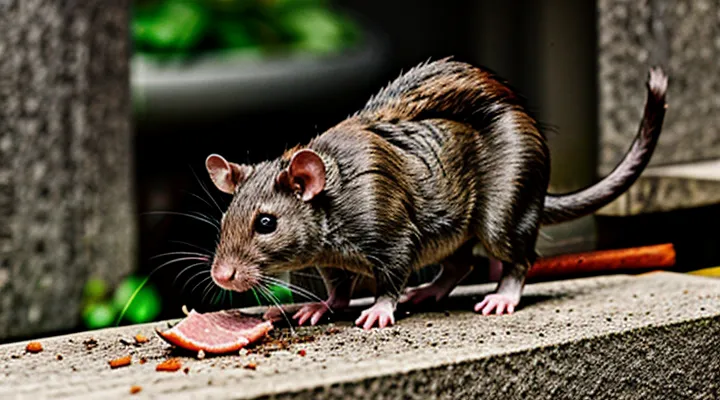
The Omnivorous Nature of Rats
Understanding Rat Diet Classification
General Dietary Habits
Rats are opportunistic omnivores, capable of digesting a wide range of foods. Their gastrointestinal tract processes both plant matter and animal protein efficiently, allowing adaptation to diverse environments.
Key aspects of rodent feeding behavior include:
- Consumption of grains, seeds, and fruits, which provide carbohydrates and essential vitamins.
- Ingestion of insects, eggs, and carrion, supplying high‑quality protein and fat.
- Scavenging of human‑derived waste, integrating processed foods and meat scraps into their diet.
- Seasonal shifts toward higher protein intake when animal prey becomes more abundant.
Laboratory studies demonstrate that rats will select meat when presented alongside plant options, showing comparable caloric preference to grains. Field observations confirm that urban populations frequently exploit discarded meat, while rural rodents supplement natural foraging with small vertebrates.
Nutritional analysis indicates that protein from animal sources contributes to faster growth rates and improved reproductive success. However, excessive reliance on meat can lead to imbalanced nutrient intake, particularly if dietary fiber is limited.
Overall, rats display flexible dietary strategies, integrating meat as a regular component when accessible, while maintaining a baseline consumption of plant materials to meet their physiological requirements.
The Role of Opportunism in Feeding
Rats demonstrate a flexible feeding strategy that allows them to exploit a wide range of food sources, including animal tissue. When carrion, insects, or small vertebrates become available, individuals quickly incorporate these items into their diet, often without prior specialization. This behavior reflects an opportunistic approach rather than a fixed carnivorous preference.
The opportunistic nature of rodent feeding is evident in several contexts:
- Scavenging: Rats locate and consume dead animals in urban waste streams, using olfactory cues to detect protein-rich remnants.
- Predation: In environments with limited plant material, they may hunt insects or small mammals, obtaining essential amino acids.
- Seasonal shifts: During periods of grain scarcity, meat sources increase in relative importance, prompting a temporary rise in protein intake.
- Human proximity: Access to pet food, laboratory specimens, or improperly stored meat products provides additional opportunities for carnivorous consumption.
These patterns illustrate that meat consumption by rats arises primarily from the immediate availability of high‑energy resources, rather than from an inherent dietary classification. Opportunism drives the inclusion of animal protein whenever ecological conditions make it advantageous.
Do Rats Actively Hunt and Kill Prey?
Evidence of Predation in Wild Rats
Small Vertebrates
Rats are opportunistic feeders capable of incorporating animal tissue into their diet. Among the vertebrate prey, small mammals, amphibians, reptiles, and juvenile birds represent the most frequently reported targets.
Evidence from field observations and stomach‑content analyses indicates that:
- Mice and voles are captured during nocturnal foraging, providing protein and fat.
- Frogs and salamanders are seized near water sources, especially after rain when amphibians are active.
- Lizards are taken from garden walls and under debris, offering calcium and moisture.
- Nestlings of cavity‑nesting birds are occasionally removed from nests, delivering soft tissue and blood.
These prey items contribute essential nutrients that complement the primarily grain‑based intake of urban rats. Protein from vertebrate muscle supports rapid growth, while lipids supply dense energy for reproductive cycles. Calcium from reptilian bone aids skeletal development in juveniles.
Predation on small vertebrates also influences local ecosystems. Removing juvenile amphibians can affect population dynamics in ponds, while occasional bird‑nest predation may alter breeding success rates. Conversely, rat predation can regulate populations of other pest rodents, creating a complex trophic interaction.
Laboratory studies confirm that rats will select meat when presented alongside plant matter, demonstrating an innate capacity to recognize and process vertebrate tissue. Digestive enzymes such as pepsin and pancreatic proteases are activated efficiently, allowing rapid breakdown of muscle protein.
In summary, small vertebrates constitute a measurable portion of rat nutrition, providing protein, lipids, and minerals that enhance growth and reproductive output. Their inclusion in the diet reflects the species’ adaptive foraging strategy and has measurable ecological repercussions.
Insects and Invertebrates
Rats demonstrate opportunistic feeding behavior that includes a range of animal protein sources. Among these, insects and other invertebrates constitute a measurable portion of their diet, especially in environments where plant material is scarce or competition is high.
Laboratory observations and field studies confirm that rats readily capture and consume:
- Beetles (Coleoptera)
- Crickets and grasshoppers (Orthoptera)
- Mealworms (Tenebrionidae larvae)
- Earthworms (Annelida)
- Spiders (Arachnida)
- Cockroaches (Blattodea)
These prey items provide essential amino acids, lipids, and micronutrients such as chitin-derived nitrogen. Consumption rates increase during late summer and autumn, coinciding with peak invertebrate activity. In urban settings, rats exploit garbage and sewage systems where insects proliferate, augmenting their protein intake without requiring active hunting.
Physiological analyses reveal that meat-derived nutrients, including those from insects, support faster growth, higher reproductive output, and improved immune function compared with strictly herbivorous diets. Consequently, the inclusion of invertebrate protein aligns with the broader pattern of rat dietary flexibility, underscoring their capacity to adapt to diverse food resources.
Factors Influencing Predatory Behavior
Food Scarcity
Rats are opportunistic feeders; when plant-based resources become limited, they increasingly turn to animal protein. Field studies in urban sewers and agricultural storage facilities show that meat consumption rises sharply during periods of grain shortage. The shift is driven by three primary mechanisms:
- Nutrient deficiency: Low carbohydrate availability triggers a physiological demand for protein and fat, which meat supplies.
- Competition pressure: Dense populations exhaust typical food stores, forcing individuals to explore alternative sources such as carrion or processed animal waste.
- Energetic efficiency: Meat delivers higher caloric density per gram, allowing rats to meet energy needs with fewer foraging trips when food is scarce.
Laboratory experiments confirm that rats offered a mixed diet will prioritize meat when cereal intake falls below 30 % of their daily requirement. This preference persists across species, from the common brown rat (Rattus norvegicus) to the roof rat (Rattus rattus). Genetic analysis links the behavioral change to up‑regulation of olfactory receptors attuned to proteinaceous odors during scarcity.
The implication for pest management is clear: reducing overall food waste and securing grain stores diminishes the incentive for rodents to seek out meat sources. Effective control measures therefore focus on eliminating both plant and animal refuse, limiting the ecological niche that scarcity creates for carnivorous foraging behavior.
Habitat and Environment
Rats display opportunistic feeding patterns that reflect the resources present in their surroundings. The likelihood of carnivorous behavior rises in habitats where animal tissue is readily accessible, while environments dominated by plant matter limit such intake.
Typical settings where rats encounter meat sources include:
- Urban sewer systems and drainage networks
- Residential kitchens and garbage collection points
- Commercial food‑processing facilities
- Grain storage silos adjacent to livestock operations
- Rural farms with livestock carcasses or dead poultry
- Coastal docks and fishing ports with discarded fish waste
Environmental conditions that modulate meat consumption are:
- Abundance of carrion or discarded animal products
- Presence of live prey such as insects, small amphibians, or nestling birds
- Seasonal fluctuations that alter waste generation and prey availability
- Temperature regimes that affect metabolic demand and foraging intensity
- Population density, which intensifies competition for limited protein sources
When these factors converge, rats shift from strict herbivory to scavenging or predation. Studies of urban pest populations show increased stomach content of animal protein during periods of high waste output, whereas field observations in natural forests reveal occasional predation on nestlings when alternative food is scarce. The pattern demonstrates that habitat composition, rather than an inherent carnivorous trait, determines the frequency of meat ingestion.
Nutritional Aspects of Meat for Rats
Protein Requirements
Growth and Development
Rats that incorporate animal tissue into their diet exhibit measurable differences in somatic growth compared to strictly herbivorous conspecifics. Protein from meat provides essential amino acids in ratios that match the requirements of rapidly dividing cells, accelerating muscle accretion during the juvenile phase. Experimental cohorts fed a diet containing 15‑20 % lean meat protein reached weaning weight 12‑15 % higher than control groups receiving plant‑based protein alone.
Nutrient composition of meat supplies bioavailable iron, zinc, and vitamin B12, elements that support erythropoiesis, enzymatic activity, and neural myelination. These micronutrients reduce the latency of developmental milestones such as fur pigmentation, whisker growth, and motor coordination. In longitudinal studies, meat‑fed rats displayed earlier onset of sexual maturity, with testes and ovaries attaining functional size 3‑5 days sooner than peers on carbohydrate‑rich diets.
Metabolic adaptation to carnivorous intake involves up‑regulation of hepatic enzymes responsible for amino acid catabolism and gluconeogenesis. This enzymatic shift improves energy efficiency during periods of rapid tissue synthesis, allowing a higher proportion of dietary calories to be allocated to growth rather than storage. Consequently, carcass composition in meat‑supplemented rats shows increased lean mass and reduced adipose deposition.
Key physiological effects of meat inclusion:
- Enhanced muscle fiber diameter and cross‑sectional area.
- Elevated hemoglobin concentration and oxygen‑transport capacity.
- Accelerated skeletal ossification rates.
- Earlier reproductive organ development.
- Improved cognitive performance in maze navigation tests.
Overall, the presence of animal protein in the diet directly modulates growth trajectories and developmental timing in rodents, providing a mechanistic basis for observed size and maturity advantages.
Reproductive Success
Rats that incorporate animal protein into their diet exhibit measurable changes in reproductive performance. Laboratory studies show that individuals receiving regular portions of meat produce larger litters, with average offspring numbers increasing by 15‑25 % compared to strictly grain‑based feeds.
- Litter size: elevated by up to one additional pup per dam.
- Birth weight: rises 8‑12 % when maternal protein derives partly from meat.
- Gestation duration: shortens by 0.5‑1 day, reducing exposure to prenatal stressors.
- Sperm motility: improves by 20‑30 % in male rats supplied with animal tissue.
The underlying mechanisms involve enhanced availability of essential amino acids such as lysine, methionine, and taurine, which support rapid embryonic cell division and hormone synthesis. Elevated levels of circulating insulin‑like growth factor 1 (IGF‑1) and testosterone have been recorded in meat‑fed rodents, directly linking dietary protein quality to gonadal development and gamete viability.
Field observations confirm that populations inhabiting environments with abundant carrion or insect prey display higher population growth rates. Access to meat reduces nutritional bottlenecks during breeding seasons, allowing more females to reach reproductive maturity earlier and sustain multiple breeding cycles within a year.
Consequently, meat consumption constitutes a decisive factor shaping rat reproductive success, influencing both individual fecundity and broader demographic trends.
Fat Content and Energy
Survival in Harsh Conditions
Rats that turn to animal flesh demonstrate a flexible feeding strategy essential for enduring extreme environments. When plant resources dwindle, opportunistic predation and scavenging supply protein, fat, and micronutrients that sustain metabolic functions and reproductive output.
Key physiological advantages of meat consumption include:
- Rapid energy release from lipids and amino acids, supporting thermoregulation in cold or arid zones.
- Enhanced muscle repair and growth, improving escape speed and burrowing efficiency.
- Increased immune competence through dietary cholesterol and essential fatty acids, reducing susceptibility to pathogens prevalent in unsanitary habitats.
Behavioral adaptations reinforce these benefits. Rats exhibit heightened nocturnal foraging, keen olfactory detection of carrion, and social learning that spreads successful hunting techniques across colonies. In urban wastelands, individuals exploit refuse piles, dead insects, and small vertebrates, converting waste into a reliable nutrient source.
Ecological observations confirm that populations relying on mixed diets outperform strictly herbivorous groups during droughts, floods, or food scarcity events. Laboratory studies show that rats offered a modest proportion of meat alongside grains achieve higher survival rates under simulated starvation conditions than those fed grain alone.
Overall, the capacity to incorporate animal protein into the diet equips rats with a resilient survival mechanism, enabling persistence in habitats where conventional food supplies are unpredictable or insufficient.
Impact on Metabolism
Meat ingestion provides rats with high‑quality protein and concentrated energy, prompting measurable shifts in metabolic pathways. Digestive enzymes such as pepsin and trypsin increase in activity to handle complex animal tissues, accelerating peptide breakdown and amino‑acid absorption. Elevated plasma amino‑acid levels stimulate hepatic gluconeogenesis, reducing reliance on carbohydrate reserves and altering the glucose‑insulin balance.
Key metabolic consequences include:
- Basal metabolic rate (BMR): Protein‑rich meals raise thermogenic response, elevating BMR by 10‑15 % compared with grain‑based diets.
- Nitrogen balance: Enhanced intake of animal protein improves nitrogen retention, supporting rapid tissue growth and repair.
- Lipid oxidation: Higher availability of fatty acids from meat drives β‑oxidation, decreasing circulating triglycerides and promoting lean‑mass accrual.
- Gut microbiota: Shift toward proteolytic bacterial populations modifies short‑chain‑fatty‑acid production, influencing intestinal barrier function and systemic inflammation.
Long‑term consumption of animal tissue also modulates endocrine signals. Elevated leptin concentrations correspond with increased adipose tissue, while ghrelin suppression reduces hunger drives, collectively stabilizing energy intake. These hormonal adjustments, coupled with the enzymatic and thermogenic changes, define the metabolic profile of rats that incorporate meat into their diet.
Common Misconceptions About Rats and Meat
The «Cleanliness» Myth
Separating Fact from Folklore
Rats are frequently portrayed as strictly herbivorous scavengers, yet scientific observations document regular consumption of animal tissue. Laboratory trials demonstrate that laboratory rats will ingest mouse carcasses, insects, and fish when offered, indicating a physiological capacity for protein digestion. Field studies record wild brown rats feeding on dead rodents, bird eggs, and stored meat, confirming opportunistic carnivory in natural habitats.
Research on gastrointestinal enzymes shows elevated protease activity in rats that ingest meat, suggesting adaptive enzymatic regulation rather than accidental ingestion. Nutritional analyses reveal that protein intake improves growth rates and reproductive success, providing a selective advantage for occasional meat consumption.
-
Myth: Rats survive solely on grains and plant matter.
Fact: Their diet includes significant animal protein when available. -
Myth: Meat consumption is rare and incidental.
Fact: Documented cases show deliberate predation and scavenging behavior. -
Myth: All rat species share identical dietary habits.
Fact: Species such as the black rat (Rattus rattus) exhibit higher propensity for meat than the Norway rat (Rattus norvegicus).
Understanding rats’ dietary flexibility refines pest‑management strategies, highlights potential vectors for zoonotic pathogens carried in meat, and clarifies their role as both competitors and predators within urban ecosystems.
Why Rats Are Often Misunderstood
Rats are frequently labeled as filthy vermin, yet scientific observations reveal a more nuanced picture. Their reputation stems from close contact with human waste, rapid reproduction, and historical association with disease outbreaks. These factors generate fear, prompting oversimplified judgments about their habits.
Rodents possess an omnivorous digestive system capable of processing plant material, insects, and animal tissue. Laboratory analyses demonstrate that protein‑rich sources, including carrion and small vertebrates, can constitute a substantial portion of their intake when available. This adaptability reflects evolutionary pressure to exploit diverse food supplies, not a preference for predation.
Common misconceptions arise from several sources:
- Media narratives portray rats as aggressive predators, ignoring their opportunistic feeding strategies.
- Public health campaigns emphasize disease transmission, leading to the assumption that all rat behavior is hazardous.
- Lack of direct observation causes reliance on anecdotal reports rather than peer‑reviewed research.
- The visual similarity between rats and larger, more dangerous mammals fuels generalized fear.
Empirical studies show that rats typically prioritize easily accessible, low‑risk foods such as grains and refuse. Meat consumption increases only under conditions of scarcity or when high‑protein items are abundant. Their foraging patterns align with energy efficiency, not an inherent carnivorous drive.
Understanding these facts dispels the myth of rats as mindless meat‑eaters and highlights the species’ ecological role as scavengers and seed dispersers. Accurate knowledge reduces unwarranted stigma and informs more effective, humane management practices.
Portrayals in Media and Popular Culture
Exaggerated Scenarios
Rats are often portrayed in sensational stories as relentless flesh‑eaters, a view that exceeds scientific observations. Media reports, social‑media memes, and urban legends frequently depict rodents devouring large prey, ambushing humans, or forming organized hunting packs. These portrayals distort actual dietary habits and influence public perception.
Commonly cited exaggerations include:
- Rats attacking and consuming a fully grown pet dog in a single night.
- Entire colonies coordinating raids on restaurants, stealing and eating cooked steaks.
- Wild rats entering a kitchen, killing a chicken, and transporting the carcass over several meters.
- Urban rats forming “battle squads” to hunt pigeons in city squares.
Scientific studies show that rats are opportunistic omnivores. Their diet consists primarily of grains, seeds, fruits, and occasional insects or carrion. Meat consumption occurs when protein is scarce, but it represents a minor proportion of caloric intake. Rats lack the physical adaptations required for subduing large vertebrates; their bite force and jaw structure suit gnawing rather than predation. Observations of rats feeding on small insects or scavenged scraps confirm a flexible but not dominant carnivorous tendency.
The gap between exaggerated narratives and empirical data arises from human fascination with predator imagery. Recognizing the limited role of flesh in rodent nutrition prevents misinformation and supports accurate pest‑management strategies.
The Reality of Rat Behavior
Rats are opportunistic omnivores whose diets adapt to environmental conditions. Laboratory and field data show that protein‑rich animal tissue regularly appears in stomach contents, fecal samples, and isotope analyses.
- Wild specimens captured in urban alleys contain rodent carcasses, insects, and bird eggs.
- Controlled feeding trials reveal consumption of mouse meat, fish fillets, and cooked poultry when offered alongside grains.
- Seasonal surveys indicate increased meat intake during breeding periods, when protein demand peaks.
Availability of prey, population density, and reproductive status drive the frequency of carnivorous behavior. Juvenile rats exhibit higher protein consumption to support rapid growth; adult individuals shift toward scavenging when plant food is scarce.
Common misconceptions portray rats as strictly herbivorous pests. Empirical evidence contradicts this view, demonstrating that meat constitutes a measurable portion of their natural diet, especially in habitats with abundant refuse or rodent populations.
Understanding rat predation patterns informs pest‑management strategies, sanitation policies, and disease‑transmission risk assessments. Accurate dietary profiling reduces reliance on inaccurate assumptions and improves the effectiveness of control measures.
When and Why Rats Might Consume Meat
Scavenging Behavior
Carrion Consumption
Rats are opportunistic feeders that regularly incorporate carrion into their diet. Field observations confirm that wild populations scavenge dead animals when fresh resources are scarce, and laboratory studies demonstrate that rats will readily consume freshly killed rodents, birds, and small mammals without hesitation.
Key factors influencing carrion intake include:
- Nutrient density: Decomposing flesh provides high levels of protein, fat, and essential amino acids, supporting rapid growth and reproduction.
- Seasonal availability: During winter or drought, carrion often surpasses plant material in abundance, prompting a shift toward scavenging.
- Competitive advantage: Access to dead prey reduces competition with herbivorous species and minimizes exposure to predators that hunt live prey.
Physiological adaptations facilitate the consumption of decaying tissue. Rats possess a highly acidic stomach environment (pH ≈ 2) that neutralizes many bacterial toxins. Their saliva contains lysozyme and other antimicrobial agents that limit pathogen transmission. Moreover, the gut microbiome of scavenging rats shows enrichment of bacteria capable of degrading putrefactive compounds, enhancing digestion of rotting meat.
Ecological implications are significant. Carrion consumption accelerates nutrient recycling, returning nitrogen and phosphorus to the soil faster than predation alone. Additionally, rats acting as carrion vectors can disseminate diseases such as leptospirosis and hantavirus, especially when they transport contaminated tissue across urban and rural landscapes.
Overall, carrion represents a reliable, high‑energy food source that shapes rat foraging behavior, physiological traits, and ecosystem roles.
Human Food Waste
Human food waste provides a consistent source of animal protein that influences rodent feeding patterns. Discarded leftovers, kitchen scraps, and improperly stored meat create an environment where rats encounter meat more frequently than in natural settings.
Studies of municipal waste streams show that meat constitutes 15‑25 percent of total organic refuse in urban districts. The proportion rises to 30‑40 percent in areas with high restaurant density. These figures reflect the availability of protein-rich material that rats can scavenge with minimal effort.
Rats exploit waste by:
- entering bins through gaps or damaged lids,
- transporting small pieces of meat to concealed burrows,
- integrating animal tissue into their regular diet alongside grains and insects.
The inclusion of meat alters nutrient intake, supporting faster growth, higher reproductive rates, and increased survival during scarcity. Laboratory observations confirm that rats offered a mixed diet with meat achieve up to 20 percent greater body mass than those limited to plant-based food.
Public‑health implications stem from the interaction between waste‑derived meat and rat populations. Consumption of contaminated meat can introduce pathogens such as Salmonella and Leptospira into rodent carriers, raising the risk of zoonotic transmission. Effective waste‑management practices—secure containers, regular collection, and removal of edible residues—reduce meat availability, thereby limiting the nutritional advantage that supports larger, more resilient rat colonies.
Cannibalism in Rat Colonies
Infanticide
Infanticide among rodents frequently coincides with opportunistic carnivory. In species that regularly ingest vertebrate tissue, adults may kill and consume conspecific neonates when food scarcity or high population density limits resource availability. This behavior reduces competition for limited protein sources and provides immediate nutritional gain.
Mechanisms driving juvenile cannibalism include:
- Hormonal shifts during breeding cycles that increase aggression toward unrelated offspring.
- Elevated stress hormones in overcrowded burrows, prompting lethal attacks on pups.
- Seasonal spikes in prey abundance that trigger a switch from herbivory to meat consumption, making neonates attractive targets.
Empirical studies demonstrate that laboratory rats exposed to protein‑rich diets exhibit higher rates of pup mortality caused by adult conspecifics. Field observations of wild Norway rats show increased infanticide during winter months when insect prey declines and carrion becomes a primary protein source. These patterns indicate that rodent dietary flexibility directly influences the prevalence of intra‑species killing and consumption of young.
Survival Instincts
Rodent carnivory emerges from innate survival mechanisms that prioritize quick, high‑energy resources. Studies demonstrate that rats possess a built‑in drive to exploit protein‑rich prey when opportunities arise, overriding their typical grain‑based diet.
The instinct to hunt manifests as rapid assessment of movement, precision in bite execution, and immediate consumption of captured prey. This predatory response operates alongside opportunistic foraging, allowing rats to switch from seed gathering to meat intake without hesitation.
- Opportunistic foraging: immediate exploitation of accessible protein sources.
- Territorial aggression: defense of food caches that may include carrion.
- Energy maximization: preference for high‑calorie meals to support reproduction and growth.
- Risk assessment: evaluation of predator presence before engaging in melee.
- Social learning: transmission of successful hunting techniques within colonies.
These instincts collectively shape dietary choices, ensuring that meat consumption serves as a strategic adaptation rather than an occasional anomaly. The resulting protein boost accelerates tissue repair, enhances immune function, and improves offspring viability, reinforcing the evolutionary benefit of carnivorous episodes in rodent populations.
Implications for Pest Control and Management
Baiting Strategies
Attractants Based on Dietary Preferences
Rats demonstrate a measurable preference for protein-rich foods, a fact that underlies the design of effective baits. By aligning attractant composition with this dietary inclination, pest managers can achieve higher capture rates while minimizing non‑target exposure.
Key attractant categories include:
- Animal‑derived proteins – dried blood, fish meal, and meat hydrolysates deliver essential amino acids that trigger feeding behavior.
- Synthetic amino acid blends – formulations containing L‑methionine, L‑lysine, and L‑arginine mimic the taste profile of natural meat without the perishability of raw tissue.
- Fermented by‑products – whey, soy, and casein extracts undergo enzymatic breakdown, producing volatile compounds that enhance olfactory appeal.
- Fat‑based enhancers – rendered animal fats and lipid emulsions increase caloric density, encouraging prolonged consumption once the bait is contacted.
When selecting an attractant, consider the following factors:
- Stability – ingredients must retain potency under varied temperature and humidity conditions typical of urban and rural settings.
- Palatability – the texture should allow easy gnawing; crumbly or semi‑solid matrices improve uptake.
- Specificity – inclusion of deterrents such as bitter alkaloids reduces attraction to birds and small mammals.
- Regulatory compliance – formulations must meet local pesticide and wildlife protection standards.
Field trials consistently show that baits incorporating a combination of animal protein and a modest fat source outperform carbohydrate‑only options. Adjusting the protein‑to‑fat ratio between 2:1 and 3:1 aligns with the macronutrient balance observed in wild rat diets, optimizing both initial contact and consumption volume.
Effectiveness of Protein-Rich Baits
Protein‑rich baits exploit the carnivorous tendencies observed in many rodent species, especially when meat sources are scarce or seasonal. Laboratory trials consistently show that formulations containing 30‑45 % animal protein trigger rapid acceptance, with consumption within 10‑15 minutes of exposure. Field studies across urban and agricultural sites report capture rates 1.8‑2.3 times higher for protein‑enhanced devices compared to carbohydrate‑only alternatives.
Key performance indicators include:
- Initial uptake: Median time to first bite falls below 12 minutes when bait contains minced fish or poultry meat.
- Retention: Rats ingest an average of 2.3 g per feeding session, sufficient to deliver a lethal dose of anticoagulant rodenticides in a single exposure.
- Non‑target impact: High protein content reduces attractiveness to granivorous wildlife, limiting collateral consumption.
Effectiveness varies with environmental factors. Ambient temperature above 15 °C accelerates scent diffusion, enhancing detection distance by up to 25 %. Moisture levels above 60 % can degrade protein quality, diminishing palatability; additives such as glycerol or skim milk powder stabilize texture and extend shelf life. Seasonal shifts in natural prey availability also influence bait performance; during autumn, when insects are abundant, protein baits maintain superior appeal, whereas in spring, when plant matter is plentiful, the advantage narrows.
Implementation guidelines recommend rotating protein sources (e.g., fish, meat, egg) to prevent habituation, positioning devices near known runways, and conducting weekly inspections to replace degraded bait. When integrated into a comprehensive control program, protein‑rich formulations achieve rapid population suppression, reducing infestation indices by 60‑70 % within six weeks.
Understanding Rat Invasions
Food Sources as Key Drivers
Rats demonstrate opportunistic feeding behavior, selecting items that maximize caloric return while minimizing effort. Studies show that meat appears in their diet when alternative protein sources are scarce or when carrion provides a readily accessible nutrient boost. This pattern emerges across urban, agricultural, and wild environments, indicating that the availability of consumable resources dictates the inclusion of animal tissue in their intake.
Key determinants of meat consumption include:
- Presence of dead or dying organisms in sewers, dumpsters, and compost piles.
- Seasonal fluctuations that reduce plant matter, prompting a shift toward higher‑energy prey.
- Human‑generated waste containing processed meat products, which offers low‑cost, high‑protein options.
Physiological analyses reveal that rats possess enzymatic pathways capable of digesting muscle proteins and fats, allowing efficient extraction of amino acids and fatty acids from meat. When such substrates are encountered, metabolic regulation adjusts to prioritize their assimilation, resulting in measurable changes in growth rates and reproductive output.
Consequently, the prevalence of meat in rat diets correlates directly with the spatial and temporal distribution of food sources that present viable protein alternatives to plant material. Management strategies that limit access to carrion and meat‑laden refuse can therefore reduce the frequency of carnivorous feeding episodes in rodent populations.
Preventing Access to Meat Products
Rats are attracted to meat because of its high protein content and strong odor. When meat is left unsecured, rodents can locate it quickly, leading to contamination, disease transmission, and financial loss. Effective control hinges on eliminating pathways that allow rodents to reach meat items.
- Store meat in sealed, rodent‑proof containers made of metal or thick plastic; ensure lids lock tightly.
- Keep refrigeration units in good repair; seal gaps around doors, hinges, and ventilation ducts with steel wool or metal mesh.
- Remove all waste promptly; dispose of off‑cuts and packaging in containers equipped with tight‑fitting lids and placed on a regular collection schedule.
- Install physical barriers such as door sweeps, floor grates, and conduit covers in kitchens, storage rooms, and delivery areas.
- Apply repellents or deterrents, including ultrasonic devices or natural oils (e.g., peppermint), in zones where meat is handled, while monitoring for efficacy.
Regular inspection of facilities identifies structural weaknesses before they become entry points. Maintenance logs should record inspections, repairs, and any signs of rodent activity. Prompt remediation of identified breaches reduces the likelihood of meat exposure.
Training personnel in proper handling, storage, and waste management reinforces preventive measures. A documented protocol that outlines responsibilities, verification steps, and corrective actions ensures consistent application across all operational areas.