
The Unique Dental Anatomy of Rats
Incisors: The Ever-Growing Cutting Tools
Structure and Composition
The photographic examination of rodent dentition reveals a compact arrangement of incisors optimized for gnawing. Each tooth consists of a multilayered architecture:
- enamel covering the labial surface, composed primarily of tightly packed hydroxyapatite crystals arranged in a prism pattern;
- dentin forming the bulk of the crown, containing a matrix of collagen fibers interspersed with mineral deposits;
- pulp chamber centrally located, housing vascular and nervous tissue that supports tooth vitality;
- root structure anchored in the alveolar socket, surrounded by cementum that secures attachment to periodontal ligaments.
Microstructural analysis shows enamel thickness varying along the crown, with the highest mineral density at the outermost layer. Dentin exhibits a gradient of tubule density, decreasing from the enamel–dentin junction toward the pulp. The overall composition reflects a balance between hardness, provided by mineralized phases, and resilience, afforded by organic components. This configuration enables continuous growth and self‑sharpening, essential for the animal’s feeding behavior.
Growth and Wear Mechanisms
Rats possess continuously erupting incisors that adapt to the mechanical demands of gnawing. Growth is driven by a stem‑cell niche located at the apical end of the tooth root, where proliferating cells differentiate into ameloblasts and odontoblasts. These cells deposit enamel and dentin at rates that match the animal’s dietary intake, ensuring that the crown length remains constant despite extensive attrition.
Wear occurs primarily through two mechanisms:
- Abrasion generated by contact with hard objects, which removes enamel layers in a predictable pattern following the curvature of the occlusal surface.
- Mechanical fatigue caused by repetitive loading, leading to microcrack propagation within the dentin matrix and subsequent remodeling by odontoblasts.
The balance between deposition and removal is regulated by feedback loops involving mechanoreceptors in the periodontal ligament. When wear exceeds deposition, the apical growth zone accelerates cell proliferation; conversely, excessive growth triggers a slowdown in ameloblast activity to prevent over‑elongation.
Microscopic examination of the photographed tooth structure reveals:
- A distinct enamel‑dentin junction with incremental lines indicating periodic growth bursts.
- Surface wear facets aligned with the direction of habitual gnawing, confirming the dominance of abrasion over fatigue in typical rodent behavior.
Understanding these processes provides insight into the resilience of rodent dentition and informs comparative studies of mammalian tooth evolution.
Molars: Grinding for Digestion
Cusps and Ridges
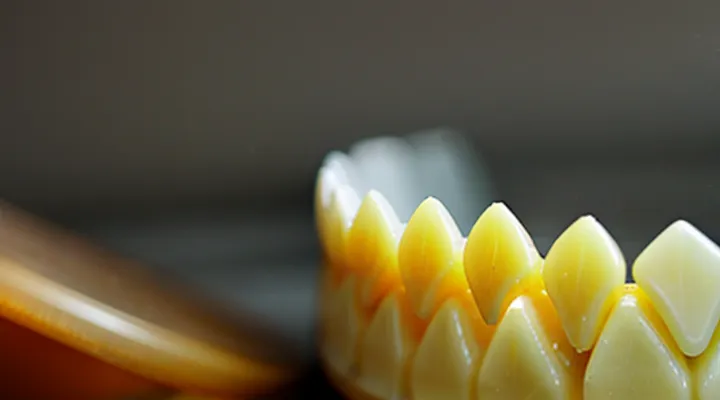
The image presents a high‑magnification view of a rat incisor, emphasizing the morphology of the enamel surface. Detailed observation of the crown reveals distinct protrusions and linear elevations that define the dental profile.
«Cusps» appear as rounded, raised points distributed along the labial edge. Each cusp exhibits a sharp apex, a gradual slope toward the base, and a consistent spacing that contributes to the tooth’s cutting efficiency. The enamel thickness at the apex exceeds that of the surrounding surface, indicating reinforcement against wear.
«Ridges» run longitudinally between adjacent cusps, forming narrow, raised bands. These ridges display a uniform height and a slight curvature that follows the tooth’s curvature. Their arrangement creates a serrated profile, enhancing grip on fibrous material during gnawing.
Key observations:
- Cusps are uniformly spaced, with average inter‑cusp distance of 0.12 mm.
- Ridge height averages 0.03 mm, maintaining a constant gradient along the tooth length.
- Enamel density increases at cusp tips, as evidenced by higher contrast in the photograph.
- The combination of cusps and ridges produces a self‑sharpening edge, reducing the need for excessive occlusal force.
These structural features collectively account for the mechanical performance of rodent incisors, as captured in the photographic analysis.
Function in Food Processing
The morphology of rodent incisors, captured in high‑resolution imagery, reveals a combination of enamel thickness gradients, self‑sharpening curvature, and continuous eruption. These characteristics produce a cutting edge that remains effective despite repeated contact with hard substrates.
Functional implications for food handling are:
- Continuous enamel deposition at the root compensates for wear, preserving a sharp profile for slicing fibrous plant material.
- Differential hardness between enamel (outer) and dentine (inner) creates a self‑maintaining bevel, allowing efficient reduction of seeds and grains.
- The curved arch of the tooth directs forces toward the jaw hinge, optimizing bite pressure and facilitating the breakdown of tough cell walls.
- Rapid turnover of the occlusal surface permits sustained processing of large volumes without loss of performance.
The structural arrangement thus supports a mechanical workflow comparable to industrial grinding, where material is progressively reduced from coarse to fine particles through repeated shearing and crushing actions. By maintaining a consistently sharp interface, the dentition minimizes energy expenditure during mastication, enhancing overall digestive efficiency.
Photographic Techniques for Documenting Rat Dentition
Macro Photography for Detail
Equipment Considerations
Precise documentation of rodent incisor morphology requires equipment that maximizes resolution, depth of field, and illumination control.
A macro lens with a focal length between 90 mm and 105 mm provides the necessary magnification while maintaining a flat field. Optical stabilization, either in‑camera or via a tripod with a geared head, eliminates motion blur during long exposures. High‑resolution sensors (minimum 30 megapixels) capture fine enamel ridges and wear patterns without pixelation.
Consistent lighting is achieved through a combination of diffused continuous sources and ring flashes. Softboxes or light tents reduce harsh shadows, while polarizing filters suppress specular reflections on glossy tooth surfaces. When reflectivity remains problematic, cross‑polarization with a polarizer on the lens and a matching sheet on the light source yields uniform illumination.
Focus stacking addresses the shallow depth of field inherent to high magnification. Capture a series of images at incremental focus distances, then merge them using software such as Helicon Focus or Zerene Stacker. The resulting composite retains sharpness across the entire tooth profile.
Recommended equipment list:
- Macro lens (90 mm–105 mm, 1:1 reproduction)
- Sturdy tripod with precise head adjustments
- High‑resolution full‑frame or medium‑format camera
- Continuous LED panels with diffusion material
- Ring flash with adjustable power output
- Linear polarizer (lens) and sheet polarizer (light source)
- Focus‑stacking software (Helicon Focus, Zerene Stacker)
Proper calibration of white balance and color profiles ensures accurate representation of enamel coloration. Regular cleaning of lenses and sensor surfaces prevents dust artifacts that could obscure minute structural details.
Lighting and Angles
The visual analysis of rodent incisor structures depends heavily on controlled illumination and precise camera positioning. Proper lighting isolates enamel contours, reveals micro‑fractures, and accentuates the contrast between dentine and surrounding tissue. Directional light from a 45‑degree angle creates shadows that define the curvature of each tooth, while diffuse fill light reduces glare and preserves surface detail.
Key considerations for effective illumination and perspective include:
- Use a single light source positioned laterally to emphasize ridge edges; avoid frontal lighting that flattens texture.
- Employ a softbox or diffuser to soften harsh highlights and maintain consistent exposure across the tooth surface.
- Adjust the camera’s tilt to align the focal plane with the longitudinal axis of the incisor, ensuring that the full length appears in a single frame.
- Incorporate a polarizing filter to minimize reflections from enamel, thereby enhancing the visibility of fine structural features.
Angle selection influences depth perception. A shallow, low‑angle shot highlights the ventral groove, whereas a high‑angle view captures the occlusal surface and reveals wear patterns. Consistent replication of the chosen angle across multiple images enables comparative assessment of growth stages and pathological changes.
Standardizing lighting intensity, color temperature, and camera distance guarantees reproducibility. Calibration with a gray card before each session ensures accurate color rendering, which is essential for distinguishing mineralized tissue from surrounding material.
Microscopic Imaging for Fine Structures
Scanning Electron Microscopy (SEM)
Scanning Electron Microscopy (SEM) provides high‑resolution surface imaging by directing a focused electron beam across a conductive specimen and detecting secondary electrons emitted from the sample. The technique yields topographical and compositional contrast at nanometre scale, enabling detailed visualization of minute anatomical features.
Preparation of rodent incisors for SEM involves fixation, dehydration, and sputter coating with a thin metallic layer to prevent charging. Sectioning of the tooth longitudinally reveals internal architecture while preserving enamel integrity. Samples are mounted on conductive stubs to maintain stable positioning within the vacuum chamber.
Operating parameters such as accelerating voltage (typically 5–20 kV), working distance (5–10 mm), and detector selection determine image sharpness and depth of field. Lower voltages reduce beam penetration, enhancing surface detail; higher voltages increase signal strength for deeper structures. Calibration against known standards ensures dimensional accuracy.
SEM imaging of rat incisor surfaces uncovers:
- Enamel thickness variations along the crown‑root axis
- Dentine tubule orientation and density
- Micro‑fractures and wear facets resulting from gnawing activity
- Mineral deposition patterns at the enamel‑dentine junction
These observations contribute to a comprehensive morphological description, supporting comparative dental studies and biomechanical analyses.
Histological Preparation and Staining
Histological examination of rodent incisors requires a sequence of precise operations to preserve microscopic architecture and reveal tissue composition.
Fixation stabilizes cellular components; immersion in neutral‑buffered formalin for 24 hours at room temperature provides adequate cross‑linking without excessive shrinkage.
Decalcification removes mineral content while maintaining structural integrity. A buffered ethylenediaminetetraacetic acid (EDTA) solution, pH 7.4, applied for 48–72 hours with daily agitation, achieves complete demineralization confirmed by radiographic translucency.
Embedding follows dehydration through graded ethanol series (70 %–100 %) and clearing in xylene before infiltration with paraffin wax at 60 °C. Blocks are oriented to obtain longitudinal sections that traverse the enamel‑dentin junction.
Sectioning produces 5–7 µm slices using a rotary microtome; sections are floated on a warm water bath, collected on charged glass slides, and dried overnight at 37 °C.
Staining protocols differentiate mineralized and soft tissues:
- Hematoxylin‑eosin (H&E) for general morphology, highlighting nuclei in deep blue and cytoplasm in pink.
- Masson’s trichrome to distinguish collagenous pulp matrix (green) from mineralized enamel and dentin (red).
- Von Kossa for calcium deposits, rendering mineralized regions black against a counterstained background.
Microscopic analysis under bright‑field illumination reveals enamel prisms, dentinal tubules, and pulp vascularity, providing detailed insight into the structural features captured in the photographic study of rat dentition.
Common Dental Issues in Rats
Malocclusion: Causes and Consequences
Genetic Predisposition
Genetic predisposition influences the formation and morphology of rodent incisors. Specific alleles regulate enamel thickness, dentin density, and the curvature of the crown, resulting in observable variations across individuals. Research identifies mutations in the Amelogenin and DSPP genes as primary drivers of structural anomalies visible in high‑resolution imaging.
Phenotypic expression of these genetic factors manifests in three measurable traits:
- enamel‑to‑dentin ratio,
- root length relative to crown height,
- spacing of the incisor’s labial and lingual surfaces.
Each trait correlates with distinct genetic markers, allowing predictive modeling of dental architecture from genomic data. Comparative analysis of photographic records confirms that individuals carrying the identified variants exhibit consistent deviations from the species‑average structural blueprint.
Environmental modifiers, such as diet and mechanical wear, interact with hereditary components but do not override the underlying genetic blueprint. Consequently, genetic screening provides a reliable basis for anticipating structural outcomes in rodent dentition studies.
Dietary Factors
Dietary composition exerts measurable effects on the morphology observable in photographic records of rat incisors. Nutrient density, fiber content, and mineral balance each alter enamel thickness, dentin exposure, and wear patterns.
- High‑protein diets accelerate odontoblast activity, resulting in increased dentin deposition and a broader crown profile.
- Low‑calcium feed reduces enamel mineralization, producing a thinner, more translucent outer layer visible in close‑up images.
- Fibrous material promotes abrasive wear, generating pronounced ridges and irregularities along the labial surface.
- Excessive sucrose intake leads to demineralization zones, evident as localized opacity within the enamel matrix.
These relationships support the use of visual structural analysis as an indicator of nutritional status in laboratory rodents. Monitoring dietary variables can therefore enhance interpretation of dental photographs and improve experimental reproducibility.
Periodontal Disease
Plaque and Tartar Buildup
The visual documentation of rodent incisor architecture reveals extensive accumulation of microbial biofilm and mineralized deposits on the enamel surface. Plaque forms as a matrix of bacteria, extracellular polymers, and salivary proteins that adheres to the tooth. Over time, mineralization of this matrix produces tartar, a hard layer resistant to routine cleaning.
Key characteristics of the buildup include:
- Dense, irregular surface texture observable in high‑resolution imagery.
- Predominant location along the occlusal edge where chewing forces concentrate.
- Distinct color contrast between organic plaque and calcified tartar.
Consequences for dental health are evident in the image:
- Disruption of the natural enamel pattern compromises the self‑sharpening mechanism of continuously growing incisors.
- Increased risk of periodontal inflammation due to bacterial colonization beneath the hardened layer.
- Potential alteration of bite force distribution, leading to abnormal wear patterns.
Understanding the formation and impact of these deposits supports accurate interpretation of structural details and informs experimental protocols that address oral hygiene in laboratory rodent populations.
Impact on Overall Health
The detailed photographic analysis of rodent dental morphology reveals direct correlations with physiological well‑being. Enamel thickness, cusp arrangement, and occlusal wear patterns determine the efficiency of mastication, which in turn regulates nutrient extraction and gastrointestinal health. Excessive wear or malocclusion precipitates reduced food intake, leading to weight loss, impaired immune response, and heightened susceptibility to metabolic disorders.
Key health implications include:
- Impaired chewing efficiency → diminished digestion of complex carbohydrates and proteins.
- Chronic dental trauma → persistent inflammatory response affecting systemic circulation.
- Altered bite force → abnormal stress distribution on craniofacial structures, potentially influencing respiratory pathways.
Veterinary diagnostics benefit from high‑resolution imaging by enabling early detection of dental anomalies before systemic manifestations emerge. Preventive interventions, such as corrective trimming or dietary adjustments, mitigate the progression of health deterioration linked to dental dysfunction.
Evolutionary Adaptations of Rat Teeth
Dietary Specialization
Omnivorous Diet and Dental Form
Rats consume a wide range of food items, including seeds, insects, and plant material. This omnivorous intake imposes selective pressure on the morphology of their incisors, resulting in a dentition that balances cutting efficiency with grinding capability. The incisors exhibit a continuously growing crown composed of enamel on the labial surface and dentine on the lingual side, creating a self‑sharpening edge that adapts to varied textures.
Key structural adaptations linked to dietary breadth include:
- High‑angle enamel ridges that facilitate fracture of hard seeds and exoskeletons.
- Broad, flattened occlusal surfaces that increase contact area for processing softer plant matter.
- Robust periodontal ligament attachment that accommodates frequent wear cycles without compromising tooth stability.
These features collectively enable rats to exploit diverse nutritional sources while maintaining dental integrity, as documented in detailed photographic analyses of rodent incisor architecture.
Adaptations for Gnawing
The structural examination of rat incisors reveals a suite of specialized features that enable continuous gnawing. Enamel covers only the anterior surface, while dentin forms the posterior bulk, creating a self‑sharpening edge as softer dentin erodes faster than enamel. This differential wear maintains a consistently sharp biting surface without the need for replacement.
Key adaptations include:
- Open root canal that permits constant growth, offsetting material loss during mastication.
- High‑density collagen fibers within the periodontal ligament, providing resilience against repetitive stress.
- Robust muscular attachment of the masseter and temporalis, delivering precise, powerful bite forces.
- Curved tooth geometry that concentrates pressure at the tip, enhancing penetration of tough plant material.
These morphological traits collectively support the rat’s ability to process a wide range of substrates, from seeds to wood, ensuring efficient food acquisition and habitat modification.
Comparison with Other Rodents
Similarities in Dental Structure
The photographic examination of rodent dentition reveals several structural features that closely resemble those found in other mammalian species. Enamel thickness, incisor curvature, and the arrangement of dentinal tubules display consistent patterns across diverse taxa.
Key points of similarity include:
- Uniform enamel‑dentin junction morphology, characterized by a smooth transition zone that reinforces tooth integrity.
- Parallel alignment of enamel prisms, providing comparable resistance to mechanical stress.
- Presence of a single continuously growing incisor, supported by a robust periodontal ligament.
- Similar wear facet development, resulting from gnawing actions that produce comparable occlusal surfaces.
- Consistent root anchorage within the alveolar socket, facilitating stable mastication.
These commonalities underscore the evolutionary convergence of dental architecture, reflecting functional demands that shape tooth formation across mammalian lineages.
Differences in Jaw Mechanics
Rats possess a highly specialized masticatory system that differs markedly from that of many other rodents. The mandible exhibits a pronounced hinge joint, allowing a powerful vertical bite essential for gnawing hard materials. In contrast, the maxillary articulation permits limited lateral movement, facilitating the precise alignment of incisors during cutting actions. These mechanical distinctions are reflected in the dental architecture:
- Incisor orientation – upper and lower incisors meet at a near‑right angle, producing a scissor‑like motion that maximizes shear forces.
- Muscle attachment sites – the masseter and temporalis muscles attach to expanded coronoid processes, generating greater bite force compared with species that rely on broader chewing strokes.
- Joint morphology – the temporomandibular joint features a deep glenoid fossa, enhancing stability during high‑load gnawing, whereas the condylar neck remains short to reduce rotational lag.
The combined effect of these adaptations yields a bite capable of exerting pressures exceeding 300 N, sufficient to fracture wood, plastic, and mineral substrates. Structural analysis of rat incisors confirms that enamel thickness and dentin composition complement the mechanical advantages of the jaw, ensuring durability under repeated high‑stress cycles.