
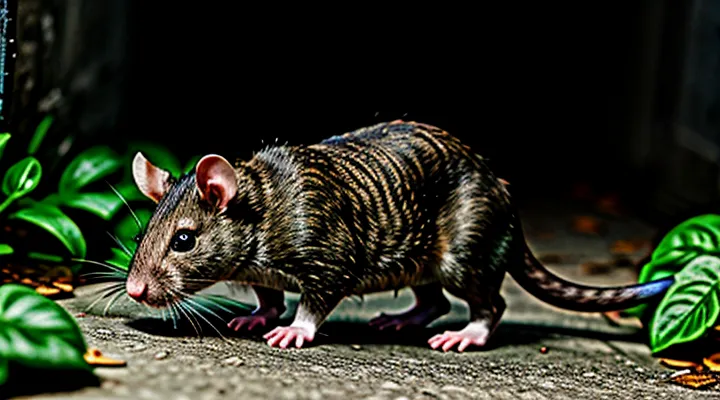
Historical Context of Rat-Human Interaction
Rats have been linked to human societies since the advent of settled agriculture, when grain storage created a reliable food source that attracted the species. Early Mesopotamian records describe rodent damage to granaries, prompting the development of protective measures such as sealed containers and the use of predators like cats. The relationship intensified during the rise of urban centers in ancient Egypt and Rome, where dense populations and waste accumulation facilitated rat proliferation and consequently heightened disease transmission.
The spread of plague in the 14th‑century Eurasian trade routes exemplifies the impact of rat‑borne pathogens on human history. Genetic analyses trace the bacterium Yersinia pestis to flea vectors that inhabited commensal rats traveling aboard merchant ships. This epidemiological link spurred the establishment of quarantine stations and public health ordinances, marking the first systematic attempts to control rodent populations as a means of disease prevention.
Scientific inquiry into rat behavior emerged in the 19th century with naturalists documenting predatory instincts observed in wild populations. Laboratory studies later revealed that, despite omnivorous diets, rats retain hunting capabilities that influence ecosystem dynamics, especially in agricultural settings where they can reduce insect pests while simultaneously competing with livestock for feed.
Key historical milestones:
- Grain storage innovations in ancient Mesopotamia (c. 3000 BCE)
- Introduction of domestic cats in Egypt (c. 2000 BCE)
- Plague pandemics linked to rat‑flea vectors (14th‑17th centuries)
- Formal quarantine regulations in European port cities (mid‑19th centuries)
- Laboratory research on rat predation and disease transmission (late‑19th to early‑20th centuries)
These developments illustrate the persistent interplay between rats and humans, where predatory behavior, ecological impact, and disease potential have shaped policy, settlement design, and scientific understanding across millennia.
Biological Profile of the Rat
Anatomy Adapted for Predation
Rats possess a suite of morphological traits that facilitate active predation. Their incisors, continuously growing and sharply chisel‑shaped, enable rapid penetration of flesh and bone. The posterior molars, flattened with ridged surfaces, process soft tissue efficiently, complementing the incisors’ cutting function.
- Strong masseter and temporalis muscles generate bite forces sufficient to subdue small vertebrates.
- Vibrissae arranged in dense rows detect minute air currents and surface textures, allowing precise localization of prey in low‑light environments.
- Large, forward‑facing eyes provide binocular overlap, enhancing depth perception during pursuit.
- Hind limbs exhibit elongated metatarsals and robust musculature, delivering bursts of speed and agile maneuverability.
- The prehensile tail offers balance and can serve as a stabilizing counterweight while climbing or leaping onto prey.
Integration of these features produces a coordinated hunting system. Rapid jaw closure follows sensory detection, while powerful hind‑limb thrust propels the animal into striking range. The tail’s stabilizing action maintains trajectory, and the dentition delivers lethal bites within fractions of a second.
Collectively, these anatomical adaptations expand the rat’s ecological niche, positioning it as an effective mesopredator capable of influencing prey populations and contributing to trophic dynamics.
Sensory Capabilities in Hunting
Rats possess a suite of sensory adaptations that enable efficient predation. Their vibrissae detect minute air currents and surface textures, providing precise information about prey location and movement. Olfactory receptors process a wide range of chemical cues, allowing rats to track hidden insects and small vertebrates through scent gradients. Auditory structures are tuned to high‑frequency sounds; rats can hear ultrasonic vocalizations produced by many prey species and respond with rapid orientation. Vision is optimized for low‑light environments; a high density of rod cells grants sensitivity to dim conditions, supporting nocturnal hunting. Tactile receptors in the forepaws and tail deliver rapid feedback on prey handling, facilitating swift manipulation and consumption.
Key sensory functions in hunting:
- Whisker‑mediated airflow detection for spatial mapping.
- Scent detection for tracking concealed or burrowing prey.
- Ultrasonic hearing for locating vocalizing insects.
- Low‑light vision for nocturnal ambushes.
- Tactile feedback for prey capture and processing.
These capabilities operate in concert, allowing rats to locate, assess, and subdue prey with minimal delay. The integration of multiple modalities creates a robust predatory system that compensates for the limitations of any single sense.
Predatory Tactics and Behavior
Diet and Opportunism
Rats exhibit predatory behavior when food resources permit, supplementing their primarily omnivorous diet with animal prey. Their consumption pattern reflects flexibility and opportunism, allowing rapid adaptation to fluctuating environments.
Key components of their opportunistic diet include:
- Small vertebrates such as birds, lizards, and amphibians.
- Invertebrates, notably insects, worms, and arachnids.
- Eggs and nestlings discovered in burrows or storage areas.
- Carrion and discarded meat from human activity.
Rats capitalize on temporary abundance, seizing prey during nocturnal foraging or when scavenging near waste sites. Their keen sense of smell and tactile whiskers facilitate detection of concealed or moving targets. Aggressive pursuit, swift bites, and efficient swallowing enable capture of prey larger than typical rodent meals.
Seasonal variations intensify predatory incidents. In colder months, reduced plant material drives increased reliance on animal protein, while warm periods provide abundant insect populations for opportunistic harvesting. Urban settings amplify opportunities: waste containers, pet food, and open compost heaps present accessible protein sources.
Overall, rat predation demonstrates a strategic balance between scavenging and active hunting, driven by nutritional demands and environmental availability. This adaptability underpins their success across diverse habitats.
Hunting Strategies in Various Environments
Rats employ a range of predatory tactics that vary with habitat structure, prey availability, and sensory conditions. In dense urban settings, they exploit confined spaces, using rapid, low‑profile movements to ambush insects and small vertebrates that shelter in cracks and sewers. Their whisker‑based tactile system detects minute vibrations, allowing precise strikes in low‑light environments where visual cues are limited.
In open fields and agricultural landscapes, rats shift to opportunistic stalking combined with short, explosive sprints. They capitalize on cover such as tall grasses to approach rodents, birds, or amphibians, then deliver a swift bite to immobilize the target. Their keen sense of smell guides them toward carrion and weakened prey, supporting a scavenging component that supplements active hunting.
In subterranean or semi‑aquatic zones, rats adapt by swimming short distances and navigating burrow networks to reach aquatic insects, tadpoles, or small fish. Their flexible jaws and sharp incisors enable them to grasp slippery prey, while their ability to hold breath for several minutes extends the hunting window underwater.
Key strategic elements across environments:
- Sensory integration (whiskers, olfaction, hearing) tailored to habitat lighting and acoustics.
- Spatial awareness that leverages structural complexity for concealment and surprise attacks.
- Rapid burst locomotion for short‑range pursuits, combined with endurance for extended foraging.
- Flexible diet that incorporates both live capture and opportunistic carrion consumption.
These adaptive behaviors confirm that rats function as competent predators, employing environment‑specific techniques to secure protein‑rich resources.
Impact on Prey Populations
Rats exhibit predatory behavior that directly reduces numbers of insects, arthropods, small vertebrates, and bird eggs. Field observations in agricultural and urban habitats report 15‑30 % declines in local invertebrate densities where rat populations exceed ecological thresholds. Laboratory trials confirm that individual rats consume up to 200 g of prey per day, influencing reproductive output of prey species and accelerating mortality in vulnerable cohorts.
The reduction of prey populations triggers secondary effects:
- Decreased pollinator abundance lowers seed set in native flora.
- Lowered insect predation pressure permits pest outbreaks, increasing crop damage.
- Diminished bird hatchling survival reduces avian diversity and alters trophic cascades.
- Suppressed small‑mammal numbers affect soil aeration and nutrient cycling.
Long‑term monitoring in temperate regions shows that sustained rat predation can shift community composition, favoring species with higher reproductive rates or defensive adaptations. Management strategies that limit rat densities consequently stabilize prey populations and preserve ecosystem functions.
Ecological Role of Rats as Predators
Influence on Ecosystem Dynamics
Rats exhibit predatory behavior that alters population structures across multiple trophic levels. Their consumption of insects, small vertebrates, and eggs reduces prey abundance, thereby influencing reproductive success and survival rates of those species. This pressure can trigger compensatory responses in prey, such as increased fecundity or altered foraging patterns, which reshapes community composition.
Predation by rats also affects nutrient cycling. By ingesting carrion and organic waste, they accelerate decomposition processes and redistribute nutrients through excreta. This activity enhances soil fertility in localized areas, supporting plant growth and influencing vegetation dynamics.
The presence of rats introduces competitive interactions with native carnivores. Overlap in diet leads to resource partitioning or displacement, potentially reducing biodiversity among higher-order predators. In ecosystems where rats dominate, apex predators may experience reduced prey availability, prompting shifts in their spatial distribution and hunting behavior.
Key ecological impacts of rat predation include:
- Reduction of seed‑predator populations, indirectly affecting plant regeneration.
- Suppression of insect vectors that transmit plant pathogens, altering disease prevalence.
- Modification of food‑web connectivity, resulting in altered energy flow and trophic cascades.
- Enhancement of scavenger efficiency, leading to faster removal of dead organic matter.
Collectively, these mechanisms demonstrate that rat predation exerts a measurable influence on ecosystem dynamics, shaping species interactions, resource distribution, and overall ecological stability.
Competition with Native Predators
Rats occupy a predatory niche that overlaps with many indigenous carnivores, influencing local food‑web dynamics. Their presence alters prey availability and can modify the hunting success of native species.
Key aspects of the competition include:
- Dietary overlap: Rats consume insects, small vertebrates, and bird eggs that are also targeted by owls, snakes, and mustelids.
- Direct encounters: Aggressive interactions occur when rats defend territories or scavenging sites, sometimes resulting in injury or mortality of native predators.
- Resource depletion: High rat densities reduce populations of shared prey, forcing native hunters to expand their foraging range or switch to less optimal food sources.
- Disease vectors: Rats carry pathogens that can infect other predators, decreasing their reproductive output and longevity.
Empirical studies show that in ecosystems where rats have become abundant, native predator abundance often declines, and shifts in prey composition are observed. Management strategies that reduce rat populations tend to restore balance, allowing indigenous hunters to regain their ecological roles.
Rats in Urban and Wild Ecosystems
Predation in Human-Dominated Landscapes
Rats exploit urban and agricultural settings to capture a wide range of prey, including insects, small vertebrates, and nestling birds. Their opportunistic hunting behavior expands beyond scavenging, directly reducing populations of native species that share the same habitats.
Key mechanisms driving rat predation in anthropogenic environments include:
- High reproductive rates that sustain large predator populations despite fluctuating food supplies.
- Habitat fragmentation that concentrates prey into limited refuges, making them more vulnerable.
- Human-provided waste that supplements dietary needs, allowing rats to allocate energy toward hunting activities.
Empirical studies reveal measurable declines in ground‑dwelling arthropod diversity where rat densities exceed ecological thresholds. Similar patterns emerge in peri‑urban bird colonies, where predation accounts for a significant portion of fledgling mortality. Management interventions that reduce refuse availability and implement targeted population control correlate with partial recovery of affected taxa.
Understanding the predatory role of rats in human‑dominated landscapes informs conservation strategies, pest management policies, and urban planning. Accurate assessment of their impact prevents underestimation of ecological consequences and supports evidence‑based decision making.
Predation in Natural Habitats
Rats exhibit predatory behavior across diverse ecosystems, targeting vertebrates, invertebrates, and eggs when opportunities arise. Their opportunistic diet expands beyond typical granivorous and omnivorous classifications, incorporating species such as amphibians, nestling birds, and small reptiles.
Research indicates that rat predation contributes measurable pressure on prey populations. Stomach‑content examinations from field studies reveal frequent ingestion of live prey items, while motion‑activated cameras document active hunting sequences in grasslands, wetlands, and forest edges.
Key prey categories include:
- Anuran larvae and adult frogs
- Ground‑nesting bird eggs and hatchlings
- Juvenile lizards and snakes
- Large arthropods (e.g., beetles, orthopterans)
These interactions influence community dynamics by reducing numbers of certain invertebrates and small vertebrates, thereby affecting nutrient cycling and vegetation health. In agricultural settings, rat predation on pest insects can indirectly benefit crop yields, whereas predation on beneficial pollinators may offset that advantage.
Rats coexist with larger carnivores, often competing for overlapping food resources. Their high reproductive rate enables rapid population adjustments, allowing them to occupy predatory niches temporarily when larger predators are absent or when prey abundance spikes.
Overall, rat predation operates as a functional component of natural habitats, shaping species composition and energy flow without relying on mythic portrayals of the animal.
The «Truth» About Rats as Predators
Debunking Common Misconceptions
Rats are often portrayed as harmless scavengers, yet scientific observations confirm their capacity to hunt and kill small vertebrates. Field studies document rats capturing birds, amphibians, and even juvenile mammals, demonstrating predatory behavior comparable to that of other opportunistic carnivores.
Common misconceptions obscure this reality:
- Rats never kill other animals. Evidence from urban and rural ecosystems shows frequent predation on nestlings and ground-dwelling species.
- Rats survive solely on garbage. While waste provides nutrients, protein from live prey constitutes a significant portion of their diet, especially during breeding seasons.
- All rat species are identical in feeding habits. Variations exist among species; some exhibit higher predatory rates due to morphological adaptations such as stronger jaws and sharper incisors.
- Predation by rats has negligible ecological impact. In island habitats, rat predation has driven declines in native bird populations, prompting extensive eradication programs.
Physiological traits support predation: robust musculature, acute hearing, and whisker sensitivity enable detection and capture of agile prey. Behavioral flexibility allows rats to switch between scavenging and hunting based on resource availability, ensuring survival across diverse environments.
Management strategies that address rat predation must incorporate both sanitation measures and targeted population control. Reducing habitat suitability, employing bait stations, and monitoring predator–prey dynamics provide comprehensive mitigation without relying on oversimplified assumptions about rat behavior.
Nuances of Their Predatory Impact
Rats demonstrate active predation that influences multiple trophic levels. Their hunting of insects, small vertebrates, and eggs reduces populations of species that could otherwise proliferate unchecked, while simultaneously providing a food source for higher predators.
- Selective pressure on invertebrate communities reshapes soil nutrient cycles.
- Consumption of nestling birds and amphibian larvae alters reproductive success of those taxa.
- Scavenging of carrion accelerates decomposition, affecting microbial activity.
- Predatory behavior facilitates pathogen transmission by moving infected prey tissue across habitats.
The cumulative effect of these actions creates feedback loops in ecosystem dynamics. Recognizing the precise mechanisms of rat predation informs control strategies, biodiversity assessments, and disease risk models, ensuring that interventions address both direct and indirect ecological consequences.