
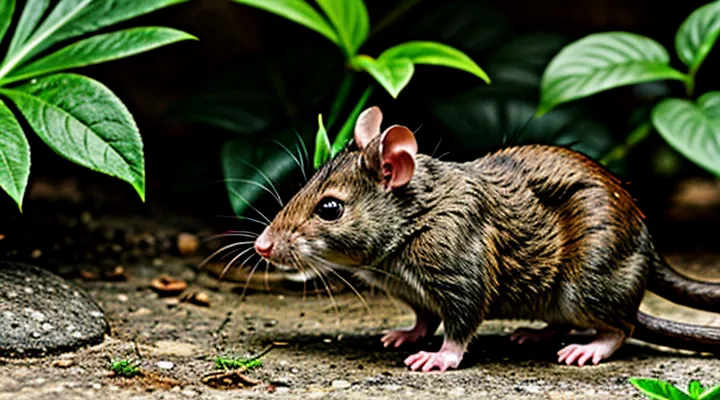
Understanding the Term «Animal»
Biological Classification Principles
Kingdom Animalia: Defining Characteristics
The rat, like all vertebrates, is classified within the kingdom Animalia, a taxonomic group defined by a set of biological traits that distinguish animals from other life forms. Understanding these traits clarifies why mammals, including rodents, are unequivocally animals.
Key characteristics of the animal kingdom include:
- Multicellular organization with cells that contain membrane-bound nuclei (eukaryotic cells).
- Absence of rigid cell walls; instead, cells are supported by a flexible extracellular matrix.
- Heterotrophic metabolism, requiring ingestion of organic material for energy.
- Development of specialized tissues and organs, such as nervous, muscular, and digestive systems.
- Embryonic development that proceeds through a blastula stage.
- Capability for movement at some life stage, driven by muscle contraction.
Rats exhibit each of these features: they are multicellular eukaryotes, lack cell walls, obtain nutrients by consuming other organisms, possess differentiated organ systems, develop from a blastula embryo, and display locomotion throughout their lives. Consequently, their biological profile aligns precisely with the defining criteria of Animalia.
The delineation of these criteria provides a clear framework for biologists when evaluating the taxonomic status of any organism, confirming that rodents belong unequivocally to the animal kingdom.
Subphylum Vertebrata: Key Features
The subphylum Vertebrata encompasses animals possessing a backbone, a condition that directly informs the classification of the common laboratory rat. Vertebrates share a suite of anatomical and developmental traits that distinguish them from invertebrate groups.
- Notochord present during embryogenesis, later replaced by a segmented vertebral column.
- Dorsal hollow nerve cord forming the spinal cord.
- Paired, ventrally located gill slits in early stages, evolving into diverse respiratory structures.
- Endostyle or thyroid gland derived from the pharyngeal region.
- Muscular, segmented body plan with a well‑developed cranial cavity housing the brain.
Rats exhibit each of these characteristics: a rigid spinal column supports locomotion; the spinal cord transmits neural signals; respiratory organs derive from the embryonic gill apparatus; a thyroid gland regulates metabolism; and the skull encloses a complex brain. These vertebrate hallmarks confirm that rats belong unequivocally to the subphylum Vertebrata, reinforcing their placement among higher‑order mammals in the broader discussion of animal classification.
The Rat's Place in Biology
Taxonomic Classification of Rats
Family Muridae
The family Muridae represents the largest rodent family, encompassing over 1,500 species distributed across more than 150 genera. Members share a set of morphological traits: a single pair of continuously growing incisors, a robust skull, and a dental formula of 1.0.0.3/1.0.0.3. These characteristics distinguish murids from other rodent groups and provide a baseline for taxonomic identification.
Murids occupy diverse habitats, ranging from tropical rainforests to arid deserts and urban environments. Their adaptive radiation includes omnivorous, granivorous, and insectivorous dietary strategies, enabling colonization of ecological niches unavailable to less flexible rodents. This versatility makes murids a frequent subject of ecological and evolutionary research.
Key genera that illustrate the family's breadth include:
- Rattus – contains the common black rat (Rattus rattus) and brown rat (Rattus norvegicus), species often implicated in disease transmission studies.
- Mus – comprises the house mouse (Mus musculus), a primary model organism in genetics and physiology.
- Apodemus – European wood mice, representing forest-dwelling murids with distinct behavioral patterns.
- Praomys – African soft-furred rats, highlighting the family's presence in savanna and woodland ecosystems.
Biologists rely on murid phylogeny to trace evolutionary relationships among rodents and to assess the impact of murid species on human health, agriculture, and biodiversity. Genetic sequencing of murid genomes has clarified lineage divergence times, while comparative morphology informs functional adaptations linked to locomotion, foraging, and social behavior.
Genus Rattus
The genus Rattus belongs to the family Muridae and comprises the true rats that are widely recognized in scientific literature. Members of this genus share a set of morphological traits: elongated bodies, relatively large ears, pointed snouts, and a dental formula of 1/1 incisors, no canines, and a total of 12 molars. Their skulls exhibit a high degree of ossification, supporting strong jaw muscles adapted for gnawing.
Species diversity within Rattus is considerable. Over 60 species have been formally described, including:
- Rattus norvegicus (brown rat) – the most common urban inhabitant worldwide.
- Rattus rattus (black rat) – historically associated with maritime trade.
- Rattus exulans (Polynesian rat) – spread across Pacific islands via human migration.
- Rattus argentiventer (ricefield rat) – prevalent in Southeast Asian agricultural zones.
- Rattus fuscipes (bushy-tailed rat) – restricted to highland forests of New Guinea.
Geographically, Rattus species occupy a broad range extending from temperate zones in Europe and North America to tropical regions of Asia, Africa, and Oceania. Their adaptability to diverse habitats stems from omnivorous feeding habits, high reproductive rates, and the capacity to exploit anthropogenic environments.
Ecologically, members of Rattus function as both seed dispersers and predators of invertebrates, influencing plant regeneration and insect populations. Conversely, they serve as vectors for numerous zoonotic pathogens, including Leptospira spp., hantaviruses, and Yersinia pestis. Their role in disease transmission underscores the relevance of precise taxonomic identification for public‑health monitoring.
From a systematic perspective, molecular phylogenetics has clarified relationships among Rattus lineages, revealing distinct clades that correspond to geographic distribution and ecological niche. This genetic resolution supports the classification of Rattus as a bona fide mammalian genus, confirming its status as an animal group rather than a colloquial label.
In summary, Rattus represents a taxonomically robust genus characterized by extensive species richness, global distribution, and significant ecological and epidemiological impacts. Its scientific definition settles the debate surrounding the classification of rats, affirming their identity as true members of the animal kingdom.
Anatomical and Physiological Evidence
Mammalian Traits
Rats possess the defining characteristics of mammals, confirming their classification as true animals. Their bodies are covered with hair, a trait exclusive to the class Mammalia, which provides insulation and sensory functions. Specialized skin glands produce oils that maintain hair health and protect against pathogens.
Mammalian reproductive anatomy includes functional mammary glands that produce milk for offspring. Rat females nurse their young, demonstrating the essential maternal lactation system shared by all mammals. The presence of three middle ear bones—malleus, incus, and stapes—enhances auditory acuity and distinguishes mammals from other vertebrate groups.
Additional mammalian features observed in rats are:
- Endothermy: internal regulation of body temperature through metabolic heat production.
- Placental development: a chorioallantoic placenta facilitates nutrient exchange between mother and embryo.
- Dental formula: continuously growing incisors with enamel on the front surface and softer dentin behind, enabling gnawing behavior.
These traits collectively validate rats as members of the mammalian lineage, settling any ambiguity regarding their status as animals.
Behavioral Ecology
Rats exhibit foraging strategies that balance energy intake against predation risk, a core principle of behavioral ecology. Individuals adjust movement patterns when food sources become scarce, increasing exploration while reducing exposure to open areas where predators are more likely to detect them. Laboratory observations confirm that urban rats favor nocturnal activity, exploiting reduced human presence to minimize disturbance.
Social organization influences resource distribution. Dominant males establish territories that contain multiple nesting sites, allowing subordinate members to access peripheral food caches without direct competition. This hierarchy reduces aggressive encounters, conserving energy for reproductive efforts.
Reproductive timing aligns with environmental cues. Photoperiod and temperature fluctuations trigger hormonal changes that accelerate breeding cycles in temperate zones, resulting in multiple litters per year. In contrast, tropical populations display less pronounced seasonal variation, maintaining steady reproductive output.
Communication mechanisms support coordination. Scent marking conveys individual identity, reproductive status, and territorial boundaries. Acoustic signals, such as ultrasonic vocalizations, facilitate mother‑infant bonding and alert conspecifics to threats.
Adaptation to anthropogenic habitats demonstrates behavioral plasticity. Rats exploit waste streams, modifying diet composition to include high‑calorie human refuse. This flexibility enhances survival in cities, where natural predators are limited and shelter is abundant.
Key observations:
- Risk‑averse foraging reduces exposure to predators.
- Hierarchical social structure optimizes resource allocation.
- Seasonal reproductive shifts correspond to climatic signals.
- Chemical and acoustic signals maintain colony cohesion.
- Urban environments drive dietary and behavioral innovation.
Common Misconceptions and Clarifications
Layman's Perception vs. Scientific Fact
Laypeople commonly label rats as dirty pests that spread disease, associate them with urban decay, and treat them as unwanted intruders. Scientific classification identifies rats as mammals belonging to the order Rodentia, describing them as highly adaptable vertebrates with complex social structures and advanced learning abilities.
Key contrasts between popular perception and biological reality:
- Health risk perception – General public emphasizes disease transmission; research shows only a minority of wild rats carry zoonotic pathogens, and most infections arise from specific ecological conditions.
- Intelligence assessment – Popular view regards rats as unintelligent scavengers; experimental data reveal problem‑solving skills comparable to those of primates, including maze navigation and tool use.
- Ecological role – Common belief treats rats as solely destructive; ecological studies document their function as seed dispersers, prey for predators, and contributors to nutrient cycling.
Scientific literature documents rat cognition, social bonding, and adaptability across habitats. Controlled experiments demonstrate memory retention over months, empathy‑like behaviors, and the ability to learn from conspecifics. Field observations confirm rats’ impact on soil aeration and seed distribution, influencing plant community dynamics.
Misalignment between public opinion and empirical evidence shapes policy and funding. Overemphasis on eradication programs can divert resources from habitat‑based management and disease‑monitoring initiatives. Accurate scientific communication can recalibrate public attitudes, fostering evidence‑based strategies that balance pest control with ecological stewardship.
The Rat as a Model Organism
Rats (Rattus spp.) serve as a primary laboratory species because of their physiological similarity to mammals, rapid reproductive cycle, and well‑characterized anatomy. Their size permits precise surgical manipulation, while their short lifespan enables longitudinal studies within a practical timeframe.
Key biological attributes include:
- Gestation of approximately 21 days and litter sizes of 6–12 offspring.
- Robust immune system that mirrors many human responses.
- Metabolic pathways that closely resemble human drug metabolism.
The rat genome has been fully sequenced, facilitating the creation of transgenic and knockout lines through CRISPR‑Cas9, viral vectors, and embryonic stem cell techniques. These genetic tools allow investigators to isolate specific gene functions and model complex traits.
Research domains that rely heavily on rat models comprise:
- Neuroscience – mapping neural circuits, studying behavior, and evaluating neurodegenerative disease mechanisms.
- Pharmacology – assessing drug efficacy, pharmacokinetics, and toxicity.
- Cardiovascular science – modeling hypertension, atherosclerosis, and heart failure.
- Endocrinology – investigating diabetes, obesity, and hormonal regulation.
- Immunology – exploring autoimmune disorders and vaccine responses.
Advantages of the rat include reproducible phenotypes, extensive historical data, and a wealth of standardized protocols. Limitations involve species‑specific differences in certain metabolic pathways and the need for specialized housing to maintain animal welfare standards. Careful experimental design balances these factors, ensuring that rat‑based findings translate effectively to broader biomedical contexts.
The Impact of Rats on Ecosystems
Ecological Role
Rats occupy multiple positions within terrestrial ecosystems, linking primary producers to higher trophic levels. Their foraging behavior regulates seed populations, while their burrowing activity modifies soil structure, enhancing aeration and water infiltration. As omnivores, rats consume insects, plant matter, and carrion, thereby influencing nutrient cycling and waste decomposition.
Key ecological functions include:
- Predation on invertebrates and small vertebrates, reducing pest populations.
- Consumption of fallen fruit and seeds, facilitating dispersal and germination of certain plant species.
- Scavenging of dead organic material, accelerating decomposition processes.
- Serving as prey for raptors, snakes, and carnivorous mammals, supporting predator energy budgets.
- Transporting parasites and pathogens across habitats, affecting disease dynamics in wildlife communities.
These interactions demonstrate rats’ integral contribution to energy flow, population control, and habitat modification within diverse environments.
Human-Wildlife Interactions
Rats occupy a unique position at the intersection of human environments and natural ecosystems. Their adaptability enables them to thrive in urban infrastructure, agricultural fields, and wilderness habitats, creating continuous points of contact with people.
Human‑wildlife interaction with rats involves several measurable dimensions:
- Disease vectors – Rats transmit pathogens such as Leptospira, hantavirus, and Yersinia pestis, accounting for documented outbreaks in densely populated regions.
- Economic impact – Crop losses and damage to stored goods result in annual financial burdens estimated in billions of dollars worldwide.
- Pest management practices – Integrated control programs combine sanitation, habitat modification, and targeted rodenticides; effectiveness is monitored through population indices and resistance surveys.
- Research contributions – Laboratory rat strains provide essential models for genetics, pharmacology, and neurobiology, linking human health advances directly to animal study.
- Cultural perception – Societal attitudes range from reverence in certain traditions to stigmatization as vermin, influencing policy decisions and public health messaging.
Ecological studies reveal that rat populations respond predictably to resource availability and human activity patterns. Urban planning that reduces food waste and shelters diminishes breeding sites, while preserving green corridors supports predator presence, naturally limiting rat numbers.
Regulatory frameworks in many jurisdictions require risk assessments before implementing control measures, ensuring that interventions balance public safety, animal welfare, and ecological integrity. Continuous data collection on population dynamics and disease incidence informs adaptive management, reducing unintended consequences such as secondary pest outbreaks.
Overall, the interaction between humans and this highly adaptable rodent species demands coordinated scientific, regulatory, and community efforts to mitigate health risks, protect economic assets, and sustain ecological balance.