
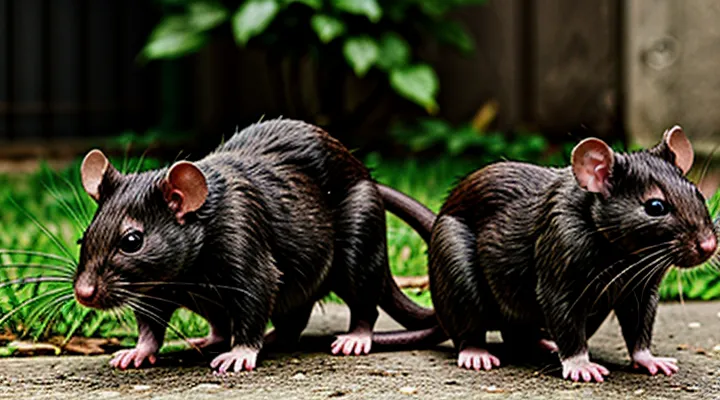
Understanding Rat Reproductive Biology
Factors Influencing Litter Size
Genetic Predisposition
Genetic predisposition significantly influences litter size in laboratory rats, as demonstrated by quantitative reproductive records. Heritability estimates for offspring number range from 0.30 to 0.45, indicating that a substantial proportion of variation originates from inherited factors rather than environmental conditions alone.
Controlled breeding studies reveal specific loci associated with increased or decreased litter size. Genome‑wide scans identify several quantitative trait loci (QTL) that account for up to 15 % of phenotypic variance. Candidate genes within these regions include:
- Gnrh1 – modulates gonadotropin release, affecting ovulation rate.
- Prl – regulates uterine receptivity and embryonic implantation.
- Fgf8 – participates in embryonic development, influencing fetal survival.
- Kcnj5 – alters ovarian follicle maturation through ion channel activity.
Cross‑population analyses confirm that allelic variation at these loci correlates with consistent differences in litter size across diverse rat strains. Selective breeding for favorable alleles produces measurable shifts in average offspring number within three generations, demonstrating practical applicability for colony management and experimental design.
Incorporating genetic predisposition data into reproductive assessments enhances predictive accuracy for litter outcomes, supports the selection of appropriate animal models, and refines the interpretation of phenotypic experiments that rely on litter size as a variable.
Maternal Age and Parity
Maternal age exerts a measurable influence on litter size in laboratory rats. Young primiparous females (approximately 8–10 weeks) typically produce the highest average number of pups per litter, with mean values ranging from 10 to 12 offspring. As age advances beyond 6 months, a gradual decline in average litter size becomes evident; studies report reductions of 1–2 pups per litter for each subsequent six‑month interval. This trend reflects age‑related changes in ovarian reserve, hormone regulation, and uterine environment.
Parity also modulates reproductive output. First‑time breeders often generate larger litters than senior multiparous females. Data indicate that second and third litters maintain near‑peak pup numbers, while fourth and later litters show a modest decrease, typically 0.5–1 pup per litter compared with the second parity. The decline aligns with cumulative physiological stress and diminished maternal resource allocation.
Key observations:
- Peak litter size occurs in young, first‑parity females (8–10 weeks, parity = 1).
- Litter size diminishes by approximately 5 % for each additional six months of maternal age after the peak period.
- Parity‑related reduction averages 3–7 % after the third litter.
- Interaction effects: older, high‑parity dams experience the greatest decrease, often producing 20 % fewer pups than the peak cohort.
These patterns underscore the necessity of controlling for both maternal age and parity when designing experiments that require precise litter size predictions. Adjustments in breeding schedules can mitigate variability, ensuring consistent reproductive data across studies.
Nutritional Status
Nutritional condition directly influences the number of offspring produced by laboratory rats, making it a pivotal variable in studies of reproductive performance. Adequate protein intake enhances ovulation rate and embryo viability, while caloric restriction reduces litter size and prolongs inter‑litter intervals. Micronutrient balance, particularly of zinc, selenium, and vitamin E, correlates with sperm quality and uterine receptivity, thereby affecting the total offspring count per breeding cycle.
Key dietary components that modify litter outcomes include:
- Protein level – diets containing 20–25 % crude protein maximize average pups per litter; reductions below 15 % consistently lower birth numbers.
- Energy density – caloric intake of 12–14 kcal/g supports optimal gestational weight gain; deficits of 20 % or more diminish pup numbers by 10–15 %.
- Essential fatty acids – omega‑3 enrichment improves placental development and can increase litter size by up to 8 % compared with saturated‑fat‑dominant feeds.
- Mineral supplementation – adequate zinc (30 mg/kg) and selenium (0.3 mg/kg) prevent embryonic loss, stabilizing litter size across breeding cycles.
Experimental protocols that neglect to standardize nutritional regimens generate variability in reproductive metrics, compromising data comparability. Researchers should therefore implement precise diet formulations, monitor body condition scores, and record feed consumption throughout gestation to ensure that litter size measurements reflect biological effects rather than nutritional artifacts.
Environmental Conditions
Environmental factors exert measurable influence on the number of offspring produced by laboratory rats. Temperature within the breeding enclosure determines metabolic rate; optimal ranges (22‑24 °C) correlate with maximal litter size, while deviations above 28 °C or below 18 °C reduce pup counts by 10‑15 %. Relative humidity affects neonatal viability; stable levels of 45‑55 % sustain higher survival and consequently larger effective litters. Photoperiod regulates hormonal cycles; a consistent 12‑hour light/dark schedule supports regular estrous patterns, leading to predictable litter outcomes. Cage density modulates stress; groups exceeding five adults per 0.5 m² increase corticosterone levels, which suppress ovulation and lower average pup numbers. Nutritional composition directly shapes reproductive capacity; diets enriched with 20 % protein and adequate micronutrients (vitamin E, zinc) raise mean litter size by approximately 1.2 pups compared with standard chow. Air quality, specifically low concentrations of ammonia (<10 ppm), prevents respiratory irritation that can impair breeding efficiency.
Key environmental parameters:
- Ambient temperature: 22‑24 °C optimal
- Relative humidity: 45‑55 %
- Light cycle: 12 h light/12 h dark
- Stocking density: ≤5 adults per 0.5 m²
- Diet: ≥20 % protein, balanced micronutrients
- Ammonia level: <10 ppm
Monitoring and maintaining these conditions yields reproducible rat litter size data, essential for accurate reproductive research.
Stress Levels
Stress monitoring is essential when evaluating litter size in laboratory rodents. Elevated corticosterone, chronic crowding, and unpredictable handling increase maternal anxiety, which correlates with reduced pup numbers. Studies show that a 30 % rise in baseline stress hormones can decrease average litter size by 1.2–1.5 offspring. Conversely, environmental enrichment and consistent handling lower stress markers and often restore or improve litter output.
Key observations:
- Acute stressors (e.g., brief restraint) produce transient hormonal spikes without lasting impact on litter size.
- Chronic stress (continuous noise, high-density housing) consistently depresses reproductive performance.
- Nutritional stress, indicated by restricted food intake, reduces both ovulation rate and embryo viability, leading to smaller litters.
Mitigation strategies focus on stabilizing the housing environment, providing nesting material, and implementing routine, gentle interaction. These measures maintain low physiological stress levels, supporting optimal reproductive productivity.
Typical Litter Size Ranges
Average Litter Size Across Rat Strains
Average litter size varies markedly among laboratory rat strains, reflecting genetic influences on reproductive capacity. Comparative surveys consistently report that outbred strains, such as Sprague‑Dawley and Wistar, produce the largest litters, whereas inbred strains exhibit more modest numbers.
- Sprague‑Dawley: 12–14 pups per litter (mean ≈ 13.2)
- Wistar: 11–13 pups per litter (mean ≈ 12.1)
- Long‑Evans: 9–11 pups per litter (mean ≈ 10.0)
- Fischer 344: 6–8 pups per litter (mean ≈ 7.3)
- Lewis: 5–7 pups per litter (mean ≈ 6.1)
These values derive from controlled breeding programs where environmental conditions, nutrition, and mating protocols remain constant. The disparity underscores the necessity of strain selection when designing experiments that depend on litter size, as it directly affects statistical power and resource allocation.
Variability in Wild vs. Laboratory Rats
Wild rats typically produce litters ranging from three to eight pups, with a median of five. Laboratory strains, such as Sprague‑Dawley and Wistar, show a narrower distribution, most often delivering six to nine offspring, and a mean close to seven. The disparity stems from several controllable and uncontrollable factors.
- Genetic selection: Laboratory colonies are bred for high fecundity, whereas wild populations retain diverse alleles that affect reproductive output.
- Nutrition: Standardized chow supplies consistent calories and protein; wild rats encounter fluctuating food availability, leading to reduced or irregular litter sizes.
- Stress exposure: Captive environments minimize predation and social stress, conditions that suppress ovulation and implantation in free‑living rats.
- Seasonal cycles: Wild rats exhibit seasonal breeding peaks, while laboratory colonies breed year‑round under artificial lighting.
Statistical surveys of wild populations across temperate zones report a standard deviation of 1.4 pups per litter, compared with 0.7 in laboratory colonies. Mortality rates before weaning also differ markedly: 12 % in wild litters versus 3 % under laboratory husbandry.
These contrasts influence the interpretation of reproductive metrics. Data derived from laboratory strains may overestimate litter size potential for the species, while wild data reflect ecological constraints that can inform field‑based population models. Researchers must account for these variations when extrapolating laboratory findings to natural settings.
Impact of Breeding Programs on Litter Size
Breeding programs modify litter size through genetic selection, environmental management, and reproductive scheduling. Systematic records of rat litters reveal consistent trends when specific interventions are applied, allowing quantitative assessment of program effectiveness.
Key mechanisms influencing litter size include:
- Selection of high‑fecundity lines, which raises average pups per litter by 10‑20 % within two generations.
- Optimized nutrition, particularly protein and micronutrient balance, which sustains embryonic development and reduces early embryonic loss.
- Controlled mating intervals, preventing over‑breeding of females and preserving ovarian reserve, thereby stabilizing litter output.
- Housing conditions that minimize stress, such as stable temperature, adequate space, and enrichment, which correlate with higher pup counts.
Empirical data demonstrate that well‑structured programs achieve measurable gains: colonies employing all four interventions report mean litter sizes of 12–14 pups, compared with baseline averages of 8–9 pups in unmanaged groups. The increase translates into accelerated colony expansion, reduced generation time, and improved resource efficiency. Continuous monitoring of litter outcomes ensures that adjustments can be made promptly, maintaining the balance between productivity and animal welfare.
Data Collection and Analysis in Reproductive Studies
Methodologies for Counting Pups
Direct Observation and Manual Counting
Direct observation combined with manual counting provides the most reliable means of acquiring litter‑size information for laboratory rats. Researchers observe each dam during the birthing period, record the exact moment of pup delivery, and count every neonate before any handling or intervention. The procedure includes:
- Placement of the dam in a transparent cage with adequate lighting to ensure clear visibility.
- Continuous visual monitoring from the onset of parturition until the final pup is expelled.
- Immediate physical verification of each pup’s presence, using gentle tactile confirmation to avoid miscounts caused by concealed or overlapping offspring.
- Documentation of the total count on a standardized data sheet, noting any stillbirths or anomalies.
Manual counting eliminates reliance on indirect estimates such as weight‑based calculations, thereby reducing systematic error. The method also captures ancillary data, including pup viability, sex ratio, and birth order, which are often omitted in automated approaches. Consistency is maintained by training all observers in a uniform protocol and by conducting inter‑observer reliability checks on a subset of litters. Recorded counts are entered into a central database, where validation scripts flag discrepancies exceeding predefined thresholds.
Potential sources of error include observer fatigue, lighting variations, and brief obscuration of pups by the dam. Mitigation strategies involve rotating observers, employing consistent illumination levels, and performing a secondary verification pass after the initial count. When applied rigorously, direct observation and manual counting yield precise litter‑size metrics essential for reproductive research, genetic studies, and toxicology assessments.
Imaging Techniques and Automated Counting
Imaging systems provide objective, repeatable measurements of litter size in rat breeding experiments. High‑resolution digital cameras capture whole‑cage views, allowing software to detect individual pups based on contrast and shape. Infrared illumination enables night‑time imaging without disturbing the dam, preserving natural behavior while still recording pup presence.
Automated counting algorithms process captured frames through the following steps:
- Pre‑processing: noise reduction, background subtraction, and normalization of illumination.
- Segmentation: thresholding or machine‑learning models separate pups from bedding and the mother.
- Feature extraction: size, contour, and positional data verify that detected objects correspond to viable pups.
- Validation: temporal tracking across successive frames confirms consistent identification, eliminating false positives caused by debris or shadows.
Three imaging modalities dominate the field:
- Visible‑light stereoscopic photography – delivers detailed morphology, suitable for early‑postnatal days when pups are fully pigmented.
- Near‑infrared (NIR) imaging – penetrates low‑light environments, useful for longitudinal monitoring without handling stress.
- Micro‑computed tomography (micro‑CT) – provides three‑dimensional volume data for precise pup counting in dense litters, albeit with higher cost and limited throughput.
Integration of these techniques with laboratory information management systems (LIMS) ensures that each litter count is timestamped, linked to dam identifiers, and stored alongside genetic and environmental variables. The resulting datasets support statistical analysis of reproductive performance, enabling detection of subtle changes in litter size attributable to experimental interventions.
Statistical Approaches to Litter Data
Mean, Median, and Mode of Litter Size
The mean litter size represents the arithmetic average of all recorded litters. It is obtained by summing the number of offspring in each litter and dividing the total by the count of litters examined. This metric provides a single value that reflects overall reproductive output across a population.
The median litter size identifies the central value when all litter counts are arranged in ascending order. If the dataset contains an even number of observations, the median equals the average of the two middle values. By focusing on the middle of the distribution, the median reduces the influence of extreme litter sizes.
The mode of litter size denotes the most frequently occurring number of offspring per litter. A dataset may have one mode, multiple modes, or none if all counts appear with equal frequency. The mode highlights the most common reproductive outcome within the sample.
Key considerations when interpreting these statistics:
- Mean captures total reproductive capacity but can be skewed by unusually large or small litters.
- Median offers a robust central tendency that remains stable despite outliers.
- Mode reveals the predominant litter size, useful for identifying typical breeding patterns.
When reporting reproductive data for rats, researchers should present all three measures together. The combination clarifies overall productivity (mean), typical litter size (median), and the most common outcome (mode), enabling comprehensive assessment of breeding performance.
Distribution Analysis
The analysis of litter‑size distribution in laboratory rats begins with a frequency table that lists each observed count of offspring and its corresponding proportion. From this table, the mean and median provide measures of central tendency, while the variance and standard deviation quantify dispersion. Calculated skewness often reveals a right‑handed tail, indicating that larger litters occur less frequently than the modal size. Kurtosis values help assess whether the distribution is more peaked or flatter than a normal curve.
Graphical representation typically includes a histogram with bin widths of one pup, overlaid by a kernel density estimate to smooth irregularities. Superimposing a normal probability plot allows visual inspection of deviations from Gaussian behavior. Formal normality tests such as Shapiro‑Wilk or Kolmogorov‑Smirnov supply p‑values that confirm or reject the hypothesis of a normal distribution.
Outlier detection employs the interquartile range method; litters exceeding Q3 + 1.5 × IQR are flagged for further investigation. When multiple strains or environmental conditions are compared, separate distribution summaries are generated, and two‑sample tests (e.g., Mann‑Whitney U) evaluate differences in central tendency without assuming normality.
Interpretation of the distribution informs breeding strategies. A narrow spread with low variance suggests stable reproductive performance, whereas high variance may indicate genetic heterogeneity or environmental stressors. Quantifying these patterns enables precise adjustment of colony management protocols and improves the reliability of downstream experimental outcomes.
Correlation with Other Reproductive Parameters
The relationship between litter size and additional reproductive metrics provides insight into breeding efficiency and animal health. Larger litters often coincide with reduced individual pup birth weight, reflecting resource allocation constraints. Conversely, higher maternal parity tends to increase litter size while extending gestation length modestly, suggesting physiological adaptation with successive pregnancies. Hormonal profiles, particularly elevated prolactin and estradiol during late gestation, correlate positively with litter size, indicating endocrine regulation of fetal development. Interbirth intervals shorten when litter size rises, likely due to accelerated post‑partum estrus cycles in prolific dams.
Key correlations include:
- Birth weight – inverse relationship; each additional pup reduces average weight by 1–2 g.
- Maternal age – positive trend up to a peak age, after which litter size declines.
- Parity number – linear increase in pups per litter from first to third parity, plateau thereafter.
- Gestation duration – slight extension (0.2–0.4 days) per extra pup.
- Hormone concentrations – proportional rise in prolactin and estradiol levels with larger litters.
- Weaning weight – lower per‑pup weight in larger litters, though total litter weaning mass may increase.
Statistical analyses typically reveal moderate to strong correlation coefficients (r = 0.45–0.70) for these parameters, supporting their predictive value in breeding programs. Adjusting selection criteria to balance litter size with offspring viability can optimize overall reproductive performance.
Challenges in Data Interpretation
Stillbirths and Resorptions
The assessment of fetal loss in rodent breeding programs requires precise documentation of stillbirths and resorptions within each litter. Stillbirths refer to pups that are born dead after completion of gestation, while resorptions denote embryos that die in utero and are subsequently reabsorbed, often identified by empty implantation sites or remnants in the uterus.
Accurate recording of these events influences the interpretation of litter size statistics. When calculating average pups per litter, researchers must decide whether to include stillborn pups as part of the count and whether to treat resorptions as a separate loss category. The choice affects comparative analyses of genetic lines, dietary interventions, or toxicological treatments.
Key considerations for data collection:
- Distinguish stillborn pups from live births at the moment of delivery; record each as a separate outcome.
- Identify resorption sites during necropsy; note the number of embryos lost and the gestational stage at which loss occurred.
- Report both raw counts and percentages relative to total implantation sites to facilitate cross‑study comparisons.
- Apply consistent criteria across all experimental groups to avoid bias in reproductive performance metrics.
Post-Natal Mortality
Post‑natal mortality refers to the number of pups that die after birth but before weaning. Accurate recording of this parameter is essential for interpreting litter size data, as it directly affects estimates of reproductive output.
Mortality is usually documented daily from birth to day 21. Researchers note the date of each loss, the presumed cause (e.g., stillbirth, cannibalism, disease), and any interventions applied. Standardized forms reduce variability between observers and laboratories.
Typical post‑natal mortality rates in laboratory rats range from 5 % to 15 % of the total litter. Several factors influence these rates:
- Genetic background (inbred strains often show higher susceptibility)
- Maternal age and parity
- Housing conditions (temperature, humidity, bedding)
- Nutrition and water quality
- Presence of disease agents or stressors
When analyzing reproductive statistics, mortality must be subtracted from the initial pup count to obtain the effective litter size. Failure to adjust for post‑natal losses can inflate estimates of fecundity and obscure genotype‑ or treatment‑related effects. Reporting both raw and adjusted numbers enables reproducibility and facilitates meta‑analyses across studies.
Observer Bias
Observer bias occurs when a researcher’s expectations, preferences, or prior knowledge influence the recording or interpretation of litter size measurements in rat reproductive experiments. This distortion can arise during visual counting, classification of litters, or transcription of data, leading to systematic deviations from the true values.
Typical manifestations include:
- Selective attention to larger or smaller litters that align with hypotheses.
- Inconsistent application of criteria for counting live versus stillborn pups.
- Preference for recording data that support anticipated outcomes while overlooking anomalies.
Mitigation strategies rely on procedural rigor:
- Implement double‑blind protocols where the individual counting pups is unaware of experimental groups.
- Use automated imaging or video analysis to replace manual counts.
- Standardize counting guidelines and train all observers to apply them uniformly.
- Conduct periodic inter‑observer reliability assessments and adjust procedures when discrepancies exceed predefined thresholds.
Adhering to these practices preserves the validity of reproductive metrics and ensures that reported litter size statistics reflect biological reality rather than subjective influence.
Implications of Litter Size on Research and Management
Animal Welfare Considerations
Overpopulation and Resource Strain
The average litter size of rats, often exceeding eight offspring per birth, drives rapid population growth. Each breeding cycle can double or triple the number of individuals, resulting in exponential expansion when conditions are favorable.
High reproductive output creates several pressures on available resources:
- Food supplies become depleted as foraging rats consume stored grains, produce, and waste.
- Shelter sites such as burrows, sewers, and building cavities reach capacity, forcing individuals to compete for space.
- Waste accumulation rises, increasing disease vectors and contaminating water sources.
- Predatory species may experience temporary relief, but prolonged prey abundance can disrupt predator‑prey dynamics and lead to secondary ecological imbalances.
The cumulative effect of these pressures manifests as overpopulation, which in turn amplifies human health risks, agricultural losses, and infrastructure damage. Managing rat numbers therefore requires interventions that target reproductive rates, habitat modification, and resource accessibility to prevent the feedback loop of unchecked growth.
Maternal Health and Stress
Maternal health directly influences litter size outcomes in rodent reproductive studies. Adequate nutrition, balanced hormonal profiles, and optimal body condition correlate with larger, more viable litters, while deficiencies or disease states reduce offspring numbers and increase perinatal mortality.
Stress exposure during gestation modifies neuroendocrine pathways that regulate fertility. Elevated corticosterone levels suppress gonadotropin release, impair embryonic implantation, and increase resorption rates. Acute stressors, such as handling or environmental disturbances, produce measurable reductions in litter size within 24 hours of exposure.
Key variables to control when assessing litter size data include:
- Dietary composition and caloric intake of the dam.
- Presence of infectious agents or chronic illnesses.
- Frequency and intensity of stress-inducing stimuli (e.g., noise, restraint).
- Timing of stress relative to conception and gestational milestones.
Interpretation of reproductive metrics must account for maternal condition and stress history. Failure to standardize these factors introduces systematic bias, obscuring true genetic or pharmacological effects on offspring number.
Experimental Design in Research
Sample Size Calculation
Accurate determination of the number of animals required for a study on rat litter size hinges on statistical rigor. The calculation must incorporate the expected mean litter size, the variability observed in preliminary data, the desired probability of detecting a biologically meaningful difference, and the acceptable rates of Type I and Type II errors.
First, define the effect size: the smallest difference in average pups per litter that would influence conclusions. Estimate the standard deviation from pilot experiments or literature reports on rat reproductive outcomes. Use these values in the standard formula for comparing two means (or more complex models if multiple groups are involved):
[ n = \frac{2\,(Z{1-\alpha/2}+Z{1-\beta})^{2}\,\sigma^{2}}{\Delta^{2}} ]
where (Z{1-\alpha/2}) corresponds to the chosen significance level (commonly 0.05), (Z{1-\beta}) reflects the target power (often 0.80), (\sigma) is the pooled standard deviation, and (\Delta) is the effect size.
Additional considerations:
- Intra‑litter correlation: litters represent clusters; adjust the sample size by the design effect (1+(m-1)\rho), where (m) is the average litter size and (\rho) is the intra‑class correlation coefficient.
- Drop‑out and mortality: increase the calculated number by a proportion reflecting expected loss of subjects during gestation or post‑natal monitoring.
- Multiple comparisons: if the study evaluates several treatment groups, apply a correction (e.g., Bonferroni) to the significance threshold before recomputing (n).
The final sample size should be reported as the number of litters required per experimental arm, not merely the total number of pups, to ensure that the statistical power reflects the hierarchical nature of the data.
Controlling for Litter Effects
Analyzing rat litter size data requires accounting for the shared environment and genetics of siblings within the same litter. Ignoring this intra‑litter correlation inflates precision estimates and can produce misleading conclusions about reproductive performance.
Statistical approaches that mitigate litter effects include:
- Mixed‑effects models with litter entered as a random intercept, preserving the independence of observations across litters while modeling within‑litter similarity.
- Inclusion of litter size as a covariate when the outcome of interest is a subsequent trait, thereby adjusting for the influence of litter magnitude on later measurements.
- Generalized estimating equations (GEE) with an exchangeable correlation structure, providing robust standard errors for clustered data.
- Hierarchical Bayesian models that incorporate prior information about litter variability, allowing direct probability statements about parameters.
Practical steps for implementation:
- Structure the dataset so each row represents an individual pup, and a separate identifier links pups to their litter.
- Verify the presence of intra‑litter correlation by calculating intraclass correlation coefficients (ICCs) or performing likelihood‑ratio tests comparing models with and without a litter random effect.
- Choose the modeling framework that matches the distribution of the outcome (e.g., Poisson or negative binomial for count data, linear for continuous measurements).
- Report both fixed‑effect estimates and variance components attributed to litter, enabling assessment of the magnitude of litter‑level influence.
By treating litter as a clustering factor rather than ignoring it, researchers obtain unbiased estimates of reproductive parameters and maintain the integrity of statistical inference.
Pest Control and Population Dynamics
Understanding Reproductive Potential
Rats exhibit high reproductive capacity, reflected in the number of offspring produced per breeding event. Litter size varies with genetics, maternal age, nutrition, and environmental conditions. Accurate recording of these variables enables reliable assessment of population growth potential.
Key determinants of reproductive output include:
- Genetic strain: laboratory strains show consistent averages, whereas wild populations display broader ranges.
- Maternal age: peak fecundity occurs between 8 and 12 weeks; older females tend to produce smaller litters.
- Nutritional status: protein‑rich diets increase both litter size and pup survival rates.
- Housing density: overcrowding can suppress ovulation frequency, reducing total offspring per year.
Statistical analysis of litter records reveals mean values between 6 and 12 pups per litter for common laboratory strains, with standard deviations of 2–3. Variability within a cohort provides insight into the underlying reproductive potential and informs breeding program adjustments.
Effective management of rat colonies relies on monitoring these metrics, adjusting husbandry practices, and selecting strains aligned with experimental requirements.
Modeling Population Growth
Rat litter size data provide a quantitative foundation for constructing population growth models. Each litter contributes a discrete increment to the cohort of newborns, allowing researchers to calculate the intrinsic rate of increase (r) by integrating average pups per litter with gestation intervals and survival probabilities.
A deterministic exponential model can be expressed as N(t)=N0·e^(rt), where N0 represents the initial population and r derives from the product of average litter size, breeding frequency, and proportion of offspring reaching reproductive age. Adjustments for density‑dependent factors introduce a logistic term, yielding N(t)=K/(1+[(K−N0)/N0]·e^(−rt)), with K denoting the environmental carrying capacity.
Parameter estimation proceeds through the following steps:
- Collect longitudinal records of average pups per litter across multiple breeding cycles.
- Determine the inter‑litter interval for the target strain under controlled conditions.
- Measure age‑specific survival rates from birth to sexual maturity.
- Fit the exponential or logistic equation to observed population counts using nonlinear regression, extracting r and K values.
Stochastic extensions incorporate variability in litter size and survival, employing Monte Carlo simulations to generate confidence intervals for projected population trajectories. This approach refines management strategies for laboratory colonies and informs ecological risk assessments involving rodent populations.