
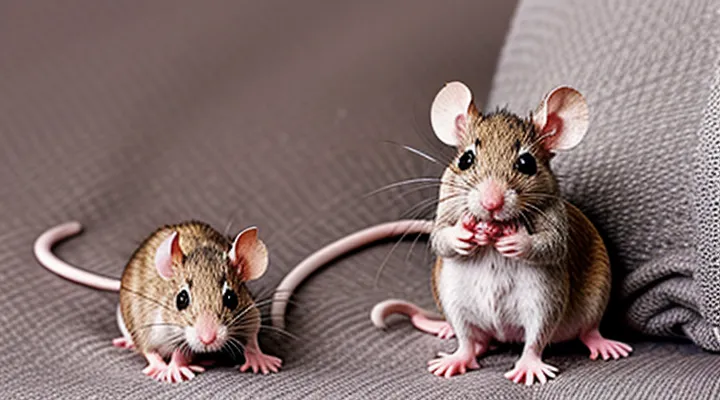
The Miraculous Birth of Mouse Pups
From Gestation to Arrival: A Rapid Journey
The gestation period for laboratory mice averages 19‑21 days, a timeframe that compresses embryonic development into less than three weeks. Fertilization occurs in the oviduct, after which the embryo migrates to the uterus and implants within 24 hours. During the remaining days, rapid cell division forms the organ systems required for independent survival.
Birth, known as parturition, typically takes place during the dark phase of the light cycle. A litter may contain 5‑12 pups, each weighing 1‑2 grams at delivery. The neonates are hairless, blind, and deaf; thermoregulation relies entirely on the dam’s body heat. Immediate post‑natal behaviors include:
- Crawling toward the nipples within minutes of birth.
- Initiating suckling reflexes to obtain colostrum, rich in antibodies.
- Remaining clustered to maintain warmth and reduce exposure to predators.
The first 24 hours are critical for establishing the mother‑infant bond. The dam regularly cleans each pup, stimulating circulation and preventing hypothermia. By day 2, the pups’ ears begin to open, and the eyes start to develop pigment, though visual acuity remains limited until day 10‑12. Weight gain follows a predictable curve: an increase of approximately 0.1 g per day, reaching 6‑8 g by the end of the first week.
Photographic documentation of these stages captures:
- The translucent skin and visible blood vessels of a newborn.
- The progressive emergence of fur patterns during the third day.
- The first visible eye opening around day 12.
Accurate visual records, combined with precise measurements of growth metrics, provide essential data for researchers studying developmental biology, genetics, and disease models.
Litter Size and Appearance: Tiny Beginnings
Newborn mouse litters usually contain between five and eight pups, although some strains produce as few as three or as many as twelve. The number of offspring is influenced by genetics, maternal age, and environmental conditions such as temperature and nutrition. Larger litters often result in slightly lower average birth weights because the uterine space and milk supply are divided among more individuals.
Physical characteristics of mouse pups are uniform across most laboratory strains. At birth, each pup measures approximately 1 cm in total length and weighs 1–2 g. The body is covered with a fine, downy coat that lacks the pigmentation seen in adults. Eyes remain sealed, and the ears are flat against the head. Limbs are proportionally short, with forepaws and hind paws barely distinguishable from the torso. The tail is short, hairless, and curls around the body.
Key measurements for the first 24 hours:
- Length: 0.9–1.2 cm
- Weight: 1.0–2.2 g
- Coat: soft, pinkish‑white fur
- Eyes: closed, opening begins around day 12
- Ears: flattened, develop curvature after day 7
These parameters provide a baseline for assessing normal development and detecting early health issues in neonatal mice.
The First Hours: Fragility and Instinct
Naked and Helpless: Early Vulnerabilities
Newborn mouse pups emerge hairless, eyes sealed, and unable to regulate body temperature. Their skin lacks insulating fur, making them highly susceptible to ambient temperature fluctuations. Within the first 24 hours, a drop of a few degrees Celsius can trigger hypothermia, which rapidly impairs metabolic function.
Mobility is absent; forelimbs and hindlimbs are present but incapable of coordinated movement. Pups cannot crawl to the nest, locate the mother’s nipples, or escape hazards. Consequently, they rely entirely on maternal care for warmth, nutrition, and protection from predators and environmental stressors.
Sensory systems are immature. The auditory canal is closed, and the olfactory epithelium is underdeveloped, limiting the ability to detect the mother’s scent or vocalizations. Vision remains nonfunctional until the eyes open around day 14, eliminating visual cues for orientation.
Key physiological vulnerabilities during the first days include:
- Thermoregulation deficiency: Absence of fur and underdeveloped brown adipose tissue reduce heat production.
- Nutritional dependence: Stomach and intestines are not yet fully mature; milk intake must occur within minutes of birth to prevent dehydration.
- Immune immaturity: Adaptive immunity is undeveloped; passive immunity derives solely from maternal antibodies transferred through colostrum.
- Limited reflexes: The righting reflex and suckling reflex emerge gradually, with full functionality typically achieved by day 4–5.
These constraints render the initial postnatal period a critical window for survival, demanding continuous maternal presence and optimal environmental conditions.
The Role of the Mother: Nurturing Instincts
Licking and Cleaning: Essential Care
Newborn mouse pups rely on maternal licking to stay dry, stimulate circulation, and trigger urination and defecation. The mother’s tongue also deposits antimicrobial saliva that reduces pathogen load on the skin. When a dam is absent or unable to care for the litter, human caretakers must replicate these actions to prevent hypothermia, dehydration, and infection.
Key actions for supplemental care:
- Gently wipe each pup with a soft, lint‑free swab dipped in sterile, warm saline. Avoid excessive pressure that could damage delicate skin.
- Apply a thin layer of sterile, petroleum‑based ointment to the paws and snout if the pups appear dry. The ointment creates a barrier against moisture loss.
- Use a pre‑warmed heating pad set to 30 °C, placing pups on a clean, absorbent pad. Monitor temperature continuously; prolonged exposure above 32 °C can cause burns.
- Stimulate elimination by lightly stroking the genital area with a sterile cotton tip. Perform the motion once every two hours for the first 48 hours, then reduce frequency as the pups mature.
- Record weight and temperature after each cleaning session. A decline of more than 5 % in body weight indicates inadequate care and requires immediate veterinary consultation.
Consistent replication of maternal licking and cleaning maintains skin integrity, supports thermoregulation, and promotes normal development during the earliest days of life.
Retrieving Runaways: Keeping the Nest Safe
Newborn mouse pups cling to the nest for the first 48 hours, relying on the dam’s warmth and milk. During this period, a small number may wander away, attracted by temperature gradients or vibrations.
Pup escape poses immediate threats: hypothermia, dehydration, predation, and loss of maternal care. A missing pup reduces litter size and can trigger stress responses in the dam, impairing overall litter health.
Effective retrieval follows a systematic approach:
- Observe the dam continuously for the first two days; note any gaps in the litter.
- Locate the pup by following its scent trail; mouse scent glands emit a distinct odor detectable within a few centimeters.
- Gently coax the pup back using a soft brush or fingertip; avoid sudden movements that could startle the dam.
- Return the pup to the nest, ensuring it contacts the dam’s abdomen for immediate nursing.
Preventive actions maintain nest security:
- Provide ample nesting material (e.g., shredded paper, cotton) to create a deep, insulating cavity.
- Keep the cage temperature between 28 °C and 30 °C; lower temperatures encourage pups to seek warmth elsewhere.
- Minimize disturbances such as loud noises, vibrations, or frequent cage cleaning during the first 48 hours.
- Monitor the dam for signs of neglect; intervene promptly if she repeatedly pushes pups out of the nest.
Implementing these measures reduces pup loss, supports optimal growth, and preserves the integrity of the early‑life environment.
Day-by-Day Development: A Visual Timeline
Day 1-3: Sensory Deprivation and Dependence
Blind and Deaf: Relying on Touch and Smell
Newborn mice enter the world without functional vision or hearing. Their eyes remain closed for the first 10‑12 days, and the auditory canal does not open until around day 14. Survival during this period depends on tactile and olfactory cues.
The whisker pads, or vibrissae, are fully formed at birth. These hairs detect minute air currents and surface textures, allowing pups to locate the nest, follow the dam’s body, and maintain position while nursing. Skin receptors transmit pressure and temperature information, guiding the suckling reflex and preventing falls from the nest.
Olfaction develops rapidly. Amniotic fluid scent, maternal urine, and the dam’s breast odor create a chemical map of the nest. Pups recognize these odors within hours, using them to identify the mother and differentiate nest material from foreign objects. The olfactory bulb shows high activity during the first three days, supporting immediate reliance on smell.
Key developmental milestones:
- Day 0‑2: Closed eyes, sealed ear canals; whisker movement initiates exploratory touch.
- Day 3‑5: Increased vibrissae sensitivity; strong preference for maternal scent.
- Day 6‑9: Enhanced skin mechanoreceptor response; coordinated crawling toward heat sources.
- Day 10‑12: Eyes begin to open; auditory canal remains sealed, reinforcing reliance on touch and smell.
Maternal behavior complements these sensory strategies. The dam emits a consistent pheromonal profile and maintains a warm, textured nest that provides the necessary tactile feedback. Pups that fail to respond to these cues exhibit reduced growth and higher mortality.
In summary, blind and deaf newborn mice compensate with fully functional tactile and olfactory systems. Whisker‑driven touch and chemically encoded maternal scents constitute the primary information channels that sustain life during the first days after birth.
Constant Nursing: Fueling Rapid Growth
Constant nursing drives the accelerated development observed in the first week of life for laboratory mice. Newborn pups receive milk at intervals of 1–2 hours, with each nursing bout lasting 10–15 minutes. This schedule supplies a steady influx of calories, proteins, and antibodies essential for tissue synthesis and immune protection.
- Milk composition: high in whey proteins (≈70 % of total protein), rich in essential amino acids, and contains 10–12 % fat, providing dense energy.
- Caloric intake: ≈150 kcal per gram of milk; pups ingest ≈0.5 g daily, supporting a weight gain of 1.5–2 g per day.
- Hormonal cues: prolactin and oxytocin released during suckling stimulate gut maturation and thermoregulation.
Maternal behavior reinforces constant access to nourishment. The dam maintains nest temperature at 30–32 °C, preventing hypothermia that would otherwise divert energy from growth. She also positions herself to allow simultaneous feeding of multiple pups, reducing competition and ensuring uniform intake.
Rapid somatic growth correlates with specific physiological milestones. By day 3, skeletal muscle fibers increase in cross‑sectional area by 25 %, and by day 7, brain weight reaches 80 % of the adult proportion. These changes are directly linked to the uninterrupted supply of nutrients and growth factors delivered during each nursing session.
In summary, the combination of high‑frequency suckling, nutrient‑dense milk, and maternal thermoregulation creates a continuous growth‑supporting environment. This regimen enables newborn mice to achieve the substantial weight and organ development characteristic of their early postnatal period.
Day 4-7: Subtle Changes Begin
Pigmentation Development: First Hints of Color
Pigmentation in newborn laboratory mice becomes visible within the first 24–48 hours after birth. At this stage, melanocytes have migrated to the epidermis but melanin synthesis remains low, producing faint speckles on the ventral and dorsal fur.
Key characteristics of early coloration include:
- Location – Initial pigment appears on the head, ears, and paws, where hair follicles develop earliest.
- Intensity – Spots are pale gray or beige; full coloration emerges only after the second post‑natal week.
- Genetic influence – Coat‑color genes (e.g., Agouti, Extension) dictate the pattern of early pigment deposition.
- Environmental factors – Temperature and light exposure can modestly affect melanin production during the first days.
By day three, the pigment distribution follows the genetic template, allowing researchers to confirm strain identity without invasive procedures. Continued observation through the first week reveals progressive darkening as melanogenic enzymes increase activity, culminating in the definitive adult coat pattern by the end of the third week.
Early Movements: Wriggling and Exploring
Newborn mice display rapid motor activity within the first 24–48 hours after birth. Muscular contractions generate a characteristic wriggling motion that propels the pup forward on the nest surface. This movement relies on spinal reflex arcs, which function before cortical control develops.
Key features of early locomotion include:
- Alternating hind‑limb kicks that create a sinuous body wave.
- Occasional fore‑limb extensions that assist in repositioning.
- Spontaneous turning when tactile cues from littermates are detected.
Exploratory behavior emerges as sensory receptors mature. Whisker contact with the nest material triggers head pivots, while temperature gradients guide the pup toward the dam’s body. Photographic documentation shows pups repeatedly shifting position, suggesting an innate drive to locate warmth and nourishment.
Day 8-12: Opening the World
Eyes Open: A New Perspective
The first visual experience for mouse pups occurs around post‑natal day 12‑14, when the eyelids separate and the retina begins to process external light. At this stage, the cornea is fully formed, pupil dilation responds to ambient illumination, and the brain’s visual cortex starts to receive patterned input.
Photographic documentation shows the gradual transition from opaque, pink eyelids to clear, translucent membranes revealing the developing iris. Close‑up images capture the emergence of a dark pupil surrounded by a faintly pigmented ring, indicating the beginning of melanin deposition.
Key observations during the eye‑opening window:
- Day 12: eyelid separation initiates; pup shows limited phototactic response.
- Day 13‑14: pupils react to light; visual tracking of moving objects appears.
- Day 15: contrast sensitivity improves; pups begin to explore the nest more actively.
- Day 16‑18: binocular coordination develops; grooming behavior increases.
These milestones correlate with measurable changes in neural activity recorded from the visual cortex, confirming that the onset of sight drives rapid synaptic refinement. The new perspective provided by high‑resolution images and precise timing data enhances understanding of sensory development and informs experimental designs that rely on visual cues in early‑life mouse studies.
Ears Unfurling: Sounds of the Nest
Newborn mice are born blind and deaf, yet their ears begin to open within the first 24‑48 hours. The cartilage that initially covers each auricle softens, allowing the pinna to separate from the head and assume a functional shape. This morphological change coincides with the onset of auditory perception, enabling the pups to detect vibrations and low‑frequency noises generated inside the nest.
The nest environment provides several characteristic sounds that guide survival behaviors:
- Mother’s vocalizations: low‑pitched chirps that signal nursing opportunities and reinforce pup‑mother bonding.
- Sibling movements: rustling of bodies and whisker contacts that convey the presence of nearby littermates and help maintain huddling temperature.
- External disturbances: faint thumps from cage bedding or equipment that trigger startle reflexes and encourage rapid orientation.
At the cellular level, the maturation of hair cells in the cochlea aligns with ear unfurling. By day three, the stereocilia exhibit increased stiffness, allowing transduction of mechanical stimuli into neural signals. Concurrently, the auditory brainstem circuitry begins to process these inputs, establishing the foundation for later vocal communication.
Understanding the timing of ear separation and the acoustic landscape of the nest informs best practices for laboratory housing. Providing a quiet, stable environment during the first 72 hours reduces stress, supports normal auditory development, and enhances the reliability of experimental observations involving sensory behavior.
Day 13-18: Growing Independence
First Steps: Wobbly Explorations
Newborn mice begin to move within the first 24 hours after birth, but their locomotion is unstable. Muscles are underdeveloped, and the forelimbs and hindlimbs lack coordinated strength. As a result, the pups crawl in a low, shuffling manner, often sliding on the nest surface while attempting to reach the mother’s nipple.
Typical characteristics of these early movements include:
- Irregular stride length; steps vary from 2 mm to 5 mm.
- Frequent loss of balance, leading to brief pauses and re‑orientation.
- Preference for staying close to the nest edge, where temperature and scent cues are strongest.
- Rapid increase in activity after the first 12 hours, coinciding with the onset of thermoregulation.
By day three, pups display more purposeful crawling, though wobbling persists. The transition from random shuffling to directed exploration is measurable through video analysis, which records the reduction in pause duration and the emergence of repeatable pathways toward the mother’s feeding area.
Solid Foods: A Dietary Transition
Solid foods represent the final stage of the nutritional shift that occurs during the first week of life in laboratory mice. By day five, the intestinal epithelium matures enough to permit limited enzymatic digestion of complex carbohydrates and proteins. At this point, the pups begin to explore the cage bedding and will ingest small particles of pelleted chow if presented alongside the dam’s milk.
Key physiological markers of readiness include:
- Increased villus height and crypt depth in the small intestine.
- Elevated expression of lactase and sucrase enzymes.
- Development of chewing motions observable in video recordings.
Nutrient composition of the initial solid diet must complement the high‑fat, high‑protein profile of maternal milk. Standard recommendations for the first solid feed consist of:
- Softened laboratory chow (approximately 30 % moisture) to facilitate swallowing.
- Gelatin‑based supplements enriched with glucose and essential amino acids.
- Small amounts of finely ground soy or casein isolates to supply additional protein.
Transition protocols typically involve:
- Introducing the softened chow at a single daily session lasting 10–15 minutes.
- Monitoring body weight daily; a stable or increasing weight indicates successful adaptation.
- Removing the solid source if weight loss exceeds 5 % within 48 hours, then reverting to exclusive nursing.
Research imaging of pups during this period shows increased exploratory behavior and a measurable rise in oral contact with non‑maternal substrates. These observations confirm that solid food intake begins as a behavioral response aligned with digestive capacity, marking the completion of the early dietary transition.
Social Interactions: Playful Beginnings
Newborn mice quickly establish tactile connections with littermates, using whisker contact and gentle nudges to locate each other in the nest. These early interactions create a framework for later social hierarchy and cooperative behaviors. The pups rely on scent cues from the mother’s fur and milk to differentiate siblings, reinforcing group cohesion.
During the first 48 hours, pups display the following playful behaviors:
- Light pawing of neighboring bodies, which stimulates movement and muscle development.
- Brief bouts of synchronized twitching that encourage reciprocal stimulation.
- Rapid head turning toward vocalizations, prompting mutual responsiveness.
By the end of the third day, the frequency of these exchanges increases, supporting neural circuit formation linked to social cognition. The pattern of tactile play observed in this period predicts the efficiency of later group coordination and stress resilience.
Threats and Survival: The Harsh Realities
Predation: Constant Dangers
Newborn mice spend their first 24–48 hours almost exclusively hidden in the nest, yet they remain exposed to a range of predators that can locate them by scent, sound, or motion. Primary threats include:
- Barn owls – silent flight and acute hearing allow detection of the faint rustle of a nest.
- Red-tailed hawks – visual acuity from high perches targets exposed litters during daylight.
- Weasels – slender bodies enable entry through narrow gaps, and they follow mouse scent trails directly to nests.
- Domestic cats – opportunistic hunters that investigate any disturbance near a burrow or shelter.
- Snakes – heat‑sensing abilities locate the warm bodies of clustered pups.
Predation pressure shapes the early behavior of both mothers and offspring. Mothers reduce movement and limit scent deposition while nursing, thereby decreasing the likelihood of detection. Newborns, still blind and deaf, rely on the nest’s insulation and the mother’s body heat to mask their presence. Even slight vibrations caused by a sibling’s shift can attract a predator, prompting the dam to rearrange pups to maintain a compact, less detectable cluster.
Survival statistics indicate that up to 70 % of litters experience at least one predation event within the first three days. Losses are most common when nests are positioned near open ground, under vegetation that provides predator perches, or when the mother is forced to leave the nest for extended periods to forage. Enhanced concealment, such as deeper burrows or placement beneath dense litter, correlates with higher pup retention rates.
Environmental Factors: Temperature and Humidity
Newborn mice depend on a stable thermal environment to maintain body temperature because they cannot generate sufficient heat through shivering. The optimal ambient temperature for the first 48 hours is 30 °C ± 2 °C. Temperatures below 28 °C cause rapid decline in core temperature, leading to hypothermia, reduced feeding, and increased mortality. Temperatures above 32 °C can induce hyperthermia, accelerating dehydration and metabolic stress.
Relative humidity should be kept between 55 % and 65 % during the initial days. Humidity lower than 50 % accelerates evaporative water loss from the pups’ skin, contributing to dehydration. Humidity higher than 70 % promotes fungal growth in nesting material and can impair respiration by increasing airway moisture.
Practical measures for maintaining these conditions include:
- Use a calibrated incubator or heated cabinet with a built‑in thermostat; verify temperature with an independent probe at pup level.
- Install a hygrometer to monitor relative humidity; adjust with a humidifier or desiccant as needed.
- Place a layer of soft, absorbent bedding to buffer temperature fluctuations while allowing airflow.
- Check temperature and humidity at least twice daily; record values to identify trends and respond promptly to deviations.
Failure to sustain the specified range within the first 72 hours markedly reduces survival rates. Consistent environmental control supports thermoregulation, hydration, and overall vigor of the newborn rodents.
Photography Tips: Capturing Tiny Wonders
Lighting Considerations: Soft and Natural
Photographing neonatal rodents requires illumination that preserves delicate features while preventing stress. Soft, natural light supplies a gentle spectrum that reduces glare and highlights subtle fur patterns without overwhelming the subjects.
Key attributes of suitable lighting include:
- Diffused daylight entering through a north‑facing window or a covered skylight, providing consistent color temperature.
- Indirect illumination achieved with white curtains or translucent panels that scatter light evenly across the enclosure.
- Low‑intensity sources positioned at a 45‑degree angle to avoid harsh shadows on the tiny bodies.
- Minimal heat output, ensuring ambient temperature remains within the optimal range for newborn mice.
When artificial augmentation is necessary, select LED panels rated for a color temperature of 5000–5600 K, set to the lowest brightness level, and place a diffusion fabric between the panel and the cage. Adjust exposure settings to compensate for reduced light intensity, preserving detail without increasing ISO noise. Consistent use of these practices yields clear, natural‑looking images that accurately reflect the early developmental stage.
Focus and Composition: Highlighting Details
Photographers documenting the earliest days of laboratory rodents must control visual emphasis to reveal anatomical and behavioral nuances. Precise focus isolates tiny features—soft fur, whisker buds, and delicate paws—while minimizing background distraction. Selecting a macro lens with a focal length of 90–105 mm provides a working distance that avoids disturbing the subjects and enables a shallow depth of field that isolates the newborn’s face.
Key compositional tactics include:
- Positioning the camera at eye level with the pup to capture a natural perspective.
- Using a neutral, low‑contrast backdrop to prevent color spill and maintain subject prominence.
- Employing diffused, cool‑temperature lighting to preserve the pale hue of newborn skin without creating harsh shadows.
- Applying the rule of thirds sparingly; centering the head often yields a more intimate portrayal of facial details.
- Capturing a sequence of images at varying focus planes to produce focus‑stacked composites that display the full depth of the tiny body.
Consistent exposure settings—ISO 200–400, aperture f/2.8–f/4—balance sharpness with sufficient light intake, reducing motion blur during the brief periods when the pups remain still. Post‑processing should limit contrast enhancement to retain the authentic texture of fur and skin, while sharpening selectively around the eyes and nose to accentuate the most informative structures.
By integrating these focus and composition strategies, images convey the physiological state of newborn rodents with scientific clarity, supporting accurate observation and documentation of their initial developmental stage.
Patience is Key: Waiting for the Moment
Observing the earliest hours of a mouse litter requires deliberate timing. Newborn pups remain motionless for several minutes after birth, allowing a clear view of their size, fur condition, and umbilical attachment. Rushing the observation often results in blurred images or missed developmental cues.
Within the first 24 hours, pups exhibit limited movement and rely entirely on maternal care. Their eyes stay closed, and body temperature regulation is still immature. Patience enables the photographer to capture the subtle shift from a limp, translucent form to a more robust, pinkish body as circulation improves.
Effective waiting strategies include:
- Monitoring the dam’s behavior to anticipate the exact moment of delivery.
- Allowing a 5‑10 minute pause after each birth before approaching, reducing stress on both mother and offspring.
- Using low‑light, high‑resolution equipment to record details without disturbing the nest.
Timing the exposure to coincide with natural stillness yields images that document anatomical features, such as the positioning of the forelimbs and the development of the whisker pads. These visual records provide reliable data for researchers studying growth patterns during the first days of life.