
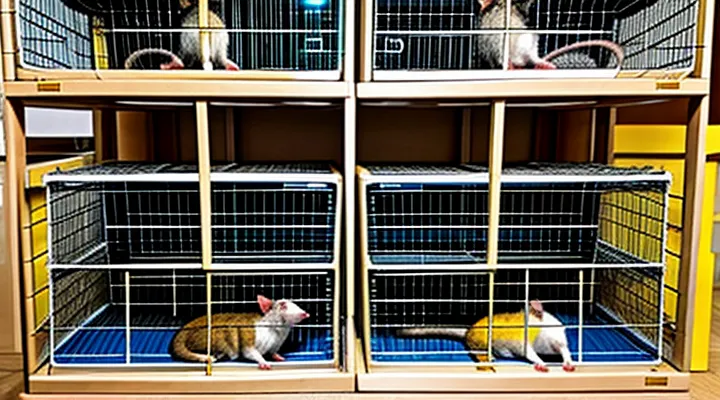
Why Multi-Level Rat Cages are Essential
Enhancing Rat Well-being and Enrichment
Promoting Natural Behaviors
Multi‑level cages provide vertical space that aligns with the natural inclination of rats to climb, explore, and establish hierarchical territories. The added tiers enable individuals to move between levels without crowding, reducing stress and supporting the expression of innate locomotor patterns.
Key natural behaviors facilitated by tiered designs include:
- Climbing and perching: Elevated platforms and ladders accommodate the species’ instinct to ascend, allowing muscles to develop and balance to be exercised.
- Nest building: Separate compartments on each level offer secluded areas for constructing nests, which promotes thermoregulation and reproductive readiness.
- Foraging and digging: Integrated substrate trays or removable sections on lower tiers permit digging activities, stimulating tactile exploration.
- Social hierarchy establishment: Multiple levels create distinct zones where dominant and subordinate rats can occupy preferred spaces, reinforcing stable social structures.
When selecting a multi‑level enclosure, prioritize the following criteria:
- Level spacing: Minimum vertical clearance of 10–12 cm between tiers prevents injury and facilitates comfortable transitions.
- Material durability: Hardened polycarbonate or stainless‑steel frames resist gnawing and maintain structural integrity over prolonged use.
- Modular enrichment compatibility: Attachments such as hammocks, tunnels, and chew blocks should be easily mounted on any tier without compromising stability.
- Cleaning accessibility: Removable trays and hinged panels enable thorough sanitation, limiting pathogen buildup that could disrupt natural behaviors.
By matching cage architecture to the species’ behavioral repertoire, researchers and caretakers create environments where rats can perform essential activities, leading to more reliable experimental outcomes and improved animal welfare.
Reducing Stress and Boredom
Multi‑level cage systems provide vertical space that allows rats to exhibit natural climbing and nesting behaviors, directly decreasing anxiety and preventing monotony. The added levels create distinct zones for exploration, shelter, and social interaction, which together lower cortisol levels and promote stable activity patterns.
Key design features that reduce stress and boredom include:
- Vertical platforms positioned at varying heights, enabling frequent movement and choice of perch.
- Integrated enrichment such as chew blocks, tunnels, and hideouts placed on each tier to sustain engagement.
- Separate but connected compartments, allowing visual contact while preserving individual retreat spaces.
- Transparent dividers that maintain line of sight across levels, supporting social cohesion without forced proximity.
When selecting a tiered enclosure, prioritize:
- Durable, non‑porous materials that resist odor buildup and facilitate thorough cleaning.
- Modular construction, permitting adjustment of level spacing and addition of enrichment items.
- Secure locking mechanisms, ensuring safety during handling and minimizing accidental escape.
- Adequate ventilation, preventing heat accumulation in upper tiers and maintaining air quality throughout the structure.
Maximizing Space Efficiency
Vertical Space Utilization
Effective use of vertical space is essential in tiered rat housing systems, where floor area is limited and experimental density must remain high. By extending usable volume upward, designers can accommodate more individuals without enlarging the footprint, thereby preserving valuable laboratory floor space.
Key design elements that contribute to vertical efficiency include:
- Adjustable platforms positioned at varying heights to match the size and activity level of the colony.
- Integrated climbing structures such as angled ramps or ladders that permit smooth transitions between levels.
- Perches and shelter modules mounted on upper tiers, providing additional resting zones while keeping lower levels clear for feeding and cleaning.
- Transparent side panels on each tier, enabling visual monitoring without disturbing the animals.
Strategic vertical arrangement influences animal welfare and data reliability. Elevated platforms encourage natural climbing behavior, reducing stress and promoting physiological stability. Clear separation of activity zones across levels simplifies behavioral observation and minimizes cross‑contamination of bedding, leading to more consistent experimental conditions.
When selecting a multi‑tier cage, evaluate the following criteria:
- Overall height and internal clearance, ensuring sufficient headroom for each tier and unobstructed movement.
- Structural rigidity of the frame, which must support the cumulative load of platforms, accessories, and occupants.
- Compatibility with standard rack systems, allowing seamless integration into existing laboratory infrastructure.
- Ease of disassembly for routine cleaning, with quick‑release mechanisms that maintain alignment of vertical components.
Prioritizing these factors results in a compact, high‑capacity enclosure that maximizes vertical real estate while preserving animal health and experimental integrity.
Accommodation for Multiple Rats
Providing adequate housing for several rats demands cage designs that separate individuals when needed while preserving opportunities for social interaction. Multi‑tiered enclosures meet this demand by offering distinct levels, each equipped with its own feeding and nesting zones, yet connected through safe passages that allow group movement.
Separate levels prevent dominance hierarchies from escalating into aggression, because subordinate rats can retreat to a higher platform without being forced into the same floor as the dominant individual. At the same time, open stairways or ramps maintain visual and olfactory contact, supporting the species’ natural gregariousness.
Key factors when selecting a multi‑level system for a group of rats include:
- Minimum floor area of 0.05 m² per animal on each level, ensuring sufficient space for exploration and exercise.
- Solid, chew‑resistant construction (e.g., stainless steel or high‑grade acrylic) to withstand persistent gnawing.
- Easy‑release latch mechanisms on all access points to facilitate cleaning and prevent accidental escapes.
- Removable trays and modular panels that allow rapid disassembly for deep sanitation.
- Integrated ventilation that circulates air across all tiers, reducing humidity and odor buildup.
When these criteria are satisfied, the resulting habitat enhances welfare by minimizing stress, maximizes laboratory or hobbyist floor space, and streamlines routine husbandry tasks. Multi‑level cages therefore represent a practical solution for housing multiple rats in a controlled, humane environment.
Key Considerations for Selecting a Multi-Level Rat Cage
Cage Size and Dimensions
Minimum Requirements for Rats
Rats require specific conditions to thrive in stacked enclosures. Adequate floor space is essential; each adult rat should have at least 0.5 square feet of usable area per level. Vertical space must accommodate climbing, with platforms positioned no higher than 12 inches above the floor to prevent injury.
Essential needs include:
- Nutrition: Balanced diet containing protein, fiber, vitamins, and minerals; fresh water available at all times.
- Social interaction: Minimum of two compatible individuals per cage to satisfy their social nature.
- Environmental enrichment: Chewable objects, tunnels, and nesting material to stimulate natural behaviors.
- Ventilation: Continuous airflow ensuring humidity below 60 % and temperature between 65‑75 °F.
- Sanitation: Easy‑to‑clean surfaces, removable trays, and regular waste removal to prevent disease.
Health monitoring protocols must be integrated into cage design. Access points should allow quick inspection of each level without disturbing the animals. Materials used for construction must be non‑toxic, resistant to gnawing, and capable of withstanding disinfectants.
When selecting a multi‑level system, verify that it meets the listed dimensions, provides secure latching mechanisms, and supports the required enrichment accessories. Compliance with these minimum standards ensures optimal welfare and simplifies management for caretakers.
Space for Accessories and Play
Adequate space for accessories and play enhances a rat’s physical health and mental stimulation. Multi‑tier cages allocate separate zones for feeding, nesting, and exploration, allowing each function to occupy a defined area without overlap. When evaluating a cage, verify that the horizontal and vertical dimensions accommodate at least one wheel, a chew‑proof tunnel, and a hideout per tier. Sufficient clearance around each item prevents crowding and reduces the risk of injury.
Key considerations for accessory placement include:
- Wheel location: Mount on a solid side panel, maintain a minimum clearance of 2 inches (5 cm) from cage walls to allow free rotation.
- Climbing structures: Install ladders or ropes at staggered heights to encourage vertical movement; ensure each rung is spaced no more than 4 inches (10 cm) apart.
- Hideouts and nests: Provide one enclosure per level, positioned away from high‑traffic areas to give rats a quiet retreat.
- Chew toys: Distribute across all levels; select materials that withstand repeated gnawing without splintering.
Safety standards require that all accessories be securely attached and free of sharp edges. Inspect joints weekly for loosening, and replace worn items promptly. A well‑organized layout, with each accessory occupying its own space, simplifies cleaning and reduces contamination between food, water, and waste zones.
Overall, selecting a cage with clearly defined, spacious compartments for accessories and play ensures that rats can express natural behaviors while maintaining a hygienic environment.
Material and Construction
Wire Spacing and Safety
Appropriate wire spacing is essential for preventing injuries while allowing adequate ventilation in tiered rat enclosures. Gaps larger than 1 cm enable escape and increase the risk of paw entrapment; gaps smaller than 0.5 cm impede airflow and may cause overheating. Selecting a mesh size between 0.6 cm and 0.8 cm balances these concerns.
Key safety aspects include:
- Material strength: Stainless‑steel or coated steel resists corrosion and maintains structural integrity under repeated cleaning.
- Edge treatment: Rounded or folded edges eliminate sharp points that could cut fur or skin.
- Support spacing: Horizontal bars spaced no more than 5 cm apart prevent sagging, which could create hazardous gaps.
- Cleaning access: Removable panels with secure latches allow thorough sanitation without compromising cage stability.
Compliance with laboratory animal welfare standards typically requires:
- Mesh openings that prevent tail or limb entrapment.
- Secure fastening mechanisms that resist accidental opening.
- Non‑toxic coatings that do not leach chemicals into the environment.
When evaluating products, verify that manufacturer specifications list mesh dimensions, material grade, and edge finishing. Independent testing reports confirming durability under load further ensure long‑term safety for the animals.
Durability and Chew Resistance
Durable construction is essential for multi‑level rat enclosures because rodents constantly test the integrity of cages with their incisors. Materials such as powder‑coated steel, reinforced aluminum, and high‑density polyethylene provide a combination of strength and resistance to gnawing. Powder‑coated steel frames resist corrosion while maintaining structural rigidity under repeated loading. Reinforced aluminum panels offer lightweight durability, reducing the risk of deformation when rats climb or push against the cage.
Chew‑resistant surfaces protect both the animals and the facility. High‑density polyethylene inserts, positioned on bars and corners, withstand persistent gnawing without splintering. Polycarbonate viewing windows remain clear and intact even after prolonged exposure to rodent teeth. When these materials are bonded with ultrasonic welding, seams become virtually impossible for rats to separate, eliminating potential escape routes.
Key considerations for selecting a cage with optimal durability and chew resistance:
- Material thickness: minimum 2 mm for steel bars, 3 mm for plastic panels.
- Coating type: powder coating or anodized finish to prevent rust and wear.
- Reinforcement: cross‑bracing or internal ribs in plastic components to increase rigidity.
- Seam construction: ultrasonic or welded joints rather than mechanical fasteners that can be loosened.
- Maintenance requirements: surfaces that can be cleaned with standard disinfectants without degrading.
Choosing a cage that meets these criteria extends its service life, reduces replacement costs, and maintains a secure environment for laboratory rats.
Ease of Cleaning
Ease of cleaning is a primary consideration when evaluating stacked rodent enclosures. Designs that incorporate removable bottom pans allow staff to extract waste without dismantling the entire structure. Smooth, non‑porous surfaces prevent debris from adhering, reducing the time required for scrubbing. Rounded corners and sealed seams eliminate hidden crevices where contaminants could accumulate.
Selection criteria focus on material durability, component modularity, and compatibility with standard disinfection procedures. Stainless‑steel frames resist corrosion and tolerate aggressive cleaners. Transparent polycarbonate panels enable visual inspection of interior conditions without opening the cage. Quick‑release latch mechanisms permit rapid removal of trays and accessories, minimizing animal disturbance during routine hygiene cycles.
Key cleaning advantages include:
- Detachable waste trays that fit standard laboratory autoclave racks.
- Integrated drainage channels that direct liquid residues away from the living area.
- Surface coatings that repel bacterial colonization and simplify chemical treatment.
- Modular stacking that provides unobstructed access to each level for spot cleaning or full cage turnover.
Levels, Ramps, and Platforms
Number and Configuration of Levels
When planning a multi‑tier housing system for laboratory rats, the decision on how many levels to include and how they are arranged directly affects space efficiency, animal welfare, and experimental consistency.
A typical configuration ranges from two to four levels. Two‑level units are suited for small colonies, offering straightforward access for cleaning and observation. Three‑level designs balance increased capacity with manageable vertical travel distances, allowing segregation of groups by age or experimental condition. Four‑level cages maximize floor area within a limited footprint, ideal for high‑density studies but requiring careful consideration of ladder placement and structural stability.
Key factors influencing the optimal level count include:
- Colony size – Larger populations benefit from additional tiers to avoid overcrowding.
- Behavioral requirements – Certain strains exhibit climbing activity; extra levels provide enrichment and reduce stress.
- Maintenance logistics – More levels increase cleaning time; designs with removable platforms simplify routine tasks.
- Ventilation and lighting – Uniform airflow and illumination across all tiers prevent hotspots and ensure consistent environmental conditions.
Configurations must incorporate secure, non‑slip ladders or ramps positioned at ergonomic angles (typically 30‑45°) to facilitate safe movement. Platform dimensions should allow at least 0.03 m² per animal, with guard rails preventing falls. Structural supports must distribute load evenly; stainless‑steel frames with reinforced cross‑bars are standard for durability.
Selecting the appropriate number and layout of tiers ensures that cage systems meet experimental standards while maintaining optimal living conditions for the rats.
Ramp Design and Safety
Ramps are essential components of multi‑level rat housing, providing vertical connectivity while preserving animal welfare. Design must balance slope, surface texture, and structural integrity. Angles between 15° and 30° reduce strain on limbs; steeper inclines increase the risk of slipping and musculoskeletal injury. Non‑porous, chew‑resistant materials such as stainless steel or high‑density polymer prevent wear and simplify sanitation. Width should accommodate the average adult rat (approximately 4 cm) with at least a 1 cm clearance on each side to avoid bottlenecks. Secure fastening to cage frames eliminates wobble and maintains alignment during routine handling.
Safety considerations focus on preventing trauma and ensuring cleanability. Surfaces must be textured or coated with a fine grit that offers grip without causing abrasions. Gaps between ramp and cage walls must be sealed to block escape routes and limit accumulation of bedding or waste. Load capacity should exceed the weight of multiple rats simultaneously using the ramp, typically rated for at least 500 g. Rounded edges and smooth transitions between ramp and platform reduce the likelihood of entrapment or injury. Regular inspection for cracks, corrosion, or loosened bolts is mandatory to sustain a risk‑free environment.
Selection criteria prioritize durability, compatibility, and compliance with laboratory standards. Evaluate the following checklist when choosing a ramp:
- Material resistance to disinfectants and autoclave cycles
- Compatibility with existing cage dimensions and mounting points
- Adjustable length or modular sections for different cage configurations
- Certification against animal‑use guidelines (e.g., AAALAC, OLAW)
- Cost‑effectiveness relative to lifespan and maintenance requirements
Implementing these design and safety parameters ensures that ramps support the functional goals of tiered rat enclosures while safeguarding the health and comfort of the animals.
Platform Materials and Texture
Platforms in multi‑level cages must withstand constant chewing, weight load, and cleaning chemicals while providing a stable surface for nesting and activity. Selection criteria focus on material durability, chemical resistance, and ease of sterilization.
- High‑density polyethylene (HDPE): strong, resistant to gnawing, tolerates autoclave temperatures, low surface porosity reduces bacterial colonization.
- Polypropylene (PP): lightweight, good impact resistance, compatible with most disinfectants, slightly less chew‑resistant than HDPE.
- Stainless steel (grade 304 or 316): maximum durability, complete resistance to corrosion, ideal for high‑throughput facilities, higher cost and weight.
- Acrylic (PMMA): transparent for visual inspection, moderate strength, prone to scratching, suitable for low‑traffic research units.
Texture influences grip, comfort, and waste management. Smooth surfaces simplify cleaning but may allow rats to slip; lightly textured finishes improve traction without harboring debris.
- Fine‑grit sandblasted finish: enhances grip, minimal crevice formation, compatible with HDPE and PP.
- Ribbed or raised pattern: provides additional climbing footholds, useful in enrichment‑focused setups, requires thorough cleaning to prevent waste buildup.
- Perforated metal mesh: offers maximal airflow and drainage, ideal for stainless‑steel platforms, must be inspected regularly for rust.
Guidelines for material and texture selection: prioritize non‑porous, chemically inert substrates; match texture level to cage activity intensity; consider weight and budget constraints; verify compatibility with institutional cleaning protocols.
Ventilation and Airflow
Importance of Proper Air Circulation
Proper air circulation is essential for the health and welfare of rats housed in tiered enclosures. Stagnant air promotes the buildup of ammonia from urine, which irritates respiratory passages and increases susceptibility to infections. Continuous airflow dilutes and removes these gases, maintaining a breathable environment throughout all cage levels.
Effective ventilation also controls temperature gradients that can develop between lower and upper tiers. Uniform temperature prevents stress‑induced behaviors and supports normal metabolic function. Moreover, steady airflow reduces humidity, limiting mold growth and the proliferation of parasites.
When selecting a multi‑level cage system, evaluate the following ventilation criteria:
- Passive vent design – openings that allow natural convection without mechanical assistance.
- Adjustable airflow rate – capacity to modify ventilation intensity based on cage density and ambient conditions.
- Uniform distribution – vents positioned to reach each tier, avoiding dead zones.
- Ease of cleaning – removable screens or filters that can be sanitized without dismantling the entire structure.
Implementing these features ensures that air quality remains consistent across all compartments, safeguarding the rodents’ respiratory health and overall productivity.
Cage Design for Optimal Ventilation
Effective ventilation is a decisive factor in the health and productivity of laboratory rats housed in multi‑tier enclosures. Proper airflow prevents the accumulation of ammonia, carbon dioxide, and humidity, which can compromise respiratory function and increase the risk of disease. Design elements that support consistent gas exchange include strategically placed inlet and outlet vents, adjustable louvers, and unobstructed channels that guide air through each level of the cage.
Key design considerations for optimal ventilation:
- Vent placement – Upper vents should align with the cage’s ceiling to allow warm, contaminated air to rise and exit, while lower inlets introduce fresh air at the base, creating a vertical flow pattern.
- Channel geometry – Smooth, rounded ducts reduce turbulence and pressure loss, ensuring that air reaches the deepest corners of each tier.
- Adjustability – Modular vent components permit fine‑tuning of airflow rates to match specific animal densities, cage dimensions, and environmental control systems.
- Material selection – Rigid, non‑porous plastics maintain structural integrity and resist deformation that could obstruct airflow pathways.
- Cleaning compatibility – Removable vent panels simplify disassembly, allowing thorough decontamination without compromising the ventilation network.
When selecting a cage system, evaluate the manufacturer’s specifications for airflow capacity (measured in cubic feet per minute per animal), the presence of integrated monitoring sensors, and the compatibility of the ventilation design with existing laboratory HVAC infrastructure. Systems that provide documented performance data and allow for real‑time adjustments deliver the most reliable environmental control across multiple cage levels.
Accessibility and Maintenance
Large Doors for Easy Access
Large doors give direct entry to each tier of a stacked rodent enclosure, eliminating the need to dismantle the unit for routine tasks. The design reduces handling time and limits exposure of the animals to external stressors.
- Faster cleaning: full‑size openings accommodate hand tools and vacuum devices, allowing thorough removal of waste without reaching through small gaps.
- Simplified health checks: technicians can inspect, weigh, or treat rats without repositioning the cage, minimizing disturbance.
- Improved ergonomics: operators work at a comfortable height, decreasing repetitive strain and accelerating turnover between cages.
When choosing a door, prioritize the following specifications. The opening must be at least 12 inches (30 cm) wide to fit standard cleaning equipment. Frames constructed from stainless steel resist corrosion and withstand repeated sanitization cycles. Secure latching mechanisms prevent accidental release while permitting quick release for authorized access. Compatibility with the cage’s modular panels ensures seamless integration across all levels.
Maintenance considerations include smooth hinge operation, rust‑free hardware, and the ability to replace seals without specialized tools. Evaluate the price‑performance ratio; higher‑grade materials may increase upfront cost but extend service life and reduce downtime. Selecting robust large doors enhances overall efficiency of multi‑level rat housing systems.
Removable Trays for Cleaning
Removable trays simplify the cleaning process for tiered rat housing systems. The trays collect waste and bedding, allowing staff to extract them without disassembling the entire cage. This design minimizes exposure of the animals to contaminants and reduces the time required for routine sanitation.
Key advantages include:
- Rapid removal and replacement of soiled material
- Lower risk of cross‑contamination between cage levels
- Compatibility with automated cleaning stations
- Decreased labor costs due to streamlined workflow
When selecting removable trays, consider the following criteria:
- Dimensions – trays must fit precisely within the cage’s lower compartment to prevent gaps.
- Material – high‑density polyethylene or polypropylene provides durability and resistance to disinfectants.
- Weight – lightweight construction eases handling while maintaining structural integrity.
- Fit – integrated locking mechanisms ensure secure placement during animal use and quick release for cleaning.
- Compatibility – trays should align with standard rack dimensions used in multi‑level setups.
Properly chosen trays enhance hygiene, support animal health, and improve overall efficiency of cage maintenance.
Assembly and Disassembly
The modular design of multi‑tier rodent enclosures simplifies both construction and breakdown. Each level connects through standardized brackets and lock‑type fasteners, allowing technicians to assemble the system without specialized equipment. The base frame typically consists of stainless‑steel rails that receive pre‑drilled holes for alignment pins; these pins guarantee perpendicular placement of the upper platforms and prevent drift during handling.
Assembly proceeds in a predictable sequence:
- Position the bottom tray on a level surface and secure it with the provided corner brackets.
- Insert alignment pins into the designated holes of the base frame.
- Attach the first tier by sliding the support beams onto the pins and tightening the lock nuts.
- Repeat the pin‑and‑beam process for each subsequent tier, ensuring that the weight rating of each level is not exceeded.
- affix side panels and access doors using the quick‑release latches, confirming that all hinges operate smoothly.
Disassembly mirrors the assembly order in reverse. Release the quick‑release latches, remove side panels, and unscrew lock nuts before extracting alignment pins. Storing the brackets and pins in a labeled container prevents loss and facilitates rapid reassembly for future experiments.
Proper assembly and disassembly contribute to cage longevity, reduce downtime during cleaning, and maintain consistent environmental conditions for research subjects. Selecting models with interchangeable components and clear fastener markings enhances these operational benefits.