
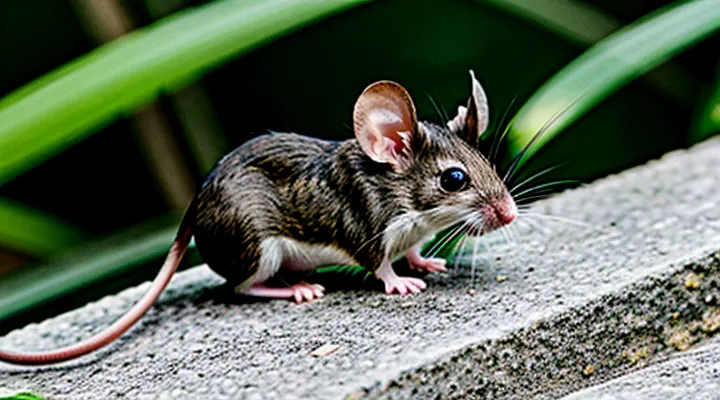
The Enigma of Melanism in Rodents
Unraveling the «Black Stripe» Phenomenon
Genetic Underpinnings of Pigmentation
The black dorsal stripe observed in certain laboratory mice results from alterations in the genetic pathways that regulate pigment production. Melanin synthesis depends on enzymatic activity of tyrosinase (TYR) and its related proteins; mutations that increase enzyme efficiency or expression raise eumelanin levels, generating darker fur. The melanocortin‑1 receptor (MC1R) modulates the switch between eumelanin and pheomelanin; gain‑of‑function variants shift melanin synthesis toward the black pigment. Antagonistic agouti signaling protein (ASIP) normally suppresses MC1R; loss‑of‑function mutations in the agouti locus remove this inhibition, reinforcing black coloration. KIT signaling influences melanocyte migration and survival; hypomorphic KIT alleles can restrict melanocyte distribution, producing discrete pigmented patterns such as a single stripe.
Key genetic factors implicated in the stripe phenotype include:
- MC1R gain‑of‑function alleles – enhance eumelanin production.
- ASIP loss‑of‑function mutations – eliminate MC1R antagonism.
- TYR promoter up‑regulation – increases overall melanin synthesis.
- KIT hypomorphic variants – limit melanocyte colonization to specific body regions.
- SLC45A2 and OCA2 polymorphisms – modify melanosome pH, affecting pigment intensity.
Epistatic interactions between these loci determine stripe width, position, and consistency across individuals. Genome‑wide association studies in mouse strains carrying the stripe have identified quantitative trait loci that co‑localize with the aforementioned genes, confirming their combined influence on the rare pigmentation pattern.
Environmental Influences on Phenotype
The black‑striped mouse variant exhibits a phenotype that is highly responsive to external conditions. Variation in pigment intensity, stripe width, and pattern regularity correlates with specific environmental parameters, indicating that the observed morphology is not solely genetically predetermined.
Key environmental factors influencing the phenotype include:
- Ambient temperature: Cooler climates promote increased melanin synthesis, resulting in darker and broader stripes.
- Nutrient composition: Diets rich in carotenoids and certain amino acids enhance pigment deposition, while protein deficiency reduces stripe prominence.
- Photoperiod: Extended daylight exposure accelerates melanocyte activity, leading to sharper stripe delineation.
- Stress hormones: Elevated corticosterone levels modify gene expression in pigment cells, often producing irregular or fragmented stripes.
- Microhabitat contaminants: Heavy metals and endocrine disruptors interfere with melanogenic pathways, causing atypical coloration patterns.
Epigenetic mechanisms mediate these effects. DNA methylation and histone modifications in pigment‑related genes adjust transcription rates in response to the listed factors, producing reversible phenotypic changes that can persist across generations when environmental conditions remain stable.
Understanding the interaction between external variables and the striped mouse’s phenotype informs broader studies of phenotypic plasticity, offering predictive insight into how similar rare morphologies may adapt to shifting ecosystems.
Anatomical Anomalies: A Detailed Examination
Morphology of the Dorsal Stripe
Histological Analysis of Pigmented Tissue
A laboratory mouse displaying a distinct dorsal black stripe represents a rare phenotypic variant that warrants detailed tissue examination. Histological assessment employed standard fixation in neutral‑buffered formalin, paraffin embedding, and sectioning at 5 µm. Staining protocols included hematoxylin–eosin for general architecture and Fontana‑Masson to visualize melanin granules. Light microscopy revealed the following characteristics:
- Dense melanin deposits confined to the superficial dermis beneath the pigmented band.
- Enlarged melanocytes with abundant cytoplasmic melanosomes, extending into adjacent hair follicles.
- Absence of inflammatory infiltrates or necrotic changes in the surrounding dermal matrix.
- Consistent melanin presence in the stratum corneum of overlying epidermis, indicating active pigment transfer.
- No evidence of neoplastic proliferation in the pigmented region.
These findings suggest an alteration in melanocyte migration or differentiation pathways, likely associated with mutations in genes governing pigment cell development (e.g., Kit, Edn3). The localized hyperpigmentation aligns with a developmental shift rather than a pathological overgrowth. Comparative analysis with non‑striped controls confirms the specificity of the observed melanin pattern.
The study provides a baseline for investigating genetic determinants of atypical coat coloration and contributes to the broader understanding of pigment biology in murine models. Future work should integrate molecular profiling to identify causative alleles and assess functional consequences on skin physiology.
Comparison with Typical Rodent Pigmentation
The black‑striped mouse displays a dorsal band of melanistic fur that contrasts sharply with the surrounding coat. This pattern differs markedly from the uniform pelage typical of most rodent species, which generally exhibit solid brown, gray, or agouti coloration.
Typical rodent pigmentation is governed by a limited set of melanin pathways, producing a homogeneous distribution of eumelanin (dark) and pheomelanin (light) across the body. The color is usually continuous, without distinct linear markings, and serves primarily for camouflage in varied habitats.
Key differences between the striped specimen and standard rodent coloration:
- Pattern architecture: a single, well‑defined black stripe runs along the spine, whereas typical rodents lack linear markings.
- Genetic basis: the stripe is associated with localized expression of the Kit and Agouti genes, while standard pelage results from uniform gene activity.
- Geographic occurrence: the striped form is documented in isolated populations, whereas uniform pigmentation is widespread across species ranges.
- Adaptive implications: the stripe may function in intraspecific signaling or predator disruption; uniform coats primarily provide background matching.
- Phenotypic stability: the stripe persists across seasons and ages, while typical rodent coloration can shift with molting cycles.
Behavioral and Ecological Implications
Predation Risk and Camouflage
Impact on Social Signaling
The dark dorsal stripe observed in a minority of laboratory and wild Mus populations represents a distinct phenotypic variant that deviates from the typical uniform coat coloration. Genetic analyses link the trait to a single‑locus mutation affecting melanin deposition, resulting in a sharply defined black band running longitudinally along the spine.
Visual cues dominate intra‑specific communication among mice, especially during direct encounters. The stripe provides a high‑contrast marker that can be detected at distances greater than those required for scent or vocal signals. Individuals bearing the stripe are identified rapidly, allowing observers to adjust behavior without prolonged assessment.
Empirical observations reveal three consistent effects of the stripe on social interactions:
- Males with the stripe receive fewer aggressive challenges from unfamiliar conspecifics, suggesting that the pattern conveys a status cue that deters escalation.
- Females demonstrate a measurable preference for striped males during mate choice trials, indicating that the trait functions as an indicator of genetic quality or health.
- Group hierarchies stabilize more quickly in mixed‑phenotype colonies, as the stripe facilitates recognition of established rank holders.
These outcomes influence population structure by modulating reproductive success and conflict frequency. Selection pressures favoring the stripe may arise when visual discrimination provides a net fitness advantage, for example in habitats with limited olfactory cues or high predator visibility. Conversely, environments that suppress visual signaling could reduce the prevalence of the trait.
Overall, the black dorsal stripe functions as an effective visual signal that shapes aggression, mate selection, and social organization within mouse communities, thereby affecting both individual fitness and collective dynamics.
Habitat Preference and Adaptation
The black‑banded mouse occupies environments where dense ground cover coexists with open foraging zones. Preferred sites include temperate grasslands with interspersed shrubs, low‑elevation forest edges, and riparian corridors featuring moist soil and abundant seed sources. Soil composition rich in organic matter supports burrowing activity, while the presence of tall grasses provides concealment from predators.
Adaptations enabling survival in these habitats are evident in both morphology and behavior. The dorsal stripe offers disruptive coloration that blends with shadowed vegetation, reducing detection during nocturnal movement. Muscular forelimbs and reinforced clavicles facilitate excavation of complex tunnel systems, allowing rapid escape and thermoregulation. Enhanced auditory acuity detects low‑frequency sounds associated with predator approach, prompting immediate retreat into concealed burrows.
Key adaptive traits:
- Dark lateral stripe for camouflage against dappled light
- Strong forelimb musculature for efficient digging
- Enlarged auditory bullae for heightened sound perception
- High reproductive rate to offset predation pressure in open habitats
Evolutionary Perspectives and Hypotheses
Theories of Adaptive Evolution
Genetic Drift and Founder Effects
The black‑banded mouse represents an uncommon phenotypic variant whose persistence can be traced to stochastic evolutionary forces. Genetic drift, the random fluctuation of allele frequencies in finite populations, reduces genetic diversity and can amplify rare alleles without selective advantage. In isolated colonies, drift may elevate the frequency of the stripe‑coding allele simply by chance events such as random mating or mortality patterns.
Founder effects occur when a new population originates from a limited number of individuals carrying the stripe allele. The initial gene pool lacks the full spectrum of alleles present in the source population, causing the stripe trait to become disproportionately common in descendants. Over successive generations, the limited genetic base reinforces the rarity of the phenotype in the broader species.
Key mechanisms linking drift and founder events to the black‑stripe trait:
- Small founder group includes one or more carriers of the stripe allele.
- Subsequent breeding within the founder population limits gene flow from external sources.
- Random sampling of offspring alters allele frequencies, often fixing the stripe allele.
- Population bottlenecks intensify drift, preserving the trait despite its low initial prevalence.
Empirical studies of captive mouse lines demonstrate that populations established from a handful of stripe‑bearing founders maintain the phenotype for many generations, while comparable lines lacking such founders rarely develop the trait. This pattern confirms that random genetic processes, rather than adaptive selection, underpin the emergence and maintenance of the rare black‑stripe morphology.
Potential for Speciation
The black‑striped murine phenotype represents a distinct morphological deviation within a population of small rodents. Genetic analysis indicates that the stripe is linked to a single‑locus mutation with high penetrance, suggesting a clear heritable basis. Frequency of the trait varies among geographically separated subpopulations, reflecting limited gene flow and the potential for divergent evolutionary trajectories.
Key mechanisms that can convert this morphological novelty into a separate species include:
- Reproductive isolation: individuals bearing the stripe exhibit assortative mating preferences, reducing interbreeding with non‑striped conspecifics.
- Ecological differentiation: the stripe correlates with a shift toward darker microhabitats, where camouflage improves survival, creating niche partitioning.
- Genetic drift: in small, isolated colonies, the allele frequency can increase rapidly, amplifying phenotypic distinctiveness.
- Selection pressure: predation patterns favor the striped form in specific environments, reinforcing adaptive divergence.
When these mechanisms operate simultaneously, they generate cumulative barriers that restrict gene exchange, promote independent lineage formation, and satisfy criteria for speciation. The presence of a conspicuous, heritable trait combined with behavioral and ecological segregation therefore provides a concrete pathway for the emergence of a new species from the striped mouse variant.
Research Methodologies and Future Directions
Non-Invasive Observation Techniques
Molecular Genetic Studies
The black‑striped phenotype in laboratory mice represents an uncommon variation that offers a window into the genetic mechanisms governing coat patterning. Molecular investigations focus on identifying the DNA alterations that produce the distinctive dorsal marking and on characterizing the downstream effects on pigment cell development.
Research employs a combination of high‑throughput and targeted approaches:
- Whole‑genome sequencing to detect single‑nucleotide variants, insertions, deletions, and structural rearrangements across the genome.
- RNA sequencing of skin tissue from striped and wild‑type individuals to compare transcriptional profiles.
- Targeted genotyping of candidate loci previously linked to melanocyte migration and melanin synthesis.
- CRISPR‑mediated editing in embryonic stem cells to validate the functional impact of identified mutations.
Analysis of sequencing data repeatedly highlights mutations in genes that regulate melanocyte distribution, such as Kit, Sox10, and Edn3. In several lines, a missense substitution within the Kit kinase domain correlates with ectopic activation of downstream signaling pathways, as evidenced by elevated Mek and Erk transcript levels. Parallel RNA‑seq results reveal up‑regulation of pigment‑cell migration genes and down‑regulation of inhibitors of melanocyte proliferation in striped specimens.
These molecular findings clarify the genetic architecture of the dorsal stripe, demonstrate how single‑gene perturbations can produce pronounced phenotypic changes, and provide a framework for comparative studies of pattern formation across mammalian species. The data also support the development of precise breeding strategies aimed at preserving or eliminating the trait in research colonies.
Conservation and Management Considerations
The black‑banded mouse represents a highly localized genetic form that is vulnerable to habitat alteration and stochastic population declines. Conservation priorities focus on preserving the specific ecological conditions that sustain the phenotype, maintaining genetic diversity, and preventing extirpation.
Key considerations include:
- Protection of native grassland and shrub mosaics where the population resides, enforcing land‑use regulations that limit conversion to agriculture or development.
- Implementation of predator‑control programs where introduced carnivores increase mortality rates.
- Monitoring of population size and genetic health through systematic live‑trapping and molecular analyses to detect inbreeding and loss of allelic variation.
- Establishment of captive‑breeding colonies that retain the distinctive stripe pattern, providing a source for potential reintroductions should wild numbers fall below viable thresholds.
- Engagement with local stakeholders to promote land stewardship, offering incentives for maintaining habitat corridors and reducing pesticide exposure.
Effective management requires coordination among wildlife agencies, research institutions, and community groups to ensure that habitat integrity, genetic viability, and public awareness are addressed simultaneously. Continuous data collection and adaptive management plans will enable timely responses to emerging threats and support the long‑term persistence of this rare morphological form.