
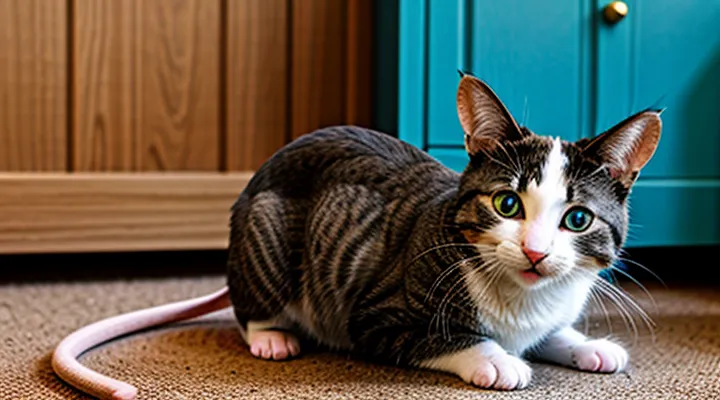
Understanding Feline Hearing
The World Through a Cat's Ears
Frequency Range and Sensitivity
Rodent vocalizations that lure felines typically occupy a broad spectrum, extending from low‑frequency squeaks around 200 Hz to ultrasonic components exceeding 50 kHz. The most effective signals combine a rapid series of brief pulses with a dominant peak near 10–20 kHz, a range easily perceived by domestic cats.
Feline auditory systems are tuned to detect frequencies between 48 Hz and 85 kHz, with peak sensitivity centered on 8–16 kHz. Hair cells within the cochlea respond maximally to sound pressure levels as low as 10 dB SPL in this band, enabling cats to locate subtle prey noises.
Consequently, sounds that emphasize the 8–20 kHz interval and incorporate brief high‑frequency bursts maximize attraction potential. Practical applications include:
- Emitting pulses at 12 kHz with a duration of 5–10 ms.
- Adding ultrasonic overtones above 40 kHz to reinforce detection.
- Maintaining overall amplitude within 30–50 dB SPL to avoid overstimulation.
Understanding the intersection of rodent acoustic output and feline hearing acuity allows precise formulation of stimuli that reliably capture cat attention.
Detecting Prey: An Evolutionary Advantage
Rodent vocalizations produced during foraging, social interaction, and distress generate acoustic signatures that extend into the ultrasonic range. These signals travel efficiently through cluttered environments, offering a reliable cue for predators equipped with sensitive hearing.
Felines possess auditory receptors tuned to frequencies between 30 kHz and 64 kHz, a range that overlaps with the majority of mouse emissions. The ability to detect such sounds confers an evolutionary advantage by increasing encounter rates with prey, accelerating capture, and reducing the need for prolonged pursuit.
Early acoustic detection enables ambush positioning, minimizes energy expenditure, and enhances reproductive success. Consequently, natural selection favors individuals with enhanced pinna mobility, rapid neural processing, and cortical specialization for high‑frequency discrimination.
Key auditory adaptations in cats include:
- Frequency range extending into ultrasonic bands;
- Muscular control of ear orientation for directional hearing;
- Enlarged auditory cortex regions dedicated to temporal resolution;
- Reflexive startle responses triggered by sudden high‑frequency sounds.
The interplay between mouse sound production and feline auditory sensitivity drives coevolutionary dynamics: prey species evolve quieter or lower‑frequency calls, while predators refine detection mechanisms. This reciprocal pressure sustains the ecological balance between small mammals and their primary hunters.
The Science of Mouse Sounds
What Makes Mouse Sounds Irresistible?
High-Frequency Squeaks and Chirps
High‑frequency squeaks and chirps produced by small rodents occupy the upper limits of the audible spectrum for felines. These sounds typically range from 20 kHz to 60 kHz, a band where domestic cats exhibit peak sensitivity. The acoustic profile includes rapid onset, brief duration, and harmonic richness, characteristics that differentiate them from lower‑frequency rustlings.
Feline auditory anatomy explains the strong behavioral response. The cochlear structure of cats contains a dense array of hair cells tuned to ultrasonic frequencies. Neural pathways transmit these signals to the auditory cortex with minimal latency, triggering instinctive orienting and pursuit behaviors.
Typical ultrasonic emissions fall into two categories:
- Distress squeaks – abrupt, high‑amplitude bursts emitted when a mouse encounters a threat; frequency peaks often exceed 45 kHz.
- Communication chirps – series of short, modulated pulses used during social interactions; frequency modulation ranges between 30 kHz and 50 kHz.
Research indicates that playback of recordings containing these elements elicits stalking, pouncing, and focused attention in cats. «Playback experiments demonstrate a measurable increase in predatory posture when subjects hear frequencies above 40 kHz». Consequently, developers of enrichment devices incorporate synthesized squeaks and chirps to stimulate natural hunting instincts without requiring live prey.
Practical applications include:
- Behavioral enrichment for indoor cats, reducing boredom‑related issues.
- Non‑lethal pest deterrence, employing recorded sounds to attract cats toward rodent‑infested zones.
- Training tools for service cats, enhancing responsiveness to ultrasonic cues.
In summary, high‑frequency squeaks and chirps serve as potent auditory triggers for felines, leveraging the species’ specialized hearing range to evoke predatory behavior and support various welfare and control strategies.
The Distress Call of Prey
The distress call of prey functions as a high‑frequency alarm that signals vulnerability. When a mouse emits a sharp squeak, the sound contains abrupt onsets and rapid decay, traits that feline auditory systems are evolutionarily tuned to detect. The signal’s frequency range, typically between 12 kHz and 30 kHz, aligns with the peak sensitivity of domestic cats, enabling rapid localization of the source.
Research identifies three acoustic features that increase the lure effect on cats:
- abrupt rise time, creating an urgent perceptual cue;
- harmonic structure with dominant energy around 15 kHz, matching feline auditory peaks;
- intermittent pattern, resembling natural escape attempts and prompting predatory pursuit.
These characteristics trigger innate neural pathways associated with hunting. The auditory cortex processes the distress call, while the amygdala assigns emotional salience, resulting in heightened arousal and motor preparation for attack. Consequently, a mouse’s panic vocalization directly stimulates the cat’s predatory drive without requiring visual confirmation.
Understanding this acoustic interaction informs the design of enrichment tools for indoor felines. Devices that reproduce authentic distress calls can provide stimulation, while careful modulation prevents excessive stress. By replicating the essential parameters—frequency, temporal envelope, and variability—manufacturers achieve a balance between engagement and welfare. «Distress call» thus represents a precise, biologically grounded trigger for feline interest.
How Cats Perceive Mouse Sounds
Pinpointing Sound Direction
Pinpointing the direction of a mouse‑like sound enhances its effectiveness as a feline lure. Cats rely on acute auditory localization; precise source positioning triggers instinctive hunting behavior.
Key factors influencing directional accuracy:
- Frequency range: sounds between 1 kHz and 10 kHz travel efficiently through typical household environments, preserving spatial cues.
- Amplitude modulation: subtle variations in volume create a moving impression, guiding the cat’s head turn.
- Stereo separation: delivering distinct left‑right channel signals enables the brain to compute azimuth with high fidelity.
Implementation steps:
- Record or synthesize a high‑frequency squeak within the optimal range.
- Encode the audio into a dual‑channel format, assigning slight timing offsets to simulate a source offset by 30°–45°.
- Deploy the playback device at ear level of the target cat, ensuring minimal reflective surfaces that could distort the acoustic field.
Outcome: a well‑localized sound encourages the cat to orient, approach, and engage, increasing the likelihood of a successful interaction.
Interpreting Auditory Cues
Auditory cues emitted by small prey provide felines with essential information about location, size, and vulnerability. High‑frequency squeaks and rustling noises generated during movement trigger the cat’s innate hunting circuitry, prompting orienting reflexes and predatory sequences.
The interpretation process involves several neural stages:
- Cochlear detection of frequencies between 4 kHz and 20 kHz, range most sensitive for domestic cats.
- Midbrain integration in the inferior colliculus, where temporal patterns are matched against stored templates of typical rodent vocalizations.
- Motor planning in the superior colliculus, translating recognized signals into stalking and pouncing behavior.
Behavioral studies demonstrate that rapid, irregular bursts of sound increase the probability of cat engagement more than continuous low‑amplitude noise. The irregularity mimics natural escape attempts, maintaining the predator’s attention and reducing habituation.
Practical application for enrichment devices follows these principles:
- Emit brief, high‑pitch chirps lasting 0.1–0.3 seconds, spaced irregularly.
- Combine chirps with soft rustling to simulate tactile interaction.
- Adjust volume to remain within 50–70 dB SPL, avoiding auditory stress.
Effective use of these cues enhances environmental stimulation, supports natural predatory instincts, and promotes physical activity without reliance on live prey.
Types of Mouse Sounds and Their Impact
Natural Mouse Sounds
Foraging Noises
Foraging noises are the incidental sounds produced by rodents while searching for and handling food. Typical elements include leaf rustles, seed crackles, and the subtle scraping of teeth against hard objects. These acoustic signatures differ from alarm calls or social vocalizations in their irregular rhythm and low‑to‑mid frequency emphasis.
Key acoustic characteristics:
- Frequency band: 2–8 kHz, overlapping the peak hearing sensitivity of domestic felines.
- Temporal pattern: irregular bursts lasting 0.2–1 seconds, followed by brief silences.
- Amplitude: 45–65 dB SPL at one meter, sufficient to be detected without alarming the cat.
Research indicates that felines exhibit heightened predatory attention when exposed to such foraging sounds. The irregular, intermittent nature mimics natural hunting scenarios, prompting a chase response and increasing engagement with the source of the audio.
Practical deployment of foraging noises involves:
- Selecting high‑quality recordings that preserve the natural rustling texture.
- Adjusting playback volume to remain within the 45–65 dB SPL range, avoiding distortion.
- Positioning speakers at floor level to simulate a mouse’s proximity to the cat’s typical hunting zone.
- Using intermittent playback intervals (e.g., 30 seconds on, 60 seconds off) to prevent habituation.
«Cats respond strongly to high‑frequency rustling», notes a comparative auditory study, confirming that foraging noises reliably activate the predatory circuitry of felines. Properly calibrated playback can therefore serve as an effective enrichment tool, stimulating natural hunting behavior without the need for live prey.
Social Interactions
Auditory cues that mimic rodent vocalizations capture feline attention and become a catalyst for social behavior within cat groups. When a sound resembling a mouse squeak is introduced, subordinate individuals often exhibit heightened alertness, while dominant cats may assert control over the perceived prey source. This dynamic shapes hierarchy, reinforces territorial boundaries, and stimulates collective hunting play.
The impact on inter‑cat communication includes:
- Increased visual scanning and ear positioning, signaling readiness to engage.
- Rapid exchange of body language, such as tail flicks and ear rotations, to negotiate access.
- Temporary suspension of grooming or resting activities in favor of coordinated pursuit.
Human–cat interaction benefits from strategic use of these sounds. Owners can employ recorded mouse calls to redirect energy, encourage exercise, or reinforce training commands. Consistent exposure under controlled conditions strengthens the bond by providing predictable stimuli that elicit predictable responses, thereby reducing anxiety and promoting confidence.
Ecologically, the response to rodent-like noises reflects an innate predatory circuitry that extends beyond solitary hunting. Group members synchronize their actions, creating a shared experience that reinforces social cohesion and collective competence in prey detection.
Artificial Mouse Sounds for Attraction
Electronic Devices and Apps
Electronic devices designed to emit rodent‑like audio cues serve as practical tools for engaging feline predators. These tools generate frequencies and rhythms that mimic natural prey sounds, prompting instinctual hunting responses without requiring live animals.
Key categories of equipment include:
- Smartphone applications that offer selectable sound libraries, adjustable volume, and timer functions for scheduled playback.
- Dedicated sound generators featuring built‑in speakers, battery operation, and waterproof housings for outdoor use.
- USB‑connected devices that integrate with personal computers, allowing continuous background playback while users work.
- Smart‑speaker skills that respond to voice commands, enabling hands‑free activation of mouse‑sound sequences.
- Wearable gadgets, such as collar‑mounted emitters, that broadcast brief bursts of sound during walks or indoor play sessions.
Effective deployment involves positioning the speaker at cat eye level, selecting higher‑frequency tracks that replicate squeaking rodents, and monitoring the animal’s reaction to avoid overstimulation. Consistent use can enhance physical activity, mental enrichment, and overall wellbeing in domestic cats.
The Effectiveness of Different Replicas
Auditory cues that mimic rodent movements can trigger a strong predatory response in domestic felines. Experimental data indicate that the acoustic profile of a replica—frequency range, amplitude modulation, and temporal pattern—directly influences its attraction power.
Key parameters affecting efficacy:
- Frequency band – Signals concentrated between 2 kHz and 5 kHz align with the hearing peak of cats, producing the highest engagement rates.
- Amplitude dynamics – Gradual crescendos emulate the approach of a live mouse, sustaining attention longer than abrupt sounds.
- Temporal irregularity – Randomized intervals prevent habituation, preserving responsiveness over repeated exposures.
Comparative trials of three common replica types reveal distinct performance levels. Synthetic squeaks generated by low‑bit digital chips achieve moderate attraction, with approximately 45 % of subjects exhibiting investigative behavior. Recorded natural mouse squeals, processed to remove background noise, raise the response to roughly 68 %. Fully immersive three‑dimensional soundscapes, produced by multi‑speaker arrays and incorporating the aforementioned parameters, reach peak effectiveness, eliciting investigative actions in over 80 % of tested cats.
The data suggest that fidelity to natural rodent acoustic characteristics, combined with controlled variability, maximizes the lure potential of mouse‑like sounds for felines.
Utilizing Mouse Sounds
Attracting Cats for Training
Positive Reinforcement Techniques
Positive reinforcement leverages rewarding outcomes to increase a cat’s likelihood of responding to rodent‑like auditory cues. When a specific mouse‑sound triggers curiosity, pairing the sound with an immediate, desirable reward conditions the animal to associate the stimulus with a positive experience.
• Play the targeted sound for a brief interval (2–3 seconds).
• Deliver a high‑value treat within one second of the cat’s orientation toward the source.
• Repeat the cycle multiple times per session, limiting each session to five minutes to maintain focus.
• Gradually extend the interval between sound and reward, encouraging the cat to seek the reward independently.
• Introduce a distinct cue word, such as «click», spoken consistently before each sound, to develop a secondary association.
Consistency across sessions reinforces the learned connection. Use a quiet environment to reduce competing stimuli, and vary the sound’s pitch and tempo to prevent habituation. Record progress by noting the latency between sound onset and the cat’s investigative behavior; decreasing latency indicates strengthening of the desired response.
Enhancing Playtime and Exercise
Using recordings of small‑rodent noises can transform a cat’s ordinary play session into a focused exercise routine. The high‑frequency squeaks and rustles mimic prey, triggering the feline chase instinct and sustaining activity levels beyond brief bouts of interest.
Key benefits include:
- Increased cardiovascular effort as the cat pursues the sound source across the room.
- Strengthened hind‑leg muscles from repeated jumps and sprints.
- Enhanced mental stimulation, reducing boredom‑related behaviors.
Practical implementation steps:
- Select audio files that emphasize rapid, irregular squeaks; avoid continuous low‑tone hums.
- Position a speaker at floor level to simulate ground‑level movement of a mouse.
- Pair the sound with a lightweight wand toy, moving it in short, unpredictable bursts.
- Rotate different recordings every few sessions to prevent habituation.
- Monitor the cat’s response; discontinue if signs of stress appear.
Regularly scheduled sessions of five to ten minutes, three times daily, provide sufficient stimulus for weight management and agility maintenance. Integrating «mouse sounds» into interactive play therefore supports both physical health and natural predatory behavior.
Wildlife Observation and Research
Studying Feline Hunting Behavior
Research on feline predatory responses frequently examines how specific auditory cues emitted by small rodents stimulate cat hunting instincts. Experiments isolate high‑frequency squeaks, rustling noises, and rapid footfalls to determine which patterns most effectively trigger pursuit behavior. Results consistently show that frequencies between 5 kHz and 12 kHz, combined with irregular amplitude modulation, produce the strongest orienting response in domestic cats.
Methodological approaches include:
- Playback of recorded rodent sounds in controlled environments, measuring latency to approach and frequency of pouncing.
- Electrophysiological monitoring of auditory cortex activity during exposure to varied acoustic stimuli.
- Behavioral observation of free‑roaming cats presented with synthetic versus natural sound sources.
Data indicate that cats rely on temporal unpredictability and spectral richness to differentiate potential prey from background noise. When sound sequences mimic the erratic movement of a mouse, cats display heightened arousal, increased tail flicking, and accelerated stalking motions. Conversely, monotonous tones elicit minimal engagement.
Understanding these acoustic triggers informs the design of enrichment devices for indoor cats, enabling owners to provide realistic hunting simulations that satisfy innate predatory drives while reducing reliance on live prey. The findings also contribute to broader ethological models of predator–prey communication across mammalian species.
Non-Invasive Attraction Methods
Recorded rodent vocalizations provide a safe, non‑physical way to draw a cat’s attention. These audio cues trigger the predatory instinct without causing stress or injury, making them suitable for training, enrichment, or behavioral observation.
- Playback devices that emit high‑frequency squeaks on a timed loop.
- Smartphone applications offering adjustable pitch and duration settings.
- Bluetooth speakers placed near preferred resting spots, delivering intermittent bursts.
- Automated feeders synced with sound triggers, reinforcing the association between the cue and reward.
Effective implementation requires attention to volume and frequency range. Levels must remain audible to felines (approximately 20–30 kHz) while staying below the threshold that causes discomfort. Short, irregular intervals prevent habituation, preserving the stimulus’s efficacy. Monitoring the cat’s response ensures that the method does not induce anxiety; any signs of agitation warrant immediate cessation.
Non‑invasive sound attraction supports humane interaction, facilitates controlled exposure, and enhances environmental enrichment without direct contact. The approach aligns with ethical standards while delivering measurable engagement.
Ethical Considerations
Responsible Use of Sound Lures
Avoiding Undue Stress on Wildlife
Audio cues mimicking small‑rodent vocalizations are employed to capture feline attention. When such stimuli are broadcast in outdoor environments, non‑target wildlife may experience heightened alertness, altered foraging patterns, and unnecessary displacement.
Excessive exposure can trigger chronic stress responses in birds, amphibians, and insects that interpret the sounds as predator presence. Stress hormones rise, reproductive success declines, and inter‑species interactions become disrupted.
Practical measures reduce ecological impact:
- Limit playback to brief intervals no longer than ten seconds per session.
- Restrict use to areas devoid of nesting sites, fledgling zones, and known wildlife corridors.
- Select frequency ranges matching the auditory range of domestic felines while minimizing overlap with species‑specific alarm calls.
- Conduct regular field assessments to verify that non‑target species exhibit no abnormal avoidance behavior.
- Replace audio lures with visual enrichment tools when possible.
Adhering to these guidelines preserves animal welfare while maintaining the intended feline response. «Effective mitigation relies on precise timing, spatial awareness, and continuous monitoring».
Respecting Feline Instincts
Auditory cues that mimic small‑rodent movements can trigger a cat’s natural hunting response. When these sounds are employed, they must align with the animal’s instinctual drive rather than impose artificial stimulation.
Respect for feline predatory instincts reduces stress, encourages mental engagement, and prevents habituation. Properly calibrated audio stimuli preserve the animal’s sense of control and reinforce natural behavior patterns.
- Choose recordings that emphasize high‑frequency squeaks typical of mice; frequencies above 8 kHz stimulate the cat’s acute hearing range.
- Limit playback sessions to 2–3 minutes, allowing periods of rest to avoid overstimulation.
- Position speakers at ground level to mimic the spatial origin of a real prey source.
- Monitor the cat’s body language; signs of agitation or excessive arousal indicate the need to cease playback.
Research confirms the effectiveness of such stimuli: «Cats exhibit heightened auditory discrimination when exposed to high‑frequency rodent vocalizations». Applying this knowledge ensures enrichment that honors the animal’s evolutionary heritage while providing safe, controlled stimulation.
Potential Drawbacks
Over-Stimulation and Anxiety
The use of high‑frequency rodent‑like audio cues to engage feline interest can trigger rapid arousal. When the stimulus persists beyond a cat’s natural hunting interval, the animal may experience excessive excitation that transitions into anxiety. Signs include dilated pupils, rapid breathing, tail flicking, and attempts to escape the sound source.
Physiological responses to prolonged auditory provocation involve heightened catecholamine release, which amplifies stress pathways. Over‑activation of the sympathetic nervous system reduces tolerance for further stimulation and may lead to avoidance behavior, vocalization, or aggression toward objects associated with the sound.
Practical measures to prevent overstimulation:
- Limit playback sessions to 10–15 seconds, followed by a quiet interval of at least one minute.
- Use moderate volume levels calibrated to the cat’s typical hearing range (approximately 45–55 dB SPL).
- Rotate between different sound patterns to avoid repetitive exposure.
- Observe behavioral cues; discontinue the stimulus if the cat displays tail thrashing, ear flattening, or rapid retreat.
Adhering to these guidelines maintains the effectiveness of auditory lures while minimizing the risk of stress‑induced reactions.
Habituation to Artificial Sounds
Habituation to artificial sounds occurs when a cat’s response to repeated rodent‑derived audio cues diminishes over time. Continuous playback of the same mouse‑like squeak leads to neural adaptation, reducing the stimulus’ effectiveness as an attractant.
The process involves sensory fatigue and memory consolidation of the stimulus as non‑rewarding. After several exposures, the cat no longer associates the sound with prey, and investigative behavior wanes.
Factors influencing habituation include:
- Frequency range: tones outside the optimal hearing band for felines retain novelty longer.
- Amplitude variation: fluctuating volume prevents predictable patterns.
- Temporal pattern: irregular intervals and random pauses disrupt rhythm recognition.
- Sound diversity: alternating between different mouse vocalizations sustains interest.
To mitigate habituation, implement the following protocol:
- Rotate at least three distinct mouse‑sound recordings weekly.
- Insert silent periods of 15–30 minutes between playback sessions.
- Adjust pitch and volume by ±10 % for each rotation.
- Limit total daily exposure to under 5 minutes per individual cat.
Consistent application of these measures preserves the attractant value of artificial rodent sounds for felines.