
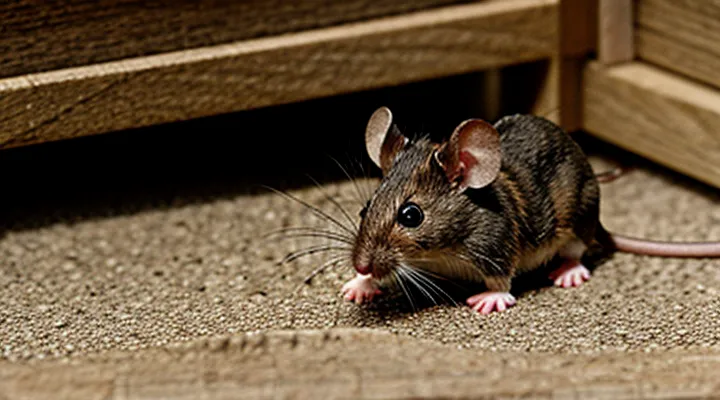
The Immediate Aftermath: Initial Reactions
Physical Responses to Capture
Fight or Flight Instinct
When a mouse becomes confined by a capture device, its nervous system immediately activates the fight‑or‑flight response. The amygdala processes the sudden threat, triggering a cascade of neurochemical events that prepare the animal for rapid action.
The sympathetic branch releases norepinephrine and epinephrine, producing measurable effects:
- Accelerated heart rate and increased cardiac output
- Elevated blood glucose through glycogenolysis
- Dilated pupils and enhanced visual acuity
- Muscle tension in forelimbs and hindquarters
If the mouse opts for flight, motor circuits in the spinal cord coordinate swift locomotion, exploiting any gap in the trap’s closure. Escape attempts often involve rapid, irregular bursts of movement, combined with vigorous gnawing of enclosure material.
When the animal selects fight, the same physiological changes support aggressive behaviors. Jaw muscles contract, teeth are unsheathed, and the mouse delivers repeated bites toward the trap’s edges. Concurrently, the hypothalamic‑pituitary‑adrenal axis secretes cortisol, sustaining alertness and pain tolerance throughout the struggle.
The decision between escape and aggression depends on several variables:
- Perceived size of the opening
- Duration of confinement
- Previous exposure to similar threats
Research indicates that mice with prior negative experiences favor flight, whereas naïve individuals display a higher proportion of combat behaviors. The binary response thus reflects an adaptive mechanism designed to maximize survival when confronted with sudden entrapment.
Physiological Stress Indicators
When a rodent becomes confined by a snare, its body initiates a cascade of measurable physiological responses that reveal the intensity of acute stress. These responses can be quantified through non‑invasive sampling or post‑mortem analysis, providing reliable markers for researchers studying fear‑induced states.
Key indicators include:
- Elevated plasma corticosterone – the primary glucocorticoid released in rodents during immediate threat exposure.
- Increased heart rate and blood pressure – detectable via telemetry implants or external pulse transducers.
- Accelerated respiration rate – measurable with plethysmography chambers.
- Altered glucose metabolism – hyperglycemia appears within minutes, reflecting sympathetic activation.
- Changes in body temperature – peripheral vasoconstriction leads to a drop in tail temperature, observable with infrared thermography.
- Activation of the hypothalamic‑pituitary‑adrenal (HPA) axis – evidenced by up‑regulation of c‑fos expression in the paraventricular nucleus.
Additional biochemical signals, such as heightened catecholamine levels (epinephrine, norepinephrine) in plasma and urine, complement the primary markers. Immunohistochemical detection of stress‑related proteins (e.g., heat‑shock protein 70) further validates the physiological impact of confinement.
By systematically recording these variables, investigators can construct a comprehensive profile of the mouse’s stress state, enabling precise comparisons across experimental conditions and informing humane handling protocols.
Behavioral Changes
Attempts to Escape
When a rodent finds itself confined, it initiates a series of behaviors aimed at regaining freedom. Sensory cues such as the feel of metal edges, the scent of bait, and the absence of open space trigger rapid neural activation. This activation drives motor patterns that manifest as attempts to escape.
The mouse’s actions can be grouped into distinct categories:
- Exploratory probing: The animal uses its whiskers and forepaws to test the interior of the enclosure, seeking gaps or weak points.
- Forceful displacement: Repeated gnawing against the trap’s walls or trigger mechanism generates pressure that may loosen hinges or break brittle components.
- Vertical climbing: When surfaces permit, the mouse climbs the interior walls, employing its claws to reach higher points that could provide leverage.
- Rapid shaking: Sudden, vigorous body movements create vibrations that can dislodge loose parts of the trap or cause the trigger to release.
Physiologically, the mouse exhibits elevated heart rate and cortisol release, indicating acute stress. These responses increase muscle readiness, allowing more forceful and sustained attempts. The animal’s learning capacity also influences outcomes; repeated exposure to similar traps leads to refined techniques, such as targeting the weakest structural element first.
Successful escape typically results from a combination of persistent gnawing, precise targeting of structural vulnerabilities, and exploitation of any design flaws. Ineffective attempts often stem from overly rigid trap construction, smooth interior surfaces that hinder climbing, or lack of accessible escape routes.
Freezing and Immobility
Freezing and immobility represent an immediate, involuntary response when a mouse becomes confined. The behavior involves cessation of locomotion, reduced respiration, and heightened muscle tension, driven by activation of the amygdala and periaqueductal gray. This state conserves energy and minimizes detection by predators, even within artificial capture devices.
Sensory input from the trap—mechanical pressure, sudden vibration, and olfactory cues from the bait—triggers a rapid surge of catecholamines and corticosterone. The hormonal cascade reinforces the motor inhibition, allowing the animal to remain motionless for several seconds to minutes, depending on stress intensity.
Observable characteristics include:
- Rigid posture with tail curled against the body
- Minimal whisker movement
- Near‑silent breathing, often less than 30 breaths per minute
Duration of immobility correlates with trap design; devices that restrict escape routes prolong the response, whereas immediate release of pressure reduces the freeze period.
Understanding this reaction informs humane trap management. Rapid removal of the mouse after capture mitigates prolonged stress, while trap modifications that limit excessive pressure decrease the likelihood of prolonged immobility and associated physiological strain.
Long-Term Behavioral and Physiological Adaptations
Psychological Impact of Confinement
Learned Helplessness
Learned helplessness describes a behavioral state in which an animal exposed repeatedly to uncontrollable adverse events ceases to attempt escape, even when escape becomes possible. The concept originated from experiments where subjects received unavoidable shocks and later failed to avoid identical shocks that could be prevented.
In rodent studies, a typical protocol places a mouse in a confined enclosure where electric pulses are delivered without any lever or tunnel that could terminate them. After numerous trials, the animal shows a marked decline in active coping behaviors, such as gnawing at the walls or seeking an exit, despite the presence of an opening that would allow escape.
Neurobiological research links this pattern to heightened activity in the dorsal raphe nucleus, increased serotonergic signaling, and dysregulation of the hypothalamic‑pituitary‑adrenal axis. Elevated corticosterone levels accompany the behavioral shift, reinforcing the perception of powerlessness.
When the same mouse encounters a standard snap‑trap, the prior helplessness experience predicts a passive response: reduced attempts to bite the trigger, prolonged immobility, and delayed escape attempts. These observations confirm that the animal’s internal model of controllability governs its reaction to new threats.
Practical measures to mitigate learned helplessness in trapping contexts include:
- Providing a brief period of controllable stimulation before exposure to inescapable conditions.
- Incorporating environmental enrichment that encourages exploratory behavior.
- Designing traps with clear, immediate cues that signal a direct cause‑effect relationship between the mouse’s action and trap release.
Implementing such strategies can restore active coping, improve the reliability of behavioral data, and reduce unnecessary suffering.
Stress-Induced Behaviors
When a rodent becomes confined in a snare, immediate stress triggers a cascade of observable actions. The animal’s response can be grouped into three categories: defensive immobility, active escape attempts, and self‑directed coping.
- Defensive immobility – sudden cessation of movement, often accompanied by a flattened body posture and reduced whisker activity.
- Active escape attempts – rapid, erratic locomotion, repeated gnawing at the trap’s edges, and vigorous clawing.
- Self‑directed coping – increased grooming of forepaws and facial region, vocalizations at high frequency, and occasional freezing interspersed with bursts of movement.
Physiological measurements recorded during confinement show elevated plasma corticosterone, tachycardia, and heightened sympathetic nerve discharge. These markers align with the behavioral patterns, indicating activation of the hypothalamic‑pituitary‑adrenal axis.
Experimental observations consistently reveal that stress intensity correlates with the frequency of escape attempts and the duration of immobility periods. Mice exhibiting prolonged immobility display higher cortisol levels, whereas those engaging in persistent gnawing show quicker normalization of heart rate after release.
Understanding these stress‑induced behaviors informs the design of humane trapping protocols and improves the interpretation of data in studies that rely on confinement as a stimulus.
Survival Strategies in the Trap
Resourcefulness and Ingenuity
The rodent’s encounter with a capture device reveals a spectrum of adaptive tactics driven by resourcefulness and ingenuity. When the mechanism activates, the mouse assesses sensory cues—pressure, vibration, scent—to locate the point of confinement. Immediate actions focus on minimizing exposure to danger while exploring escape routes.
- Rapidly tests the interior for weak joints or gaps, applying bite force selectively.
- Employs body flexion to wedge limbs against edges, generating leverage that can pry open hinges.
- Utilizes whisker feedback to map spatial dimensions, guiding precise movements toward the opening.
- Manipulates surrounding debris, stacking or displacing objects to create a makeshift fulcrum for leverage.
- Adjusts breathing and heart rate to conserve energy, prolonging the window for trial‑and‑error attempts.
These behaviors illustrate a problem‑solving hierarchy: sensory detection → structural analysis → mechanical exploitation → iterative refinement. The mouse’s capacity to repurpose environmental elements and execute fine motor control underscores an evolutionary refinement that maximizes survival odds in confined, hostile settings.
Waiting for an Opportunity
When a mouse becomes confined, its immediate instinct is to assess the environment for any chance to escape. Sensory input—particularly vibrations, odors, and light fluctuations—triggers a heightened state of alertness. The animal remains motionless at times, conserving energy while scanning for a breach in the barrier.
During this pause, the mouse evaluates risk versus reward. If the trap offers a clear exit route, even a minimal one, the rodent initiates rapid movements aimed at exploiting the gap. When no opening is apparent, the mouse adopts a waiting posture, intermittently testing the edges with its paws and whiskers to detect subtle changes that could create an opportunity.
Typical behavioral patterns observed in this waiting phase include:
- Periodic twitching of the tail, indicating low‑level stress.
- Small, exploratory nudges toward the nearest wall.
- Increased respiration rate, reflecting heightened vigilance.
- Occasional grooming, serving to maintain focus and reduce tension.
These actions demonstrate that the mouse does not remain passive; it continuously monitors for any shift that could transform a static confinement into a viable escape route.
Factors Influencing Reaction
Individual Differences in Mice
Personality Traits
A rodent’s reaction to a capture device is shaped by its underlying personality dimensions.
Boldness drives rapid entry into the trap, reducing hesitation and increasing capture probability. In contrast, heightened anxiety prolongs avoidance, often resulting in repeated inspection of the trap’s exterior without penetration. Exploratory drive prompts frequent probing of the device’s interior, which may lead to accidental activation or, if the mouse possesses strong problem‑solving skills, to purposeful escape attempts. Neophobia—aversion to novel stimuli—causes a freeze response, limiting movement near the trap and decreasing encounter rates. Cognitive flexibility determines whether the animal can manipulate the trigger mechanism to free itself, thereby converting a potentially lethal situation into a survivable one. Stress‑coping style influences physiological arousal; resilient individuals maintain motor function under duress, while susceptible mice exhibit motor suppression that hampers escape.
Key personality traits and their typical behavioral outcomes in a trapping scenario:
- Boldness: immediate approach, high entry rate.
- Anxiety: delayed approach, extensive perimeter monitoring.
- Exploratory tendency: frequent interior investigation, variable capture risk.
- Neophobia: avoidance of novel structures, low entry likelihood.
- Problem‑solving ability: potential to disengage trigger, increased survival odds.
- Stress coping style: determines motor performance under threat.
Understanding these traits allows precise prediction of capture dynamics and informs the design of humane, effective trapping methods.
Prior Experiences
Prior encounters with capture devices influence a mouse’s immediate response when it confronts a new snare. A history of successful escapes reduces the likelihood of engagement, while repeated exposure to harmless triggers can produce a habituated, less fearful stance.
Learning mechanisms governing this behavior include classical conditioning, where an association forms between specific cues (e.g., scent, sound) and the outcome of capture; operant conditioning, where escape attempts are reinforced by avoidance of pain; and sensitization, where prior injury heightens alertness to similar threats.
Key findings from experimental research:
- Mice that previously survived a spring‑loaded trap displayed a 40 % lower entry rate into a comparable device when presented with identical bait.
- Subjects trained with non‑lethal shock associated the trap’s metallic scent with danger, resulting in increased latency before investigation.
- Animals repeatedly exposed to empty cages showed diminished startle responses, entering new traps more quickly despite identical visual cues.
These observations guide practical adjustments in pest‑control strategies. Bait composition should consider the target population’s exposure history; for rodents with extensive trap experience, novel odors or tactile stimuli improve capture rates. Conversely, for naïve mice, standard food baits remain effective without additional deterrents.
Environmental Variables
Type of Trap
Various trap designs affect a mouse’s immediate response and subsequent behavior. Mechanical devices that snap shut rely on rapid pressure to cause incapacitation, prompting reflexive attempts to escape before the jaws close. Live‑capture cages employ a trigger plate that releases a hinged door, allowing the animal to enter but preventing exit, which typically elicits hesitation followed by rapid retreat after the door locks. Glue boards present a sticky surface that immobilizes the mouse upon contact, often resulting in frantic struggling until the adhesive secures the limbs. Electronic traps deliver a high‑voltage pulse when the mouse completes a circuit, producing a swift, involuntary muscle contraction that incapacitates the creature instantly.
Key characteristics of each type include:
- Snap traps: Immediate lethal action, minimal handling time.
- Live‑capture cages: Non‑lethal, enables relocation, requires monitoring.
- Glue boards: Passive, high risk of prolonged suffering, difficult to remove.
- Electronic traps: Quick incapacitation, reusable, requires power source.
The choice of trap influences the mouse’s stress level, escape attempts, and the likelihood of successful capture. Lethal mechanisms produce a brief, intense reaction, whereas containment devices trigger exploratory behavior before the animal realizes confinement. Understanding these dynamics informs effective pest management while aligning with ethical considerations.
Presence of Predators or Other Mice
The presence of a predator near a trap dramatically alters a captured mouse’s behavior. Auditory cues such as rustling or growls trigger an immediate increase in heart rate and a shift from exploratory movements to defensive postures. The mouse may attempt rapid escape motions, claw at the trap’s edges, or emit high‑frequency vocalizations that serve as alarm calls to conspecifics. Visual detection of a predator—silhouette, movement, or reflected light—produces a similar escalation, often accompanied by heightened aggression toward any perceived threat within the enclosure.
When another mouse is introduced into the vicinity of a trapped individual, social dynamics become the primary driver of the response. The trapped mouse may exhibit one of several observable patterns:
- Submission: reduced activity, lowered vocalizations, and avoidance of direct contact, reflecting an assessment of dominance hierarchy.
- Aggression: rapid lunges, biting attempts at the intruder, and increased scent marking, indicating territorial defense.
- Cooperative escape attempts: synchronized nudging of the trap mechanisms, suggesting learned behavior from conspecific observation.
These reactions are mediated by the mouse’s neuroendocrine system, which releases stress hormones (e.g., corticosterone) upon detection of danger. Elevated hormone levels sharpen sensory processing, prioritize motor output, and suppress non‑essential functions such as grooming. Consequently, the combined presence of predators or other mice intensifies the trapped mouse’s physiological and behavioral stress response, directly influencing the likelihood and manner of escape.
Ethical Considerations and Humane Practices
Understanding Mouse Suffering
Pain and Distress
When a mouse becomes confined, sensory receptors detect tissue damage and emit rapid electrical signals to the spinal cord and brain. This nociceptive input triggers an immediate autonomic surge, releasing catecholamines and glucocorticoids that raise heart rate, blood pressure, and respiratory frequency.
The animal’s motor system responds with a sequence of actions aimed at terminating the threat. Initial attempts include vigorous limb movements, biting, and scratching at the enclosure. If escape fails, the mouse may adopt a freezing posture, reduce vocalizations, and exhibit prolonged immobility. These behaviors reflect a shift from active to passive coping strategies under sustained distress.
Physiological markers of the stress response include:
- Elevated plasma corticosterone within minutes of capture.
- Increased blood glucose levels driven by adrenal output.
- Enhanced expression of immediate‑early genes (e.g., c‑Fos) in the amygdala and hypothalamus.
Prolonged exposure to the trap environment can produce lasting alterations in neural circuitry. Repeated painful confinement leads to heightened sensitivity of nociceptive pathways, reduced exploratory behavior in novel arenas, and a higher likelihood of exhibiting depressive‑like phenotypes in subsequent testing.
Understanding these reactions informs humane pest‑control practices and guides the development of mitigation strategies that minimize suffering while maintaining efficacy.
Psychological Trauma
A mouse that experiences confinement in a capture device undergoes acute psychological trauma, manifested through rapid activation of the hypothalamic‑pituitary‑adrenal (HPA) axis. Elevated glucocorticoid levels trigger physiological changes that prepare the animal for immediate escape but also impair memory consolidation and immune function.
Behavioral indicators of trauma include frantic locomotion, repetitive biting of the trap, and prolonged freezing after release. These responses reflect heightened amygdala activity and reduced prefrontal regulation, resulting in a state of hyperarousal that persists beyond the initial encounter.
Long‑term effects may involve:
- Development of learned helplessness, where the mouse ceases attempts to avoid future threats despite opportunities.
- Increased sensitivity to novel stimuli, leading to avoidance of environments previously associated with danger.
- Altered feeding patterns, with reduced food intake and delayed weight gain.
Understanding these reactions informs ethical pest‑management protocols. Strategies that minimize exposure to distress—such as rapid release mechanisms, non‑lethal traps, and environmental enrichment—reduce the likelihood of chronic trauma and its ecological consequences.
Humane Trapping and Release Methods
Live Traps vs. Lethal Traps
Live traps capture mice without causing immediate death, allowing observation of escape attempts, stress signals, and recovery patterns. The devices typically consist of a hinged entry that closes when the mouse triggers a pressure plate. Once secured, the animal remains conscious, exhibiting rapid breathing, whisker twitching, and occasional attempts to gnaw the door. These reactions provide measurable data on the animal’s perception of confinement and its innate drive to flee.
Lethal traps deliver a swift, fatal blow, usually through a spring‑loaded bar or snap mechanism. Upon activation, the mouse experiences a brief, intense shock that immobilizes it within milliseconds. Observable responses are limited to a rapid convulsion followed by cessation of movement. The brevity of the reaction reduces the window for behavioral analysis but ensures immediate removal of the pest.
Key differences:
- Outcome: Live traps preserve life; lethal traps end it.
- Behavioral data: Live traps reveal prolonged stress responses; lethal traps offer only immediate incapacitation.
- Ethical considerations: Live capture aligns with humane standards; lethal methods raise welfare concerns.
- Management: Live traps require subsequent release or relocation; lethal traps eliminate the problem in situ.
Choosing between the two depends on the need for behavioral insight versus rapid population control. Live capture supports research on mouse reaction patterns, while lethal devices prioritize efficiency and minimal handling.
Minimizing Stress During Release
When a captured mouse is prepared for release, stress can impair its ability to resume normal activity and increase the risk of injury or predation. Immediate handling techniques, environmental preparation, and post‑release monitoring together form an effective protocol.
- Use gloved fingers or a small, smooth container to avoid direct skin contact and minimize tactile irritation.
- Keep the mouse in a quiet, dimly lit area for no longer than 30 seconds before release; prolonged confinement heightens cortisol release.
- Provide a familiar substrate (e.g., shredded paper or natural bedding) inside the release container to give the animal a sense of cover.
- Choose a release site with dense vegetation, low predator traffic, and proximity to natural foraging resources.
- Open the container slowly, allowing the mouse to exit voluntarily rather than being forced out.
After release, observe the animal from a distance for several minutes to confirm it has entered cover and resumed movement. If the mouse remains motionless, gently tilt the container to encourage a calm exit. Consistent application of these steps reduces physiological stress, supports rapid recovery, and improves survival odds for the released rodent.