
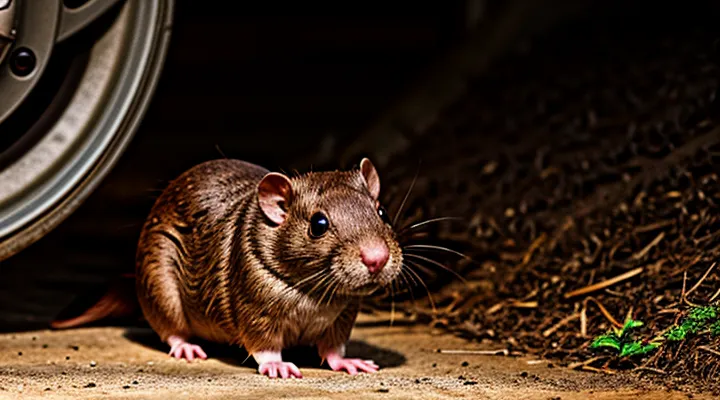
What is a Mole Rat?
Defining Characteristics
The photographed subterranean rodent exhibits a suite of adaptations that distinguish it from other mammals. Its elongated body lacks external ears and visible fur, reducing resistance while moving through compact soil. The skin displays a pinkish hue due to the absence of pigment, allowing direct observation of underlying vasculature.
Key defining characteristics include:
- Skeletal structure: Robust skull with continuously growing incisors that protrude forward, enabling efficient soil excavation without damaging the oral cavity.
- Sensory system: Diminished visual organs replaced by heightened tactile receptors in the facial whiskers, facilitating navigation in total darkness.
- Thermoregulation: Low metabolic rate and poor insulation confer tolerance to hypoxic, hypercapnic environments, while communal nesting conserves heat.
- Social organization: Colonies consist of a single breeding female, numerous non‑reproductive workers, and a hierarchy maintained through pheromonal communication.
- Longevity: Lifespan exceeds 30 years, exceptional for a rodent of comparable size, linked to efficient DNA repair mechanisms and resistance to cancer.
These traits collectively enable survival in the extreme conditions of underground burrow systems, defining the species as a model for studies in physiology, social behavior, and biomedical research.
Geographic Distribution and Habitats
The species commonly known as the mole rat occupies a limited range across the Horn of Africa and adjacent regions. Populations are documented in:
- Ethiopia’s highland plateaus
- Kenya’s Rift Valley and surrounding savannas
- Northern Tanzania’s semi‑arid grasslands
- Southern Sudan’s floodplain margins
- Isolated pockets in Somalia and Djibouti
These rodents thrive in soils that permit extensive tunneling. Preferred habitats include:
- Loose, sandy loam with low organic content, facilitating burrow construction
- Subtropical grasslands where seasonal rainfall maintains moderate moisture levels
- Semi‑desert scrubland where deep burrows provide thermal regulation
- Agricultural fields with irrigated soils, where the species exploits disturbed earth
Burrow systems can extend several meters horizontally and reach depths of up to two meters, allowing individuals to avoid surface temperature extremes and predators. Soil pH typically ranges from slightly acidic to neutral, supporting the invertebrate prey base that sustains the rodent’s diet. Distribution correlates closely with regions where these edaphic conditions persist, limiting the species to the outlined geographic corridor.
Unique Adaptations for an Underground Life
Physical Features: Designed for Digging
The subterranean rodent displayed in the image exhibits a suite of morphological traits optimized for excavation. Its body is elongated and cylindrical, reducing resistance while moving through compact soil. The spine is highly flexible, allowing the animal to twist and push forward without lifting its head.
- Robust forelimbs equipped with large, clawed digits for displacing earth.
- Short, powerful humerus and radius that generate high torque during digging strokes.
- Incisor teeth that protrude forward, continuously growing to break through hard substrate.
- Thick, loose skin on the head and shoulders that slides over underlying muscles, minimizing abrasion.
- Reduced external ears and eyes, decreasing vulnerability to debris and conserving energy.
- Dense, vascularized fur that repels moisture and protects against soil particles.
These adaptations collectively enable efficient burrowing, allowing the creature to create extensive tunnel networks in arid and semi‑arid environments.
Sensory Abilities: Navigating in Darkness
The blind subterranean rodent captured in the image relies on a suite of non‑visual senses to negotiate tunnels where light is absent. Its elongated whiskers, densely innervated with mechanoreceptors, detect contact with walls and obstacles, providing immediate spatial feedback. The somatosensory cortex processes this tactile input, enabling rapid adjustments to body posture and direction.
Olfactory receptors detect chemical gradients emitted by food sources, conspecifics, and predators, guiding movement toward favorable zones and away from danger. Auditory structures are tuned to low‑frequency vibrations transmitted through soil, allowing the animal to perceive the footsteps of other organisms. Specialized skin receptors sense subtle changes in pressure and humidity, further refining environmental awareness.
Key sensory modalities used for underground navigation:
- Vibrissal touch for immediate wall detection
- Olfactory cues for long‑range orientation
- Low‑frequency acoustic perception of substrate vibrations
- Cutaneous pressure and humidity sensors for terrain assessment
These adaptations collectively compensate for the lack of vision, ensuring efficient foraging and predator avoidance in complete darkness.
Social Structures and Colonies
The subterranean rodent forms colonies that resemble eusocial insect societies. A single breeding female, often called the queen, dominates reproduction while all other members assume non‑reproductive roles. Workers maintain tunnels, forage for tubers, and care for the young; soldiers defend the nest against predators and rival colonies.
Colony size varies from a few dozen individuals to over a hundred. Typical composition includes:
- 1 dominant breeding female
- 1–3 breeding males
- 80–90 % non‑breeding workers
- A smaller fraction of specialized defenders
Reproductive suppression is maintained through aggressive behavior and pheromonal signals emitted by the queen. Workers exhibit cooperative brood care, sharing food through mouth-to-mouth feeding, which sustains offspring in the low‑oxygen environment of the burrow system.
The social organization enhances survival in harsh underground habitats. Division of labor reduces energy expenditure, while cooperative digging expands tunnel networks, improving access to food and ventilation. Genetic relatedness among colony members further reinforces altruistic behavior, ensuring the propagation of shared genes.
Species Diversity and Notable Examples
Naked Mole Rat: A Biological Marvel
The naked mole‑rat (Heterocephalus glaber) inhabits subterranean colonies across East Africa, where it thrives in low‑oxygen, high‑carbon‑dioxide environments. Its cylindrical body, near‑hairless skin, and continuously growing incisors facilitate extensive tunneling and root feeding.
- Eusocial organization: a single breeding queen, a few male breeders, and numerous non‑reproductive workers.
- Thermoconformity: body temperature mirrors ambient conditions, reducing metabolic demand.
- Hypoxia tolerance: cells maintain aerobic respiration at oxygen levels that incapacitate most mammals.
- Cancer resistance: fibroblasts exhibit early contact inhibition mediated by high‑molecular‑weight hyaluronan.
- Longevity: individuals live beyond 30 years, far exceeding the expected lifespan for rodents of comparable size.
Physiological adaptations derive from modified ion channels, altered pain‑receptor expression, and unique gene regulation patterns. The species’ ability to sustain tissue function without typical inflammatory responses informs biomedical investigations into aging, wound healing, and oncogenesis.
Photographic documentation of these animals highlights morphological traits that correlate with their extraordinary biology, providing visual reference for field and laboratory studies.
Other Prominent Mole Rat Species
The family Bathyergidae includes several well‑studied mole‑rat species that illustrate the diversity of subterranean rodents.
-
Naked mole‑rat (Heterocephalus glaber) – native to arid regions of East Africa, exhibits eusocial organization comparable to that of insects, with a single breeding queen and non‑reproductive workers. Its lack of pain sensation in skin and remarkable hypoxia tolerance have made it a model for biomedical research.
-
Cape mole‑rat (Georychus capensis) – inhabits the fynbos and shrubland of South‑west Africa. Unlike its blind relatives, it retains functional eyes and displays a more solitary lifestyle, constructing deep burrow systems with multiple chambers for food storage.
-
Damaraland mole‑rat (Fukomys damarensis) – found in the semi‑desert regions of Namibia and Botswana. This species forms cooperative breeding colonies, displays vocal communication, and demonstrates pronounced genetic variation in social structure across populations.
-
Highveld mole‑rat (Cryptomys hottentotus) – occupies the grasslands of southern Africa. It builds extensive tunnel networks and feeds primarily on tubers and roots. The species is noted for its strong digging musculature and robust skull morphology adapted to compact soils.
-
African mole‑rat (Bathyergus suillus) – the largest member of the family, residing in the Cape region of South Africa. Its burrows can reach depths of over two meters, and its diet consists mainly of tuberous plants, which it caches for seasonal scarcity.
These species share adaptations such as reduced vision, powerful forelimbs, and physiological mechanisms for low‑oxygen environments, yet each exhibits unique social and ecological traits that contribute to the overall understanding of subterranean mammalian evolution.
The Mole Rat in its Ecosystem
Role in Soil Aeration and Fertility
Mole rats excavate extensive tunnel networks that physically restructure compacted substrates. Their burrowing displaces soil particles, forming continuous voids that enhance gas exchange between the atmosphere and deeper layers. Increased oxygen diffusion supports aerobic microorganisms, which accelerate organic matter decomposition and nutrient mineralization.
The animals transport surface litter into subterranean chambers, integrating plant residues with mineral soil. This bioturbation distributes organic carbon and nitrogen throughout the profile, improving nutrient availability for root systems. Additionally, fecal deposits enrich the surrounding matrix with readily assimilable nutrients, fostering microbial growth and enzymatic activity.
Key contributions to soil health include:
- Creation of macropores that reduce bulk density and improve water infiltration.
- Promotion of aerobic microbial communities that drive nitrification and phosphorous solubilization.
- Redistribution of organic material, enhancing humus formation and cation exchange capacity.
- Localized enrichment of nitrogen and phosphorus via excreta, supporting plant uptake.
Collectively, these processes sustain a dynamic soil environment that sustains plant productivity and ecosystem resilience.
Interactions with Other Species
The blind subterranean rodent inhabits extensive tunnel networks in arid and semi‑arid regions, where it rarely surfaces. Its secretive lifestyle limits direct observation, yet photographic documentation has revealed its morphological adaptations for a life spent entirely below ground.
Predation pressure originates from several surface and underground hunters:
- Venomous snakes that enter burrows in search of prey.
- Raptors such as owls that capture individuals forced to the surface.
- Small carnivorous mammals (e.g., mongooses) that exploit tunnel openings.
Ectoparasites and endoparasites routinely infest the species. Fleas, mites, and nematodes feed on blood or tissue, influencing health and reproductive output. These parasites also serve as vectors for bacterial agents that can spread to co‑habiting fauna.
Resource competition occurs with other fossorial mammals, especially pocket gophers and gerbils. Overlapping foraging zones lead to territorial disputes and occasional displacement, shaping the spatial distribution of each population.
The animal’s burrowing activity aerates soil, redistributes organic material, and creates microhabitats used by invertebrates, fungi, and plant seedlings. This engineering effect indirectly benefits a range of organisms, enhancing biodiversity within the ecosystem.
Conservation Status and Threats
Human Impact and Habitat Loss
The photographed subterranean rodent inhabits loose, well‑drained soils of semi‑arid steppe and desert margins, where it constructs extensive tunnel networks for foraging and shelter. Its distribution is naturally fragmented, relying on specific edaphic conditions that limit colonization of surrounding terrain.
Agricultural expansion converts native steppe into monocultures, reduces soil heterogeneity, and eliminates the loose substrate required for burrowing. Irrigation alters moisture regimes, rendering former habitats unsuitable. Urban sprawl replaces open ground with impermeable surfaces, directly destroying burrow complexes. Mining operations remove topsoil layers and introduce compaction, further degrading the environment.
Key human‑driven pressures include:
- Conversion of natural steppe to cropland
- Installation of irrigation infrastructure
- Expansion of residential and industrial zones
- Extraction of minerals and associated land disturbance
Habitat loss reduces population connectivity, increases susceptibility to predators, and limits genetic exchange. Conservation measures must prioritize protection of remaining steppe patches, restoration of soil structure, and mitigation of land‑use change to sustain viable colonies of this fossorial mammal.
Conservation Efforts and Challenges
The photographed subterranean rodent, a species confined to isolated underground habitats, faces a precarious future. Conservation programs focus on preserving its limited range, maintaining genetic diversity, and mitigating human‑induced threats.
- Habitat protection through the designation of nature reserves and the enforcement of land‑use regulations.
- Captive‑breeding initiatives that aim to establish genetically viable populations for potential reintroduction.
- Community outreach that educates local stakeholders about the ecological importance of the species and encourages sustainable agricultural practices.
- Scientific monitoring employing radio‑telemetry and genetic sampling to track population trends and health indicators.
Challenges impede progress:
- Fragmented habitats resulting from mining, urban expansion, and intensive farming reduce viable corridors for dispersal.
- Low reproductive rates and specialized breeding requirements limit natural population recovery.
- Insufficient funding restricts long‑term research, habitat management, and enforcement of protective legislation.
- Climate variability threatens soil moisture regimes essential for the species’ burrowing systems.
Addressing these obstacles requires coordinated policy measures, sustained financial investment, and adaptive management strategies that respond to emerging ecological data.
Capturing the Mole Rat: Photography Challenges and Techniques
Specialized Equipment for Underground Shots
Capturing a clear image of a subterranean rodent requires equipment that can operate reliably in confined, low‑light environments. Standard camera bodies are unsuitable because dust, moisture, and limited space compromise both optics and electronics. A rugged, sealed housing protects the sensor while allowing manual control of exposure parameters.
Key components for successful underground photography include:
- Water‑tight camera housing – rated to IP68, with interchangeable ports for lenses and accessories.
- Macro lens with close‑focus capability – focal length 50–100 mm, aperture f/2.8 or wider for depth of field control.
- High‑intensity LED or fiber‑optic light source – color temperature 5500 K, adjustable intensity to avoid over‑exposure of reflective fur.
- Remote trigger or wired release – minimizes vibration, enables precise timing when the animal is in view.
- Dust‑proof ventilation filters – maintain internal pressure balance without allowing particulates to enter.
- Battery pack with extended life – lithium‑ion cells rated for low temperatures common in burrow environments.
Additional considerations involve using a tripod or compact boom to position the housing at the tunnel opening, employing a polarizing filter to reduce glare from moist surfaces, and calibrating white balance on site to compensate for the unique lighting conditions. Proper integration of these tools yields high‑resolution, detail‑rich photographs that document the anatomy and behavior of rare underground rodents.
Ethical Considerations in Wildlife Photography
Photographing a rare subterranean rodent demands strict adherence to ethical standards that protect both the animal and its habitat. The photographer must minimize disturbance, avoid manipulation of the animal’s behavior, and respect legal protections governing endangered species.
- Obtain required permits before entering protected areas; documentation demonstrates compliance with wildlife regulations.
- Use non‑intrusive equipment: silent shutters, natural lighting, and lenses that permit distance reduce stress on the subject.
- Refrain from baiting, trapping, or altering burrow structures; such actions compromise the animal’s natural activities and can lead to habitat degradation.
- Record observations without altering the environment; any physical interaction must be justified by scientific or conservation objectives and approved by relevant authorities.
- Publish images with accurate context, avoiding sensationalism that could encourage illegal collection or tourism pressures.
Ethical wildlife photography balances artistic ambition with responsibility. By prioritizing the well‑being of the burrowing mammal and its ecosystem, photographers contribute to conservation awareness without compromising the species’ survival.