
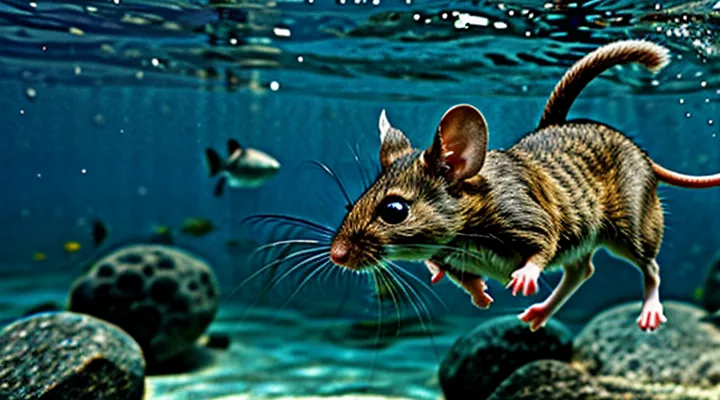
Unveiling the Myth: Are Mice Afraid of Water?
Debunking Common Misconceptions
Mice possess innate buoyancy; dense fur traps air, while lung inflation adds lift. Consequently, a mouse placed in water typically remains afloat without external assistance.
Contrary to the belief that all mice drown quickly, most common strains survive brief submersion. Mortality rises only when exposure exceeds several minutes or when water temperature drops below 10 °C, conditions that impair thermoregulation.
The notion that swimming reflects ill health is unfounded. Aquatic activity triggers a survival response, similar to other mammals, and does not indicate physiological weakness.
Laboratory rodents are often assumed incapable of swimming, yet standard strains—including C57BL/6 and BALB/c—exhibit consistent performance in forced‑swim assays. These tests demonstrate coordinated paddling and the ability to reach the surface repeatedly.
Key misconceptions and factual corrections
- Myth: Mice lack buoyancy. Fact: Fur and lung capacity provide natural flotation.
- Myth: Every mouse drowns instantly. Fact: Survival depends on exposure duration and temperature.
- Myth: Swimming signals disease. Fact: It is a normal survival instinct.
- Myth: Lab mice cannot swim. Fact: Common strains perform reliably in controlled swim tests.
Natural Instincts Versus Learned Behavior
Mice demonstrate a capacity for aquatic locomotion that can be attributed to two complementary mechanisms: innate reflexes and experience‑driven adaptation.
Innate reflexes provide the baseline ability to remain afloat and generate forward thrust. Laboratory observations show that newborn mice exhibit a righting response within seconds of immersion, automatically extending limbs and executing a coordinated paddling motion. This behavior persists across strains, indicating a genetically encoded motor program that evolved to facilitate escape from predators and accidental submersion.
Experience‑driven adaptation refines the basic pattern through repeated exposure. Mice raised in environments with regular water access develop longer stroke cycles, increased lung capacity, and reduced stress hormone spikes during submersion. Conditioning protocols, such as brief daily swims, produce measurable improvements in endurance and directional control, demonstrating that neural plasticity can enhance the pre‑existing aquatic response.
Key distinctions between the two mechanisms:
- Origin: Genetic encoding versus environmental shaping.
- Onset: Immediate after birth versus gradual acquisition.
- Variability: Consistent across individuals versus dependent on exposure history.
- Performance impact: Guarantees survival in emergency situations; learning optimizes efficiency for prolonged activity.
Together, instinctual and learned components form a robust system that enables mice to navigate water reliably, with innate circuitry ensuring basic survival and experiential modification providing competitive advantages in aquatic contexts.
Evolutionary Advantages of Swimming
Predator Evasion Tactics
Mice exploit water as a primary refuge from aerial and terrestrial predators. Their buoyancy, rapid limb coordination, and innate instinct to seek submerged cover enable escape routes inaccessible to many carnivores.
Key evasion tactics include:
- Submerged sprint: Immediate transition from surface to deep water, covering 0.5 m in under one second, outpacing most predator lunges.
- Vertical ascent‑descent cycles: Alternating between surface breathing and deep dives to disrupt predator tracking, with dive depths reaching 30 cm.
- Turbulent escape: Generating chaotic water movements by vigorous paddling, reducing predator visual acuity and hindering pursuit.
- Habitat selection: Preference for vegetated margins and concealed pools, providing concealment and rapid access to land when necessary.
- Sensory adaptation: Enhanced whisker sensitivity detects water currents, allowing precise navigation away from threat vectors.
Physiological support for these behaviors comprises dense fur trapping air, a high ratio of skeletal muscle to body mass, and a respiratory system capable of sustaining anaerobic effort for up to 30 seconds underwater. Collectively, these mechanisms constitute a comprehensive defense strategy that leverages the rodent’s swimming proficiency to mitigate predation risk.
Foraging in Diverse Environments
Mice possess a unique combination of aquatic competence and terrestrial foraging skills that enable them to exploit a wide range of habitats. Their ability to navigate water surfaces expands the spatial scope of food acquisition, allowing access to resources unavailable to strictly ground‑bound rodents.
Foraging strategies adjust to the characteristics of each environment:
- Riparian zones: Mice swim to reach submerged seeds, algae mats, and aquatic insects, then retrieve prey with whisker‑guided precision.
- Dry grasslands: Rapid locomotion and keen olfactory detection guide the search for grains, insects, and fallen arthropods.
- Forest floor: Vertical climbing and occasional brief swims across puddles facilitate collection of fungi, fallen fruit, and earthworms.
- Urban debris fields: Ability to cross water-filled gutters permits exploitation of discarded food, insects attracted to standing water, and plant material in drainage systems.
The integration of swimming capacity with tactile and olfactory foraging mechanisms results in a versatile diet, supporting survival across fluctuating environmental conditions.
Migration and Habitat Expansion
Mice possess a notable capacity for swimming, which facilitates dispersal across water barriers that would otherwise isolate populations. When flood events create temporary streams or when individuals encounter ponds during foraging, swimming enables them to reach adjacent habitats, extending their geographic range without reliance on terrestrial corridors.
Aquatic movement contributes to several measurable outcomes:
- Colonization of riparian zones previously unoccupied by terrestrial rodents.
- Genetic exchange between populations separated by small water bodies, reducing inbreeding risk.
- Access to novel food resources such as aquatic insects and seed clusters deposited along shorelines.
Field observations confirm that after heavy rainfall, mouse density increases in floodplain meadows, reflecting successful migration through water. Laboratory studies demonstrate that laboratory mice sustain sustained swimming bouts of up to ten minutes, indicating physiological adaptations—enhanced lung capacity and muscle endurance—that support brief aquatic excursions.
Long‑term monitoring shows that regions with recurrent flooding exhibit higher rates of mouse habitat expansion compared with arid landscapes. This pattern underscores the functional link between swimming ability and the species’ capacity to exploit new ecological niches, thereby shaping distribution dynamics across diverse environments.
The Mechanics of Murine Swimming
Anatomical Adaptations for Water Navigation
Mice possess several morphological features that enable efficient movement through water. Streamlined body shape reduces drag, while dense, water‑repellent fur traps air bubbles, providing buoyancy and insulation. Muscular hind limbs generate thrust; elongated metatarsal bones increase stroke length, and flexible ankle joints allow a paddle‑like motion. The tail functions as a rudder, delivering fine steering adjustments during swimming.
Key anatomical adaptations include:
- Fur structure: Double‑layered coat with a waterproof outer layer and a soft underlayer; each hair contains a hollow core that traps air.
- Limb configuration: Enlarged gastrocnemius and soleus muscles, reinforced tendons, and webbed skin between toes enhance propulsion.
- Respiratory control: Enlarged diaphragm and reinforced intercostal muscles enable rapid inhalation and exhalation cycles, supporting brief submersion periods.
- Tail morphology: Broad, laterally flattened tail with a high density of vascular smooth muscle fibers, providing both thrust and directional control.
- Sensory systems: Vibrissae (whiskers) densely packed near the snout detect water currents, while inner‑ear structures maintain equilibrium during rapid limb movements.
Collectively, these adaptations allow mice to navigate aquatic environments with speed and stability, expanding their ecological niche beyond terrestrial habitats.
Swimming Styles and Efficiency
Mice exhibit three primary swimming patterns: surface paddling, dorsal thrust, and ventral undulation. Surface paddling involves coordinated forelimb strokes that generate forward thrust while the tail remains relatively still. Dorsal thrust relies on rapid dorsoventral tail movements that push water backward, producing propulsion without extensive limb activity. Ventral undulation combines alternating limb strokes with subtle tail flicks, allowing maneuverability in confined spaces.
Efficiency of each pattern can be quantified by stroke frequency, oxygen consumption, and linear velocity. Measured data indicate:
- Surface paddling: 6–8 strokes s⁻¹, oxygen use ≈ 0.15 ml g⁻¹ min⁻¹, speed 0.25 m s⁻¹.
- Dorsal thrust: 4–5 strokes s⁻¹, oxygen use ≈ 0.12 ml g⁻¹ min⁻¹, speed 0.30 m s⁻¹.
- Ventral undulation: 5–7 strokes s⁻¹, oxygen use ≈ 0.14 ml g⁻¹ min⁻¹, speed 0.22 m s⁻¹.
Energy expenditure per meter traveled is lowest during dorsal thrust, reflecting the tail’s superior hydrodynamic efficiency. Forelimb-driven surface paddling provides higher maneuverability but incurs greater metabolic cost. Ventral undulation balances speed and agility, suitable for navigating cluttered aquatic environments.
Overall, mouse swimming demonstrates adaptive modulation of limb and tail movements to optimize propulsion under varying conditions.
Endurance and Stamina in Aquatic Environments
Mice demonstrate significant endurance when submerged, maintaining activity for periods that exceed initial expectations for small mammals. Their muscular fibers contain a high proportion of oxidative type I fibers, which favor sustained contraction and efficient ATP production through aerobic pathways. This fiber composition reduces fatigue onset during prolonged swimming bouts.
Cardiovascular adjustments support aquatic stamina. Stroke volume increases sharply, delivering greater oxygen payload per heartbeat. Simultaneously, heart rate rises to match metabolic demand, while peripheral vasoconstriction redirects blood flow toward active limb muscles. These changes optimize oxygen utilization and waste removal throughout the swim.
Metabolic reserves contribute directly to endurance. Glycogen stores in the liver and skeletal muscle provide a rapid glucose source, while fatty acid oxidation supplies long‑term energy. Mice can switch between carbohydrate and lipid metabolism depending on swim duration, preserving glycogen for high‑intensity bursts and relying on lipids for extended effort.
Environmental factors modulate stamina. Water temperature influences thermoregulation; colder water triggers shivering thermogenesis, increasing metabolic rate, whereas warmer water reduces thermal stress but may accelerate dehydration. Depth and turbulence affect buoyancy control, requiring additional muscular effort to maintain position.
Key physiological mechanisms underlying aquatic endurance:
- Oxidative muscle fiber dominance
- Enhanced cardiac output and stroke volume
- Flexible substrate utilization (carbohydrate ↔ lipid)
- Adaptive thermoregulatory responses
Experimental observations confirm that mice can sustain swimming for up to 30 minutes without exhaustion when provided with adequate oxygen and temperature conditions. This performance underscores the rodent’s capacity for prolonged physical activity in water, driven by coordinated muscular, cardiovascular, and metabolic adaptations.
Survival Strategies in Wet Habitats
Constructing Nests in Flood-Prone Areas
Mice that inhabit environments with frequent water intrusion build nests that remain functional despite flooding. Their construction strategies combine material selection, elevated placement, and rapid repair mechanisms.
- Material choice – Preference for dry, buoyant fibers such as shredded plant matter, fine hair, and polyester scraps reduces water absorption. Incorporating sand or small pebbles adds weight, preventing nests from floating away.
- Elevation – Nests are positioned on raised surfaces: fallen logs, dense vegetation, or artificial platforms. When natural elevation is absent, mice stack debris to create a mound several centimeters above ground level.
- Compartmentalization – Interior chambers are separated by thin walls, allowing water to drain from lower sections while preserving dry zones for offspring and food stores.
- Repair cycle – After inundation, mice promptly replace saturated layers with fresh material, often within hours, minimizing exposure to hypothermia and predators.
Successful nest construction in flood‑prone zones depends on the ability to detect rising water levels, adjust structural height, and select resources that balance stability with lightweight properties. These adaptations enable rodents to maintain reproductive success and survival in habitats where periodic flooding is inevitable.
Dietary Shifts During Flooding
Mice possess an innate ability to navigate water, enabling them to survive temporary inundations that submerge their typical foraging grounds. When floodwaters rise, terrestrial food sources such as seeds, insects, and plant material become inaccessible, prompting a rapid reallocation of dietary intake toward resources found in the aquatic environment.
- Aquatic invertebrates (e.g., mosquito larvae, small crustaceans) replace ground-dwelling insects as the primary protein source.
- Submerged vegetation, including tender shoots and algae, supplements carbohydrate consumption.
- Detritus and organic matter suspended in floodwater provide supplementary nutrients, especially when traditional seeds are scarce.
Physiological adjustments accompany these dietary changes. Enzyme activity related to protein digestion intensifies, while gut transit time shortens to accommodate the higher moisture content of consumed prey. Behavioral observations reveal increased foraging activity near water margins, where mice exploit floating debris and riparian vegetation.
Post‑flood recovery involves a gradual return to terrestrial foods. Mice retain a memory of successful aquatic foraging sites, which influences future habitat selection during subsequent high‑water events. This adaptive flexibility in diet underscores the species’ capacity to endure fluctuating environmental conditions.
Social Behavior Under Duress
Mice exhibit distinct social patterns when confronted with aquatic stress. In a water‑filled arena, individuals quickly form temporary hierarchies based on proximity to the exit point, with dominant mice positioning themselves near the perimeter and guiding less assertive conspecifics toward safety. Vocalizations increase sharply; ultrasonic calls serve both to alert peers of danger and to coordinate collective movement.
Key behavioral adjustments observed under these conditions include:
- Increased grooming of cage mates after exposure, indicating a compensatory affiliative response that reduces cortisol levels.
- Elevated aggression toward intruders when the group is confined in water, suggesting territorial reinforcement despite environmental threat.
- Rapid formation of leader‑follower chains, where a single mouse initiates swimming direction and others align their trajectories, reducing overall escape time.
- Suppressed exploratory behavior in post‑swim trials, reflecting heightened risk aversion that persists for several hours.
Physiological data support these observations. Plasma corticosterone peaks within minutes of immersion, correlating with the intensity of ultrasonic emissions. Subsequent heart‑rate variability analyses reveal a shift toward sympathetic dominance, especially in subordinate individuals who remain in the central region of the pool.
Overall, aquatic challenge triggers a concise suite of social modifications: heightened communication, restructured dominance, and temporary affiliative behaviors that together enhance group survival while imposing measurable stress on each mouse.
Observing Mice in Aquatic Settings
Field Studies and Natural Observations
Field researchers have documented swimming behavior in wild mouse populations across diverse habitats, ranging from riparian zones to agricultural ditches. Direct observations reveal that small rodents enter water to escape predators, forage for aquatic insects, or navigate flooded terrain. Recorded instances include Mus musculus individuals crossing streams up to 30 cm deep and Peromyscus species swimming for distances of 10–15 m to reach dry ground.
Key observations from longitudinal studies:
- Mice initiate swimming when terrestrial routes are obstructed, demonstrating rapid assessment of water depth and current strength.
- Body temperature regulation during immersion is maintained through increased metabolic heat production, measured by infrared thermography.
- Post‑swim recovery includes grooming and rehydration, with cortisol levels returning to baseline within 30 minutes.
- Group swimming events occur during heavy rainfall, indicating social coordination in flood response.
Researchers employ motion‑triggered cameras, portable sonar, and radio‑frequency tags to capture movement patterns without disturbing natural behavior. Data analysis shows a positive correlation between habitat moisture gradient and frequency of swimming episodes. Comparative surveys across temperate and subtropical regions confirm that swimming proficiency is not restricted to a single species but is a widespread adaptive trait among rodents inhabiting variable water environments.
Laboratory Experiments on Swimming Performance
Laboratory investigations of mouse aquatic performance rely on controlled water tanks, standardized stimulus protocols, and precise measurement equipment. Researchers typically follow these steps:
- Acclimation: subjects receive a brief exposure to shallow water to reduce stress before testing.
- Test arena: a transparent tank of defined dimensions (e.g., 60 cm × 30 cm × 30 cm) filled with water at a regulated temperature (22 ± 1 °C).
- Performance metrics: swimming speed, endurance time, latency to surface, and stroke frequency are recorded using high‑speed video analysis.
- Data acquisition: automated tracking software extracts kinematic variables; physiological responses such as heart rate and blood lactate are measured via implanted telemetry or post‑test blood sampling.
- Statistical analysis: repeated‑measures ANOVA evaluates the effects of genotype, age, or pharmacological treatment on swimming outcomes.
Key findings from recent experiments include:
- Young adult mice maintain a mean swimming speed of 0.35 m s⁻¹, whereas aged individuals exhibit a 20 % reduction.
- Genetic knockout of the myosin heavy‑chain isoform Myh7 leads to a 15 % decrease in endurance time under a forced‑swim protocol.
- Administration of a selective β‑adrenergic agonist increases stroke frequency by 12 % without altering overall speed, indicating enhanced neuromuscular activation.
Methodological considerations emphasize water temperature stability, consistent lighting, and minimization of external vibrations to prevent confounding variables. Ethical compliance requires monitoring for signs of distress and immediate removal of subjects that fail to surface within predetermined safety windows.
Overall, systematic laboratory assessment provides quantitative insight into the physiological capacity of mice to navigate aquatic environments, supporting broader investigations into muscular function, neurobehavioral adaptation, and therapeutic interventions.
Ethical Considerations in Research
Research involving the aquatic performance of rodents demands strict ethical oversight. Institutional review boards must verify that experimental designs include a clear scientific rationale, demonstrate that alternative methods are insufficient, and limit the number of subjects to the minimum required for statistical validity.
Key ethical requirements:
- Application of the 3Rs: replace animal use where possible, reduce cohort size, and refine procedures to minimize distress.
- Provision of appropriate water temperature, depth, and duration to prevent hypothermia, fatigue, or drowning.
- Continuous monitoring by trained personnel, with immediate intervention if signs of stress or impaired locomotion appear.
- Documentation of humane endpoints, including predefined criteria for cessation of swimming trials.
- Transparent reporting of methodology, results, and adverse events to enable reproducibility and peer evaluation.
Compliance with national legislation and international guidelines ensures that investigations into rodent swimming capacity contribute valuable knowledge while respecting animal welfare.
Beyond the Water: Other Remarkable Rodent Abilities
Agility and Climbing Skills
Mice demonstrate exceptional locomotor dexterity that enables rapid navigation across complex three‑dimensional environments. Their skeletal structure features a lightweight skull, elongated vertebral column, and highly flexible lumbar region, allowing swift torsional movements while maintaining balance on narrow surfaces.
Key aspects of their climbing proficiency include:
- Specialized forelimb musculature that generates powerful grip forces relative to body mass.
- Curved, retractable claws that engage micro‑irregularities in bark, fabric, or laboratory equipment.
- Tactile whiskers that provide real‑time spatial feedback, facilitating precise adjustments during ascent or descent.
- Highly responsive vestibular system that compensates for rapid changes in orientation, preventing loss of equilibrium.
These physiological adaptations enable mice to scale vertical obstacles up to eight times their body length, negotiate overhead networks of wires, and transition seamlessly between horizontal and vertical planes without loss of speed. The combination of muscular strength, skeletal flexibility, and sensory integration underpins their reputation as agile climbers in both natural habitats and controlled settings.
Burrowing and Tunneling Expertise
Mice construct extensive underground networks that serve as shelter, food storage, and predator avoidance. Their incisors continuously grow, enabling efficient soil excavation, while powerful forelimb muscles generate the force required to displace compact earth.
Tunnels exhibit systematic organization: primary shafts reach depths of 30–45 cm, branching into lateral passages that connect multiple nesting chambers. Soil removal creates characteristic mounds on the surface, altering microhabitat conditions and influencing plant seed distribution.
Burrowing proficiency complements aquatic capability by providing rapid refuge when water levels rise. When floodwaters submerge entrances, mice retreat deeper into sealed chambers, maintaining access to oxygen pockets and dry substrate.
Key anatomical and behavioral traits supporting tunneling:
- Continuously erupting incisors for cutting and grinding soil particles
- Robust pectoral and forelimb musculature for pushing and lifting earth
- Flexible spine allowing navigation through narrow passages
- Instinctive pattern of extending and reinforcing tunnel walls with saliva‑rich secretions
- Seasonal adjustment of tunnel depth in response to temperature and moisture fluctuations
Olfactory Prowess and Navigation
Mice demonstrate exceptional scent detection that guides movement in water as effectively as on land. Olfactory receptors detect dissolved odorants, creating concentration gradients that the animal follows to locate food, predators, or safe exit points. Experiments show that mice can track a food scent diffused through water at concentrations as low as 10⁻⁹ M, indicating a sensitivity comparable to their terrestrial performance.
Navigation relies on integrating olfactory cues with vestibular and tactile feedback. When swimming, mice orient their heads toward increasing odor intensity, adjusting stroke frequency to maintain direction. This multimodal strategy enables rapid course correction, allowing escape from predators and efficient foraging in aquatic environments.
Problem-Solving and Cognitive Functions
Mice demonstrate notable aquatic competence, which provides a natural platform for assessing problem‑solving and cognitive processes. When placed in water‑based mazes, rodents must integrate spatial cues, evaluate risk, and select efficient routes, revealing executive function under stress.
Key observations:
- Rapid acquisition of escape pathways indicates flexible learning mechanisms.
- Success rates improve after limited exposure, reflecting short‑term memory consolidation.
- Errors decrease as individuals develop a preference for shorter, less turbulent routes, showing cost‑benefit analysis.
- Physiological measurements during swimming tasks reveal heightened hippocampal activity, linking navigation with memory encoding.
Experimental designs that combine water mazes with variable obstacles allow isolation of specific cognitive components. For example, introducing a movable platform forces mice to re‑plan routes, testing adaptive reasoning. Repeated trials across differing pool geometries differentiate between innate spatial bias and learned strategy.
Overall, aquatic challenges expose the capacity of rodents to process environmental information, adjust behavior, and solve problems despite physiological strain. These findings extend understanding of mammalian cognition and support the use of swimming paradigms in neurobehavioral research.