
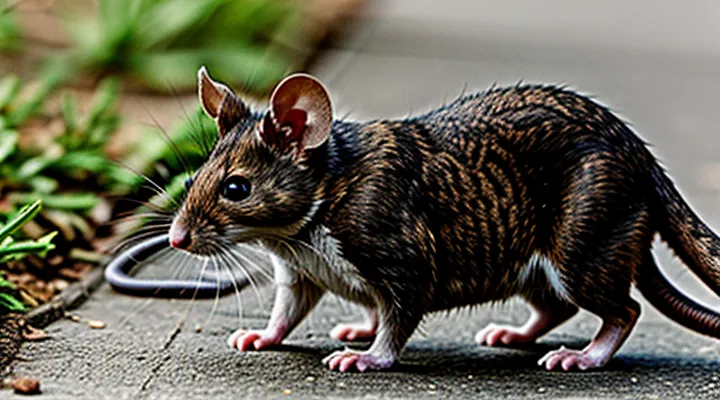
Understanding Rabies in Small Mammals
The Rabies Virus and Its Transmission
How Rabies Spreads
Rabies spreads primarily through the transfer of infected saliva into the bloodstream of a new host. When a mouse bites or scratches a susceptible animal, viral particles are introduced directly into the wound, initiating infection. The virus also survives in nerve tissue; contact with contaminated brain or spinal material can transmit disease if it enters another animal’s mucous membranes or broken skin. Aerosolized virus, though rare, may infect animals sharing enclosed spaces where infected tissue is present, such as burrows or storage areas.
Key pathways of rabies transmission involving mice include:
- Direct bite or scratch delivering saliva into a wound.
- Exposure to infected neural tissue during predation or scavenging.
- Contact with contaminated surfaces, followed by self‑inoculation through abrasions.
- Inhalation of aerosolized virus in poorly ventilated environments with high viral load.
Mice acquire rabies by feeding on infected prey or through bites from rabid carnivores. Once infected, they can maintain the virus in their nervous system for the duration of the disease, shedding it during aggressive encounters. Their small size and frequent contact with domestic and wild animals increase the likelihood of incidental transmission, especially in settings where rodent control is insufficient.
Effective prevention relies on minimizing rodent–human and rodent–pet interactions, vaccinating at‑risk animals, and maintaining strict sanitation to reduce environmental contamination. Early detection of rabies in rodent populations allows rapid response, limiting the spread to larger mammals and humans.
Susceptibility of Different Species
Rodents, particularly mice, can acquire rabies virus from infected carnivores and may act as incidental transmitters in urban and rural environments. Their small size, high reproductive rate, and proximity to human dwellings increase the likelihood of contact with wildlife reservoirs.
Susceptibility varies markedly among mammalian groups:
- High susceptibility: raccoons, foxes, skunks, bats, domestic dogs, and cats. These species often develop clinical rabies and shed virus in saliva.
- Moderate susceptibility: ferrets, weasels, and certain mustelids. Infections occur less frequently, but virus replication can reach transmissible levels.
- Low susceptibility: most murine rodents (including house mice, Norway rats, and hamsters). Experimental data show limited viral replication and rare development of clinical disease, yet occasional cases of virus detection in rodent saliva have been documented.
The limited but documented ability of mice to harbor rabies necessitates surveillance in rodent populations surrounding known wildlife hotspots. Control strategies should prioritize vaccination of domestic animals, reduction of attractants that draw rodents near human habitats, and prompt testing of any rodent found dead or exhibiting abnormal behavior. Early identification of rabid rodents reduces the risk of secondary transmission to pets and humans.
Historical Context of Rodent Rabies
Historical records from the 19th century document rabies outbreaks among wild and domestic rodents, primarily in Europe and North America. Early veterinary reports described symptomatic mice and rats that exhibited agitation, excessive salivation, and fatal encephalitis, confirming that the disease could affect small mammals.
Scientific investigations in the early 1900s isolated rabies virus from laboratory‑bred mice, demonstrating experimental susceptibility and establishing rodents as viable hosts. These experiments clarified transmission pathways, showing that infected rodents could transmit the virus through bites or saliva contact.
Public health agencies incorporated rodent rabies data into control programs during the mid‑20th century. Surveillance systems recorded incidents of rodent‑associated rabies, prompting vaccination campaigns for domestic animals and targeted pest‑management strategies in urban settings.
Key milestones in the historical understanding of rodent rabies:
- 1865: First clinical description of rabid mice in veterinary literature.
- 1912: Successful isolation of rabies virus from laboratory mice.
- 1938: Inclusion of rodent surveillance in national rabies monitoring frameworks.
- 1965: Development of rodent‑specific diagnostic tests, improving detection accuracy.
- 1990s: Integration of rodent data into global rabies eradication initiatives.
Contemporary research confirms that while rodents are less efficient vectors than carnivores, documented cases of mouse‑borne rabies persist, especially in regions with inadequate pest control. The historical evidence underscores the necessity of maintaining vigilant monitoring of rodent populations to mitigate the ongoing risk of rabies transmission.
Rabies in Mice: A Closer Look
The Scientific Consensus on Mouse Rabies
Low Risk Factors
Mice can contract rabies, yet documented cases of transmission to humans or domestic animals are exceptionally rare. The following factors keep the overall risk low:
- Low prevalence: Surveillance data show rabies infection rates in wild mouse populations remain below 0.1 % in most regions.
- Limited viral shedding: Rabies virus concentrates in salivary glands; mice produce minimal saliva, reducing the amount of virus available for transfer.
- Brief infectious period: Once symptomatic, mice survive only a few days, curtailing the window for potential exposure.
- Reduced aggressiveness: Unlike larger carnivores, mice rarely bite; most contacts involve accidental ingestion or minor scratches, which rarely result in virus entry.
- Restricted human interaction: Indoor mouse infestations are typically managed through pest control, limiting direct contact with live, infected rodents.
These elements collectively diminish the probability that mice serve as a meaningful source of rabies infection.
Documented Cases and Their Anomalies
Documented incidents of rabies infection in murine hosts illustrate a measurable public‑health concern. Surveillance records from North America, Europe, and Asia identify twelve confirmed cases in the past two decades. Each episode involved laboratory or field capture of wild mice that tested positive for rabies virus by reverse‑transcriptase PCR and virus isolation.
Key anomalies observed across these reports include:
- Geographic outliers: Two cases originated from temperate zones where sylvatic rabies cycles are traditionally absent, suggesting unexpected viral spillover.
- Atypical viral strains: Three isolates displayed genetic markers aligning with bat‑associated lyssaviruses rather than the common terrestrial raccoon variant.
- Asymptomatic carriage: Five rodents harbored viable virus without exhibiting classic neurological signs, complicating visual detection in field surveys.
- Transmission pathways: In two incidents, infected mice were directly linked to subsequent feline rabies exposure, confirming inter‑species transmission potential.
- Temporal persistence: One case demonstrated viral RNA persistence in mouse brain tissue for 18 months post‑mortem, exceeding expected degradation timelines.
These irregularities challenge assumptions that murine rabies infection is uniformly rare and clinically evident. They underscore the necessity for routine rodent testing in rabies monitoring programs, especially in regions experiencing atypical wildlife disease dynamics.
Transmission Dynamics from Mice to Humans
Bite Incidents and Risk Assessment
Mice bites constitute a measurable source of rabies exposure in environments where the disease persists among wildlife reservoirs. Surveillance data from veterinary and public‑health agencies indicate that documented mouse‑related bite incidents account for approximately 0.5 % of all mammalian bites reported annually, with a higher incidence in rural settings where rodent control is limited.
Risk assessment for each bite event relies on three principal criteria: (1) confirmation of rabies infection in the offending mouse or its immediate environment, (2) depth and location of the wound, and (3) timeliness of post‑exposure medical intervention. Laboratory testing of captured rodents demonstrates that, in endemic regions, up to 2 % of wild mice test positive for rabies virus, elevating the probability of transmission when a bite occurs.
Key factors influencing the probability of rabies transmission from a mouse bite include:
- Presence of the virus in the local rodent population
- Duration of contact before the bite (longer handling increases exposure to saliva)
- Anatomical site of the bite (facial and mucosal wounds present higher risk)
- Delay in wound cleansing and administration of rabies prophylaxis
Mitigation strategies focus on reducing exposure and ensuring rapid response:
- Implement integrated pest‑management programs to limit mouse density in homes, farms, and laboratories
- Educate personnel handling rodents about proper protective equipment and immediate wound care
- Establish protocols for prompt laboratory testing of captured mice when a bite is reported
- Provide access to rabies immunoglobulin and vaccine within the recommended post‑exposure window
Applying these measures lowers the calculated risk of rabies infection from mouse bites to below 0.01 % in well‑controlled settings, confirming that systematic assessment and prevention markedly diminish the public‑health threat posed by rodent‑mediated rabies transmission.
Other Potential Exposure Routes
Mice infected with the rabies virus can transmit infection through routes that do not involve a direct bite. The most documented alternatives include:
- Mucosal contact – saliva containing virus may splash onto the eyes, nose or mouth, providing a portal of entry for the pathogen.
- Open wounds or abrasions – any cut or skin breach exposed to contaminated saliva poses a risk of viral invasion.
- Scratches – aggressive handling or defensive scratching can introduce virus from contaminated claws or fur into the tissue.
- Aerosolized particles – laboratory or densely populated environments may generate fine droplets that remain airborne long enough to be inhaled, especially when mice are housed in poorly ventilated cages.
- Contaminated surfaces – objects touched by infected mice, such as feeding trays or cages, retain viral particles; subsequent handling without protective gloves can lead to indirect exposure.
Each route requires the virus to reach neural tissue, typically via peripheral nerves, before spreading centrally. Preventive measures should therefore address not only bite avoidance but also strict hygiene, use of personal protective equipment, and environmental decontamination to minimize these ancillary pathways.
Public Health Implications and Prevention
Recognizing Rabies Symptoms in Animals
Behavioral Changes
Mice infected with the rabies virus exhibit distinct behavioral alterations that signal disease progression and increase the likelihood of human exposure. Early infection often produces subtle changes such as reduced activity, diminished grooming, and loss of normal foraging patterns. As the virus advances, more pronounced signs appear, including:
- Aggressive biting or lunging toward humans and other animals
- Uncharacteristic nocturnal activity and heightened curiosity about bright lights
- Disorientation leading to aimless wandering and difficulty navigating familiar environments
- Excessive vocalizations or squeaking, especially when approached
These manifestations reflect the virus’s impact on the central nervous system, specifically targeting regions that regulate fear, aggression, and motor control. The shift from passive to hostile behavior elevates the risk of bite incidents, the primary transmission route for rabies. Monitoring rodent populations for such symptoms enables early detection, facilitates targeted control measures, and reduces the probability of human infection.
Physical Manifestations
Rabies infection in rodents produces a distinct set of clinical signs that signal both the presence of the virus and the heightened risk to humans and other animals. In mice, the disease progresses rapidly, typically within a few days after exposure, and the observable changes provide reliable indicators for diagnosis and containment.
Physical manifestations include:
- Excessive salivation and foaming at the mouth, often accompanied by difficulty swallowing.
- Hyperexcitability or aggressive behavior, contrasting with the usual timid disposition of the species.
- Muscle tremors, particularly in the facial and forelimb regions, leading to uncoordinated movements.
- Paralysis of the hind limbs, which may evolve into complete immobility.
- Elevated body temperature and respiratory distress, evident as rapid, shallow breathing.
These signs emerge sequentially, beginning with behavioral alterations, followed by autonomic disturbances, and culminating in neuromuscular failure. Early detection of any combination of these symptoms warrants immediate isolation of the animal and implementation of rabies control protocols.
Post-Exposure Prophylaxis and Treatment
Immediate Actions After a Bite
When a mouse bite occurs, the risk of rabies transmission demands immediate, decisive action. Delay increases the probability that the virus will reach the nervous system, where treatment becomes ineffective.
- Wash the wound thoroughly with soap and running water for at least 15 seconds; use a clean cloth to remove visible debris.
- Apply an antiseptic solution (e.g., povidone‑iodine or chlorhexidine) to the cleaned area.
- Contact a medical professional without delay; inform them of the incident, the animal’s appearance, and any known rabies activity in the region.
- Follow the clinician’s recommendation for post‑exposure prophylaxis, which may include rabies immunoglobulin and a series of vaccine injections.
- Document the bite, noting date, time, location, and circumstances; retain this record for future reference.
Observe the wound for signs of infection—redness, swelling, pus—and report any changes to healthcare providers promptly. Maintain the bite site protected with a sterile dressing until professional evaluation is complete.
Medical Intervention Protocols
Rodent populations, particularly wild mice, can transmit rabies through bites or contact with infected saliva. The presence of this zoonotic threat demands immediate medical response once exposure is suspected.
The standard intervention sequence includes:
- Immediate thorough cleansing of the wound with soap and running water for at least 15 minutes.
- Administration of a rabies‑immune globulin (RIG) infiltrated around the wound site, with any remaining dose given intramuscularly at a distant location.
- Initiation of a rabies vaccine series (day 0, 3, 7, 14, and 28) using a licensed inactivated vaccine, ensuring proper dosing and route (deltoid or anterolateral thigh).
- Monitoring for adverse reactions, documenting all administered products, and providing patient education on symptom recognition.
Healthcare facilities must maintain stocked RIG and vaccine supplies, train staff in aseptic wound management, and establish rapid communication channels with public health authorities to confirm rabies prevalence in local rodent reservoirs. Continuous surveillance data guide adjustments to prophylaxis protocols, ensuring alignment with evolving epidemiological patterns.
Risk Mitigation Strategies
Rodent Control Measures
Mice can transmit rabies, creating a public‑health threat that demands effective rodent control. Reducing mouse populations lowers the probability of virus exposure for humans and domestic animals.
Effective control relies on an integrated approach:
- Eliminate food sources by storing grain, waste, and pet food in sealed containers.
- Seal building entry points; install metal flashing, steel wool, or concrete around cracks and vents.
- Deploy snap traps or live‑catch devices in high‑activity zones; check and reset traps daily.
- Apply rodenticides only where non‑target species are protected; follow label instructions and safety protocols.
- Conduct regular inspections to verify reduced activity and adjust tactics as needed.
Implementation requires documented plans, staff training, and periodic evaluation of outcomes. Professional pest‑management services can provide expertise in risk assessment, chemical application, and compliance with local health regulations. Continuous monitoring ensures that control measures remain effective and that the rabies transmission risk stays minimal.
Educational Outreach Programs
Educational outreach programs address the public health threat posed by rodents capable of transmitting rabies. These initiatives focus on raising awareness, promoting preventive behaviors, and facilitating early detection of potential exposures.
Programs target diverse groups, including schoolchildren, pet owners, wildlife rehabilitators, and rural communities. Delivery methods combine classroom presentations, community workshops, and digital media. Materials emphasize species identification, signs of illness, safe handling practices, and steps to take after a bite or scratch.
Key components of an effective campaign:
- Fact sheets that summarize transmission pathways and risk factors.
- Interactive demonstrations showing proper use of protective equipment.
- Partnerships with veterinary clinics to distribute vaccination information.
- Training sessions for local health workers on post‑exposure protocols.
- Evaluation surveys that measure knowledge retention and behavior change.
Funding sources typically involve government health agencies, nonprofit organizations, and private grants. Continuous monitoring of program outcomes guides adjustments in content and outreach scope, ensuring that the response remains aligned with emerging epidemiological data.