
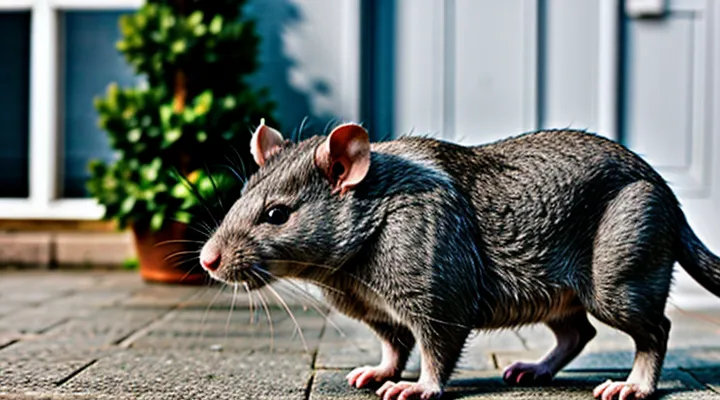
Physical Characteristics
Size and Weight
Body Length
The body length of a mature large gray rat typically ranges from 20 cm to 30 cm, measured from the tip of the nose to the base of the tail. This dimension excludes the tail, which adds an additional 15 cm to 25 cm in most specimens.
Key factors influencing body length include:
- Genetic lineage: certain populations exhibit consistently longer torsos.
- Nutritional availability: abundant food sources correlate with increased growth rates.
- Age: individuals reach maximum length by the end of the third month of life.
Measurements are obtained using calibrated measuring tapes or digital calipers, ensuring accuracy to within 0.5 cm. Consistent methodology allows reliable comparison across studies and geographic regions.
Tail Length
The tail of a large gray rat measures between 20 cm and 25 cm, representing roughly 70‑80 % of the head‑body length. Its structure is uniformly covered with fine, dense fur that matches the dorsal coloration, while the ventral side appears slightly lighter.
Key characteristics:
- Length: 20–25 cm (average 22.5 cm)
- Diameter: 0.5–0.7 cm, tapering gradually toward the tip
- Scale pattern: overlapping keratinous scales provide flexibility and protection
- Coloration: uniform gray dorsally, pale ventrally, with occasional faint striping near the base
The tail serves as a balance organ during rapid locomotion and aids thermoregulation by dissipating excess heat. Its length and proportionality are reliable indicators for distinguishing this species from smaller, shorter‑tailed rodents.
Weight Range
The large gray rat typically weighs between 250 g and 500 g. Juvenile individuals average 150 g–250 g, while mature adults reach the upper limit of the range. Weight varies with habitat and diet, but the following figures represent the most frequently recorded measurements:
- Minimum adult weight: 250 g
- Common adult weight: 350 g–400 g
- Maximum adult weight: 500 g
These values are derived from field studies across temperate regions and provide a reliable benchmark for identification and health assessment.
Fur
Coloration
The large gray rat exhibits a predominantly slate‑blue fur covering the dorsal surface, interspersed with subtle silver‑gray speckles that soften the overall tone. The ventral side presents a lighter, almost creamy hue, creating a clear contrast with the darker back.
- Dorsal coat: slate‑blue, dense, medium‑length hair
- Lateral strip: narrow, darker stripe extending from the shoulder to the hip
- Ventral fur: creamy, sparse, shorter hair
- Tail: uniformly gray, lacking distinct banding
Color variation occurs between populations inhabiting urban and rural environments; urban individuals tend to display a higher concentration of silver speckles, while rural counterparts retain a more uniform slate tone. Juveniles possess a softer, pale gray coat that darkens progressively over the first three months of life.
The coloration provides effective concealment against concrete, stone, and leaf litter, reducing visual detection by predators. The lighter ventral surface assists in heat dissipation during nocturnal activity, while the darker dorsal region absorbs limited solar radiation during daylight exposure.
Texture
The large gray rodent exhibits a distinctive tactile profile that can be broken down into several observable layers.
- Coarse dorsal fur: dense, wiry strands form a protective coat, each hair measuring approximately 2–3 mm in length. The coloration ranges from light ash to deep charcoal, with occasional interspersed darker tips.
- Soft ventral fur: finer, shorter fibers cover the belly and inner limbs, providing insulation while allowing flexibility. This area feels smooth to the touch, contrasting sharply with the back.
- Thin, leathery skin on the ears and nose: highly vascularized tissue that remains supple despite exposure to environmental elements. The skin surface is slightly moist, aiding in thermoregulation.
- Tail surface: sparsely haired, the tail’s skin is covered by a thin epidermal layer that feels slick and resilient. The texture supports rapid movement and balance.
- Paw pads: thick, keratinized pads present a rough, gritty feel. The pads contain numerous sensory receptors, granting precise tactile feedback during foraging.
Overall, the texture of this sizable gray rodent combines protective coarseness on the exterior with softer, more delicate regions underneath, creating a functional balance between durability and sensory acuity.
Seasonal Variations
The large gray rat exhibits distinct physical and behavioral changes across the year, reflecting adaptations to fluctuating environmental conditions.
During spring, the fur density lightens as new growth replaces the thicker winter coat, improving thermoregulation while maintaining camouflage among emerging vegetation. Reproductive activity peaks; females enter estrus cycles, and litters are born, increasing population density. Food intake shifts toward fresh seeds, insects, and tender plant matter, prompting heightened foraging ranges.
In summer, the coat reaches full maturity, offering protection against higher temperatures and occasional precipitation. Activity patterns become more nocturnal to avoid daytime heat, and water consumption rises to offset dehydration risks. Dietary preferences expand to include fruits and agricultural crops, leading to increased human‑rat interactions.
Autumn triggers a gradual re‑thickening of the pelage, preparing for lower temperatures. Foraging focus returns to stored seeds and nuts, while territorial behavior intensifies as individuals secure resources for the upcoming scarcity. Mortality rates rise due to heightened predation and competition.
Winter imposes the most severe constraints. The coat reaches maximum insulation, and metabolic rates decrease to conserve energy. Rats limit movement to sheltered burrows, reducing exposure to cold and predators. Dietary intake relies heavily on cached food, and reproductive activity ceases until conditions improve.
Head and Facial Features
Snout Shape
The snout of the large gray rat is markedly elongated, extending forward from the facial plane in a straight line that minimizes obstruction during foraging. Its dorsal surface is gently convex, while the ventral side is relatively flat, allowing close contact with substrates. The nasal bones are robust, supporting a broad, blunt rostrum that houses well‑developed olfactory epithelium.
Key dimensions and features:
- Length: approximately 2.5–3.0 cm from the tip of the nose to the anterior edge of the incisors.
- Width: 0.8–1.0 cm at the widest point across the nostrils.
- Profile: straight, with a subtle upward curve near the tip.
- Nostrils: laterally positioned, oval, and partially concealed by a thin, leathery skin flap.
- Surface texture: smooth, lacking prominent scales or fur tufts.
Ear Size and Placement
The ears of a sizable gray rat are proportionally moderate, typically measuring 1.5–2 cm in length from tip to base. Their cartilage is thin, allowing a flexible yet sturdy structure that can flatten against the skull when the animal navigates narrow passages. The external pinna is rounded with a slightly tapered apex, providing a surface area sufficient for effective sound capture without adding excessive bulk.
Placement of the ears follows a lateral, slightly forward‑tilted orientation on the head. The auditory canals open near the midpoint of the skull’s width, granting a broad field of acoustic reception. Key characteristics include:
- Symmetrical positioning on each side of the head, aligned with the eyes for coordinated visual‑auditory tracking.
- Slight forward tilt (approximately 10–15°) that enhances detection of sounds emanating from the front and above.
- Close proximity to the temporalis muscles, allowing rapid adjustments during foraging or predator evasion.
These dimensions and locations optimize the rat’s ability to detect high‑frequency noises in its environment while maintaining aerodynamic efficiency during rapid movement.
Eye Characteristics
The large gray rodent possesses eyes adapted for nocturnal activity. Each eye is proportionally large relative to the skull, providing a wide visual field essential for detecting movement in low‑light environments.
Key ocular features include:
- Dark, vertically elongated pupils that constrict sharply in bright conditions and dilate widely at night.
- A reflective tapetum lucidum behind the retina, enhancing photon capture and causing the characteristic eye shine.
- High rod density in the retinal layer, optimizing sensitivity to dim light while sacrificing color discrimination.
- A relatively thin cornea and lens, allowing rapid focus adjustments during foraging.
These characteristics collectively enable the animal to navigate complex habitats, locate food sources, and avoid predators with minimal reliance on daylight.
Whisker Configuration
The whisker system of a sizable gray rodent exhibits a highly organized arrangement that supports precise tactile perception. Each mystacial vibrissa emerges from a well‑defined follicle, aligned in parallel rows that extend from the snout tip toward the cheeks. The typical configuration includes:
- Four primary rows on each side of the nasal bridge, designated A‑D, with row A positioned closest to the midline.
- Approximately 30–35 macro‑vibrissae per row, varying in length from 15 mm at the outermost positions to 30 mm near the center.
- Inter‑vibrissal spacing of 1–2 mm, providing dense coverage without overlap.
- Robust innervation by the trigeminal nerve, allowing rapid transmission of deflection signals to the somatosensory cortex.
Secondary, or genal, vibrissae populate the cheek region, forming two lateral clusters that augment peripheral detection. These shorter hairs, averaging 8–12 mm, orient slightly outward, enhancing obstacle avoidance during nocturnal foraging. The arrangement of both mystacial and genal whiskers creates a three‑dimensional sensory field, enabling the animal to discriminate surface textures, gauge object dimensions, and navigate confined spaces with minimal visual input.
Limbs and Paws
Forelimbs
The forelimbs of a large gray rat exhibit a compact skeletal framework that supports both locomotion and manipulation. The humerus, radius, and ulna are proportionally robust, providing a sturdy base for muscle attachment. The scapula is broad and flattened, allowing a wide range of motion at the shoulder joint.
Key anatomical features include:
- Digits: Four functional fingers ending in sharp, curved claws; a reduced fifth digit is vestigial.
- Musculature: Well‑developed flexor and extensor groups enable precise grip and rapid withdrawal.
- Tendons: Thickened flexor tendons run along the palmar surface, reinforcing force transmission during digging.
- Sensory structures: Dense mechanoreceptors on the pads detect texture and pressure, facilitating object discrimination.
These adaptations permit effective burrowing, food handling, and nest construction. The forelimb musculature works in concert with the hind limbs, allowing coordinated movement across varied substrates.
Hindlimbs
The hindlimbs of the large gray rat are robust and adapted for rapid, agile movement. Musculature includes powerful quadriceps femoris and gastrocnemius groups that generate strong extension at the knee and ankle, enabling swift jumps and bursts of speed. The femur is relatively short and thick, providing leverage for powerful thrusts, while the tibia and fibula are elongated to increase stride length.
Key anatomical features:
- Pelvic girdle: Broad ilium and ischium support the attachment of hind‑limb muscles and distribute forces during locomotion.
- Hip joint: Ball‑and‑socket configuration allows wide range of motion in flexion, extension, abduction, and rotation.
- Knee joint: Hinge joint with reinforced collateral ligaments for stability under high‑impact running.
- Ankle (tarsal) complex: Multiple small bones create a flexible platform for precise foot placement on varied terrain.
- Digits: Five toes ending in sharp, curved claws provide grip on surfaces and assist in climbing.
The skeletal structure is reinforced by a dense cortical bone layer, reducing fracture risk during rapid escape responses. Tendons such as the Achilles are highly elastic, storing and releasing energy to improve locomotor efficiency. Sensory innervation from the sciatic and femoral nerves supplies fine motor control, allowing the rat to adjust limb position in real time while navigating obstacles.
Digit Count and Claws
The large gray rat exhibits a typical rodent limb structure, with a consistent pattern of digits and claw morphology that supports its terrestrial and semi‑arboreal activities.
The forefeet possess five digits, while the hind feet retain four. This arrangement can be summarized as follows:
- Forelimb: five toes, each ending in a sharp claw.
- Hindlimb: four toes, each ending in a sharp claw.
Claws are keratinous, curved, and proportionally robust. They enable effective digging, climbing, and grip on varied substrates. The curvature of each claw aligns with the corresponding digit, providing leverage during locomotion and manipulation of objects. The dorsal surface of the claws is smooth, reducing friction when the animal retracts its feet, whereas the ventral edge is sharpened for penetration into soil or bark.
Overall, the digit count and claw design reflect an adaptation to diverse environments, facilitating foraging, escape from predators, and nest construction.
Dentition
Incisors
The large gray rat possesses a pair of continuously growing incisors in each jaw. These teeth are positioned at the front of the dental arcade and are the primary structures used for gnawing.
Incisors are composed of enamel on the outer surface and dentin internally, producing a self-sharpening edge as the softer dentin wears faster than the enamel. The enamel exhibits a distinctive orange‑brown hue due to iron deposits, which enhances resistance to abrasion.
Key characteristics:
- Length: up to 15 mm in mature individuals, extending beyond the cheek teeth when the mouth is closed.
- Curvature: slight outward bow that facilitates efficient cutting of fibrous material.
- Root: open‑ended, allowing constant eruption to compensate for wear.
- Alignment: symmetrical across the midline, ensuring balanced bite force.
Functionally, the incisors generate forces exceeding 30 N, enabling the animal to breach hard seeds, wood, and synthetic substrates. The rapid turnover of enamel and dentin maintains a sharp edge without the need for external sharpening.
Molars
The molars of the large gray rat are robust, hypsodont teeth positioned at the rear of the jaw. Each side bears three molars, giving a total of twelve in the complete dentition. The crowns are broad, with flattened occlusal surfaces that display multiple cusps arranged in a triangular pattern, optimizing the grinding of fibrous plant material.
The species follows the dental formula 1.0.0.3 / 1.0.0.3, indicating one incisor, no premolars, and three molars per quadrant. Enamel thickness exceeds that of the incisors, providing resistance to abrasion. The dentine beneath the enamel is densely mineralized, contributing to structural integrity during repetitive mastication.
Key functional attributes:
- High occlusal surface area – enhances contact with food particles, facilitating efficient breakdown.
- Continuous growth – molars erupt throughout the animal’s life, compensating for wear incurred by a diet rich in seeds, nuts, and coarse vegetation.
- Self-sharpening edges – the interplay of opposing cusps creates a self‑maintaining grinding surface without the need for dental maintenance.
Wear patterns on the molars reveal a diet dominated by hard, abrasive items. The posterior cusps exhibit flattened wear facets, while the anterior edges retain sharper profiles, indicating a balanced use of both crushing and grinding motions during feeding.
Sensory Abilities
Olfaction
The large gray rat possesses an olfactory system adapted for precise detection of environmental chemicals. Nasal epithelium contains millions of olfactory receptor neurons, each expressing a single receptor type that binds specific volatile molecules. This cellular diversity enables discrimination among a broad spectrum of odorants, including food sources, predators, and conspecific pheromones.
Key characteristics of the rat’s sense of smell include:
- Receptor density: Approximately 1.5 × 10⁶ receptors per square centimeter of olfactory epithelium, surpassing that of many other mammals.
- Detection threshold: Ability to perceive odorant concentrations as low as 10⁻¹⁴ M, allowing detection of trace food odors.
- Signal processing: Olfactory bulb contains distinct glomerular maps; each glomerulus receives input from receptors of the same type, facilitating rapid pattern recognition.
- Behavioral integration: Odor cues trigger innate responses such as foraging, territorial marking, and avoidance of toxic substances.
The olfactory bulb projects to the piriform cortex and amygdala, linking scent perception with memory and emotional states. This neural circuitry supports learning of complex odor mixtures and adaptation to changing habitats. Consequently, olfaction serves as a primary sensory modality for survival, navigation, and social interaction in the large gray rat.
Hearing
The large gray rat possesses a well‑developed auditory system adapted for nocturnal activity. The external ear consists of broad, fur‑covered pinnae that channel sound toward a moderately sized ear canal, ending in a tympanic membrane proportionate to the animal’s body mass.
Auditory capabilities include:
- Frequency detection from approximately 1 kHz to 80 kHz, with peak sensitivity near 20 kHz.
- Minimum audible threshold around 30 dB SPL, enabling perception of faint rustling.
- Rapid middle‑ear muscle reflexes that protect inner‑ear structures from sudden loud noises.
These characteristics allow the rodent to locate prey, avoid predators, and maintain social cohesion through ultrasonic vocalizations. The cochlea exhibits a high density of hair cells, providing fine frequency discrimination essential for navigating cluttered environments and for detecting conspecific calls that exceed human hearing limits.
Vision
The visual apparatus of a sizable gray rodent is adapted for low‑light environments and wide‑angle perception. Lateral placement of the eyes grants a field of view approaching 300°, enabling detection of movement across most of the surrounding space. The retina contains a high density of rod cells, providing acute sensitivity to dim illumination while limiting color discrimination; the species perceives a limited spectrum, primarily in the blue‑green range. Visual acuity is modest, estimated at 1–2 cycles per degree, reflecting a reliance on motion cues rather than fine detail.
Functionally, this vision supports three primary tasks:
- Rapid identification of predators through motion detection across the peripheral field.
- Navigation of complex burrow systems by integrating optic flow with whisker feedback.
- Locating food sources by recognizing contrasting silhouettes against low‑contrast backgrounds.
The optic nerve projects to a relatively small visual cortex, consistent with the animal’s emphasis on other sensory modalities. Despite limited resolution, the combination of expansive visual coverage and heightened sensitivity to light gradients ensures effective survival in nocturnal habitats.
Touch
The large gray rodent presents a distinct tactile profile that informs handling, research, and field identification. Its dorsal coat consists of coarse, interlocking guard hairs overlaying a softer underlayer; the guard hairs feel firm under pressure, while the undercoat yields a plush texture when brushed. The ventral skin is thinner, relatively smooth, and exhibits a subtle elasticity that becomes apparent when the animal is gently stretched. Whiskers, or mystacial vibrissae, are rigid, tapering structures that transmit minute vibrations to the facial nerves, providing a precise sense of surface contours and proximity.
Key tactile features include:
- Fur density: Approximately 1,200 hairs per square centimeter on the back, creating a palpable thickness.
- Hair texture gradient: Guard hairs 2–3 mm in diameter, undercoat fibers 0.5 mm, each with a distinct tactile resistance.
- Skin pliability: Abdominal skin stretches up to 15 % of its resting length without tearing, indicating high elasticity.
- Vibrissae sensitivity: Each whisker detects deflections as small as 0.01 mm, delivering fine-grained tactile feedback.
When grasped, the animal’s limbs feel compact and muscular, with joints that lock securely yet allow controlled flexion. The tail, covered in sparse, short hairs, feels smooth and slightly rubbery, reflecting its role in balance and temperature regulation. These tactile characteristics are essential for safe capture, humane handling, and accurate morphological assessment.
Behavioral Traits
Social Structure
The large gray rat exhibits a highly organized social system that balances competition and cooperation among individuals. Groups typically consist of a dominant breeding pair, subordinate adults, and their offspring, forming a stable unit that occupies a defined territory.
Hierarchy is maintained through aggressive encounters and scent marking, establishing a clear rank order. Dominant individuals control access to food resources and nesting sites, while subordinates defer to higher‑ranking members and assist in pup care.
Communication relies on vocalizations, ultrasonic calls, and pheromonal cues. Short chirps signal alarm, whereas low‑frequency growls convey aggression. Scent glands deposit markers that delineate boundaries and convey reproductive status.
Reproduction is seasonal, with the dominant pair producing litters of four to eight young. Subordinate adults may assist in nest construction and grooming, increasing offspring survival rates. After weaning, juveniles either remain as helpers or disperse to establish new territories.
Key characteristics of the social structure:
- Stable core unit with a breeding pair and helpers
- Linear dominance hierarchy enforced by aggression and scent
- Multi‑modal communication for coordination and conflict resolution
- Cooperative breeding that enhances juvenile survival
- Seasonal dispersal of mature offspring to reduce inbreeding
These elements collectively enable the species to thrive in urban and rural environments, maintaining population stability despite fluctuating resource availability.
Communication
The sizable gray rat relies on a multimodal communication system to maintain social cohesion and coordinate activities. Acoustic signals include high‑frequency squeaks and low‑frequency chattering, each associated with specific contexts such as alarm, territorial intrusion, or mating. These vocalizations travel efficiently through the dense underbrush of urban and rural habitats, allowing rapid dissemination of information across groups.
Chemical cues dominate long‑range interactions. The animal deposits urine and glandular secretions along established pathways, creating scent trails that convey identity, reproductive status, and dominance rank. Conspecifics detect these markers via the vomeronasal organ, adjusting behavior without direct contact.
Visual and tactile signals supplement auditory and olfactory channels. Body posture, ear orientation, and whisker positioning communicate aggression, submission, or curiosity. Direct grooming and nose‑to‑nose contact reinforce affiliative bonds and transmit microbiota that influence health and social recognition.
Key communication modalities:
- Vocalizations: alarm squeaks, contact chattering, mating calls
- Scent marking: urine, dorsal gland secretions, fecal deposits
- Body language: raised fur, tail position, ear flattening
- Physical contact: grooming, nose‑to‑nose sniffing
These mechanisms operate concurrently, providing redundancy and flexibility that enable the species to adapt to fluctuating environmental pressures and population densities.
Locomotion
The large gray rat moves on four limbs, each foot positioned on the digits rather than the heels. This digitigrade stance lifts the hindquarters, allowing rapid thrust during each stride.
Muscle groups responsible for propulsion include the gastrocnemius, soleus, and iliopsoas, which generate strong, coordinated contractions. The vertebral column exhibits flexible intervertebral joints, facilitating lateral bending essential for maneuvering through confined spaces.
- Maximum sprint speed: 13 km/h (8 mph) on level ground.
- Acceleration: 0 to 8 km/h in less than two seconds.
- Endurance: sustained travel of 2 km at 6 km/h before fatigue.
- Climbing ability: vertical ascent of 1.5 m on rough bark using clawed digits and tail balance.
- Swimming competence: submersion for up to 30 seconds, propelled by alternating fore‑ and hind‑limb strokes.
Locomotor behavior adapts to habitat demands. Burrowing exploits powerful forelimb digging motions, while nocturnal foraging relies on agile, silent footfalls that minimize substrate vibration. Tail acts as a counter‑balance during rapid turns, enhancing stability on uneven terrain.
Dietary Habits
The large gray rodent exhibits an omnivorous diet that adapts to seasonal resource availability. Primary components include:
- Seeds and grains such as wheat, barley, and corn, which provide carbohydrates and essential fatty acids.
- Insects and arthropods (e.g., beetles, larvae, and spiders), supplying protein and micronutrients.
- Fresh vegetation, including grasses, leaves, and tender shoots, contributing fiber and vitamins.
- Fruit and berries, offering sugars and antioxidants during ripening periods.
- Human-derived waste, encompassing discarded food scraps and refuse, which supplements natural food sources in urban environments.
Feeding behavior is opportunistic; individuals forage during twilight and nighttime hours, exploiting ground-level and low-lying vegetation. Seasonal shifts prompt increased insect consumption in spring and greater reliance on stored seeds in winter. Water intake derives from moist foods and occasional direct drinking from puddles or containers. Nutrient balance is maintained through selective foraging, ensuring adequate protein, carbohydrate, and lipid intake for growth and reproductive success.
Habitat and Distribution
Preferred Environments
The large gray rat thrives in settings that provide ample shelter, consistent food sources, and access to water. Its adaptability allows occupation of both natural and anthropogenic habitats, each offering specific advantages for survival and reproduction.
- Urban underground networks – sewer systems, utility tunnels, and abandoned basements supply moisture, waste-derived nutrients, and protection from predators.
- Agricultural fields – grain storage facilities, crop residues, and irrigation channels deliver abundant plant material and water.
- Riparian zones – riverbanks and floodplains present dense vegetation, soft soil for burrowing, and seasonal food fluctuations.
- Woodland edges – mixed deciduous‑coniferous forests with clearings provide nesting sites, diverse foraging options, and moderate climate conditions.
- Industrial complexes – warehouses, factories, and waste processing plants offer insulated structures and discarded organic matter.
Selection of these environments depends on regional climate, human activity intensity, and seasonal resource availability. The species exhibits a preference for habitats where concealment is readily achievable and where food waste is regularly deposited, ensuring sustained population densities.
Geographic Range
The large gray rat occupies a broad distribution across temperate and subtropical zones of the Northern Hemisphere. Populations are established in the following regions:
- Eastern Europe: Russia (European part), Ukraine, Belarus, and the Baltic states.
- Central and Western Europe: Poland, Germany, Czech Republic, Slovakia, and Hungary.
- Scandinavia: Sweden, Norway, and Finland, primarily in low‑lying agricultural areas.
- Western Asia: Turkey, Iran, and the Caucasus region, where the species adapts to irrigated fields.
- North America: Pacific Northwest of the United States (Washington, Oregon, northern California) and adjacent Canadian provinces (British Columbia, Alberta).
- Northeastern United States: New England states and parts of the Mid‑Atlantic region, especially in urban and peri‑urban environments.
Within these areas, the species favors habitats that provide abundant food and shelter, including cultivated fields, grain storage facilities, river valleys, and the edges of human settlements. Its presence is confirmed by systematic trapping surveys and museum specimen records spanning the last two decades.
Adaptations to Environment
The large gray rat exhibits several physiological and behavioral traits that enable survival across diverse habitats.
Its dense, coarse fur provides insulation against low temperatures and repels moisture, reducing heat loss in damp environments. The rodent’s robust incisors, continuously growing and self-sharpening, allow efficient gnawing of hard seeds, roots, and woody debris, expanding its dietary options when preferred foods are scarce. A highly developed olfactory system detects food sources and predators from considerable distances, facilitating rapid foraging and early threat avoidance.
Adaptations to urban and agricultural settings include:
- Strong climbing ability aided by flexible forelimbs and a prehensile tail, granting access to elevated food storage and shelter.
- Tolerance to high salinity and low-quality water, supported by efficient kidney function that concentrates urine and conserves electrolytes.
- Reproductive plasticity; litters can increase in size and frequency under favorable conditions, ensuring rapid population growth when resources are abundant.
Collectively, these characteristics allow the large gray rat to occupy a wide ecological niche, from temperate forests to densely populated human settlements.