
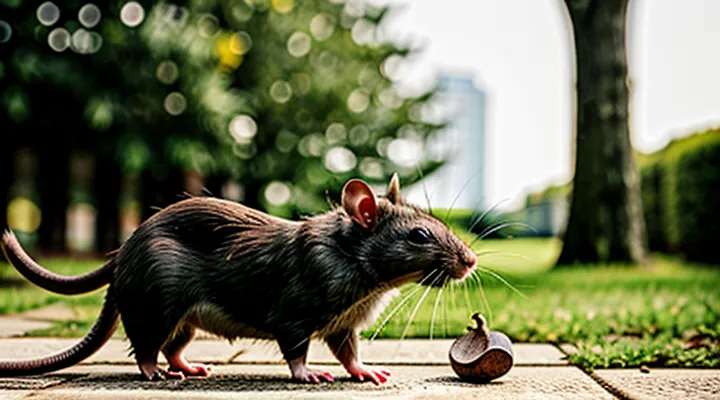
The Anatomy and Physiology of a Rat's Tail
The Tail's Role in a Rat's Life
Balance and Locomotion
Handling a rat by its tail directly challenges the animal’s balance system. The tail functions as a dynamic stabilizer, providing proprioceptive feedback that assists in maintaining equilibrium during rapid movements. When the tail is seized, the feedback loop is disrupted, causing the rat to lose its reference point for spatial orientation.
The resulting loss of balance triggers a cascade of locomotor adjustments. Muscles in the hind limbs contract reflexively to compensate, often leading to abrupt, uncontrolled leaps. These reactions increase the likelihood of musculoskeletal strain, particularly in the lumbar vertebrae and hind‑limb joints, and elevate the risk of tail‑bone fractures.
Key considerations for safe handling:
- Avoid direct grip on the tail; use cupped hands or a gentle cradle that supports the torso.
- Support the animal’s body weight to preserve natural weight distribution.
- Allow the rat to orient its tail freely, maintaining sensory input for balance.
Understanding the interplay between tail‑mediated balance and locomotion clarifies why tail‑only lifts pose significant injury risks. Proper handling techniques that respect the tail’s stabilizing role reduce stress on the musculoskeletal system and promote animal welfare.
Thermoregulation
Thermoregulation in rodents is a rapid, autonomic process that maintains core temperature within a narrow range despite external fluctuations. Heat production derives primarily from brown adipose tissue activation and skeletal muscle shivering; heat loss occurs through vasodilation of cutaneous vessels, especially in the tail, which functions as a thermal radiator.
When a rat is restrained by its tail, the following physiological responses are observed:
- Immediate vasoconstriction of tail arteries reduces heat dissipation, causing a transient rise in core temperature.
- Stress‑induced catecholamine release triggers non‑shivering thermogenesis, further elevating body heat.
- Prolonged tail suspension impairs peripheral circulation, leading to localized cooling and potential tissue damage.
These thermoregulatory changes increase the risk of injury. Elevated core temperature can accelerate metabolic rate, hastening fatigue and compromising motor coordination. Simultaneously, restricted blood flow to the tail may produce necrosis if the grip persists beyond a few seconds.
Best practices for handling laboratory rats recommend minimizing tail contact. Alternative methods such as cupping the animal in a cupped hand or using a gentle restraining device preserve normal peripheral blood flow and prevent stress‑related hyperthermia. Continuous monitoring of body temperature during handling sessions ensures that thermoregulatory disruption remains within safe limits.
Communication
Effective communication is essential when assessing the risk of grasping rodents by the tail. Clear messages reduce uncertainty and prevent injury to both handler and animal.
Verbal instructions convey the rationale for avoiding tail‑based lifts. Simple statements such as «Do not hold a rat by the tail» provide direct guidance. Visual cues, including signage and color‑coded restraints, reinforce the verbal message. Tactile feedback, like gentle handling demonstrations, illustrates safe techniques without relying on the tail as a grip point.
Key practices for transmitting safety information:
- Use concise, imperative language in all instructions.
- Display signage at points of animal contact, employing high‑contrast graphics.
- Conduct brief, hands‑on training sessions to model proper handling.
- Provide written protocols that outline alternative grip methods, such as using the base of the forepaws.
- Encourage immediate reporting of any incidents to facilitate prompt corrective communication.
Consistent, multi‑modal communication ensures that the hazards associated with tail handling are understood and mitigated across all personnel.
The Risks of Handling Rats by Their Tails
Physical Injuries to the Rat
Vertebral Damage
Handling rodents by grasping the tail alone creates a direct load on the caudal vertebrae. The force applied to the tail transmits upward through the sacral and lumbar regions, producing compression and shear stresses that exceed the normal physiological limits of the spinal column.
The rat vertebral column consists of fourteen thoracic, six lumbar, and a fused sacral segment. The lumbar vertebrae, particularly L4–L6, lack extensive muscular support and are therefore susceptible to fracture or dislocation when the tail is subjected to abrupt tension.
Tail‑only lifting generates hyperflexion of the lumbar spine. Rapid acceleration or deceleration forces cause the intervertebral discs to compress beyond their elastic capacity, leading to annular fissures or nucleus pulposus extrusion. In severe cases, vertebral body fracture accompanies spinal cord contusion.
Clinical signs of vertebral trauma include reduced hind‑limb gait, reluctance to bear weight, and abnormal postural reflexes. Persistent pain may manifest as vocalization when the animal is handled. Neurological deficits, such as hind‑limb paresis or urinary incontinence, indicate possible spinal cord involvement.
Diagnostic evaluation relies on imaging. Lateral radiographs reveal vertebral alignment and possible fractures. Computed tomography provides detailed assessment of bone integrity, while magnetic resonance imaging delineates soft‑tissue injury, disc herniation, and spinal cord edema.
Preventive measures eliminate tail‑based support. Recommended techniques involve cupping the animal in both hands, supporting the torso with a gentle cradle, or using a restraining tube that distributes pressure across the forelimbs and torso. When tail handling is unavoidable, the tail should be grasped near the base with minimal tension and the animal should be lifted smoothly to avoid sudden acceleration.
Adopting proper handling protocols reduces the incidence of spinal injury, preserves animal welfare, and maintains experimental validity.
Skin and Tissue Damage
Grasping a rodent by its tail creates mechanical stress that exceeds the tensile capacity of the animal’s integument. The tail’s skin, subcutaneous tissue, and vascular network are vulnerable to lacerations, avulsion, and hemorrhage. Resulting lesions may progress to necrosis if blood flow is compromised.
Human handlers confront comparable risks. Direct contact with a stressed tail often provokes defensive biting or clawing. Typical skin and tissue injuries include:
- puncture wounds from incisors, frequently contaminated with oral flora;
- linear or jagged lacerations caused by claw strikes;
- abrasions from friction against the tail’s fur and skin;
- deep tissue trauma when excessive force separates the tail from underlying musculature.
Such injuries can breach the epidermal barrier, exposing underlying muscle and connective tissue. Immediate decontamination, thorough irrigation, and professional medical assessment reduce infection likelihood and promote optimal healing.
Preventative strategies focus on alternative handling techniques. Employing a cupped hand, a sturdy container, or a grabber reduces reliance on the tail, thereby minimizing both animal suffering and practitioner tissue damage.
Psychological Stress
Psychological stress constitutes a critical factor when evaluating the safety of grasping rats by the tail. Acute stress triggers activation of the hypothalamic‑pituitary‑adrenal axis, elevating corticosterone levels and accelerating heart rate. Behavioral manifestations include freezing, vocalizations, and attempts to escape the grip.
Observable stress indicators:
- Elevated plasma corticosterone
- Increased respiratory rate
- Reduced exploratory activity in open‑field tests
- Persistent grooming or self‑directed aggression
Stress‑induced physiological changes can distort experimental outcomes. Hormonal fluctuations alter metabolic pathways, affect immune responses, and bias behavioral assays. Data variability rises when subjects experience inconsistent handling stress, undermining reproducibility across studies.
Mitigation strategies:
- Employ handling techniques that avoid tail grip, such as cupping or tunnel transfer.
- Provide habituation sessions to acclimate animals to human contact.
- Use gentle restraint devices that distribute pressure evenly across the body.
- Monitor stress biomarkers regularly to verify baseline conditions.
Implementing these practices reduces psychological distress, enhances animal welfare, and improves the reliability of scientific findings related to rodent handling procedures.
Behavioral Consequences for the Rat
Increased Fear and Aggression
Handling rats by their tails can trigger heightened fear and aggression. The sudden grip on a sensitive region activates nociceptive pathways, causing immediate pain. Pain signals travel to the amygdala, intensifying the animal’s defensive response. Consequently, the rat may exhibit rapid escape attempts, vocalizations, and increased muscular tension.
The behavioral shift manifests in several observable patterns:
- Rapid, erratic movements aimed at disengaging the tail grip.
- Biting or lunging toward the handler’s hands.
- Elevated grooming or freezing, indicating stress.
These reactions reduce the likelihood of safe manipulation and raise the risk of injury to both the rat and the person. Avoiding tail‑based handling minimizes stress, promotes calmer behavior, and supports more reliable experimental or caregiving outcomes.
Impaired Bonding with Humans
Handling rodents by grasping the tail creates a direct source of acute stress. The sudden pain and loss of balance trigger a fight‑or‑flight response, releasing corticosterone that interferes with the neurochemical pathways responsible for social attachment. As a result, the animal exhibits reduced willingness to approach, explore, or interact with human caretakers.
Key consequences for the human‑rat relationship include:
- Decreased frequency of voluntary contact; the rat retreats from proximity even when food is offered.
- Lowered responsiveness to gentle tactile cues, such as hand stroking, which normally reinforce trust.
- Impaired learning of positive associations, limiting the effectiveness of training or enrichment programs.
These effects persist beyond the immediate encounter. Repeated tail‑grasping establishes a conditioned aversion, causing the rat to generalize fear to all human presence. Consequently, the animal’s capacity to form a stable, affiliative bond diminishes, compromising welfare and the reliability of experimental or companion‑animal outcomes.
Recommended Methods for Handling Rats
Safe and Humane Handling Techniques
The «Scoop» Method
The «Scoop» Method provides a controlled approach for securing a rodent when a tail grip is employed. By positioning the hand beneath the animal’s torso and guiding the body into a cupped palm, the technique minimizes stress on the spinal column and reduces the likelihood of tail injury.
Key procedural steps:
- Place the dominant hand flat on the cage floor, palm facing upward.
- Gently slide the hand beneath the rat’s thorax, ensuring the forepaws remain free.
- Simultaneously lift the animal, allowing the tail to trail naturally without being the primary support.
- Transfer the animal to a secondary container using a swift, fluid motion to avoid prolonged suspension.
The method’s safety advantages stem from distributing load across the chest and limbs rather than concentrating force on the tail. This distribution lowers the risk of vertebral compression and prevents tail detachment, a common consequence of direct tail handling.
When applied correctly, the «Scoop» Method aligns with humane handling standards and supports accurate data collection without compromising animal welfare.
The «Support» Method
The «Support» Method offers an alternative to the practice of lifting rodents by the tail, reducing the chance of spinal injury and panic‑induced biting. The technique relies on stabilizing the animal’s torso while the forepaws are gently guided into a secure hold.
Implementation begins with positioning the rat on a flat surface. One hand slides beneath the chest, palm supporting the sternum; the second hand cupped around the hindquarters, fingers avoiding pressure on the spine. The animal’s weight rests on the handler’s palms, allowing controlled movement without traction on the tail.
Key steps:
- Place the rat on a non‑slippery platform.
- Slide the dominant hand under the rib cage, thumb along the spine for orientation.
- Position the supporting hand behind the pelvis, fingers spread to distribute pressure.
- Lift smoothly, maintaining a horizontal plane.
- Transfer to a container or cage by sliding the supported body forward.
Advantages include minimized stress responses, lower incidence of tail fractures, and improved handling efficiency for laboratory and veterinary settings. The method aligns with animal‑welfare guidelines that prioritize humane restraint techniques.
Building Trust with Your Rat
Gradual Acclimation
Gradual acclimation refers to a systematic process that conditions a rat to tolerate handling without excessive stress. By introducing contact in short, predictable intervals, the animal learns that tactile interaction does not threaten its safety, thereby decreasing the likelihood of defensive reactions when the tail is grasped.
Key steps in a gradual acclimation protocol include:
- Initiate brief, gentle touches on the back or side for a few seconds, observing the animal’s response.
- Extend contact duration by a few seconds each session, maintaining a calm environment.
- Introduce light pressure on the tail only after the animal accepts dorsal handling without agitation.
- Conduct sessions daily, limiting total handling time to under five minutes to prevent habituation fatigue.
- Record behavioral indicators such as freezing, vocalization, or attempts to escape, adjusting the pace accordingly.
Implementing this progressive approach minimizes sudden reflexive attempts to bite or withdraw, which are primary causes of tail injuries. Consistent exposure also stabilizes physiological stress markers, supporting overall health and reducing the risk associated with tail-based manipulation.
Positive Reinforcement
Positive reinforcement provides a reliable method for encouraging voluntary cooperation when handling rodents. By pairing a gentle grasp with a desirable stimulus, the animal learns to associate the action with a reward, reducing stress and minimizing the risk of injury.
When attempting to lift a rat without using the tail, the following protocol proves effective:
- Offer a high‑value food item immediately before contact; the anticipation creates a positive expectation.
- Apply a brief, secure hand‑hold around the torso, ensuring the limbs are supported.
- Deliver the reward within a few seconds of successful lift; the short interval reinforces the behavior.
- Repeat the sequence consistently, gradually increasing the duration of the hold.
Research indicates that rats trained with this approach exhibit lower cortisol levels during handling, suggesting reduced physiological stress. The technique also improves handler safety by decreasing the likelihood of sudden movements that could result in bites or falls.
Implementation requires careful selection of the reward, precise timing, and a calm environment. Over time, the animal develops a reliable response, allowing safe manipulation without reliance on the tail as a grip point.
The Ethical Implications of Tail Handling
Animal Welfare Standards
Handling rodents by the tail raises specific animal welfare concerns. Established standards require that any manipulation minimize pain, stress, and risk of injury. The following points summarize key requirements for ethical practice:
- Secure grip on the tail without excessive force; pressure should be sufficient to prevent slipping but not enough to cause tissue damage.
- Limit duration of tail restraint to the shortest period necessary for the intended procedure.
- Provide immediate access to a safe, supportive surface after release to prevent falls or collisions.
- Monitor physiological indicators such as vocalization, rapid breathing, or abnormal movement as signs of distress.
- Employ alternative handling techniques—such as cupping the body or using a tunnel—when feasible, to reduce reliance on tail lifting.
Regulatory frameworks, including the United Kingdom Animals (Scientific Procedures) Act and the United States Animal Welfare Act, classify tail handling as a stress‑inducing method that must be justified by scientific necessity and accompanied by mitigation strategies. Institutional animal care and use committees (IACUCs) evaluate protocols for compliance, ensuring that any tail‑based handling is performed by trained personnel and documented with detailed observations.
Documentation of each handling event, including duration, force applied, and animal response, supports continuous improvement of welfare practices. Data analysis can reveal patterns of excessive stress, prompting protocol revisions or adoption of less invasive techniques.
Overall, adherence to these standards protects animal well‑being while maintaining the integrity of experimental or veterinary procedures involving rats.
Understanding Rat Behavior and Needs
Rats rely on acute tactile and olfactory senses to navigate their environment. Their tails serve as balance organs and convey social signals; sudden grip can cause stress, disrupt equilibrium, and trigger defensive aggression. Handling by the tail therefore increases the likelihood of injury to both animal and handler.
Key aspects of rat behavior relevant to safe handling include:
- Strong flight response activated by perceived threat;
- Preference for low‑profile, gentle contact that mimics natural grooming;
- Social hierarchy expressed through scent marking and body language rather than tail manipulation.
Meeting basic physiological and psychological needs reduces stress and improves cooperation during handling:
- Access to clean water and nutritionally balanced food;
- Enrichment items such as tunnels, chew toys, and nesting material;
- Regular, brief human interaction conducted with soft, palm‑based support.
When capture is necessary, secure the animal by supporting the torso and hindquarters, allowing the tail to remain free. This technique minimizes the risk of spinal injury and prevents the tail from being used as a lever for escape. Consistent application of these principles promotes animal welfare and protects handlers from bites or scratches.
Common Misconceptions About Rat Handling
Debunking the Myth of «Easy Lifting»
The belief that a rodent can be hoisted by its tail without adverse effects persists in many informal settings. This notion, often summarized as «Easy Lifting», suggests that the tail provides a secure anchor for the animal’s entire weight.
Anatomically, a rat’s tail consists primarily of vertebrae, blood vessels, and a dense network of sensory nerves. The vertebral column lacks the muscular and ligamentous support required to bear substantial loads. When force is applied to lift the animal by the tail, the following outcomes are common:
- Fracture or dislocation of caudal vertebrae
- Rupture of tail arteries, leading to hemorrhage
- Severe nociceptive stimulation, triggering acute stress responses
- Compromised balance, increasing the risk of falls and secondary injuries
Empirical observations confirm that tail‑based lifting produces measurable spikes in stress hormones and observable behavioral signs of distress. These physiological markers correlate with reduced immune function and slower recovery from minor wounds.
Best practices for handling laboratory or pet rats emphasize a two‑hand approach: one hand cradles the torso, the other stabilizes the hindquarters. This method distributes weight across the musculature, minimizes pressure on the tail, and reduces the likelihood of injury. If a tail must be grasped momentarily, the grip should be gentle, limited to a few seconds, and accompanied by immediate release.
Adhering to these guidelines eliminates the myth of «Easy Lifting» and ensures humane, safe interaction with the animal.
The Difference Between Wild and Domestic Rats
Wild rats and domesticated rats differ markedly in physiology, temperament, and response to human contact. These distinctions affect the risk associated with grasping an animal by the tail.
• Wild rats retain sharp, well‑developed incisors and a heightened fight‑or‑flight instinct. Their skin is thicker, but muscle tension increases when restrained, amplifying the chance of a sudden bite or tail fracture.
• Domestic rats have been selectively bred for reduced aggression and greater tolerance of handling. Their teeth are comparable in size, yet they exhibit fewer defensive reflexes and are less likely to lash out when the tail is lifted.
• Habitat exposure shapes disease prevalence. Wild individuals carry a broader spectrum of pathogens, raising health concerns for anyone who handles them without protective equipment. Domesticated rats, kept in controlled environments, present a lower zoonotic risk.
When a tail is used as a primary grip, the animal’s reaction determines safety. Wild specimens often jerk backward, generating torque that can detach vertebrae or cause musculoskeletal injury. Domestic rats, accustomed to human interaction, typically remain still or move forward, reducing mechanical stress on the tail. Nevertheless, even domesticated rats can experience pain or stress from tail handling, potentially leading to defensive behavior.
For individuals who need to move rats—researchers, pest controllers, or caretakers—recognizing these differences guides the choice of technique. Employing alternative grips, such as cupping the torso or using a gentle restraining device, minimizes injury risk for both animal and handler, regardless of the rat’s origin.