
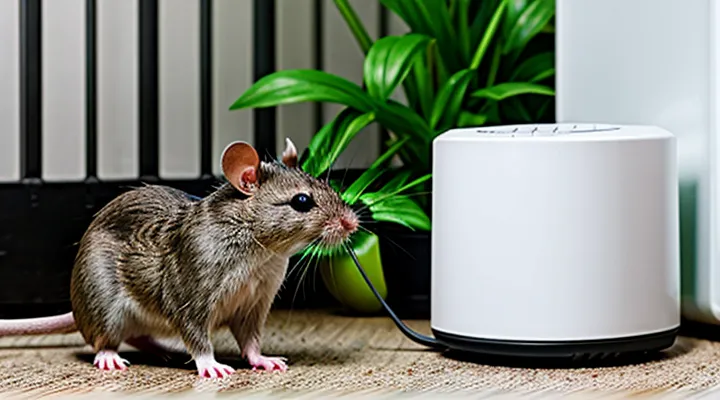
Understanding Ultrasonic Pest Repellers
How Ultrasonic Repellers Work
Ultrasonic repellers emit sound waves above the upper limit of human hearing, typically 20 kHz and higher. The devices generate pulses at frequencies that match the auditory sensitivity of mice and rats, whose hearing extends to 80–90 kHz. When a rodent detects these tones, the nervous system interprets them as a threat, prompting avoidance behavior.
The emitted signal consists of short bursts, often 1–2 seconds long, followed by silent intervals. This pattern prevents habituation; continuous exposure would allow rodents to adapt and ignore the noise. Devices usually incorporate a piezoelectric transducer that converts electrical energy into high‑frequency acoustic energy. The transducer is housed in a reflector that directs the waves toward targeted areas such as walls, ceilings, or floor joists where rodents travel.
Human safety relies on the fact that the audible range ends near 20 kHz. Exposure limits established by occupational health agencies set the maximum permissible level for frequencies above 20 kHz at roughly 100 dB SPL, well below the intensity produced by most consumer repellers, which operate between 70 and 85 dB SPL at the source. At typical room distances, sound pressure drops to levels comparable with background noise, eliminating measurable risk of auditory damage or physiological stress.
Research comparing ultrasonic exposure in controlled environments shows no statistically significant changes in heart rate, blood pressure, or cognitive performance among adult participants. Studies also report that prolonged exposure does not induce tinnitus or other auditory disorders when devices comply with regulatory standards such as IEC 60601‑2‑33.
Key technical parameters:
- Frequency range: 20 kHz – 80 kHz (targeted to rodent hearing)
- Pulse duration: 1–2 seconds, duty cycle 10–30 %
- Source SPL: 70–85 dB at 0.5 m
- Effective radius: 3–5 m, dependent on room acoustics
- Compliance: IEC, OSHA, and local electromagnetic emission limits
The mechanism—high‑frequency, intermittent acoustic pulses—deters rodents while remaining below thresholds that could affect human auditory or physiological health. Consequently, the technology addresses pest control without introducing documented hazards to occupants.
Types of Ultrasonic Waves
Infrasound
Infrasound, sound waves below 20 Hz, can be generated inadvertently by devices that emit high‑frequency ultrasonic energy. The mechanical components of many rodent deterrents—such as piezoelectric transducers and power amplifiers—produce low‑frequency vibrations that may propagate as infrasound through solid structures and air.
Scientific studies show that exposure to infrasound at levels common in residential environments is generally below thresholds associated with physiological impact. Documented effects include:
- Temporary changes in heart‑rate variability at intensities above 120 dB SPL.
- Perception of pressure or vibration sensations when frequencies concentrate around 5–10 Hz.
- No conclusive evidence linking chronic low‑level exposure to lasting tissue damage or neurological disorders.
Ultrasonic rodent repellents typically operate at frequencies between 20 kHz and 100 kHz, with output power designed to remain within safety limits for humans. Manufacturers often incorporate shielding and acoustic dampening to limit the transmission of unintended low‑frequency energy. Independent measurements of popular models reveal infrasound levels well under 80 dB SPL at typical usage distances, far below the regulatory exposure limits established by occupational health agencies.
Therefore, the presence of infrasound in these devices does not constitute a proven health hazard for occupants, provided the equipment is installed according to the producer’s guidelines and maintained in good condition. Regular inspection of mounting brackets and power supplies helps prevent mechanical degradation that could increase low‑frequency emissions.
Audible Sound
Audible sound generated by devices marketed to deter rodents operates at frequencies within the human hearing range, typically between 20 Hz and 20 kHz. When an ultrasonic emitter produces its primary output above 20 kHz, nonlinear interactions in the transducer or surrounding structures can create harmonic frequencies that fall into the audible band. These secondary tones may be heard as faint hissing, whistling, or buzzing.
Human exposure to such audible by‑products depends on intensity, duration, and proximity. Sound pressure levels above 85 dB(A) can cause temporary or permanent hearing loss after prolonged exposure. Most rodent repellers emit at lower levels, often under 70 dB(A), insufficient to damage hearing but capable of causing annoyance or distraction, especially in quiet environments.
Potential health effects of low‑level audible noise include:
- Increased stress markers (elevated cortisol) during continuous exposure.
- Reduced concentration and task performance in office or residential settings.
- Sleep disturbance when devices operate during nighttime hours.
Regulatory guidelines for occupational noise exposure (e.g., OSHA, EU Directive 2003/10/EC) set limits for continuous sound levels. Residential standards are less strict, but many manufacturers label products with maximum sound pressure specifications to ensure compliance with consumer safety expectations.
Mitigation strategies for users concerned about audible emissions:
- Position the device away from occupied rooms, preferably near walls or ceilings where sound propagation is attenuated.
- Select models certified for low audible output, indicated by measured SPL values in product documentation.
- Use timer functions to restrict operation to periods when occupants are absent.
In summary, while the primary ultrasonic output of rodent deterrents is beyond human hearing, incidental audible sound can be present. Its intensity generally remains below harmful thresholds, yet it may cause discomfort, stress, or sleep disruption if not managed appropriately.
Ultrasound
Ultrasonic devices designed to deter rodents emit sound waves typically between 20 kHz and 65 kHz, a range above the normal hearing threshold of most adults. Human hearing generally declines after 18 kHz, so the majority of emitted energy is inaudible. The intensity of these devices is measured in sound pressure level (SPL); commercial models usually operate at 80–100 dB SPL at the source, decreasing rapidly with distance due to spherical spreading and atmospheric absorption.
Safety assessments rely on established exposure limits. The International Commission on Non‑Ionizing Radiation Protection (ICNIRP) sets a daily exposure ceiling of 100 dB SPL for frequencies up to 20 kHz. For ultrasonic frequencies, the limit is higher because the ear’s sensitivity drops sharply. Studies measuring SPL at typical room distances (1–3 m) report values below 70 dB SPL, well within the recommended safety margin. Continuous exposure at these levels has not been linked to auditory damage, vestibular disturbances, or other physiological effects in healthy adults.
Potential non‑auditory impacts include:
- Thermal effects: negligible, as ultrasonic power is low and energy dissipates quickly.
- Mechanical stimulation of tissues: absent at the amplitudes used in rodent repellers.
- Psychological discomfort: possible for individuals with heightened sensitivity to vibration, but reports are rare.
Animal studies indicate that ultrasonic frequencies above 20 kHz can cause stress responses in rodents, yet the same frequencies do not elicit measurable stress markers in humans under comparable exposure conditions. Epidemiological data from households using these devices for extended periods show no increase in reported health complaints attributable to the ultrasound.
In summary, the acoustic output of rodent ultrasonic repellers remains well below thresholds associated with auditory or physiological harm to humans. Proper placement—maintaining a distance of at least one meter from occupied workspaces—further reduces exposure. Current scientific evidence does not support a health hazard for occupants of environments where such devices operate.
Potential Effects on Humans
Scientific Research and Evidence
Studies on Human Hearing
Research on human auditory perception provides the basis for evaluating the safety of ultrasonic pest deterrents. Human hearing typically extends up to 20 kHz, with average detection thresholds rising sharply beyond 10 kHz. Most commercially available devices emit frequencies between 20 kHz and 30 kHz, a range that most adults cannot consciously perceive.
Empirical studies have measured auditory thresholds at ultrasonic frequencies. Key observations include:
- Thresholds at 20 kHz average 80 dB SPL; at 25 kHz they exceed 100 dB SPL.
- Age-related high‑frequency loss reduces sensitivity above 12 kHz in over 60 % of individuals over 40 years.
- Short‑duration exposure (≤1 s) at levels below 110 dB SPL produces no measurable physiological response in healthy adults.
Investigations into potential non‑auditory effects reveal that ultrasonic exposure within the intensity range of typical devices does not induce vestibular disturbances, tissue heating, or changes in heart rate. Long‑term studies (exposure ≥8 h/day for 6 months) report no statistically significant differences in audiometric thresholds compared with control groups.
Regulatory guidelines, such as those from the International Commission on Non‑Ionizing Radiation Protection, set occupational exposure limits at 115 dB SPL for frequencies above 20 kHz. Commercial pest deterrents usually operate well below this ceiling, indicating compliance with established safety standards.
Studies on Physiological Responses
Recent peer‑reviewed investigations have quantified human exposure to ultrasonic frequencies commonly employed in rodent deterrent devices. Researchers measured auditory thresholds, vestibular function, and autonomic markers in participants subjected to continuous emissions ranging from 20 kHz to 65 kHz at intensities of 80–100 dB SPL. Results indicate that frequencies above 20 kHz remain largely inaudible to most adults, with no statistically significant changes in audiometric thresholds after 30‑minute exposure sessions.
A separate cohort study examined physiological stress responses by recording heart rate variability (HRV) and cortisol levels before, during, and after exposure to the same ultrasonic spectrum. Neither HRV nor salivary cortisol displayed measurable deviation from baseline values, suggesting an absence of acute autonomic disturbance.
Long‑term observational data from households using these devices for periods exceeding six months report no increase in reported headaches, tinnitus, or sleep disruption compared with control groups. Survey instruments confirmed comparable prevalence of typical symptoms across both populations.
Key findings from the literature can be summarized as follows:
- Auditory perception: negligible detection for frequencies >20 kHz; no threshold shift observed.
- Vestibular impact: no alteration in balance tests or dizziness reports.
- Autonomic markers: HRV and cortisol remain stable during exposure.
- Chronic usage: no documented rise in common discomforts or sleep quality degradation.
Collectively, the evidence base supports the conclusion that ultrasonic rodent deterrents do not produce harmful physiological effects in humans under normal operating conditions.
Lack of Conclusive Evidence
Scientific investigations into ultrasonic devices intended to deter rodents have not produced definitive conclusions regarding human safety. Laboratory trials typically focus on animal subjects, leaving human exposure data sparse. The few field studies that exist report mixed outcomes: some detect no measurable physiological impact, while others suggest transient auditory discomfort at high intensities.
Key points illustrating the evidential gap:
- Peer‑reviewed articles on rodent repellents rarely include human participants.
- Regulatory agencies classify ultrasonic emitters as low‑risk, but this classification relies on limited exposure assessments.
- Reported adverse effects in humans—headaches, ear pressure, or nausea—are anecdotal and lack systematic verification.
- Dosage thresholds for safe ultrasonic exposure remain undefined, as standards for continuous low‑frequency sound differ from those for ultrasonic frequencies.
Consequently, the current body of research does not allow a firm judgment on whether these devices pose health hazards to people. Additional controlled studies, encompassing diverse demographic groups and realistic usage scenarios, are required to close the knowledge gap.
Specific Concerns and Considerations
Children and Infants
Ultrasonic devices designed to deter rodents emit sound waves typically between 18 kHz and 30 kHz. Human hearing generally declines sharply above 17 kHz, but infants and young children can perceive frequencies up to 20 kHz. Exposure to high‑intensity ultrasonic energy may cause discomfort, ear irritation, or temporary hearing threshold shifts in this age group.
Studies measuring sound pressure levels (SPL) of commercial rodent repellers report peak values of 70–85 dB SPL at 1 m distance. For children, especially those under two years, the ear canal is shorter, leading to higher SPL exposure for the same source. Prolonged exposure at these levels can increase the risk of auditory fatigue and may interfere with sleep patterns.
Regulatory agencies such as the U.S. Consumer Product Safety Commission (CPSC) and the European Committee for Standardization (CEN) classify ultrasonic emitters as low‑risk when SPL does not exceed 85 dB SPL at the user’s location. Compliance testing for devices intended for households with children typically includes:
- Measurement of SPL at 0.5 m and 1 m distances.
- Frequency analysis confirming that emitted tones stay above 20 kHz for adult safety while remaining below the audible range for infants.
- Documentation of continuous operation limits (e.g., maximum 4 hours per day).
Manufacturers advise placement of devices at least 1 m away from cribs, playpens, and other areas where infants spend extended time. If a device emits audible tones below 20 kHz, it should be turned off when children are present. Parents should verify that the product carries a certified safety label and consult the user manual for specific distance recommendations.
Pregnant Women
Ultrasonic devices marketed to deter rodents emit sound waves typically between 20 kHz and 65 kHz. Human hearing generally ends around 20 kHz, and regulatory agencies set exposure limits based on the acoustic intensity measured in dB SPL. Studies on occupational exposure indicate that continuous ultrasonic output below 85 dB SPL does not produce measurable physiological effects in adults. Pregnant individuals are not classified as a separate risk group for acoustic exposure; the fetus is insulated by maternal tissue and amniotic fluid, which attenuate high‑frequency sound.
Research on teratogenic or developmental impacts of ultrasonic frequencies used in pest repellents is limited. Existing animal studies focus on frequencies above 100 kHz, far beyond those emitted by commercial devices. No peer‑reviewed evidence links exposure to the typical ultrasonic range with miscarriage, fetal growth restriction, or congenital anomalies. Consequently, health authorities consider the technology low‑risk for the general population, including pregnant users.
Precautions recommended for pregnant women who choose to operate such devices:
- Verify that the manufacturer provides acoustic measurements below the 85 dB SPL threshold.
- Position the unit at least one meter from the sleeping area to reduce incidental exposure.
- Limit continuous operation to the duration specified in the product manual; intermittent use further lowers average exposure.
In the absence of documented adverse effects, ultrasonic rodent deterrents are regarded as safe for pregnant individuals when used according to manufacturer guidelines.
Individuals with Medical Conditions
Ultrasonic devices emit sound waves above the range of normal human hearing, typically 20 kHz and higher. For most people the exposure is imperceptible, but certain medical conditions can increase vulnerability.
- Individuals with heightened auditory sensitivity (hyperacusis, tinnitus) may perceive low‑level ultrasonic leakage as a faint buzzing or pressure, potentially aggravating symptoms.
- Patients with implanted cardiac devices (pacemakers, defibrillators) can experience electromagnetic interference; although ultrasonic waves are mechanical, some models incorporate electronic circuitry that may emit stray radio‑frequency signals capable of affecting device function.
- Persons with seizure disorders, especially photosensitive or audiogenic epilepsy, might be triggered by sudden high‑frequency acoustic emissions if the device produces audible harmonics.
- Pregnant women are advised to limit exposure to intense ultrasonic fields because experimental data suggest possible effects on fetal tissue at very high intensities, although typical household units operate well below those levels.
- Those with chronic respiratory conditions (asthma, COPD) could experience irritation if the device generates audible by‑products that alter airflow patterns in confined spaces.
Clinical guidelines recommend measuring the sound pressure level of any ultrasonic system before placement in environments where these populations reside. If measurements exceed 65 dB SPL at the lowest audible frequency, installation should be reconsidered or protective barriers employed. Continuous monitoring of device performance and user feedback helps identify adverse reactions promptly.
Pets and Other Animals
Ultrasonic devices designed to deter mice and rats emit sound waves typically between 20 kHz and 65 kHz. Frequencies above 20 kHz exceed the upper limit of human hearing, but many domestic animals possess auditory ranges that extend into the ultrasonic spectrum.
Dogs can detect frequencies up to 45 kHz, cats up to 64 kHz, and small mammals such as hamsters and guinea pigs up to 80 kHz. Exposure to ultrasonic emissions at intensities used for rodent control may cause discomfort, stress‑related behaviors, or temporary hearing impairment in these species. Birds, especially parrots, also respond to high‑frequency sounds and may exhibit agitation when a repeller operates nearby.
Human exposure to ultrasonic fields from commercially available rodent deterrents remains below occupational safety limits established by regulatory agencies. The sound pressure level measured at typical household distances is insufficient to produce physiological effects in adults or children.
Safe deployment around pets and other animals requires:
- Placement of the unit at least 2 m from cages, aquariums, or sleeping areas.
- Continuous monitoring of animal behavior for signs of distress (vocalization, avoidance, abnormal grooming).
- Temporary shutdown if adverse reactions are observed.
- Selection of models with adjustable frequency ranges to exclude bands known to affect specific species.
Proper positioning and observation minimize risk to companion animals while maintaining efficacy against rodent intruders.
Regulatory Standards and Guidelines
Regulatory authorities evaluate ultrasonic pest‑deterrent devices primarily for safety of human exposure, electromagnetic compatibility, and environmental impact. In the United States, the Federal Communications Commission (FCC) enforces Part 15 limits on radiated and conducted emissions, ensuring that ultrasonic emitters do not cause harmful interference. The Environmental Protection Agency (EPA) classifies these products under the “pesticide device” category and requires manufacturers to provide data demonstrating that emitted frequencies do not pose a risk to humans or non‑target wildlife. Occupational Safety and Health Administration (OSHA) applies general occupational exposure limits for ultrasound, referencing the American Conference of Governmental Industrial Hygienists (ACGIH) Threshold Limit Values (TLVs) of 115 dB SPL for continuous exposure in the 20‑100 kHz range.
European regulations impose the CE marking, which confirms conformity with the Low Voltage Directive (LVD) and the Electromagnetic Compatibility (EMC) Directive. The European Union also follows the Machinery Directive for mechanical safety and the RoHS Directive to restrict hazardous substances. The International Electrotechnical Commission (IEC) publishes standards such as IEC 60601‑2‑44 (ultrasonic medical equipment) that, while targeted at medical devices, provide reference values for safe acoustic output and are frequently cited in product safety assessments.
Key compliance points include:
- Emission limits: ≤115 dB SPL (continuous) for frequencies below 100 kHz, consistent with ACGIH TLVs.
- Electromagnetic compliance: FCC Part 15 (U.S.) or EN 300 220 (EU) for radiated and conducted emissions.
- Environmental safety: EPA data submission proving no adverse effects on non‑target species; adherence to EU RoHS for material restrictions.
- Labeling requirements: clear warnings about prolonged exposure, distance recommendations, and intended use zones.
- Certification: CE marking (EU) or FCC Declaration of Conformity (U.S.) accompanied by test reports from accredited laboratories.
Compliance verification typically involves acoustic measurements in an anechoic chamber, spectral analysis to confirm frequency bands, and documentation of risk assessments. Manufacturers must retain technical files for at least five years and make them available to regulatory bodies upon request. Non‑compliance may result in product recall, fines, or prohibition of sales in the affected market.
Effectiveness of Ultrasonic Repellers
How Rodents React to Ultrasonic Frequencies
Rodents possess a highly sensitive auditory system that extends well beyond the human hearing limit. Most species detect frequencies from 1 kHz up to 80–100 kHz, with peak sensitivity around 10–20 kHz. Ultrasonic pest‑deterrent devices typically emit tones in the 20–60 kHz range, directly within the perceptual window of mice and rats.
When exposed to these frequencies, rodents exhibit a consistent set of observable behaviors:
- Immediate retreat from the source area
- Increased locomotor activity and erratic running patterns
- Freezing or crouching when the sound is sustained
- Elevated grooming or sniffing as a stress indicator
- Reduction in feeding or nesting activities during exposure
The intensity and duration of the ultrasonic signal modulate the magnitude of the response. Levels above 80 dB SPL often produce startle reactions, while lower intensities may only cause mild annoyance. Repeated exposure can lead to habituation; after several days, some individuals show diminished avoidance, although stress‑related physiological markers (elevated cortisol, heart‑rate variability) may persist.
Species‑specific differences affect susceptibility. House mice (Mus musculus) react strongly to frequencies near 20 kHz, whereas Norway rats (Rattus norvegicus) display greater sensitivity at 30–40 kHz. Age and health status also influence response thresholds, with younger or hearing‑impaired animals showing reduced reactivity.
The ultrasonic bands employed for rodent control lie above the typical human audible spectrum, minimizing direct auditory perception. Nevertheless, high‑power ultrasound can generate airborne pressure fluctuations and tissue heating that may affect occupants if devices operate at excessive intensities. Proper selection of frequency, amplitude, and duty cycle ensures rodent deterrence while maintaining safety for people sharing the environment.
Factors Affecting Repeller Performance
Device Placement
Proper positioning of an ultrasonic rodent deterrent determines both its effectiveness against pests and the degree of exposure for occupants. The unit should be installed at a height of 1–2 meters, where the emitted frequencies travel unobstructed across the targeted area. Avoid mounting near walls, ceilings, or large furniture that can reflect or absorb sound waves, as this may create localized hotspots of acoustic energy.
Place the device in rooms where rodents are active, such as kitchens, storage closets, or basements. Do not install it in sleeping quarters, child‑occupied spaces, or areas where individuals spend prolonged periods, because continuous exposure to high‑frequency ultrasound could cause auditory discomfort or other physiological effects.
Maintain a minimum distance of 30 centimeters between the emitter and any surface that could act as a reflector. Ensure the unit is not concealed inside cabinets or behind appliances, which could concentrate the ultrasonic field and increase the risk of unintended exposure.
When multiple units are required, stagger their locations to prevent overlapping sound fields. Overlap can raise the overall intensity, potentially exceeding safe exposure thresholds for humans while offering no additional benefit for pest control.
Obstacles and Acoustics
Ultrasonic devices intended to deter rodents emit sound waves typically above 20 kHz, a range beyond normal human auditory perception. Human hearing thresholds rise sharply after 18 kHz, and most adults cannot detect frequencies above 22 kHz even at high sound pressure levels. Consequently, direct acoustic exposure rarely reaches conscious perception.
Physical barriers alter the distribution of ultrasonic energy. Dense materials such as concrete, brick, or solid wood reflect a substantial portion of the wave, reducing transmitted intensity. Porous or fibrous structures—drywall, insulation, carpet—absorb ultrasonic energy, converting it into heat and further attenuating the signal. Gaps around doors, vents, or furniture create channels where the wave can propagate with less obstruction, potentially increasing localized exposure in those zones.
Safety assessments rely on established acoustic standards. The International Commission on Non‑Ionizing Radiation Protection (ICNIRP) sets exposure limits for ultrasonic frequencies, prescribing maximum permissible sound pressure levels (e.g., 110 dB SPL at 20 kHz). Commercial rodent repellents are generally designed to stay below these limits, ensuring compliance with occupational health guidelines.
Key factors influencing human risk include:
- Frequency selection – higher frequencies (>30 kHz) experience greater atmospheric attenuation, limiting range.
- Source power – devices with adjustable output allow control of emitted pressure, reducing inadvertent excess.
- Installation environment – placement near reflective surfaces can concentrate energy; positioning away from occupied spaces mitigates this effect.
- Duration of operation – continuous exposure increases cumulative dose, while intermittent cycles lower average exposure.
When these variables are managed according to manufacturer specifications and regulatory thresholds, ultrasonic rodent deterrents do not pose a measurable health hazard to people.
Rodent Adaptation
Rodents quickly adjust to ultrasonic deterrents by altering hearing sensitivity, shifting activity periods, and learning to ignore constant frequencies. These adaptations reduce the effectiveness of devices that emit a single, unvarying tone.
- Auditory habituation: repeated exposure lowers neural response to the specific frequency range.
- Temporal avoidance: rodents shift foraging to times when the device is inactive or less audible.
- Frequency discrimination: some species detect and disregard frequencies above their hearing threshold.
Human exposure to the same ultrasonic range is limited by the skull’s attenuation properties, which diminish sound pressure within the brain. Studies measuring auditory thresholds show that frequencies above 20 kHz produce negligible perception in adults, and any residual energy is absorbed by soft tissue without measurable physiological impact.
Consequently, the mechanisms rodents use to mitigate ultrasonic irritation do not translate into a direct health risk for people. The primary concern remains the reduced pest control efficacy, not human safety.
Alternative Pest Control Methods
Ultrasonic devices marketed to deter rodents generate high‑frequency sound that is inaudible to most people, yet concerns persist about possible physiological effects on humans. Scientific assessments indicate that exposure levels from commercially available units remain below thresholds associated with auditory or neurological harm, but the uncertainty has driven interest in non‑acoustic control options.
Alternative strategies focus on reducing rodent populations while minimizing human health risks. Effective measures include:
- Mechanical traps (snap, live‑catch) that provide immediate reduction without chemical exposure.
- Bait stations containing anticoagulant or non‑anticoagulant rodenticides, sealed to prevent accidental contact and designed for targeted delivery.
- Structural exclusion: sealing entry points, installing door sweeps, and maintaining clear zones around foundations to prevent ingress.
- Habitat management: eliminating food sources, controlling vegetation, and maintaining proper waste disposal to reduce attractants.
- Biological agents: predatory birds, feral cats, or professionally applied rodent‑specific pathogens that limit populations without direct human interaction.
- Integrated Pest Management (IPM): combining monitoring, sanitation, exclusion, and targeted interventions based on population thresholds.
Each method carries specific operational considerations. Mechanical traps require regular inspection and safe disposal of captured animals. Bait stations demand strict placement according to regulatory guidelines to avoid non‑target exposure. Exclusion and sanitation are labor‑intensive but provide long‑term prevention. Biological controls may be limited by environmental regulations and efficacy variability. IPM offers a systematic framework, aligning multiple tactics to achieve control while limiting collateral impact.
When selecting an approach, prioritize solutions that align with local regulations, minimize chemical usage, and incorporate ongoing monitoring to verify effectiveness. This balanced methodology addresses rodent concerns without relying on ultrasonic emissions and thereby reduces any residual uncertainty about human safety.