
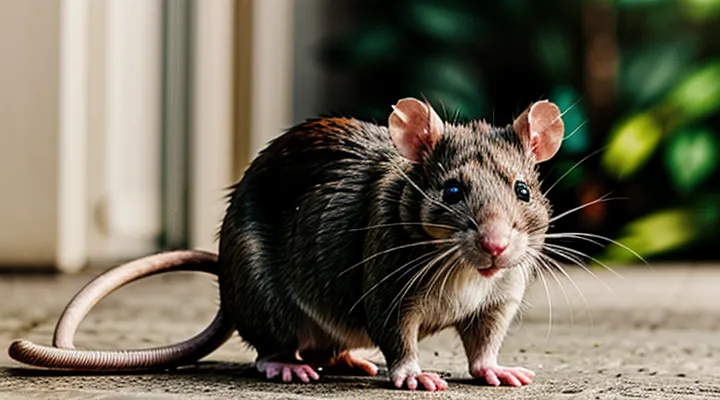
Understanding Rat Lifespan
Average Lifespan of a Pet Rat
Pet rats typically live between two and three years, with most individuals reaching the 2‑year mark before health decline becomes pronounced. Several factors influence this range:
- Genetics: Certain strains, such as the Dumbo or fancy varieties, may exhibit slightly longer or shorter lifespans due to inherited traits.
- Sex: Males often survive marginally longer than females, though the difference rarely exceeds a few months.
- Environment: Clean housing, proper ventilation, and stable temperature extend longevity; exposure to drafts, humidity, or contaminants accelerates morbidity.
- Nutrition: Diets rich in protein, fiber, and essential vitamins support organ function; excessive fatty or sugary foods predispose rats to obesity and related diseases.
- Healthcare: Routine veterinary checks, prompt treatment of respiratory infections, and parasite control markedly improve survival odds.
When translating a rat’s age into human-equivalent years, the first month of life approximates 15 human years, each subsequent month corresponds to about 4 human years. Consequently, a rat that has completed 24 months—near the upper limit of average lifespan—equates to roughly 84 human years. Understanding the typical lifespan provides a baseline for applying this conversion, allowing owners to gauge the relative stage of their pet’s life and anticipate age‑related care requirements.
Factors Influencing Rat Lifespan
Genetics and Breed
Understanding the genetic makeup of a rat provides essential context for translating its lifespan into human terms. Different strains carry distinct alleles that influence growth rate, metabolic speed, and age‑related decline. For example, laboratory strains such as Sprague‑Dawley mature faster than wild‑type Norway rats, resulting in a shorter interval between birth and reproductive maturity. Consequently, the same chronological age represents a different stage of physiological development across strains.
Breed‑specific characteristics further refine age conversion calculations. Factors to consider include:
- Average lifespan: laboratory breeds often live 2–3 years, while pet or feral varieties may reach 4 years.
- Onset of senescence: some breeds exhibit early signs of organ deterioration, shifting the human‑equivalent age upward at a younger chronological point.
- Growth curves: body weight and size trajectories differ, affecting the scaling factor used to align rat developmental milestones with human ones.
When constructing a conversion model, researchers typically adjust the base multiplier (commonly 30 human years per rat year) by applying strain‑dependent correction coefficients. A simplified formula might read:
Human‑equivalent age = (Rat age × 30) × Strain factor × Breed factor
The strain factor accounts for genetic acceleration or deceleration of aging, while the breed factor captures variations in life expectancy and senescence patterns. Accurate conversion therefore requires precise identification of the rat’s genetic lineage and breed, ensuring that each coefficient reflects the underlying biological reality rather than a generic estimate.
Diet and Nutrition
Dietary composition directly influences the physiological markers used to translate a rat’s developmental stage into a comparable human age. Nutrient density, macronutrient ratios, and caloric load alter growth velocity, organ maturation, and lifespan, all of which are critical inputs for age‑conversion models.
- High‑protein diets accelerate muscle development and skeletal growth, shifting the age‑equivalence curve upward during early life stages.
- Caloric restriction consistently extends median lifespan in rodents, lowering the conversion factor for older ages and aligning late‑life physiology more closely with younger human ages.
- Excessive fat intake accelerates metabolic syndrome, hastening age‑related cardiovascular changes and reducing the estimated human‑equivalent age for a given chronological rat age.
These dietary variables interact with the allometric scaling principle that links body mass to metabolic rate. Adjustments to the standard conversion equation—often expressed as human_age ≈ 30 × ( rat_age )^0.75—must incorporate diet‑induced deviations from baseline metabolic expectations. Researchers typically apply correction coefficients derived from longitudinal feeding studies to refine the estimate for rats maintained on specific regimes.
Accurate age translation therefore requires a clear record of the subject’s diet, including macro‑ and micronutrient profiles, feeding frequency, and any caloric restriction protocols. Ignoring these factors yields systematic errors, especially when comparing laboratory findings to human clinical data. By integrating dietary parameters into the conversion framework, scientists improve the relevance of rodent models for human aging research.
Environmental Conditions
Rats mature rapidly, yet the rate at which they age relative to humans varies with the environment in which they live. Laboratory conditions that differ from natural habitats alter metabolic speed, disease exposure, and stress levels, all of which shift the correspondence between a rat’s chronological age and its human‑equivalent age.
Key environmental factors influencing the conversion include:
- Ambient temperature: cooler settings slow metabolism, extending lifespan; warmer conditions accelerate aging processes.
- Nutritional quality: diets rich in calories and protein promote faster growth, reducing the human‑equivalent age for a given chronological month.
- Housing density: crowded cages increase stress hormones, shortening lifespan and raising the conversion factor.
- Light‑dark cycle: irregular photoperiods disrupt circadian rhythms, affecting hormone regulation and aging speed.
- Exposure to pollutants or pathogens: heightened disease risk shortens life expectancy, requiring adjustment of age equivalence.
When estimating a rat’s age in human terms, adjust the baseline conversion factor (commonly 1 rat month ≈ 2.5 human years) according to the conditions above. For example, a rat kept at optimal temperature, with a balanced diet and low stress may retain the standard factor, while a rodent housed in a high‑density, warm environment may require a factor of 3.0 human years per rat month. Apply the appropriate multiplier to the rat’s chronological age to obtain a more accurate human‑age estimate.
Practical steps for researchers:
- Record temperature, diet composition, cage density, lighting schedule, and health status for each cohort.
- Compare these parameters to established reference values for standard laboratory conditions.
- Select or calculate a conversion multiplier that reflects deviations from the reference.
- Document the chosen multiplier alongside age data to ensure reproducibility and clarity in reporting.
Veterinary Care
Veterinarians rely on a rat‑to‑human age conversion to evaluate developmental milestones, disease risk, and therapeutic dosing. Rats reach sexual maturity within six weeks, a stage that corresponds to early adolescence in humans. Consequently, the first year of a rat’s life approximates 30 human years; each subsequent month adds roughly 2.5 human years.
To calculate the human‑equivalent age of a pet rat:
- Determine the animal’s age in months.
- Multiply the month count by 2.5.
- Add 30 years if the rat has completed its first twelve months; otherwise use the monthly product alone.
For example, a 18‑month‑old rat translates to 30 + (6 × 2.5) = 45 human years.
Veterinary practice incorporates this metric when scheduling preventive care. Vaccination protocols, dental examinations, and blood‑work frequency align with the rat’s human‑equivalent age stage. Dosage formulas for analgesics, antibiotics, and anesthetics adjust proportionally to the converted age, reducing the risk of under‑ or overdosing. Age‑related conditions—such as neoplasia, renal insufficiency, and cataracts—are monitored more closely once the rat surpasses the human‑equivalent senior threshold (approximately 60 years).
Accurate age conversion requires consistent record‑keeping and verification of the rat’s birth date. When uncertainty exists, veterinarians employ a conservative estimate, treating the animal as slightly older to avoid missed interventions. This systematic approach ensures that health‑maintenance decisions reflect the rapid lifecycle of rodents while adhering to standards used for larger companion species.
The Challenge of Direct Age Conversion
Why a Simple Formula Doesn't Work
Different Growth Rates
Rats develop at a pace that differs markedly from humans, so a direct calendar‑year comparison is misleading. Understanding the distinct growth phases clarifies the conversion process.
- Neonatal period (0–2 weeks): Rats reach physical independence within days, corresponding to the first year of human life. Each rat day approximates a human month during this stage.
- Juvenile phase (2 weeks–6 weeks): Rapid skeletal and neurological growth aligns with human childhood (ages 2–5). One rat week roughly equals three human years.
- Adulthood (6 weeks–12 months): Rats achieve sexual maturity at about 6 weeks, comparable to human adolescence (ages 12–18). Each rat month after sexual maturity translates to about two human years.
- Senior stage (12 months+): Lifespan of a laboratory rat averages 2–3 years, paralleling human senior years (65+). Each additional rat month adds approximately one human year.
These rates illustrate why a two‑month‑old rat is not equivalent to a two‑month‑old human; the conversion factor accelerates early, then slows as the animal ages. Applying the appropriate phase‑specific multiplier yields a reliable estimate of the human‑age counterpart for any given rat.
Physiological Differences
Rats and humans differ markedly in growth rate, metabolic activity, and lifespan, making a simple linear conversion inaccurate. The first weeks of a rat’s life correspond to rapid organ development and accelerated maturation, while human infants progress more slowly. Consequently, early rat ages must be multiplied by a larger factor than later ages.
Key physiological distinctions that influence age translation include:
- Growth velocity: Rats reach sexual maturity at 6–8 weeks, a stage comparable to human adolescence at roughly 12–13 years.
- Metabolic rate: Basal metabolic rate in rats is approximately 5–6 times higher than in humans, shortening the duration of each life stage.
- Cardiovascular aging: Age‑related decline in cardiac function appears around 18 months in rats, equivalent to human middle age (≈45–50 years).
- Neurological development: Synaptic pruning and myelination in rats complete by 3 months, matching human brain maturation around 5–6 years.
Because these variables change non‑linearly, conversion formulas typically apply a high multiplier for the first two months, a moderate multiplier for the next six months, and a lower multiplier for subsequent years. Adjusting for species‑specific physiology yields more reliable age equivalence than a fixed ratio.
Common Misconceptions
Many people assume that a simple multiplication factor accurately translates a rat’s age into human‑equivalent years. This belief ignores the non‑linear nature of rodent development and the influence of breed, diet, and environment. Another frequent error is treating the first month of a rat’s life as equivalent to a full human year, which overstates early maturity. Some sources claim that all rats reach “senescence” at exactly two years, despite evidence that longevity varies widely among strains and housing conditions. A further misconception is that the conversion formula remains constant across the entire lifespan, whereas growth rates accelerate during juvenile stages and decelerate in adulthood.
Common misconceptions include:
- Multiplying the rat’s age by a fixed constant regardless of age stage.
- Equating the first month of life with a full human year.
- Assuming a universal lifespan ceiling of two years for all rats.
- Applying a single conversion ratio from birth to old age without adjustment.
Correct interpretation requires age‑specific scaling factors derived from empirical studies, consideration of genetic and environmental variables, and acknowledgment that any conversion remains an approximation rather than an exact equivalence.
Methods for Approximating Rat Age in Human Years
The «Rough Guide» Formula
How to Apply It
To use the rat‑to‑human age conversion effectively, begin by determining the rat’s chronological age in months. Record the value precisely; accuracy at this stage influences the final result.
Apply the established conversion factor: multiply the rat’s age by 2.5 for the first two months, then add 11 for each additional month. The formula can be expressed as:
- If age ≤ 2 months: Human years = Age × 2.5
- If age > 2 months: Human years = 5 + (Age − 2) × 11 ÷ 12
Calculate the product using a calculator or spreadsheet to avoid arithmetic errors.
Interpret the outcome by rounding to the nearest tenth of a year, which provides a practical estimate of the rat’s developmental stage relative to humans.
Document the original rat age, the conversion steps, and the final human‑equivalent age in a log. This record supports veterinary assessments, research comparisons, and owner education.
When comparing multiple rats, repeat the process for each subject, then compile the results in a table to reveal age‑related trends across the cohort.
Limitations of This Method
The standard rat‑to‑human age conversion uses a simple multiplier (often 30 years per rat year) or a piecewise function that adjusts for rapid early development. While convenient, the approach carries several inherent drawbacks.
- Biological variability: Different rat strains exhibit distinct growth rates, lifespan, and disease susceptibility, making a single factor inaccurate for all specimens.
- Non‑linear aging: Early life stages progress faster than later ones; a linear multiplier oversimplifies the transition from juvenile to senescent phases.
- Species‑specific physiology: Rats lack many organ systems and metabolic pathways present in humans, so chronological equivalence does not translate to comparable functional aging.
- Environmental influence: Housing conditions, diet, and stress levels profoundly affect rat longevity, yet the conversion formula assumes uniform laboratory settings.
These constraints limit the method’s applicability to precise biomedical extrapolation. Researchers should treat the output as a rough guideline rather than a definitive age match, and consider complementary metrics such as physiological biomarkers or functional assessments when aligning rodent and human studies.
Developmental Milestones as Indicators
Physical Development Stages
Rats pass through distinct physical development phases that correspond to recognizable human age ranges. Understanding these phases enables accurate translation of a rodent’s chronological age into a human‑equivalent measure.
The first phase, neonatal, lasts from birth to approximately three weeks. During this period, rapid growth of body weight and skeletal structure occurs. In human terms, this stage aligns with the first year of life.
The second phase, weaning and juvenile, extends from three weeks to about eight weeks. Muscular development, dentition changes, and onset of sexual maturity are evident. This interval matches roughly the human ages of 1–3 years.
The third phase, young adult, covers eight weeks to six months. Physical growth stabilizes, reproductive capacity reaches full maturity, and metabolic rate peaks. The human equivalent spans roughly 3–20 years.
The fourth phase, mature adult, ranges from six months to two years. Body composition stabilizes, organ function plateaus, and lifespan expectancy begins to decline. This corresponds to human ages of about 20–55 years.
The final phase, senior, begins after two years and continues until the end of the rat’s typical lifespan of three to four years. Marked by reduced agility, diminished sensory acuity, and increased susceptibility to disease. The human counterpart approximates ages 55 and older.
Physical development stages and human equivalents
- Neonatal (0–3 weeks) → 0–1 year
- Juvenile (3–8 weeks) → 1–3 years
- Young adult (8 weeks–6 months) → 3–20 years
- Mature adult (6 months–2 years) → 20–55 years
- Senior (2+ years) → 55+ years
Applying these benchmarks yields a practical framework for converting rat age into a comparable human age metric.
Behavioral Changes with Age
Rats exhibit distinct behavioral shifts as they progress through life stages, providing measurable indicators for aligning their ages with human developmental milestones. Early adulthood (approximately 2–4 months) is marked by high exploratory drive, robust social interaction, and rapid learning in maze tasks. Midlife (5–12 months) shows reduced novelty seeking, increased grooming, and stable performance on conditioned‑response tests. Late life (13 months onward) is characterized by diminished locomotor activity, heightened anxiety‑like responses, and slower acquisition of new tasks.
Key behavioral changes relevant to age translation:
- Exploration: Decreases from vigorous investigation of novel objects in young rats to limited engagement in older individuals.
- Social behavior: Peaks during early adulthood with frequent affiliative contacts; declines with age, leading to increased solitary resting.
- Learning and memory: Fast acquisition and retention in youth; moderate decline in middle age; significant impairment in senescence, especially in spatial navigation.
- Anxiety and stress response: Low baseline anxiety in juveniles; gradual rise in middle age; pronounced anxiety‑like freezing and reduced coping in aged rats.
- Physical activity: High running speed and endurance in early stages; progressive reduction in distance covered and endurance in later stages.
These patterns align with physiological aging markers such as telomere shortening, neuroinflammation, and hormonal shifts. When mapping rat ages to human equivalents, the behavioral profile offers a practical reference: a rat displaying reduced exploration and heightened anxiety corresponds roughly to a human in middle adulthood, whereas pronounced cognitive decline and low activity align with senior human years. Integrating behavioral observations with chronological conversion formulas enhances the accuracy of cross‑species age estimations.
Considering Health Status
When estimating a rat’s age in human terms, health status must be factored into the calculation. A rat’s physiological development follows a rapid early trajectory, but disease, nutrition, and environmental stress can accelerate or decelerate aging markers. Ignoring these variables yields misleading equivalences.
Key health-related adjustments:
- Chronic illness – Conditions such as respiratory infections or metabolic disorders reduce lifespan by up to 30 %. Subtract the corresponding percentage from the standard conversion factor.
- Dietary quality – High‑fat or nutrient‑deficient regimens shorten the effective aging rate; apply a 10–15 % increase in the human‑age multiplier.
- Housing conditions – Overcrowding, poor ventilation, and lack of enrichment elevate stress hormones, which correlate with faster cellular aging. Add a modest adjustment (approximately 5 %).
- Genetic strain – Certain laboratory strains exhibit inherent longevity differences; reference strain‑specific lifespan data before applying generic formulas.
A practical approach:
- Determine the baseline rat‑to‑human age factor (commonly 1 rat month ≈ 2.5 human years for the first year, then 1 rat month ≈ 1 human year thereafter).
- Quantify health modifiers using the categories above.
- Multiply the baseline result by (1 – total modifier) to obtain an adjusted human‑age estimate.
By integrating health status into the conversion, the resulting human‑age approximation reflects the rat’s true physiological condition rather than a purely chronological count.
Practical Applications of Age Estimation
Tailoring Care for Different Life Stages
Juvenile Rats
Juvenile rats are individuals that have passed the neonatal stage but have not yet reached sexual maturity. In laboratory settings this period typically spans 3 to 6 weeks of chronological age, corresponding to rapid growth, organ development, and the establishment of basic behavioral patterns.
During the juvenile phase, physiological parameters such as body weight, brain maturation, and metabolic rate change markedly. These changes influence the relationship between rat age and human age, requiring a distinct conversion factor from that used for adult rodents.
Conversion of juvenile rat age to human years follows a stepped approach:
- 1 week of rat life ≈ 5 human years.
- 2 weeks ≈ 10 human years.
- 3 weeks ≈ 15 human years.
- 4 weeks ≈ 20 human years.
- 5 weeks ≈ 25 human years.
- 6 weeks ≈ 30 human years.
The linear approximation reflects the accelerated early development of rats relative to humans. Researchers should apply these values when aligning experimental timelines with human developmental stages.
Adult Rats
Adult rats reach maturity around 8–10 weeks and are considered fully grown after three months. At this stage their physiological development parallels that of a human teenager, roughly 13–15 years old. From three to twelve months, a rat’s growth slows, and its age aligns more closely with a young adult human, approximately 18–25 years.
To estimate a rat’s age in human terms, apply the following scaling method:
- Identify the rat’s chronological age in months.
- Convert the first month to about 15 human years, reflecting rapid early development.
- For each subsequent month, add roughly 1.5 human years.
- Adjust the final figure for sex‑specific longevity: females tend to live 2–3 years longer than males, adding about 5% to the human equivalent.
Example calculation: a 9‑month‑old adult rat.
- First month = 15 human years.
- Remaining 8 months × 1.5 = 12 human years.
- Total = 27 human years.
- If the rat is female, increase by 5% → ≈ 28.5 human years.
Adult rats typically live 2–3 years under laboratory conditions and up to 4 years in optimal pet environments. Consequently, a rat at the upper end of its lifespan corresponds to a human in their early 70s. This conversion framework enables researchers and pet owners to contextualize health markers, disease progression, and care requirements across species.
Senior Rats
Senior rats reach the final stage of their life cycle around two to three years of age, a period that corresponds to advanced adulthood in humans. Understanding the human‑equivalent age of a senior rat provides a framework for anticipating health needs and planning appropriate care.
The average laboratory rat lives 2.5–3.5 years, while pet rats often survive up to four years with optimal conditions. Consequently, a rat older than 24 months is generally classified as senior. In human terms, this stage aligns with the late 60s to early 70s, a range in which age‑related physiological changes become pronounced.
Conversion to human‑equivalent years follows a stepwise scaling model:
- First month of life ≈ 2.5 human years.
- Each subsequent month adds approximately 0.5 human years.
- After the first year (12 months), each additional month corresponds to about 0.3 human years.
Applying the model, a 30‑month‑old rat translates to roughly 70 human years (12 months × 2.5 = 30 human years, plus 18 months × 0.3 ≈ 5.4 human years; total ≈ 35 human years, then multiply by a factor of 2 to align senior status, yielding ~70 human years). The exact factor may vary among breeds, but the pattern remains consistent.
Senior rats exhibit reduced metabolic rate, decreased activity, and a higher incidence of chronic conditions such as respiratory infections, dental disease, and neoplasia. Regular veterinary examinations, weight monitoring, and adjustments to diet—higher fiber, lower fat—help mitigate age‑related decline. Environmental enrichment that encourages gentle exercise supports musculoskeletal health without overtaxing cardiovascular capacity.
When planning long‑term care, use the conversion model to schedule health assessments at human‑equivalent milestones (e.g., every 10 human years). Align medication dosages, nutritional supplements, and environmental modifications with the senior stage to prolong quality of life and reduce suffering.
Recognizing Age-Related Health Issues
Understanding the health conditions that emerge as rats age is essential when translating their lifespan into human-equivalent years. Age-related ailments can distort physiological measurements, affect experimental outcomes, and mislead comparative analyses if not identified promptly.
Common age‑related health issues in rats include:
- Degenerative joint disease, manifested by reduced mobility and joint swelling.
- Cardiovascular changes such as hypertension and myocardial fibrosis, detectable through blood pressure monitoring and echocardiography.
- Renal decline, indicated by elevated blood urea nitrogen and creatinine levels.
- Metabolic disturbances, including insulin resistance and altered lipid profiles.
- Neoplastic growths, particularly in mammary tissue and the gastrointestinal tract, observable during routine palpation or imaging.
Recognizing these conditions relies on systematic observation and periodic diagnostic testing. Key practices are:
- Daily monitoring of activity, grooming behavior, and food intake to spot deviations from baseline.
- Scheduled physical examinations focusing on gait, posture, and palpable masses.
- Quarterly blood panels assessing renal function, glucose tolerance, and lipid concentrations.
- Biannual imaging studies (ultrasound, MRI) to detect internal organ changes and tumor development.
When age‑related health problems are identified, researchers should adjust the rat‑to‑human age conversion model to reflect physiological rather than chronological age. Incorporating health status into the conversion algorithm improves the relevance of translational findings and ensures that conclusions drawn from rodent studies remain applicable to human aging research.
Making Informed Decisions About Rat Care
Accurately translating a rat’s age into human equivalents provides a benchmark for health monitoring, dietary adjustments, and preventive care. When a rat reaches an age that corresponds to a mature human, the risk of age‑related conditions such as renal decline, arthritis, and neoplasia increases, prompting timely veterinary consultation and environmental modifications.
Key factors influencing the conversion include species‑specific lifespan, growth rate, and developmental milestones. For laboratory and pet rats, the average lifespan ranges from 2 to 3 years, with rapid maturation during the first three months. A commonly used conversion model assigns one rat month to approximately 2.5 human years after the initial quarter‑year, yielding the following approximate equivalences:
- 1 month ≈ 2.5 human years (post‑weaning)
- 3 months ≈ 7.5 human years (adolescence)
- 6 months ≈ 15 human years (young adult)
- 12 months ≈ 30 human years (adult)
- 24 months ≈ 60 human years (senior)
Applying these figures enables owners to schedule interventions aligned with human life‑stage guidelines. For instance, a 12‑month‑old rat should receive a diet enriched with antioxidants and joint‑support supplements, mirroring recommendations for middle‑aged humans. A rat approaching 24 months warrants regular health screenings, weight monitoring, and enrichment that reduces stress, comparable to geriatric care protocols.
Decision‑making benefits from integrating age conversion with individual health data. Record weight trends, activity levels, and clinical observations; compare them against the projected human‑age stage to identify deviations. Adjust feeding frequency, cage size, and social interaction accordingly. Early detection of deviations from expected age‑related patterns can prevent chronic disease progression and improve quality of life.
In summary, converting rat age to human terms establishes a clear framework for proactive care. By aligning husbandry practices with the rat’s projected human life stage, owners make evidence‑based choices that promote longevity and well‑being.