
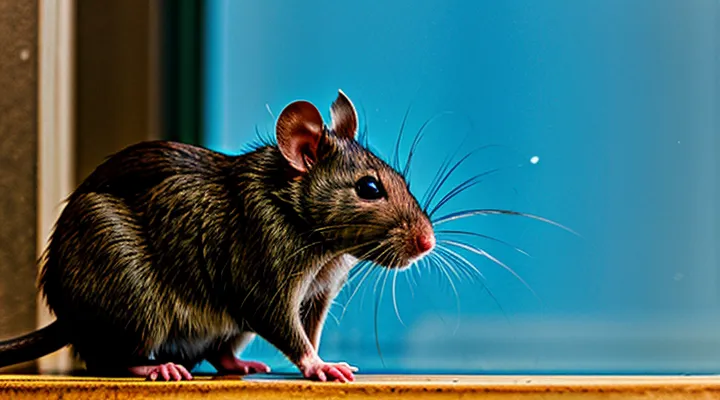
Introduction to Rodent Vision
The Rodent Eye: Anatomy and Physiology
Photoreceptors: Rods and Cones
Rats possess two photoreceptor types—rods and cones—embedded in the retinal outer segment. Rods dominate the retinal mosaic, accounting for roughly 85 % of photoreceptors, and provide high sensitivity to low‑light conditions. Their peak spectral sensitivity lies near 500 nm, matching the greenish wavelengths prevalent in nocturnal environments. Rods generate a single photon response that triggers a cascade of biochemical events, ultimately hyperpolarizing the cell and reducing glutamate release to bipolar cells.
Cones represent the minority population, distributed primarily in the ventral retina where visual acuity is higher. Rats express two cone opsins: an ultraviolet‑sensitive (S‑cone) peaking around 360 nm and a middle‑wavelength (M‑cone) peaking near 510 nm. This dichromatic arrangement enables discrimination of UV and green light, supporting tasks such as foraging and predator detection under daylight.
Key functional distinctions include:
- Temporal resolution: Cones recover faster than rods, allowing higher flicker fusion frequencies and better motion detection.
- Spatial acuity: Cone‑rich zones exhibit tighter packing, yielding finer visual sampling and improved pattern recognition.
- Adaptation range: Rods sustain vision across scotopic to mesopic illumination, whereas cones dominate in photopic light levels, preventing saturation.
The rod‑cone interplay shapes rat visual perception by providing a broad dynamic range: rods secure sensitivity in dim settings, while cones furnish color discrimination and detail under brighter conditions. This dual system underlies the animal’s capacity to navigate complex habitats, locate food, and respond to visual cues across varying light environments.
Lens and Pupil Characteristics
Rats possess a relatively small, spherical lens that provides a wide field of view but limited focal length. The lens curvature is steep, resulting in a high degree of spherical aberration that is partially compensated by the rod‑dominant retina. Accommodation is minimal; instead, rats rely on head and body movements to adjust focus on objects at varying distances.
The pupil of a rat is circular and highly dynamic. Under bright illumination the pupil constricts to approximately 1 mm in diameter, reducing retinal light exposure and enhancing depth of field. In low‑light conditions the pupil dilates up to 4 mm, maximizing photon capture. Unlike many mammals, the rat pupil does not exhibit a pronounced vertical slit; its shape remains consistent across lighting levels, reflecting the species’ reliance on scotopic vision.
Key functional implications:
- Broad visual field (≈300°) results from the combination of a small lens and wide pupil dilation.
- Limited accommodative ability is offset by rapid ocular and head saccades that reposition the visual axis.
- Pupil dynamics enable efficient transition between photopic and scotopic environments, supporting nocturnal foraging.
Overall, the structural simplicity of the rat lens and the flexibility of the pupil accommodate a visual system optimized for motion detection and low‑light navigation rather than high‑resolution detail.
Specialized Vision of Rats
Color Perception: Dichromacy
Wavelength Sensitivity
Rats possess two photoreceptor classes that define their spectral responsiveness. Rods dominate the retina, containing a single visual pigment (rhodopsin) with a peak absorption near 500 nm, which provides high sensitivity under low‑light conditions. Cones are fewer, split into two types: one expressing an S‑opsin maximally sensitive around 360 nm (ultraviolet) and another expressing an M‑opsin with peak sensitivity near 510 nm (green). This dichromatic arrangement limits color discrimination to the UV–green axis.
- Rod peak: ~500 nm (green‑blue)
- S‑cone peak: ~360 nm (ultraviolet)
- M‑cone peak: ~510 nm (green)
Behavioral tests reveal that rats can distinguish stimuli differing in UV versus green wavelengths, yet they rely primarily on luminance cues for tasks such as navigation and foraging. Their limited chromatic resolution reflects the sparse cone distribution and the overlap between S‑ and M‑cone spectral curves.
Electrophysiological recordings (electroretinography) and microspectrophotometric measurements confirm the described absorption maxima. Genetic manipulations that alter opsin expression shift the spectral sensitivity profile, demonstrating a direct link between opsin composition and visual performance.
Overall, rat visual perception is characterized by high sensitivity to short‑wavelength light, a modest capacity for color discrimination, and a dominant reliance on rod‑mediated luminance detection.
Impact on Environmental Interaction
Rats rely on a visual system optimized for low‑light conditions, wide fields of view, and rapid motion detection. Their eyes are positioned laterally, granting extensive peripheral coverage that aids in detecting objects while moving through cluttered spaces. High rod density enhances sensitivity to dim illumination, allowing activity during twilight and nocturnal periods. These attributes shape how rats explore, locate food, and respond to threats.
- Peripheral vision supports obstacle avoidance and tunnel navigation by signaling approaching walls or debris before central focus is required.
- Sensitivity to motion triggers escape responses; sudden silhouettes activate neural pathways that initiate rapid fleeing.
- Limited color discrimination directs reliance on contrast and brightness cues for distinguishing edible items from inedible material.
- Broad visual field facilitates social monitoring, enabling individuals to track conspecifics during group foraging or territorial patrols.
Consequently, visual perception directly influences habitat selection, foraging efficiency, and predator evasion. Environments offering dim, structurally complex settings align with rat sight capabilities, while open, brightly lit areas reduce survival odds. Understanding these visual constraints informs pest management strategies and the design of laboratory habitats that accommodate natural exploratory behavior.
Visual Acuity and Resolution
Near-Sightedness
Rats exhibit a pronounced myopic bias, meaning the focal point of incoming light falls short of the retina. The retinal architecture contributes to this condition: a relatively high density of rods, a flattened corneal curvature, and a short axial length combine to limit the eye’s ability to focus distant objects sharply. Electrophysiological recordings reveal reduced visual acuity for far‑range stimuli, with spatial resolution estimated at 0.5–1 cycles/degree, compared with the higher acuity of diurnal mammals.
Behavioral assays confirm functional consequences. In maze navigation, rats rely on proximal visual cues and whisker‑mediated tactile information to compensate for blurred distant vision. When presented with high‑contrast patterns at distances beyond 30 cm, performance declines markedly, indicating that far‑field visual input provides limited guidance.
Research on developmental plasticity shows that early‑life visual enrichment can modestly adjust ocular growth. Controlled exposure to patterned environments leads to:
- Slight elongation of the eyeball, reducing the myopic offset.
- Increased expression of retinal growth factors.
- Improved contrast sensitivity for mid‑range distances.
However, the inherent anatomical constraints prevent full emmetropization, and the myopic state persists into adulthood.
Comparative data place rat myopia alongside other nocturnal rodents, which share similar retinal specializations for low‑light sensitivity at the expense of distant sharpness. The myopic profile thus reflects an evolutionary trade‑off favoring near‑field detection over far‑field resolution.
Detection of Motion
Rats possess a visual system optimized for detecting rapid changes in their environment. Photoreceptor distribution favors the ventral retina, providing high sensitivity to motion across the lower visual field where predators and obstacles typically appear. The rod-dominated retina yields low spatial acuity but excellent temporal resolution, allowing rats to discern movement at frequencies up to 15 Hz.
Neural processing of motion begins in the retina, where direction-selective ganglion cells transmit signals to the superior colliculus and the lateral geniculate nucleus. In the cortex, the primary visual area (V1) and the lateroposterior nucleus integrate these inputs to generate motion vectors that guide navigation and escape responses. Electrophysiological recordings demonstrate that rat V1 neurons fire preferentially to stimuli moving at speeds of 10–30 cm s⁻¹, matching typical ground speeds during foraging.
Behavioral studies confirm that rats respond reliably to moving objects even under low-light conditions. In maze tests, subjects adjust their trajectories within milliseconds of detecting a moving barrier, indicating a tight coupling between motion perception and motor planning. Optogenetic inhibition of direction-selective retinal pathways disrupts this ability, confirming the causal role of early visual circuits.
Key characteristics of rodent motion detection:
- High temporal contrast sensitivity (threshold ≈ 5 % flicker)
- Preferred stimulus speed range: 5–35 cm s⁻¹
- Direction selectivity concentrated in ventral retinal regions
- Rapid integration in subcortical structures (latency < 30 ms)
Field of View and Depth Perception
Panoramic Vision
Rats possess laterally positioned eyes that generate a visual field extending beyond 300 ° horizontally. Each eye covers roughly 150 ° of the surrounding space, while the forward‑facing binocular region occupies only about 30–40 °. This arrangement yields a panoramic perspective that emphasizes peripheral detection over detailed central focus.
The anatomical basis of this wide view includes a flattened retina, a reduced foveal specialization, and a high density of rod photoreceptors. Consequently, visual acuity remains low (approximately 1 cycle/degree), yet sensitivity to motion and low‑light conditions is maximized. The optic nerves converge partially, allowing the brain to integrate overlapping inputs without sacrificing the extensive monocular coverage.
Functional outcomes of panoramic vision in rats encompass:
- Rapid identification of approaching threats from any direction.
- Continuous monitoring of complex burrow environments.
- Coordination of head and whisker movements for precise spatial mapping.
Compared with diurnal rodents that exhibit narrower fields and higher acuity, rats prioritize breadth of perception. This trade‑off aligns with a nocturnal lifestyle, wherein early detection of predators outweighs the need for fine detail. The panoramic system therefore constitutes a core component of rodent visual ecology.
Limited Binocular Overlap
Rats possess laterally positioned eyes, resulting in a binocular visual field of only 30–40 degrees. This limited overlap constrains stereoscopic depth cues to a narrow central region of the visual field, while the majority of the retina receives monocular input. Consequently, rats rely heavily on motion parallax, texture gradients, and whisker‑mediated tactile information to judge distances outside the binocular zone.
Key functional implications:
- Restricted stereopsis – depth discrimination is most accurate directly ahead, diminishing sharply toward peripheral angles.
- Enhanced peripheral vision – wide monocular fields provide early detection of predators and obstacles.
- Neural allocation – the primary visual cortex allocates a disproportionately large cortical area to the narrow binocular strip, reflecting its specialized processing demands.
- Behavioral compensation – rodents integrate head movements and whisker feedback to augment depth perception during navigation and foraging.
Comparative data indicate that the binocular overlap in rats is roughly one‑third that of primates, yet the visual system adapts by emphasizing other spatial cues. This adaptation is evident in the pronounced development of the superior colliculus, which integrates visual, auditory, and somatosensory inputs to guide orienting responses across the extensive monocular periphery.
Adaptations for Nocturnal Life
Sensitivity to Low Light
Tapetum Lucidum
The tapetum lucidum is a reflective layer situated behind the retinal photoreceptor cells. In rats, this structure consists of densely packed, lipid‑rich cells whose membranes contain guanine crystals arranged to scatter incoming light. The layer redirects photons that pass through the photoreceptor layer back toward the rods, effectively doubling the probability of photon capture during low‑light conditions.
Functional consequences include:
- Enhanced scotopic sensitivity, allowing rats to detect dim illumination that would be below the threshold for mammals lacking a tapetum.
- Slight improvement in visual acuity under mesopic lighting, though the effect is modest compared with carnivores such as cats or dogs.
- Increased retinal illumination contributes to the characteristic eye shine observed when rats are illuminated with a cold light source.
The rat tapetum differs from that of strictly nocturnal species. Its reflectivity is lower, the crystal organization is less ordered, and the overall thickness is reduced. Consequently, the contribution to night vision is supportive rather than decisive; the primary adaptation for dim vision in rats remains the high rod density and rod opsin composition.
Comparative observations:
- Laboratory strains (e.g., Sprague‑Dawley) exhibit a well‑developed tapetum, whereas some wild‑derived populations show reduced or absent layers.
- Other rodent families, such as murids, possess variable tapetal development, indicating divergent evolutionary pressures on low‑light performance.
For researchers, the presence of a tapetum influences optical measurements. Imaging techniques that rely on back‑scattered light, such as fundus photography or optical coherence tomography, must account for the additional reflective signal to avoid misinterpretation of retinal layer thickness.
In summary, the tapetum lucidum in rats provides a modest but measurable boost to photon capture in dim environments, complements the high rod count, and varies among strains, affecting both natural visual capability and experimental observations.
Rod Dominance
Rats possess a retina in which rods vastly outnumber cones, establishing a visual system optimized for low‑light environments. This rod dominance shapes the spectral sensitivity, spatial resolution, and temporal dynamics of their visual perception.
Key physiological features include:
- Rod photoreceptor density exceeding 90 % of the retinal cell population.
- Peak sensitivity around 500 nm, aligning with mesopic illumination levels.
- Absence of a fovea; the visual field is sampled uniformly, favoring peripheral detection.
- Limited cone presence confined to the ventral retina, supporting modest color discrimination under bright conditions.
Functionally, rod dominance confers heightened motion detection and contrast sensitivity in dim settings, enabling navigation and predator avoidance during nocturnal activity. Spatial acuity remains low, reflected in a visual acuity of approximately 0.5 cycles per degree, which restricts fine detail discrimination but suffices for the species’ ecological demands. Temporal resolution is adapted to detect slow-moving objects, with a critical flicker fusion frequency near 5 Hz under scotopic light.
Overall, the predominance of rods defines the visual strategy of rats, prioritizing sensitivity over resolution and shaping behavioral responses to low‑light habitats.
Role of Olfactory and Tactile Senses
Whiskers and Navigation
Rats rely on their mystacial vibrissae to construct spatial maps while moving through complex environments. Each whisker functions as a mechanosensory probe, detecting minute deflections caused by contact with surfaces. The resulting signals travel via the trigeminal pathway to somatosensory cortex, where they are encoded as precise temporal and spatial patterns.
During locomotion, whisker movements are coordinated with head and body posture. Protraction and retraction cycles generate rhythmic sampling that synchronizes with stride frequency, allowing continuous updating of obstacle location. This tactile feedback compensates for the limited acuity of rodent vision, especially under low‑light conditions.
Key aspects of whisker‑driven navigation include:
- Active scanning: Rats adjust whisker amplitude and speed based on task demands, increasing resolution near potential hazards.
- Multisensory integration: Tactile input merges with visual and auditory cues in higher‑order cortical areas, producing a unified representation of the surrounding space.
- Predictive modeling: Neural circuits anticipate the outcome of whisker contacts, enabling rapid corrective movements without visual confirmation.
Experimental studies using high‑speed videography and electrophysiology demonstrate that whisker removal markedly impairs maze performance, reduces speed, and increases collision frequency. Conversely, enhancement of whisker sensitivity improves obstacle avoidance even when visual information is degraded.
Overall, the vibrissal system supplies rats with a high‑resolution, low‑latency channel for spatial perception, essential for effective navigation in variable lighting and cluttered habitats.
Scent Trails
Rats deposit volatile compounds along their routes, creating continuous chemical gradients that other individuals can follow. The substances originate from urine, feces, and specialized scent glands, and they persist on surfaces for hours to days depending on humidity and temperature.
Olfactory signals combine with visual input to guide locomotion. When light levels are low, rats increase head movements to maximize retinal coverage, yet they still track scent trails using whisker‑mediated airflow detection. Visual landmarks provide orientation cues, while the chemical trail supplies a directional vector that remains stable despite changes in illumination.
Navigation relies on the integration of both modalities. Rats construct a mental map that aligns visual features with the position of a scent line, allowing rapid route correction after obstacles. The map updates in real time: loss of visual contact triggers a shift toward higher reliance on olfactory cues, and re‑establishment of sight refines the spatial framework.
Experimental observations demonstrate this interaction:
- In darkness, rats locate a food source faster when a fresh scent trail is present than when only visual cues are available.
- Removal of whiskers reduces the ability to detect subtle changes in trail concentration, causing longer search times even under bright conditions.
- Disruption of the main olfactory bulb impairs trail following, while visual acuity remains unchanged, confirming that scent trails dominate pathfinding when available.
Overall, scent trails serve as a persistent, high‑resolution guide that complements visual perception, enabling rats to navigate complex environments with efficiency and adaptability.
Implications for Research and Pest Control
Understanding Rat Behavior
Maze Navigation
Rats solve mazes by integrating visual input with somatosensory and olfactory information, yet their visual system imposes distinct constraints on the strategies they employ.
The rodent eye provides a panoramic field of view exceeding 270°, low spatial resolution (≈1 cycle/degree), and sensitivity to luminance contrast rather than color. Photoreceptor distribution favors the ventral retina, directing visual attention toward the ground and near‑horizontal plane. Temporal resolution is high, allowing rapid detection of moving edges.
These characteristics shape maze navigation in several ways. Broad peripheral vision enables detection of wall proximity without head turns, while limited acuity restricts reliance on fine pattern discrimination. Rats preferentially use high‑contrast landmarks, such as dark walls against bright floors, to orient themselves. Motion cues from moving walls or experimenter‑controlled lighting facilitate route selection when static cues are ambiguous.
Key experimental findings:
- Rats reach decision points faster when maze walls are painted with stark, monochrome patterns.
- Removal of distal visual cues slows learning curves, even if tactile cues remain unchanged.
- Introduction of low‑frequency flicker (5–10 Hz) improves performance on complex mazes, indicating sensitivity to temporal changes.
- Visual occlusion (opaque caps) forces reliance on whisker‑mediated exploration, markedly increasing error rates.
Designing mazes that align with rodent visual capacities—high contrast, simple geometric shapes, and salient motion—enhances the reliability of behavioral assays and isolates the contribution of vision from other sensory modalities.
Food Foraging
Rats possess a visual system adapted to low‑light environments, with a high density of rod photoreceptors and a limited number of cones. Their retina emphasizes motion detection and contrast rather than fine detail, resulting in an acuity of roughly 1 cycle per degree. The visual field extends laterally to about 300°, providing extensive peripheral coverage while sacrificing binocular overlap.
During foraging, rats rely on the detection of moving shadows, edges, and changes in luminance to locate edible items. Rapid response to brief visual transients enables them to distinguish fresh food from static debris. The limited depth perception is compensated by whisker‑mediated tactile exploration once an object enters the peripheral visual zone.
Key visual cues employed in food searching include:
- Sudden movement of potential prey or seed particles.
- High‑contrast outlines against the substrate.
- Flickering light patterns indicating surface texture.
- Low‑intensity illumination that highlights moisture gradients.
These cues trigger a sequence of head and body rotations that align the animal’s nose with the target, after which whisker contact confirms edibility. The integration of visual detection with somatosensory feedback creates an efficient foraging loop, allowing rats to locate and acquire food under conditions where other sensory modalities alone would be insufficient.
Developing Humane Control Strategies
Visual Deterrents
Rats rely on dichromatic vision, detecting motion and contrast rather than fine detail. Effective visual deterrents exploit these sensitivities by presenting stimuli that trigger avoidance or startle responses.
- High‑contrast patterns (black‑on‑white stripes or checkerboards) create strong edges that rats perceive as obstacles, reducing entry into treated zones.
- Rapidly flashing LED lights, especially in the blue‑green spectrum, generate sudden luminance changes that interrupt foraging behavior.
- Moving silhouettes, such as rotating fan blades or oscillating shapes, produce motion cues that rats associate with predators.
- Reflective surfaces angled toward light sources produce glints that mimic water droplets, discouraging nesting in humid environments.
Design considerations include positioning deterrents at rat eye level (approximately 4–6 cm above ground), ensuring illumination levels exceed the species’ threshold for scotopic vision (≈0.5 cd/m²), and maintaining a duty cycle that prevents habituation (alternating active periods of 10–30 seconds with equal idle intervals). Combining multiple visual cues—contrast, motion, and flicker—enhances efficacy by engaging several aspects of rodent visual processing simultaneously.
Trap Placement
Rats rely on a visual system optimized for low‑light environments, with a high proportion of rod cells and a limited ability to resolve fine detail. Effective trap deployment must align with these sensory constraints.
Placement near walls or along established runways maximizes exposure, as rodents preferentially travel close to surfaces to avoid open spaces. Positioning traps at ground level or slightly elevated (2–5 cm) matches the typical height of a rat’s eye line when navigating tunnels and burrows.
Contrast enhances detection. Dark‑colored traps set against light substrates, or vice versa, create a visual edge that rats can discern despite limited acuity. Bright, saturated colors do not improve capture rates and may be ignored.
Lighting conditions affect performance. In dimly lit areas, traps should avoid reflective surfaces that could produce glare. Matte finishes reduce specular highlights that might deter approach.
Movement cues are secondary but can be useful. Traps equipped with a subtle, slow oscillation generate a visual stimulus that rats perceive as a potential shelter or obstruction, encouraging investigation.
Practical guidelines
- Locate traps within 10 cm of walls or baseboards.
- Align the trigger mechanism parallel to the runway direction.
- Use high‑contrast color schemes (e.g., black on light wood, white on dark concrete).
- Choose non‑reflective materials for trap bodies.
- Maintain a low profile; height should not exceed 5 cm from the floor.
- In darkness, ensure ambient light levels remain below 5 lux to match rats’ natural activity conditions.
By respecting rat visual perception—low resolution, high contrast sensitivity, and preference for concealed pathways—trap placement becomes a precise tool for effective control.