
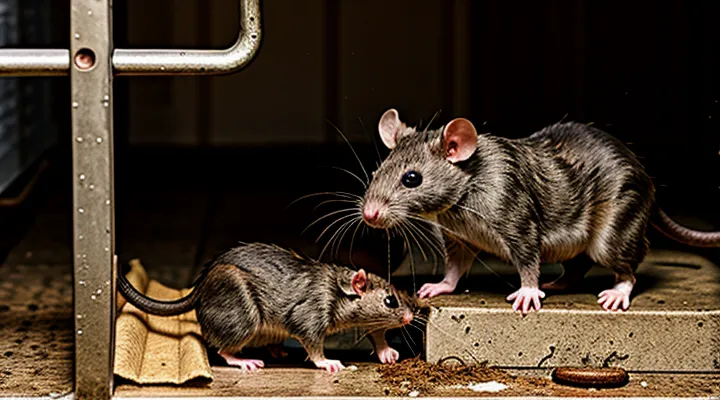
«The Reproductive Cycle of Rats»
«Female Rat's Reproductive Readiness»
«Estrus Cycle Phases»
The estrous cycle governs the reproductive readiness of female rats and determines the timing of conception that leads to parturition. Each cycle spans approximately four to five days, during which hormonal fluctuations prepare the ovary and uterus for possible fertilization.
- Proestrus – lasts 12–14 hours; rising estrogen triggers follicular development and induces sexual receptivity.
- Estrus – lasts 12–14 hours; peak estrogen levels cause ovulation and maximal receptivity; mating typically occurs in this window.
- Metestrus – lasts 12–14 hours; estrogen declines while progesterone rises, initiating luteal formation.
- Diestrus – lasts 48–72 hours; progesterone dominates, maintaining uterine quiescence until the next proestrus.
Mating during estrus introduces sperm that fertilize ova released at the end of proestrus. The resulting embryos implant during metestrus, and the prolonged diestrus supports early gestation. The precise alignment of these phases ensures that conception coincides with optimal uterine conditions, ultimately leading to the gestational period that culminates in delivery.
«Signs of Receptivity»
Female rats exhibit distinct physiological and behavioral cues that indicate readiness for copulation. These cues emerge during the estrous cycle, particularly in the proestrus and estrus phases, and serve as reliable indicators for breeders and researchers.
- Swelling of the vulvar region, accompanied by a pinkish coloration and increased moisture.
- Frequent lordosis posture, characterized by a pronounced arch of the back when a male approaches.
- Elevated frequency of ultrasonic vocalizations in the 30‑40 kHz range, signaling sexual receptivity.
- Increased locomotor activity and frequent exploration of the male’s cage, often accompanied by sniffing of the male’s scent marks.
- Presence of a clear, watery vaginal discharge, typically observed in the evening of proestrus and peaking during estrus.
Hormonal fluctuations underlie these manifestations. Rising estradiol levels trigger the physical changes, while a surge in luteinizing hormone precipitates the onset of lordosis and vocal signaling. Monitoring these signs enables precise timing of mating, which directly influences the efficiency of the rat birthing process.
«Mating and Fertilization»
«Courtship Behavior»
Rats initiate reproduction with a distinct courtship sequence that prepares both partners for successful gestation. Males detect estrus in females through pheromonal cues, then approach with a series of tactile and auditory signals. The interaction proceeds as follows:
- The male performs a rapid “pursuit” run, circling the female while emitting ultrasonic vocalizations.
- Upon close proximity, he engages in “mounting” behavior, positioning himself behind the female and grasping the nape with his forepaws.
- The female may respond with a “lordosis” posture, arching her back to facilitate copulation.
- Copulation typically lasts 5–10 minutes, after which the male disengages and may repeat the cycle if the female remains receptive.
These behaviors synchronize hormonal release, stimulate ovulation, and ensure sperm delivery to the oviducts. Successful courtship leads directly to fertilization, after which embryonic development proceeds through the gestational period culminating in parturition. The efficiency of this pre‑birth ritual is essential for maintaining the species’ reproductive output.
«Copulation Process»
Rats engage in a rapid and precise mating sequence that initiates the reproductive cascade leading to offspring. The male mounts the female, grasps her with forepaws, and aligns his genitalia with the female’s vaginal opening. A brief intromission follows, during which sperm are transferred directly into the reproductive tract.
Key physiological events during copulation include:
- Mounting and posture: The male positions himself behind the female, establishing a stable grip that facilitates efficient sperm delivery.
- Ejaculation: Occurs within seconds; the ejaculate contains millions of motile sperm and seminal plasma that supports sperm viability.
- Post‑ejaculatory behavior: The male often remains attached for a short period, allowing sperm to migrate toward the oviducts.
Females exhibit a short estrus phase, typically lasting 12‑14 hours, during which they are receptive to mating. Ovulation is induced by the act of copulation, ensuring that eggs are released concurrently with sperm arrival. This synchrony maximizes fertilization probability and sets the stage for embryonic development that culminates in parturition.
«Sperm Viability and Fertilization Window»
Sperm viability in rats determines the narrow period during which fertilization can occur. After ejaculation, sperm remain motile for approximately 12–24 hours within the female reproductive tract, provided that the uterine environment maintains a pH near 7.4 and temperature close to 37 °C. Viability declines rapidly if the cervical mucus becomes hostile or if oxidative stress exceeds the antioxidant capacity of seminal plasma.
The fertilization window aligns with the estrous cycle’s ovulatory phase. Female rats experience a 4‑day estrous cycle, with ovulation occurring at the transition from proestrus to estrus, typically 10–12 hours after the onset of estrus behavior. Consequently, successful conception requires that viable sperm be present in the oviducts during this 6‑hour interval. Factors that shorten sperm lifespan—such as elevated vaginal acidity, infection, or prolonged storage—reduce the probability of fertilization.
Key parameters influencing the fertilization window:
- Sperm motility duration: 12–24 h under optimal conditions.
- Ovulation timing: 10–12 h after estrus onset, lasting ~6 h.
- Uterine pH: 7.2–7.6 for maximal sperm survival.
- Temperature stability: 36.5–37.5 °C throughout the tract.
Ensuring that these conditions coincide maximizes the likelihood of successful fertilization, thereby initiating the subsequent stages of rat parturition.
«Gestation Period»
«Duration and Key Developmental Stages»
«Early Embryonic Development»
Early embryonic development in rats begins immediately after fertilization in the oviduct. The single-cell zygote undergoes rapid mitotic divisions, producing a multicellular structure without increasing overall size. By the third day post‑conception, the embryo reaches the morula stage, comprising 16–32 compacted cells.
- Day 1–2: Cleavage divisions generate 2‑, 4‑, and 8‑cell embryos; transcription of the embryonic genome initiates around the 2‑cell stage.
- Day 3: Morula formation; cells become tightly packed, establishing the first differentiation between inner and outer cells.
- Day 4: Blastocyst cavity expands; the inner cell mass (future fetus) and trophoblast (future placenta) are distinguishable.
- Day 5–6: Blastocyst migrates to the uterine lumen and attaches to the endometrial surface, marking the onset of implantation.
Implantation involves trophoblast invasion, remodeling of maternal vasculature, and secretion of signaling molecules that sustain embryonic growth. The early embryo relies on maternal nutrients until placental circulation is established around day 10. Throughout this period, precise timing of cell division, lineage specification, and tissue interaction determines the success of subsequent gestation.
«Fetal Growth and Organogenesis»
Rats undergo a rapid intra‑uterine development that culminates in parturition after approximately 21–23 days. Fetal growth proceeds through distinct phases, each characterized by specific morphogenetic events and organ formation.
Early gestation (embryonic days 1–7) features cleavage, blastocyst implantation, and the establishment of the primitive streak. By day 8, the three germ layers differentiate, initiating the formation of the neural tube, heart tube, and somites. This period sets the foundation for organogenesis.
Mid‑gestation (days 9–14) marks the emergence of primary organ systems. The heart begins rhythmic contractions, establishing circulation through the yolk sac and early placenta. Limb buds elongate, and the basic architecture of the brain, lungs, liver, and kidneys becomes discernible. Vascular networks expand, supplying nutrients essential for rapid tissue growth.
Late gestation (days 15–21) involves maturation of previously formed structures. The cerebral cortex thickens, alveolar sacs develop, and renal glomeruli reach functional capacity. Skeletal ossification accelerates, and the fetus gains approximately 30 g, reaching a total body weight of 5–7 g at birth.
Key developmental milestones can be summarized:
- Day 8: Neural tube closure, heart tube formation.
- Day 10: Limb bud emergence, primary brain vesicles.
- Day 12: Onset of fetal circulation, liver hematopoiesis.
- Day 14: Pulmonary bud branching, kidney nephron initiation.
- Day 16: Skeletal ossification, whisker follicle development.
- Day 18: Hair follicle maturation, gastrointestinal tract peristalsis.
- Day 20‑21: Final weight gain, lung surfactant production, readiness for delivery.
Throughout gestation, placental exchange efficiency increases, facilitating the transfer of glucose, amino acids, and oxygen. Hormonal regulation—primarily progesterone and prolactin—maintains uterine quiescence until the onset of labor, when a coordinated rise in prostaglandins and oxytocin triggers uterine contractions.
The culmination of fetal growth and organogenesis equips the newborn rat with functional respiratory, circulatory, and neural systems, ensuring survival immediately after birth.
«Maternal Changes During Pregnancy»
«Hormonal Shifts»
During the final stage of gestation, a coordinated shift in endocrine activity prepares the female rat for parturition. The transition begins with a marked reduction in circulating progesterone, a hormone that has maintained uterine quiescence throughout pregnancy. This decline removes inhibitory signaling on myometrial contractility and permits the rise of estradiol, which enhances uterine sensitivity to contractile stimuli.
Estradiol levels increase sharply in the last 24–48 hours before delivery. Elevated estradiol amplifies the expression of oxytocin receptors on uterine smooth muscle and stimulates the synthesis of prostaglandins, both of which facilitate the onset of rhythmic contractions. Concurrently, the pituitary gland releases a surge of prolactin, promoting the development of mammary alveoli and priming the neonates for lactation immediately after birth.
Oxytocin, secreted from the hypothalamus and released into the bloodstream, reaches a peak at the moment of labor initiation. Its binding to the up‑regulated uterine receptors triggers calcium influx, generating the force required for cervical dilation and fetal expulsion. The same hormone also stimulates milk ejection during the first nursing bouts.
Feedback mechanisms ensure the progression of these hormonal events. The mechanical stretch of the uterus during contractions feeds back to the hypothalamus, sustaining oxytocin release, while the decline of progesterone removes negative feedback on estrogen synthesis, maintaining high estradiol concentrations until delivery is complete.
Key hormonal changes:
- Progesterone: rapid decrease → loss of uterine inhibition.
- Estradiol: sharp increase → up‑regulation of oxytocin receptors, prostaglandin synthesis.
- Prolactin: surge → mammary gland maturation.
- Oxytocin: peak release → initiation of uterine contractions and milk let‑down.
These endocrine adjustments orchestrate the transition from gestation to the birth of rat offspring.
«Physical Manifestations»
Pregnant rats exhibit distinct physical changes that signal imminent parturition. The abdomen enlarges noticeably as fetuses fill the uterine cavity, often accompanied by a palpable firmness along the midline. Fur around the ventral area becomes softer and may appear slightly disheveled due to stretching of the skin.
Observable signs include:
- Nest‑building activity: the female gathers bedding material, arranges it into a compact nest, and may pull additional fibers into the nesting site.
- Increased restlessness: frequent repositioning, pacing, and vocalizations indicate discomfort and preparation for delivery.
- Swollen mammary glands: nipples enlarge, become pinker, and may secrete a clear fluid as lactation begins.
- Reduced food intake: appetite diminishes in the final 24‑48 hours, though water consumption generally remains steady.
- Body temperature shift: a slight drop in core temperature often precedes delivery, detectable with a rectal probe.
These manifestations provide reliable indicators for caretakers to anticipate the birth event and implement appropriate monitoring and support.
«Nutritional Needs»
Pregnant and nursing rats require a diet that exceeds the nutritional demands of non‑reproductive individuals. Energy intake must rise by approximately 30 % during gestation and by 50 % while lactating, reflecting the caloric cost of fetal growth and milk production. Protein content should increase from the standard 14 % to at least 20 % of the diet, ensuring adequate supply of amino acids for tissue development. Calcium and phosphorus ratios of 1.2 : 1 support skeletal mineralization in both dam and offspring; supplementation with vitamin D₃ enhances calcium absorption and prevents hypocalcemia.
Key dietary components for optimal reproductive performance include:
- High‑quality protein (e.g., soy, casein) providing essential amino acids.
- Balanced minerals: calcium, phosphorus, magnesium, and trace elements such as zinc and copper.
- Vitamins: B‑complex for metabolic pathways, vitamin A for embryonic development, vitamin E as an antioxidant.
- Essential fatty acids: omega‑3 and omega‑6 for membrane formation and neural development.
- Increased calories: primarily from carbohydrate sources like corn starch or maltodextrin, adjusted to maintain stable body weight.
Water consumption must be unrestricted; dehydration reduces milk output and impairs fetal growth. Monitoring body condition and adjusting feed quantities daily prevents under‑ or over‑nutrition, both of which can compromise litter size and neonatal viability.
«Labor and Birth (Parturition)»
«Pre-Labor Signs»
«Nest Building Behavior»
Rats construct nests immediately before parturition, creating a controlled microenvironment that safeguards newborns from temperature fluctuations, predation, and dehydration. The behavior is driven by a surge of prolactin and estrogen, which stimulate nesting instincts and increase the animal’s motivation to gather materials.
Typical nest composition includes shredded paper, cotton fibers, wood shavings, and occasionally plant debris. The mother selects items based on texture and availability, arranging them into a compact, dome‑shaped structure. The nest’s interior is densely packed to retain heat, while the outer layers remain loosely arranged to allow ventilation.
Construction proceeds in a sequence that can be outlined as follows:
- Material collection: The female carries objects in her forepaws, transporting them to the chosen site.
- Base formation: She spreads a layer of loose material to form a stable foundation.
- Layering and compaction: Successive layers are added, each pressed firmly with forelimbs and hindquarters.
- Final shaping: The nest is molded into a rounded cavity, often with a slight depression to accommodate the litter.
Studies show that nests built with higher proportions of insulating fibers result in faster pup thermoregulation and reduced mortality during the first 48 hours. Conversely, inadequate nesting material leads to increased exposure to ambient temperature changes and higher incidence of hypothermia.
Environmental factors such as cage size, lighting schedule, and availability of nesting substrates directly influence nest quality. Providing a variety of soft, absorbent materials consistently improves construction speed and structural integrity.
Overall, nest building constitutes an essential preparatory phase of rat reproduction, ensuring optimal conditions for successful offspring development.
«Changes in Activity Levels»
During gestation, female rats gradually reduce locomotor activity as the pregnancy advances. In the final days before delivery, the decline becomes pronounced, reflecting the growing abdominal mass and preparation for nesting.
In the hours preceding birth, activity shifts from low‑level movement to intense nest‑building behavior. Rats gather bedding, arrange material, and construct a compact nest. This surge in purposeful activity peaks shortly before the first pup is expelled.
Once labor commences, the pattern changes again. The mother exhibits brief, repetitive motions associated with uterine contractions, followed by short pauses for each pup’s emergence. Between deliveries, the rat remains largely immobile, conserving energy for the next contraction.
After all offspring are born, activity levels rise sharply. The mother alternates between nursing bouts and self‑grooming, interspersed with brief foraging trips to replenish food stores.
Typical activity changes can be summarized:
- Late gestation: steady decline in general locomotion.
- Pre‑parturition (12‑24 h before birth): heightened nest‑building effort.
- Labor: intermittent, low‑amplitude movements synchronized with pup delivery.
- Post‑parturition (first 48 h): rapid increase in nursing, grooming, and occasional feeding excursions.
These fluctuations align with physiological demands of pregnancy, parturition, and early maternal care, ensuring optimal conditions for offspring survival.
«Stages of Labor»
«First Stage: Uterine Contractions and Cervical Dilation»
During the initial phase of rat parturition, the uterus begins rhythmic contractions that generate intra‑abdominal pressure sufficient to expel the fetus. Contractions are driven by a surge of oxytocin and prostaglandin release, occurring at intervals of 30–90 seconds and lasting 10–20 seconds each. The strength of each contraction increases progressively, reaching peak amplitude shortly before delivery.
Simultaneously, the cervix undergoes progressive dilation. Fibrous tissue relaxes under the influence of progesterone withdrawal and estrogen rise, allowing the cervical canal to widen from a closed state to an average diameter of 2–3 mm. Dilation proceeds in stages:
- Initial softening of cervical epithelium.
- Progressive widening of the cervical opening.
- Complete dilation sufficient for fetal passage.
The coordination of uterine tone and cervical opening defines the duration of this stage, typically lasting 30–45 minutes in a healthy adult female rat. Monitoring these physiological markers provides a reliable indicator of the onset of active labor.
«Second Stage: Expulsion of Pups»
The second stage of rat parturition consists of the active expulsion of the newborns from the birth canal. After the onset of strong uterine contractions, each pup is delivered in rapid succession, typically within a few minutes. The mother immediately bites through the amniotic membrane, exposing the neonate, and then uses her forepaws to pull the pup forward. This action reduces the risk of the offspring becoming trapped and facilitates a clean passage.
Key characteristics of this stage include:
- Contraction pattern: High‑frequency, high‑amplitude uterine waves that push each pup toward the cervix.
- Membrane rupture: The mother often breaks the sac herself, preventing the need for the pup to escape autonomously.
- Pup handling: The dam rotates the pup, cleans it with saliva, and stimulates breathing by licking the face and nostrils.
- Timing: The interval between successive pups averages 1–2 minutes, with the entire expulsion phase lasting 10–30 minutes for a typical litter of 6–12 individuals.
- Post‑expulsion behavior: After each delivery, the mother briefly rests before initiating the next contraction cycle, ensuring continuous flow until the litter is complete.
Successful completion of this phase is essential for neonatal survival, as immediate maternal care begins the moment each pup emerges.
«Third Stage: Delivery of Placenta»
The third stage of rat parturition involves the expulsion of the placenta, commonly called the afterbirth. After the pups are delivered, the uterine muscle contracts rhythmically, forcing each placental disc away from the uterine wall. Contractions are weaker than those in the second stage but sufficient to detach the chorionic membranes.
Key characteristics of placental delivery in rats:
- Each litter typically produces one placental disc per fetus; a litter of eight yields eight separate discs.
- Placental discs measure 1–2 cm in diameter and weigh approximately 0.2 g each.
- The mother’s abdominal muscles assist in the final expulsion, often resulting in a brief, audible pop as the disc exits the birth canal.
Immediately following expulsion, the dam usually grasps the placenta with her forepaws, chews it, and ingests the tissue. This behavior reduces the risk of predation and infection. After consumption, the mother resumes grooming the newborns, maintaining nest hygiene and temperature regulation.
Complications are rare but may include retained placental tissue, which can lead to uterine infection if not expelled promptly. Veterinary observation focuses on the presence of all expected placentas and the absence of excessive bleeding or uterine distension.
«Maternal Assistance During Birth»
«Cleaning and Stimulating Pups»
After a litter is delivered, newborn rats are wet, covered in amniotic fluid, and their respiration may be weak. Immediate intervention by the dam or a caretaker is essential to ensure survival.
- The mother licks each pup, removing fluid and debris; this action also stimulates the pup’s circulatory system and triggers the first breaths.
- If the dam does not attend promptly, a caretaker should gently wipe the pup with a soft, damp cloth, taking care not to damage the delicate skin.
- The caregiver must apply mild pressure to the chest and abdomen with a fingertip, encouraging inhalation and expelling residual fluid from the airways.
- Warmth is maintained by placing the litter on a pre‑heated pad or within the nest material; temperature should stay between 30 °C and 32 °C during the first 24 hours.
- The umbilical stump is left intact until it dries and falls off naturally; during this period, the mother’s grooming protects it from infection.
These actions collectively promote effective breathing, prevent hypothermia, and reduce the risk of bacterial contamination, thereby improving the odds that each newborn rat will thrive.
«Consuming Placenta»
Rats typically ingest the placenta immediately after delivering each litter. This behavior occurs within seconds of birth, before the pups are fully cleaned or nursed.
The act provides several measurable advantages for the mother:
- Rapid replenishment of iron, protein, and lipid reserves lost during gestation.
- Restoration of blood glucose levels, supporting the energetic demands of lactation.
- Delivery of hormones such as oxytocin and prolactin, which reinforce maternal bonding and stimulate milk production.
- Reduction of olfactory cues that could attract predators, thereby decreasing nest disturbance.
Research on laboratory rodents shows that mothers who consume the placenta exhibit higher pup survival rates during the first 48 hours. Experimental removal of the placenta leads to delayed initiation of nursing and lower maternal grooming frequencies.
Physiological monitoring indicates a transient increase in circulating cortisol and catecholamines following placental ingestion, aligning with the stress‑mitigation response observed in other mammalian species. This hormonal surge appears to facilitate the transition from parturition to sustained care.
Overall, placental consumption represents a short‑term, self‑directed strategy that optimizes maternal recovery, enhances offspring protection, and supports the immediate demands of lactation in rats.
«Postpartum Care and Lactation»
«Immediate Maternal Care for Newborns»
«Nursing and Milk Production»
Rats begin nursing within minutes of delivering their litter. The dam positions herself over the pups, exposing the tips of her nipples to allow suckling. Pup stimulation triggers a neuroendocrine reflex that sustains milk ejection throughout the early days of life.
Milk synthesis is driven primarily by prolactin, which rises sharply after parturition. Prolactin stimulates alveolar cells in the mammary glands to produce a nutrient‑rich secretion composed of lactose, protein, fat, and immunoglobulins. Oxytocin, released in response to pup suckling, contracts myoepithelial cells and forces milk into the ducts. The composition of rat milk changes over the lactation period, with early milk rich in immunoglobulins and later milk higher in fat to support rapid growth.
Maternal care continues alongside nursing. The dam maintains a warm nest, frequently rearranges bedding, and performs vigorous licking that cleans the pups and promotes thermoregulation. These behaviors reduce mortality and enhance developmental outcomes.
Key elements of rat lactation:
- Prolactin surge initiates alveolar secretory activity.
- Oxytocin release drives milk let‑down with each suckling bout.
- Milk composition shifts from immunoglobulin‑dense to fat‑rich as pups age.
- Weaning typically occurs between postnatal day 21 and 23, after which the dam’s mammary tissue regresses.
The coordinated hormonal and behavioral mechanisms ensure that each pup receives sufficient nutrition and protection during the critical postnatal interval.
«Thermoregulation and Protection»
During rat parturition, newborns emerge with limited ability to generate body heat. The dam’s physiology compensates through several mechanisms that maintain a stable thermal environment for the litter.
- The mother’s abdominal muscles contract rhythmically, producing brief bursts of heat that transfer to the pups as they pass through the birth canal.
- Immediately after delivery, the dam curls around the offspring, creating a micro‑climate that reduces heat loss. This behavior also limits exposure to drafts and external temperature fluctuations.
- The fur of newborn rats is initially sparse; the dam’s body heat raises the litter’s core temperature to the range required for metabolic activation, typically 35‑37 °C.
Protection against hypothermia extends beyond warmth. The dam’s nesting material, usually shredded paper or straw, provides insulation and a barrier against moisture. The nest’s architecture traps air, further decreasing conductive heat loss. Additionally, the mother cleans each pup, removing amniotic fluids that could lower surface temperature through evaporation.
Physiological adjustments in the dam support these external measures. Vasodilation of peripheral vessels increases blood flow to the skin, enhancing heat transfer to the pups. Hormonal shifts, particularly elevated prolactin, stimulate milk production, supplying energy substrates that fuel thermogenic processes in the neonates.
Collectively, the dam’s behavioral posture, nest construction, and circulatory adaptations create a controlled thermal niche and shield the litter from environmental stressors during the critical early hours after birth.
«Lactation Period and Weaning»
«Milk Composition and Benefits»
Rat offspring depend on maternal milk for the first weeks after birth. The secretion produced by lactating females contains a precise balance of macronutrients and bioactive molecules that support rapid growth and physiological development.
Proteins dominate the nutrient profile, comprising casein‑like fractions, whey proteins, and immunoglobulins such as IgG and IgA. Lipids account for roughly 30 % of the energy content and include long‑chain triglycerides, phospholipids, and cholesterol, which supply essential fatty acids. Carbohydrates are primarily lactose, providing a readily absorbable glucose source. Additional constituents—growth factors (e.g., epidermal growth factor), antimicrobial peptides, and hormones (prolactin, insulin‑like growth factor‑1)—modulate intestinal maturation, immune competence, and metabolic regulation.
Benefits for neonates include:
- Immediate energy supply for thermoregulation and locomotion.
- Stimulation of gut epithelial cell proliferation and barrier formation.
- Passive transfer of antibodies that protect against bacterial and viral pathogens.
- Delivery of growth‑promoting factors that accelerate skeletal and muscular development.
- Regulation of microbiota composition through oligosaccharides and antimicrobial agents.
These attributes make rat milk a specialized vehicle that ensures survival and optimal development during the critical post‑natal period.
«Timeline for Weaning»
Newborn rat pups are entirely dependent on their mother’s milk for nutrition and thermoregulation. The transition from exclusive lactation to solid food occurs within a narrow developmental window that determines survival and growth rates.
- Day 0‑3: Pups remain in the nest, nursing continuously; no solid food is introduced.
- Day 4‑7: Beginning of whisker development and slight increase in activity; occasional exposure to soft, moistened chow may be offered but milk remains primary source.
- Day 8‑10: Pups start to explore the nest perimeter; introduction of finely ground pellets or laboratory rodent diet mixed with water becomes routine.
- Day 11‑14: Consumption of solid food increases; nursing frequency declines but does not cease.
- Day 15‑18: Majority of nutritional intake derived from solid diet; mother’s milk contribution falls below 25 % of total caloric intake.
- Day 19‑21: Complete weaning achieved; pups no longer rely on maternal milk and are fully capable of independent feeding.
Successful weaning depends on stable cage temperature, adequate humidity, and a diet free of contaminants. Early introduction of solid food before day 8 may cause gastrointestinal distress, while delayed weaning beyond day 22 can impede growth and prolong dependence on the dam. Monitoring body weight gain of at least 2 g per day after day 10 confirms appropriate nutritional transition.