
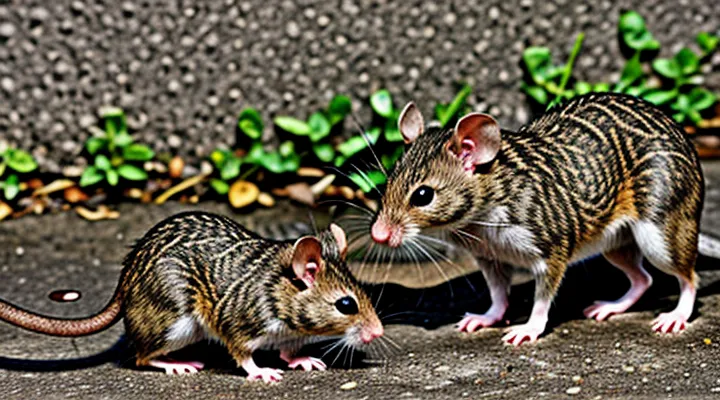
Mouse Reproductive Cycle Basics
Mating Habits
Mice engage in brief, frequent mating bouts that maximize reproductive output. Females enter estrus every 4–5 days, a cycle driven by hormonal fluctuations that make them receptive for only 12–24 hours. During this window, a female emits pheromones that attract nearby males, prompting rapid courtship.
Male mice respond to the female’s scent by mounting within minutes. Copulation lasts 3–5 minutes, after which the male often pursues additional females. A single male can father multiple litters in a breeding season, while a female may produce 5–10 litters annually, each after a gestation of roughly 19–21 days.
Key aspects of mouse mating behavior include:
- Territorial marking: Urine and glandular secretions delineate breeding zones and signal reproductive status.
- Scent communication: Both sexes rely on olfactory cues to assess readiness and genetic compatibility.
- Aggressive competition: Males establish dominance hierarchies; dominant individuals gain priority access to receptive females.
- Post‑copulatory sperm competition: Females store sperm from multiple matings, allowing selective fertilization.
Environmental factors such as temperature, photoperiod, and food availability influence estrus frequency and mating intensity. Warm, well‑fed conditions accelerate cycles, leading to higher litter production, whereas scarcity prolongs intervals between estrus and reduces overall breeding success.
Gestation Period
The gestation period is the interval between conception and birth. In the common house mouse (Mus musculus) it averages 19–21 days, with 20 days representing the median value reported in laboratory colonies.
Other rodent species display similar but slightly longer intervals:
- Deer mouse (Peromyscus maniculatus): 21–23 days
- Brown rat (Rattus norvegicus): 21–23 days
- Hamster (Mesocricetus auratus): 16–18 days
Variation within a species arises from genetic strain, ambient temperature, and nutritional status. Elevated ambient temperatures (approximately 28 °C) can shorten gestation by 1–2 days, whereas suboptimal protein intake may extend it by a comparable margin.
A short gestation aligns with the rapid reproductive cycle of mice. Females typically enter estrus immediately after delivering a litter, enabling the production of up to 10 – 12 litters per year under favorable conditions. Consequently, the gestation period constitutes a critical component of the overall reproductive output.
Litter Size
Average Pups Per Litter
Mice typically produce between five and seven offspring per litter. Laboratory strains often average six to eight pups, while wild populations usually fall in the five‑to‑six range. The number of pups can vary widely; recorded extremes span from three to fourteen depending on species, environmental conditions, and maternal health.
Factors influencing litter size include:
- Age of the dam: Young adults tend to have larger litters than very young or older females.
- Nutrition: Adequate protein and caloric intake correlate with higher pup counts.
- Seasonality: Longer daylight periods and warmer temperatures often increase reproductive output.
- Genetics: Certain strains are selectively bred for larger litters, whereas others naturally produce fewer pups.
Understanding these variables helps predict reproductive potential and manage mouse colonies effectively.
Factors Affecting Litter Size
Mice litter size varies widely, reflecting a combination of intrinsic and extrinsic influences. Genetic makeup determines the baseline potential for offspring number; certain strains consistently produce larger litters, while others are predisposed to smaller ones. Maternal age also matters: young adults (8–12 weeks) typically achieve peak fecundity, whereas very young or older females tend to have reduced pup counts.
Nutrition directly affects reproductive output. Diets rich in protein and essential micronutrients support higher embryo survival and larger litters, whereas caloric restriction or nutrient deficiencies lower the number of viable pups. Environmental temperature influences gestation; moderate ambient conditions (20–24 °C) promote optimal development, while extreme heat or cold can suppress embryo implantation and reduce litter size.
Stressors, including overcrowding and frequent handling, elevate cortisol levels, which interfere with the hormonal cascade required for successful breeding. High population density often leads to aggressive encounters, further diminishing reproductive success. Seasonal cues, such as changes in daylight length, trigger hormonal adjustments that can increase or decrease litter size depending on the time of year.
Health status is critical. Parasitic infestations, viral infections, and chronic diseases impair maternal physiology, resulting in fewer offspring. Repeated breeding cycles without sufficient recovery time deplete uterine resources, causing a gradual decline in litter size across successive pregnancies.
Key factors can be summarized as follows:
- Genetic background of the strain
- Maternal age and parity
- Dietary protein and micronutrient adequacy
- Ambient temperature and humidity
- Stress levels and population density
- Photoperiod and seasonal hormonal shifts
- Presence of disease or parasites
- Interval between successive litters
Understanding how each element interacts allows researchers and breeders to predict and manage reproductive outcomes more effectively.
Frequency of Reproduction
Post-Partum Estrus
Post‑partum estrus in laboratory mice occurs immediately after delivery, allowing a female to become fertile within 12–24 hours of giving birth. This rapid return to sexual receptivity is driven by a surge in luteinizing hormone (LH) and a decline in prolactin inhibition once lactation demands diminish. The estrus phase typically lasts 4–6 hours, during which ovulation may be triggered by a single copulatory event.
Key physiological characteristics of the post‑partum estrus:
- Elevated estradiol concentrations peak within the first day after parturition.
- LH pulse frequency increases markedly, mirroring the pattern observed in regular estrus cycles.
- Progesterone levels remain low, preventing the establishment of a prolonged luteal phase.
- Vaginal cytology shows a predominance of cornified epithelial cells, confirming receptivity.
Behaviorally, females exhibit increased locomotor activity and vocalizations that attract males. Mating during this window can result in a second litter as early as 10 days after the first, effectively compressing the inter‑litter interval. However, the likelihood of successful conception declines if the dam continues intensive nursing, because prolactin-mediated suppression of the hypothalamic‑pituitary‑gonadal axis re‑establishes within 48 hours.
Researchers exploiting post‑partum estrus must control for:
- Timing of male introduction to avoid confounding data on gestation length.
- Nutritional status, since caloric restriction can delay estrus onset.
- Genetic strain, because C57BL/6J mice display a shorter post‑partum estrus than outbred stocks.
Understanding this brief fertile period clarifies how mice achieve high reproductive rates, influencing colony management and experimental design.
Weaning and New Pregnancy
Mice separate their young from the mother at weaning, which typically occurs between 18 and 21 days after birth. At this stage the pups have developed sufficient fur, dentition, and digestive capability to survive independently. The mother’s lactation ceases, and she regains nutritional reserves that support the next reproductive cycle.
Soon after weaning, female mice enter a postpartum estrus. This hormonal surge can produce viable ova within 24–48 hours, allowing conception to begin while the previous litter is still nursing. Consequently, a breeding female may become pregnant again within as little as one week after the pups are weaned.
Key points summarizing the transition from weaning to a new pregnancy:
- Weaning age: 18–21 days post‑birth.
- Hormonal shift: Rapid rise in estrogen and luteinizing hormone triggers estrus.
- Interval to conception: 1–7 days after weaning, depending on strain and environmental conditions.
- Gestation length: Approximately 19–21 days, leading to a potential cycle of 30–35 days from birth of one litter to the birth of the next.
Environmental factors such as temperature, photoperiod, and food availability influence the exact timing, but the physiological capacity for near‑continuous breeding remains a defining characteristic of laboratory and wild mouse populations.
Lifespan and Reproductive Potential
Mice typically live 1 – 2 years in the wild, with predation, disease, and seasonal scarcity limiting longevity. In laboratory environments, where food, temperature, and health are controlled, the average lifespan extends to 2 – 3 years, and some strains reach 4 years. The disparity reflects external stressors rather than intrinsic biological limits.
Sexual maturity occurs at 5 – 6 weeks of age. After reaching maturity, a female can produce a new litter every 21 – 28 days, depending on photoperiod and nutrition. The gestation period lasts approximately 19‑21 days, and each litter averages 5‑8 pups. A single female may therefore generate:
- 5‑7 litters per year under optimal conditions
- 25‑56 offspring annually, based on average litter size
Males become fertile shortly after puberty and remain capable of mating throughout their lives, contributing to high population turnover.
The cumulative reproductive output of a mouse is constrained by its short lifespan but amplified by rapid breeding cycles. Assuming a 1.5‑year effective reproductive window, a female can produce 8‑10 litters, yielding 40‑80 offspring over her lifetime. Environmental pressures, such as limited food or high predator density, can reduce litter frequency and size, while abundant resources and stable climates maximize reproductive potential.
Factors Influencing Reproduction Rates
Environmental Conditions
Food Availability
Food abundance directly influences the reproductive cycle of mice. When caloric intake meets or exceeds metabolic demands, females enter estrus more frequently, shortening the interval between litters. Conversely, limited food supplies extend the time between ovulations and may suppress breeding altogether.
Key effects of food availability on mouse reproduction:
- Increased nutrient intake raises luteinizing hormone levels, accelerating follicular development.
- High‑energy diets reduce the gestation interval, allowing up to eight litters per year under optimal conditions.
- Scarce resources trigger hormonal feedback that delays puberty onset and lowers litter size.
- Seasonal fluctuations in natural food sources cause predictable peaks in breeding activity during periods of surplus.
Shelter and Nesting
Mice construct nests to protect offspring from predators, temperature extremes, and competition. A typical nest consists of shredded paper, fabric fibers, dried vegetation, or soft insulation material gathered from the surrounding environment. The female arranges these components into a compact, dome‑shaped structure that retains heat and provides a stable microclimate for embryonic development and early pup growth.
Nest placement follows predictable patterns. Mice select locations that offer concealment and easy access to food sources, such as:
- concealed spaces behind wall cavities, under floorboards, or within stored boxes
- burrows excavated in soil or compost piles, often reinforced with loose litter
- elevated platforms in cluttered storage areas, where airflow reduces humidity buildup
The quality of the shelter directly influences litter size and survival rate. Adequate insulation lowers the energy required for thermoregulation, allowing the mother to allocate more resources to gestation and lactation. Conversely, exposure to drafts or frequent disturbance increases stress hormones, which can reduce reproductive output. Maintaining undisturbed, well‑filled nesting sites therefore supports higher reproductive efficiency in rodent populations.
Temperature
Temperature directly influences the reproductive cycle of mice. Optimal breeding conditions occur when ambient temperature stays between 20 °C and 26 °C (68 °F–79 °F). Within this range, females experience shorter estrous cycles, allowing litters to be produced every 21–28 days. Temperatures below 15 °C (59 °F) extend the interval between estrus phases, often reducing litter frequency to one per month or less. Conversely, sustained heat above 30 °C (86 °F) impairs sperm viability and can suppress ovulation, leading to irregular breeding and smaller litters.
Key temperature effects:
- Metabolic rate: Higher ambient temperatures increase basal metabolism, accelerating follicular development.
- Hormonal regulation: Stable moderate temperatures support consistent secretion of luteinizing hormone and prolactin, essential for ovulation and lactation.
- Gestation stability: Maintaining the optimal range minimizes stress‑induced abortions and promotes healthy pup development.
Laboratory and field studies confirm that precise temperature control yields the highest reproductive output. Adjusting environmental conditions to remain within the 20 °C–26 °C window maximizes breeding efficiency and litter size for mouse populations.
Predation
Predation exerts a direct influence on the reproductive output of mice. When predators such as domestic cats, barn owls, snakes, hawks, and foxes are present, mouse populations experience higher juvenile mortality, which reduces the number of individuals that reach sexual maturity. Consequently, females compensate by increasing litter size or shortening the interval between litters, a response documented in field studies of rodent colonies exposed to predator cues.
Key effects of predation include:
- Elevated stress hormones that accelerate estrus cycles, allowing females to breed more frequently.
- Selective pressure favoring early‑maturing offspring, which attain reproductive capability sooner.
- Reduction of competitor density, thereby expanding available resources for surviving mice and supporting higher reproductive rates.
Predator presence also shapes mating behavior. Mice under threat tend to breed in concealed nests and limit the duration of mating encounters to lower exposure risk. These adaptations result in a measurable shift in the average number of litters per year compared to populations in predator‑free environments.
Overall, predation acts as a regulatory mechanism that drives both physiological and behavioral adjustments in mouse reproduction, ensuring population persistence despite elevated mortality risk.
Human Intervention
Human activities shape mouse reproductive dynamics through direct and indirect mechanisms. In laboratory settings, controlled breeding schedules accelerate generational turnover, allowing researchers to produce multiple litters within a year. Housing conditions—temperature, photoperiod, and diet—are regulated to maximize fertility, resulting in average litter sizes of 5–8 pups and gestation periods of 19–21 days.
In urban and agricultural environments, pest control programs alter population trajectories. Chemical rodenticides reduce adult survival, prompting surviving females to increase breeding frequency to compensate for losses. Trapping efforts that remove dominant males can trigger social restructuring, leading to earlier sexual maturity among subordinate females.
Genetic manipulation techniques, such as CRISPR‑mediated gene editing, introduce traits that affect reproductive output. Knock‑out of the Fshb gene, for example, suppresses ovulation, providing a tool for population suppression studies. Conversely, transgenic lines engineered for enhanced fecundity are used to study metabolic and developmental processes.
Environmental modifications imposed by humans also influence reproductive rates. Habitat fragmentation creates isolated patches where reduced predator presence and abundant food sources elevate breeding success. Urban heat islands raise ambient temperatures, shortening estrous cycles and extending the breeding season.
Key interventions and their typical effects:
- Chemical control: Decreases adult mortality; may induce compensatory breeding.
- Mechanical removal (traps): Alters social hierarchy; can accelerate sexual maturation.
- Laboratory breeding programs: Standardize conditions; increase litter frequency.
- Genetic engineering: Directly modulates fertility traits.
- Habitat alteration: Modifies resource availability; often expands breeding windows.
Understanding these interventions enables precise management of mouse populations, whether for scientific research, agricultural protection, or public health objectives.
Identifying Mouse Infestations
Common Signs
Mice reproduce rapidly, and early detection of breeding activity helps manage populations effectively. Recognizing physiological and behavioral cues provides reliable evidence that a colony is in the reproductive phase.
- Females develop a visibly enlarged abdomen as embryos grow, often noticeable within two weeks after conception.
- Pink, swollen nipples appear and may become more prominent during the later stages of pregnancy.
- Nest‑building intensifies; mice gather soft materials such as shredded paper, fabric, or insulation to construct concealed chambers.
- Increased urine marking and a stronger musky odor signal hormonal changes, especially in males defending territory.
- Males display heightened aggression toward rivals and more frequent mounting attempts.
- Droppings become more abundant and may contain a slight sheen from dietary changes associated with gestation.
- Presence of newborn pups—tiny, hairless bodies with closed eyes—indicates that breeding has already produced offspring.
These indicators appear sequentially, allowing observers to assess the reproductive status of a mouse population without invasive methods.
Population Growth Indicators
Mice achieve rapid population expansion through several measurable biological factors. Females reach sexual maturity at 5–6 weeks, allowing the first breeding cycle within two months of birth. Gestation lasts 19–21 days, after which a single litter of 5–8 offspring is typical; larger litters of up to 12 have been recorded under optimal conditions. Post‑partum estrus enables a female to conceive again within 24 hours, creating the potential for a new litter every 3–4 weeks during peak breeding seasons.
Key metrics that signal population growth include:
- Litter size average – 6.5 pups per birth, directly influencing cohort size.
- Breeding interval – 21‑day cycle, determining turnover rate.
- Age at first reproduction – 5 weeks, setting the earliest contribution to the next generation.
- Reproductive lifespan – up to 12 months in laboratory settings, extending the cumulative number of litters per female.
- Sex ratio – approximately 1:1, ensuring balanced potential for future matings.
When these indicators align, a mouse population can double in roughly 30–45 days under favorable environmental conditions. Monitoring litter size, interval, and age of first estrus provides reliable forecasts of population trajectories in both laboratory colonies and wild infestations.
Rodent Control and Prevention
Impact of Rapid Reproduction
Mice reach sexual maturity within six weeks, enabling multiple litters each year. A single female can produce up to ten offspring per litter, and successive pregnancies may occur every three weeks. This capacity drives exponential population growth when environmental conditions allow.
The consequences of such rapid reproduction are significant:
- Crop damage – High densities of rodents consume and contaminate grains, vegetables, and stored products, leading to measurable losses for farmers.
- Disease transmission – Large populations increase the probability of pathogen spread, including hantavirus, leptospirosis, and salmonellosis, which affect both humans and livestock.
- Ecosystem alteration – Overabundant mice exert pressure on seed banks and invertebrate communities, reshaping plant regeneration patterns and predator–prey dynamics.
- Genetic variation – Frequent breeding cycles generate a broad genetic pool, enhancing adaptability to changing habitats and resistance to control measures.
- Research implications – Laboratories rely on predictable breeding rates to maintain colonies for biomedical studies; uncontrolled proliferation can compromise experimental consistency and biosecurity.
Effective management must address the reproductive speed directly, employing habitat modification, exclusion techniques, and targeted population control to mitigate the outlined impacts.
Control Strategies
Trapping
Mice reproduce at a remarkable rate; a single female can produce several litters each year, each containing up to a dozen offspring. This biological potential makes trapping a primary tool for limiting population growth before new cohorts reach maturity.
The reproductive cycle drives trap placement and timing. Females become fertile within six weeks of birth, and gestation lasts about three weeks. Consequently, a surge in juvenile activity appears roughly two months after an initial infestation. Traps set during this window capture both adults and newly‑emerging juveniles, reducing the number of future breeders.
Effective trapping strategies include:
- Snap traps positioned along walls, behind objects, and near known travel routes; these provide immediate kill and are reusable.
- Live‑catch traps placed in concealed areas; allow for humane removal and relocation, but require frequent checks to prevent stress.
- Glue boards deployed in hidden corners; useful for monitoring activity levels, though not recommended as a sole control method.
- Bait selection using high‑protein foods such as peanut butter or dried meat; aligns with mice’s increased appetite during breeding periods.
- Rotation schedule: deploy traps for three‑day intervals, rest for one day, then resume; this disrupts nesting cycles and prevents trap avoidance.
Regular inspection of trap locations, prompt disposal of captured rodents, and sanitation to eliminate food sources complement the physical capture process. By synchronizing trap deployment with the known timing of mouse reproduction, the overall population can be suppressed effectively.
Exclusion
Mice reproduce rapidly, but scientific observations rely on strict exclusion of variables that could distort data. Researchers eliminate wild‑caught individuals to focus on laboratory strains, ensuring genetic uniformity. They also exclude animals that have experienced stressors such as overcrowding, irregular lighting, or temperature fluctuations, because these conditions alter estrous cycles and litter size.
Exclusion of non‑reproductive individuals is mandatory. Juvenile mice, sterile mutants, and animals with surgical alterations of the reproductive tract are removed from breeding cohorts. Pregnant females are excluded from studies measuring estrous frequency, while lactating females are omitted from assessments of ovulation intervals.
Typical exclusion criteria include:
- Age outside the reproductive window (younger than 6 weeks or older than 12 months).
- Body condition score indicating malnutrition or obesity.
- Presence of detectable pathogens (e.g., Mycoplasma spp., Salmonella).
- Prior exposure to hormonal treatments or contraceptives.
- Genetic modifications affecting fertility (e.g., knockout of Fshb).
By applying these exclusions, data on mouse breeding cycles remain consistent, allowing precise calculation of inter‑litter intervals, gestation length, and offspring viability. The resulting datasets support reliable extrapolation to broader rodent reproductive patterns.
Sanitation
Mice breeding cycles generate rapid population growth, which directly challenges sanitary conditions in homes, warehouses, and agricultural facilities. Each female can produce several litters per year, and the resulting droppings, urine, and carcasses contaminate surfaces, food supplies, and ventilation systems. This contamination creates health hazards for humans and livestock, promotes the spread of pathogens such as Salmonella, Hantavirus, and Leptospira, and accelerates material decay.
Effective sanitation measures limit the resources mice need to reproduce and reduce the likelihood of infestations:
- Remove food residues promptly; store grains and processed foods in sealed containers.
- Eliminate standing water and fix leaks to deny a water source.
- Clean and disinfect all surfaces weekly, focusing on corners, behind appliances, and storage areas.
- Dispose of waste in tightly sealed bins and empty them regularly.
- Inspect and repair structural gaps, vents, and utility entries that provide entry points.
Regular monitoring combined with these practices disrupts the breeding environment, curtails population expansion, and maintains a hygienic setting resistant to rodent proliferation.